Capital city of the autonomous community of Andalusia. Famous for its architecture, culture and rich history. It is also considered the birthplace of Flamenco. And of course, no mention of Seville would be complete without a reference to Seville oranges. The bitter fruit that grows on trees throughout the city is highly sought after in places like Britain for making marmalade. The Spanish use the oranges for aromatherapy, herbal medicine and even clean electricity generation by using the methane generated from the fermentation process. Never as a foodstuff.
We visited the city at the end of October, which unfortunately coincided with some of the worst flooding Spain had seen for years. And while the heaviest rains and the worst consequences (including loss of lives) was in the Valencia region, several hours north, the rain fell for the entire duration of our three day stay. But Seville is such an outstanding city that even the rains didn’t dampen the spirits or spoil the enjoyment.
The Plaza de Espana was our fist port of call. Built in 1928 for the Ibero-American Exposition of 1929, it is an imposing structure of huge proportions.
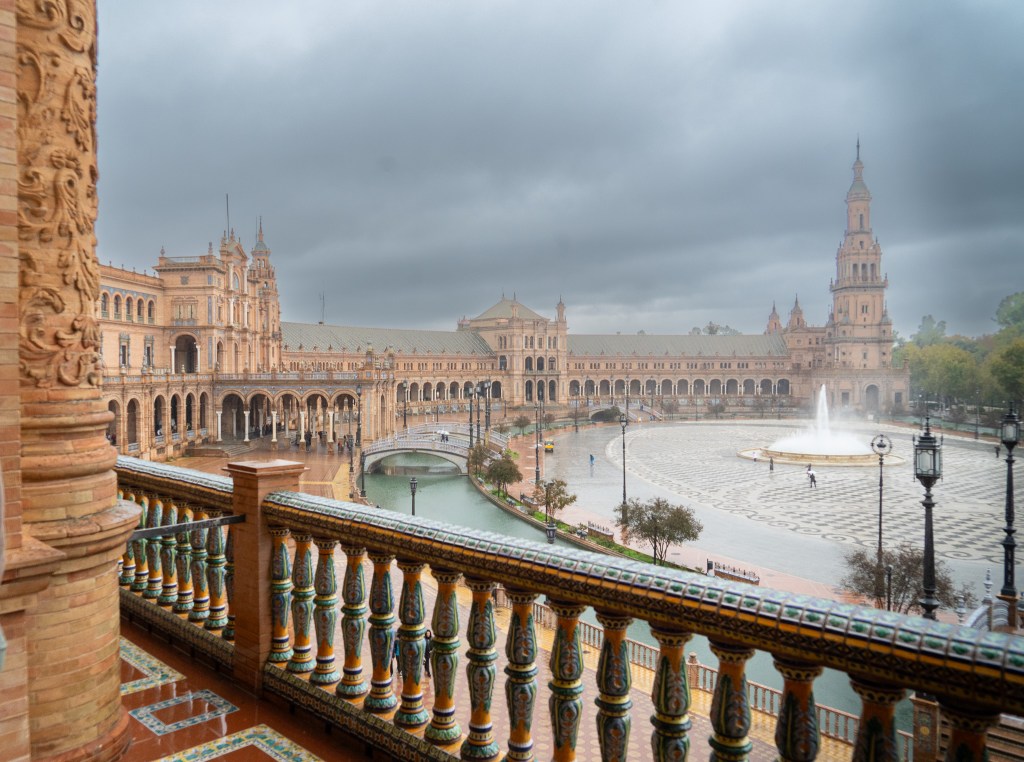
Plaza de Espana. The rain created a softening effect and kept most of the tourists away, which gave the place an almost ethereal feel.
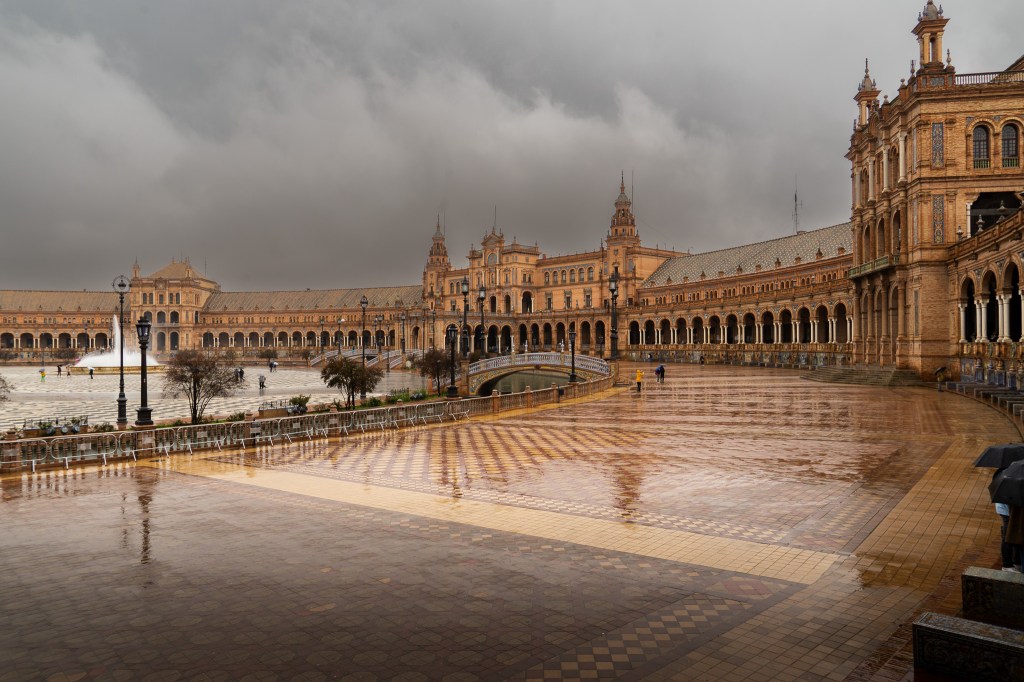
Only extreme weather would cause this place to be so deserted but I wasn’t complaining. The deserted plaza allowed for some dramatic shots.

The cloistered walkway providing respite for the sodden tourists.
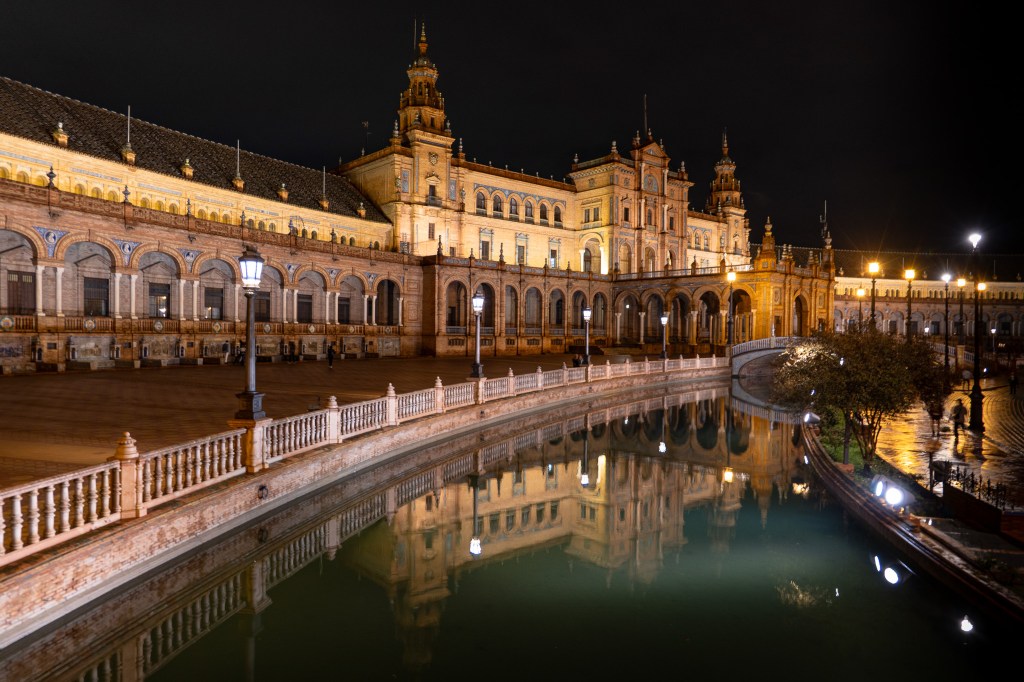
I loved this place so much that we made a return visit at night.
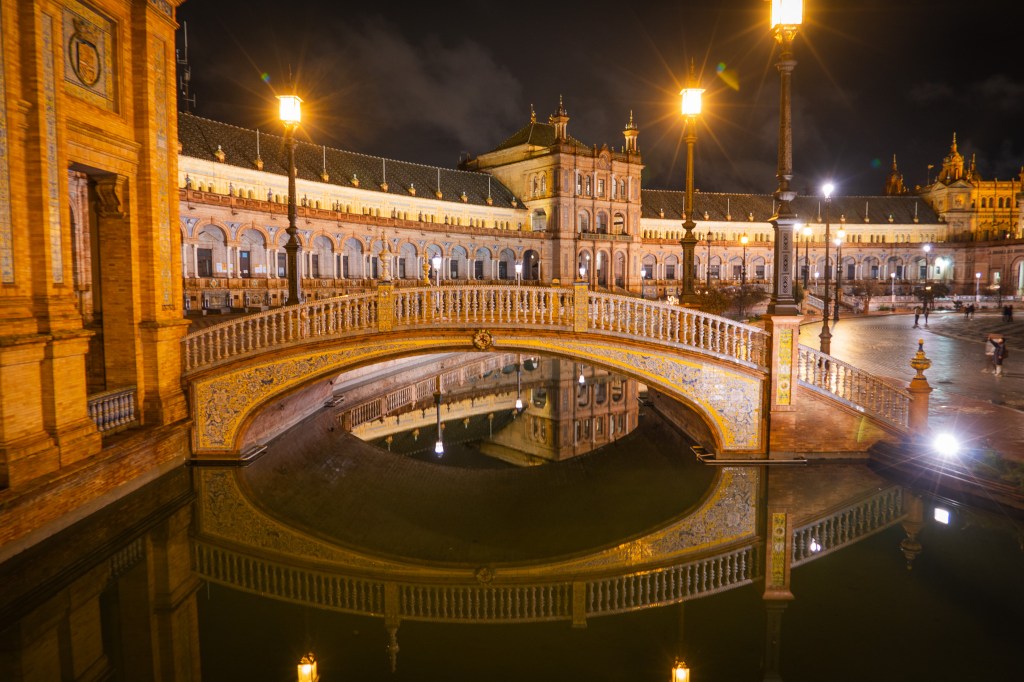
The lights and reflections in the canal created a sereneness that was palpable.
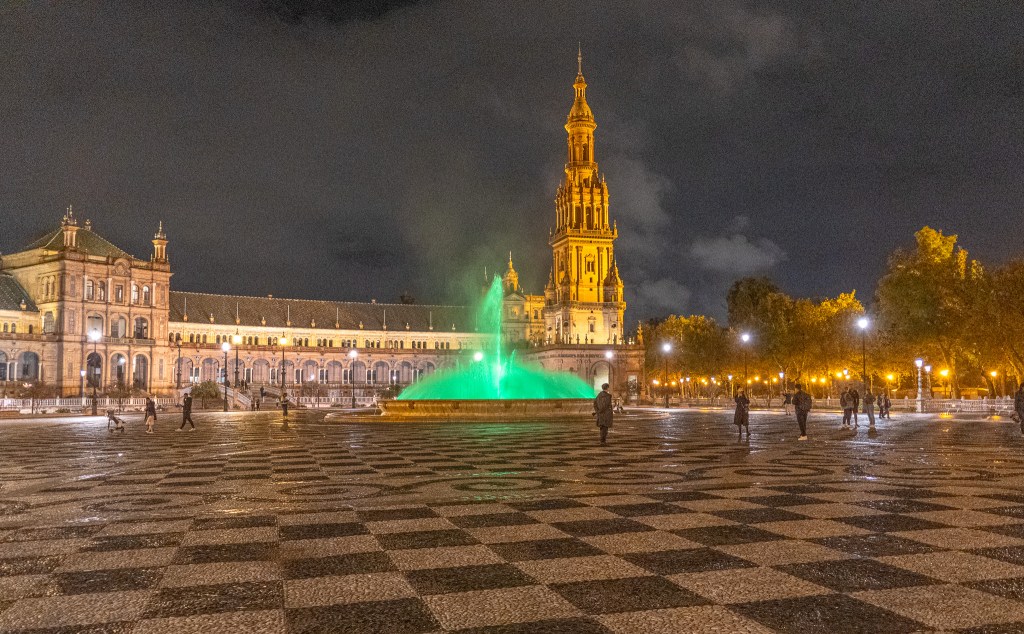
A splash of colour to lift the drenched spirits.
The Plaza de Espana had set a high standard but the Real Alcazar de Sevilla was every bit as impressive. Maybe not in terms of outward grandeur but once inside, the Moorish architecture was stunning. The attention to intricate detail in the stone carved arches alone make this place a work of art.
The term Alcazar is of Arabic origin, ‘al-qasr’, meaning castle or palace. It started life as the citadel of the city during the Islamic era in the 10th century. It was added to by successive Arab dynasties and finally by the Christians in 14th century. Fortunately, the Christians decorated the buildings in the Mudejar style which was derived from Islamic decorative designs, retaining the original character.
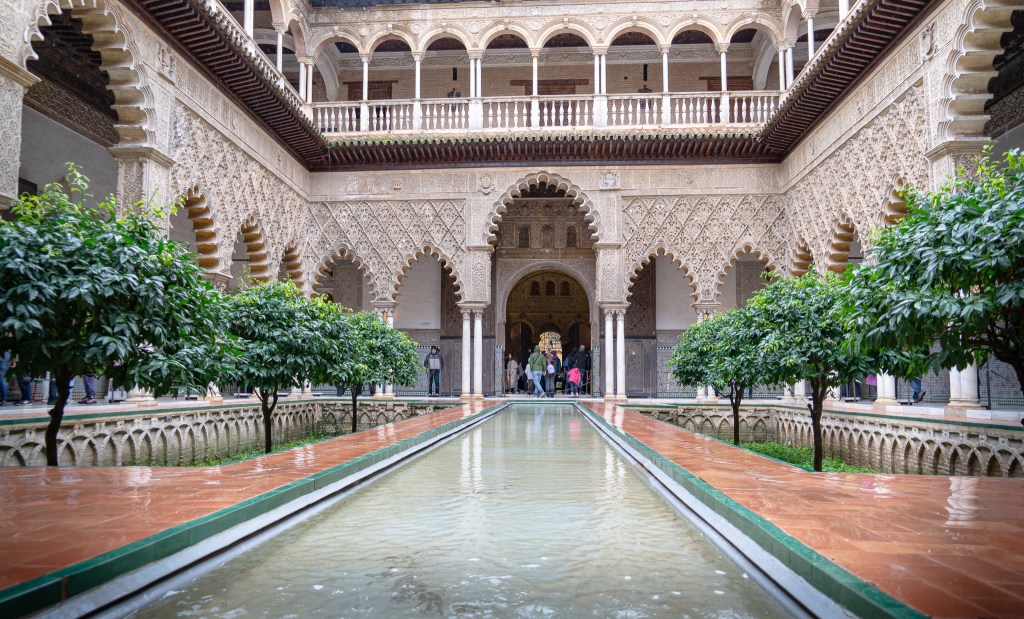
The Real Alcazar. An outstanding example of Moorish architecture.
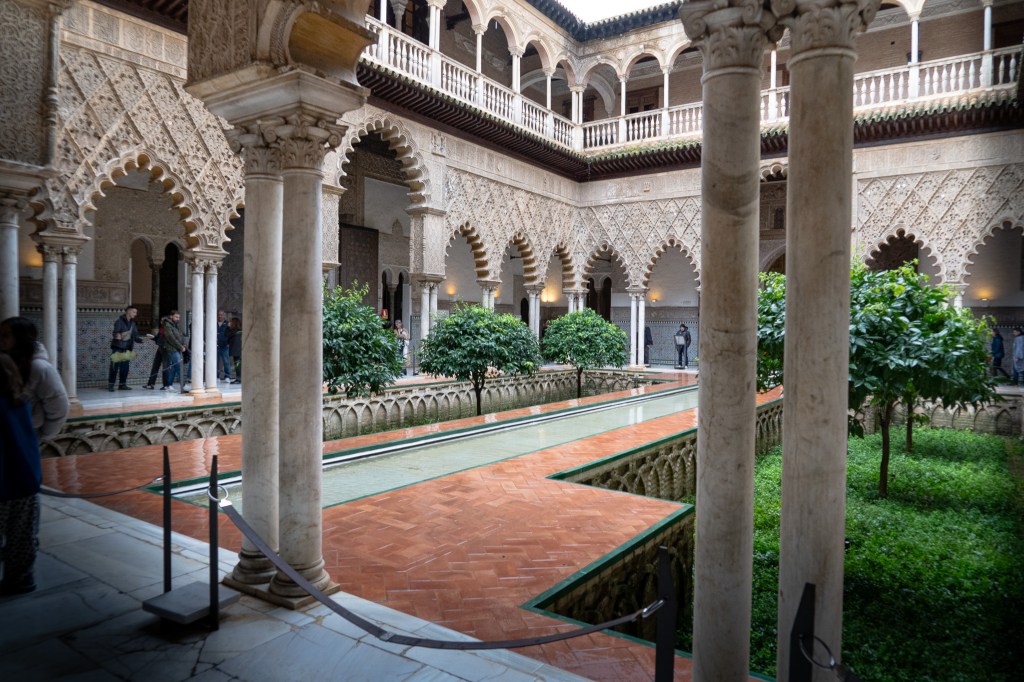
A lot more tourists here than at the Plaza de Espana but I was still able to get the odd photo without the tourists clad in blue and yellow ponchos.
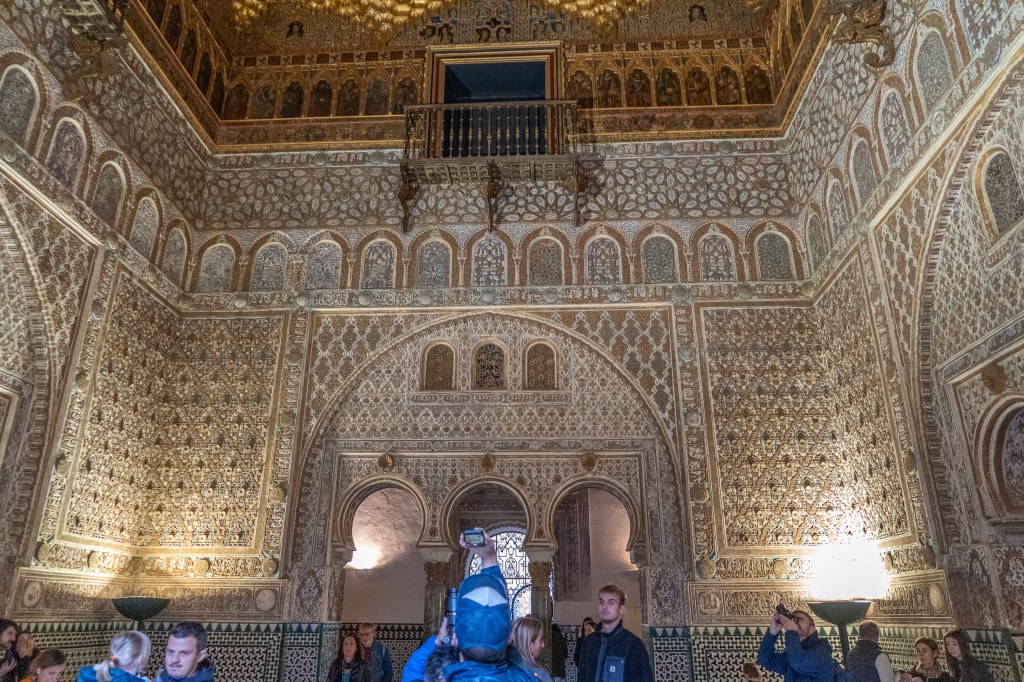
The level of detail in this place was staggering. It’s hard to imagine anything like this being replicated today. Not just because of prohibitive cost. I don’t believe there are enough craftsmen of the calibre needed to do it.
Another must-see in this city is Seville Cathedral (Catedral de Sevilla). A Catholic cathedral and former mosque, it is a UNESCO World Heritage Site. It is the largest Gothic cathedral in the world and dates from the 12th century.
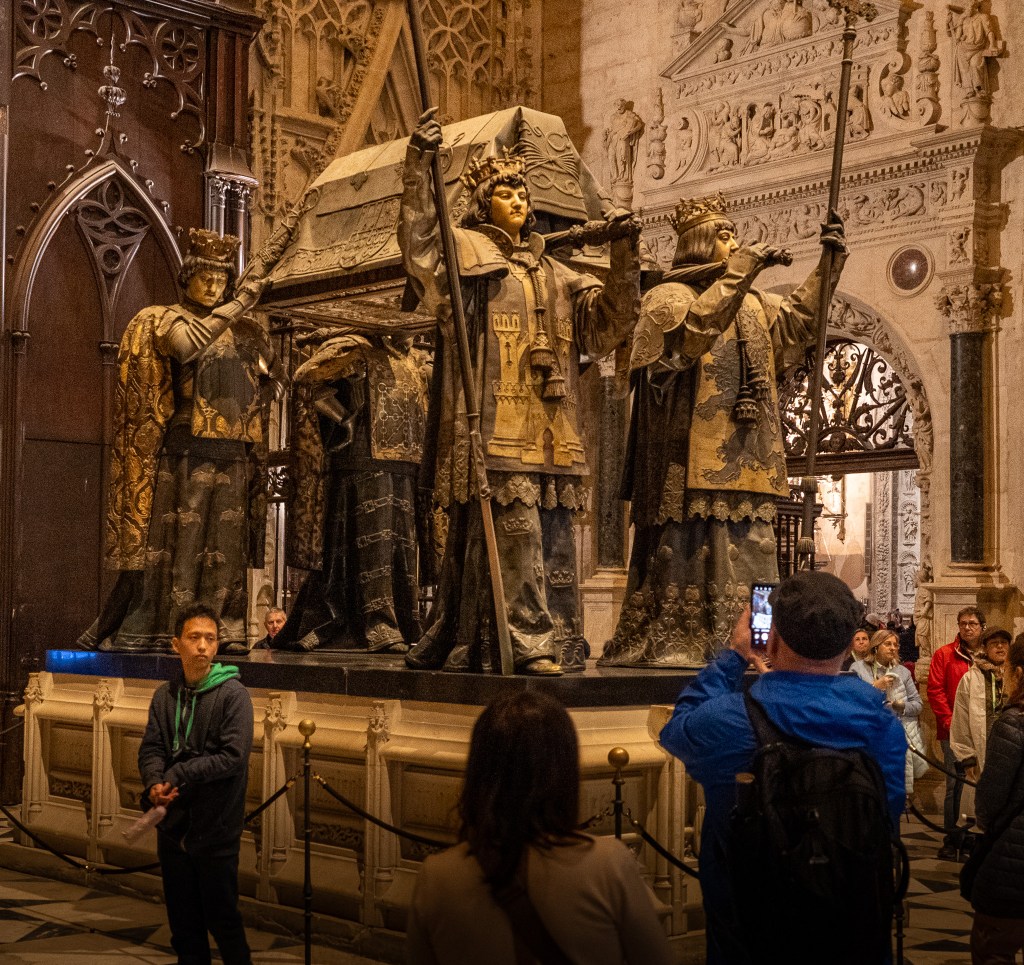
The cathedral contains the tomb of Christopher Columbus. The four pallbearers represent the four kingdoms of Spain from Columbus’s time-Castille, Navarre, Aragon and Leon.

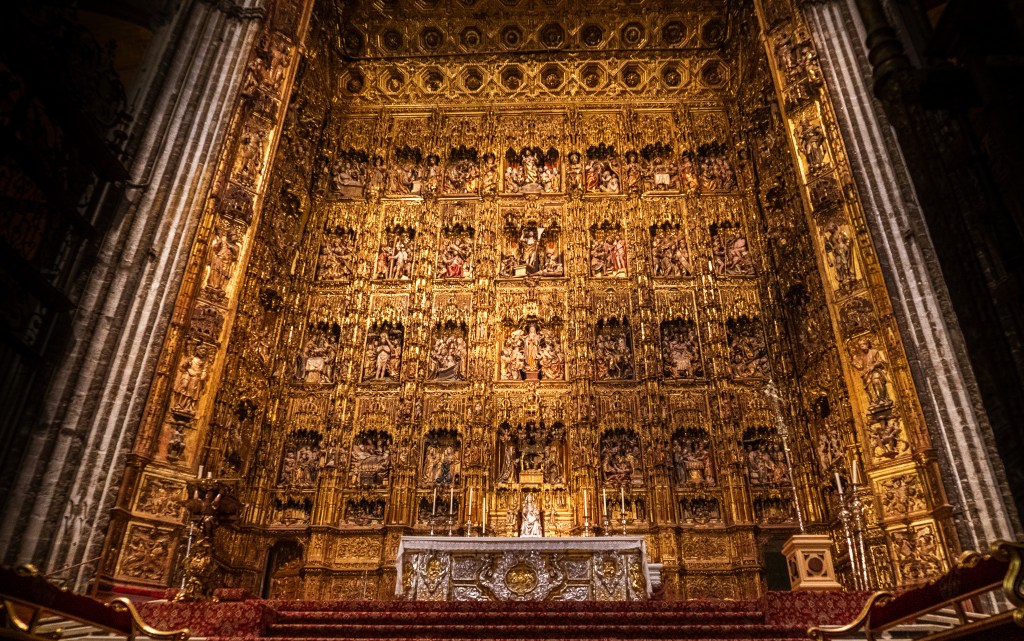
There are 80 chapels in Seville Cathedral. This is the Main Chapel. The altarpiece took 80 years to complete.
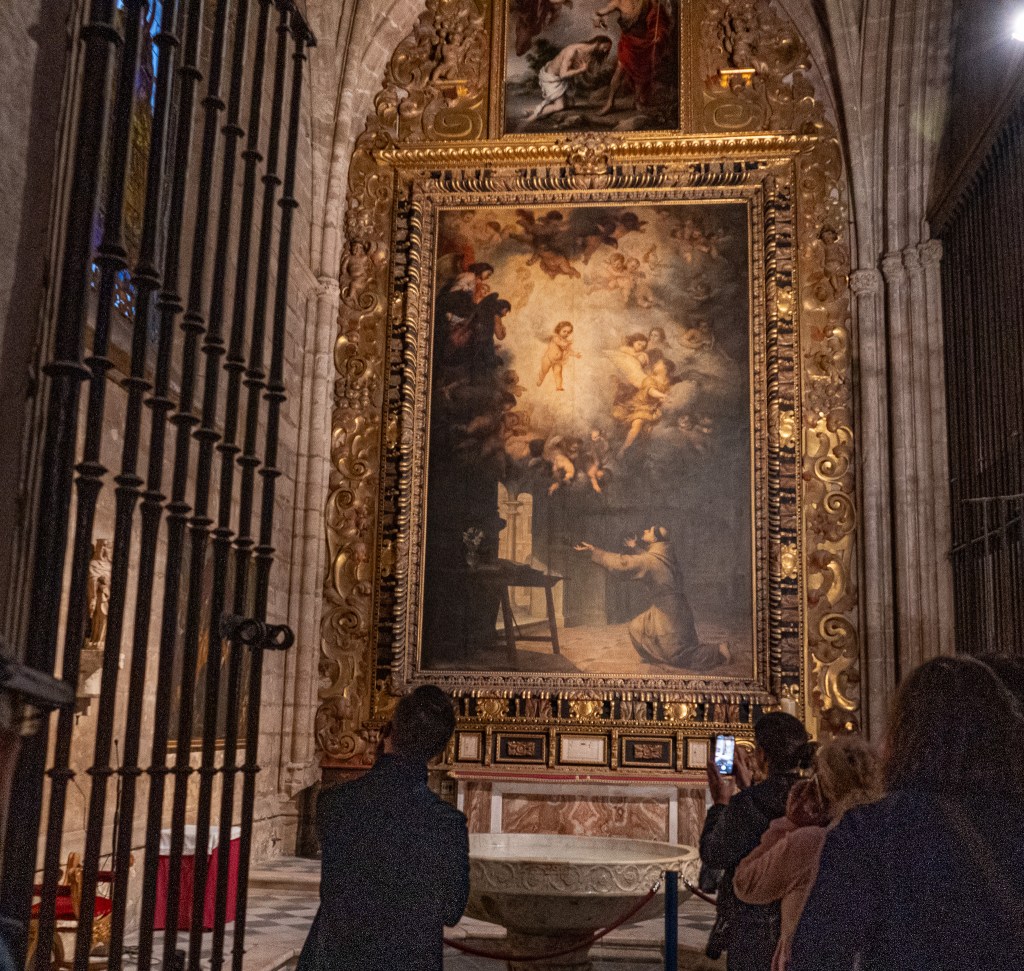
The works of art are numerous and captivating.

The scale of the cathedral is dramatic and the craftsmanship extraordinary.
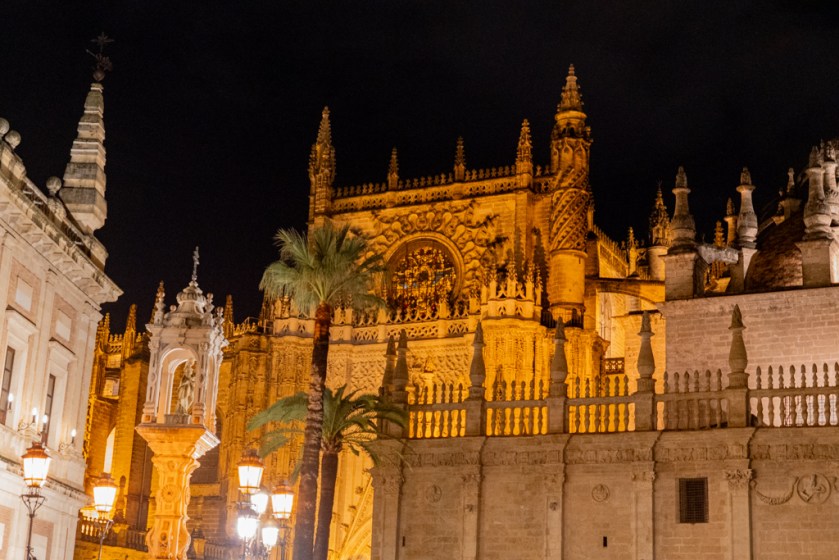
Seville Cathedral at night.
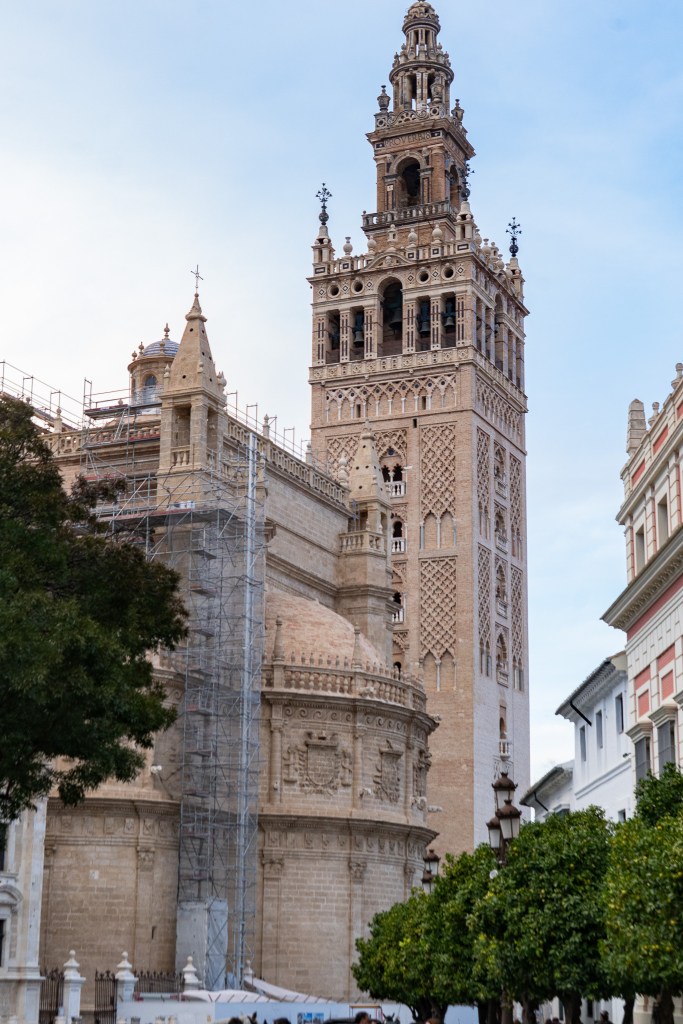
The Giralda Tower (La Giralda). Photo taken during a brief dry spell.
La Giralda is the bell tower of the cathedral. Originally a minaret for the Great Mosque, constructed in the 12th century, it is one of the most important examples of Moorish architecture in Spain. We climbed to the top for a view of the city but the weather conditions ensured it wasn’t the most pleasurable experience.
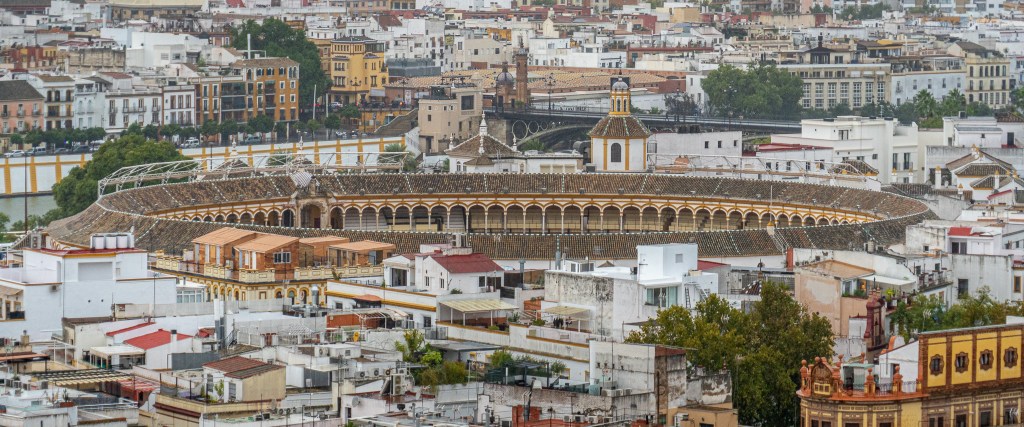
One of the few photos I was able to take from the top of the Giralda Tower. The Seville bullfighting ring.
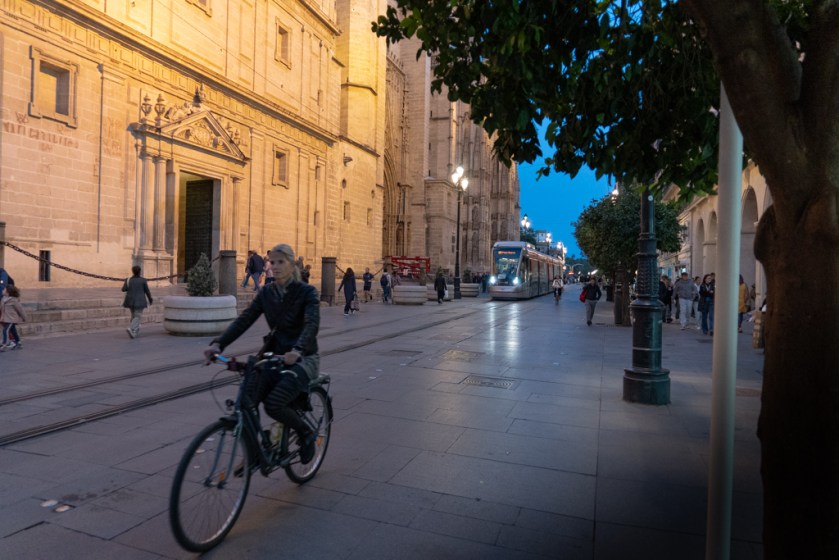
Getting around Seville requires little effort.
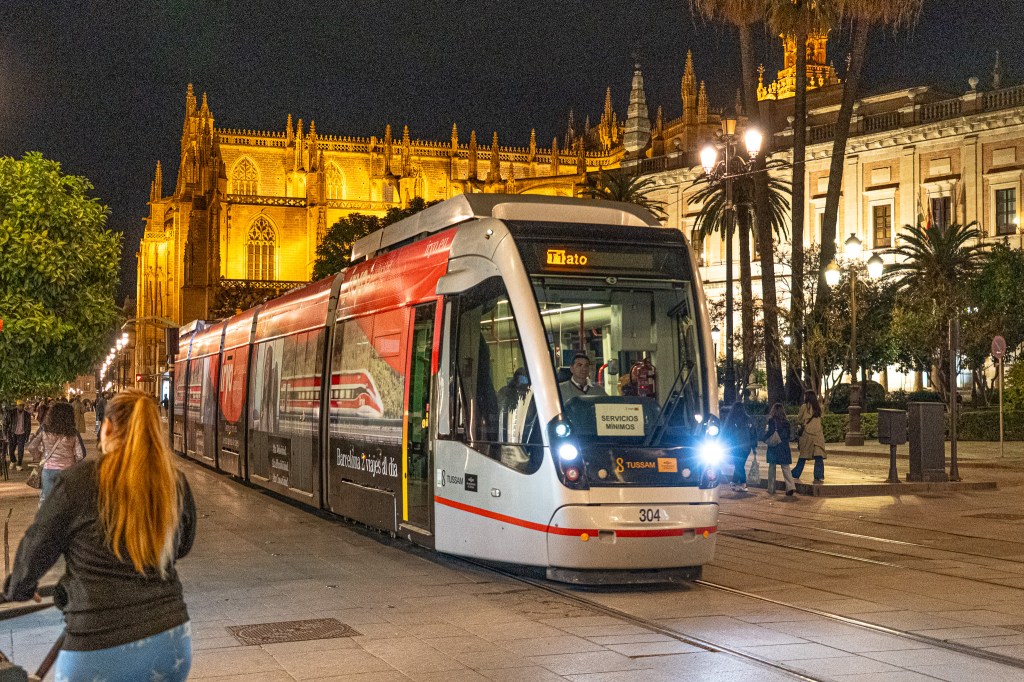
The centre of Seville is relatively flat but like lots of Spanish cities, the streets (even the very narrow ones) are a shared space. Trams, bicycles, cars and pedestrians are everywhere, so be aware of your surroundings.
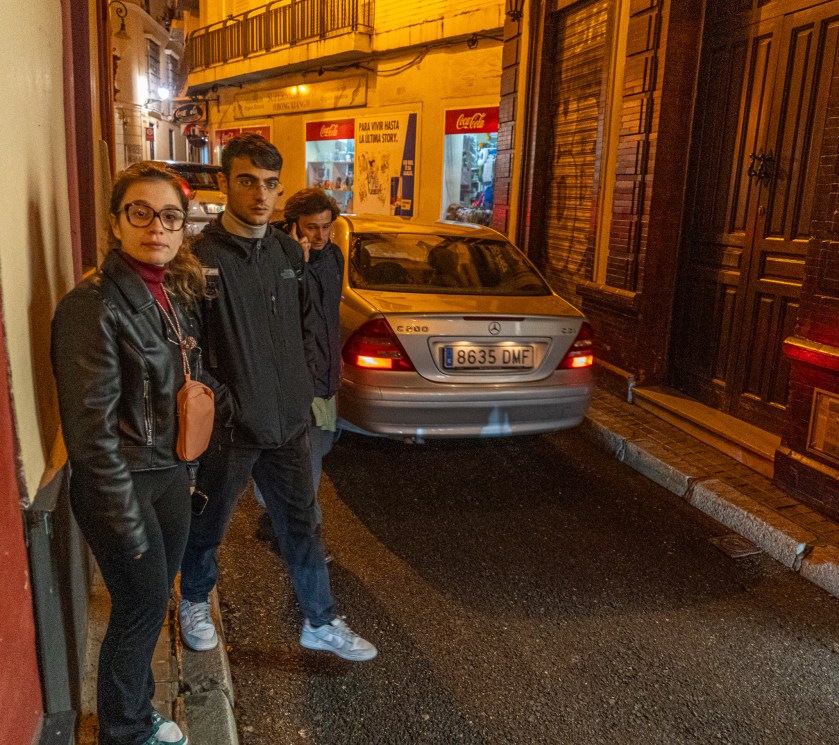
You can’t please all the people all the time! Not sure if those are disapproving looks or merely curious ones..
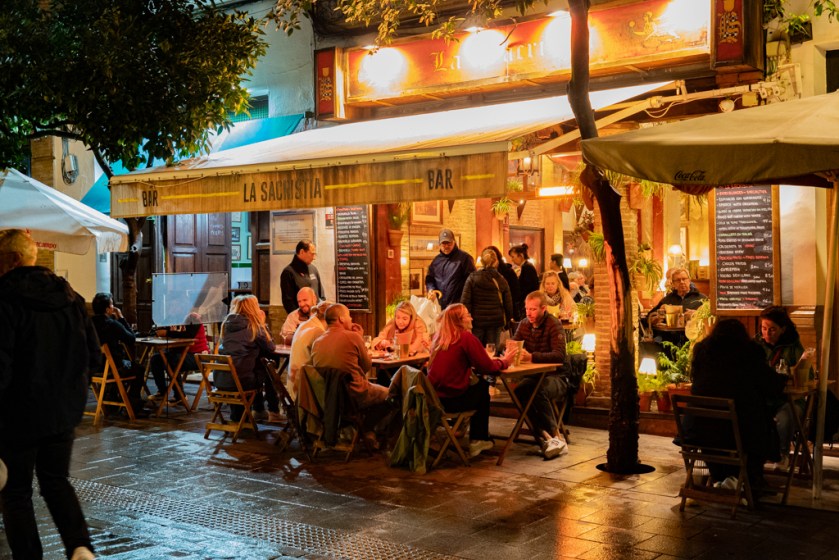
Despite the unrelenting rain, there was still a relaxed and enjoyable atmosphere in the evenings and the cafe culture was very much alive and kicking.
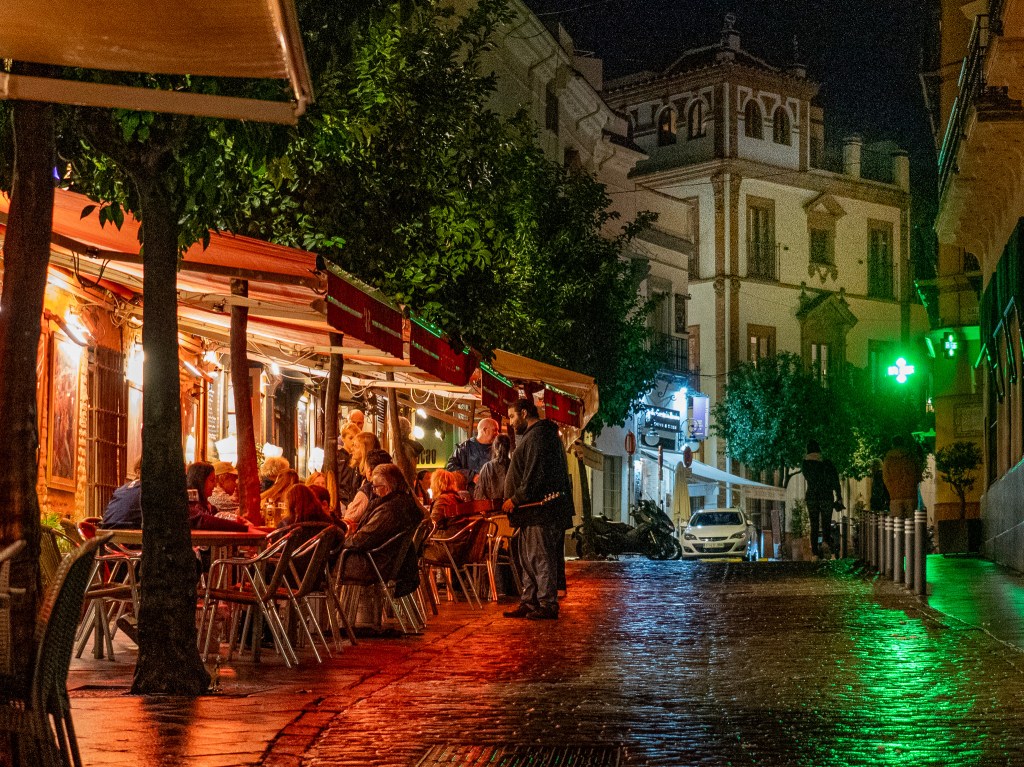
This street reminded me of the Montmartre area of Paris. The coloured lights reflecting off the wet cobbles added lots of character.
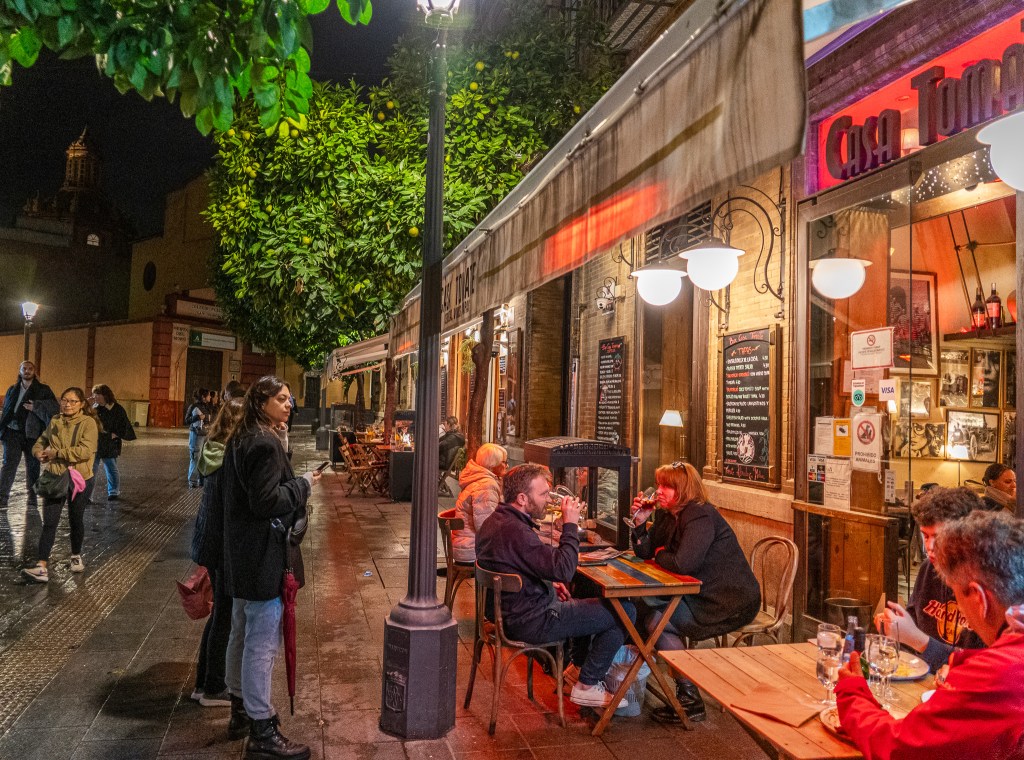
Love a bit of people-watching.


There was also the occasional quiet spot.

This scene reminded me of the Edward Hopper painting, ‘Nighthawks’
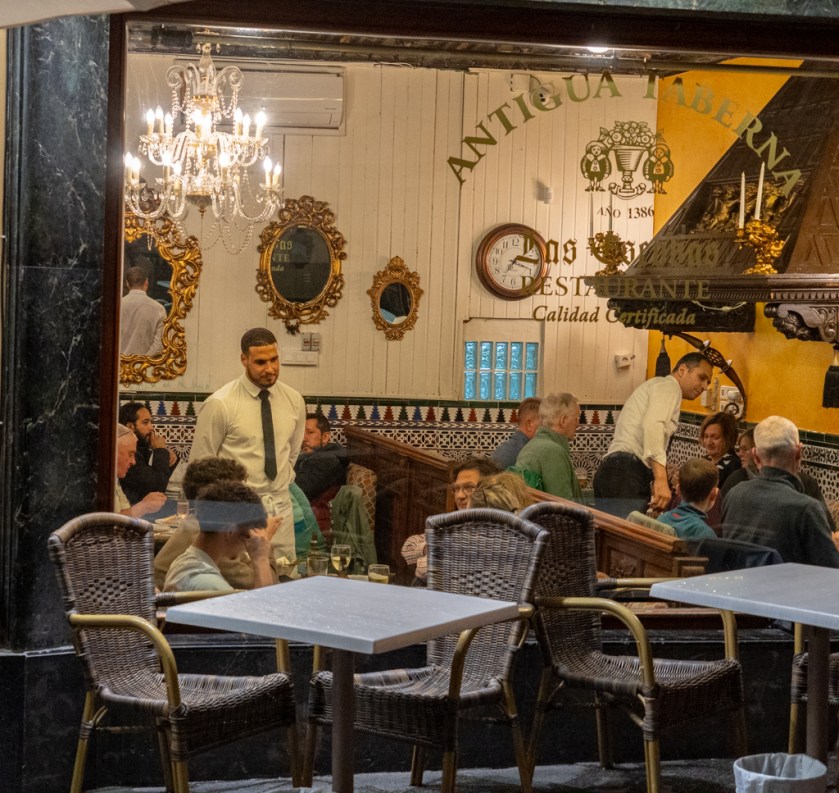
Sevillians are friendly and welcoming.
Eating out in Seville offers choice for every taste and budget. My favourite meal was ox tail at a bar/restaurant that had a bull theme (El Toro?)

Distasteful?
Not everyone would be comfortable surrounded by bulls mounted on the walls but bullfighting is an undeniable part of Seville’s history. I was surprised by how much these added to the authenticity of the place.
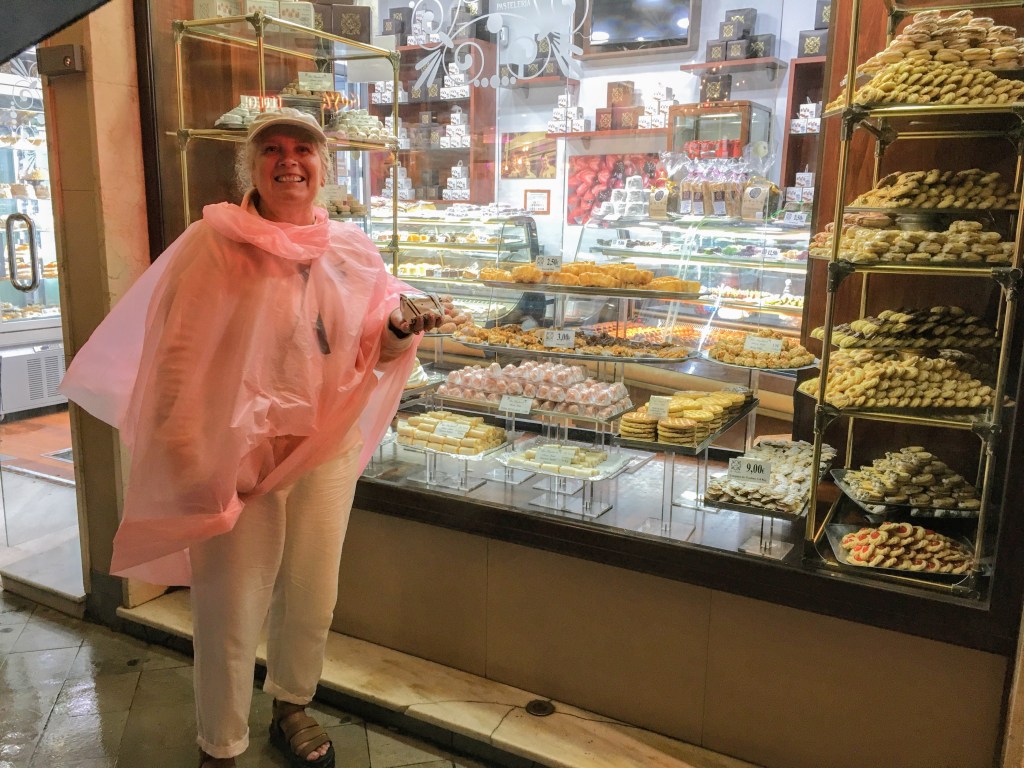
For those with a sweet tooth, an after dinner something was never far away.
I always judge the appeal of a city by my desire to revisit. I would definitely like to return to Seville. The weather curtailed our activities and there was so much more I wanted to see. The only respite from the rain took place on one evening. That’s when most of the photos were taken, with the exception of the Plaza de Espana where the cloistered walkway provided convenient cover. Hopefully when we see this beautiful city again, it will be in the sunshine and I won’t have to walk around with my camera secreted up my coat.
It’s easy when talking about a visit to a particular city, to forget to refer to the journey. On this occasion, the journey definitely deserves a mention. We left a relatively sunny and dry Costa Blanca and travelled by bus. As we headed south west, the countryside became increasingly green and lush as we traversed the agricultural heartland of Murcia. But the most spectacular, and surprising, leg of the journey came as we approached Granada. The landscape changed to a rocky scene and the bus started to climb steeply into the Sierra Nevada mountains. The snow capped peaks were an unexpected but awesome sight. There was also a notable drop in temperature. Then as we descended into Granada, the snow gave way to greenery again and the countryside was dotted with the distinctive villages of Andalusia, with their whitewashed walls and terracotta roofs. The journey, including a pit stop, took around 5 hours but the scenery made it seem shorter. And very memorable.
 Bleeding Dove