Roadtrippin’ Western Australia, 2026. Part 2. The Moho.

We had some light showers as we packed the Ute for the next leg of our journey. Probably the last rain I remember on the trip. While thankful that our luggage remained dry, I began to have reservations about the quantity of it. I had seen motorhomes before but had never seen five people attempt to stow their belongings in one. But not wanting to meet trouble half way, I parked my concerns and focused on the drive. It was a rare and enjoyable experience being a passenger. Another opportunity to observe the changing landscape as we left Margaret River on the road to Perth. The distance is 280km but in Western Australia, places are so far apart that they use the ‘time as distance’ rule. This means Perth is 3 hours from Margs and is ‘down the road’. The tree-lined country roads and lush vineyards soon gave way to small quaint towns with unfamiliar names like Cowarumup and to slightly bigger ones whose names, like Busselton and Bunbury, were a giveaway as to their colonial past. As we approached Perth, the relaxed atmosphere of wine country, with its quiet roads and laid back vibe, already seemed like a distant memory.

Did you know? Perth is a contender for the most isolated major city in the world, depending on the parameters used. It has 2.2 million inhabitants and its nearest large city neighbour is Adelaide, which is 2,100km (1,305 miles) away.

After the requisite rundown of the moho, delivered by a less than enthusiastic employee of the hire company (Apollo), the task of decanting and storing belongings began. Interestingly, Apollo, does not specify a specific cubic litre capacity for cargo storage. Instead, you have to allocate sleeping areas and use the closest overhead lockers or under-seat compartments for your clothes, shoes, devices, toiletries, medication etc. And this is where being an accomplished member of the Magic Circle would be very useful. I couldn’t help but think of Dr Who’s Tardis, which looked like a telephone kiosk on the outside but was huge on the inside. The Moho, on the other hand, looked smaller than expected on the outside and even smaller on the inside! Challenging as the loading operation was, we were finally ready to hit the road.
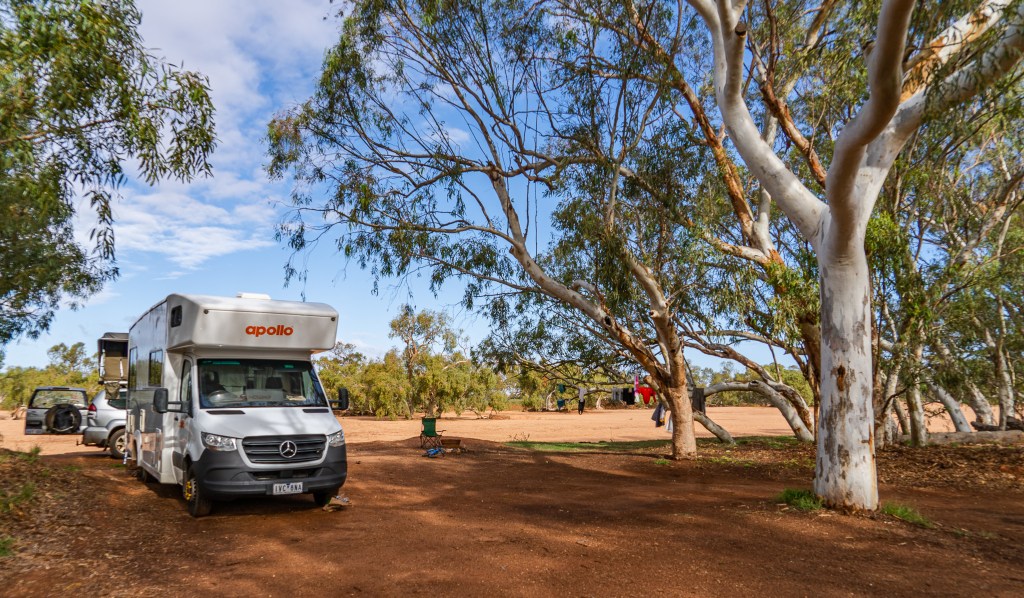
The Moho. While challenging at times, we couldn’t help but develop a certain affection for the old girl. Her clock had over 200k km on it and if she was a horse, would probably would have been put out to pasture long ago. But she served us well-for a while!

Our first campsite was Jurien Bay. Another ‘short drive’ of 220km. We were in good spirits as we travelled north along the coast. The novelty for the passengers being able to sit at a table, playing cards or snacking while enjoying the scenery, was obvious. The trauma of loading the Moho already becoming a vague recollection.
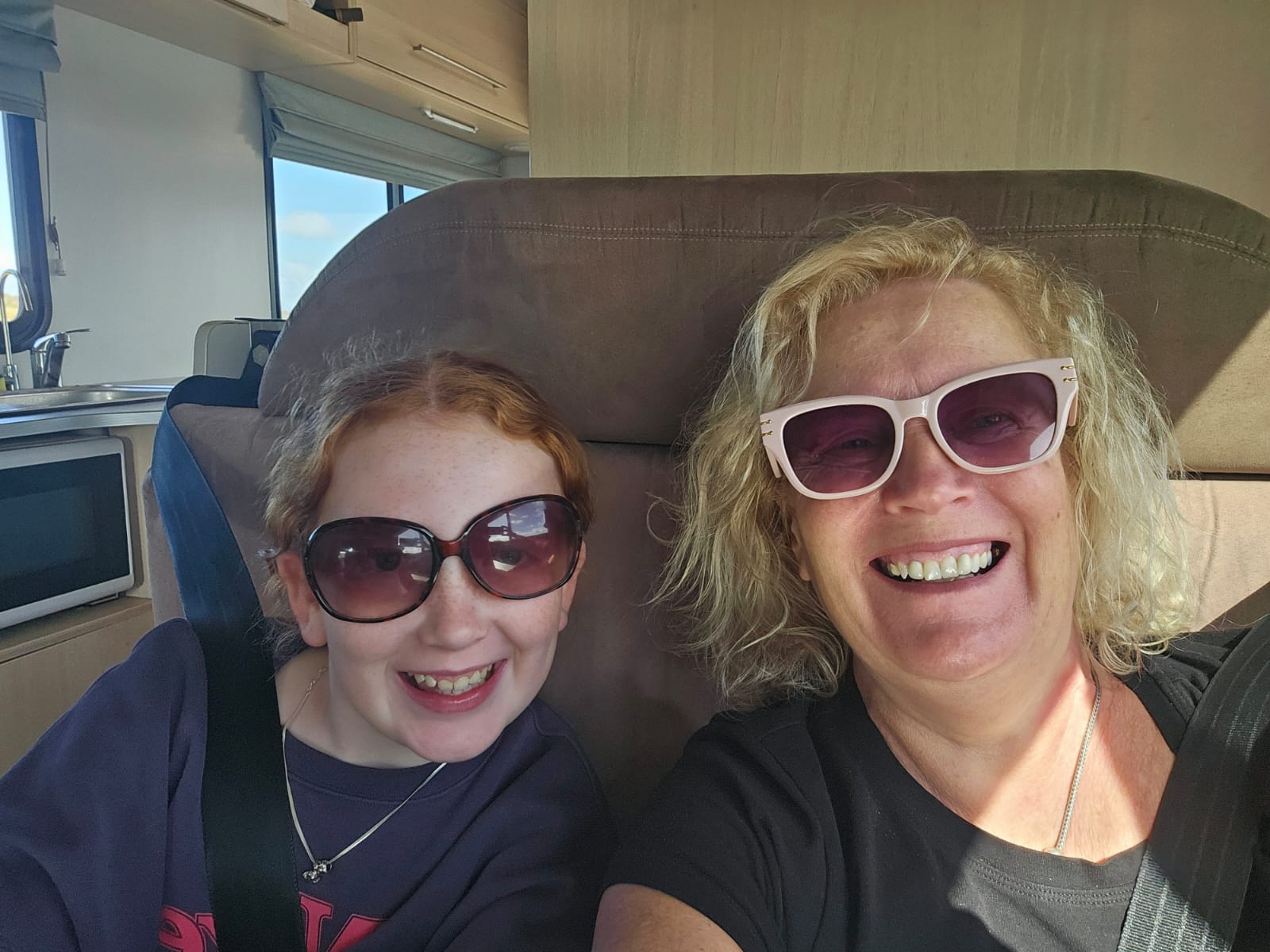
The novelty of sitting at a table while driving along, never faded.

This first stretch of our travels began to reveal to us the vast nature of Western Australia and the diverse and unique facets of the country.
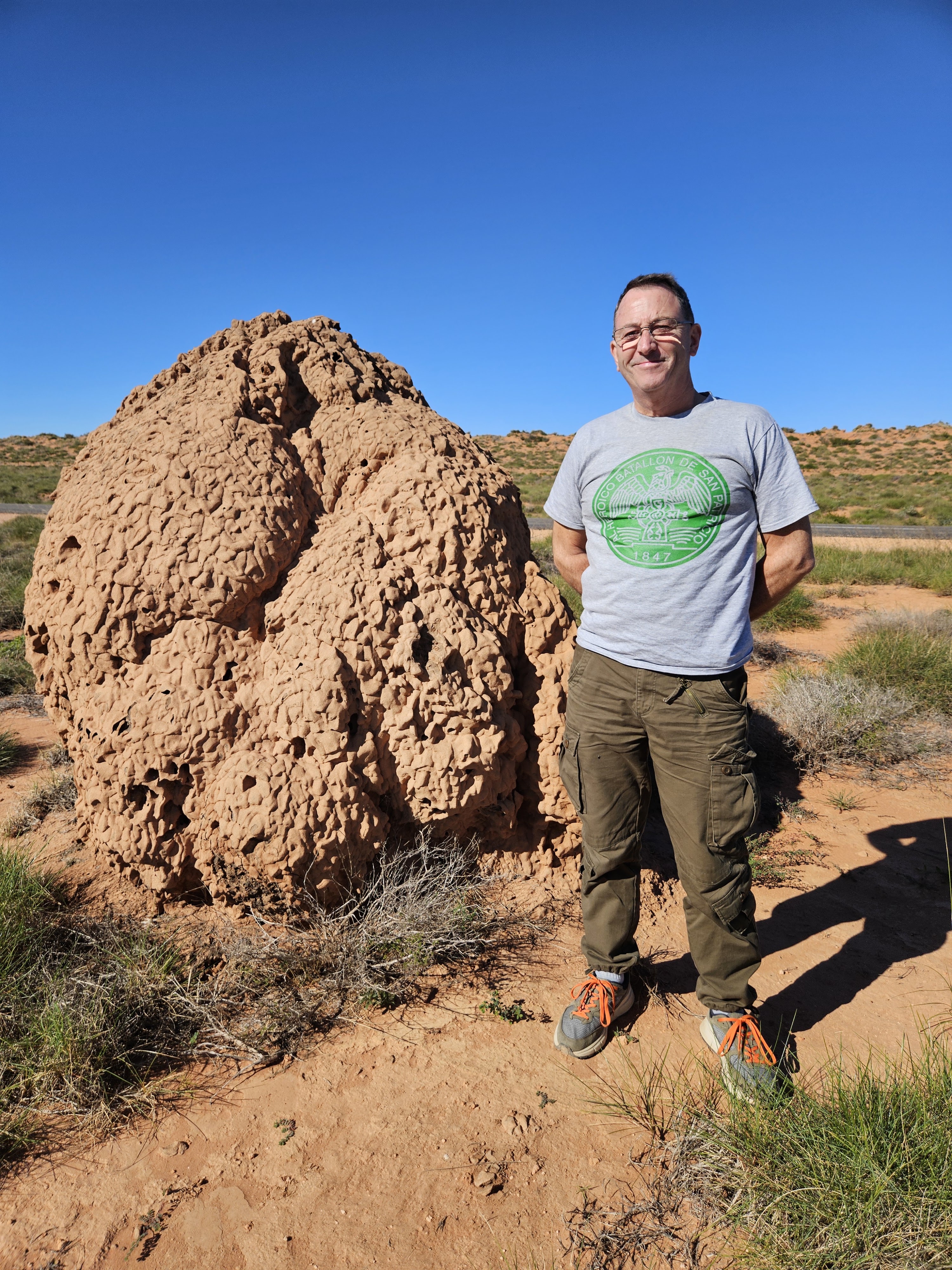
There were thousands of strange structures in the fields lining the road, which turned out to be termite mounds. Note the tightly pulled draw cords at my ankles!

I think it was on the road to Jurien Bay that I first noticed a tangible change in my mood. The wide open plains of the landscape seemed to evoke a sense of lightness and well being. I felt as if I was being exposed to generous doses of all the natural things that are beneficial to the mind and spirit. Later in the trip, I would discover the deep connection that the indigenous people have to the land. But that’s for another post. What I will say, is that it is no surprise that such a unique landscape would inspire such feelings of attachment and oneness with the environment.
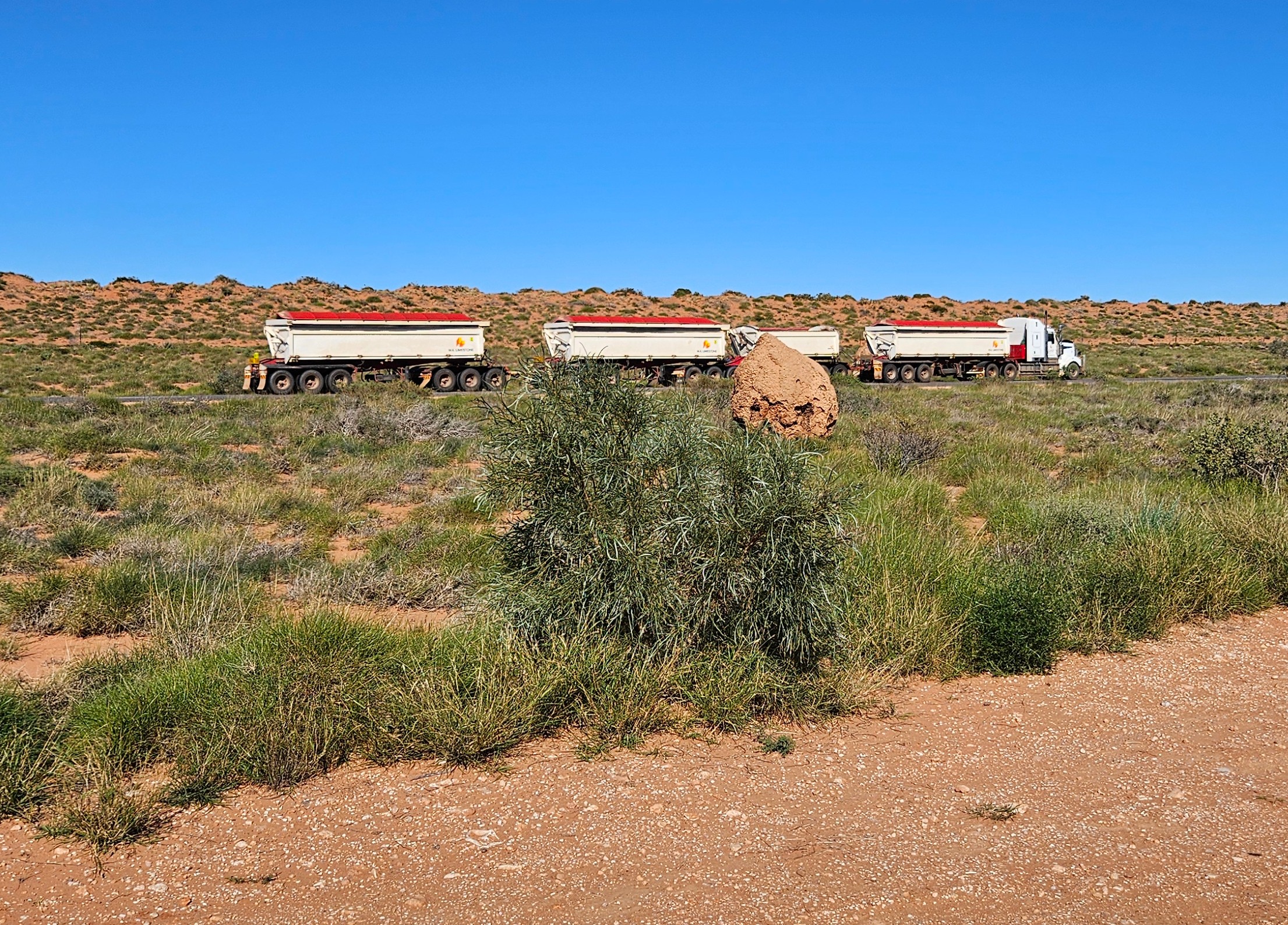
Another first for me was the sight of road trains on these remote roads. An efficient and economical way of transporting freight long distances. And more than a bit scary when one passes alongside you!

Night falls quickly in Western Australia and we navigated our last few kilometers in the dark. The campsite was a basic layout of logged off sections nestled behind the sand dunes. We found our allocated spot and settled down for some home cooked food, Moho style, and a glass or two of local wine.

Tip: There are two things you stock up on, every opportunity you get. Fuel and wine/beer. It’s not unusual to travel 300km between petrol stations or ‘bottle shops’.
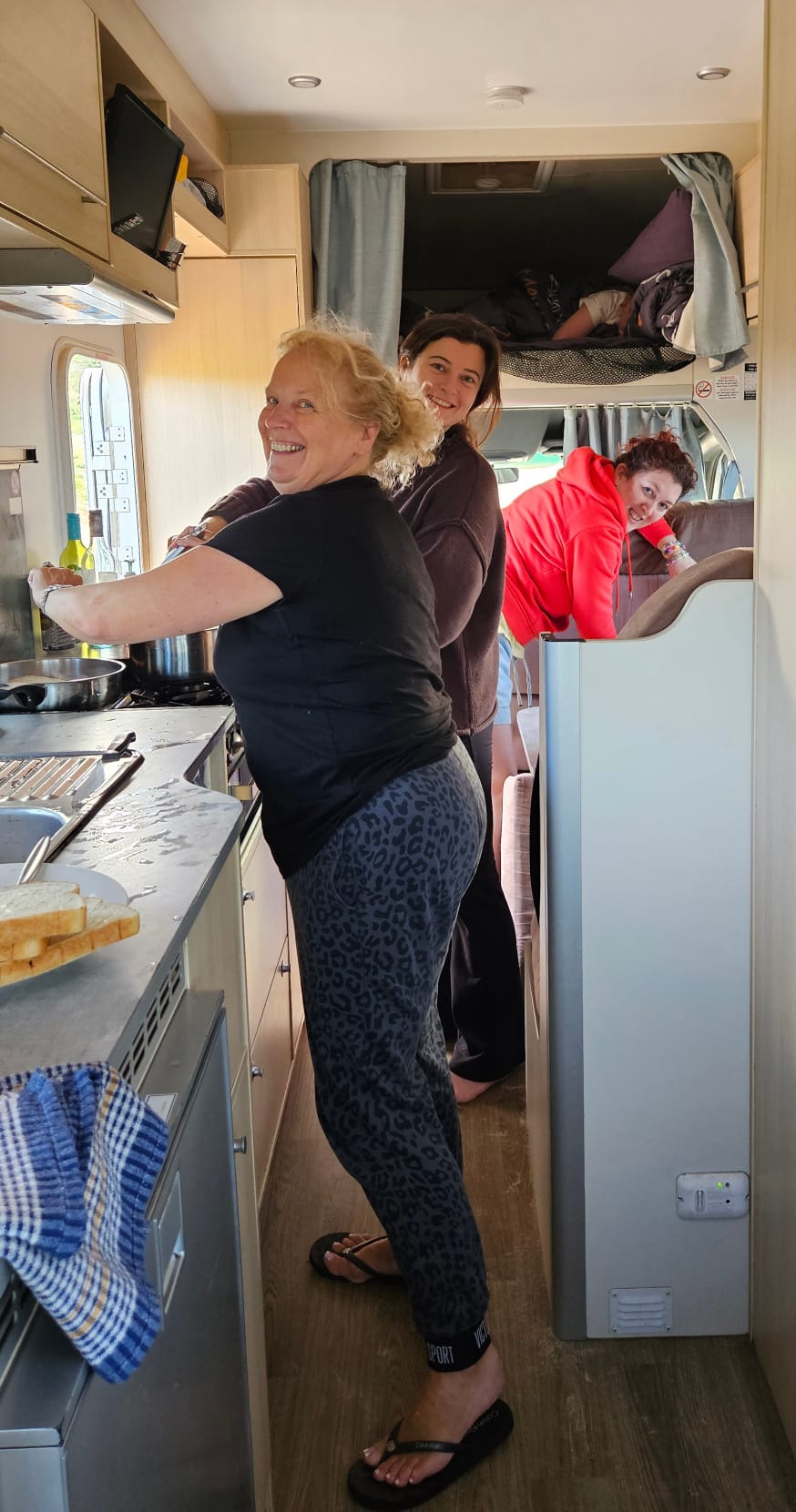
All hands on deck. No breakfast until the beds are converted back to seats!

As we made up our respective beds and turned out the lights, I lay looking at the moon through the skylight. The only sound to be heard was the gentle lapping of the waves on the shore. It felt like we had taken one more step away from ‘civilisation’ and returned to a more natural existence. As the early morning sun crept through the blinds, we emerged, one by one, to explore our surroundings.
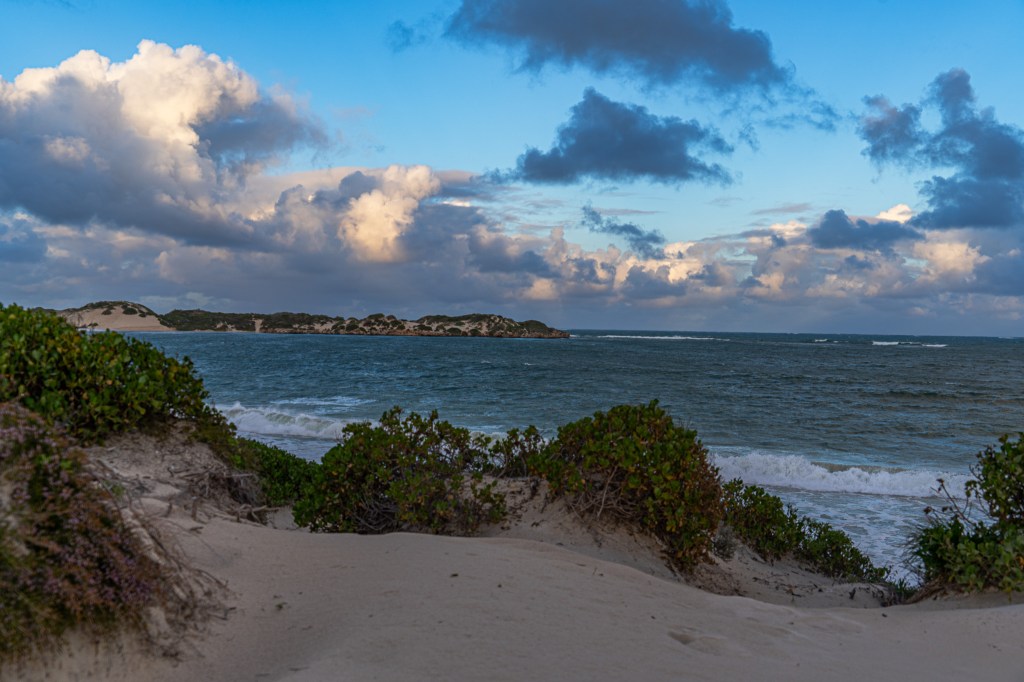
Jurien Bay campsite. I hadn’t realised we were literally a stone’s throw from the ocean.
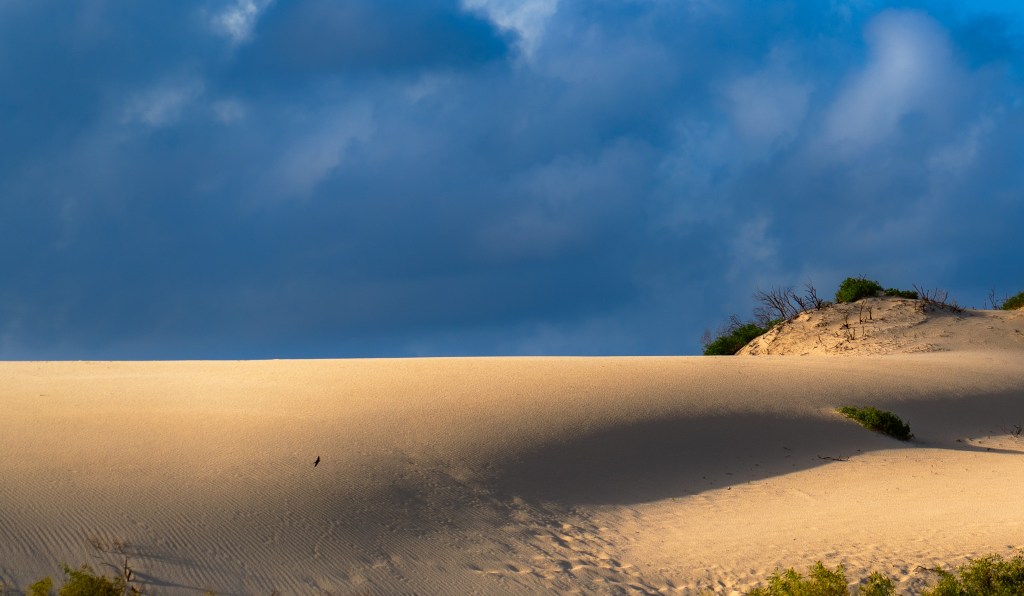
The overall feeling was that we were the first people ever to visit this pristine place.

The Moho comes equipped with a toilet but one thing you quickly learn is that it should be used sparingly! The cassette, which contains all deposits, needs emptied at designated dump sites. And like petrol stations and bottle shops, these can be sparse, though thankfully not as sparse. The capacity of the cassette was 17 litres and with a party of five, it was full after 24 hours. The rule was established that it should be used for night time and emergencies and for liquids only. Solids were an absolute last resort. I strictly enforced this rule because the job of emptying it had somehow fallen to me! I share this toilet chat with you as a prelude to our first encounter with a ‘long drop’ toilet (or dunny). When you think about it, if a campsite is a couple of hundred km from the nearest town, it is unlikely to have a mains water supply or sewage plumbing. And so, the long drop dunny is a dry toilet. It is a stainless steel tube that sits over a pit about 3 metres deep. The waste breaks down via natural decomposition but suprisingly there is no smell as the pits are well ventilated. The toilets are housed in a corrugated outhouse with a large gap around the bottom, so you can have the occasional visitor in there with you but they’re usually harmless. It did take some getting used to, all the same. After all, we are not accustomed to having a breeze blowing where the sun never shines!

Tip: Resist the urge to look down the long drop toilet before you make a deposit. It’s not a pleasant sight.
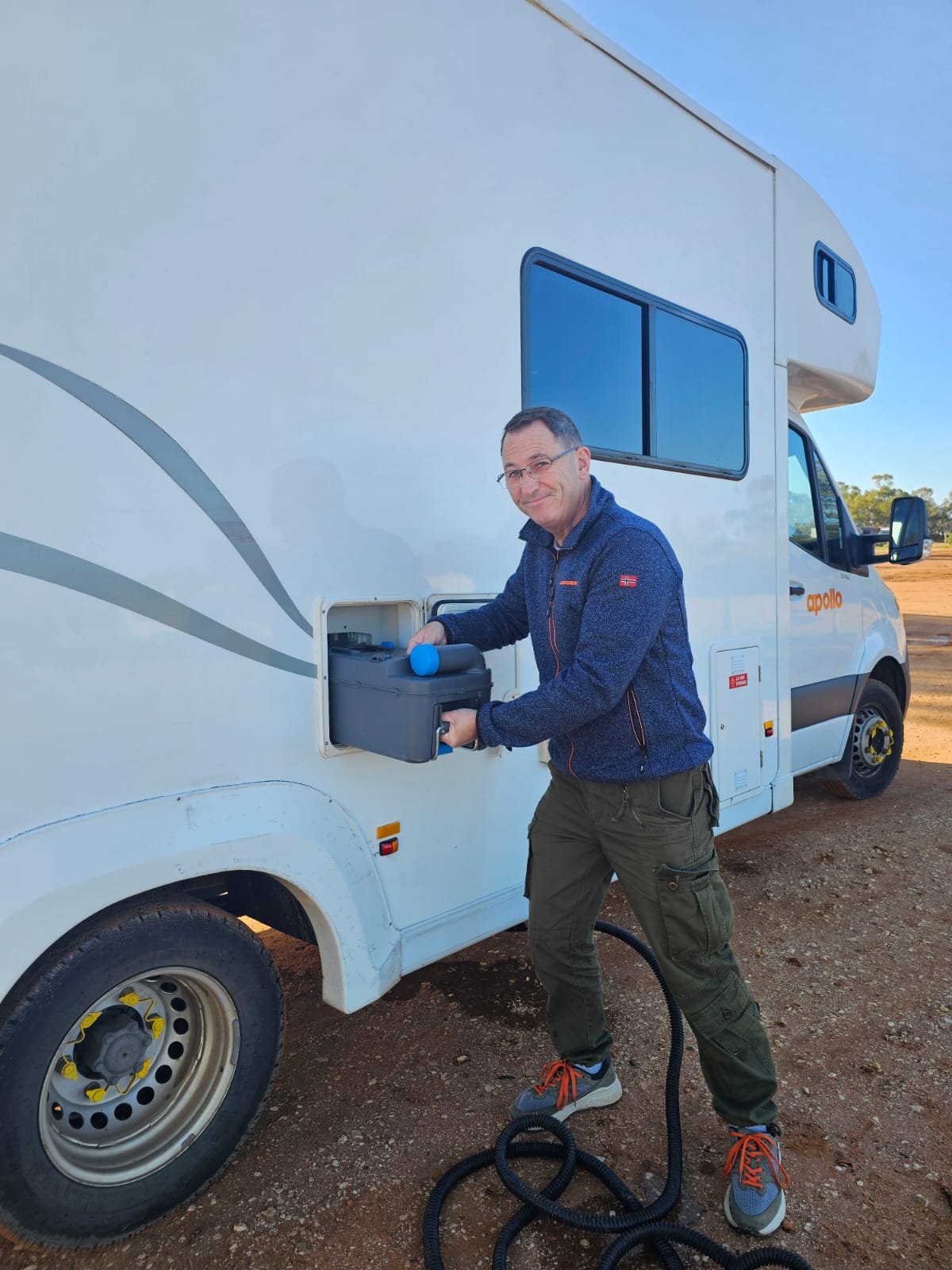
The face says it all.
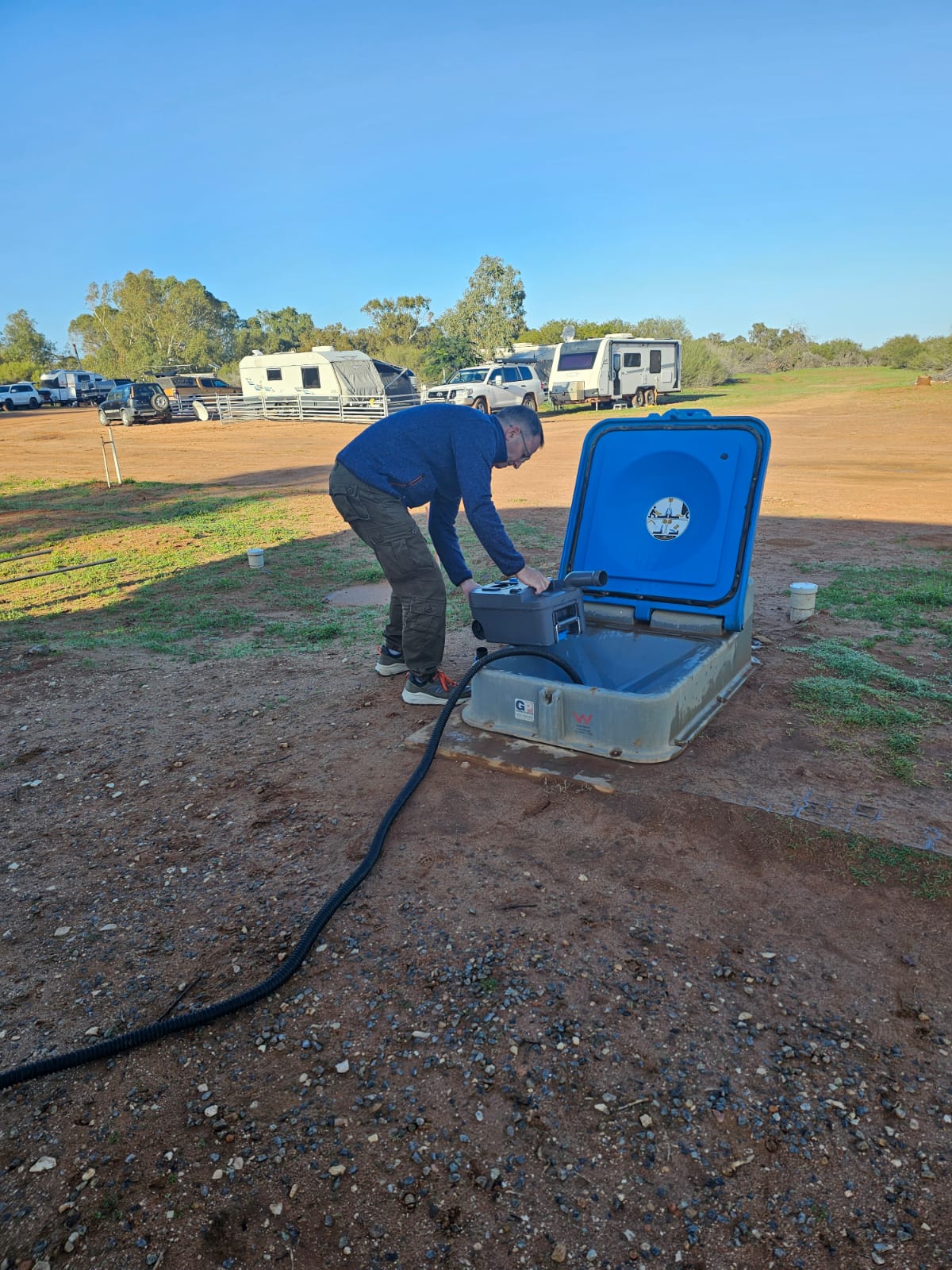
It’s a dirty job but…

And so, we were slowly being introduced to a more primitive existence. And with the experience came an appreciation of the things we take for granted every day, like flushing toilets, warm showers and an endless supply of fresh drinking water. This thought provoking element of our trip was unexpected but it became a constant companion and nurtured a deep gratitude of our privileged lives.

Our next destination was Kalbarri National Park and some of the most epic scenery of our trip. Hope to see you there.
Road tripping, Western Australia 2026. Part 1: Margaret River.

Australia is like its wildlife-unique!

When I first decided to write this blog I thought I would put up some photos of the highlights of our trip with a few descriptions to accompany them. But the more I thought about the experiences we had and the impact they had on me, I realised that a few cursory paragraphs would not do the trip justice at all. I therefore decided to split the blog up into different parts. Hopefully this will make it more accessible, in these days of ever decreasing attention spans, to a wider range of readers. So, if you get bored, you can read one part at a time. Ultimately I want to remain true to the thing that drives me; a desire to put down, as freely as possible, the things I’ve seen and the places I’ve visited, how they impacted on me and perhaps go some way to providing a record for future generations and enabling them to share in those special moments in my life.

Our last trip, which was also our first, to Australia was in 2020. (see post ‘Land Down Under’). We visited our daughter in Brisbane on the southeast coast of Queensland. During that visit we thought that Queensland was like nowhere else on earth. A place where a 60-minute drive could take you, depending on your starting point and direction of travel,  to the city of Brisbane, to the rainforest or to a golden beach. She now lives 4,350km from there in Western Australia in a small town called Margaret River. How she ended up there is a story in itself and one which I hope she will write someday. We were about to embark on a three-week road trip up along the West coast of Australia and were taking a couple of days in Margaret River to catch up with our daughter, meet some of her friends and readjust to something resembling a normal sleeping pattern after travelling across seven time zones.

To describe ‘Margs’, as they call it, as different to Brisbane would be a gross understatement. It has all the small-town attributes, such as people waving at each other as they pass on the roads, offering help to strangers without being asked and generally moving at a slower pace. An unmistakable charm and sense of community prevail, reminiscent of small-town America or a typical small Irish town. You won’t find any large shops or malls here but coffee shops, craft and jewellery studios and artisan bakeries are abundant.  Its geography and climate also make it a prolific wine producing region. We arrived in late June, which is their winter and the weather reminded me of a typical ‘in between’ day back home. One of those days when you’re not sure whether to wear shorts or long trousers and whether it’s safe to hang the Washing out (ok, I never ask that question personally but I know people who do). Apparently this part of Australia can receive heavy rainfall at this time of year but we didn’t experience any.

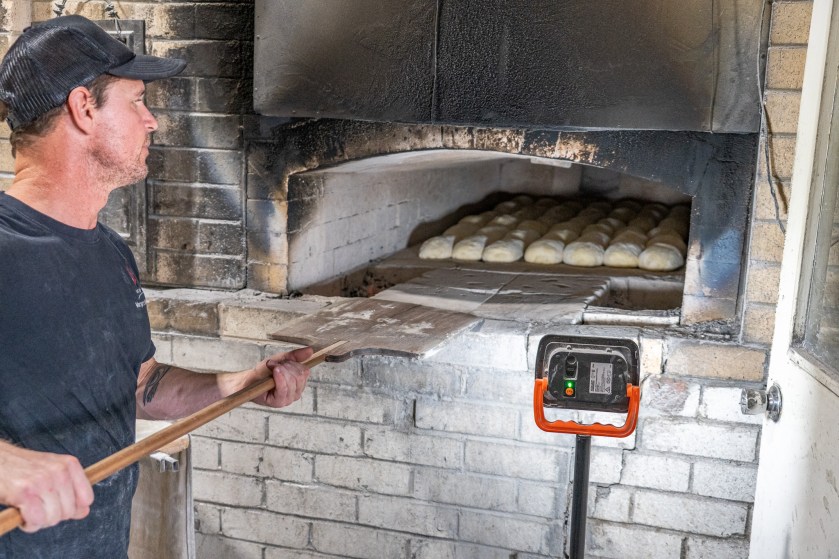
The local bakery in Margaret River, where you can watch the baker load the next batch before selecting your breakfast roll. The aroma of baking bread, combined with the smell of the burning wood that heats the ovens, is, in my opinion, right up there with the smell of fresh cut grass or a Donegal turf fire.

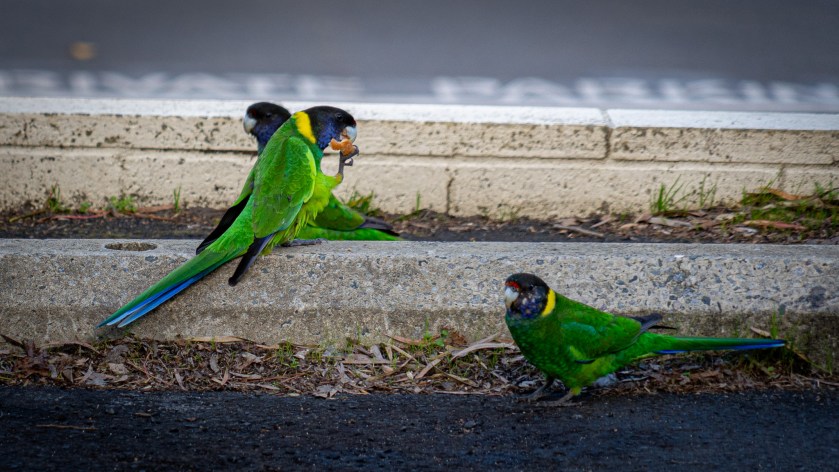
Ten thousand miles separates Ireland from Australia, so it’s not surprising that new sights and sounds are all around. Shortly after our arrival we stopped at a supermarket to pick up a few groceries and, not being a fan of grocery shopping, I busied myself cleaning the windscreen of my daughter’s pickup truck (‘Ute’ as they say in Aussie). Just to make myself useful, you understand, and not in any way inferring that my daughter doesn’t keep her windscreen squeaky clean! Anyway, as the visibility gradually returned, I noticed that the car park was dotted with groups of brightly coloured parrots, casually foraging for scraps of food. In Belfast, my hometown, the most colourful bird you can expect to see in a supermarket car park is a black and white magpie or a grey and black crow. I grabbed my camera and started snapping away, unable to believe my good fortune. However, my excitement at seeing these green, blue, yellow, red and black beauties was somewhat tempered when I was informed by fellow Irishman (who lives in Margs) and big wave hunter, Dave, that their official name is the ‘Twenty-Eight’. Apparently, the name is a reflection of its call which sounds like the three syllables of ‘Twen-ty-eight’. I didn’t hear them make any sounds, so I couldn’t verify this. If I was a cynic, an accusation often levelled at me, I would suggest that the person (I can’t believe it was a collective decision) responsible for naming this exotic bird was either very lazy or had completely lost his/her mojo and, in a state of ennui, named them after his/her house number. I can’t think of any plausible reason why such a striking creature should be labelled with such a spectacularly unglamourous descriptor as ‘28’. Maybe it’s simply a reflection of the laconic tendencies of Australians. A bit of a ramble, I know, but I include this anecdote because it seems like an appropriate portent of what lay ahead. Every day brought something new and unexpected.

A trio of ‘Twenty Eight’ parrots in the car park searching for food. Or maybe they’re holding a demonstration in protest at their inglorious title!

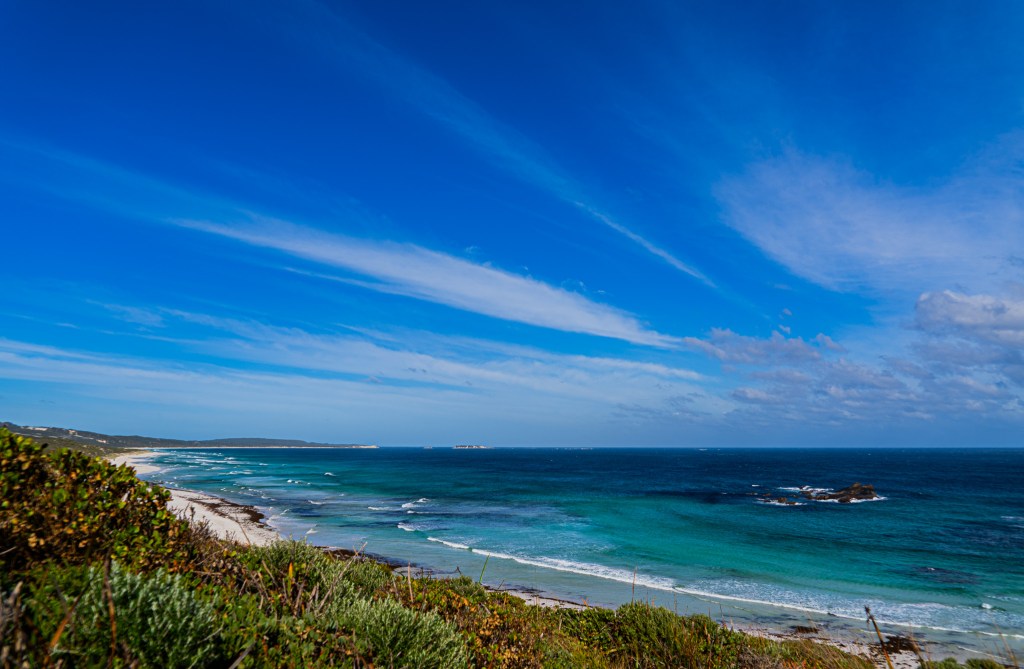
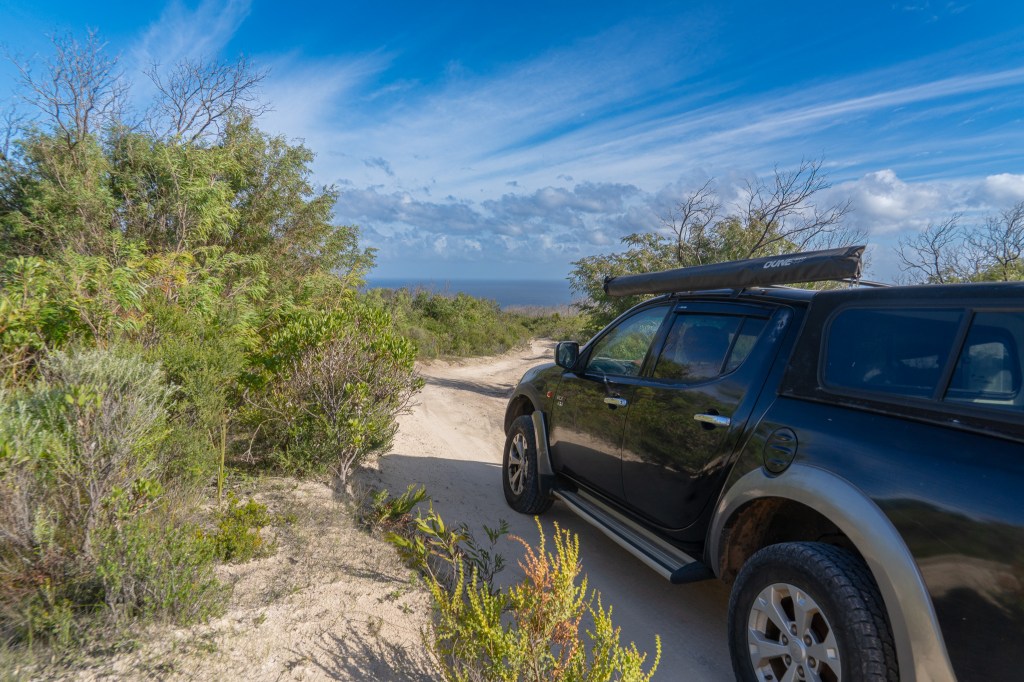
On our first full day in Margaret River, our daughter took us on a unique journey to the coast. I say unique because it was an extreme off-road journey never before experienced. And I say extreme because that’s exactly what it was. The tracks that we navigated were deeply rutted and uneven and, in some places, giant craters had been gouged out which appeared to render the track impassible. On more than one occasion, as we were being thrown about like ragdolls and the tilting of the vehicle was evoking theme park rollercoaster memories, I thought there was a strong possibility that the vehicle was going to overturn. Luckily it never came to that. Relief set in when we reached the coast at a place called Boranup. I was immediately struck by how similar the coastline was to the beaches of northwest Donegal in Ireland. A place I know well. But we weren’t looking at the Atlantic. This was the Indian Ocean. A world away. But in some respects, just like home. The thought crossed my mind that perhaps this was one of the attractions for young people coming from Ireland. While Australia is different in so many ways, there are still features and characteristics that remind them of their roots. Ireland is such a small island that the taste of salt air on your lips is never far away. Literally, or as a happy childhood memory. Maybe this core element of their DNA is one of the factors that makes it easy for them to think of Australia as ‘home’.

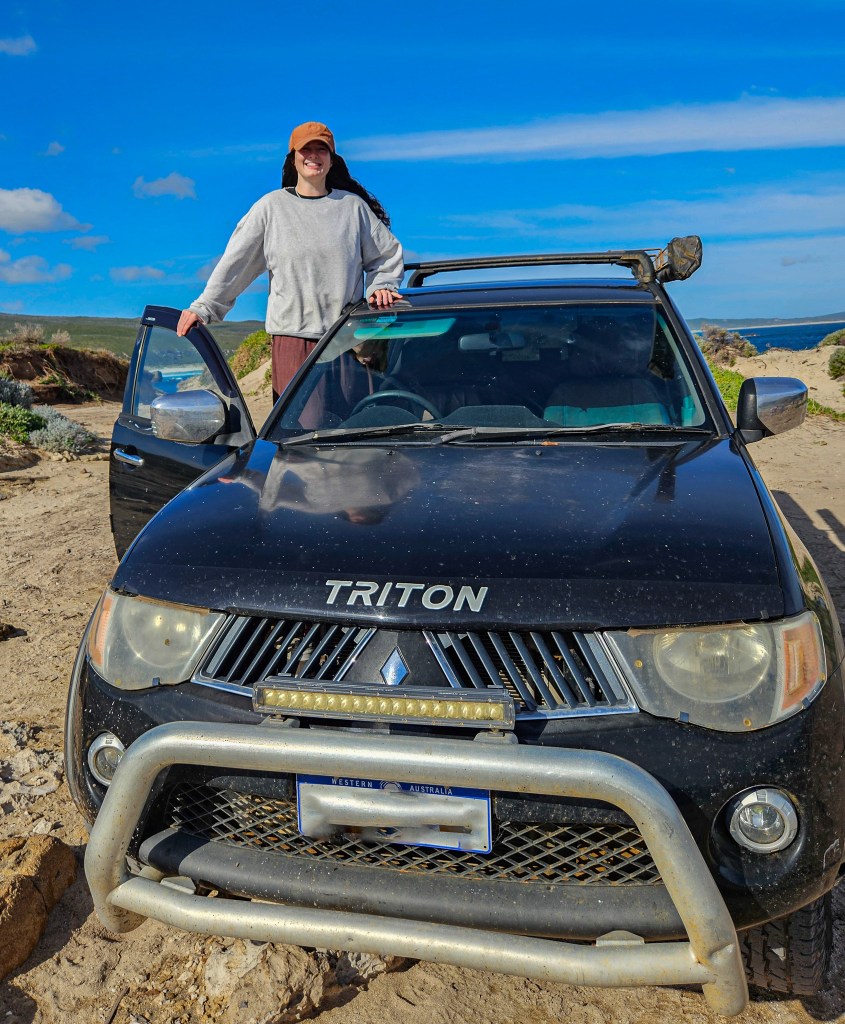
Boranup, Hamelin Bay, in the Margaret River region. Not forgetting the ‘Ute’.

My daughter summed up the drive, “Apologies, I’m not used to back seat passengers. Hope there aren’t too many head injuries!”

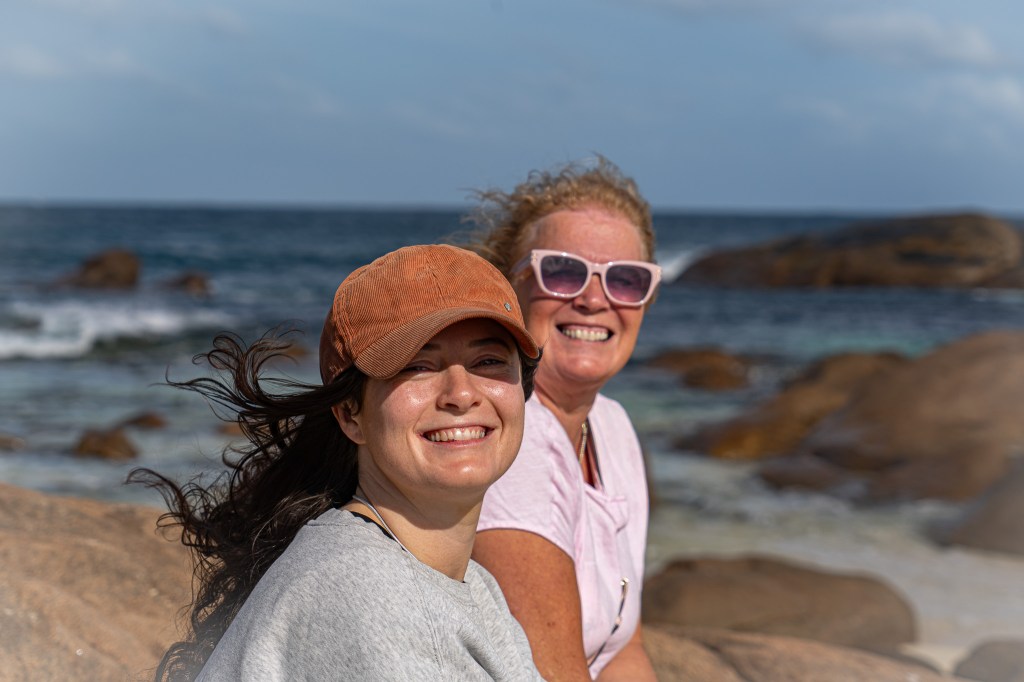
Mother and daughter reunited.

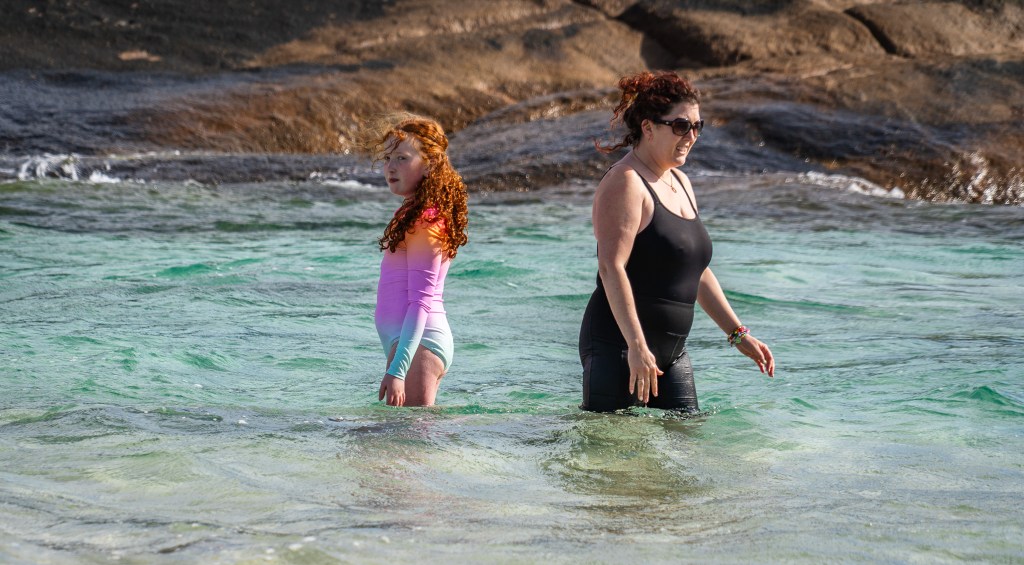
Daughter and granddaughter testing the water.

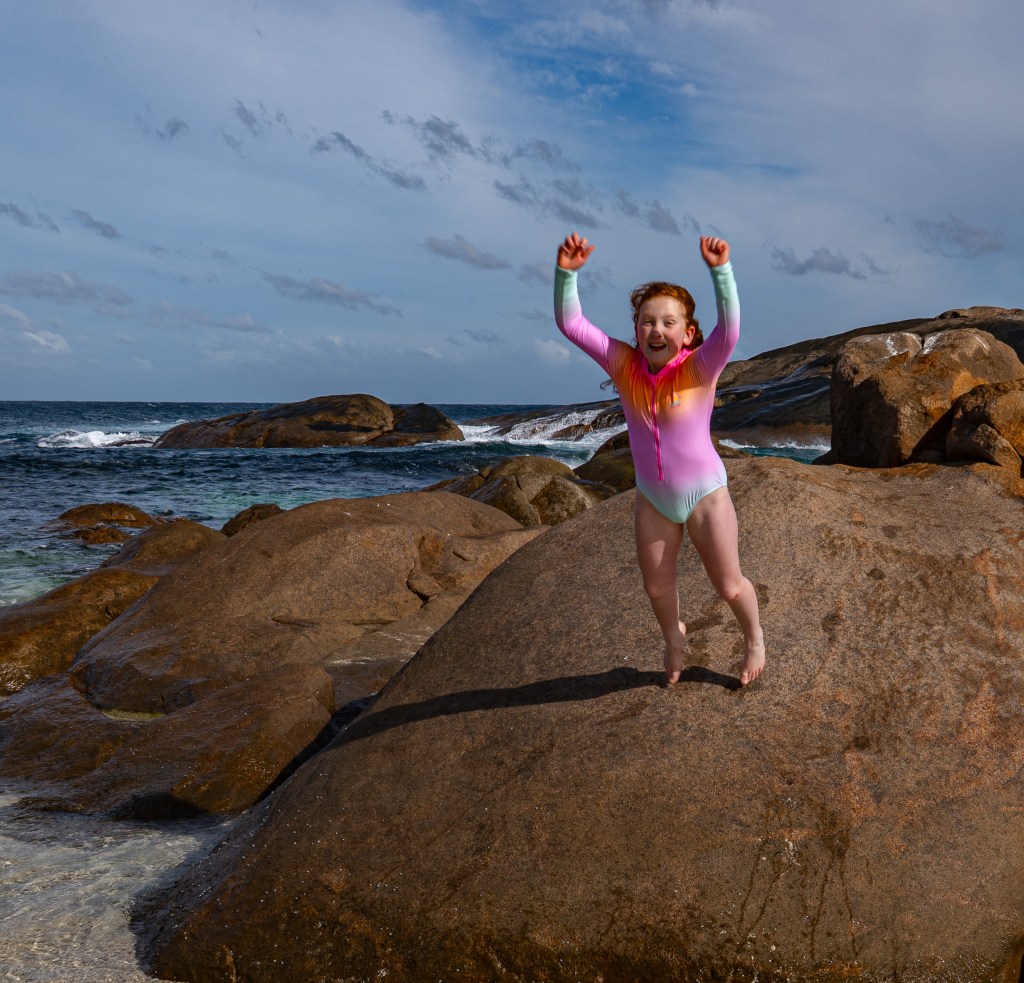
Some of those salt air memories in the making.

Having made a successful return trip to Margs, with the passengers and vehicle in one piece, we lit the fire pit in the garden and settled down to an evening of food, wine and reminiscing.

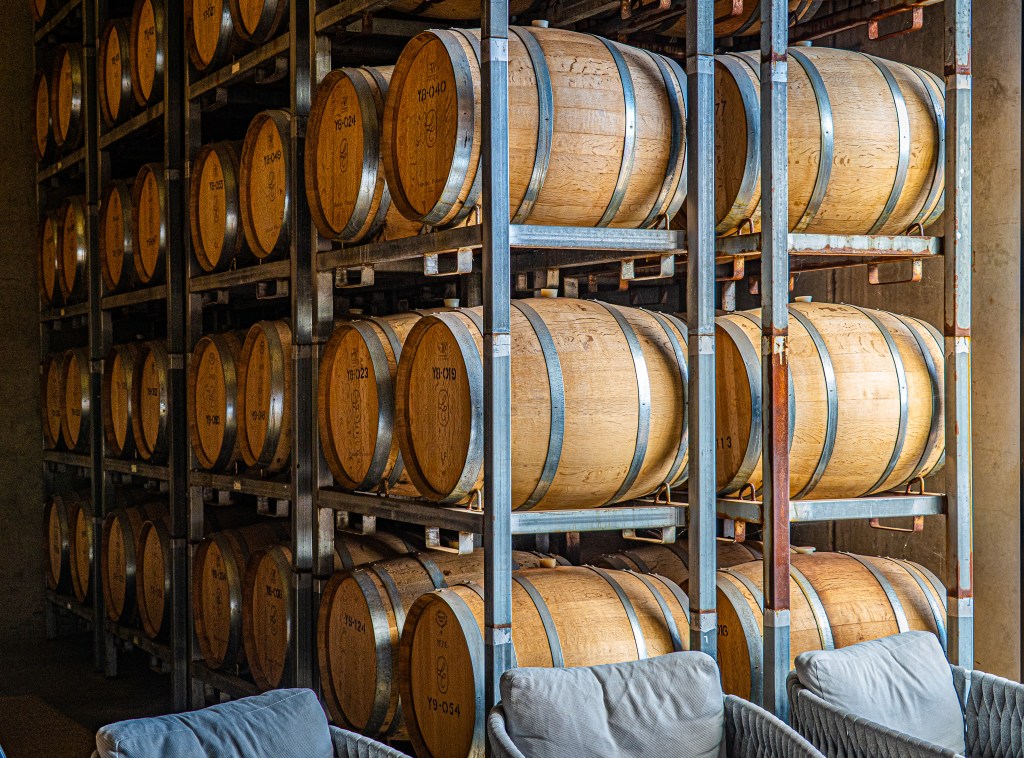
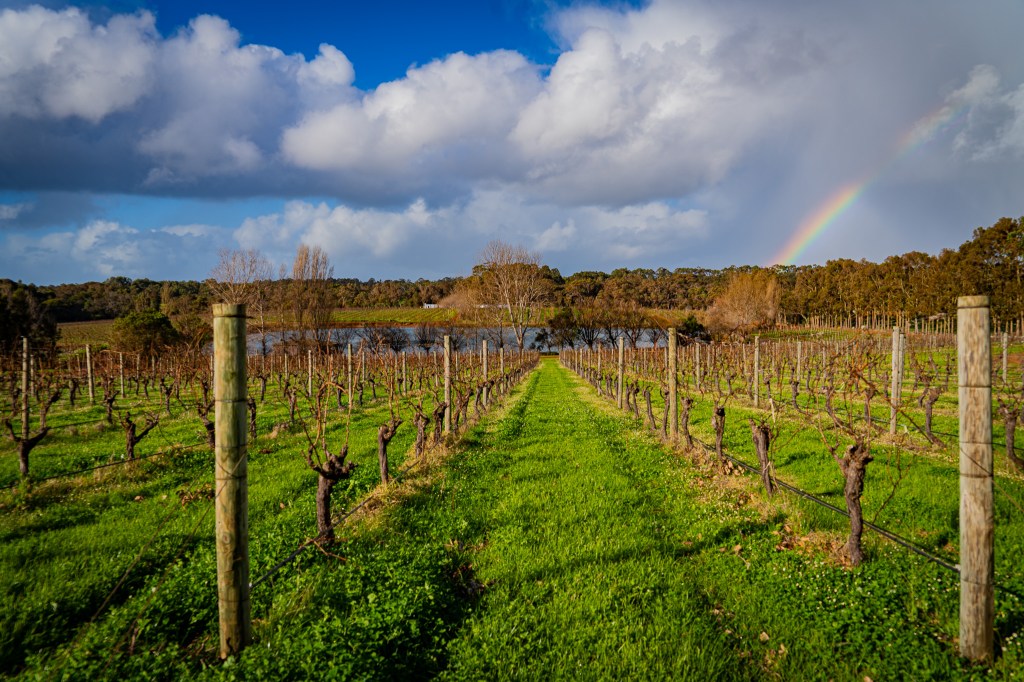
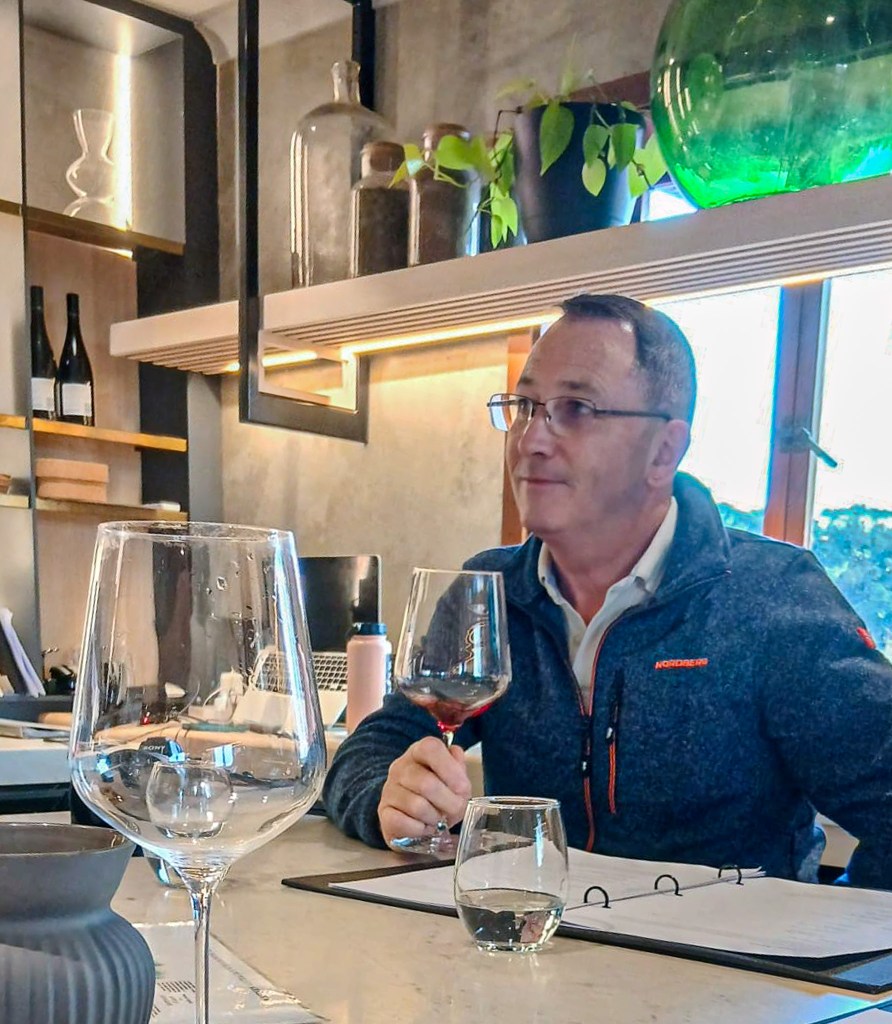
The next day, I was treated to a belated Fathers Day gift-a wine tasting at one of the local wineries, called Cherubino. This was another first for me. I enjoy a glass of wine but drinking it surrounded by racks of wooden barrels, complete with that heady aroma and looking out at the parallel rows of vines where the wine begins its journey, brings a whole other level of appreciation and enjoyment. I am by no means a connoisseur but it was fascinating listening to the Sommelier describe the different grape varieties and how they are influenced by the specific geography of the region. The Margaret River region, especially the southern end, is one of the best examples of a maritime climate in Australia. It experiences the warm westerly breezes from the Indian Ocean and the cooling breezes from the Southern Oceans (officially, it’s all the Indian Ocean but Australians use ‘Southern Oceans’ to describe the part that borders the southern reaches), making it ideal for producing Chardonnay, Sauvignon Blanc and Semillon.

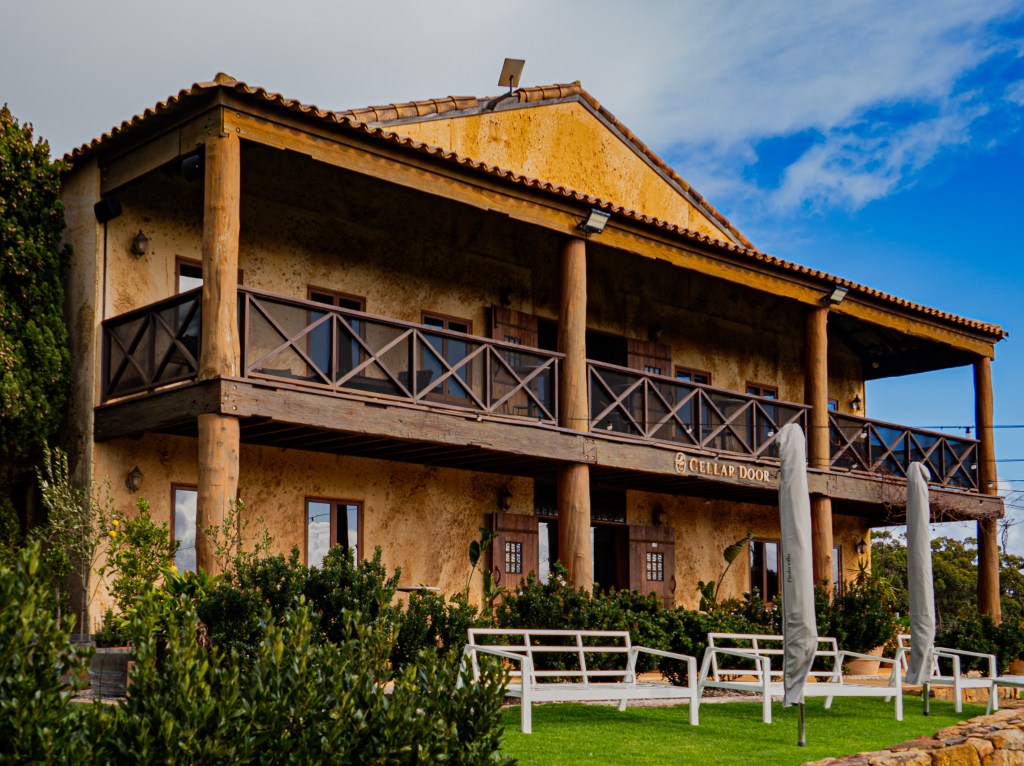
The Cellar Door tasting rooms at Cherubino winery.

Cherubino vineyard slopes gently toward a small lake, ensuring good drainage for the vines.

Father’s Day wine tasting. The perfect excuse for day drinking!

And so, after a short drive and some delicious wood fired pizza at Swings and Roundabouts, it was back to our rental property to begin preparations for the next stage of our adventure-picking up the RV/ motorhome, or as we called it, the ‘Moho’. Not only was this the vehicle that would enable us to discover Western Australia. It would also be our home for the next 18 days and nights. It’s probably accurate to say that it also became the source of some of our most memorable moments, challenges and emotions.

Target date for publishing Part 2: 22nd September 2026

Land Down Under 2020

Part 2. Exploring Queensland
Bribie Island

Queensland is a pretty unique part of Australia. It’s got everything from city to beaches to rainforest, all within an hour’s drive. Bribie Island is one of the most beautiful beaches I’ve ever seen. It is pristine and unspoilt. One of the reasons for this may be that it can only be accessed by 4 wheel drive vehicles. Luckily for us, my nephew drives one of these. He has lived in Queensland for several years and kindly took some time off work to spend with us. When I stepped out of his jeep, I stood on the beach and looked in every direction. Not a single soul for miles. I experienced what can only be described as a Robinson Crusoe moment.

Bribie Island. A serene and unspoilt paradise.
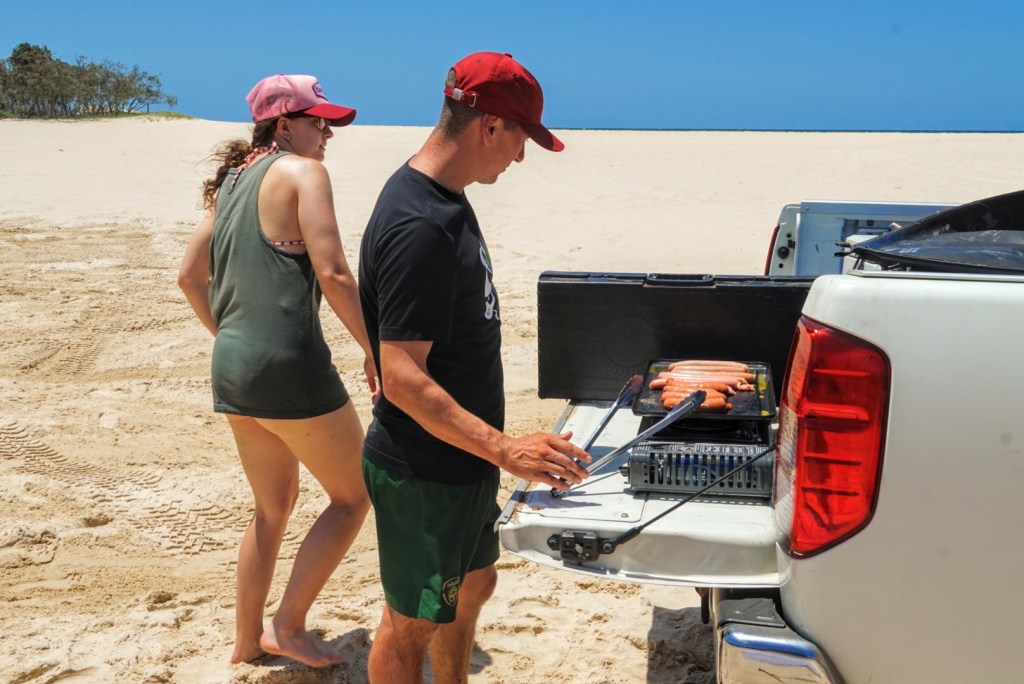
My nephew comes prepared!

We spent another day here in a BBQ boat. We dropped anchor in the shallow water. The warmest sea water I’ve ever been in (26 Celsius).
Saltwater swamp on Bribie
Sailors for a day. The boat came complete with gas BBQ and toilet.
Surfers Paradise

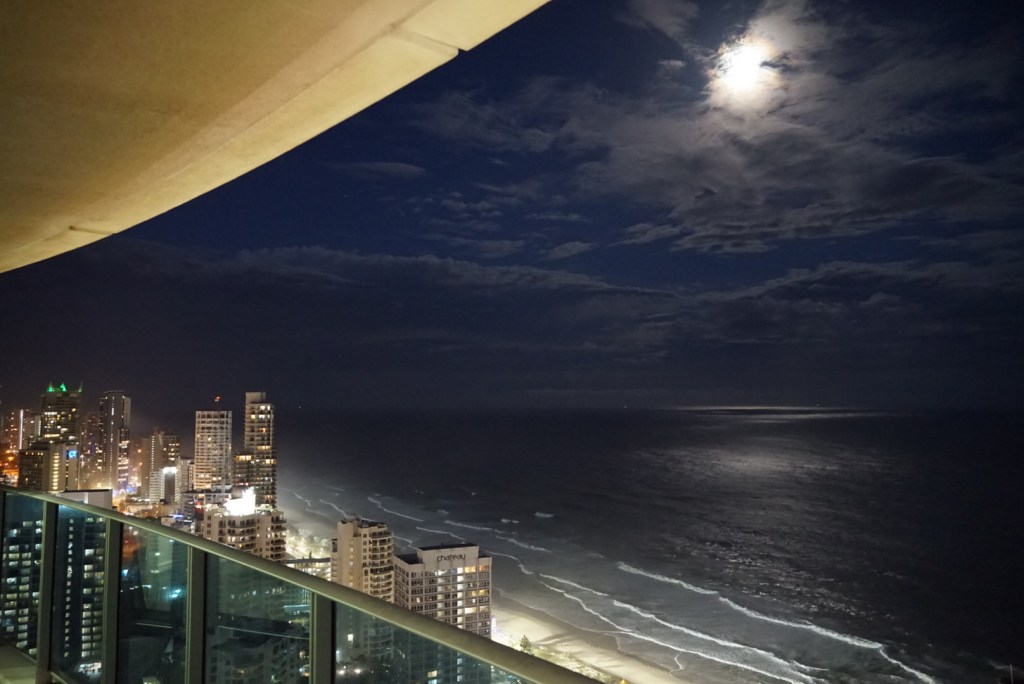
Then there’s Surfers Paradise on the Gold Coast. Which could probably be described as Bribie Island on speed. The kind of place Robinson Crusoe goes when he’s had too much serenity and wants to party. It’s got the beautiful beaches but also has endless bars, eateries and night clubs. Not to mention some serious high rises. I can’t complain about these however because we had an apartment on the 34th floor and the views were something else!


A birdseye view in Surfers Paradise

Many happy hours were spent on that balcony, catching up with family. We had breakfast, lunch and dinner here while enjoying the view, the music (Ed doesn’t go anywhere without his Bose speaker), the sea breeze and more than a few drinks. Even the occasional storm was a joy to watch from this vantage point.

Give me the moonlight..

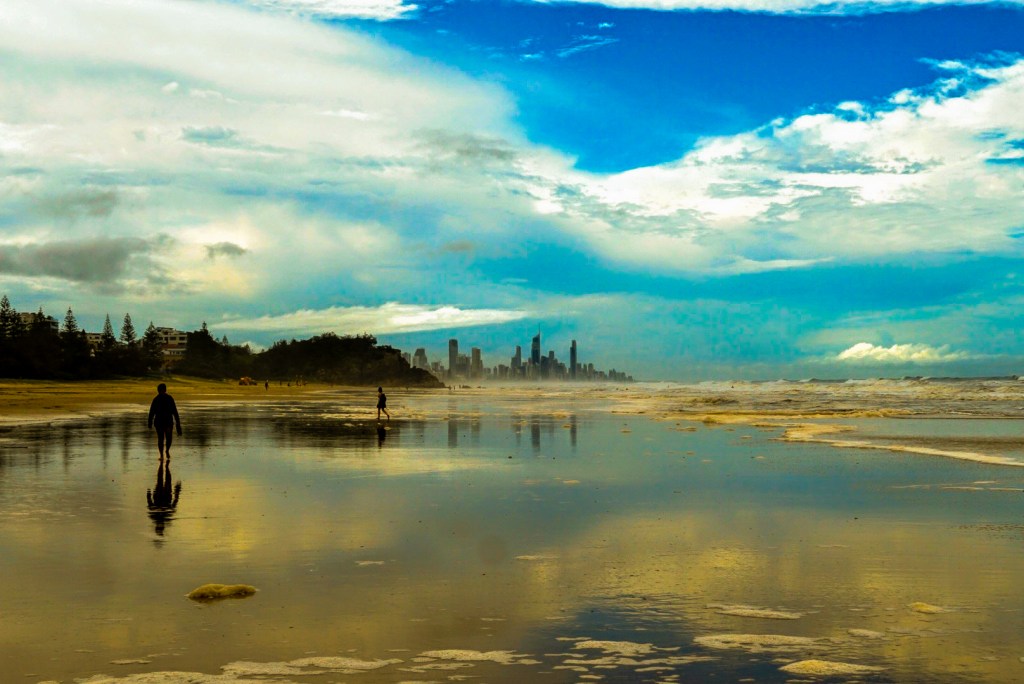
A view of Surfers Paradise from Burleigh Heads beach
Springbrook National Park

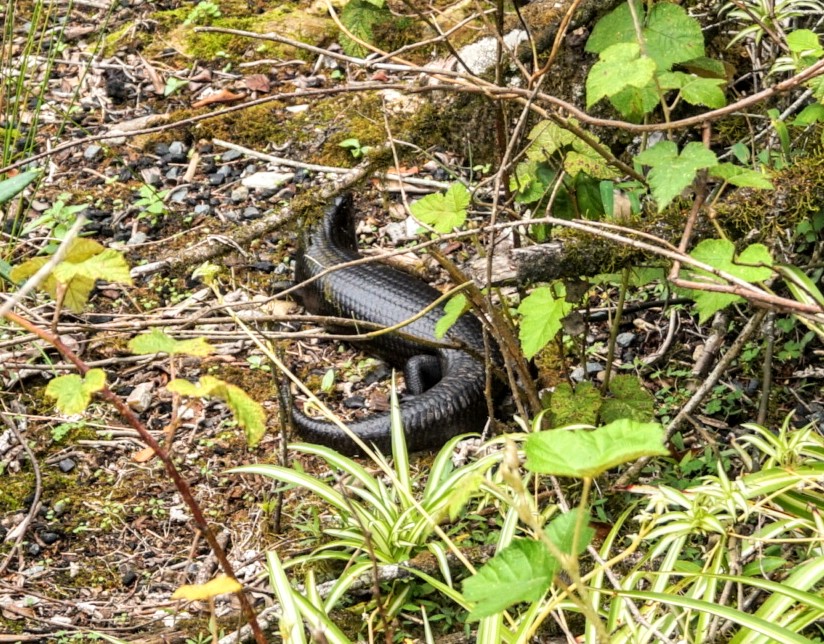
I never really understood how it could be possible to have a sub-tropical rainforest less than an hour’s drive from the Gold coast. Geography isn’t a strong point of mine. But it was there that we spent the most unique night of our visit. As we drove away from the coast and into the hinterland, I was struck by the lush greenery all around us. I had a preconceived notion of Australia as an arid, dusty country. I now realise that it is so vast that it has every possible variation of climate, depending on which region you are in. As the car climbed the mountain roads, the grassland gave way to forest on both sides as we entered the area of the majestic Springbrook National Park. On arrival, we parked the car and loaded our luggage into the carts provided and pulled them the short distance to The Mouse’s House Retreat. And if there was any doubt that we were now walking on the wild side, the sight of two large snakes at the edge of the path quickly dispelled that notion.

Our welcoming committee, consisting of two carpet pythons.

Closely followed by what I believe is known as a skink

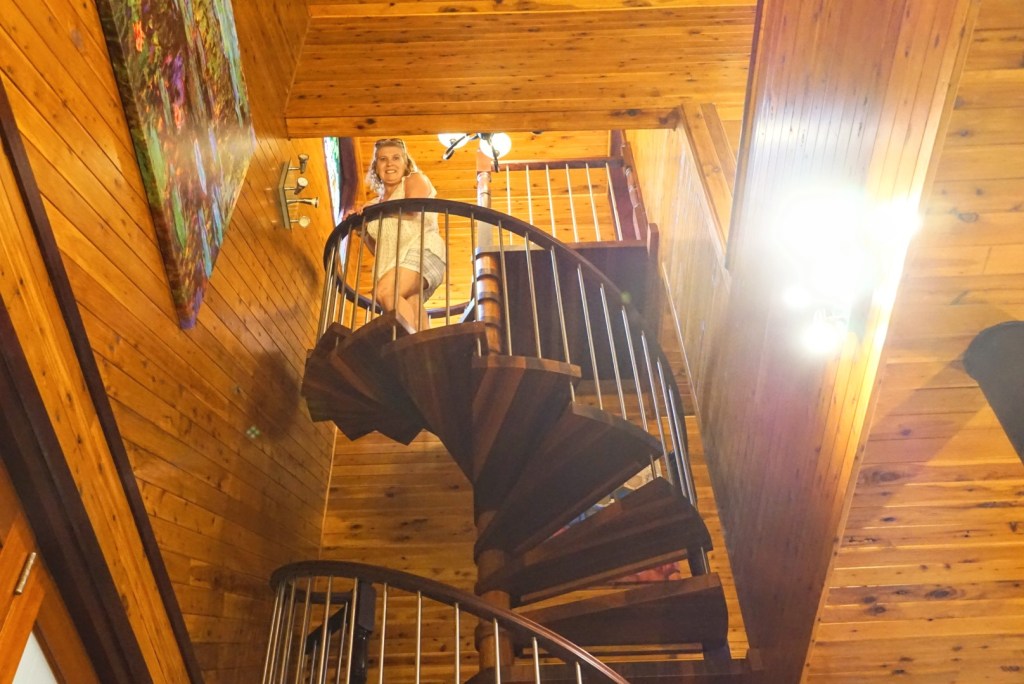
Our accommodation would be best described as a 3 storey luxury cabin built in the style of a tree house.

Spiral staircase in the Mouse’s House Retreat
All mod cons…
Life in the canopy

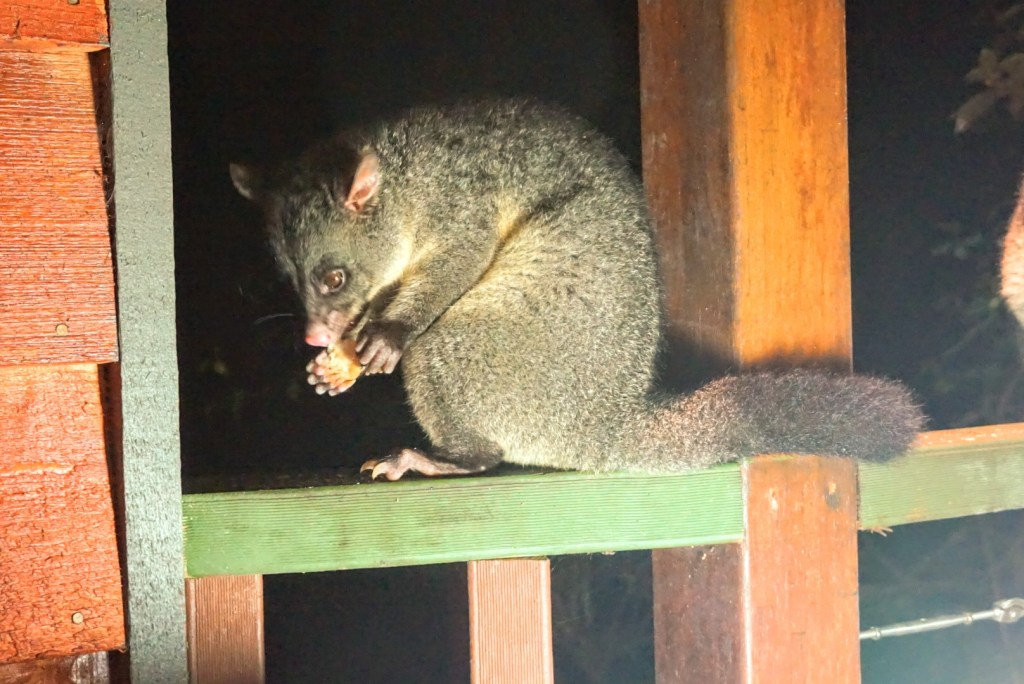
The veranda projected out into the canopy of the trees and the growth was so dense that the sun barely penetrated the leaves. We settled down with drinks and some snacks and I tried to look relaxed while nervously glancing up now and again to see if the friendly neighbourhood pythons were going to drop in. The rainforest was surprisingly quiet with only the occasional bird song to be heard. Then as the light faded the critter chorus began. It started with the bird calls, followed closely by the toads and cicadas, accompanied by the occasional screech from God knows what! The cacophony grew to a deafening crescendo and then, as quickly as it started, it stopped and all was quiet again. It hadn’t been dark for long when some visitors arrived. The veranda was illuminated but all around us was blackness. The branch of a tree seemed to be moving but it was hard to tell if it was my imagination stepping up a gear. Then a dark coloured creature the size of a cat but resembling a racoon appeared and made its way slowly along the handrail.

Night visitor

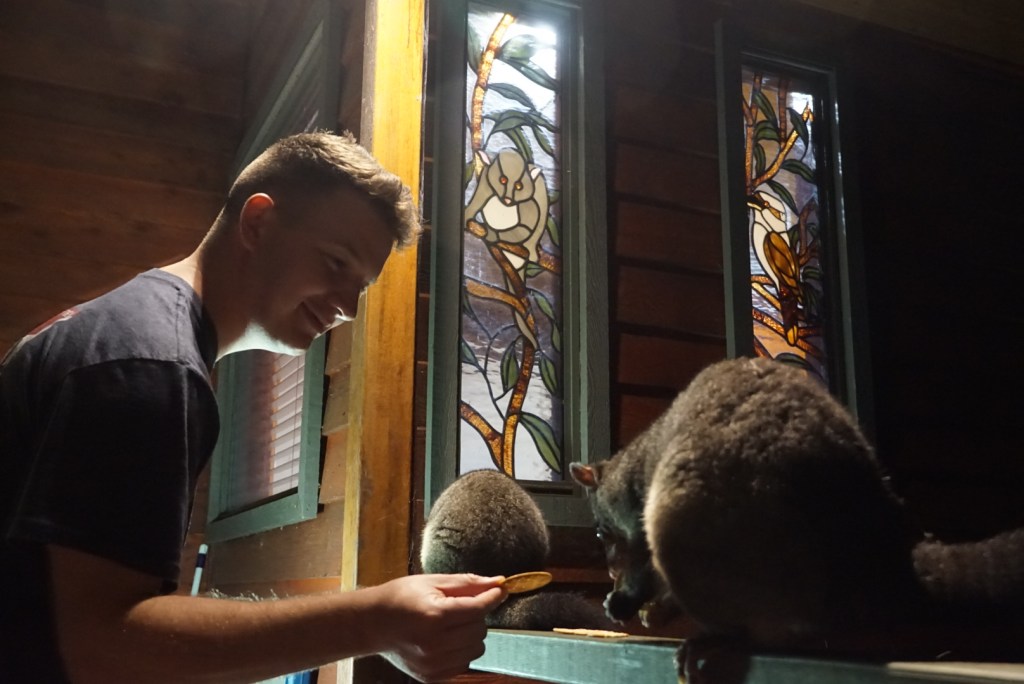
It was a possum and apparently they have gotten use to visitors of the human variety and are quite partial to crackers. They certainly caught our attention and were the main guests for the rest of the evening.

Ed the Possum Whisperer

Numinbah Nature Reserve

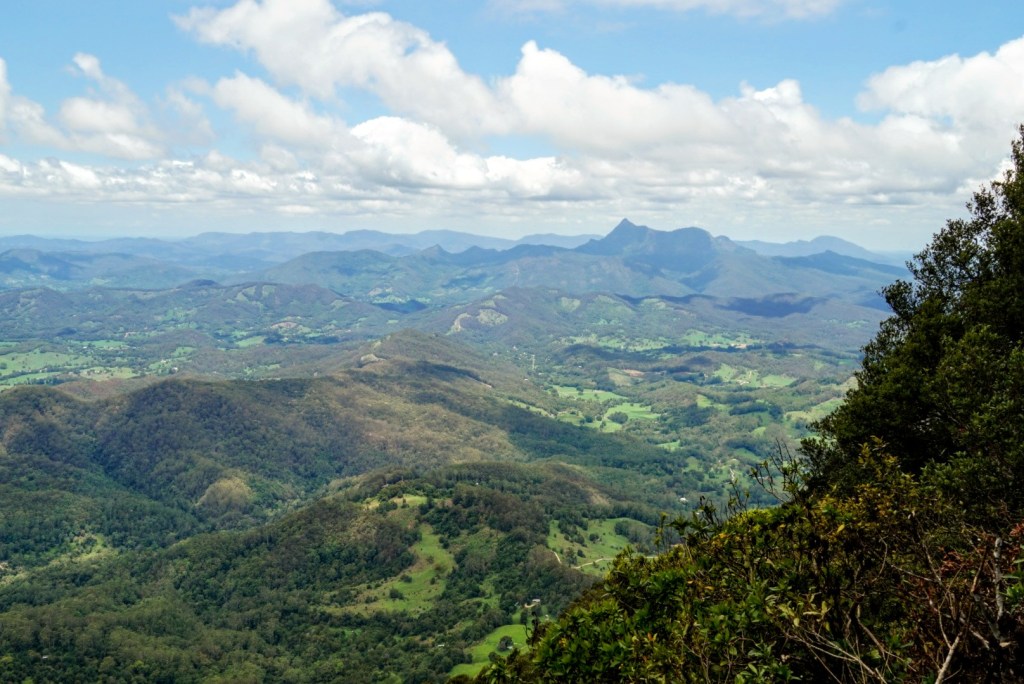
On the way back from the Mouse’s House we stopped off to take in some of the breathtaking scenery. The photo below is taken from the rim of an ancient (and dormant) volcano. The fertile volcanic soils, high humidity and rainfall provide all the elements needed for a sub tropical rainforest to survive. At least that’s what the information board said. In that moment, the whole rainforest thing made sense! Over millennia the area evolved to become what is now the beautiful Numinbah Nature Reserve, its ridges forming part of the border between the states of Queensland and New South Wales. Home to ancient trees, rare plants and exotic fauna, looking down at it is just as pleasurable as being in it.

Numinbah Nature Reserve
Antartctic beech trees. Some individuals are up to 12,000 years old! They are highly specialised and have very exacting requirements for survival.

We only spent one night in this location but it was enough to trigger a realisation of the unique biodiversity of this part of Australia. While people go about their everyday business in the city, a short distance away a whole other world exists. One that was there long before us and should be there long after we are gone. I now have a greater appreciation of the growing awareness of the detrimental effects of climate change in Australia and elsewhere. The future of these ecosystems hang in the balance and once they’re gone, they’re gone. Food for thought…

Byron Bay

No mention of New South wales would be complete without reference to Byron Bay. It is the most easterly point on mainland Australia. The coast consists of yet more stunning beaches but unfortunately the day of our trip was a bit of a washout so I reluctantly left my camera in the car. However, that didn’t stop us seeking out what was once named Australia’s number one secret destination in Australian Traveller magazine’s 100 Incredible Travel Secrets of Australia. Given the effort it took to reach the secluded Whites Beach at Broken Head, its status as a secret location was no surprise. We (Ed) negotiated several miles of washed out ‘road’ (in a VW Polo!) before descending several hundred steps that led to a crescent shaped cove bounded by rocks and palm trees. On a sunny day this would be the stuff of Bounty adverts. Sorry if you’re too young to remember them! I will always remember the 6 of us making our way down those steps in our swimwear in the rain, each carrying our drink of choice. We passed a diehard surfer coming in the opposite direction. I could just about make out his quizzical expression through the fogged up lenses of my rain-covered glasses. “Nice day for it” he said but I can only guess what he was really thinking!

As for the actual beach town of Byron Bay, it has a laid back hippie vibe and is home to artists musicians and the odd dropout. Not to mention the actor Chris Hemsworth. That’s one you will know if you’re young. I had to ask!

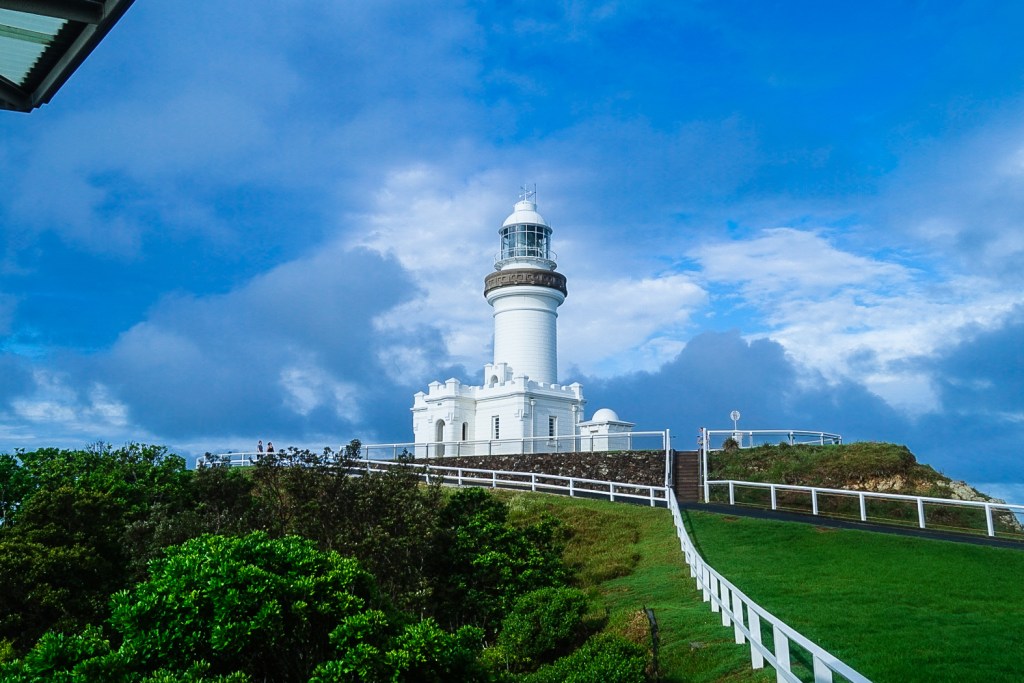
And as a very fitting end to our day, the sun obliged with a brief appearance which allowed me to capture a shot of the iconic Byron Bay Lighthouse. Perfect end to the day.

Cape Byron Lighthouse


This blog could quite easily become a book if I included everything we did but just a few other memorable moments….

Bookfest. I could have spent all day here. Run by Lifeline, a crisis support and suicide prevention charity, it raised over a million dollars in 3 days. Bring an empty suitcase (isn’t that right, Harry?)

The trip down under would not have been as memorable if it hadn’t been for all the effort that people went to for us. They really did go the extra mile! As for our hosts, Harry and Ria, the extent of their hospitality was humbling. We couldn’t have felt more welcome. Sometimes the extent of the hospitality left me with a hangover but when the wine is such good quality, well what can you do? And while we’re on the subject of drink, after a night at Jim’s house (he’s Irish), I felt like I was a connoisseur of single malt whiskey. And it’s always nice to sample some of the old ‘milk’ from back home (that’s right Jim, the stuff the ‘milkman’ used to deliver!). As for Harry’s steaks, well as the man said, “you had to be there”.

Every day spent in Australia was special. Not just because it was spent in the company of my daughter. Different aspects of it reminded me of various other countries but it has a distinct character all of its own. If I was asked to describe what that unique feature is, I would struggle to put it down on paper. It’s not just the sights and sounds, the light and climate, the people and the easy going pace of life. But a combination of all of these things. The one tangible and inescapable fact is that it is far away! 10,300 miles to be exact. But it’s not just about the miles. It’s about how we perceive separation between loved ones. Somehow the length of time it takes to reach them seems to be what defines distance.That awareness seemed ever present and is the only negative thing I could say about this beautiful part of the world. For young people the opportunities are endless and the quality of life exceptional. I would highly recommend it as a starting point to experience a lifestyle that isn’t found everywhere but it’s a bridge too far for me. I will always be glad that I experienced it and hopefully will visit again in the not too distant future. In the meantime, I have the memories…and the photos.

Land Down Under. Part 1

Part 1. The arrival. Brisbane.

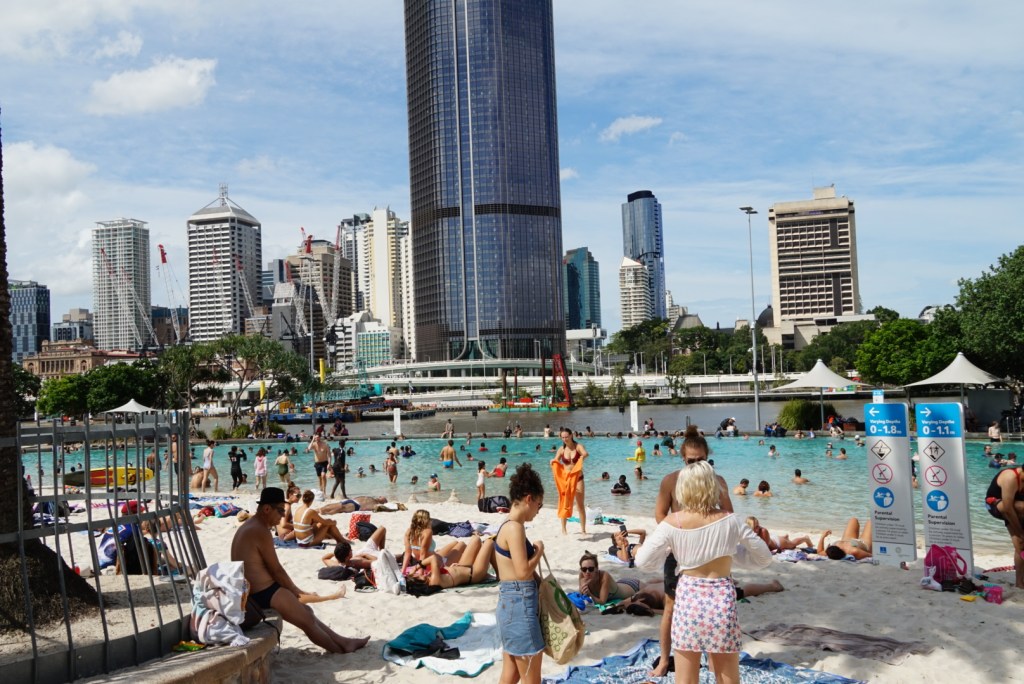
What do you do when your city isn’t on the coast? Simple. You build a beach in the city! Streets Beach, South Bank, Brisbane.

It seems that all of the longest journeys I undertake these days are dictated by my youngest daughter. Not content with spending a year in the USA, she has decided to make Australia her home for the foreseeable future. Because of the distance (10,000miles) the Land of Oz would never have been on my radar. But blood ties are a powerful motivator.

So, at the end of January we set off on the marathon flight to the Land Down Under. At the time of writing, the Coronavirus is world news but when we started the journey it wasn’t much of a concern. At least not until boarding the plane on the first leg-Heathrow, London to Singapore. Being the Chinese New Year, a significant portion of the passengers were making the journey to celebrate with family there. The abundance of mask-wearing passengers was slightly disconcerting but I was determined not to let anything interfere with my joyful anticipation of seeing my daughter for the first time in a year and a half.
My globetrotting daughter, Tiarna and her partner, Eduan. Or as they are more commonly known, T and Ed.

13 hours to Singapore, followed by 7.5 hours from Singapore to Brisbane and we walked out into a balmy 30 degree Celsius (90 degrees Fahrenheit) morning. The fact that 24 hours earlier we left a wet and cold (5 degree Celsius) Belfast, made this the first in a series of pleasant surprises.

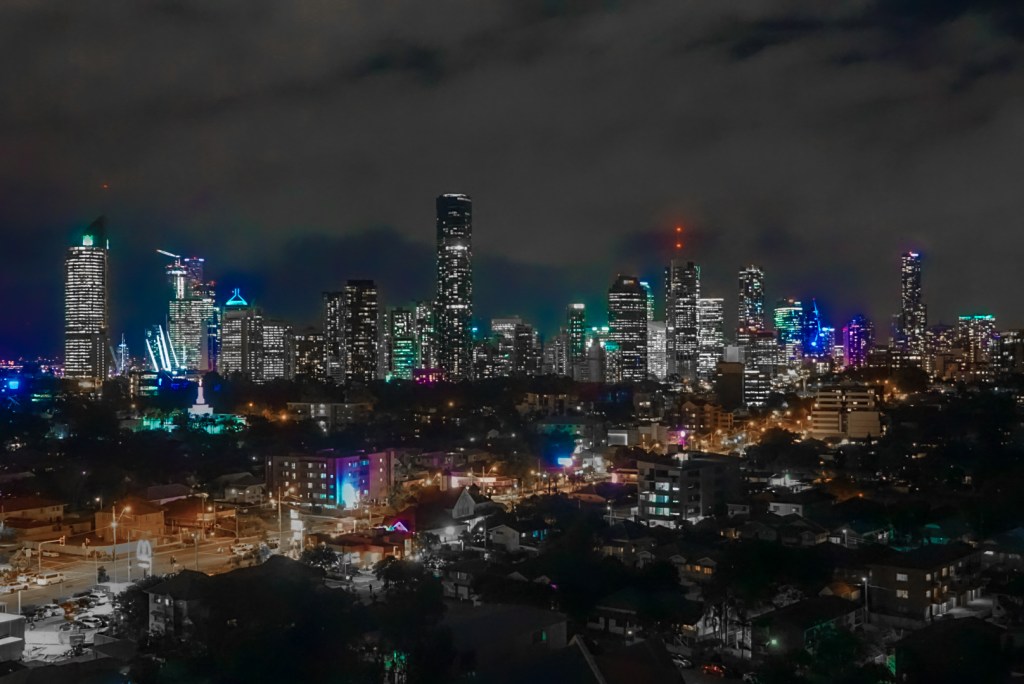
I had seen some photos, taken from the roof of the apartment block where Tiarna and Eduan live and thought it looked like a nice place but seeing it for myself was a real treat. The view of the Brisbane skyline was impressive during the day but once night fell it was stunning!

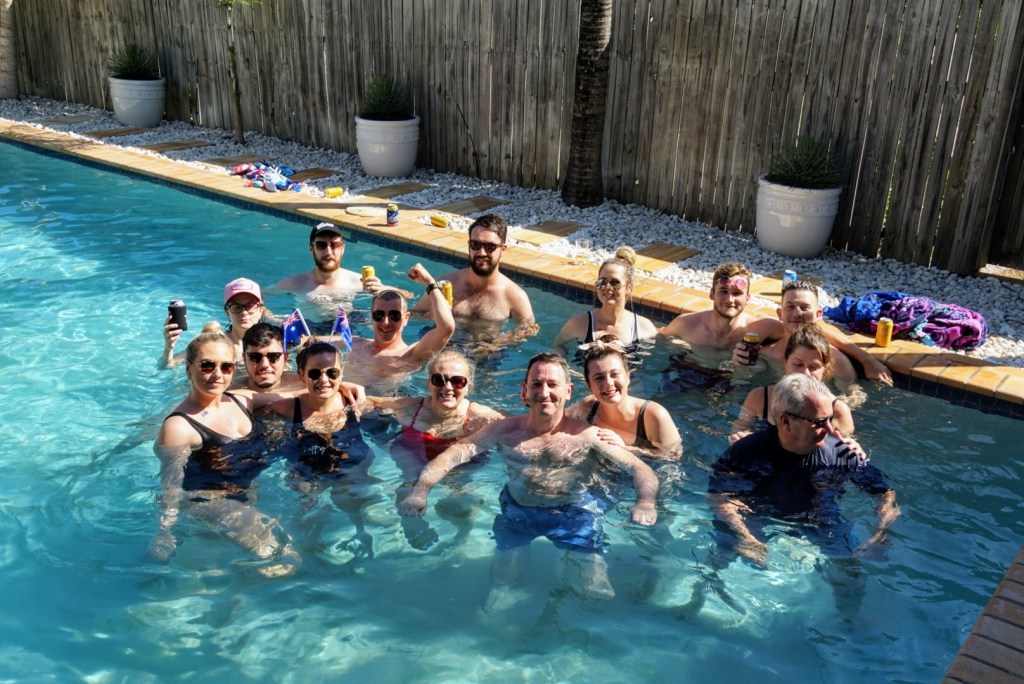
Our second day in Australia was ‘Australia Day’ and coincidentally, Ed’s birthday. So, if ever there was an excuse for a party, this was it. Having said that, the Aussies are a bit like the Irish-they don’t need an excuse! Now, in Ireland we normally celebrate birthdays (and every other occasion) in the dry confines of a house, hotel or bar. So it was a whole new experience to celebrate the occasion/s in a swimming pool!

Happy birthday (Australia Day), Ed.

This was our first real taste of Australian hospitality. Though it would be more accurate to call it South African hospitality. The couple hosting the party and who would later share their home with us for a week, were Ed’s parents. They left South Africa around 20 years ago and now have a new life in Australia. Their story is typical of many nationalities who now call this country home. To illustrate this, only 2 of the people in the above photo were born in Australia!