Roadtrippin’ Western Australia, 2026. Part 4. Wooramel. The Upside Down River and the Shoemaker Frog.

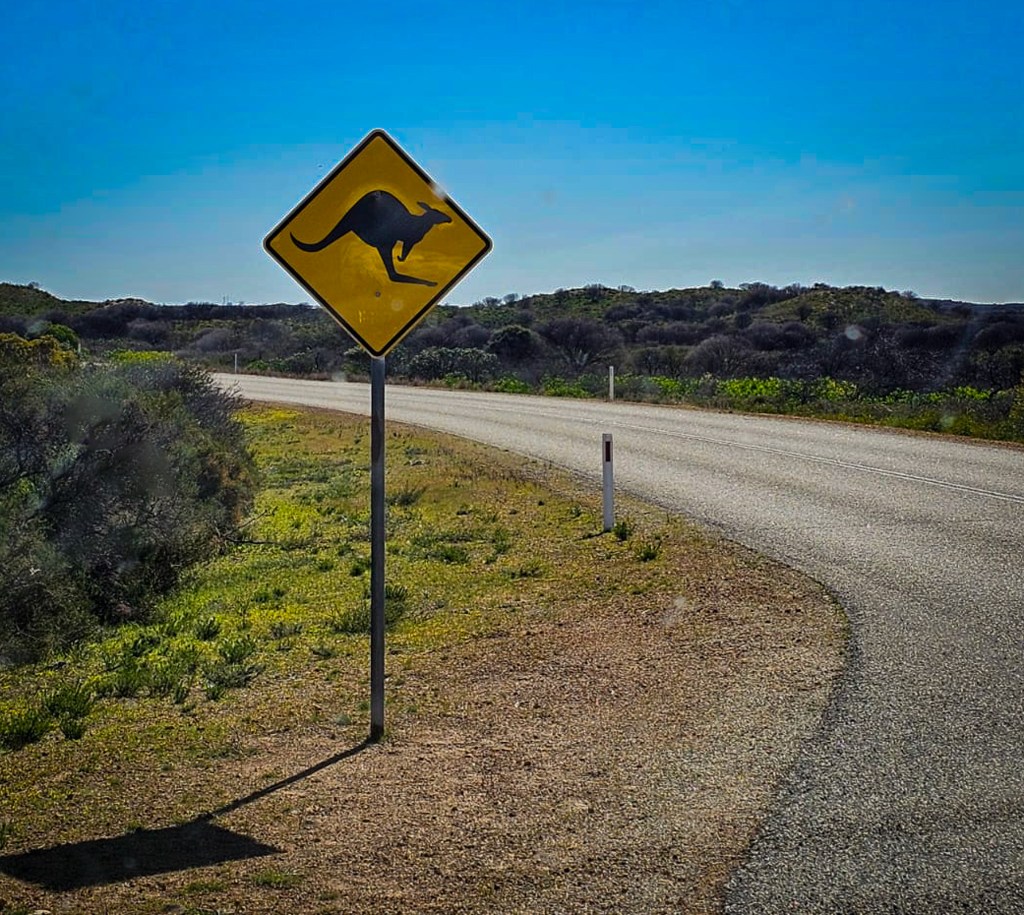
Our next destination was Wooramel, 290km north of Kalbarri. Our route was the North West Coastal Highway, another mesmerizing stretch of wide open plains, big skies and landscapes of shifting colours. We had spotted kangaroos several times on the journey, either in large grazing groups or as single individuals bouncing at speed through the bush. But as we logged more and more miles, the sight of dead kangaroos at the roadside became all too common. Most collisions with vehicles happen at dawn and dusk. Worth bearing this in mind if travelling at those times.

About 30km south of our destination, we passed a large road sign which read, ’26th Parallel-Entering the North West’.
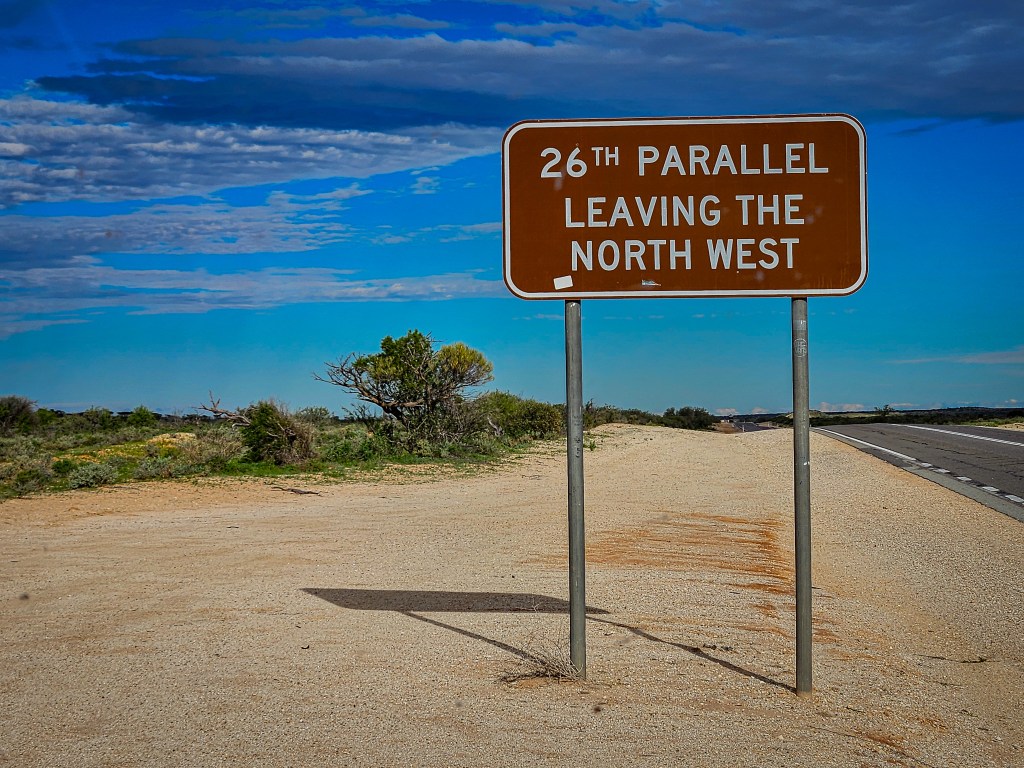
A reminder that we really were ‘Down Under’. I took this photo on our return journey, which is why it states ‘leaving the North West’.

The sign evoked memories of my school days and learning about lines of longitude and latitude. These were abstract notions that were merely markings on a map. The 26th Parallel is a line of latitude that runs east/west and sits 26 degrees south of the equator. Physically travelling through this line had an unexpectedly profound effect on me. It brought home to me the global scale of our travels-the realisation that boyhood dreams of adventure and discovery were now very real.

We arrived at Wooramel Station (in WA, a station is the equivalent of a ranch in the USA) just after sunset. It’s hard to portray the scale of things in this part of the world. Wooramel Station covers an area of 1,430 square km (552 square miles). About 1.5 times bigger than the entire county Dublin, Ireland! The entrance to the site was via large ranch style gates, illuminated only by the headlights of the moho. In order to get to our prebooked pitch, we had to drive a couple of miles along a wide rutted, dirt track, raising clouds of dust as we went.
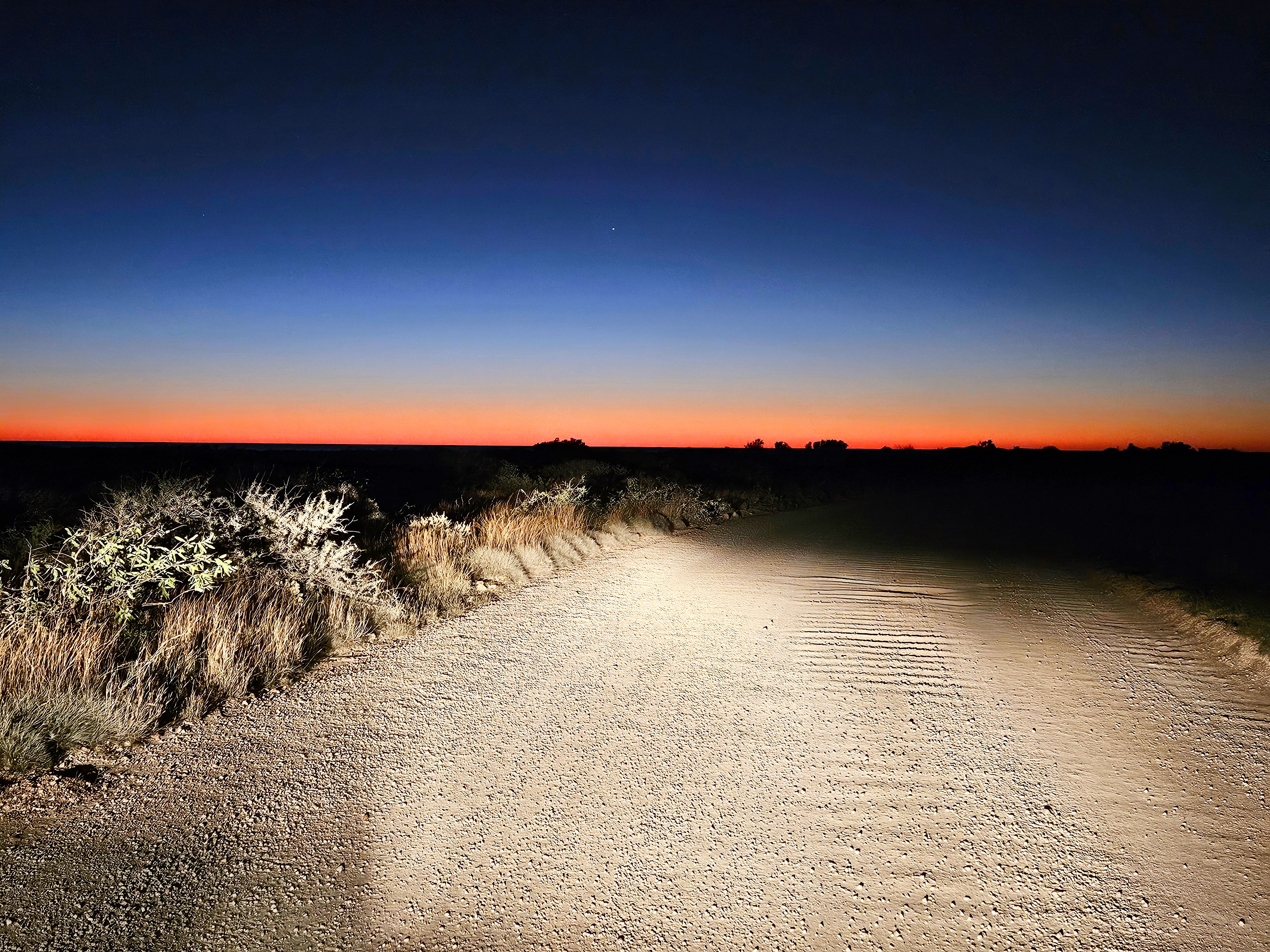
Night falls quickly in WA but the residual colours of the sunset provided reassurance and comfort as we navigated the final stretch of the day’s journey.

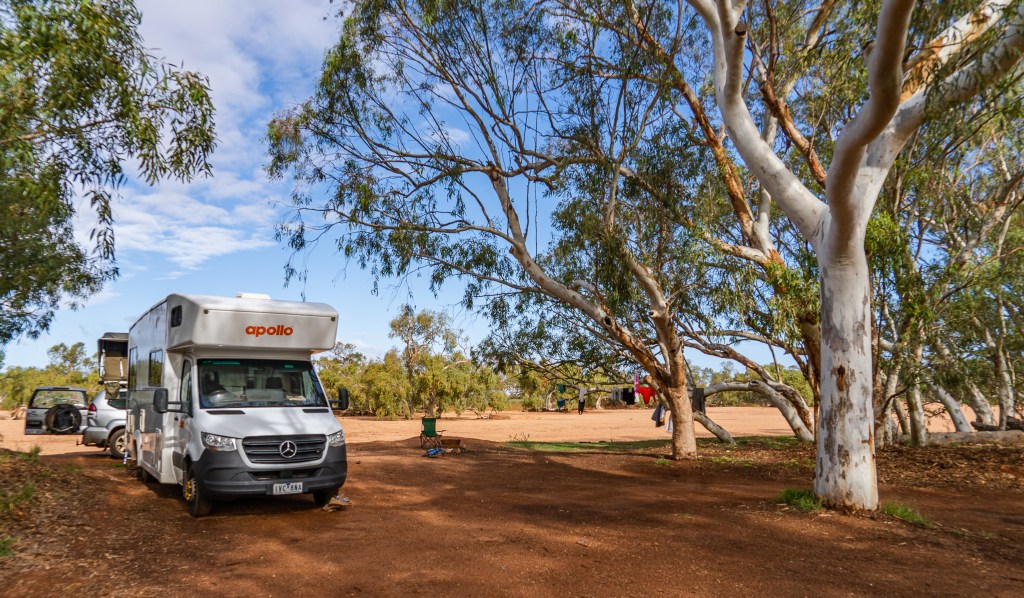
The pitches consisted of flat dirt (a mix of grit, sand and earth) areas, irregularly spaced under eucalyptus trees to provide shelter. We had secured a river side site, so you can imagine our surprise when we discovered the river had no water! And so, here was another fascinating story. The phenomenon known as The Upside Down River.
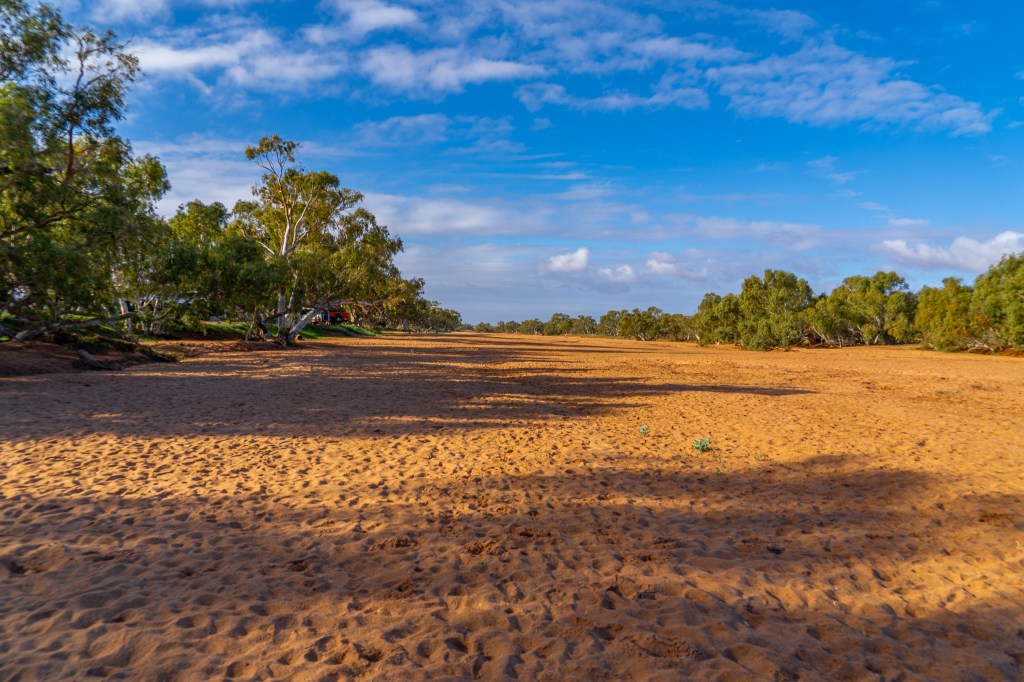
The ‘river’ at Wooramel Station.

The Wooramel River flows under the sandy riverbed for most of the year but the clues of its presence can be seen along the banks. They are lined with gnarled and strangely drooping eucalyptus trees with beautifully contrasting bark patterns. The trees, known as ‘River Gums’ have adapted roots that go deep into the damp mud to take up water. The source of the underground water is the Birdrong Aquifer; a mix of clay and sand that acts as a huge sponge. Two or three times a year, after heavy rainfall, the aquifer is saturated and the water rises up and forms a flowing river that makes its journey to the Indian Ocean. This typically lasts for only a couple of weeks. Just as the river sustains the trees, the trees themselves perform a vital function. During dry periods on the surface, arid-adapted, burrowing frogs bury themselves in the root network of the trees, cocooned in a water-retaining skin layer. When the rains come and the water rises, they emerge in huge numbers to breed and fill the river corridor with their ‘song’. As the river dries up again, they return to their underground sanctuary to await their next outing. There are a few different species but the one with the best name is the Shoemaker Frog. It was named as such because of its mating call, which sounds like the tapping of a cobbler’s hammer tapping nails into leather. It really does!
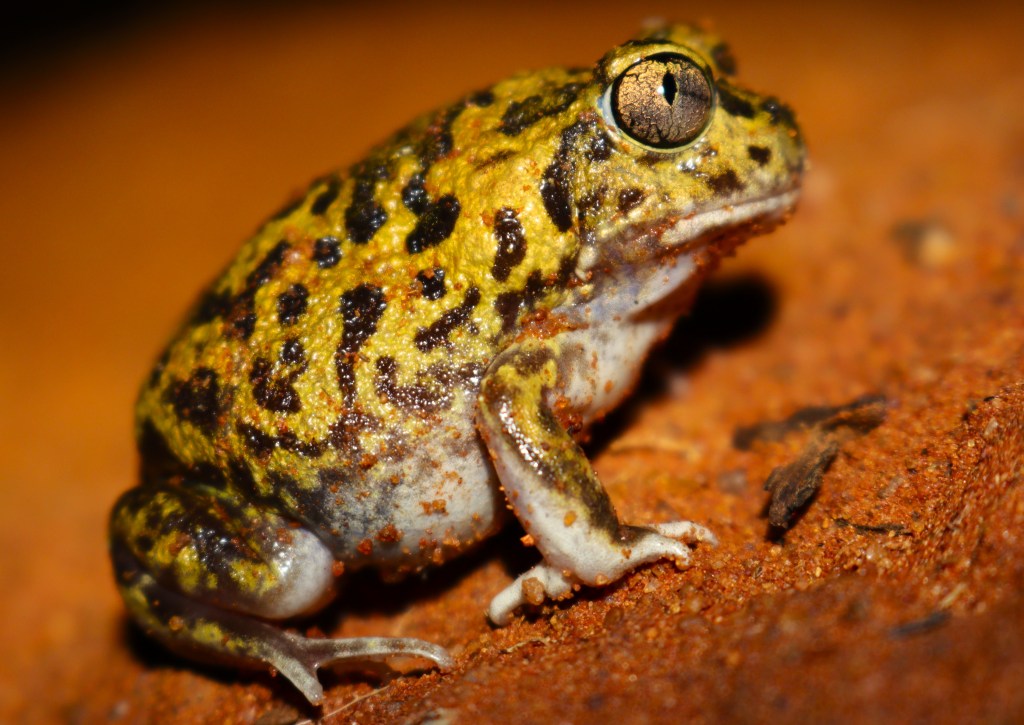
The Shoemaker Frog. Photo by kind permission of James Lamb. I highly recommend a visit to James’s site for those interested in trekking and exceptional wildlife photography.https://quollingaround.com
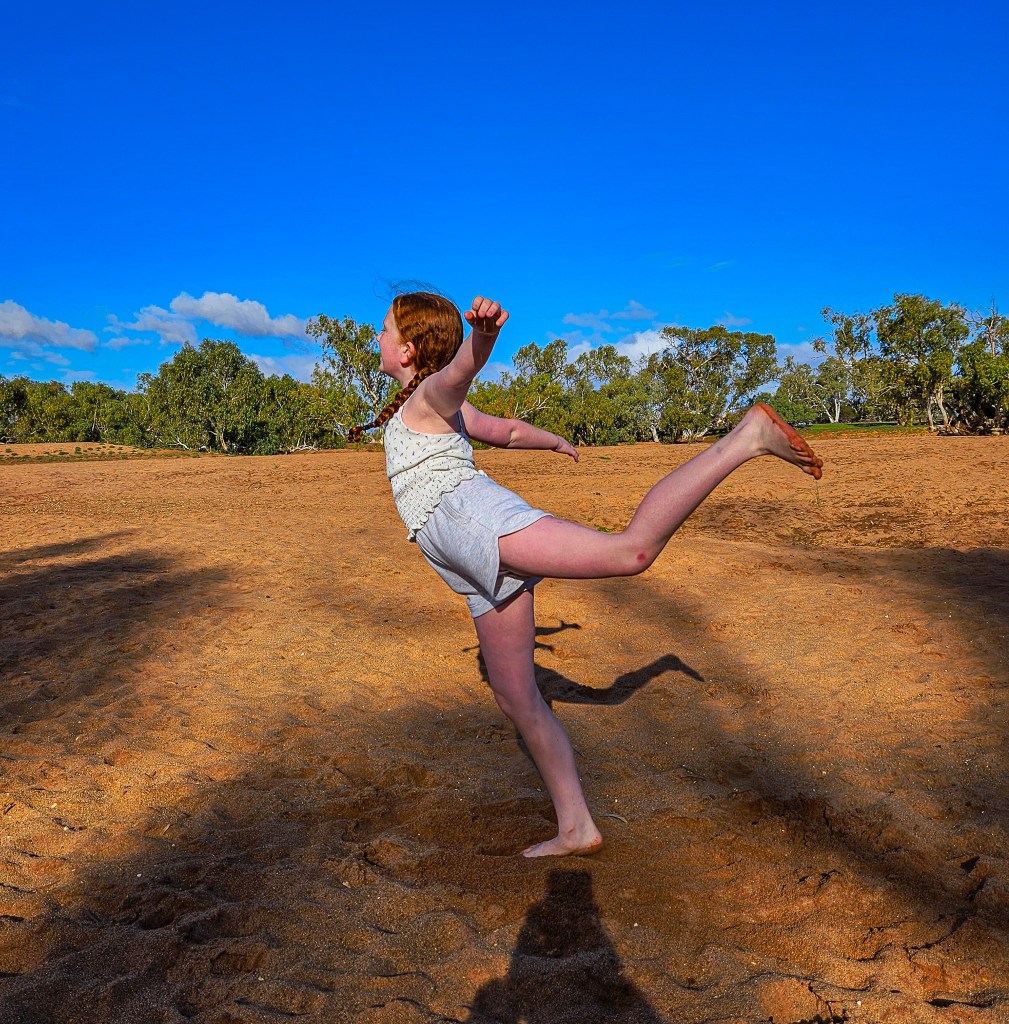
For some, the Wooramel River simply means a private beach and freedom.
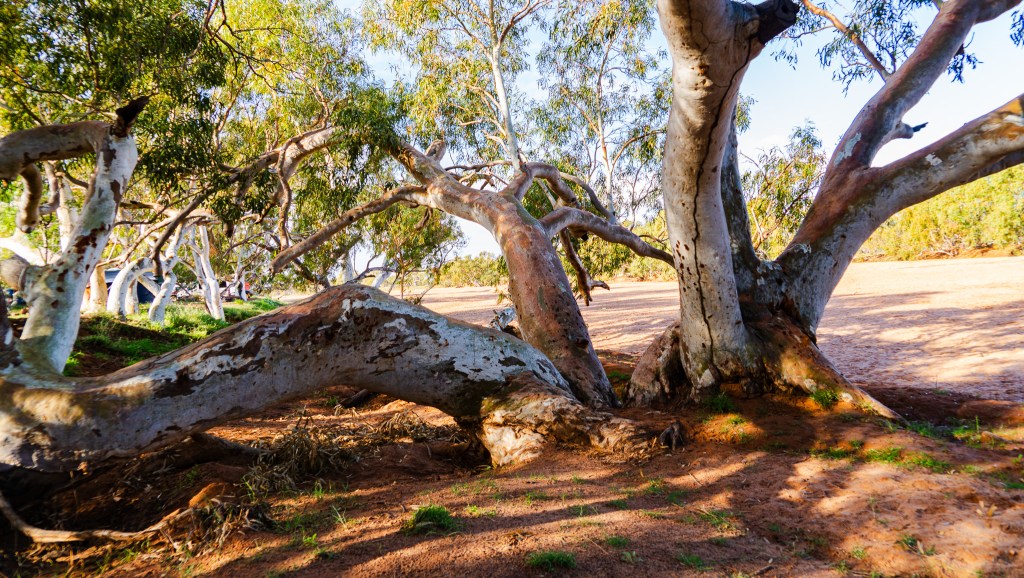
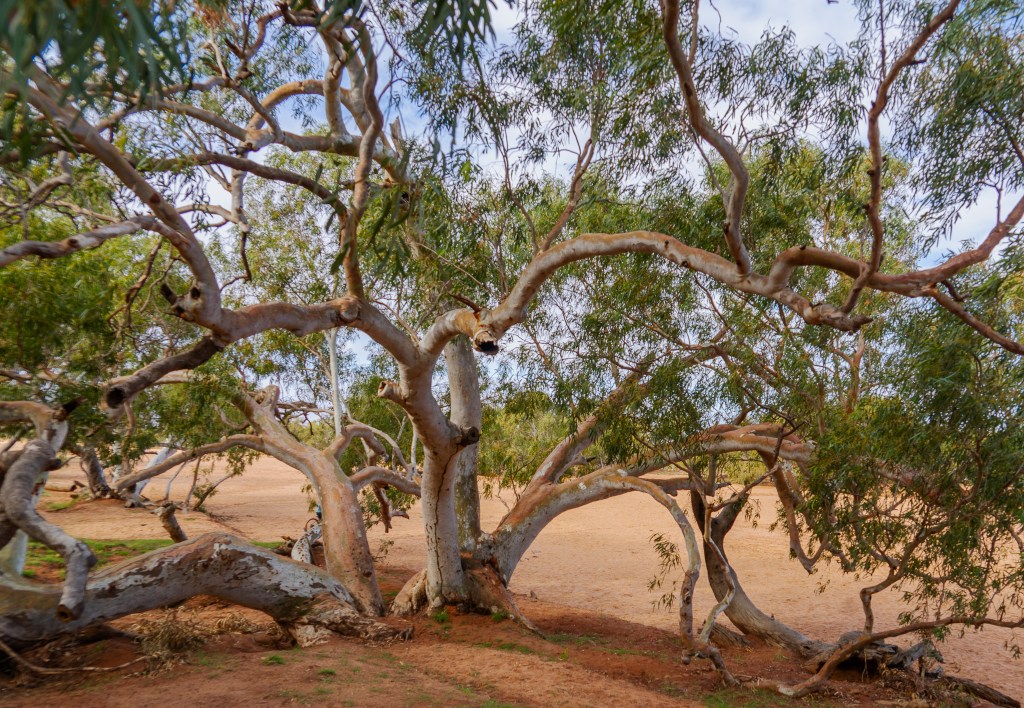
The captivating River Red Gums that anchor the riverbank by preventing erosion.

Wooramel was a two night stay, which meant staying up a bit later on our first night without worrying about an early start. Campers’ routine was another surprise to me. There wasn’t much sign of life after 10pm each night. People start leaving every morning as early as 5am, depending on the distance to their next site and their itinerary. Anyway, after the campfire was well established, we pulled up our folding chairs and opened a very agreeable red. Why does wine always taste better when consumed in the country of origin? As the campsite grew darker with every light that was extinguished in the surrounding vehicles, our eyes were drawn up to a moonlit sky made up of what looked like a giant ice field which had begun to thaw and break up. Then a hole opened up in the cloud and the moon appeared, creating an orange halo around the edges of the clouds. It seemed like we were witnessing an epic cosmic event but it was probably just another night sky in the wilderness of Western Australia. I thought the scene looked liked a biblical illustration, painted in oils by one of the old masters. Or maybe that was just the wine. Either way, it was yet another one of those events that encapsulated the uniqueness of the place and the experience.
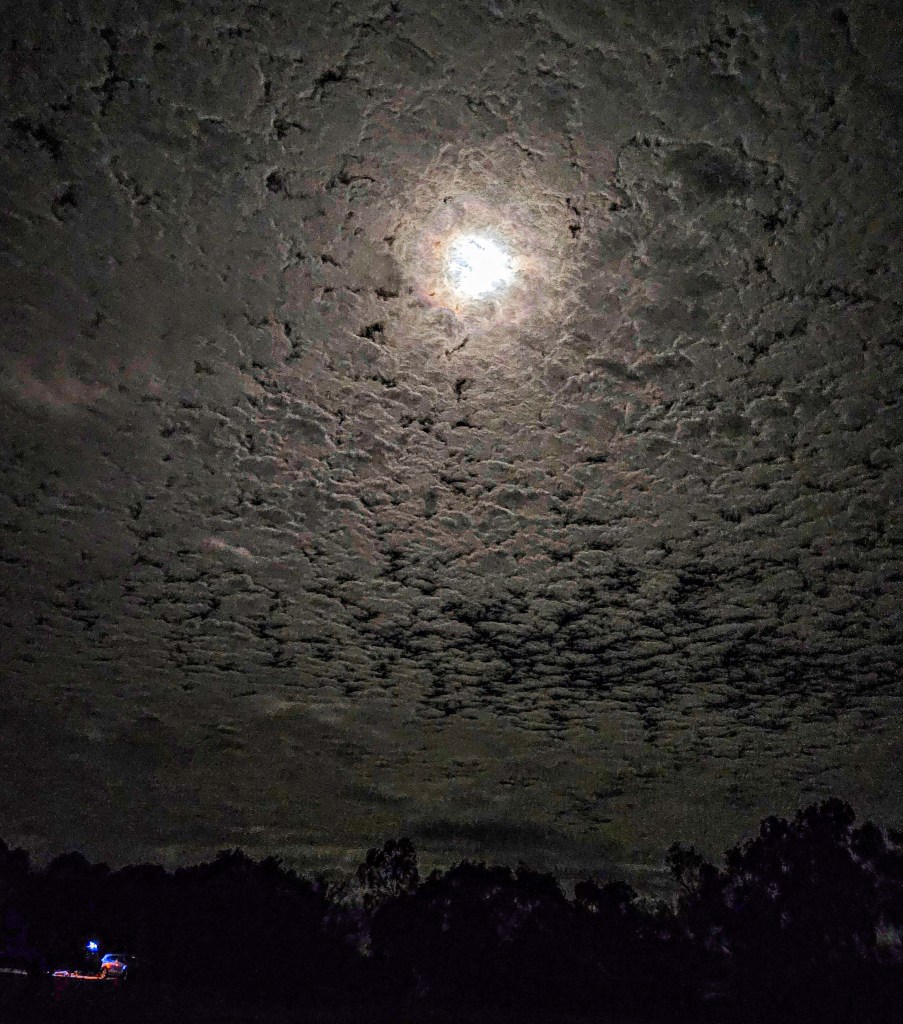
The last of the ‘night owls’ just visible in the bottom left of the frame.
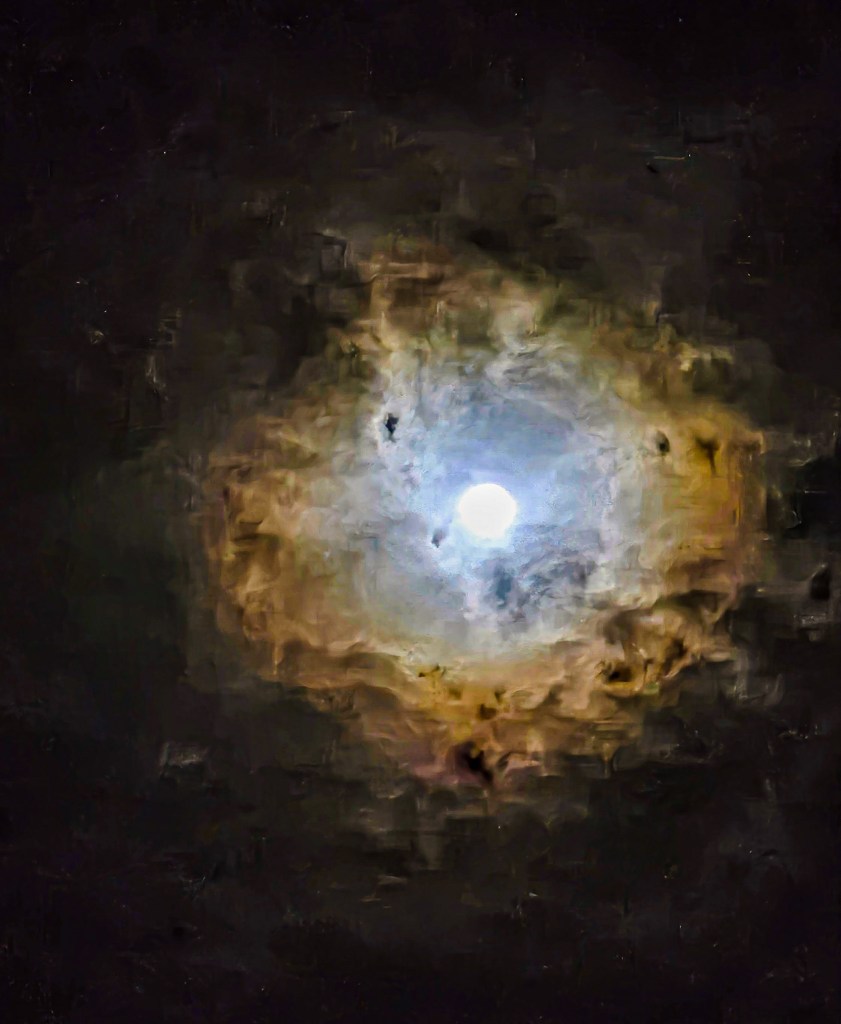
Not so much a photo as a representation of what we witnessed. Low light and a phone held in a swaying hand will never give a true portrayal but i thought i’d include it anyway.

I probably shouldn’t leave Wooramel without mentioning another unexpected benefit of the Birdrong aquifer. In the 1920s the owner of the station drilled three artesian bores to bring water to the surface to water his livestock. Today, some of that water is piped into large tubs. Because it comes, under its own pressure, from 240 metres (787 feet) below ground, it has a constant temperature of 33 degrees Celsius (91.4 degrees Fahrenheit). While the water’s reddish colour isn’t visually appealing, all doubt vanishes as you slide into its all embracing warmth and relax those stiff muscles, in preparation for another day and another destination. I didn’t have my camera or phone at the artesian bath but the following link will give you an idea of what they look like:

https://th.bing.com/th/id/OIP.w_VgbhQdHBQpdfmiX92y6QHaE8?w=327&h=180&c=7&r=0&o=7&dpr=3.5&pid=1.7&rm=3

A nice hot soak was just what the doctor ordered because our next stop was Ned’s campground in the Cape Range National Park; a cool 527km (327 miles) away. See you there!
Roadtrippin’ Western Australia, 2026. Part 3. Kalbarri National Park.

Kalbarri National Park.

Our next stop was Kalbarri National Park, 325km north of Jurien Bay. I should probably explain at this stage that road tripping in Australia requires careful planning. Turning up at a camp site without notice is not a good strategy. Road trips are not just for tourists. They are also a way of life for many Australians. Their popularity, combined with a finite number of sites, means that availability is limited. And it’s not just a simple case of securing a space. Some sites have a limited number of powered pitches. An electricity supply is essential if your stay is longer than one night, unless you have extra battery reserves for essential equipment, like your fridge. So, credit to our daughter who has a good deal of experience travelling around Australia. She planned the trip in a way that maximised our coverage of the west coast, whilst ensuring that we had adequate facilities along the way, with one minor exception, that was outside her control. Her task was all the more challenging because July is the busiest time of year. Which might come as a surprise because it’s winter ‘down under’ but the temperatures during their summer can be uncomfortable. At the most northerly point of our trip, the daytime temperatures reached into the high 20s. In December, Australian summer, daytime temperatures can reach 36 degrees Celsius or (97 degrees fahrenheit). So, planning is everything.

Back to the journey. As we travelled along Western Australia’s Coral Coast, on what is known as Indian Ocean Drive, it was easy to see why this is one of WA’s classic road trips. Once again, the long stretches of open road, the vast plains and huge skies, evoked an almost euphoric sense of freedom. The landscape was an ever changing vista. Long stretches of scrubland were punctuated by tantalising glimpses of white sand dunes and turquoise sea. As we approached the Kalbarri region, the rocks and plains took on a striking red hue and larger trees competed with the scrub for prominence. One more reminder that the vastness of this country is such, that you could be forgiven for thinking that you had left one country and entered another.

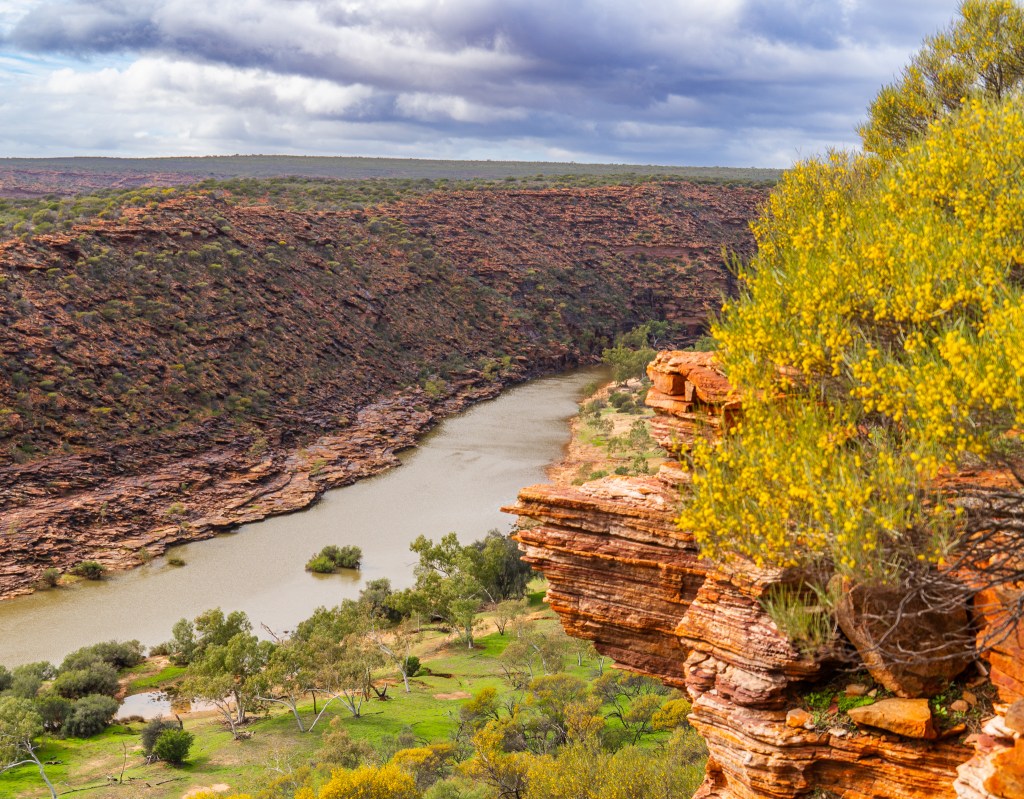
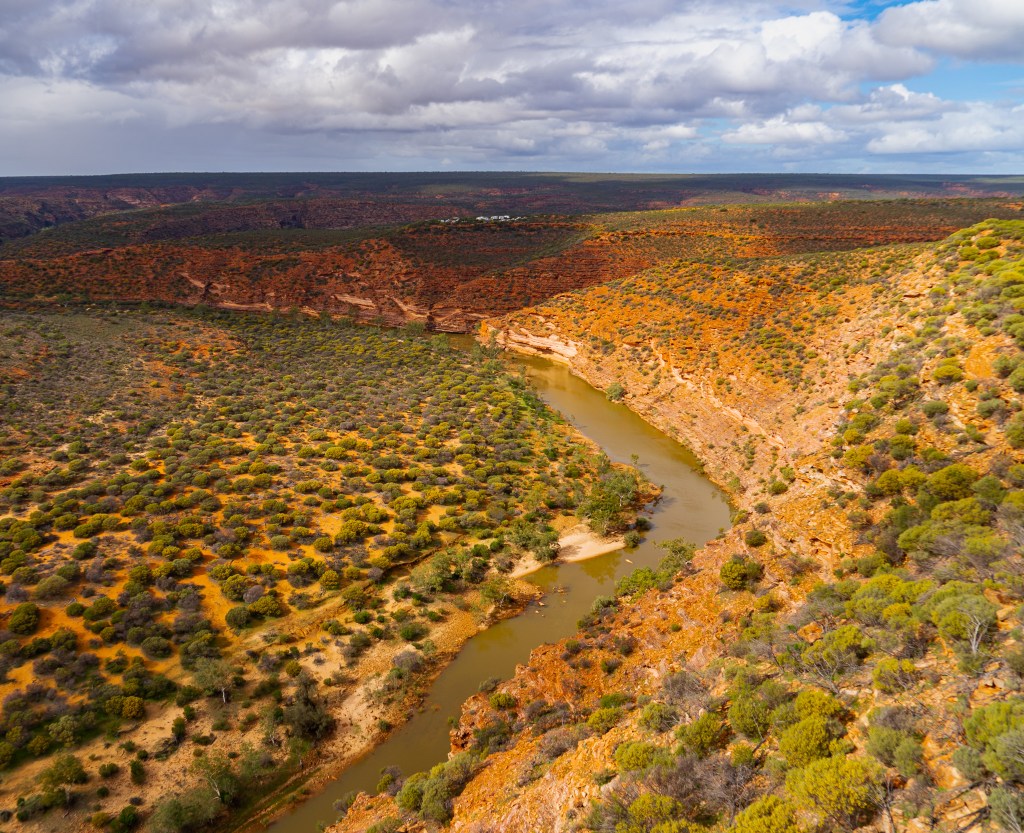
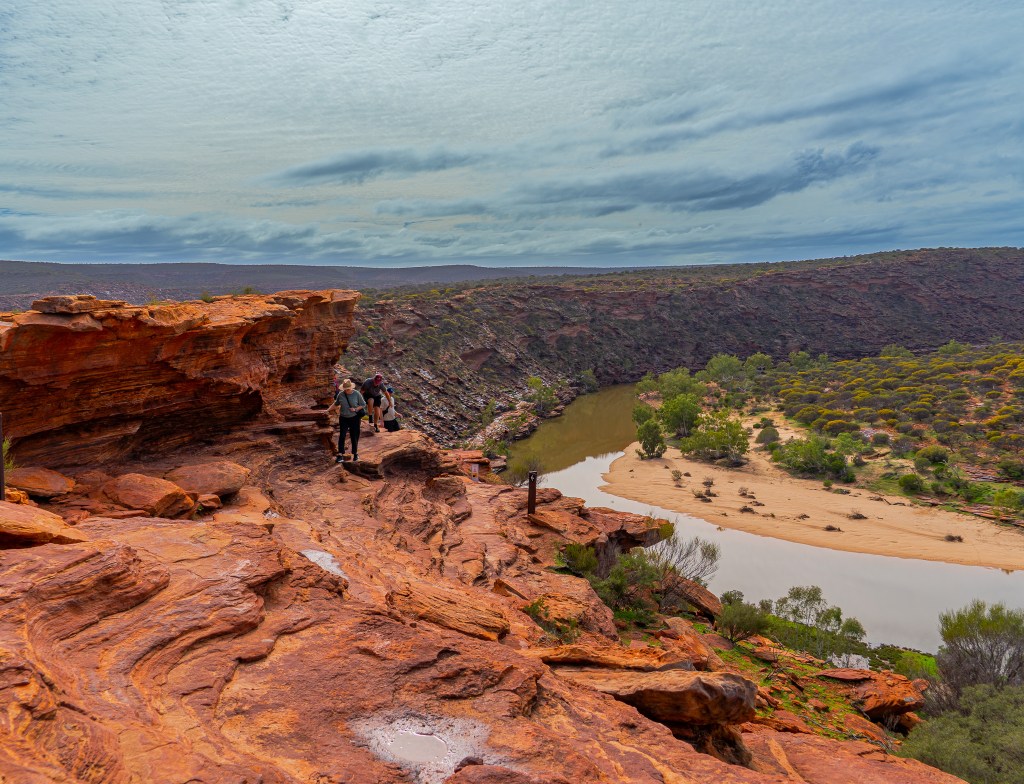
Kalbarri National Park has lots to offer, not least, its stunning sea cliffs. But the focus of our visit was the inland spectacle of the Murchison River Gorge. The dramatic scenery was awe-inspiring.

The Murchison River Gorge.

The gorge is a natural phenomenon consisting of Tumblagooda sandstone. Its features have been sculpted by the elements over millions of years. The rocks hold the key to its history and there is evidence, such as sea scorpion fossils, that this was once a tidal flat. Over millennia, the Murchison River has carved out a deep trench that makes the gorge a heat sink. In summer months, temperatures can reach 50 degrees Celsius (122 degrees Fahrenheit). Thankfully, during our visit, it was a pleasant 23 or 24 degrees Celsius.

However interesting the geological history may be, I prefer another explanation for the gorge’s existence. The traditional owners of this land, the Nanda (Nhanta) people, have their own creation story. The gorge was created by a huge ancestral water serpent, Beemarra, as she made her way across the arid plains to find the source of the sounds coming from the ocean. In her wake, she left behind pools of fresh water and springs. Beemarra’s final resting place is in one of these pools. I suppose, in their imagination, they felt compelled to tell a story that could convey the significance of this precious oasis of fresh water surrounded by miles of arid country and explain in mystical terms, how it came about. It goes some way to explaining their reverence towards this place. They consider it sacred. And why not? In a world where water resources are being destroyed and polluted on a cataclysmic scale, the Nanda people revere it for its life-giving and life-sustaining presence.

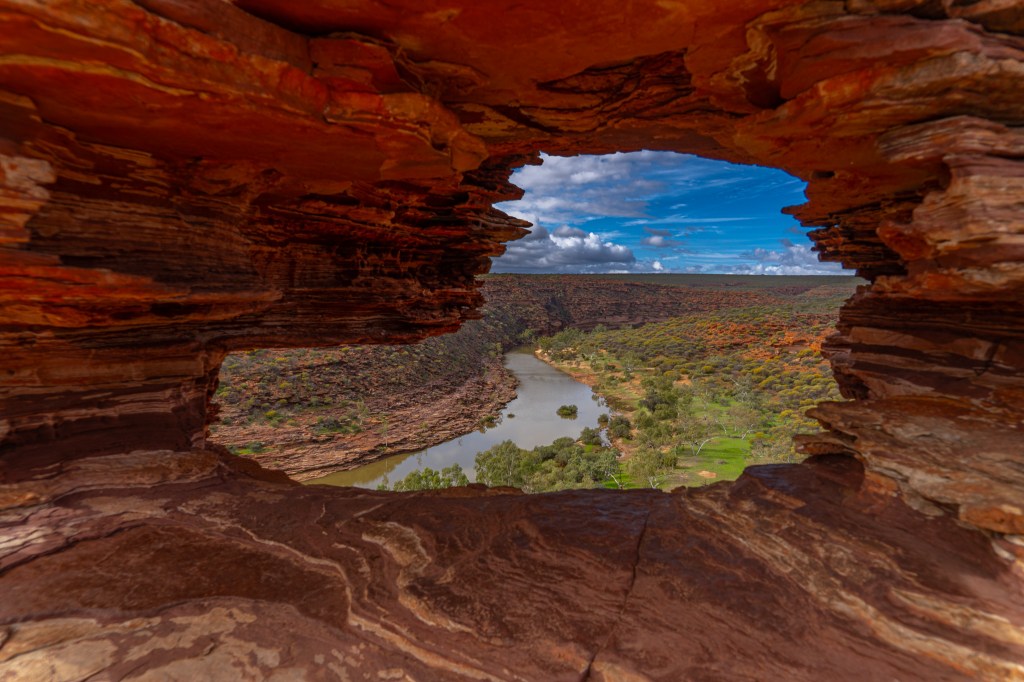
Nature’s Window.

Another fascinating natural ‘monument’, sculpted by eternal processes of water and wind, is Nature’s Window. This was one of those places I had to see, and was very close to the top of my bucket list, ever since our daughter posted photos of it in 2024. If you’re a photographer, you’ll know how that obsession works! But this location is so much more than a photo opportunity. It is a literal window that showcases a stunningly unique and ancient landscape. The perfect frame for a priceless work of art. A piece where the artist and subject are one in the same-nature. The ultimate goal would be to take a series of photos at different times of the day here, culminating in a spectacular sunset. Maybe next time…

Beemarra’s legacy.

There was an unexpected consequence of our visit to Kalbarri National Park. I gained an insight into another aspect of this majestic region of Western Australia. The intimate connection of an ancient people to this primal place. Okay, let me start with one of those giant lies that the world has been fed. The aboriginal people were a single, homogenous entity. Wrong! The truth is that when the first Europeans arrived, there were 500-600 nations, each with its own distinct traditions and culture. There were over 250 distinct language groups (comprising around 800 dialects). As is always the case with colonialism, the indigenous population was subjected to mass murder and abuse. Their way of life was attacked and attempts made to eradicate their language and culture. Today, the result of colonization is a displaced and marginalized people. Fortunately there are occasional good news stories of restitution and recognition of aboriginal rights, as well as dedicated resources designed to revive and promote the culture and languages.

https://aiatsis.gov.au/explore/languages-alive

On 28 November 2018, a 24 year legal process concluded with the Federal Court of Australia formally recognizing the Nanda people as native title holders of an area of 17,000 square kilometers, including Kalbarri National Park. The Nanda story is now told through photographs and information boards at the visitors centre. It adds a whole other dimension to the place and goes some way to affording the visitor an insight into a way of life that has deep meaning for those whose existence is inextricably linked and intertwined with the land. If you ever visit this magical place, take a moment to consider its special place in the world. Yes it is visually stunning but it also has a spiritual connection for an ancient people who inhabited this land. Their ‘connection to country’ comes from a 10,000 year old symbiotic relationship where the land sustained them and they protected and nurtured the land. It is in their DNA. Personally, I felt enriched by our visit. Another reminder that the face of a country that is portrayed in modern literature or in the media is not always an accurate portrayal. Sometimes it is even a deliberate erasure of the truth. Next up, into the Outback at Wooramel. Hope to see you there.

Roadtrippin’ Western Australia, 2026. Part 2. The Moho.

We had some light showers as we packed the Ute for the next leg of our journey. Probably the last rain I remember on the trip. While thankful that our luggage remained dry, I began to have reservations about the quantity of it. I had seen motorhomes before but had never seen five people attempt to stow their belongings in one. But not wanting to meet trouble half way, I parked my concerns and focused on the drive. It was a rare and enjoyable experience being a passenger. Another opportunity to observe the changing landscape as we left Margaret River on the road to Perth. The distance is 280km but in Western Australia, places are so far apart that they use the ‘time as distance’ rule. This means Perth is 3 hours from Margs and is ‘down the road’. The tree-lined country roads and lush vineyards soon gave way to small quaint towns with unfamiliar names like Cowarumup and to slightly bigger ones whose names, like Busselton and Bunbury, were a giveaway as to their colonial past. As we approached Perth, the relaxed atmosphere of wine country, with its quiet roads and laid back vibe, already seemed like a distant memory.

Did you know? Perth is a contender for the most isolated major city in the world, depending on the parameters used. It has 2.2 million inhabitants and its nearest large city neighbour is Adelaide, which is 2,100km (1,305 miles) away.

After the requisite rundown of the moho, delivered by a less than enthusiastic employee of the hire company (Apollo), the task of decanting and storing belongings began. Interestingly, Apollo, does not specify a specific cubic litre capacity for cargo storage. Instead, you have to allocate sleeping areas and use the closest overhead lockers or under-seat compartments for your clothes, shoes, devices, toiletries, medication etc. And this is where being an accomplished member of the Magic Circle would be very useful. I couldn’t help but think of Dr Who’s Tardis, which looked like a telephone kiosk on the outside but was huge on the inside. The Moho, on the other hand, looked smaller than expected on the outside and even smaller on the inside! Challenging as the loading operation was, we were finally ready to hit the road.

The Moho. While challenging at times, we couldn’t help but develop a certain affection for the old girl. Her clock had over 200k km on it and if she was a horse, would probably would have been put out to pasture long ago. But she served us well-for a while!

Our first campsite was Jurien Bay. Another ‘short drive’ of 220km. We were in good spirits as we travelled north along the coast. The novelty for the passengers being able to sit at a table, playing cards or snacking while enjoying the scenery, was obvious. The trauma of loading the Moho already becoming a vague recollection.

The novelty of sitting at a table while driving along, never faded.

This first stretch of our travels began to reveal to us the vast nature of Western Australia and the diverse and unique facets of the country.

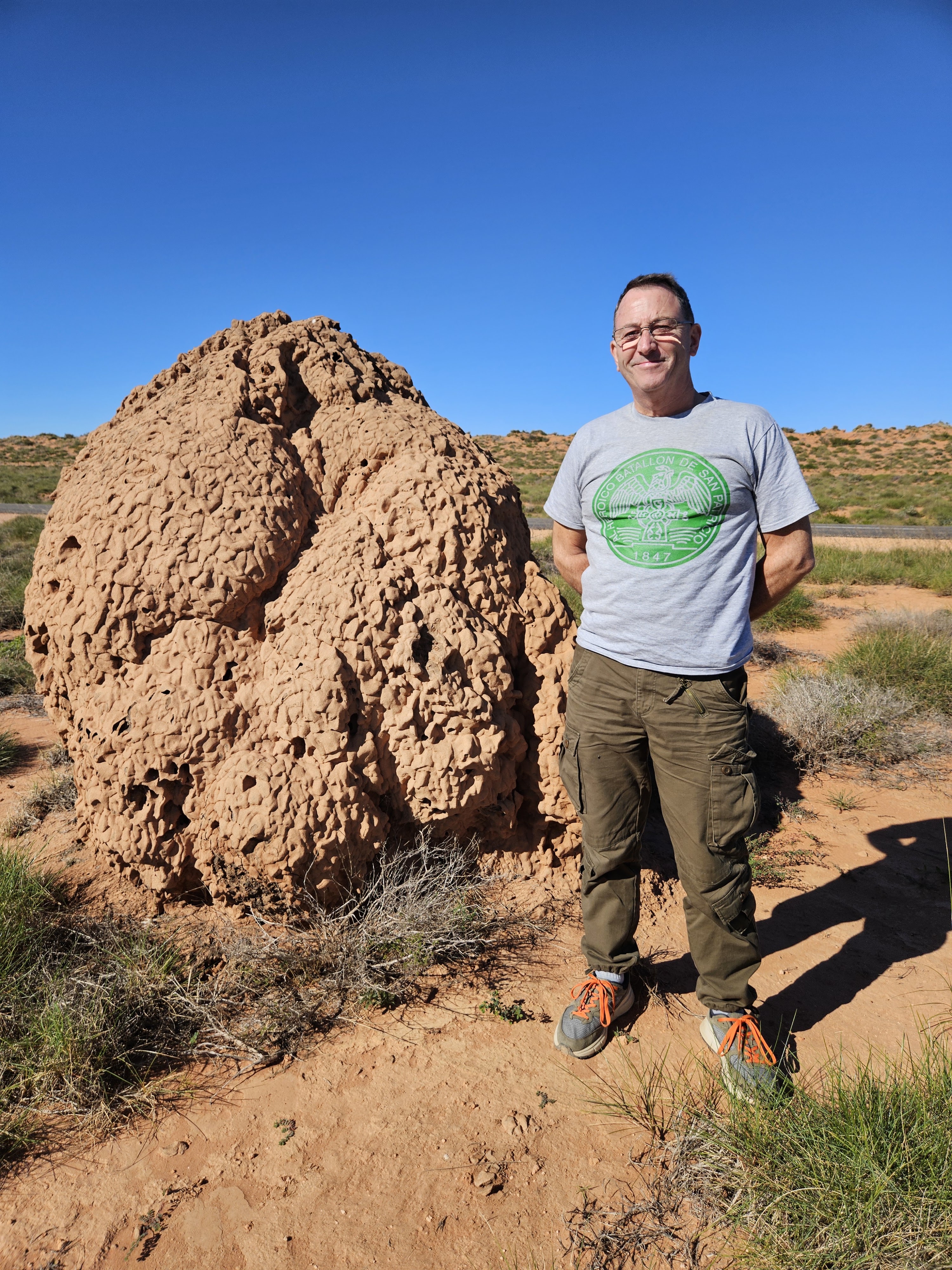
There were thousands of strange structures in the fields lining the road, which turned out to be termite mounds. Note the tightly pulled draw cords at my ankles!

I think it was on the road to Jurien Bay that I first noticed a tangible change in my mood. The wide open plains of the landscape seemed to evoke a sense of lightness and well being. I felt as if I was being exposed to generous doses of all the natural things that are beneficial to the mind and spirit. Later in the trip, I would discover the deep connection that the indigenous people have to the land. But that’s for another post. What I will say, is that it is no surprise that such a unique landscape would inspire such feelings of attachment and oneness with the environment.

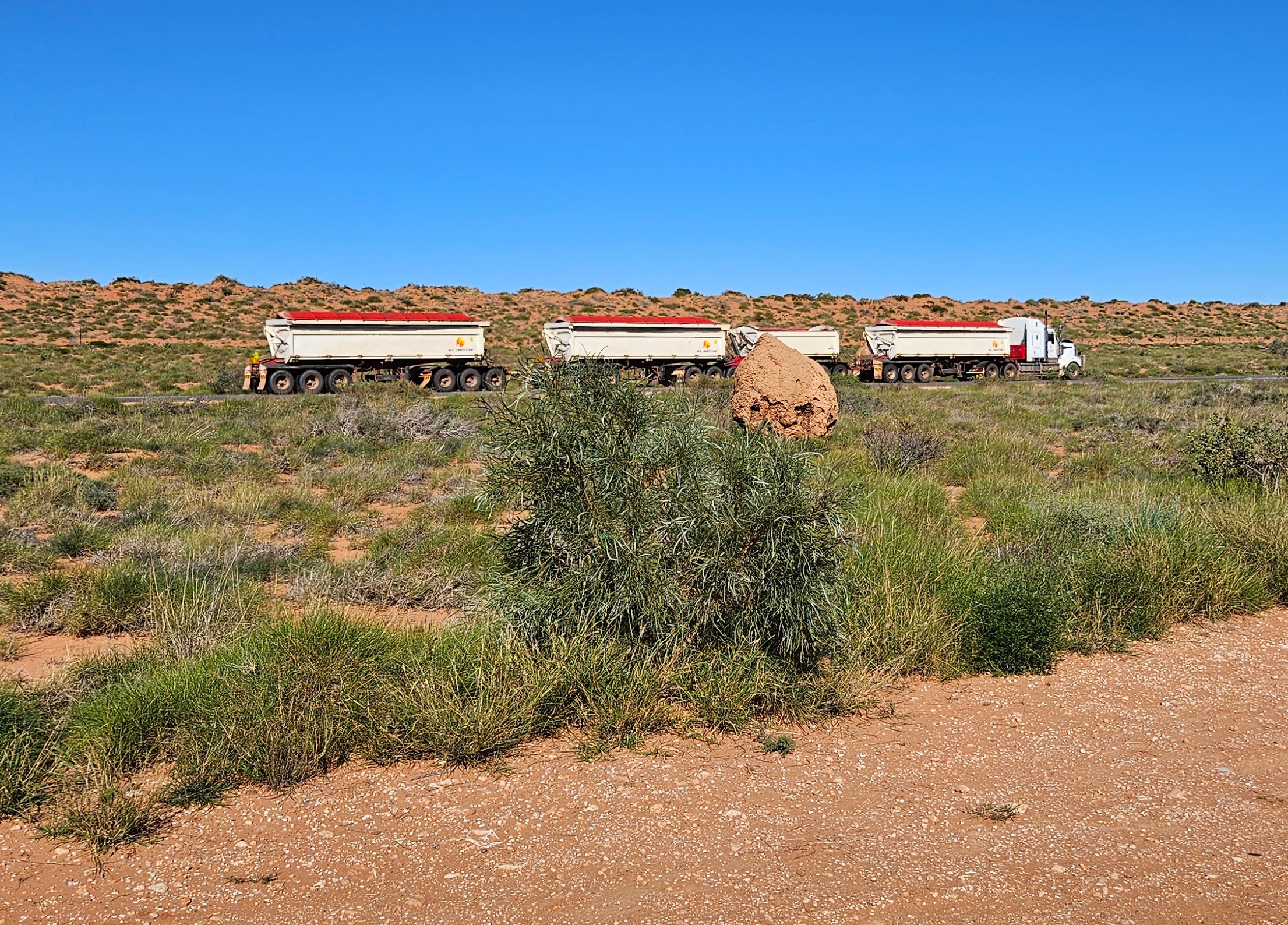
Another first for me was the sight of road trains on these remote roads. An efficient and economical way of transporting freight long distances. And more than a bit scary when one passes alongside you!

Night falls quickly in Western Australia and we navigated our last few kilometers in the dark. The campsite was a basic layout of logged off sections nestled behind the sand dunes. We found our allocated spot and settled down for some home cooked food, Moho style, and a glass or two of local wine.

Tip: There are two things you stock up on, every opportunity you get. Fuel and wine/beer. It’s not unusual to travel 300km between petrol stations or ‘bottle shops’.

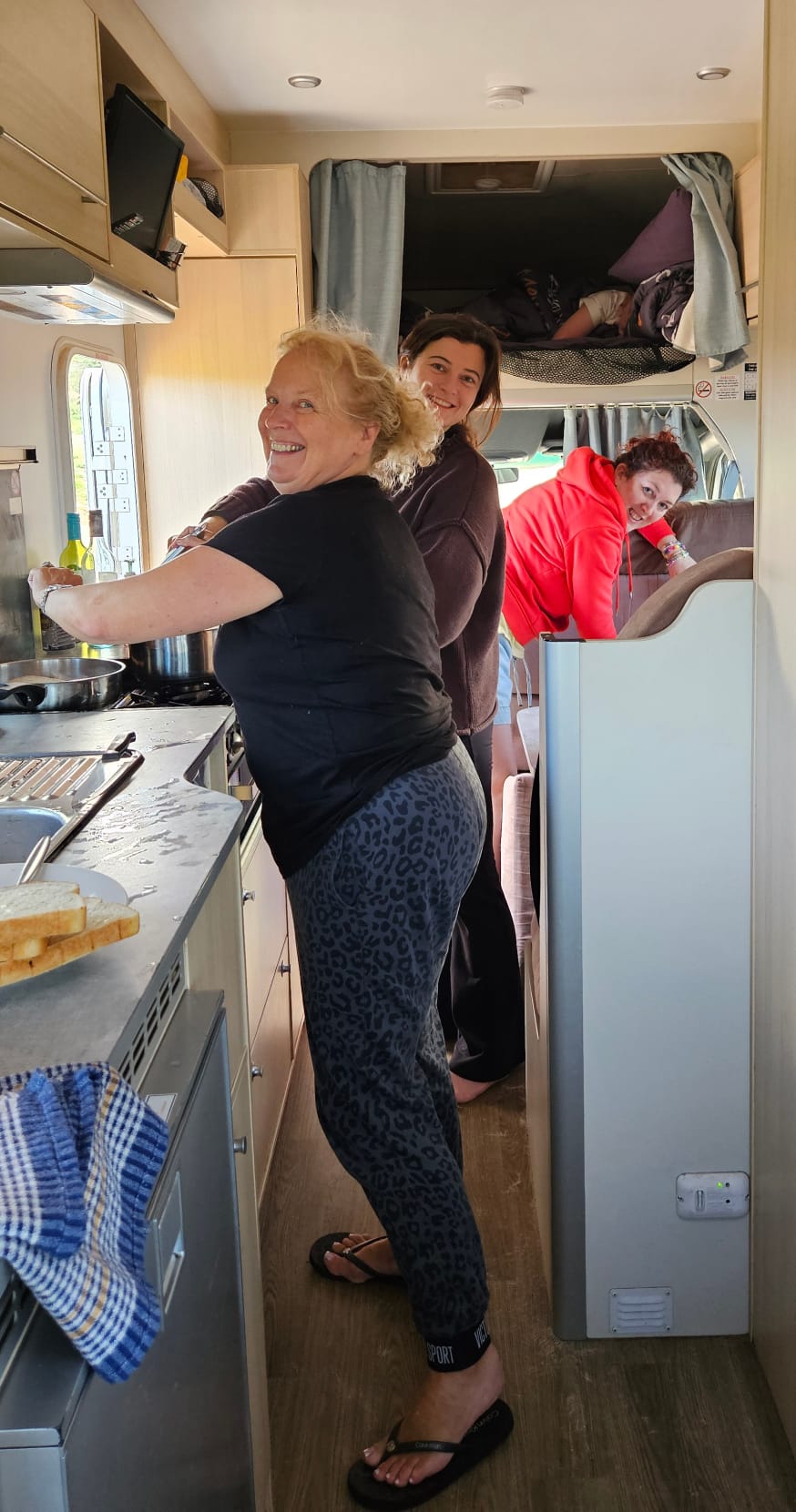
All hands on deck. No breakfast until the beds are converted back to seats!

As we made up our respective beds and turned out the lights, I lay looking at the moon through the skylight. The only sound to be heard was the gentle lapping of the waves on the shore. It felt like we had taken one more step away from ‘civilisation’ and returned to a more natural existence. As the early morning sun crept through the blinds, we emerged, one by one, to explore our surroundings.

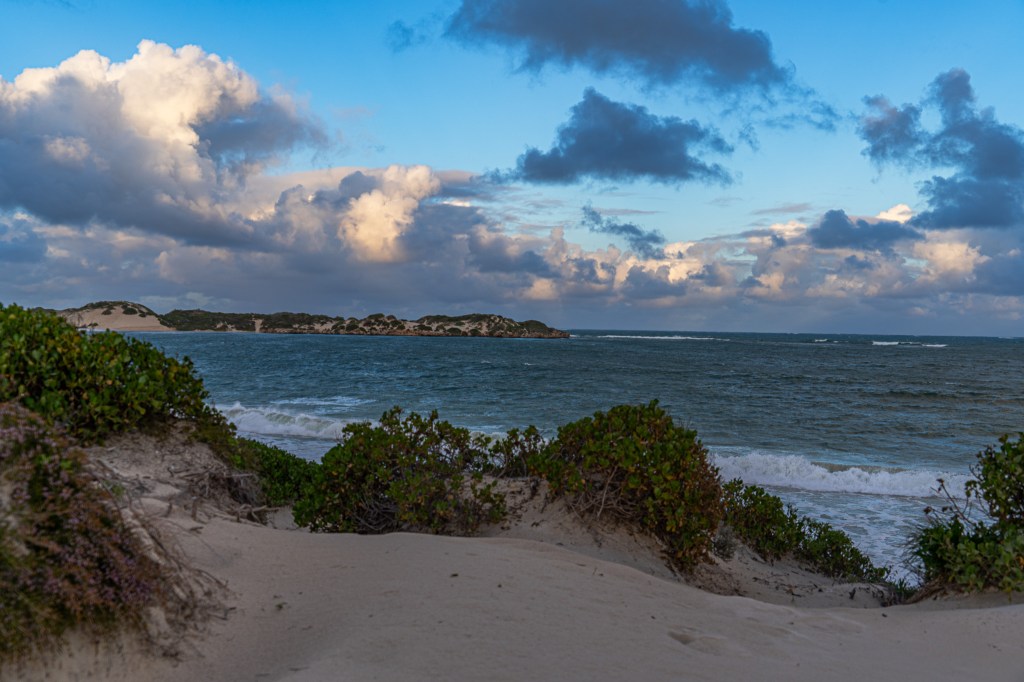
Jurien Bay campsite. I hadn’t realised we were literally a stone’s throw from the ocean.

The overall feeling was that we were the first people ever to visit this pristine place.

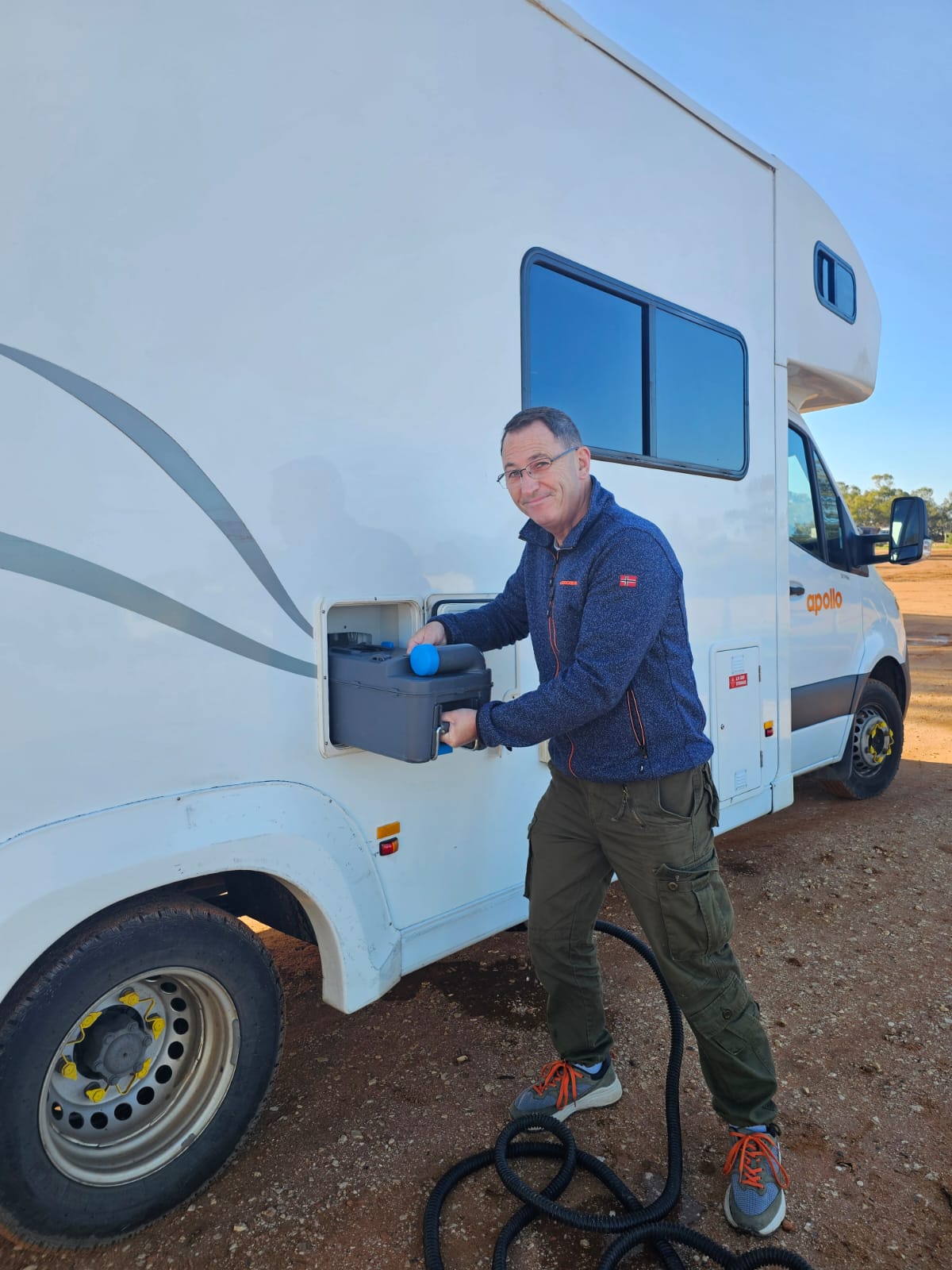
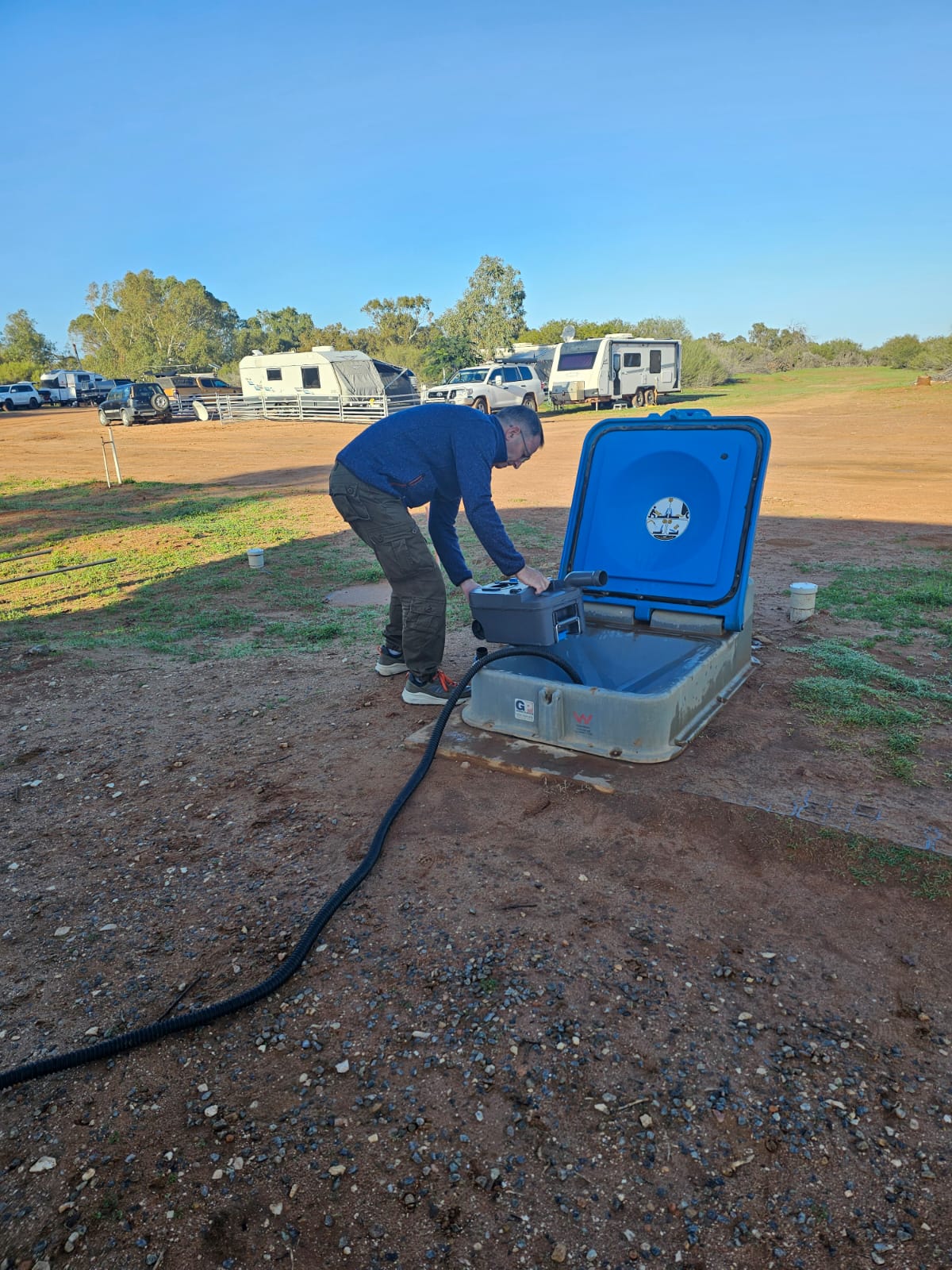
The Moho comes equipped with a toilet but one thing you quickly learn is that it should be used sparingly! The cassette, which contains all deposits, needs emptied at designated dump sites. And like petrol stations and bottle shops, these can be sparse, though thankfully not as sparse. The capacity of the cassette was 17 litres and with a party of five, it was full after 24 hours. The rule was established that it should be used for night time and emergencies and for liquids only. Solids were an absolute last resort. I strictly enforced this rule because the job of emptying it had somehow fallen to me! I share this toilet chat with you as a prelude to our first encounter with a ‘long drop’ toilet (or dunny). When you think about it, if a campsite is a couple of hundred km from the nearest town, it is unlikely to have a mains water supply or sewage plumbing. And so, the long drop dunny is a dry toilet. It is a stainless steel tube that sits over a pit about 3 metres deep. The waste breaks down via natural decomposition but suprisingly there is no smell as the pits are well ventilated. The toilets are housed in a corrugated outhouse with a large gap around the bottom, so you can have the occasional visitor in there with you but they’re usually harmless. It did take some getting used to, all the same. After all, we are not accustomed to having a breeze blowing where the sun never shines!

Tip: Resist the urge to look down the long drop toilet before you make a deposit. It’s not a pleasant sight.

The face says it all.

It’s a dirty job but…

And so, we were slowly being introduced to a more primitive existence. And with the experience came an appreciation of the things we take for granted every day, like flushing toilets, warm showers and an endless supply of fresh drinking water. This thought provoking element of our trip was unexpected but it became a constant companion and nurtured a deep gratitude of our privileged lives.

Our next destination was Kalbarri National Park and some of the most epic scenery of our trip. Hope to see you there.

Road tripping, Western Australia 2026. Part 1: Margaret River.

Australia is like its wildlife-unique!

When I first decided to write this blog I thought I would put up some photos of the highlights of our trip with a few descriptions to accompany them. But the more I thought about the experiences we had and the impact they had on me, I realised that a few cursory paragraphs would not do the trip justice at all. I therefore decided to split the blog up into different parts. Hopefully this will make it more accessible, in these days of ever decreasing attention spans, to a wider range of readers. So, if you get bored, you can read one part at a time. Ultimately I want to remain true to the thing that drives me; a desire to put down, as freely as possible, the things I’ve seen and the places I’ve visited, how they impacted on me and perhaps go some way to providing a record for future generations and enabling them to share in those special moments in my life.

Our last trip, which was also our first, to Australia was in 2020. (see post ‘Land Down Under’). We visited our daughter in Brisbane on the southeast coast of Queensland. During that visit we thought that Queensland was like nowhere else on earth. A place where a 60-minute drive could take you, depending on your starting point and direction of travel,  to the city of Brisbane, to the rainforest or to a golden beach. She now lives 4,350km from there in Western Australia in a small town called Margaret River. How she ended up there is a story in itself and one which I hope she will write someday. We were about to embark on a three-week road trip up along the West coast of Australia and were taking a couple of days in Margaret River to catch up with our daughter, meet some of her friends and readjust to something resembling a normal sleeping pattern after travelling across seven time zones.

To describe ‘Margs’, as they call it, as different to Brisbane would be a gross understatement. It has all the small-town attributes, such as people waving at each other as they pass on the roads, offering help to strangers without being asked and generally moving at a slower pace. An unmistakable charm and sense of community prevail, reminiscent of small-town America or a typical small Irish town. You won’t find any large shops or malls here but coffee shops, craft and jewellery studios and artisan bakeries are abundant.  Its geography and climate also make it a prolific wine producing region. We arrived in late June, which is their winter and the weather reminded me of a typical ‘in between’ day back home. One of those days when you’re not sure whether to wear shorts or long trousers and whether it’s safe to hang the Washing out (ok, I never ask that question personally but I know people who do). Apparently this part of Australia can receive heavy rainfall at this time of year but we didn’t experience any.

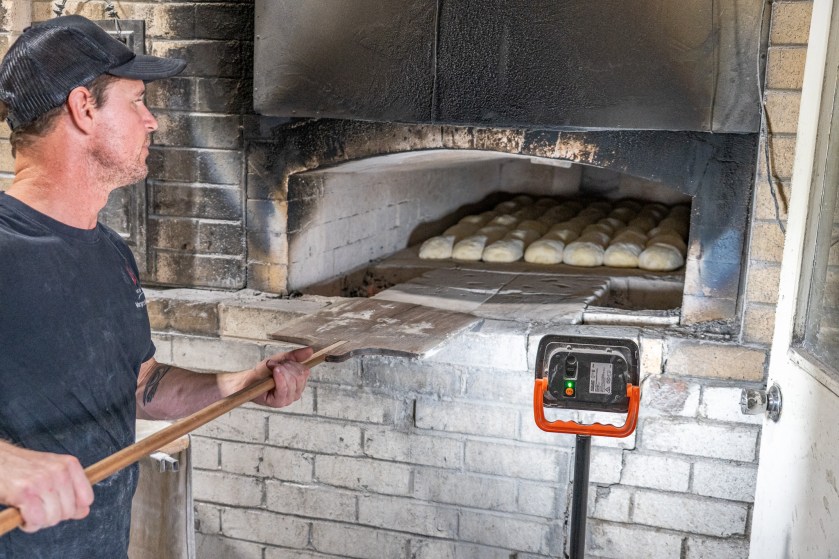
The local bakery in Margaret River, where you can watch the baker load the next batch before selecting your breakfast roll. The aroma of baking bread, combined with the smell of the burning wood that heats the ovens, is, in my opinion, right up there with the smell of fresh cut grass or a Donegal turf fire.

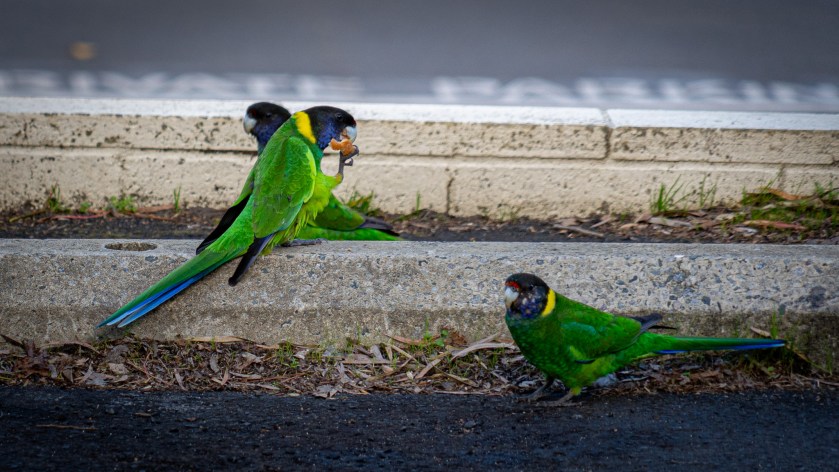
Ten thousand miles separates Ireland from Australia, so it’s not surprising that new sights and sounds are all around. Shortly after our arrival we stopped at a supermarket to pick up a few groceries and, not being a fan of grocery shopping, I busied myself cleaning the windscreen of my daughter’s pickup truck (‘Ute’ as they say in Aussie). Just to make myself useful, you understand, and not in any way inferring that my daughter doesn’t keep her windscreen squeaky clean! Anyway, as the visibility gradually returned, I noticed that the car park was dotted with groups of brightly coloured parrots, casually foraging for scraps of food. In Belfast, my hometown, the most colourful bird you can expect to see in a supermarket car park is a black and white magpie or a grey and black crow. I grabbed my camera and started snapping away, unable to believe my good fortune. However, my excitement at seeing these green, blue, yellow, red and black beauties was somewhat tempered when I was informed by fellow Irishman (who lives in Margs) and big wave hunter, Dave, that their official name is the ‘Twenty-Eight’. Apparently, the name is a reflection of its call which sounds like the three syllables of ‘Twen-ty-eight’. I didn’t hear them make any sounds, so I couldn’t verify this. If I was a cynic, an accusation often levelled at me, I would suggest that the person (I can’t believe it was a collective decision) responsible for naming this exotic bird was either very lazy or had completely lost his/her mojo and, in a state of ennui, named them after his/her house number. I can’t think of any plausible reason why such a striking creature should be labelled with such a spectacularly unglamourous descriptor as ‘28’. Maybe it’s simply a reflection of the laconic tendencies of Australians. A bit of a ramble, I know, but I include this anecdote because it seems like an appropriate portent of what lay ahead. Every day brought something new and unexpected.

A trio of ‘Twenty Eight’ parrots in the car park searching for food. Or maybe they’re holding a demonstration in protest at their inglorious title!

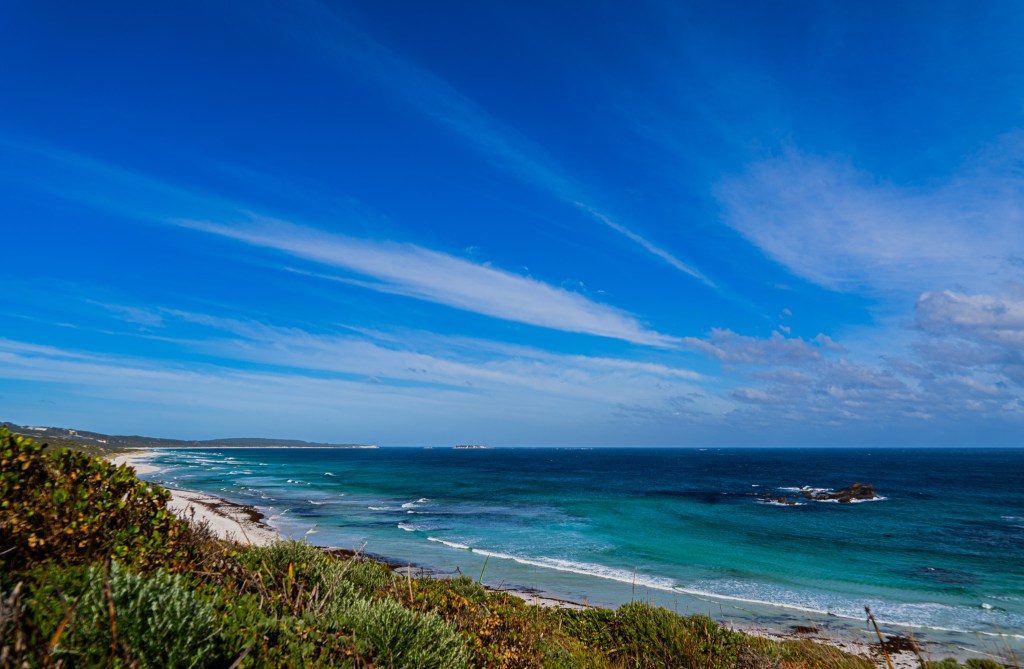
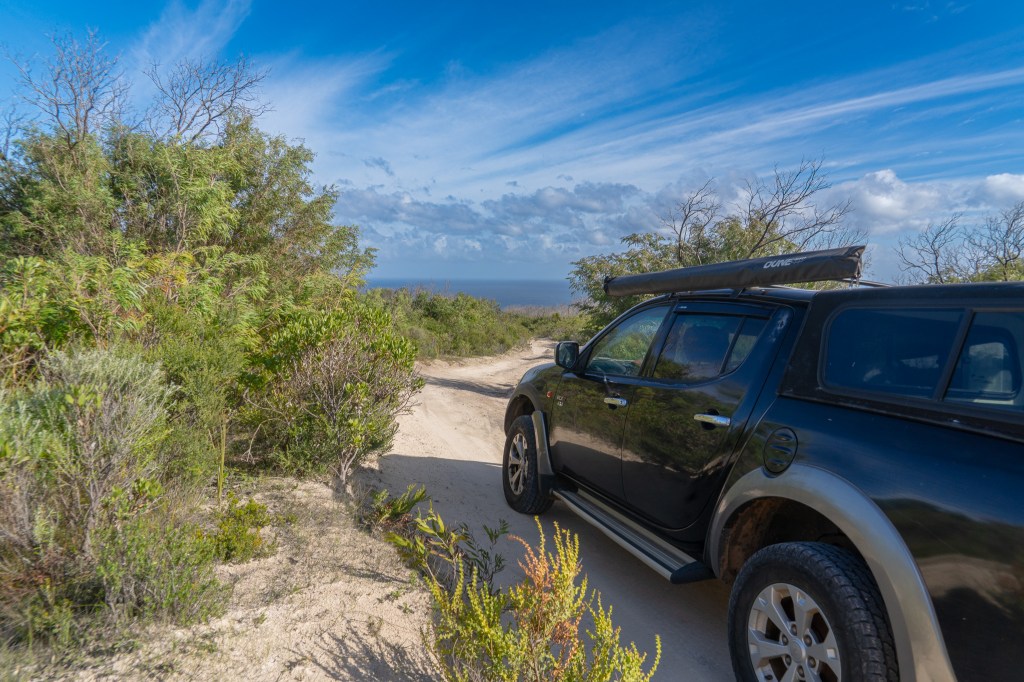
On our first full day in Margaret River, our daughter took us on a unique journey to the coast. I say unique because it was an extreme off-road journey never before experienced. And I say extreme because that’s exactly what it was. The tracks that we navigated were deeply rutted and uneven and, in some places, giant craters had been gouged out which appeared to render the track impassible. On more than one occasion, as we were being thrown about like ragdolls and the tilting of the vehicle was evoking theme park rollercoaster memories, I thought there was a strong possibility that the vehicle was going to overturn. Luckily it never came to that. Relief set in when we reached the coast at a place called Boranup. I was immediately struck by how similar the coastline was to the beaches of northwest Donegal in Ireland. A place I know well. But we weren’t looking at the Atlantic. This was the Indian Ocean. A world away. But in some respects, just like home. The thought crossed my mind that perhaps this was one of the attractions for young people coming from Ireland. While Australia is different in so many ways, there are still features and characteristics that remind them of their roots. Ireland is such a small island that the taste of salt air on your lips is never far away. Literally, or as a happy childhood memory. Maybe this core element of their DNA is one of the factors that makes it easy for them to think of Australia as ‘home’.

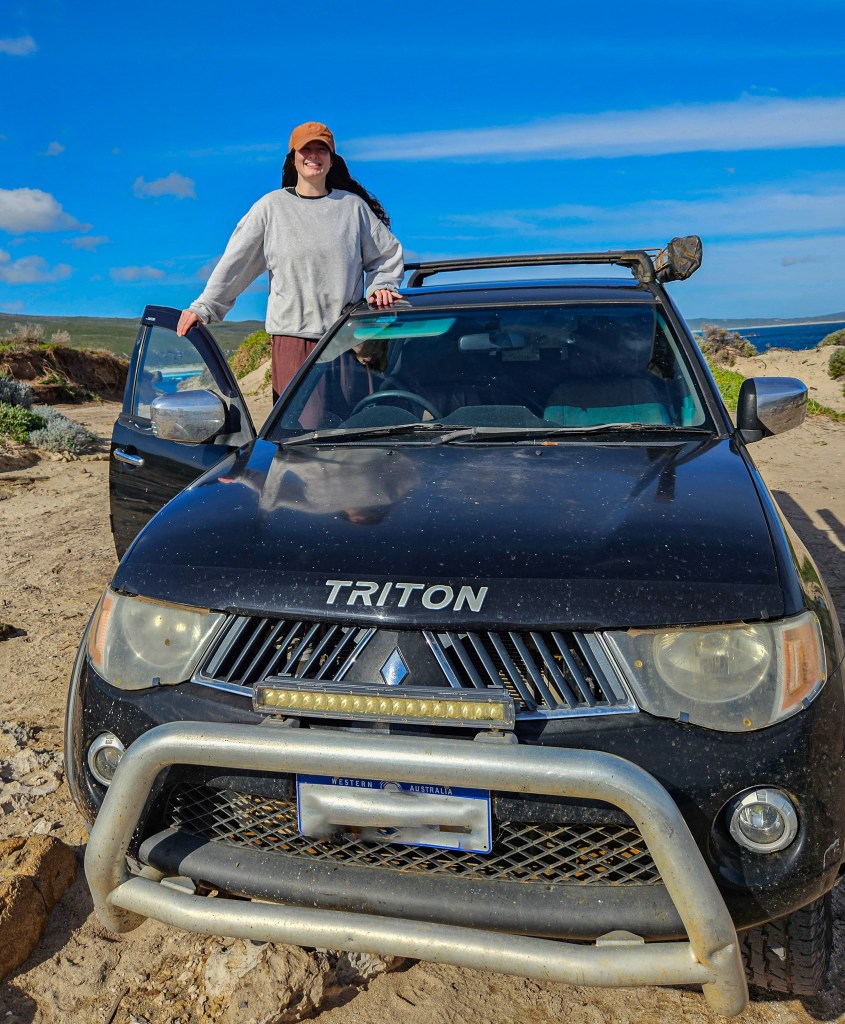
Boranup, Hamelin Bay, in the Margaret River region. Not forgetting the ‘Ute’.

My daughter summed up the drive, “Apologies, I’m not used to back seat passengers. Hope there aren’t too many head injuries!”

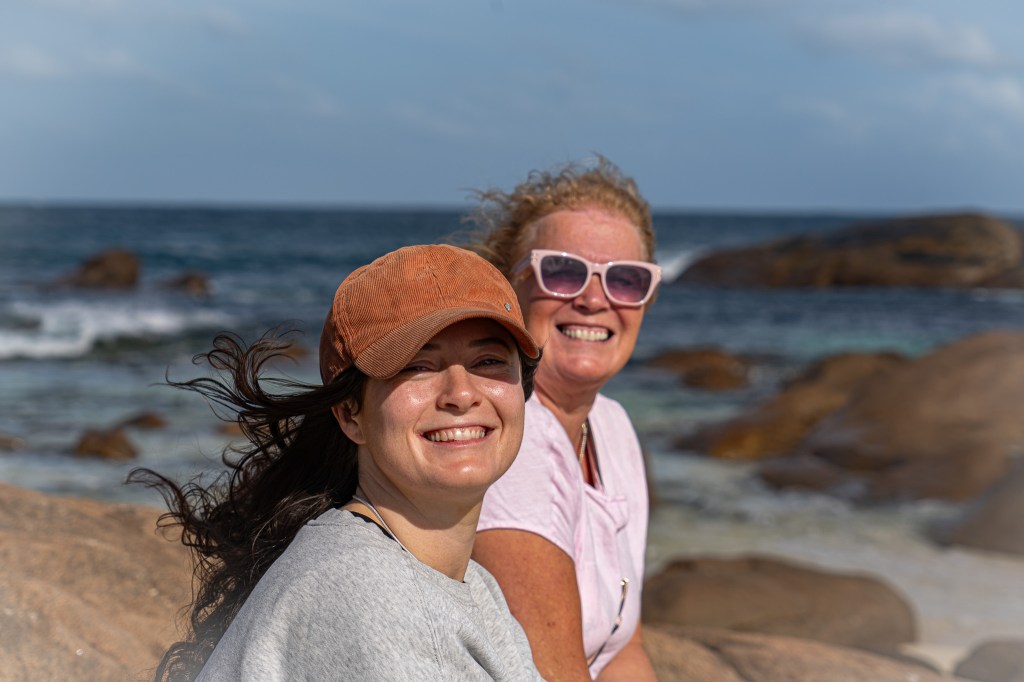
Mother and daughter reunited.

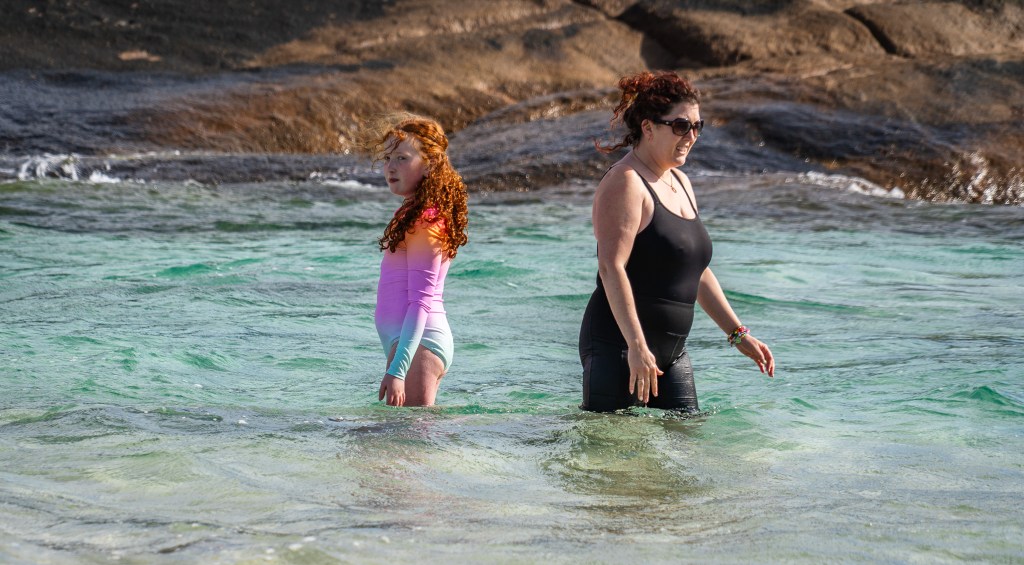
Daughter and granddaughter testing the water.

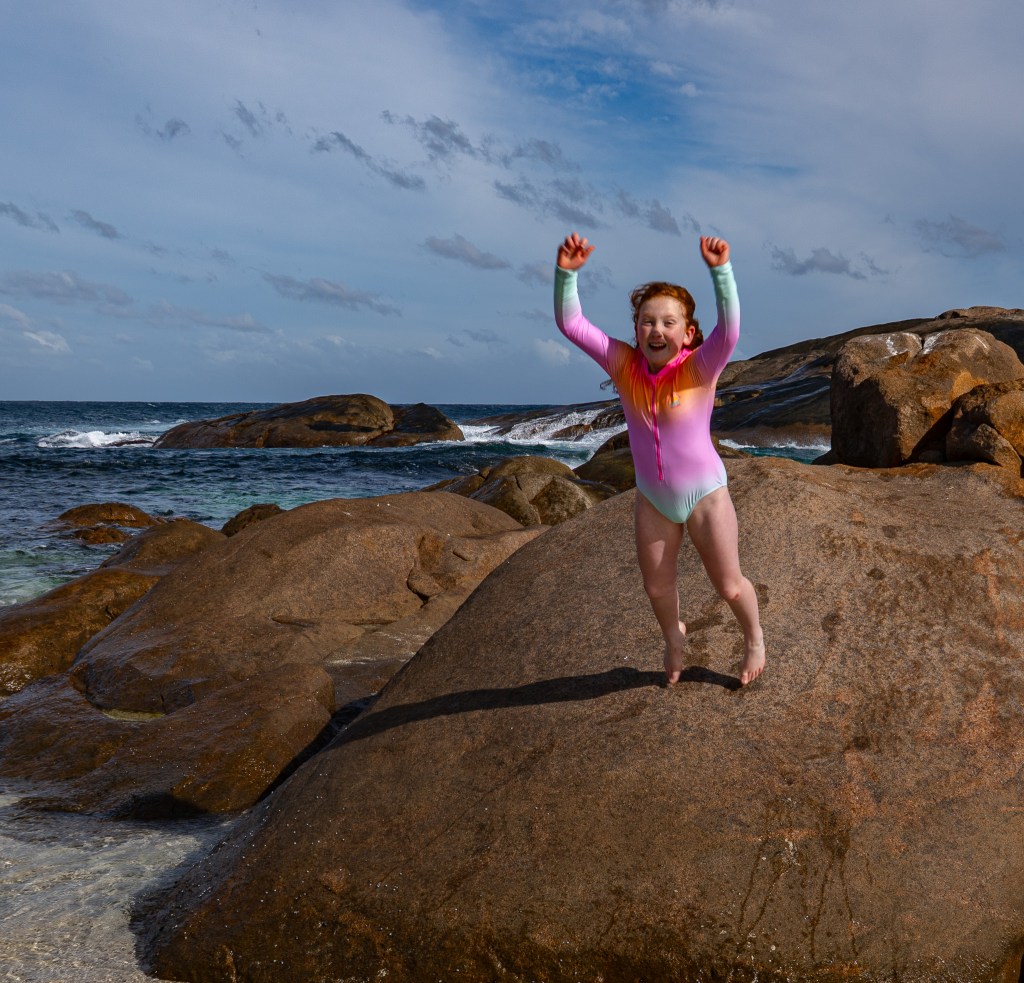
Some of those salt air memories in the making.

Having made a successful return trip to Margs, with the passengers and vehicle in one piece, we lit the fire pit in the garden and settled down to an evening of food, wine and reminiscing.

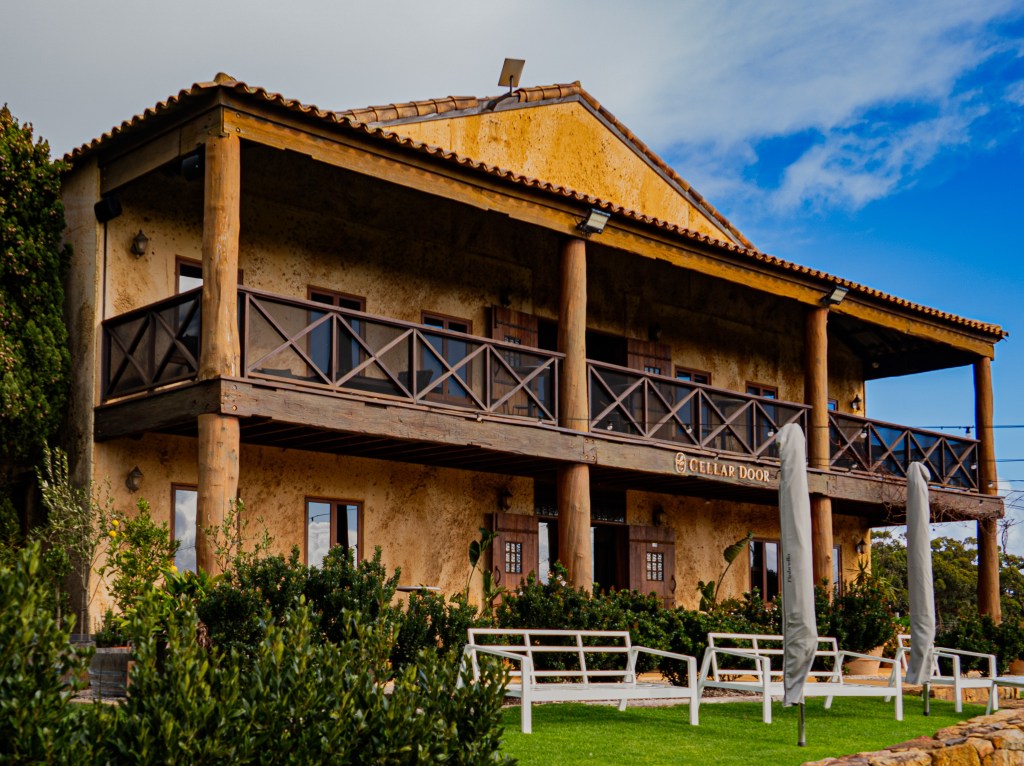
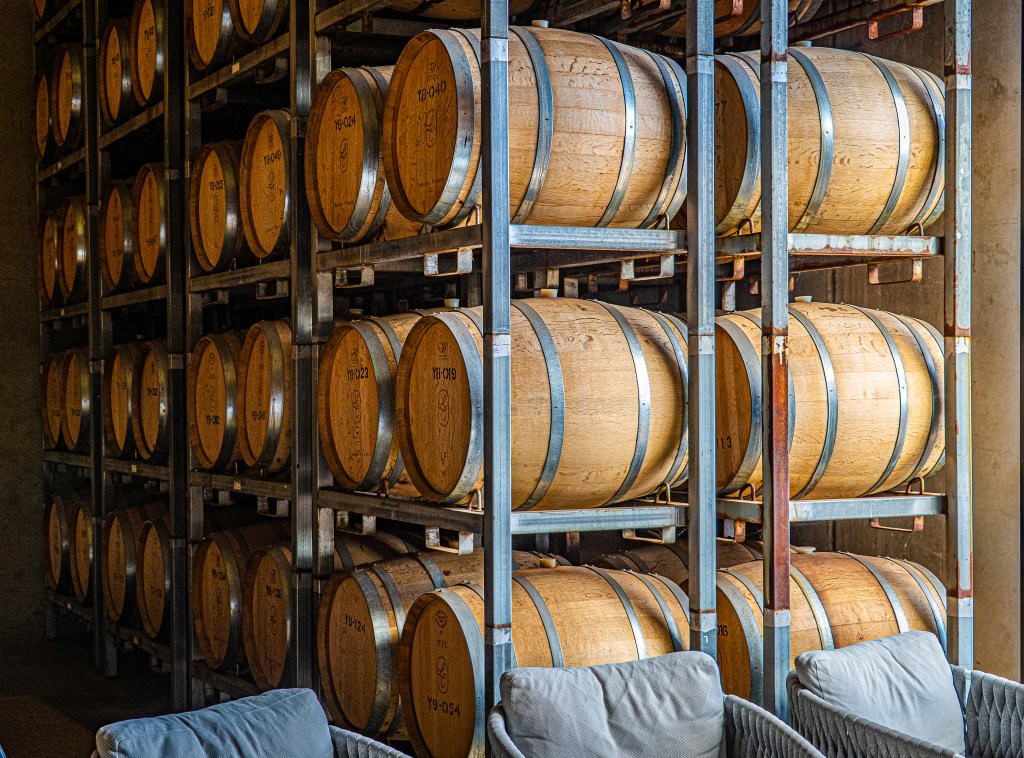
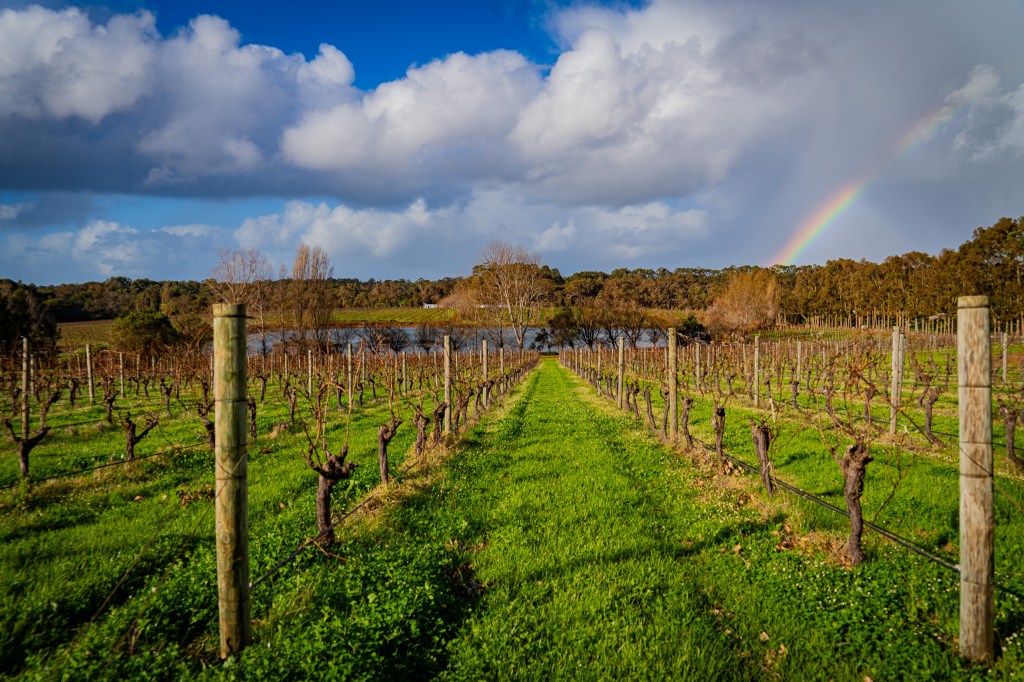
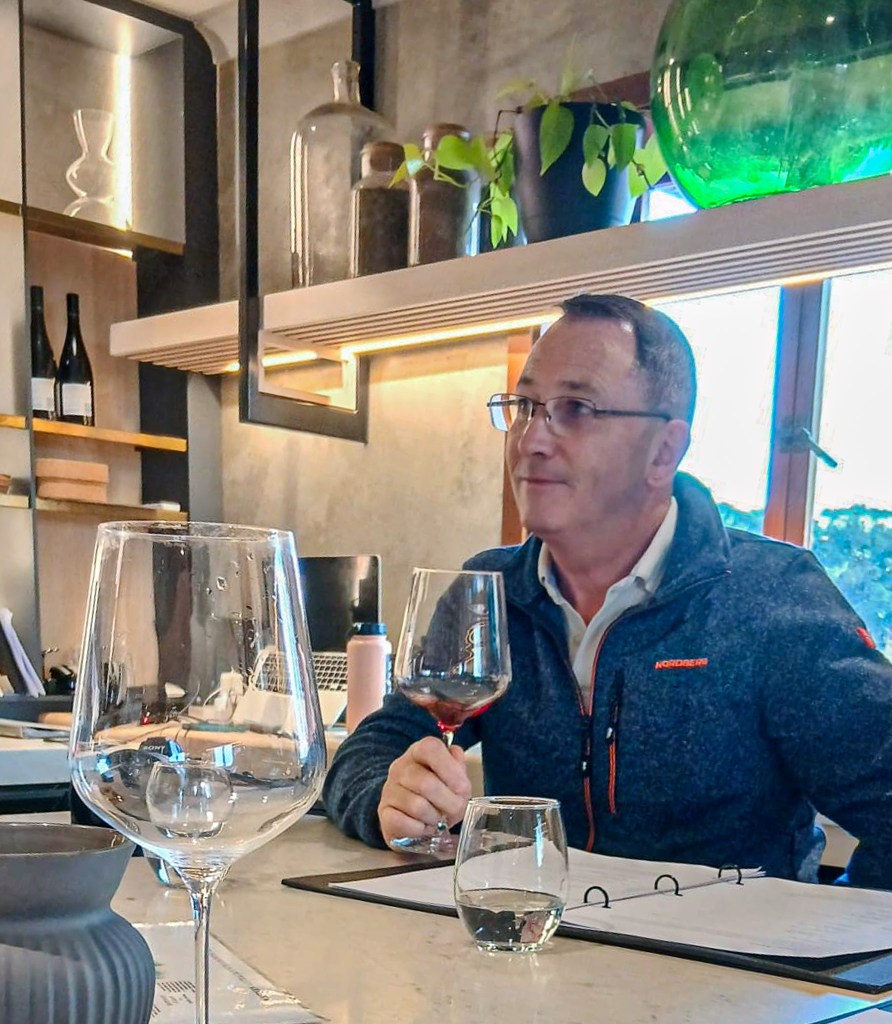
The next day, I was treated to a belated Fathers Day gift-a wine tasting at one of the local wineries, called Cherubino. This was another first for me. I enjoy a glass of wine but drinking it surrounded by racks of wooden barrels, complete with that heady aroma and looking out at the parallel rows of vines where the wine begins its journey, brings a whole other level of appreciation and enjoyment. I am by no means a connoisseur but it was fascinating listening to the Sommelier describe the different grape varieties and how they are influenced by the specific geography of the region. The Margaret River region, especially the southern end, is one of the best examples of a maritime climate in Australia. It experiences the warm westerly breezes from the Indian Ocean and the cooling breezes from the Southern Oceans (officially, it’s all the Indian Ocean but Australians use ‘Southern Oceans’ to describe the part that borders the southern reaches), making it ideal for producing Chardonnay, Sauvignon Blanc and Semillon.

The Cellar Door tasting rooms at Cherubino winery.

Cherubino vineyard slopes gently toward a small lake, ensuring good drainage for the vines.

Father’s Day wine tasting. The perfect excuse for day drinking!

And so, after a short drive and some delicious wood fired pizza at Swings and Roundabouts, it was back to our rental property to begin preparations for the next stage of our adventure-picking up the RV/ motorhome, or as we called it, the ‘Moho’. Not only was this the vehicle that would enable us to discover Western Australia. It would also be our home for the next 18 days and nights. It’s probably accurate to say that it also became the source of some of our most memorable moments, challenges and emotions.

Target date for publishing Part 2: 22nd September 2026

Morning People

It’s easy to feel that you have a personal connection to the sunrise. Even when you know it can be seen by everyone. And so, when we get up and go to a particular place to enjoy it and hopefully photograph it, I usually find myself with mixed emotions. I see other people (not many) with the same idea as me and feel resentment that they are crashing my party. My time with MY sunrise. On the other hand, I feel reassured that I am not alone in my appreciation of what is arguably the most precious part of the day.

Please meet some of the dawn fraternity…

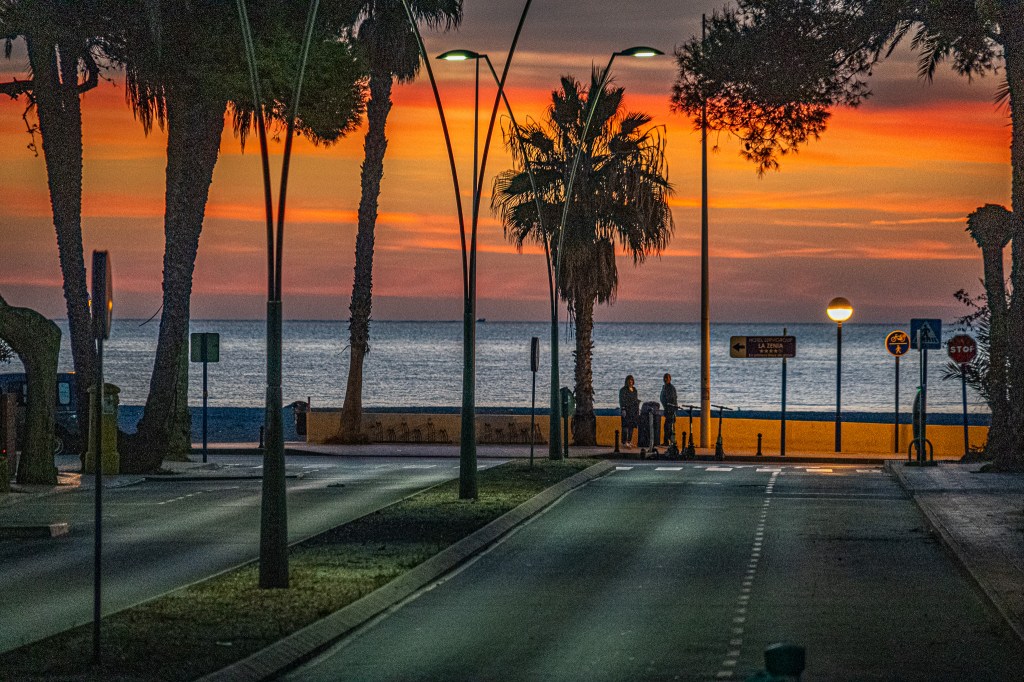
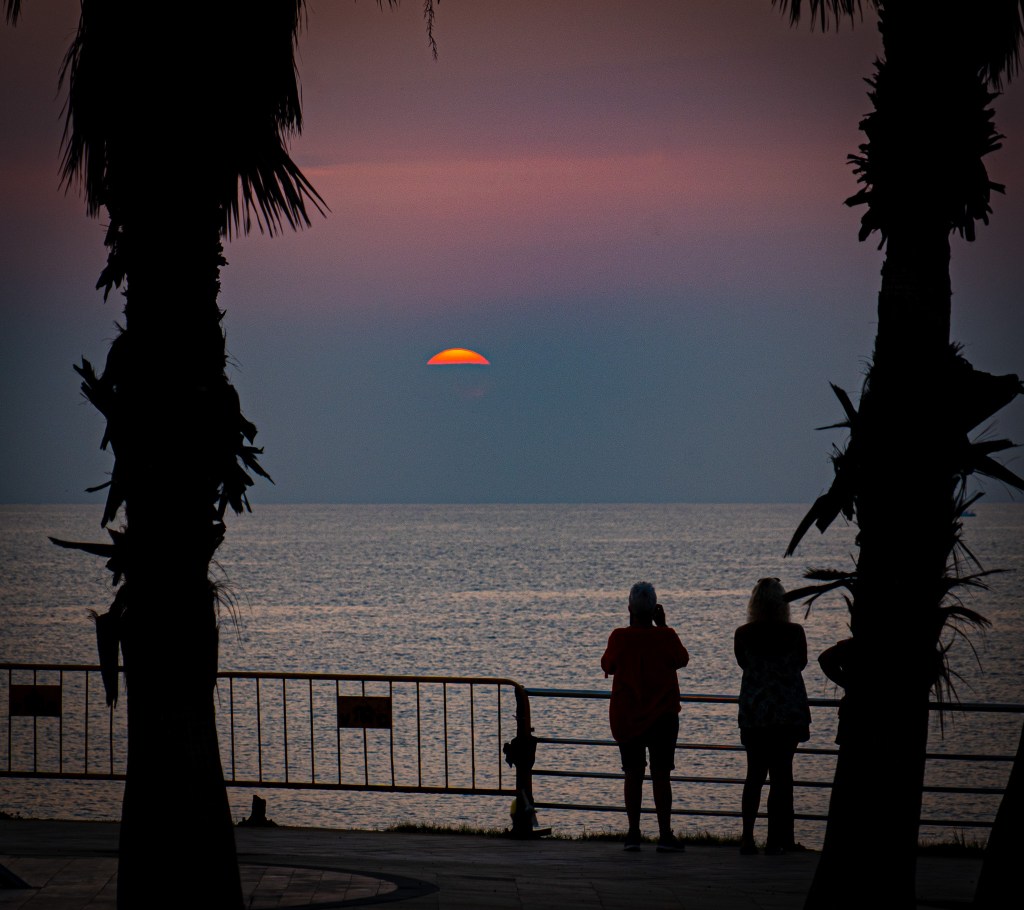
I pulled into this deserted street near La Zenia beach just before sunrise. As I took the photo I couldn’t help but think the couple in the shot resented me. Probably because I was crashing their party. Their time with THEIR sunrise!

Some mornings disappoint because of cloud cover but the uncertainty is half the joy. After a dull start, my long suffering wife was rewarded with an inspiring sunrise at Playa Flamenca, Orihuela Costa.

This is probably one of my favourites. From a technical perspective, it’s nothing special but I think it has a cinematic feel. Something almost nostalgic about it. Playa Flamenca, Orihuela Costa.

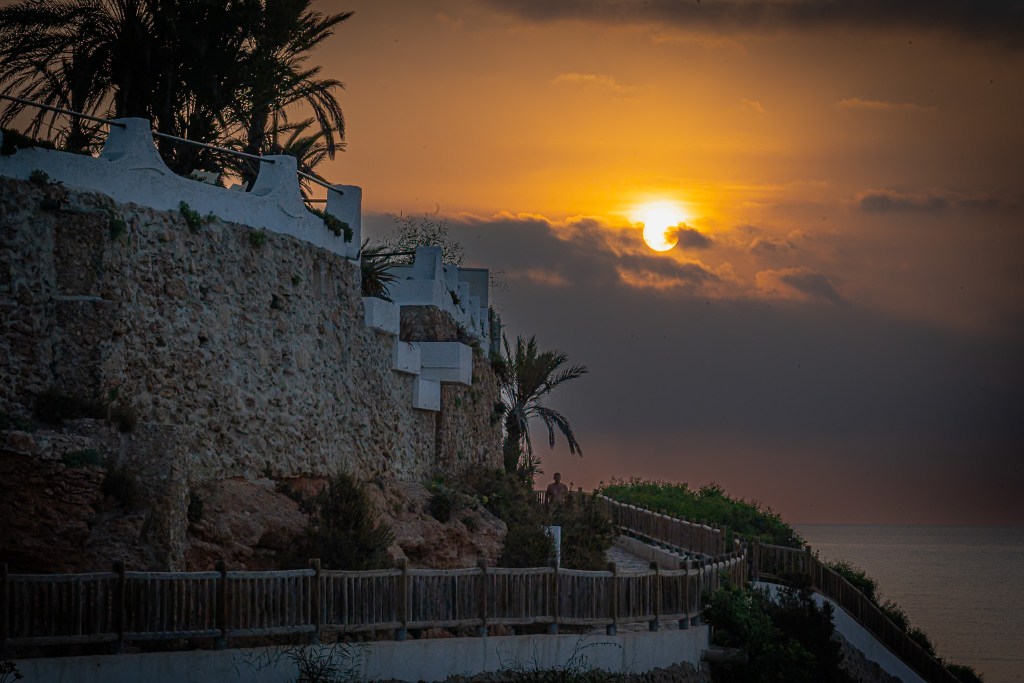
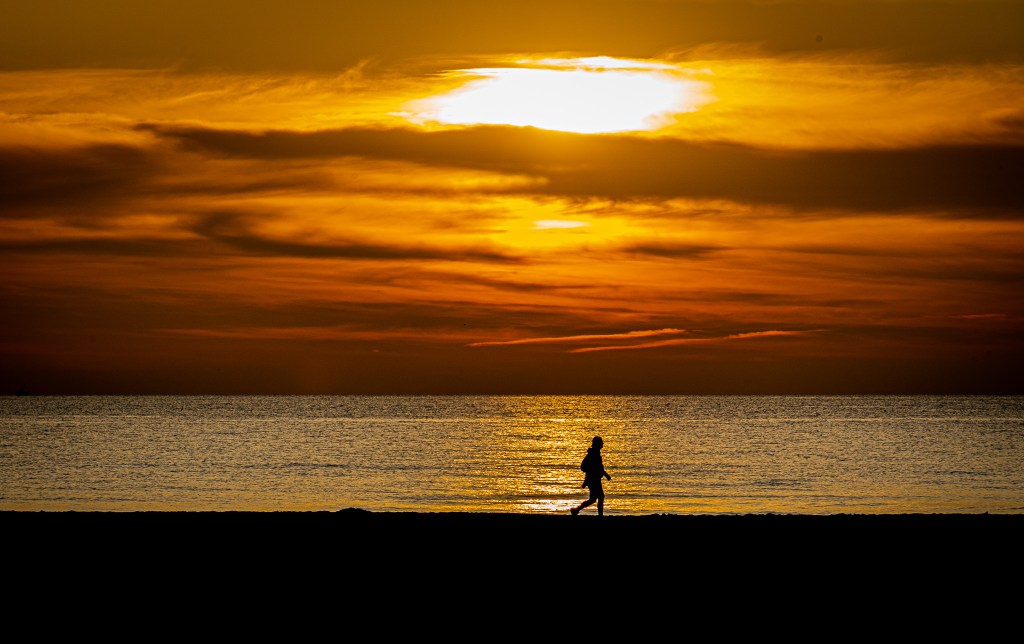
The sun appearing about 10 minutes after sunrise on the coastal path at Cabo Roig. The first jogger of the day coming into shot.

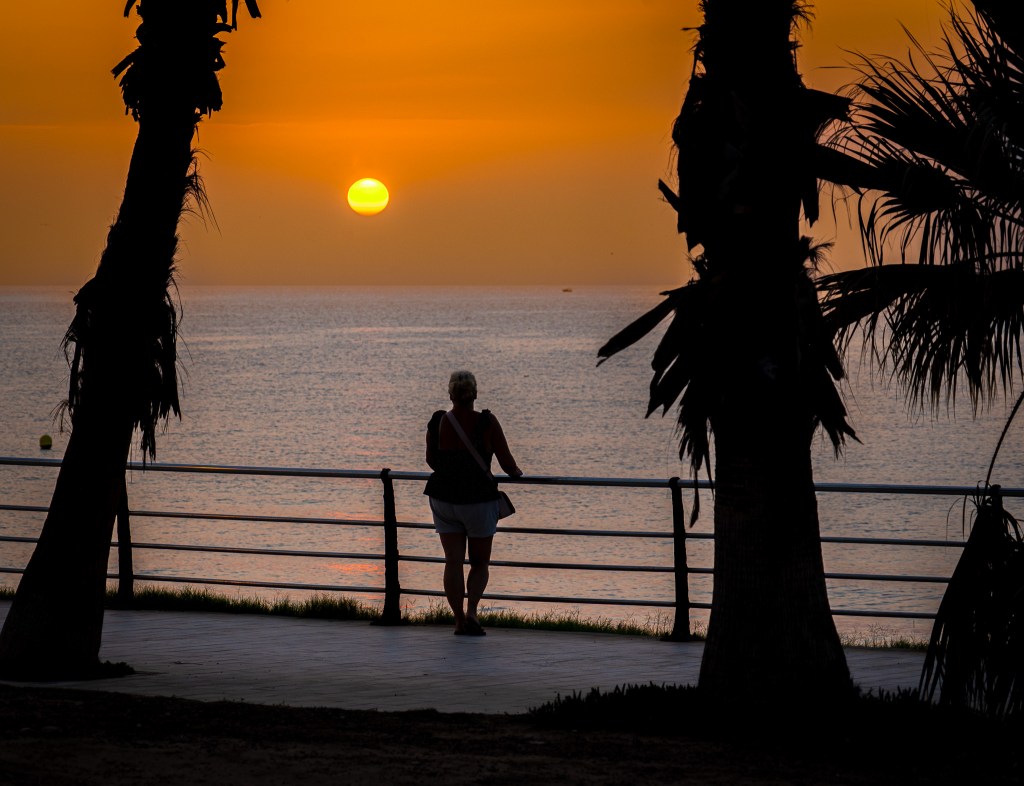
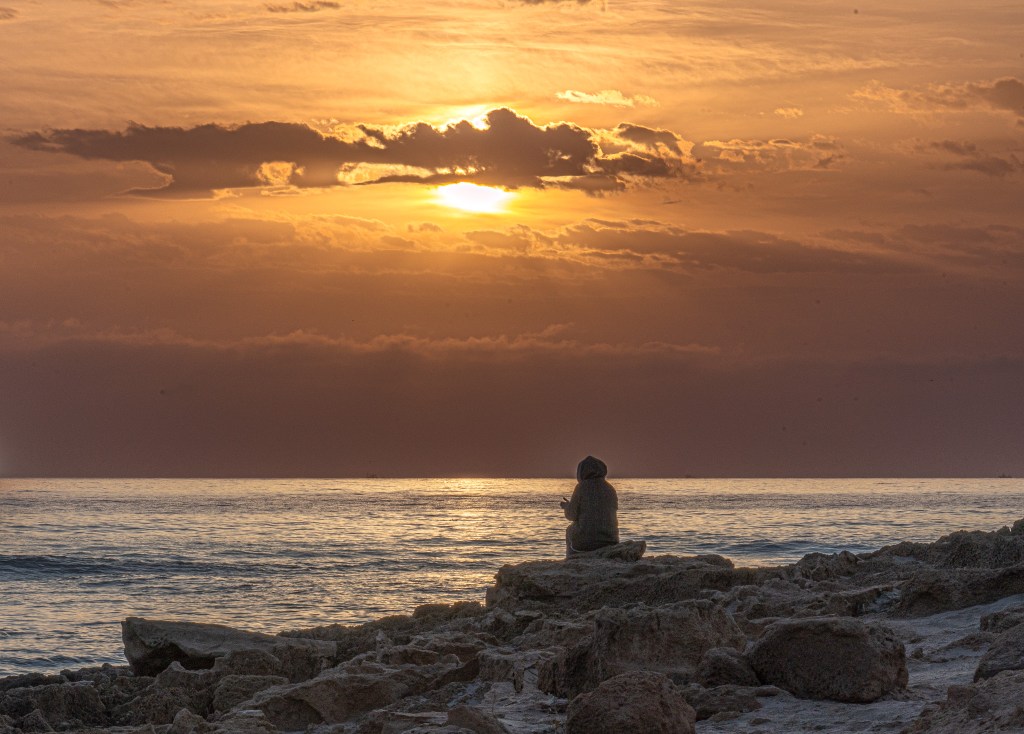
A very cold morning at La Zenia, Orihuela Costa. Alone with her thoughts. This time of day is an opportunity in a frenetic world to find some quiet space.

A lone walker on La Zenia beach. Not many better ways to start the day. And depending on the time of year, this is the only time it is possible. In summer, the daytime temperatures and crowds make it a less enjoyable experience.

Partial reveal. That touch of magic when the rising sun slowly appears above the misty horizon at Playa Flamenca. The patience of the expectant watchers paying off.

There is never any interaction between the morning people, apart from the odd polite nod. A hesitancy exists among the multinational strangers. One unsure of the language spoken by the other. But as the sun rises in the sky and reaches an intensity that is impossible to look at, and as the morning people make their way to their various homes to get on with their days, they can be sure of one thing. They all share a common language. One that has no words. Rather, one that consists of a shared wonder and appreciation of the yellow star that sits at the centre of our solar system and the magic it performs every morning.