I had entered my 60th year when I saw New York for the first time. I had many preconceived notions about it – all based on TV shows, films and books. I imagined it to be densely populated, noisy and shabby in places and probably a bit overwhelming. And it was all these things. One thing that was unexpected was the sheer scale of the place and you can only appreciate this when you see it ‘in the flesh’. We stayed in mid town Manhattan and as a keen photographer, one of the first things I realised was that the towering skyscrapers meant limited ‘field of view’ (see photo below). I decided that the best photographic opportunities would be the ones taken from the outside looking in. In other words, from the river or an elevated vantage point but more on that later. You either love New York or you hate it. I can’t imagine anyone saying “it’s okay”. I returned a year later, so you know which category I am in.
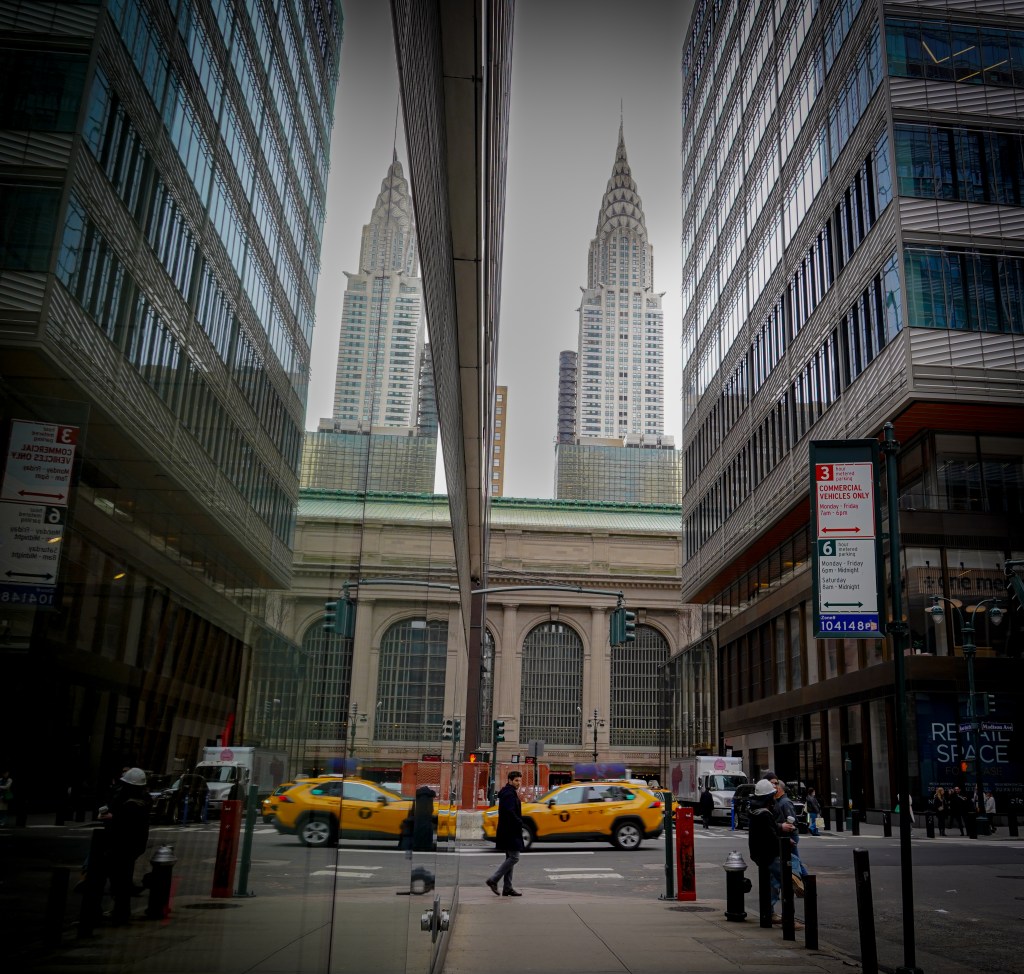
Approaching Grand Central Terminal from East 43rd street with the Chrysler building taking centre stage.
Tip: If you’re a photographer, bring the widest angle lens you own. For me, this was 24mm but a 16mm lens could be useful.
Some New York (mainly Manhattan) trivia. Did you know?
- New York has five boroughs. They are (in alphabetical order) Bronx, Brooklyn, Manhattan, Queens and Staten Island.
- There are 21 bridges and 15 tunnels in and out of Manhattan.
- Manhattan is an island bounded by three rivers. The Hudson River, the East River and the Harlem River.
- Manhattan is subdivided into districts and some of their names hint at the historical concentrations of various businesses such as the Flower District, Garment District, Diamond District and Meat Packing District.
- Manhattan is easy to navigate, thanks to its grid system. Most of the borough follows a pattern of avenues running north/south and these are intersected by streets running east/west. Fifth Avenue is the dividing line between east and west. Simple but effective. Makes getting lost difficult!
- The average length of a city block in Manhattan, e.g., walking along 5th Avenue from 42nd to 43rd Street, is 264 feet. So, about 20 blocks per mile.
- Manhattan is one of the most densely populated areas in the world, with a population distribution of almost 73,000 residents per square mile.
- Some NYC acronyms. DUMBO-Down Under Manhattan Bridge Overpass. SoHo-South of Houston Street. Tribeca-Triangle Below Canal.
Flower District. An oasis in Midtown Manhattan.
Before arriving at our hotel on West 28th Street, I had only paid brief attention to the part of the description that said ‘in the heart of the flower district’. It was, after all, New York. Flowers are not something I would have associated with that city. We arrived in the evening and the street was surprisingly quiet, despite its close proximity to 6th Avenue. I woke at 4.30am (it didn’t take much to rouse me because my body clock was still on home time, which was 9.30am and I would normally be well into the work of the day). I heard the sounds of a metal shutter being raised and the rattling of trolley wheels dropping from the kerb onto the road. Or as they would say in NYC, “from the sidewalk onto the street”. I went to the window and saw that it was raining. Looking down to the street I saw the source of the noise. A half raised shutter revealed a lighted interior and a group of workers loading trolleys with shrubs, plants and a wide variety of flowers but the surrounding darkness made it difficult to see much detail.
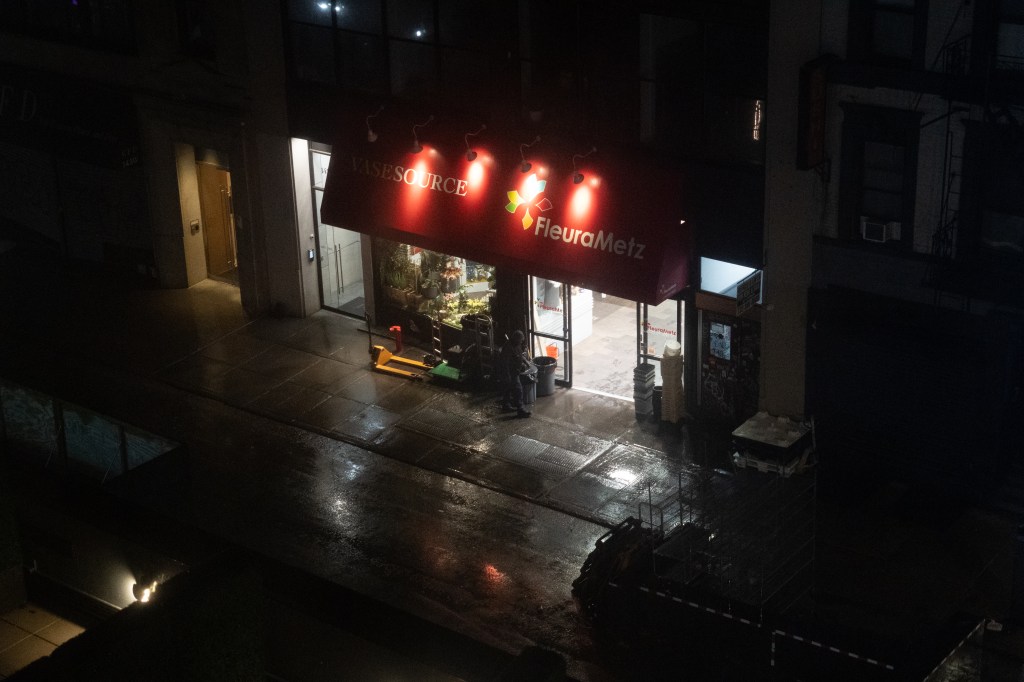
The flower seller’s day starts early at 4.30am
Then one by one, the shutters of adjacent shops began to rise, and more light spilled out onto the reflective surface of the wet street. Soon the area was a hive of activity, and the pavements (sorry, sidewalks) were transformed into verdant walkways. Walking along the street in daylight was a truly pleasurable experience. The bright colors and heady scents seemed incongruous with the concrete jungle, but the effect was therapeutic. The flower district has been in this location since the 1950s. Its history goes back to post-Civil War days, and its most famous predecessor was the Union Square Flower Market, which opened in 1891. The number of flower sellers is diminishing annually as they fall foul of increasingly high rents ($7,000 to $25,000 per month!) and post COVID19 inflation. In the 1950s, 60 sellers were operating here. Today there are less than 20. The reason for the early opening is that the shops act as wholesalers to the trade from 5:00 a.m., so the best time to visit would be after 9:00 a.m. While the daytime experience of the Flower District was enjoyable, the abiding memory for me will be waking at 4:30 a.m. and hearing West 28th Street come to life in the city that never sleeps.
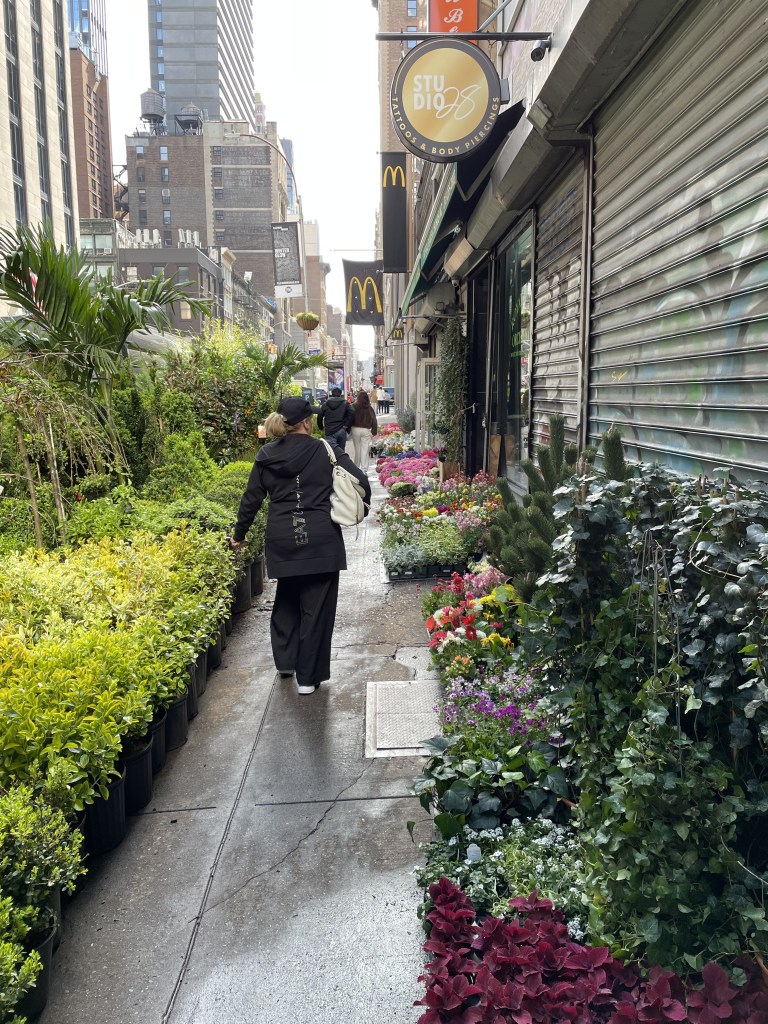
Nature in the city.
Tip: Visit after 9.0am when the professional buyers have left and before midday when a lot of the blooms will have been sold.
Circle Line Cruise. The best way to view Manhattan.
The multitude of sights to see in NYC and the ways in which to see them is endless and determined by personal choice. In my opinion, the Circle Line Cruise around Manhattan is a must. As I mentioned in my introduction, the best way to see Manhattan is from the outside looking in. If the impressive vantage point was all the tour had to offer, I would have been satisfied but it included much more. The guide (David), a native New Yorker, provided the story of the city’s fascinating history, from its native inhabitants, through to modern day. His narration was peppered with human stories and trivia that only a local would know and his portrayal of the city and it’s people was one of an eclectic mix of behaviours and mindsets. A place where nothing is unusual. To illustrate this point, he described how, while filming a scene in Times Square for Ghostbusters, the directors didn’t use extras. The sight of Bill Murray and Dan Aykroyd running through the streets in silver suits, carrying their ‘proton packs’ didn’t provoke much of a response from the seasoned New Yorkers who have seen it all!
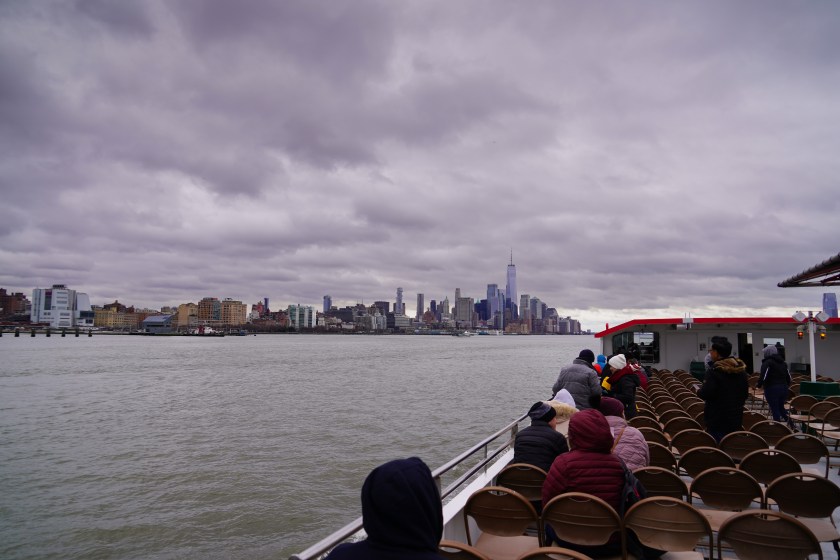
Cruising down the Hudson River with the financial district looming in the distance.
Tip: Sit on the left hand side for unobstructed views of Manhattan. If sitting outside in any season but summer, wrap up well. It’s always colder on the water.
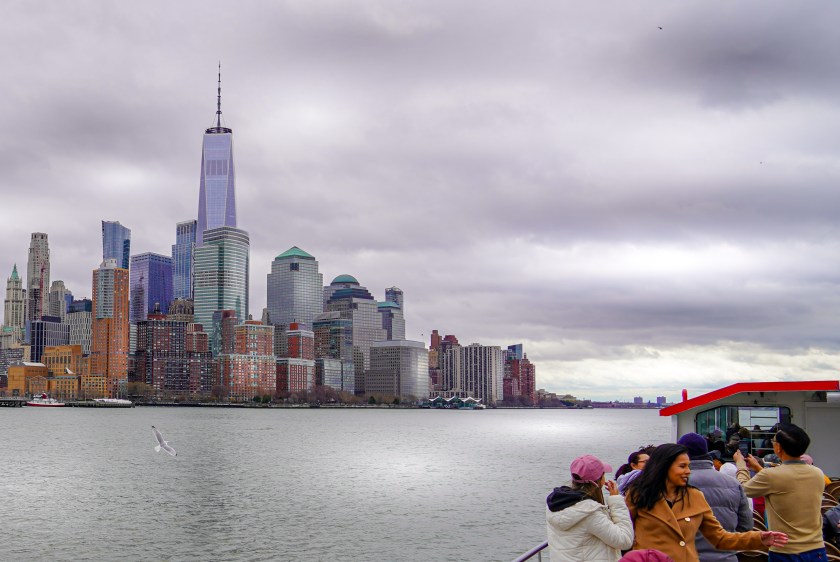
The One World Trade Center dominates the skyline in the Financial District in Lower Manhattan.
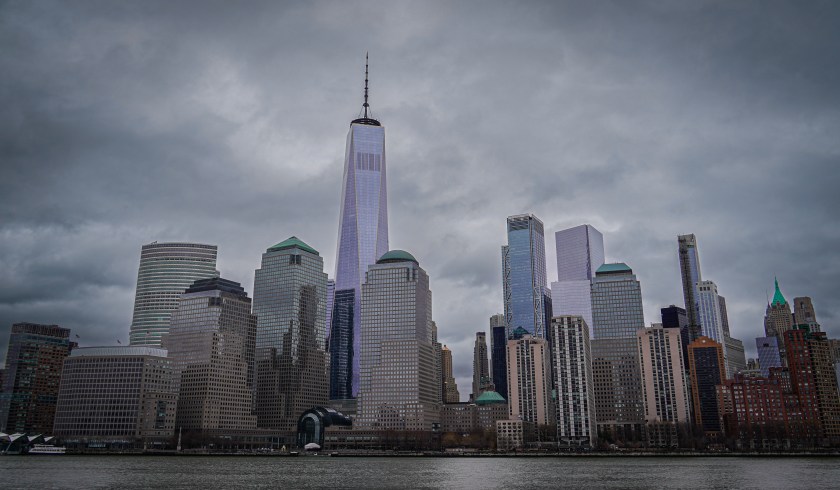
The gap where the Twin Towers stood, a solemn reminder of a dark day in New York’s history.
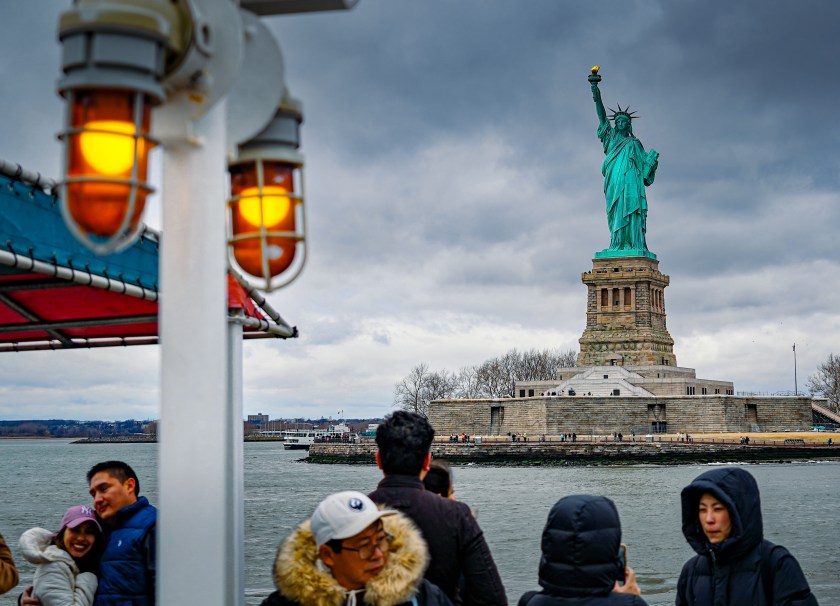
Before circling Manhattan, we took a short detour and sailed past Liberty Island for that obligatory photo of the Statue of Liberty.
The Statue of Liberty was a gift from France in 1885 to honour the alliance between the two countries during the American Revolution. She is made of copper which has been oxidised by the air over time, resulting in the green patina of copper oxide. The statue is struck by lightning, on average, 600 times every year.
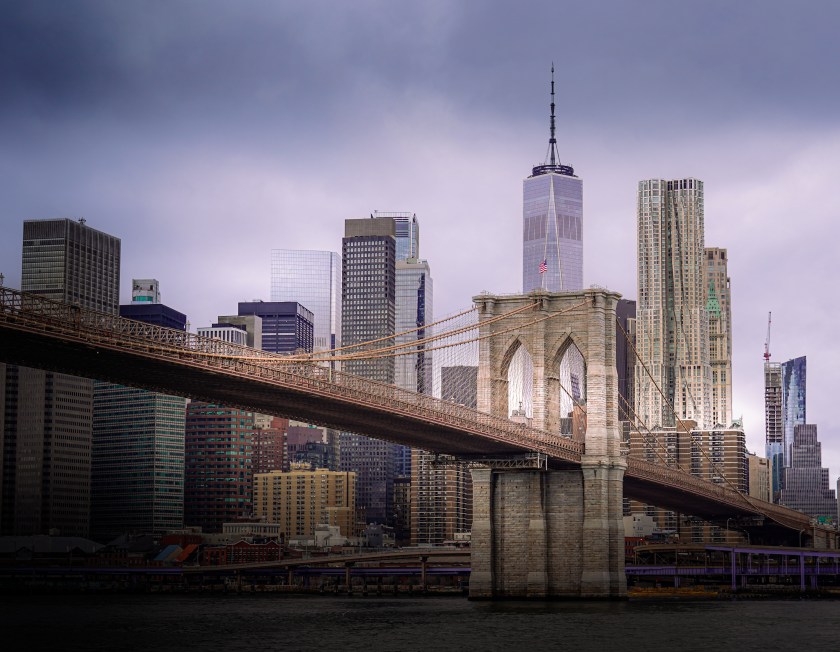
Brooklyn Bridge. The iconic first bridge over the East River, linking the boroughs of Manhattan and Brooklyn.
Tip: The best vantage points, in my limited experience, from which to photograph the Brooklyn Bridge are from a boat on the river, from the Manhattan Bridge or from Brooklyn Bridge Park in Brooklyn.
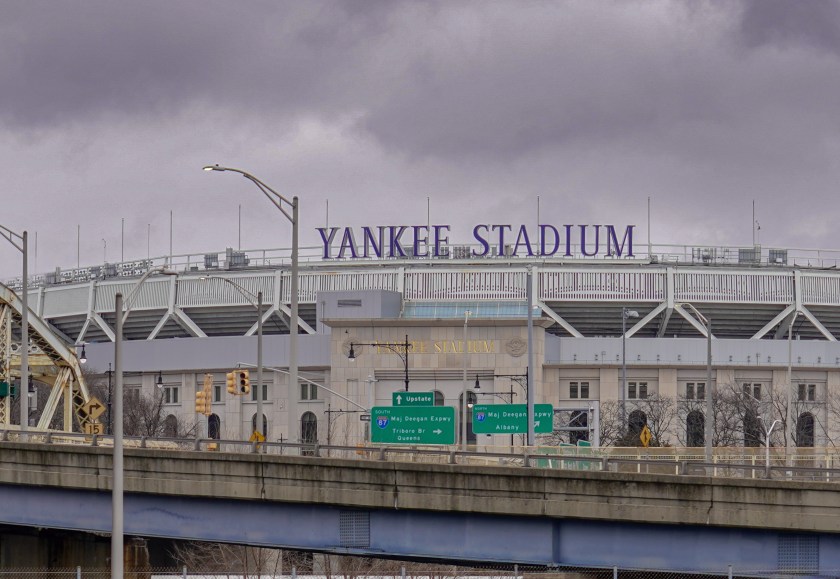
Sailing up the Harlem River, we passed the home stadium of the New York Yankees.
Yankee Stadium is situated in the Bronx and opened in 2009. It replaced the original that was built in 1923. Apparently during construction, one of the workers, a Boston Red Sox fan, buried a Red Sox jersey underneath the visitors’ dugout. He hoped this would bring the Yankees bad luck! However, his dastardly deed was reported by his colleagues and he was forced to dig it up again. The Bronx is the only one of NYC’s boroughs that is part of the USA mainland.

The George Washington Bridge (GWB) on the Hudson River.
Connecting Washington Heights in Manhattan to Fort Lee in New Jersey, the GWB is the busiest motor vehicle bridge in the world. Over 100 million vehicles cross this bridge every year. Opened in 1931, it is the only suspension bridge in the world with 14 vehicular lanes.

Back at our starting point at Pier 83 at West 42nd St and 12th Avenue
As we approached the dock from which we had departed over 2.5 hours previously, the sun was low in the sky and the clouds were taking on a pink hue. For the last hour, I had been the only person on the outer deck. It was bitterly cold but I hadn’t come all this way to miss whatever photo opportunities came my way. I shook from head to toe and my hands were numb and painful but it was worth it. A unique experience, viewing the most interesting and most famous city in the world from the water. An experience made all the more enjoyable by the fascinating, informative and entertaining commentary from our guide who was as unique as NYC itself. Thanks David!
On the Edge. A bird’s eye view from the Edge observation deck.
For a completely different view of Manhattan, there are various ‘observation decks’ scattered around the borough. These include the Empire State Building, One World Observatory, Top of the Rock and Summit One Vanderbilt but my personal choice was Edge (not sure why it’s not called the Edge). When you have limited time in NYC and have decided to only do one observation deck, your choice will not be an easy one. I picked Edge because of its riverside location on the banks of the Hudson, its views of Midtown and Lower Manhattan and its status as the highest observation deck in the Western Hemisphere. It was difficult to envisage what the view would be like from such a place but it didn’t take long to find out. The high speed elevator took us from ground floor to the 100th floor in 52 seconds! Stepping out of the elevator, we were confronted by sight that will probably be one of my most enduring memories. Looking down at the Empire State Building!
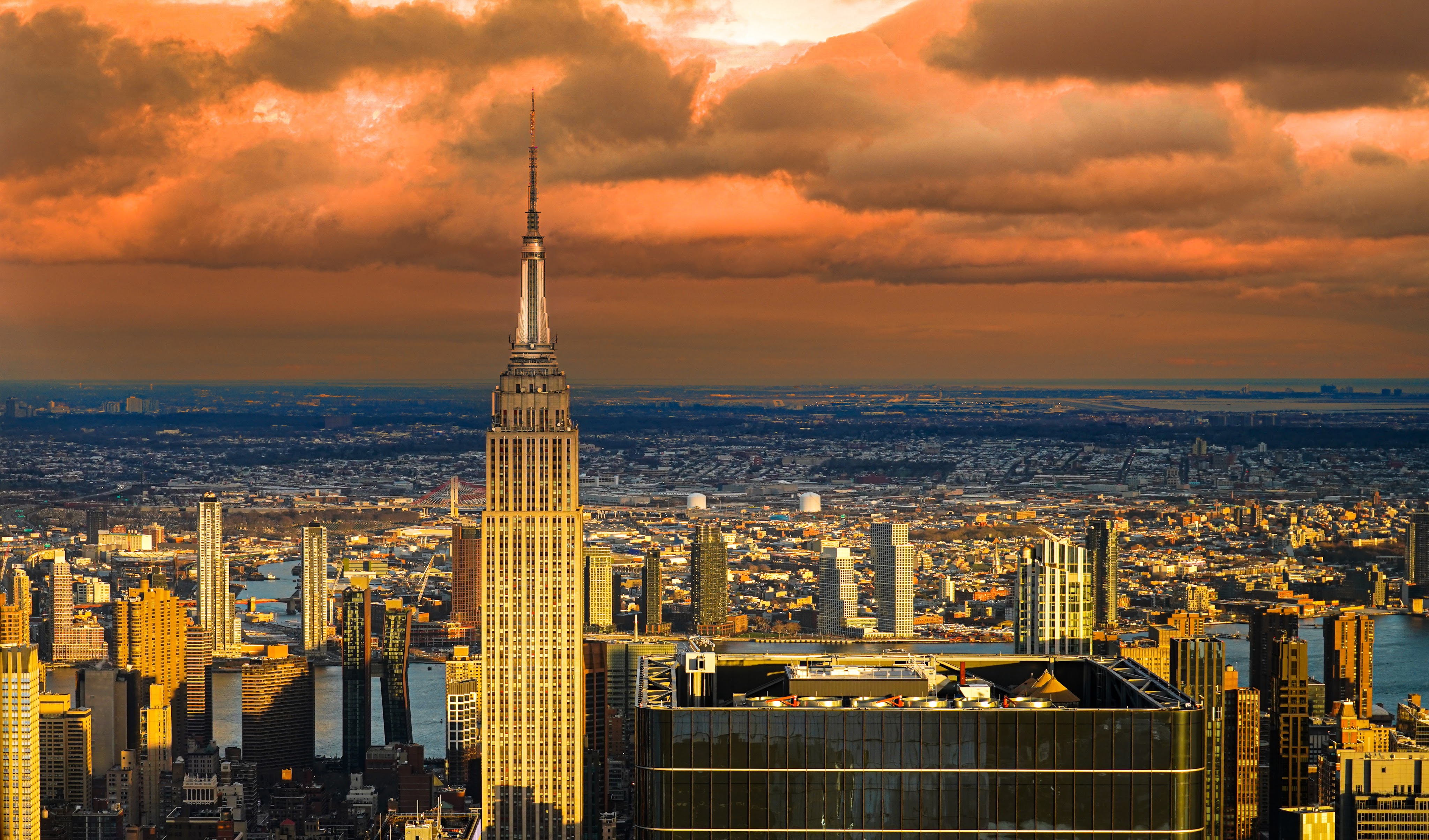
Looking down at what used to be the tallest building in the world.
Construction of the Empire State Building began on St Patrick’s Day (17th March), 1930. It opened on 1st May the following year. Impressive schedule by any standards. It’s name comes from the nickname for the state of New York (the ‘Empire State’) and when it was completed was the tallest building in the world. I don’t think it’s an exaggeration to describe it as the most famous building in the world. It is large enough to warrant its own zip code (10118), similar to 43 other buildings in NYC. Its observatories on the 80th, 86th and 102nd floors helped make it the number 1 attraction in the world in Tripadvisor’s 2024 Traveller’s Choice Awards. But, just like the Brooklyn Bridge, if you want to photograph it, you don’t want to be on it. Standing there gazing at it, glowing in the setting sun, I admit to being a bit starstruck.

As darkness fell a short time later, the magnitude of the building was evident as its illuminated peak towered above the city. The glass wall around the observation deck affected the quality of the images but that didn’t lessen the enjoyment of the occasion.

Of course it wasn’t all about the Empire State Building. The views looking south towards the financial district were impressive in their own right. The beautiful sunset over the Hudson River was an added bonus.
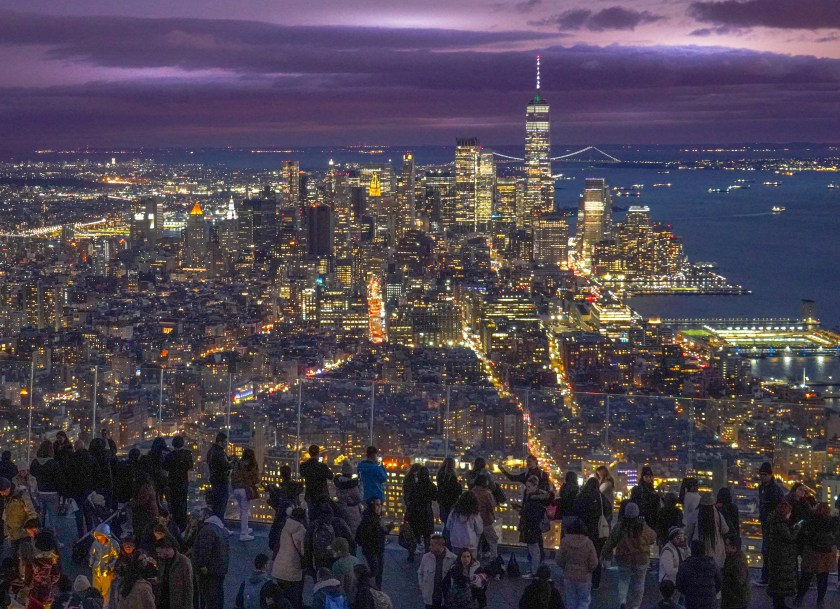
View from Edge looking towards the Financial District, with One World Trade Center reaching skyward and the Hudson river on the right. Beyond the southern tip of Manhattan, you can see the illuminations on the Verrazano suspension bridge (also referred to as The Narrows Bridge) which connects the boroughs of Staten Island and Brooklyn.
I often wonder how much I would remember about places I’ve visited, if it wasn’t for the photographs. The details would be scant. But when I look at the photos, the memories are triggered and the details come flooding back. That’s the real beauty of photography and I suppose, the main motivation for this website. When I’m old and decrepit it will serve as a repository of all the life enhancing experiences I’ve been lucky enough to have had.
Tip. I recommend buying the tickets for Edge at the on site ticket office. We bought ours online with Viator and the scanner did not recognize the code. This led to a lengthy delay and we were eventually issued with new tickets. It’s also worth noting that you will still need to purchase in advance because it is highly unlikely that you will be able to visit the deck at the time of purchase. Numbers are strictly limited. This will mean two trips to Edge but in my opinion, well worth it.





 Bleeding Dove