Valencia is the name of the city, the name of the province and also the name of the autonomous community. This piece refers to the city of Valencia. It is the third most populated city in Spain after Madrid and Barcelona and sits on the eastern coast above the Costa Blanca.
A very brief history: Valencia was founded by the Romans in 138 BC. The Visigoths conquered the Iberian peninsula in the 5th century after the fall of the Roman Empire and established a kingdom in Spain. In 711 AD Spain was invaded by the Moors. They occupied the city and today their influence is still evident in the architecture and irrigation systems that have shaped the city and whole regions of Spain. The Christian conquest of Spain was a gradual process which ended in the 15th century with the fall of Granada.
Valencia is around a two and a half hour drive from our house but on this occasion we took the bus which added another couple of hours to the journey. The advantage though, was that we were able to take in the impressive scenery along the way. As the bus travelled north, the rocky outcrops of Benidorm and Calpe gave way to miles of lush green agricultural landscape. This transformation is illustrative of Spain’s variety. It is a complex and diverse country. Not only in geography but in its culture and traditions, not to mention its languages. It may come as a surprise to know that several languages are spoken in Spain. No doubt there are many people out there who will have differing opinions but as far as I can tell, the main ones are Spanish (Castilian Spanish), which is spoken my the majority of the population; Catalan, spoken in Catalonia and the Valencian Community (though the people who live in Valencia call it Valencian!), Galician, spoken in Northwestern Spain and is similar to Portuguese; and Euskara, spoken in the Basque Country. As with all things linguistic and cultural, there will always be different opinions and bias and occasions where contradictions occur. For example, we are based in Orihuela Costa which is part of the Valencian Community and people here speak Castilian Spanish. The only part of the Community of Valencia where this is the case. An anomaly, yes, but I’m sure it’s not the only one!
Because of the city of Valencia’s history, it’s unsurprising that there is a wealth of historic buildings and architecture to explore. One place in particular that I have wanted to see for a while is the Church of Saint Nicholas. Having seen several YouTube videos, I was struck by the contrast of the inconspicuous exterior with the ostentatious interior. And so, this was the first visit on the list. The YouTube videos were impressive but nothing equals seeing the frescoes with your own eyes.
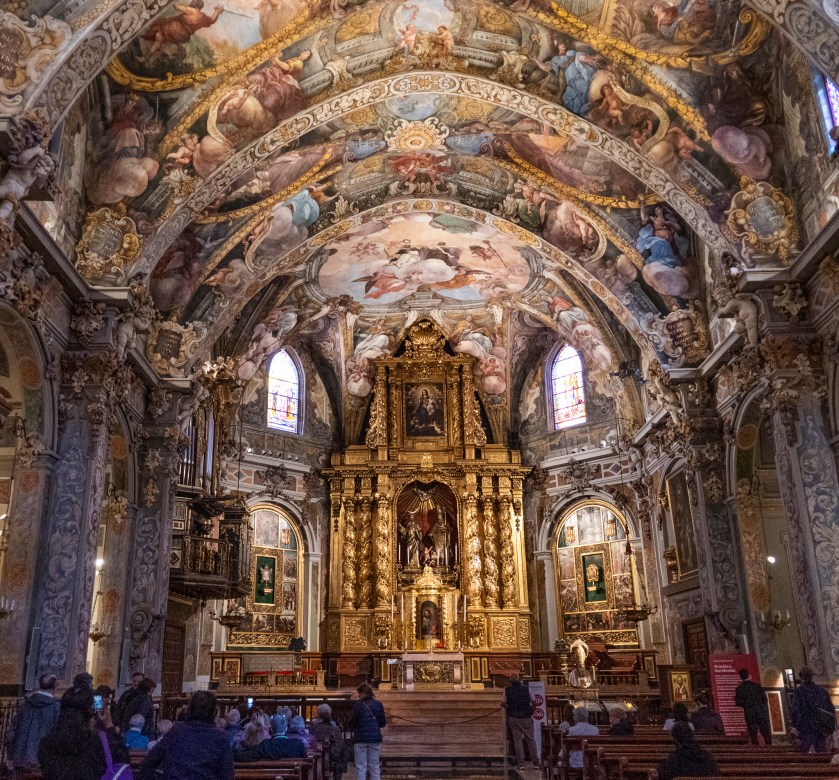
‘The Sistine of Valencia’ is a well deserved moniker.
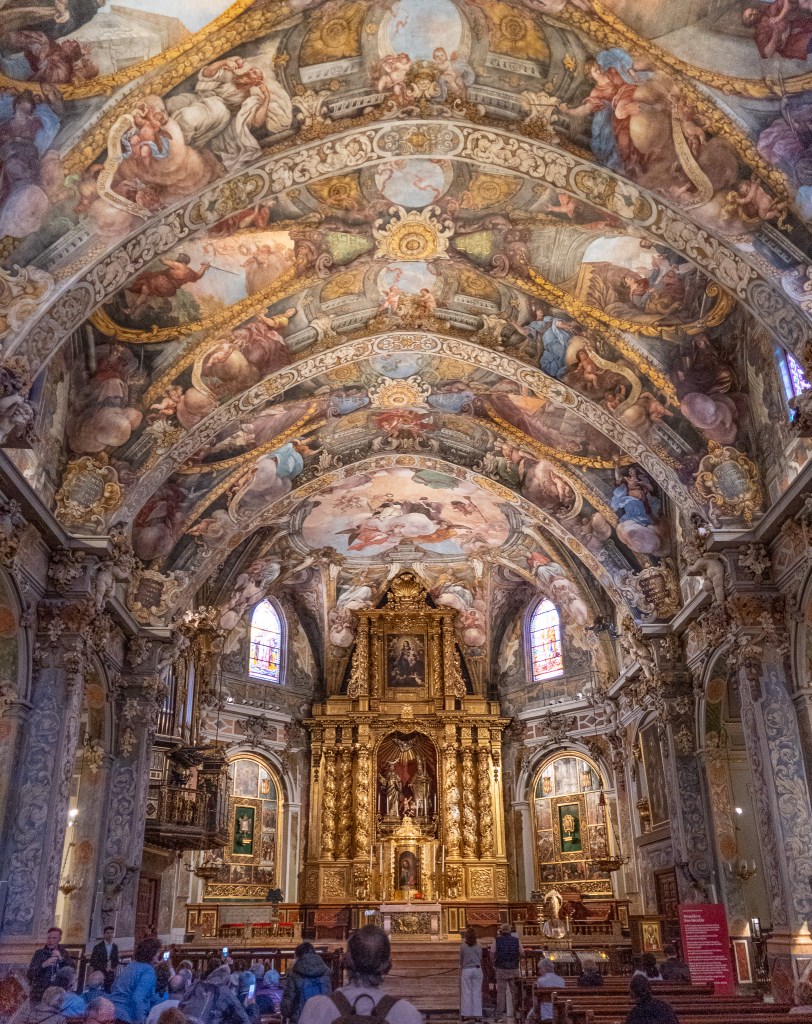
You really need to seek this place out because you will never just come across it by chance. The entrance is via a narrow side street and an unassuming door. After visiting old churches over the years, you never really get any big surprises but this is the exception. It is worth visiting for the outstanding frescoes alone. Although the church was founded in the 13th century, the frescoes were added in the 17th century. Over the next 300 years the detail became obscured by layers of soot from burning candles and incense. In 2016, renovations were completed and this amazing artwork is visible once again, in all its glory, for all to see. It is with good reason that this church is known as ‘the Sistine of Valencia’.
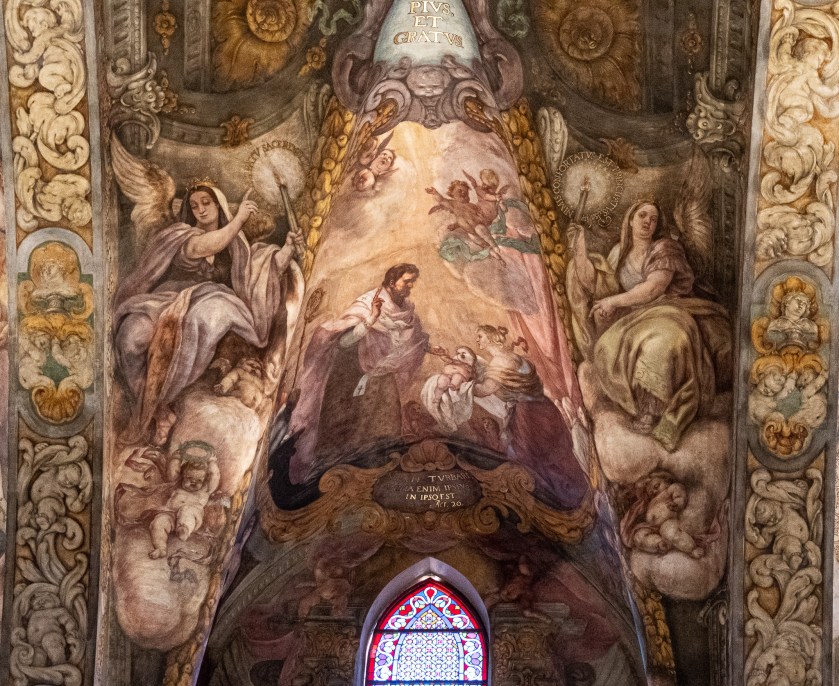
Close up of one of the lunettes. There are six on each side of the nave. Each lunette depicts a scene from the life of a saint in the center, ‘escorted’ on either side by angels, diverse according to their hierarchy. I didn’t know there was a hierarchy of angels!
The history of Saint Nicholas’s church (including the artists) is rich and detailed but not for this blog. For anyone who’s interested, it makes fascinating reading but my aim is to provide a cursory taste of what you can expect in this hidden gem.
Valencia Cathedral, also known as St Mary’s Cathedral is another important religious building. While not as artistically ornate as the church of St Nicholas, it has a particular significance all of its own.
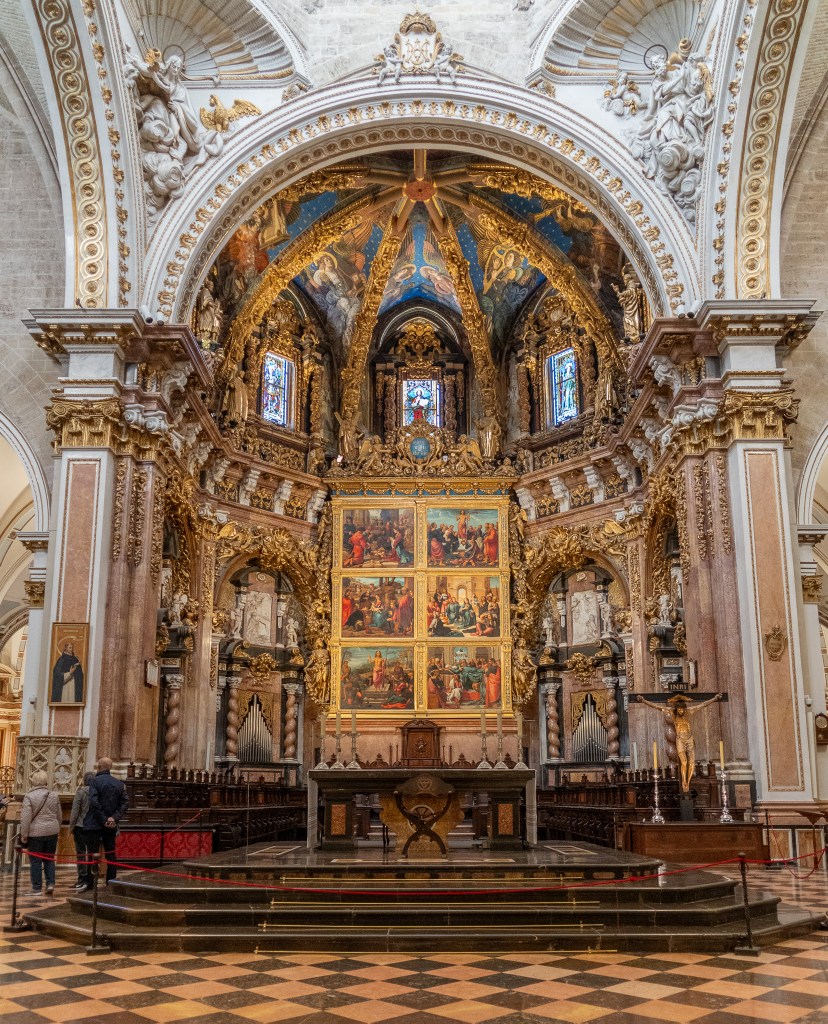
The main altar in Valencia Cathedral
Among its many chapels, there is one that claims to hold a holy chalice, believed by many to be the true Holy Grail, the chalice that Jesus drank from at the Last Supper. Of all the claimants around the world, this chalice is considered the most plausible contender due to it being dated to the 1st century and its provenance. Its movements throughout the centuries has been well documented. It was given to this cathedral in 1436 by King Alfonso V of Aragon. It has been used by many popes, most recently by Pope John Paul II in 1982 and Benedict XVI in July 2006. Only the top portion is the true relic. An agate bowl shaped vessel, it is made from a mineral found in the region between Alexandria and Syria. The ornate handles and precious stones were added later. Whatever the true origin of this cup, there is no doubt that it has great historical significance and has been venerated for centuries as a true and valuable relic of the Passion of Jesus Christ
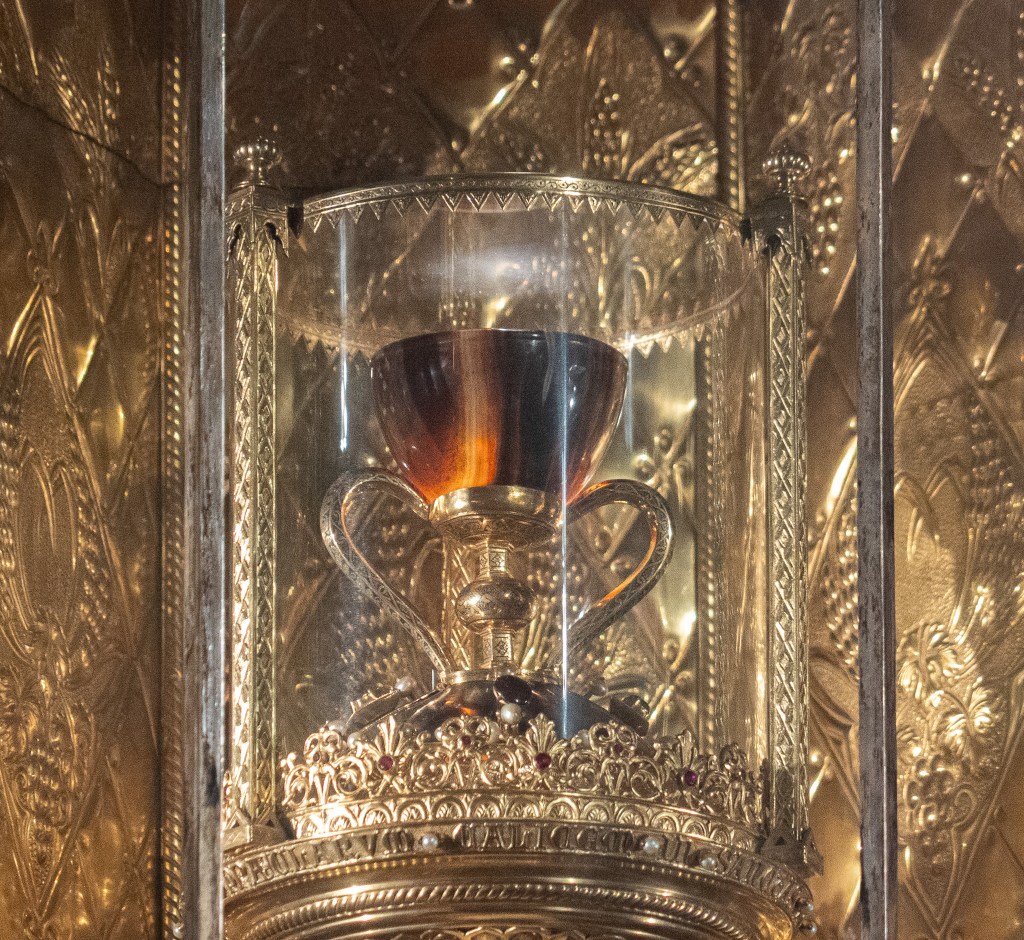
The Holy Chalice
21st Century Valencia
Valencia, like most cities, has two parts. An old, historic part and a new, modern part. And I don’t mind admitting that when it comes to architecture, my preference is for the ornate Gothic or Baroque over the streamlined futuristic structures. If anywhere could put my preferences to the test, it’s the ‘City of the Arts and Sciences’ (‘Ciutat de les Arts i les Ciencies’ in Valencian)
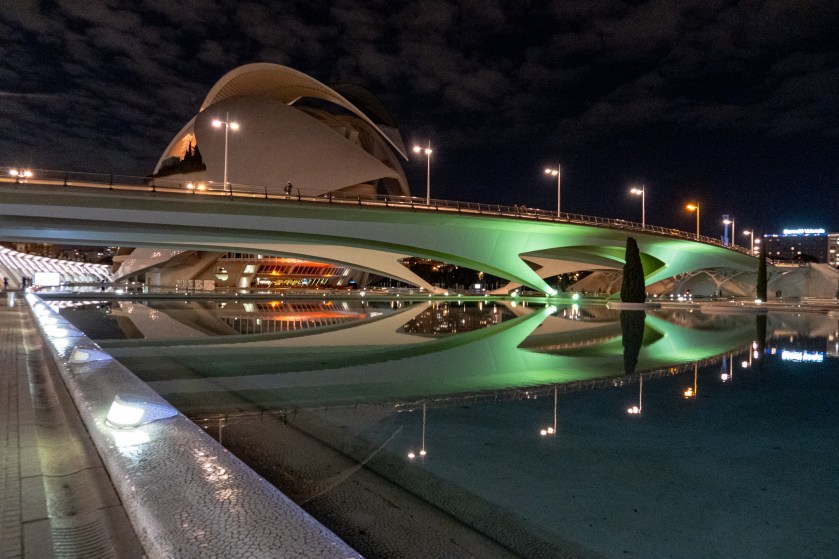
City of the Arts and Sciences
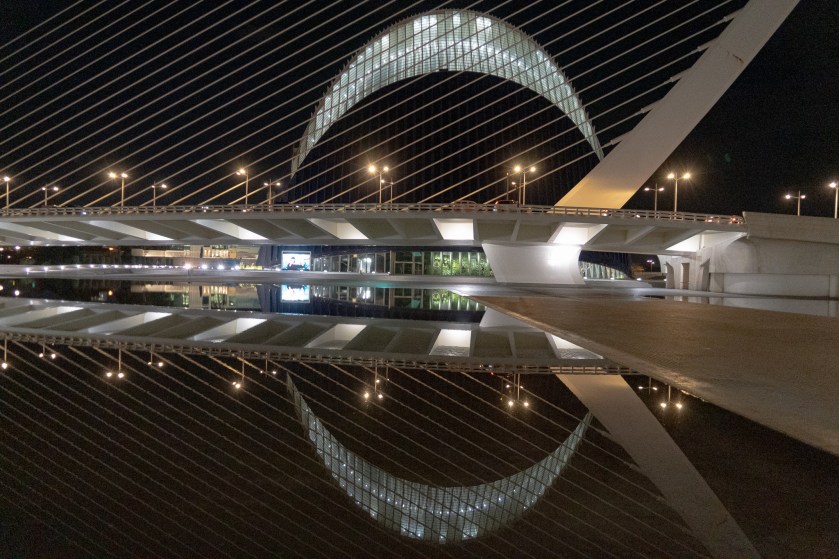
Reflections creating a whole other dimension
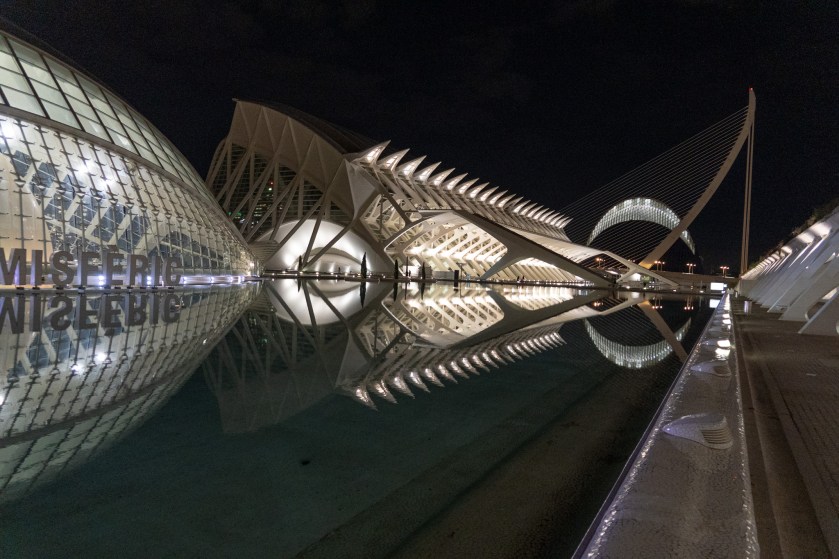
Museum of the Sciences leading to the ‘Hemisferic’
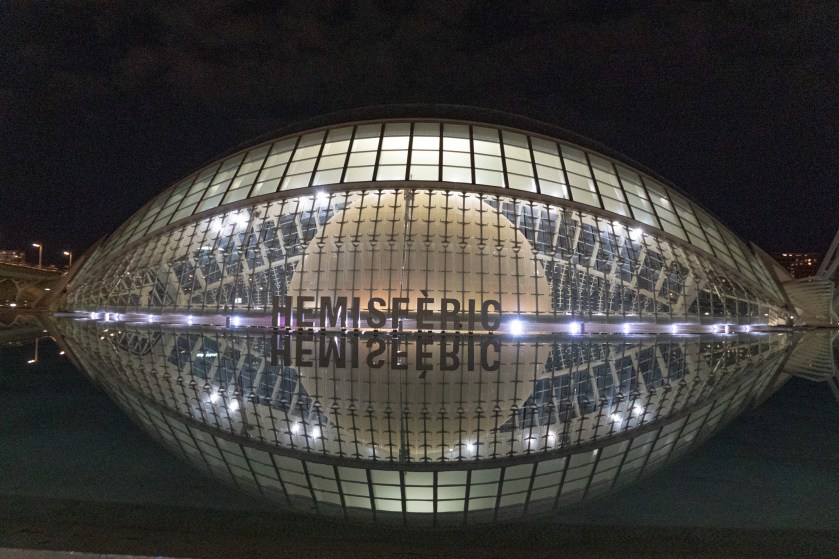
The ‘Hemisferic’ is an immersive experience with IMAX Dome format on a huge concave screen.
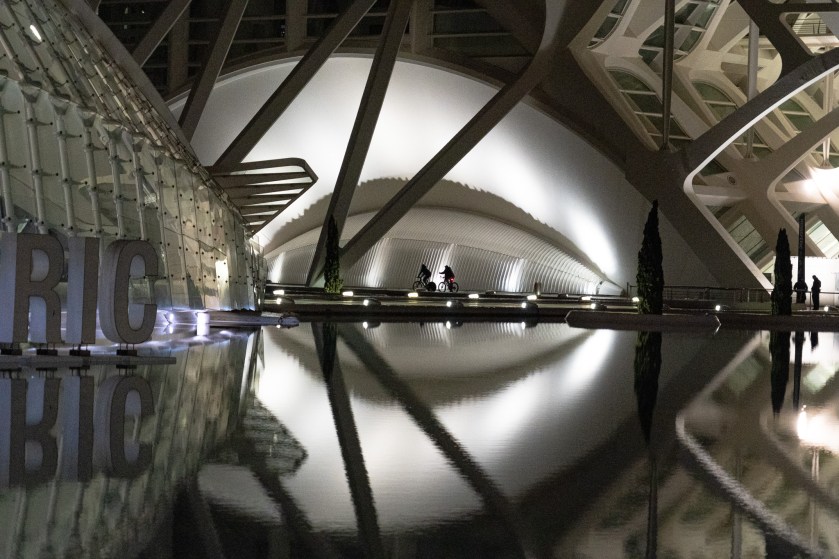
In the eye of the beholder
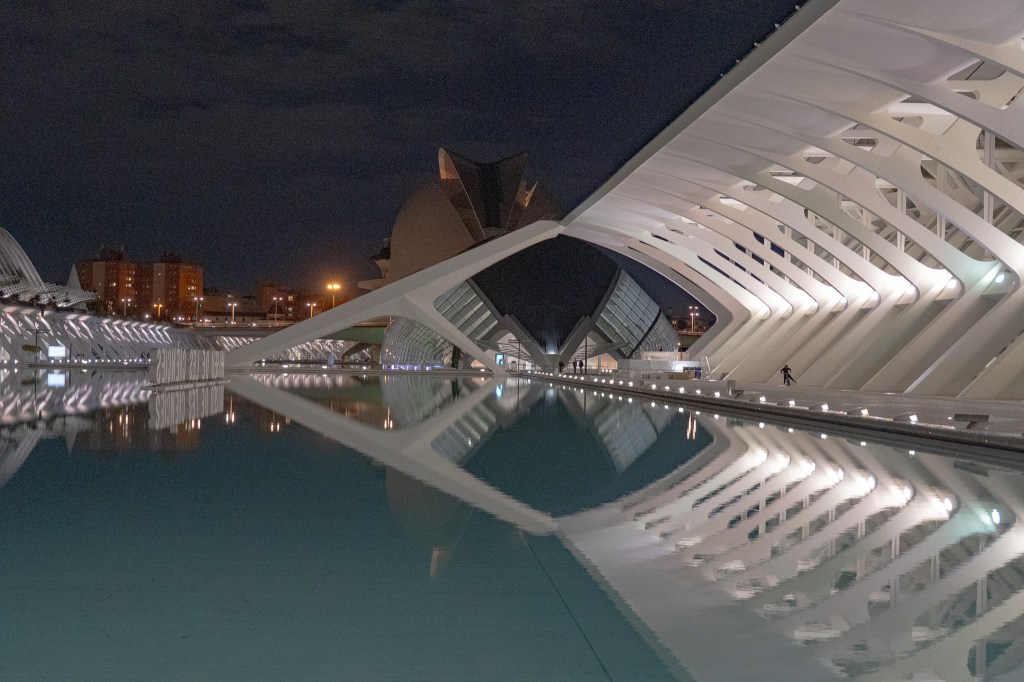
Symmetry
Due to a limited stay of two nights, a decision was taken to omit this place from our daytime itinerary. It is packed with attractions, including the ‘Oceanografic’ aquarium which is run by a foundation focused on research initiatives and species recovery. It would be easy to spend a couple of full days enjoying everything these places have to offer but the ticket costs could quickly add up! Visiting at night though, has its own rewards. It would be difficult to think of many places such as this where you could wander around, safely, late at night and be presented with such a display of light and reflections. I have seen daylight images of the above shots and they look like different structures. Without the nighttime reflections, it looks like the bottom halves are missing! So, for all you keen photographers, this is a must see if you come to Valencia. Day or night, I’m sure you won’t find a shortage of photo opportunities. As usual I didn’t have a tripod. I was happy enough with the shots I took but a few long exposures would have been nice!
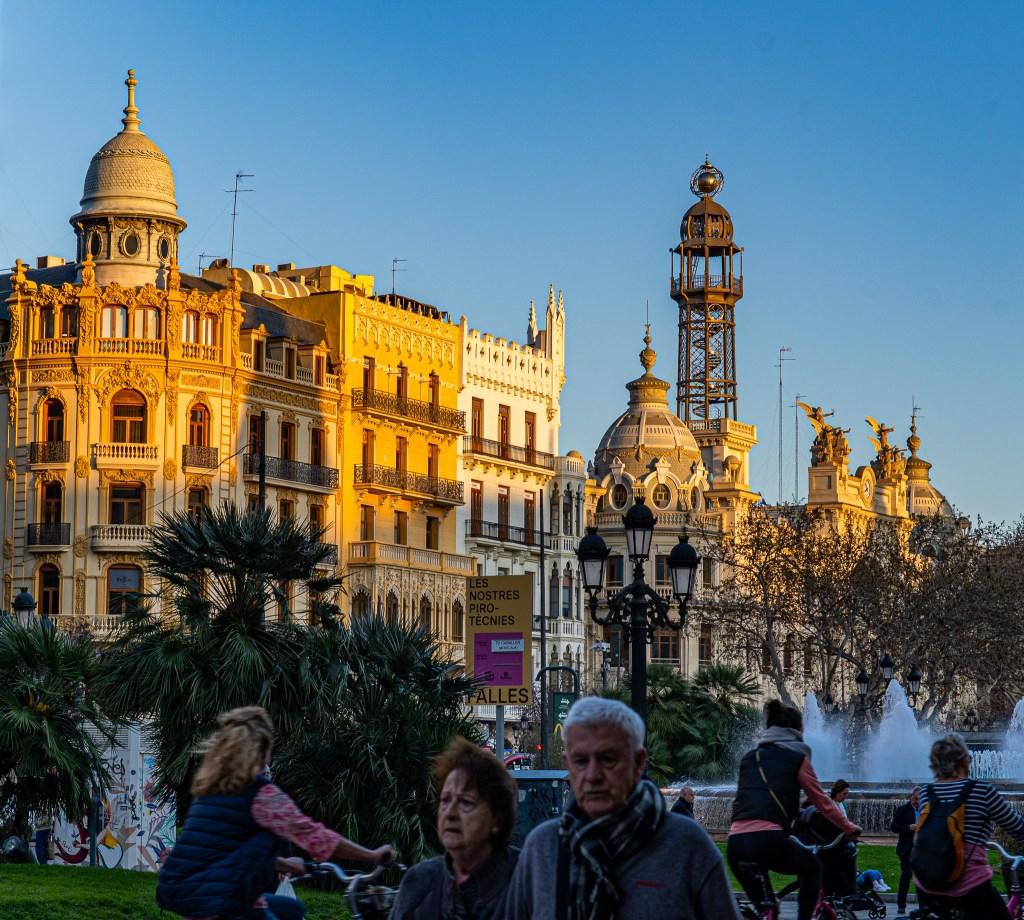
While all Valencia’s attractions make it a fascinating city to visit, one of the most enjoyable aspects for me was simply walking around the streets and soaking up the atmosphere. Valencia is a vibrant yet relaxed city. And while the age range of its inhabitants is wide, young people definitely seem to be in the majority. It also felt like a very safe place, day or night.
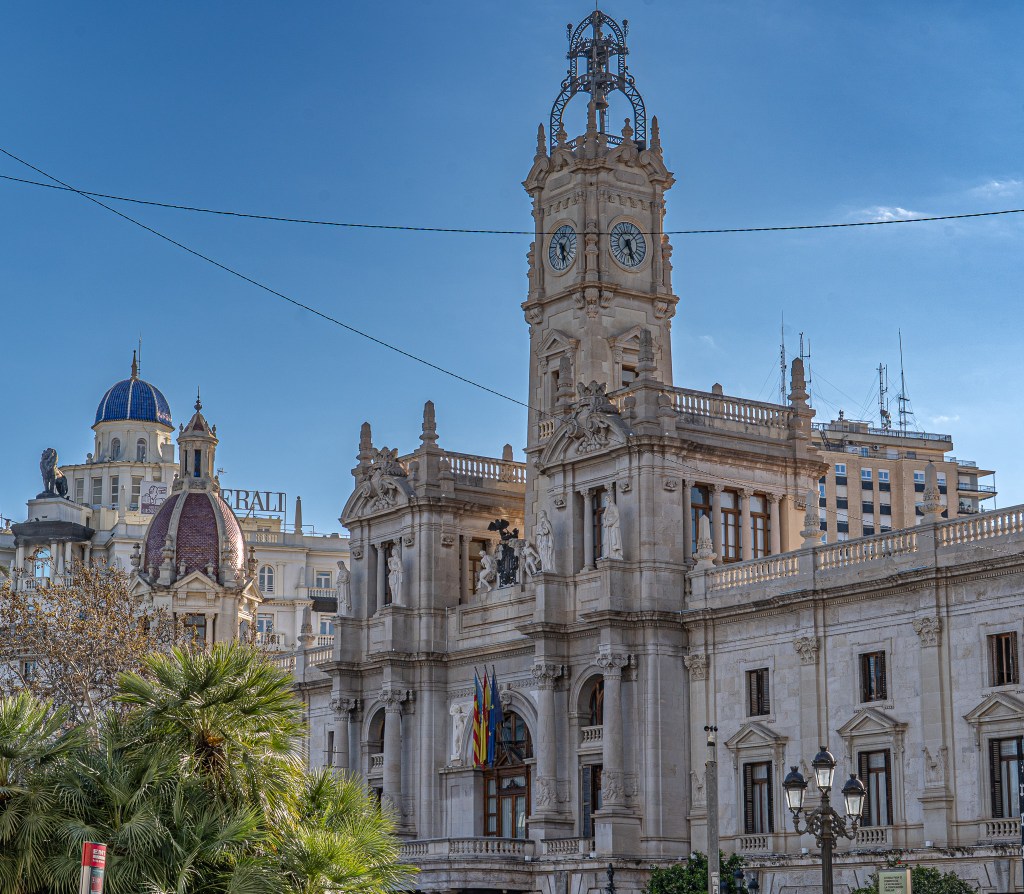
Valencia City Hall
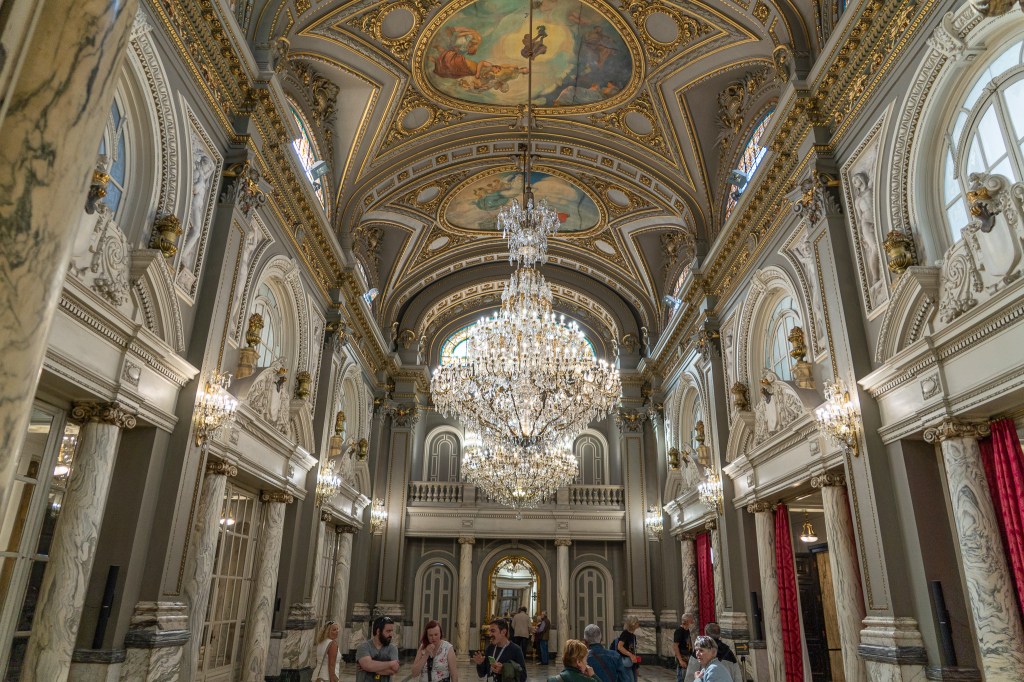
City Hall. Free to visitors.
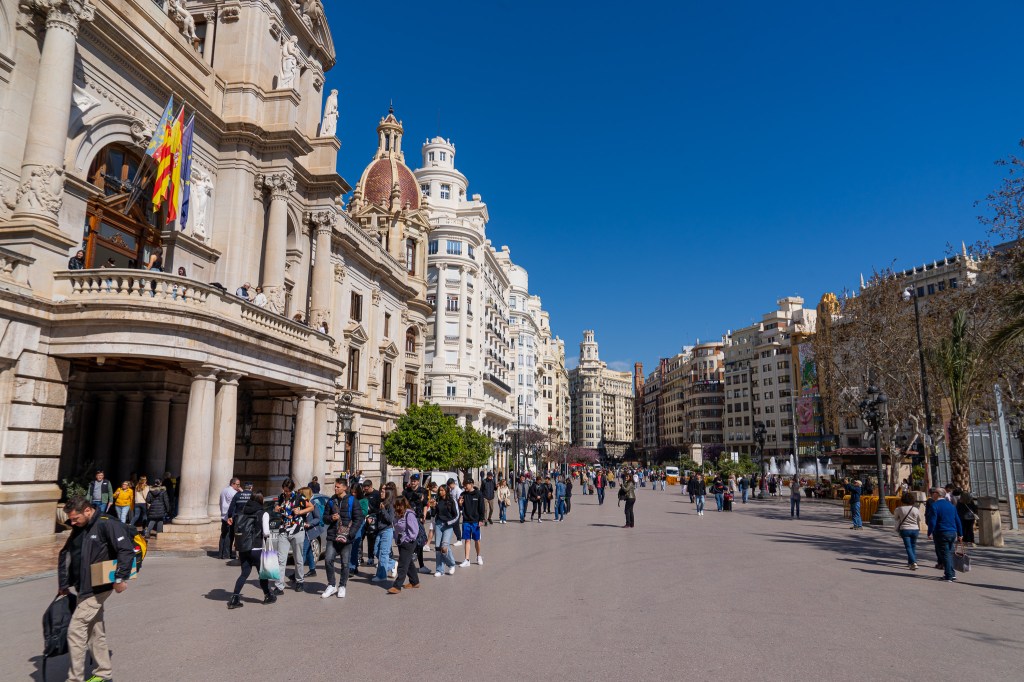
Traffic free zones make strolling around a relaxed affair.
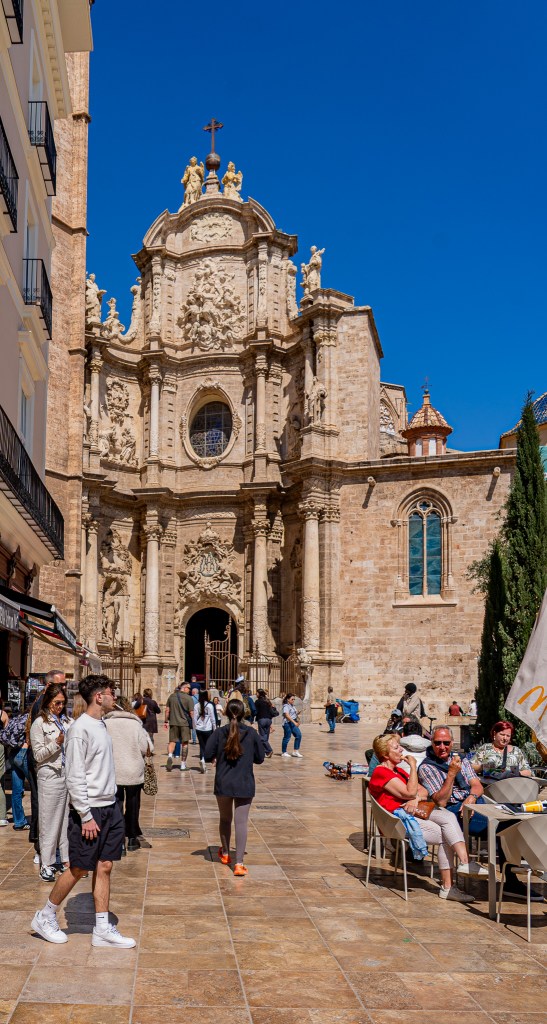
Entrance to the cathedral in Plaza de la Reina (translates to Queen’s Square)
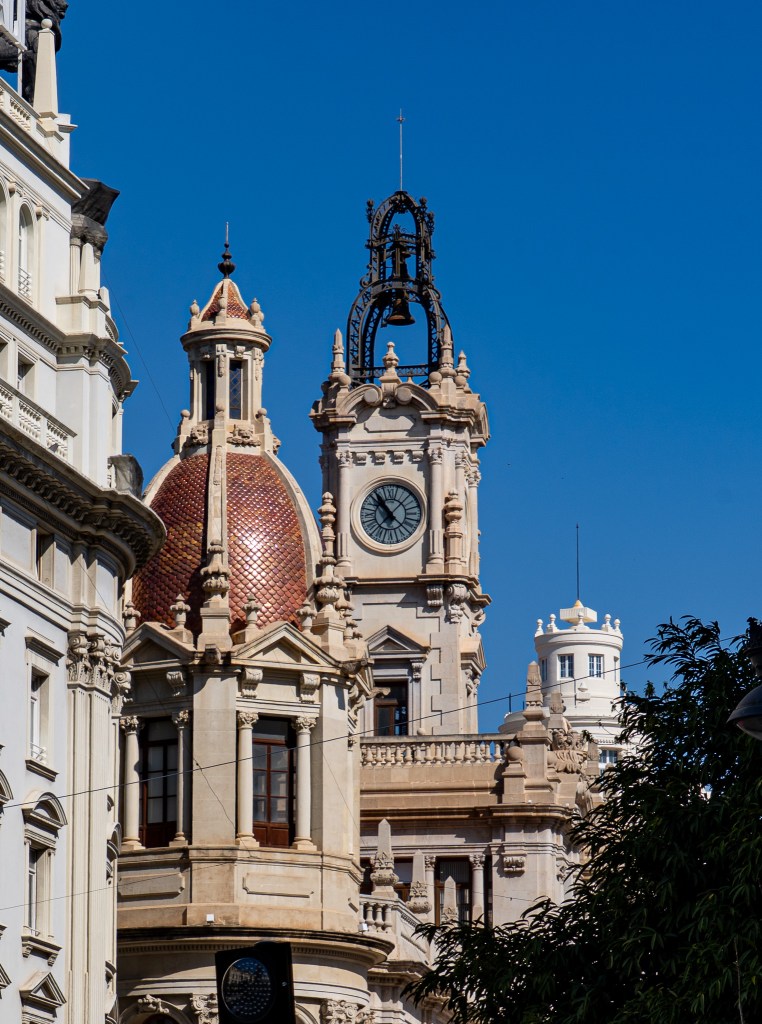
The architecture provides a constant treat for the eyes.
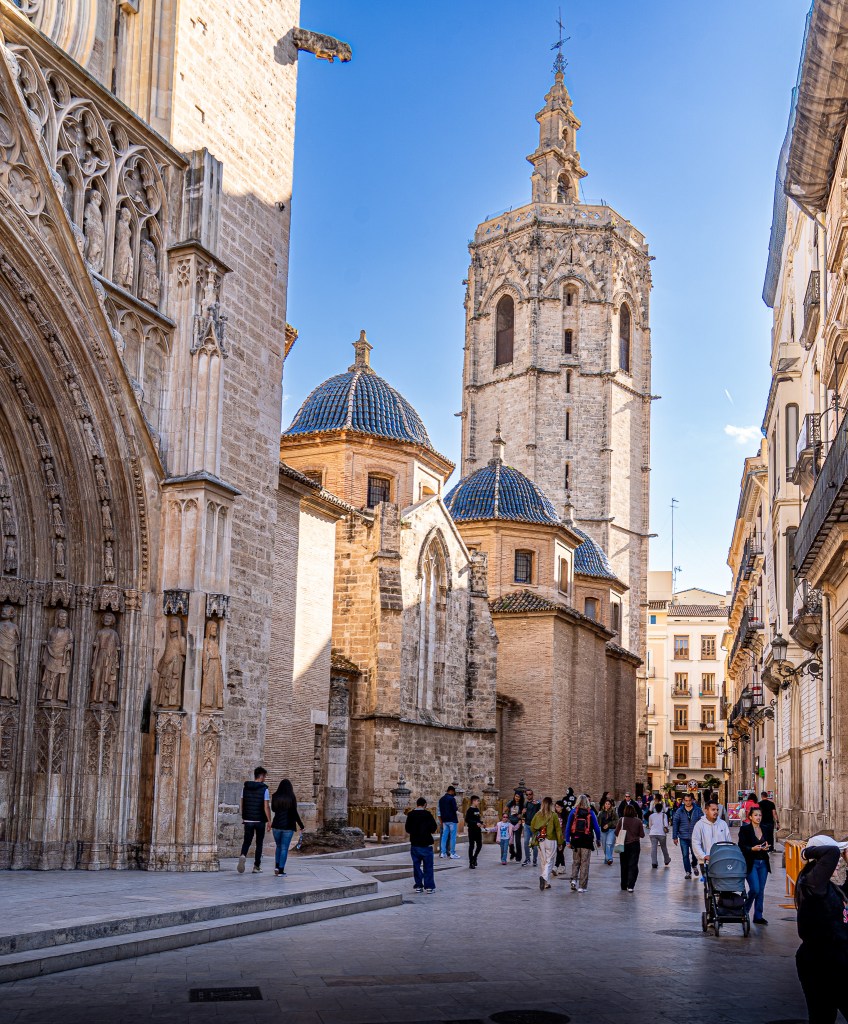
The Miguelete Tower and the domes of the individual chapels inside the cathedral.
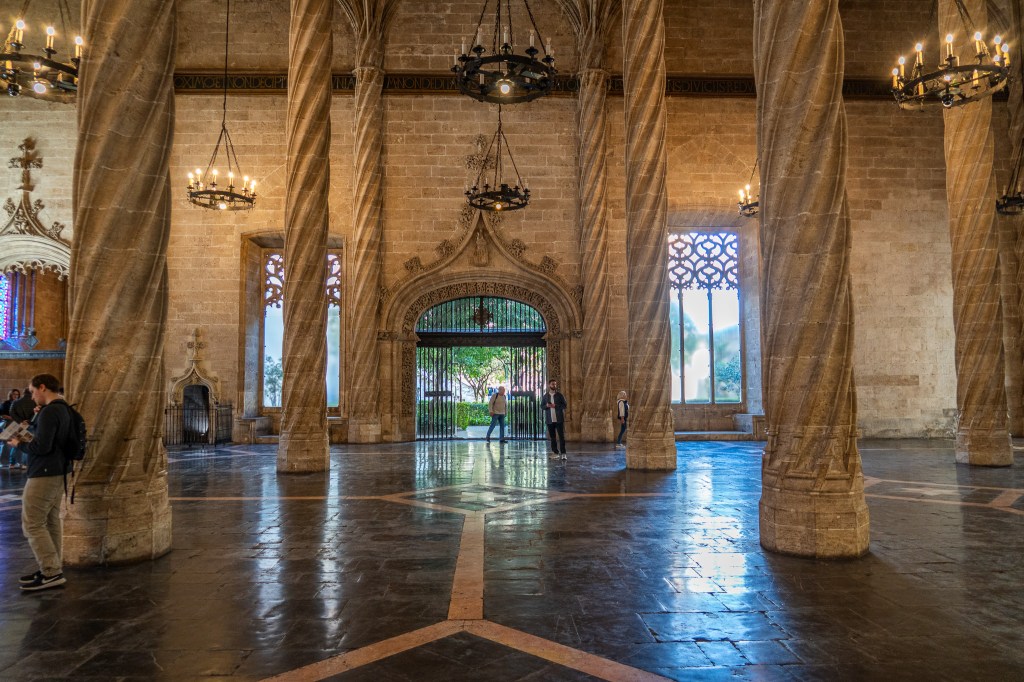
The Silk Exchange (Lonja de la Seda) built in the 15th century. Merchants worked out their contracts and completed their deals here.
The silk trade contributed greatly to Valencia’s prosperity. Around the four walls of the trading hall (above) is a Latin inscription that translates as, ‘I am an illustrious house built in fifteen years. Try and see, fellow citizens, how negotiation is such a good thing when there is no lie in speech, when it swears to the neighbour and does not deceive him, when it does not lend money with an interest charge for its use. The merchant who acts this way will prosper galore and at the end he will enjoy the eternal life.’ I like the sentiment of honesty in business. It’s as pertinent today as it always was. I wonder how many ‘merchants’ adhere to it.
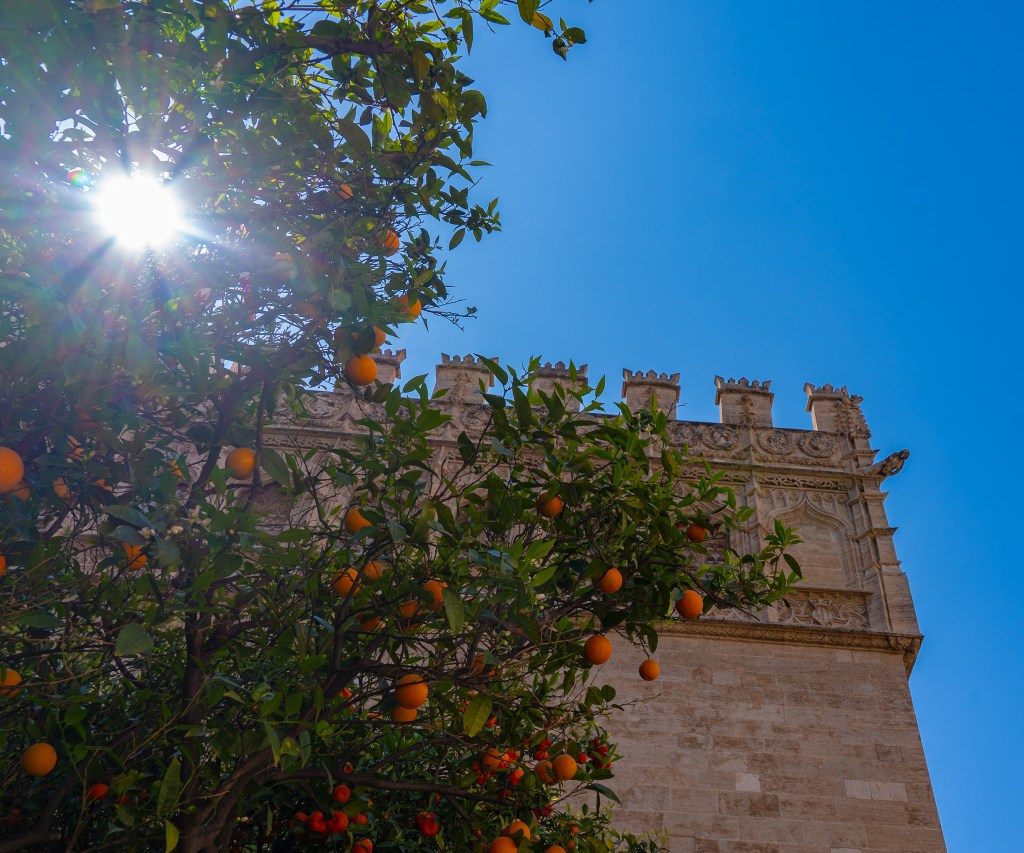
Orange Tree Courtyard of the Silk Exchange
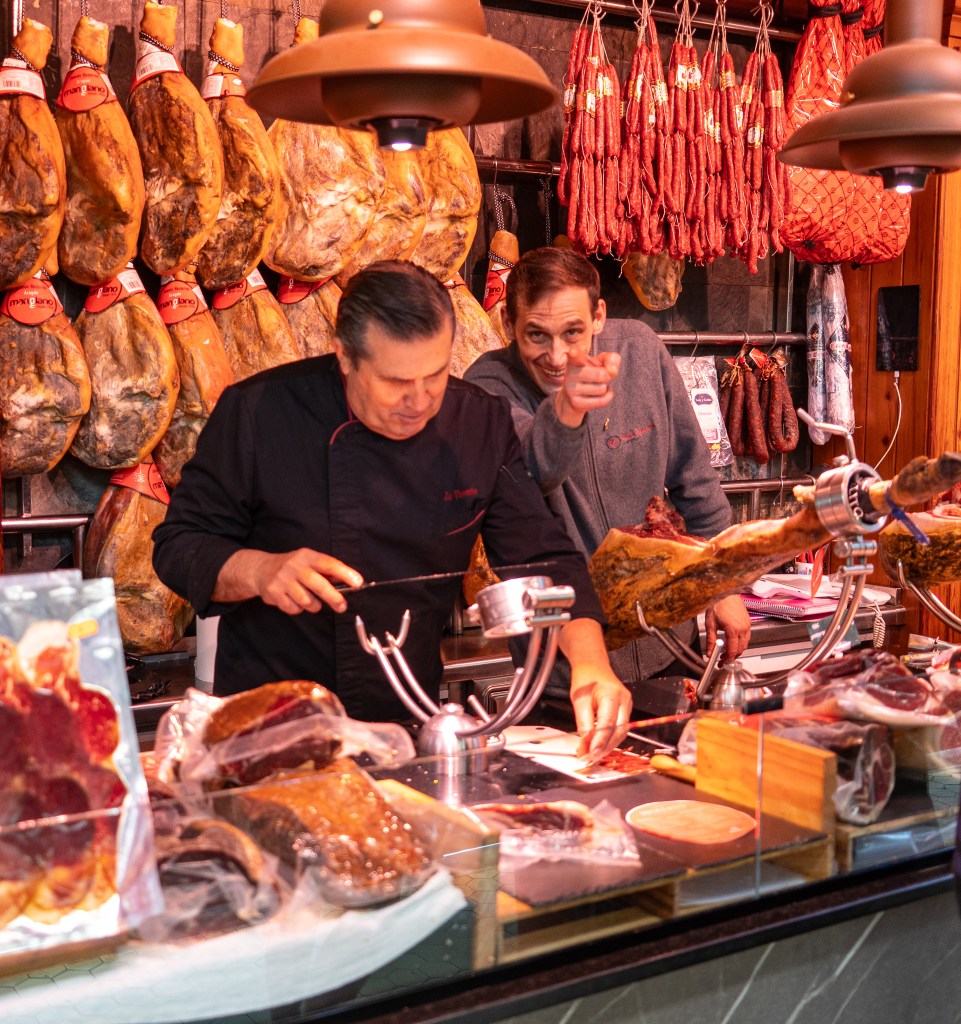
Valencia’s Mercado Central, where the choice of ham, fish, fruit and vegetables is endless.
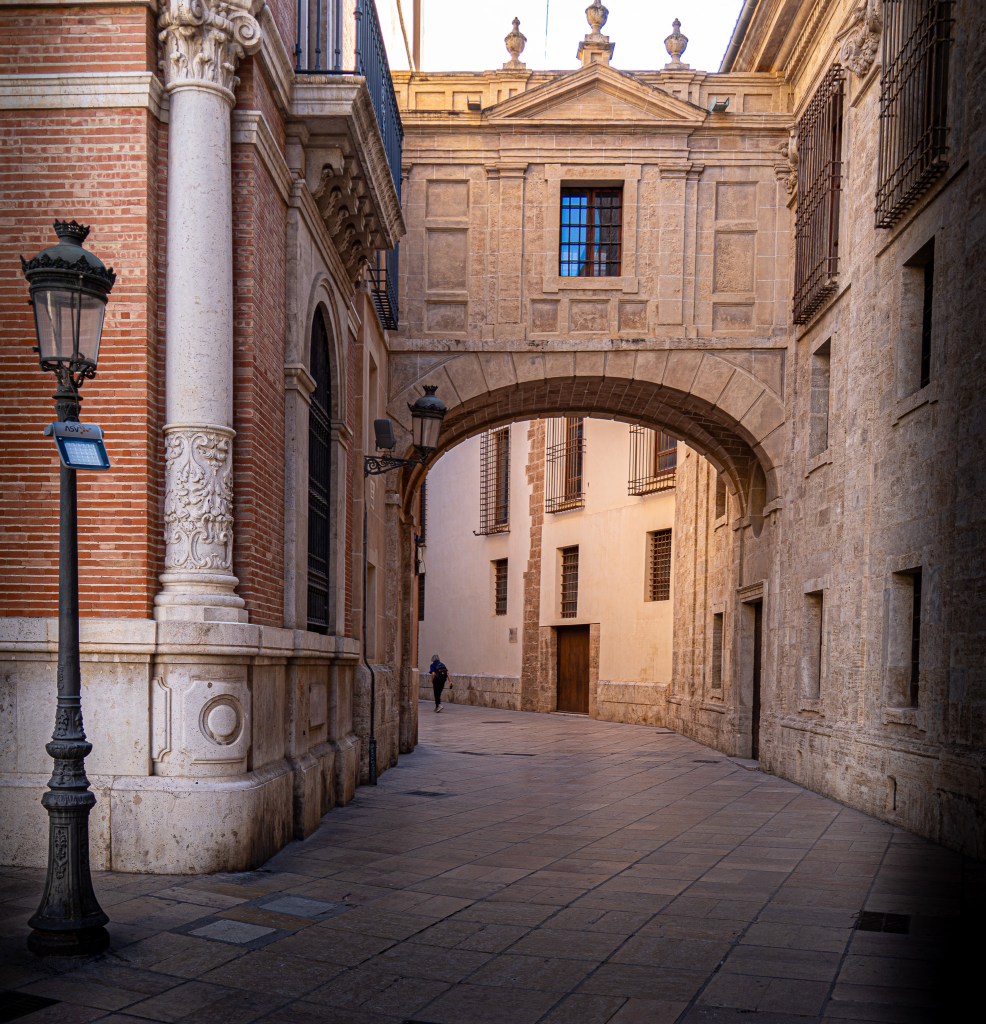
A city of carved stone, arches and alleyways.
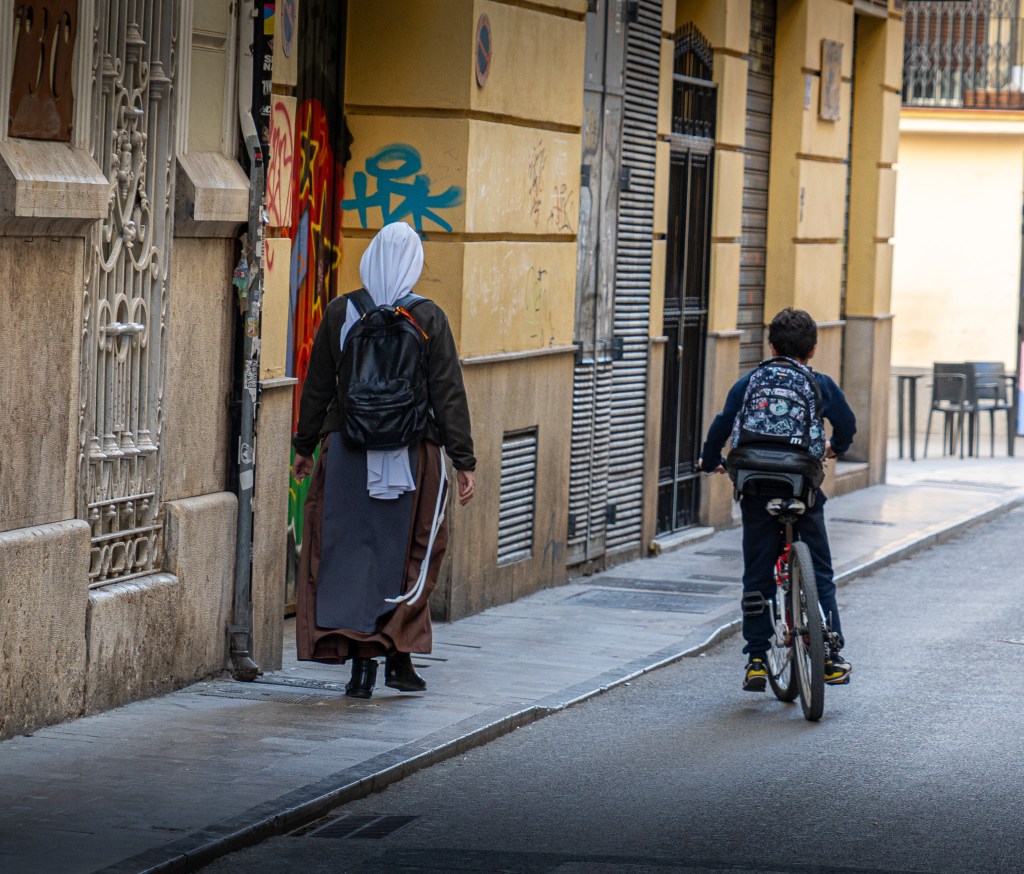
A young Franciscan nun and a schoolboy on a bike. Probably an unusual sight for many but here it’s just everyday life.
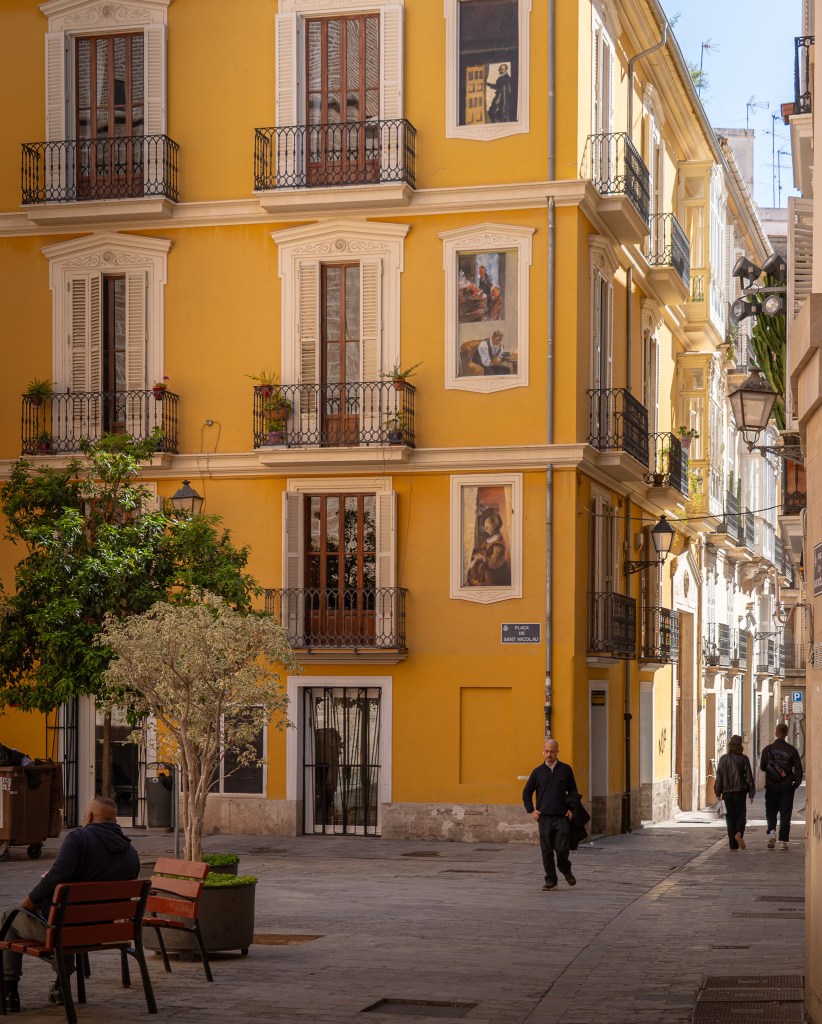
Every street seems to lead to another square.
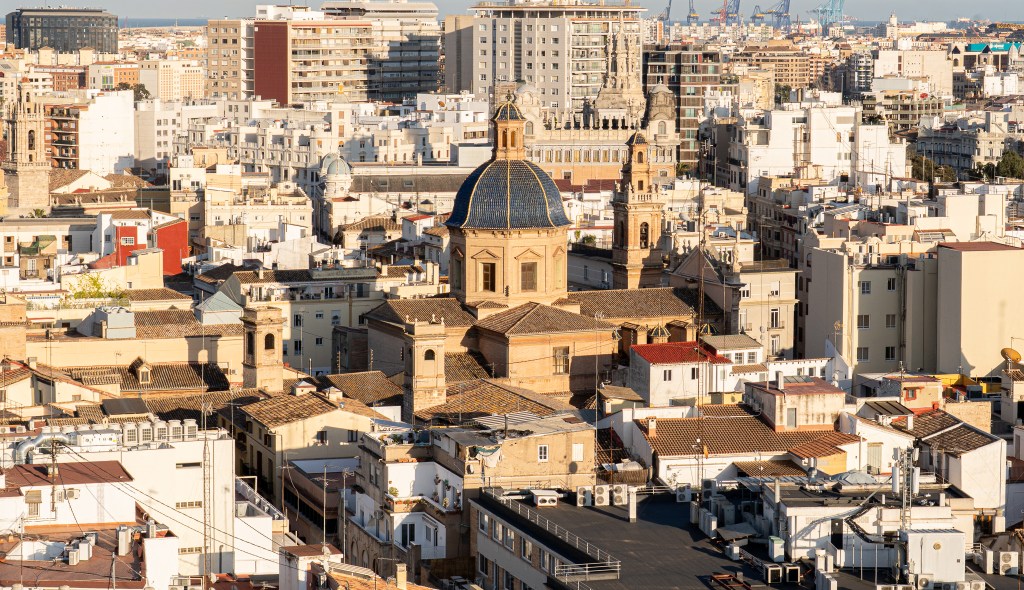
A roofscape taken from the Miguelete Tower
The sun setting on Valencia and the end of another trip to remember.
Tip. Even if you feel reasonably confident speaking Spanish or are just beginning to learn the language, be prepared for a challenge. The population speak Valencian here. It is sometimes similar to Spanish, sometimes bears no resemblance. I may be mistaken but I got the impression while trying to use my limited Spanish that some Valencians preferred to speak in English to me than Spanish. This is understandable when you consider that for forty years of the Franco dictatorship, Valencian was banned and only Spanish was permitted. People here are proud of their language and fervently defend their right to protect it and promote it. So, don’t take it personally if your efforts are not appreciated.
 Bleeding Dove