Bernina Express

There are many things I never dreamed of doing. Not because I had no desire to do them but because they simply never came onto my radar. One example would be sitting looking out of a train window as it traversed the Swiss Alps. But that’s exactly where I found myself at the start of May 2025. Saying I ‘found myself’ there implies that I was abducted and woke up on the train. My turn of phrase merely reflects the fact that when it comes to journeys, I tend to be less imaginative than my wife. She is the one who sources and books the trips while I busy myself recording the experience on my camera-not exactly an onerous task and definitely my preferred role.

The Train I refer to was the Bernina Express. It runs on the 384 Km narrowgauge network of the Rhaetian Railway which links Switzerland with Italy. Our schedule included a 48 km stretch of the network, known as the Bernina Line-the only Swiss railway to cross the Alps. In order to catch the train, we travelled by bus from Lake Como in Italy, through Lugano in Switzerland, stopping briefly in Tirano and finally on to Poschiavo station. The low cloud looming over the Basilica of the Madonna di Tirano gave a clue as to the weather conditions we could expect as we began ascending to higher altitudes.
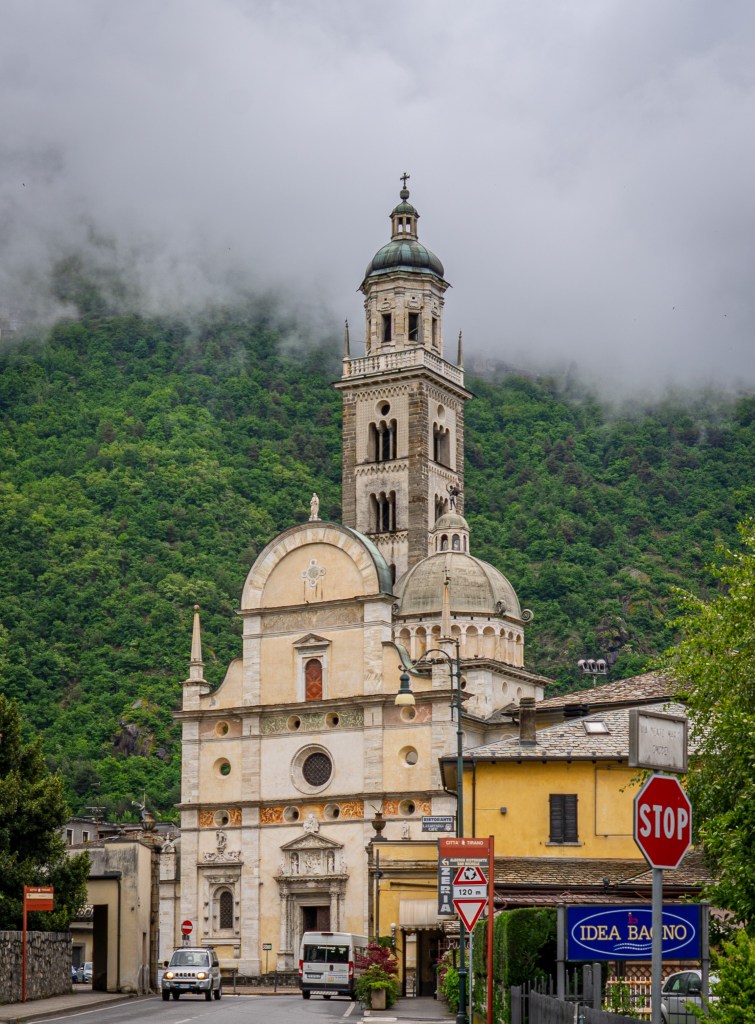
Basilica of the Madonna di Tirano

The bus was an unexpectedly interesting leg of the journey. We were informed by the guide as we crossed the Swiss border that Switzerland has four official languages: German, spoken by 62%, French (23%) Italian (8%) and Romansh (only spoken by 0.5%). We also passed a small town inside the Swiss border called Campione d’Italia which is administered by Italy and belongs to the province of Como. It seems Ireland isn’t the only country with border issues!

We also passed close to the village of Dongo on the upper reaches of Lake Como. It was here, in April 1945, in the final days of World War II, that Mussolini, the fascist dictator, was captured by Italian partisans. He was accompanied by his mistress, Claretta Petacci and several other senior fascists who were fleeing Milan and heading for the Swiss border. The next day they were executed and their bodies brought back to Milan, where they were hung upside down in a suburban square, Piazzale Loreto.

At Poschiavo we boarded the Bernina Express. There was some confusion about which part of the train was allocated to our group and by fluke, we ended up in a half empty carriage. The brochures I had read always gave prominence to photos of carriages with extended windows which curved up over the roof of the train for enhanced viewing. The first thing I noticed were the regular windows, similar to most trains. My initial ire was dispelled when it occurred to me that the extended windows were fixed units that couldn’t be opened. These ones could! I’m guessing that opening the windows, if not prohibited, is discouraged. But as anyone who has ever taken photos through a window pane will know, the reflections of ‘ghosts’ can ruin the image. So, taking the proverbial bull by the horns, I pulled (with considerable effort!) the sash of the window down. In my defense, I tried a couple of shots through the window first but couldn’t entertain the thought of missing an opportunity that may never come again. As in all such cases, it only takes one instigator and soon all the windows were being opened as the hitherto sedate passengers took on a more rebellious demeanour!
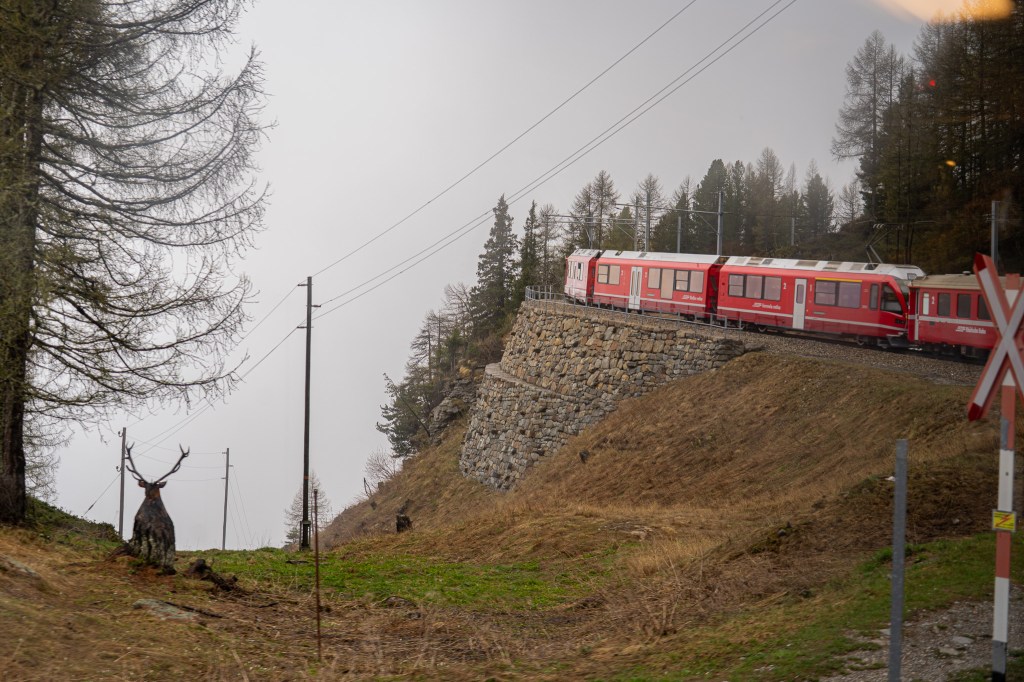
A shot through the window with those annoying reflections in the top right of the photo. I wish I could say that the deer walked into the shot but he’s made of stone!

As the train left Poschiavo, at an altitude of just over 1,000 m (3,330 ft) it seemed as if we were ascending into the clouds. One of the unique features of the railway is the use of sharp bends in the track which allow the train to climb the steep gradient. This provides good opportunities to capture the carriages as they snake their way upwards. This is also why you should pick a front or rear carriage. That way you can get more of the train into your shots.
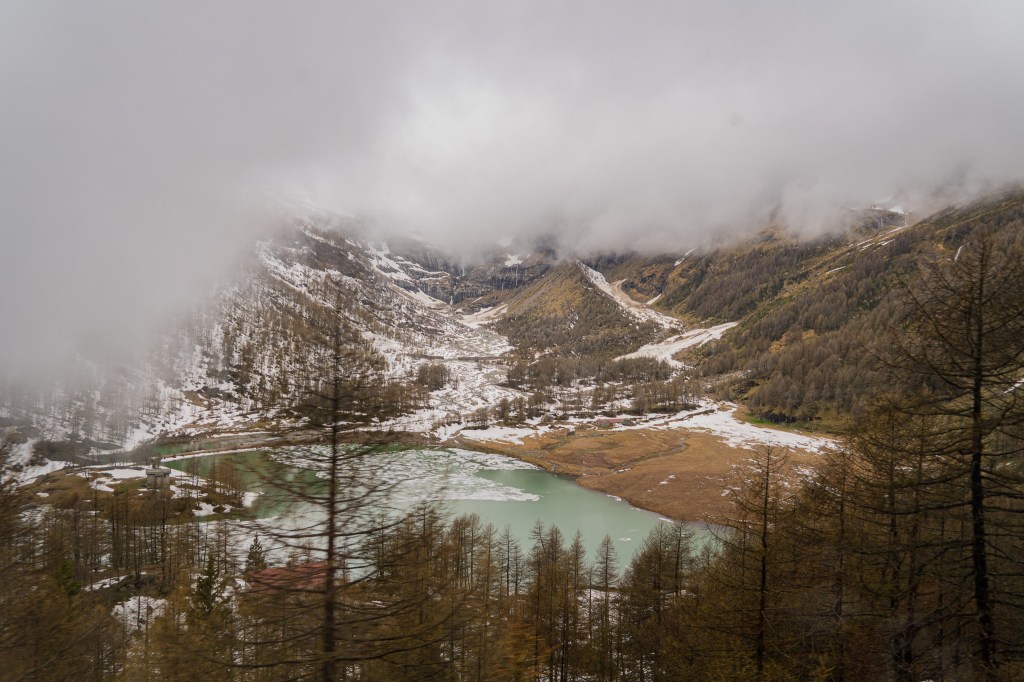
Occasional breaks in the cloud revealed aquamarine lakes and alpine slopes sprinkled with snow.
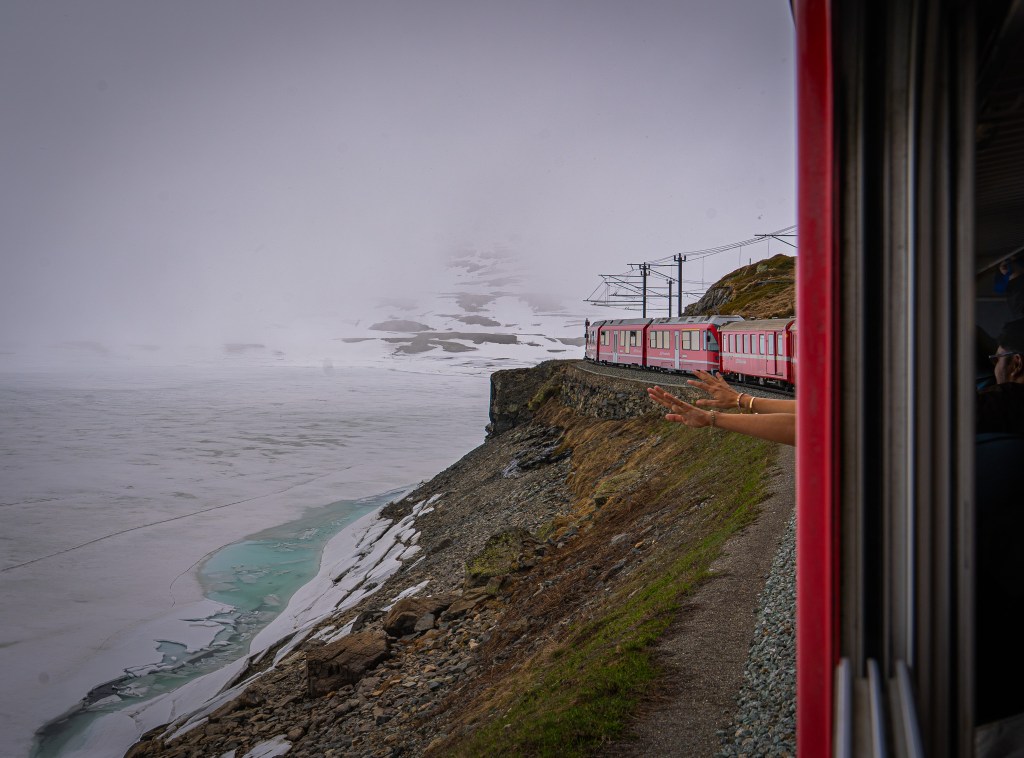
And the occasional frozen lake, plus anonymous hands of fellow passengers. Maybe they’re thanking me for initiating the mass opening of the windows!

The train slowed down, almost to a halt, as we entered Alp Grum railway station. The altitude here is 2,090 m (6,860 ft). Normally the train would stop here for passengers to enjoy the panoramic view but we were now passing through dense cloud and there wasn’t much to see. As we passed through Ospizio Bernina, the highest point of the Bernina Line at 2,253 m (7,392 ft), above sea level, the prospect of some good photos was dwindling. Then, as if by magic, the carriage lit up with bright sunshine and the landscape appeared again in all its splendour.
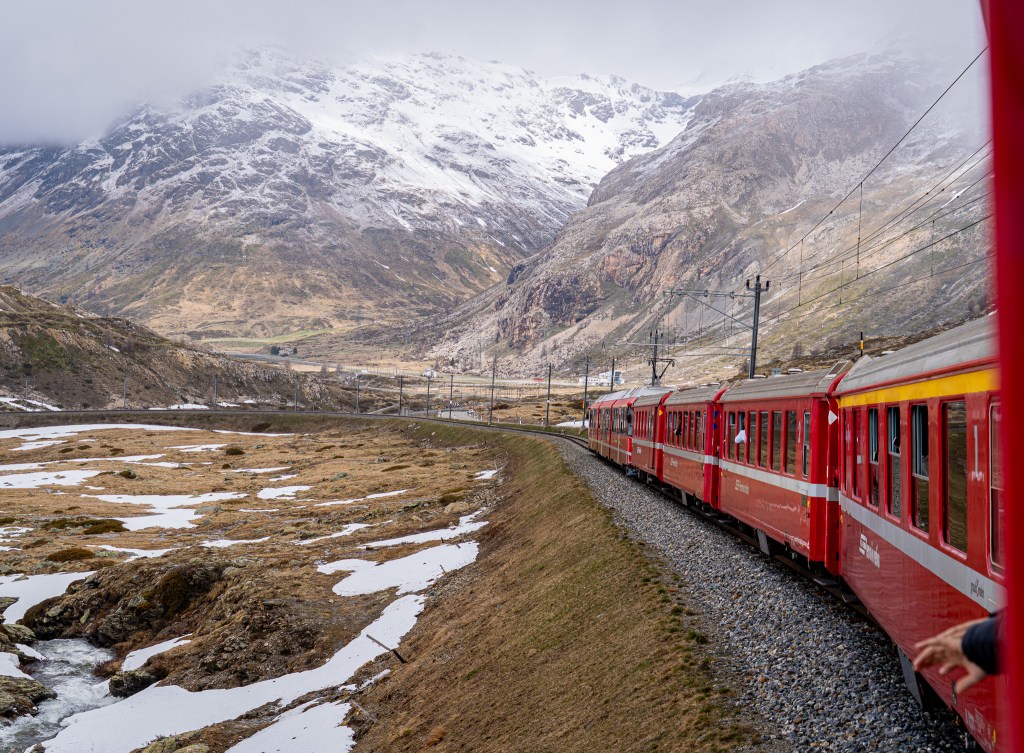
Descending below the clouds outside Bernina Diavolezza at approximately 2,080 m (6,820 ft) above sea level.

I was happy to be coming away with at least some decent photos that would serve as mementos of a unique experience. I was also reminded that when it comes to any form of landscape photography, nature is the boss. It decides when and where it will provide the optimum conditions. Regardless of weather, this was a pleasure. In fact, to witness the majestic beauty of this part of the world was more than a pleasure. It was a privilege. One for which I will always be grateful.

A cable car crosses the railway line at Bernina Diavolezza, our final stop on the Bernina Express.
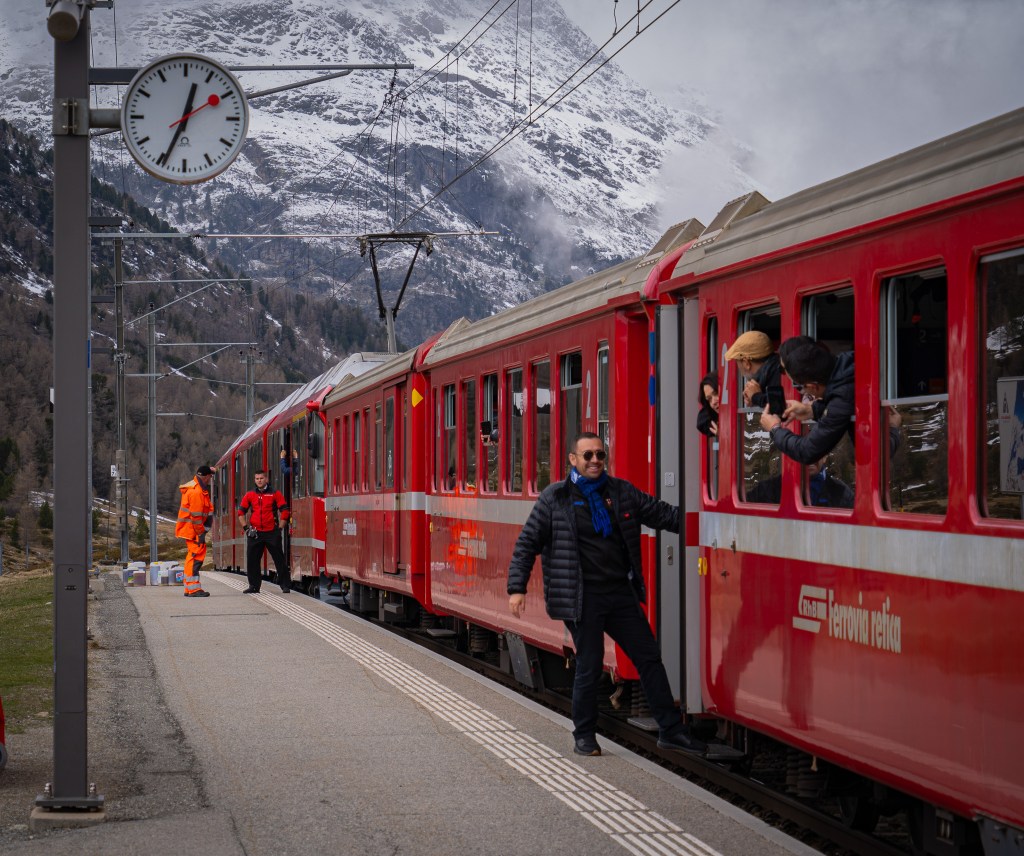
Bernina Diavolezza station.

From Bernina Diavolezza, we travelled a short distance by coach into St Moritz. If I had to sum up this town in one word, it would be ‘anticlimactic’. Given its reputation as a world class ski resort, I had imagined a bit of style and polish but we were both in agreement about the nondescript character of the place. It didn’t help that a lot of the shops were closed for a ‘between season break’. I’m not a skier and I reckon that is its biggest draw, the skiing and its location, a perfect base for exploring the Alps. And maybe it looks better when covered in snow. But let’s not end on a negative. Before getting back on the coach for the return trip to Italy, I had a pleasant surprise. I took a walk across the road to the lakeshore and a break in the stormy sky created a scene which lasted less than a minute before the rain started again. What did I say about nature being the boss?
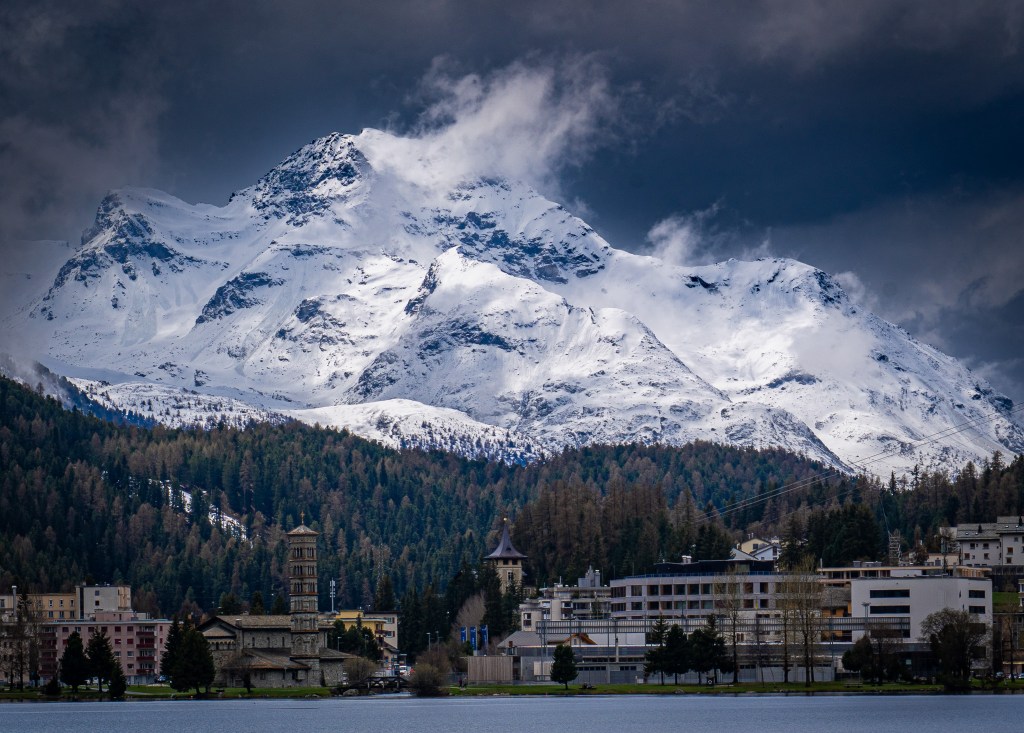
The sun broke threw the clouds to create a dramatic contrast between the snow capped peaks and the storm clouds.

And so, St Moritz having provided some photographic compensation, we boarded the bus and settled in for the return journey to Lake Como.

Thoughts and Tips

A great experience. As I have alluded to, the weather conditions will determine how much you will see. People have a tendency to expect the views to be exactly like the brochures but you have to remember that the brochures show places in perfect weather.

Which train to choose? This is a tricky one. As I mentioned, there are different ‘classes’ of train. The most expensive train will have the carriages with the extended windows but if photos are your priority, take the train with windows that open. It’s also worth noting that normal service trains run on the same line. If you have the time, you can travel longer stretches of the line, getting off at different stations and catching the next train to continue on to your next destination. One major benefit of using these trains is that your ticket allows flexibility. You don’t have to travel on a particular day. If you buy a ticket for the Bernina Express, you must use it on a specific day and time.

What time of year is best? It depends on what type of experience you want. In winter you will see dazzling snow covered landscapes. In summer, lush pines and alpine flora will be the order of the day. Spring or Autumn will offer a mixture as the seasons change from one to the other. But remember. When you are travelling at such high altitudes, weather conditions are volatile and your experience will be in the hands of the Gods. This is where the flexibility of the regular service trains will be an advantage. If you are spending a few days or longer in the region, you can follow the weather forecast and pick the best day to travel.

Would I go back? Yes but as I said in my previous post, independent travel would allow the flexibility I’ve talked about above. But that comes at a cost. Our trip was part of a package and while that meant less flexibility, it made the the trip more cost effective. Also, independent travel isn’t for everyone. For some travellers, a package means not having the hassle and responsibility of booking trains, buses, accommodation etc. As I have already mentioned, I don’t have to do that anyway, so as long as I have my camera, I’m a happy lad.

Lake Como

Lake Como is situated in the Lombardy region of Italy. Formed by glacial processes, it has a distinctive inverted Y shape. It’s the third largest of the Italian Lakes (146km2) after Lake Garda and Lake Maggiore. It is also one of the deepest lakes in Europe at 400m.

The lake sits at the base of the Alps and its shores are punctuated with picturesque villages and luxury villas. This is one of the most scenic locations we have ever visited. With the dramatic backdrop of the Alps and the striking coastal landscape, it’s no wonder this has been the setting for many movies, including Hitchcock’s debut film, The Pleasure Garden (1925), Star Wars: Episode 2 (2002), Ocean’s Twelve (2004) and Casino Royale (2006).

This house is part of Richard Branson’s site. It’s his gardener’s house!

Our hotel was on the lakeshore at Tremezzo and watching boats of all descriptions, from yachts to water taxis, on the lake was a pastime of dreams.

Tremezzo. One of the many ferries that carries passengers to the various towns and villages. Photo taken from the hotel room balcony.

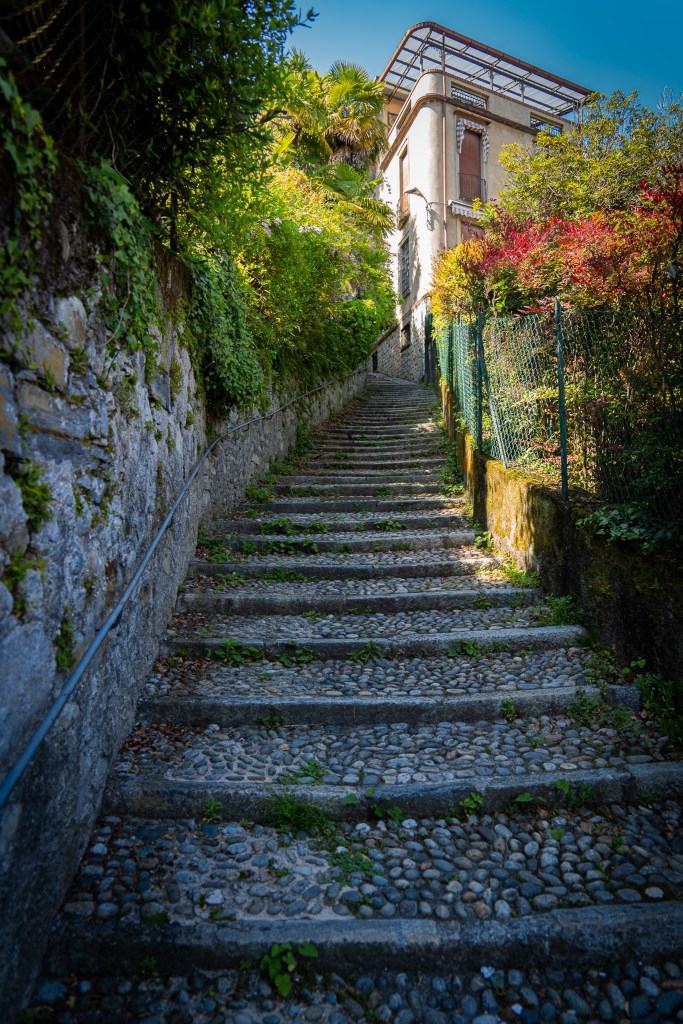
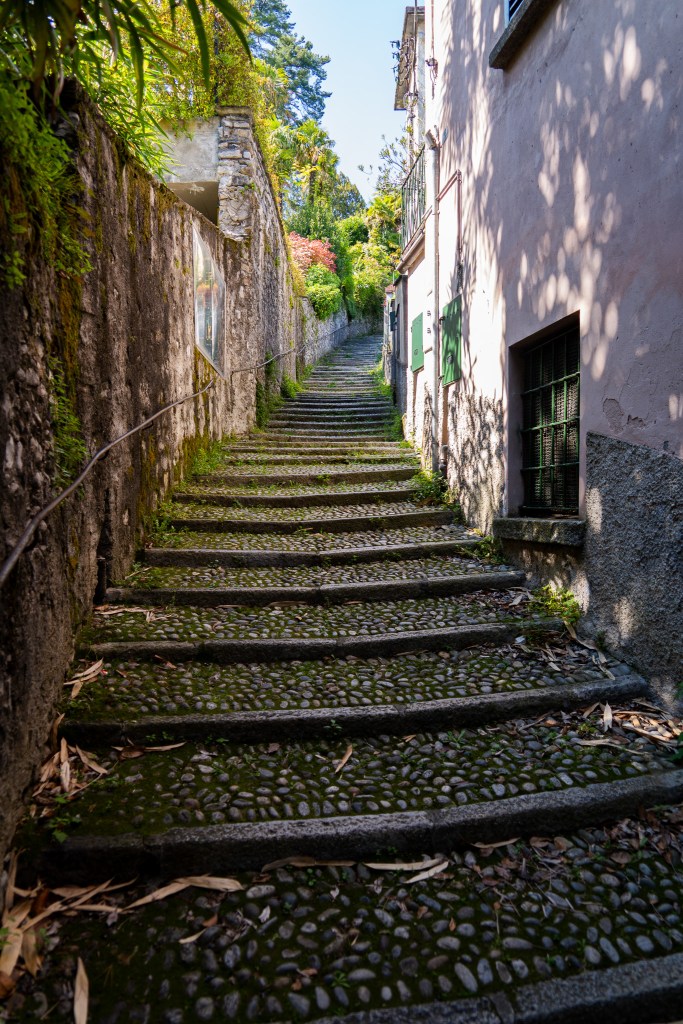
The cobbled lanes behind the hotel revealed lots of villas tucked away.

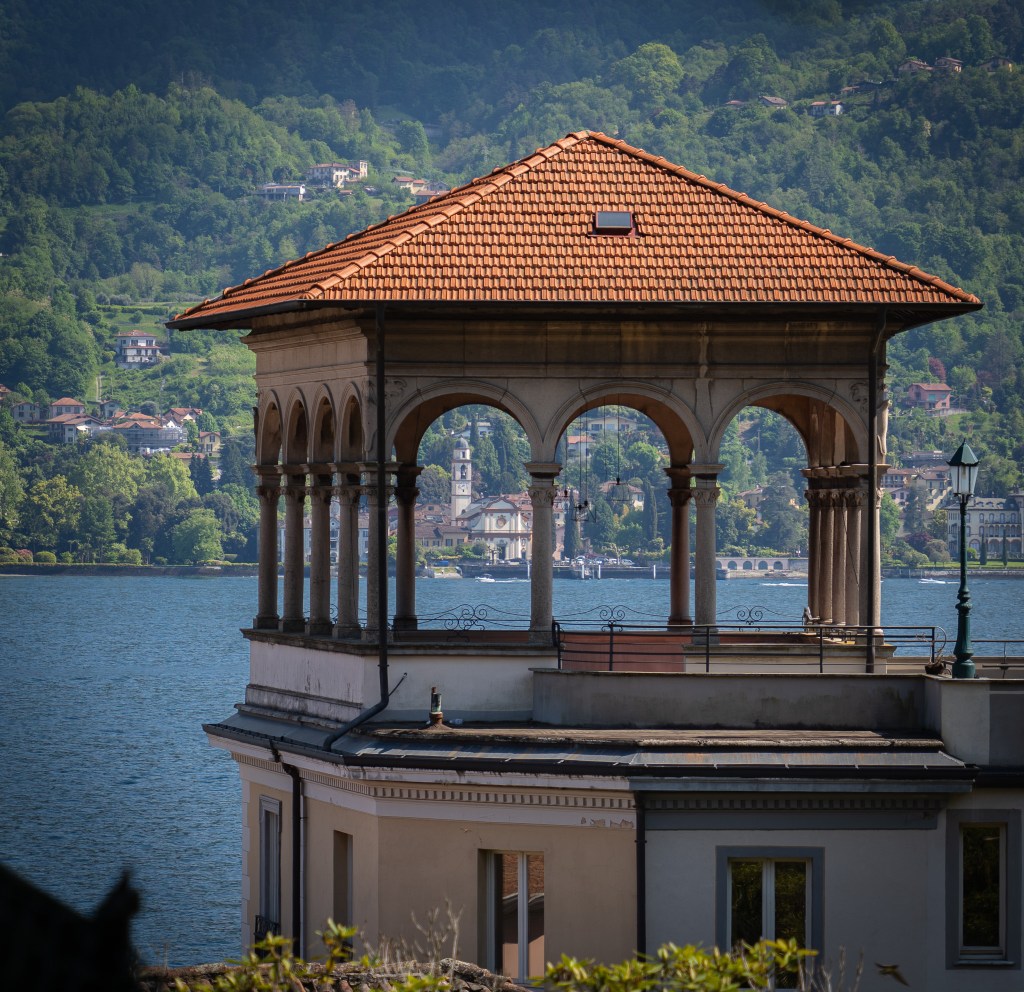
Not to mention some impressive views over the lake.

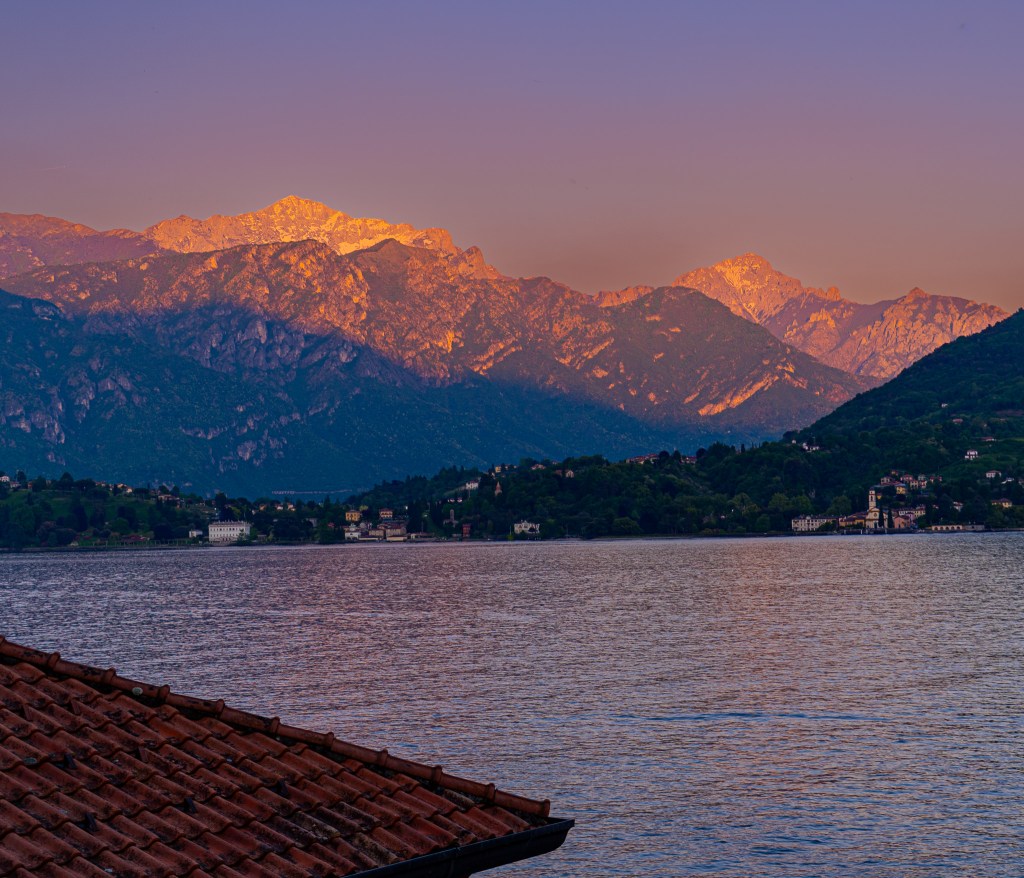
The setting sun painting the Alps in evening tones. View from the hotel room balcony.

Although there are many towns and villages dotted around the shores of Lake Como, we only had time to visit four: Bellaggio, Varenna, Lenno and Como. Each one had their own unique appeal and I would recommend a visit to all of them.

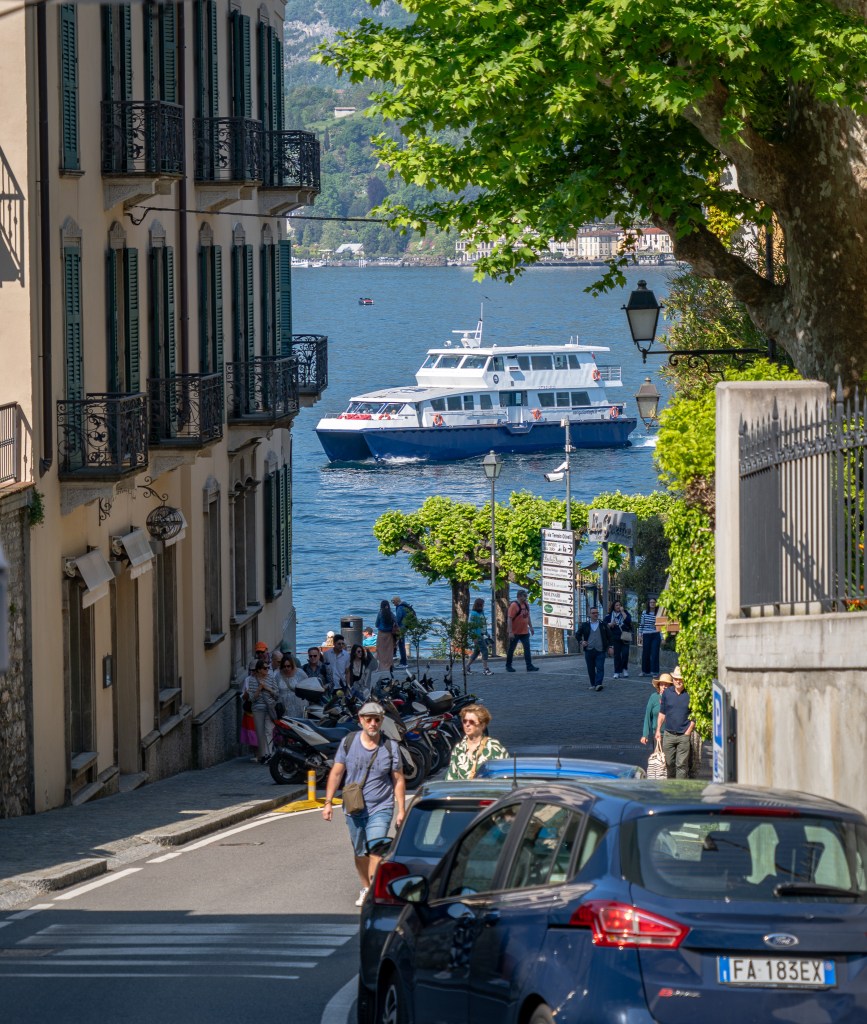
Bellaggio was probably the most polished town we visited.

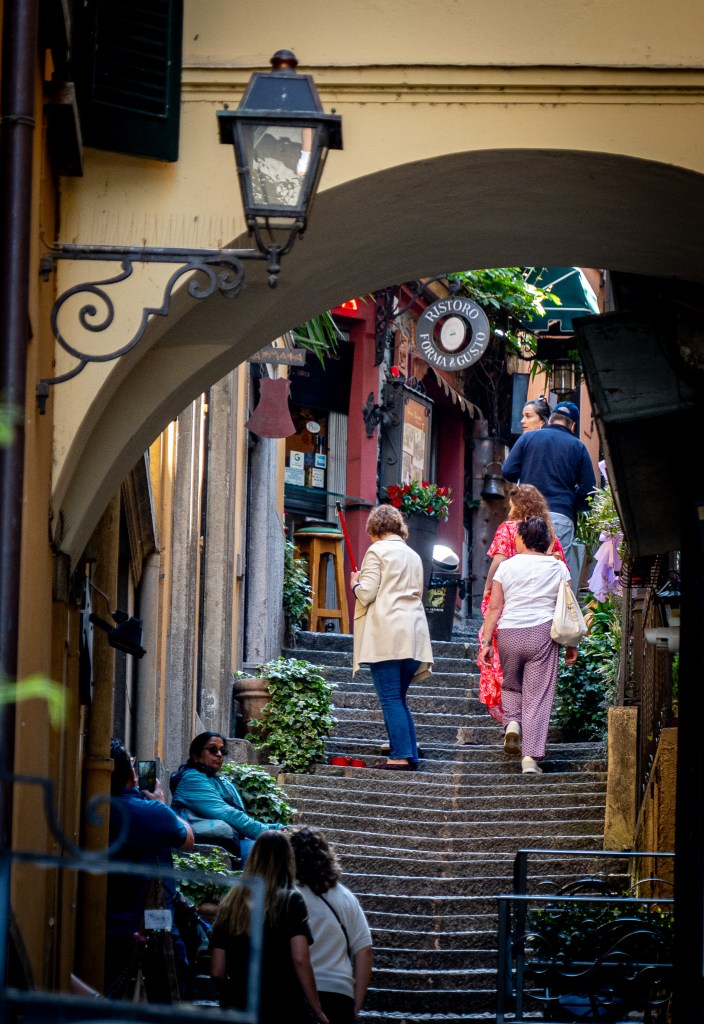
Bellaggio’s steep cobbled streets were lined with shops of every description. From jewellery to glass to silk, for which the region is famous.

Both a shopper’s paradise and a photographer’s dream.

Streets full of character.

The next ferry is never far away.

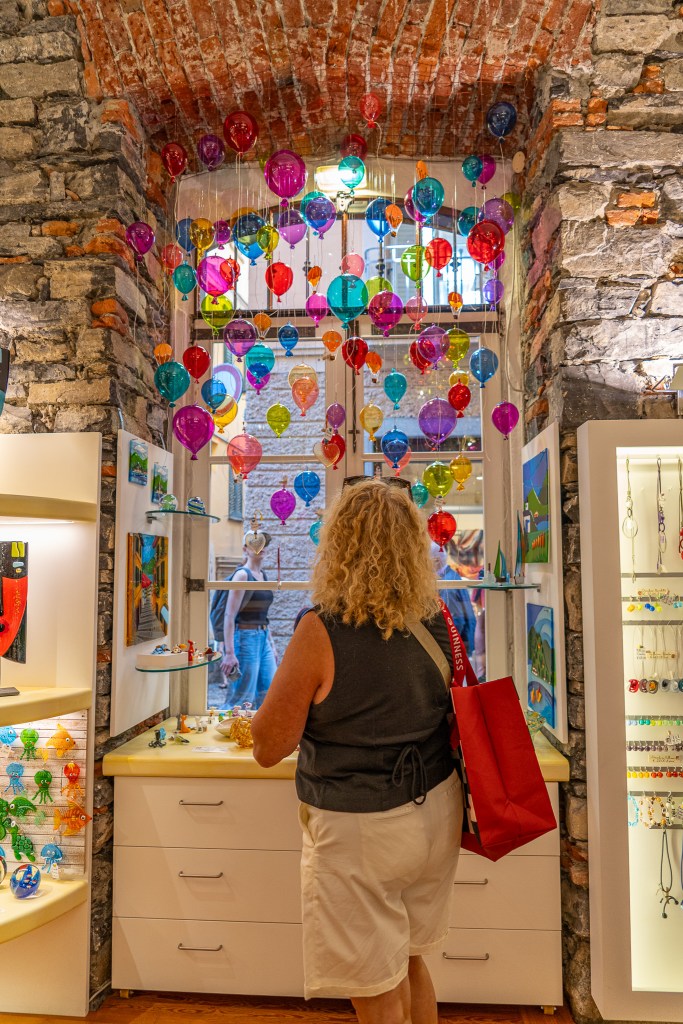
One of the many artisans in Bellaggio, specializing in glass. Including an eye catching range of coloured glass balloons.

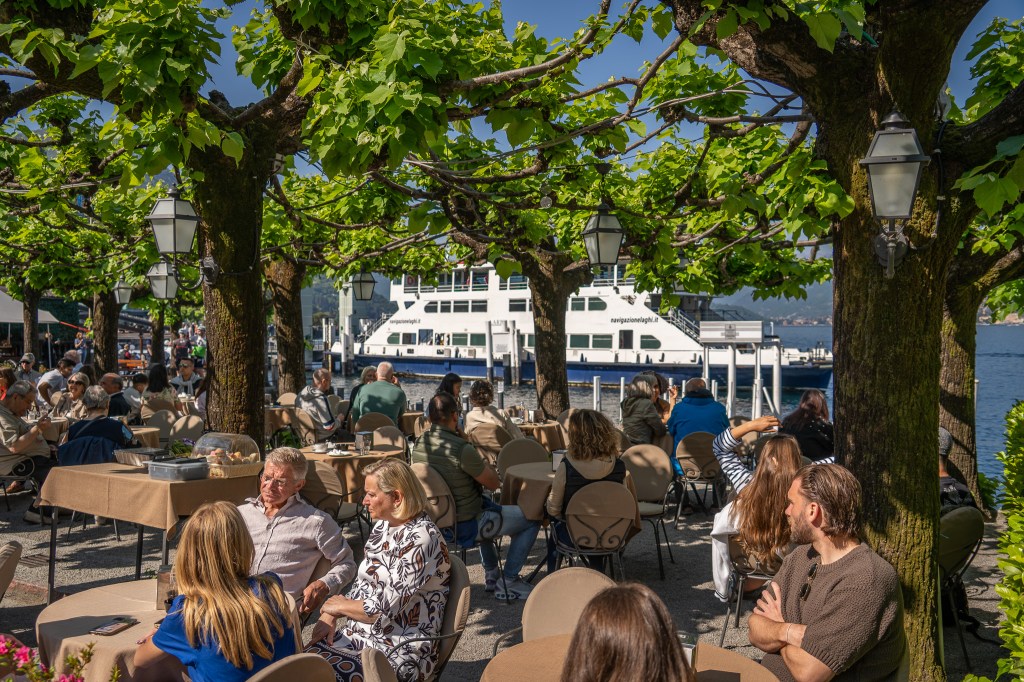
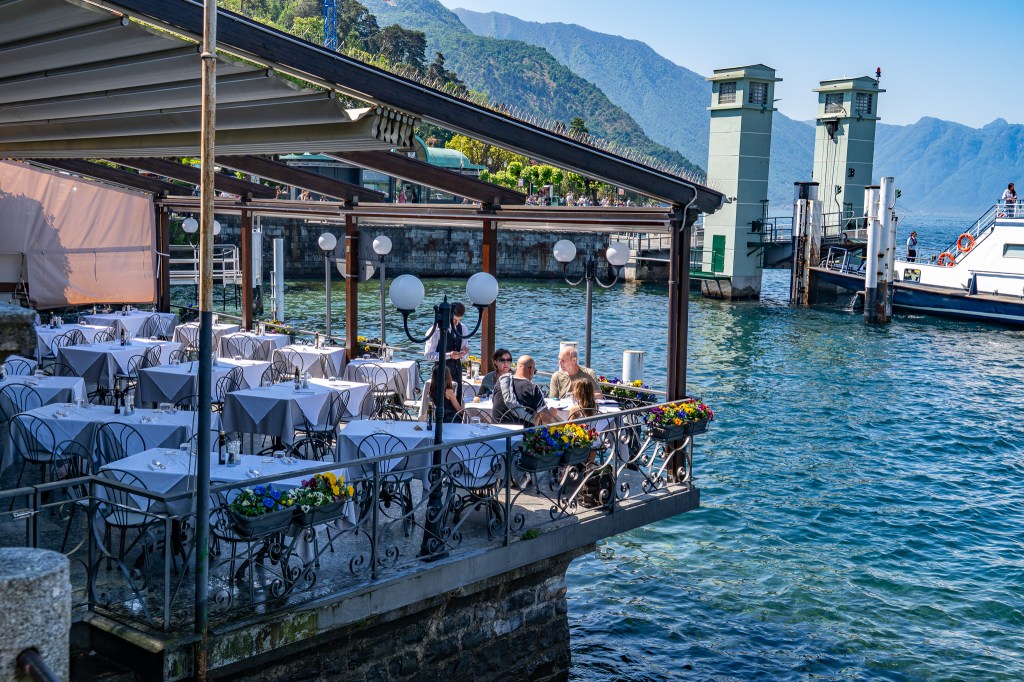
While the narrow cobbled streets cater for the shoppers, the lake front offers a wide range of eateries.

Lunch by the lake.

As close as you can get to the lake without being in it!

If Bellaggio is the most polished town, Varenna has to be the most picturesque. It is situated approximately 15 minutes, by boat, from Bellaggio. Stepping off the boat it soon becomes obvious that Varenna lacks the elegance of Bellaggio but if it lacks elegance, it overcompensates with charm and rustic beauty.

Varenna. Capturing this scene was a long standing goal of mine. The combination of lighting conditions and the vibrant colours resulted in a photo with a postcard feel and made the wait worthwhile.

Varenna invokes the same question as other locations on the lake. Is it a town or a village? It seems too small for the former and too big for the latter. Whatever its status, it oozes history and character. There is no shortage of cafes and restaurants from which to enjoy the atmosphere and watch the world (and endless tourists) go by. A climb up one of the many steep side streets provides an escape from the bustle of the harbour and a glimpse of what everyday existence is like for the locals-unhurried and peaceful.

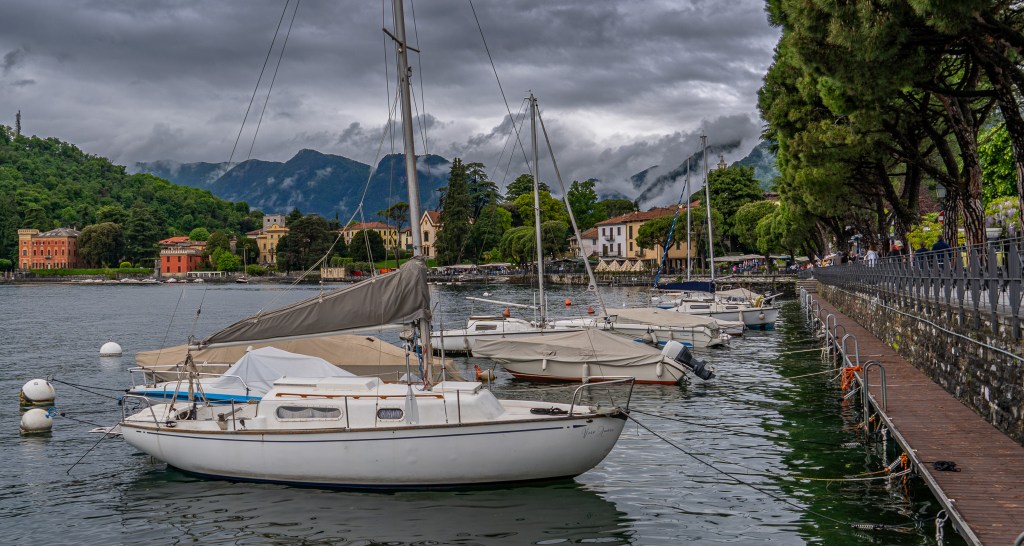
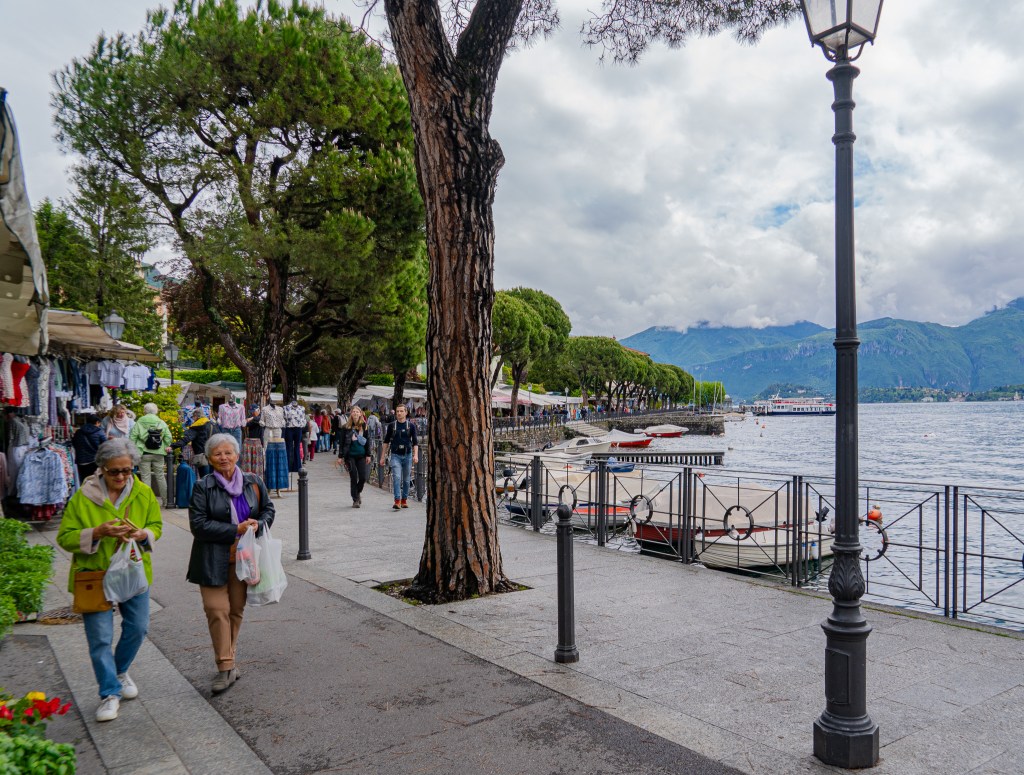
Another 15 minute boat ride, heading south from our hotel in Tremezzo, brought us to Lenno. While not as striking as Bellaggio or Varenna, market day in Lenno has a pleasant ambience. The stalls stretch from the small square in the village down to the waterfront, so if market shopping isn’t your thing, you can always just admire the small boats that are moored in front of the stalls.

Lenno. Boats moored at the jetty.

Market stalls versus boats. I know which I prefer!

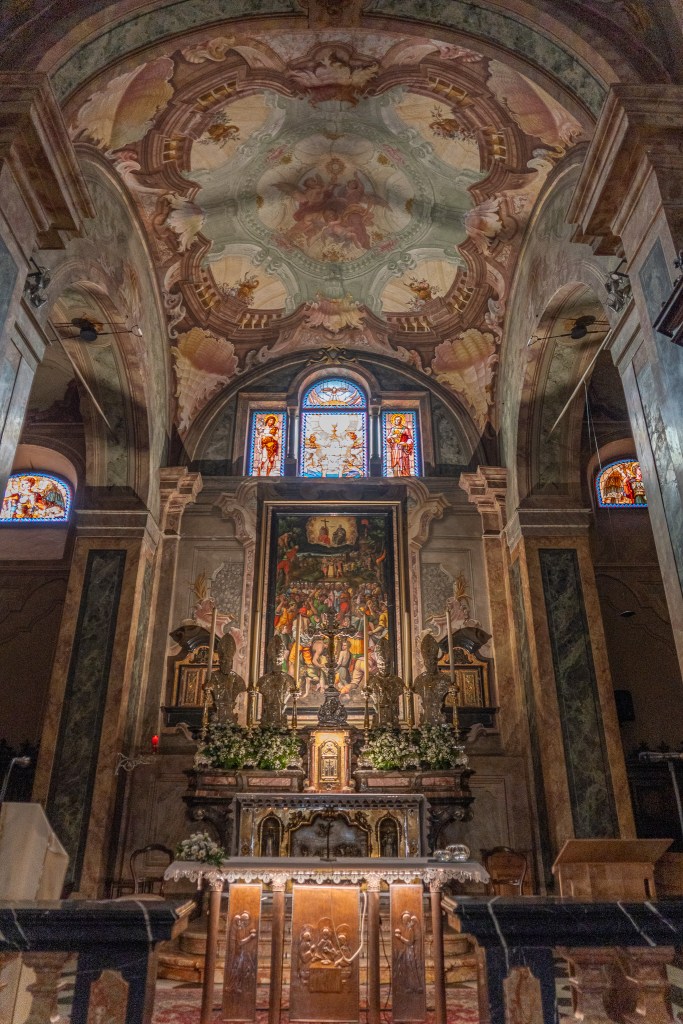
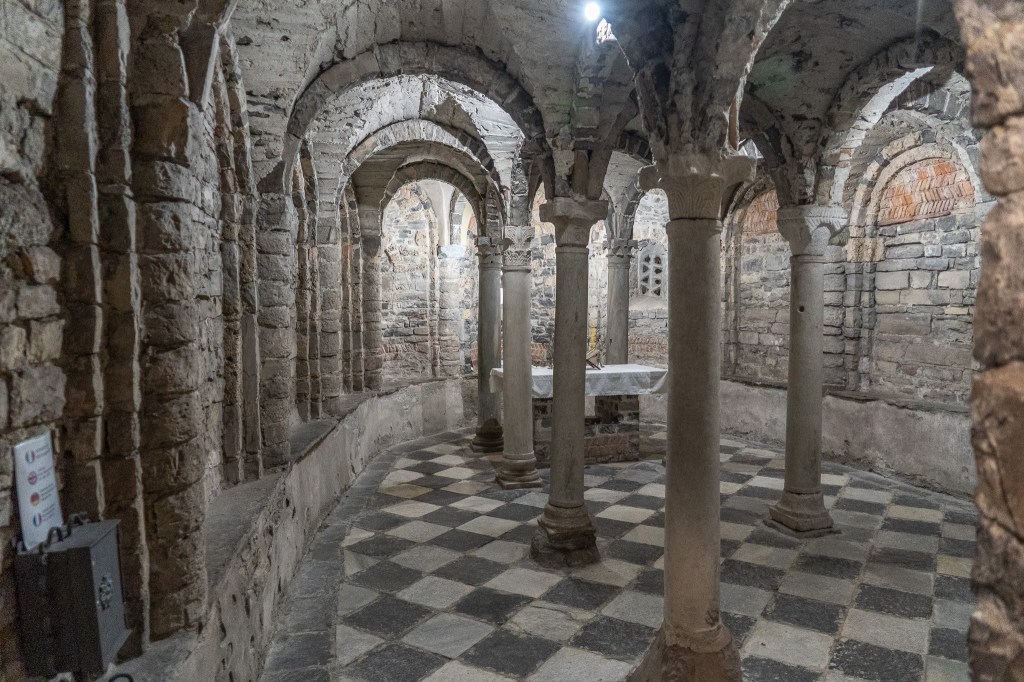
Two hours in Lenno is probably enough unless you stay for a coffee or something to eat. The local church of St Stephen was an interesting and unexpected find and is worth a look. As well as the intricate frescoes, there is a crypt that is accessed from steps in the main body of the church. It dates back to the 12th century and has been impressively preserved. No mean feat, given that it is below the water level of the lake!

Frescoes and stained glass adding colour and interest.

St Stephen’s underground crypt.

Como was our first trip by bus. Although it is accessible by boat, its position at the southwestern tip of the lake would have meant a 2 hour boat journey. Unlike the previous locations, Como’s status is obvious. It’s most definitely a city. It is the administrative capital of the Province of Como and has a population of 84,000. Como has lots to offer in terms of history, culture and arts, as well as the world’s oldest seaplane club.

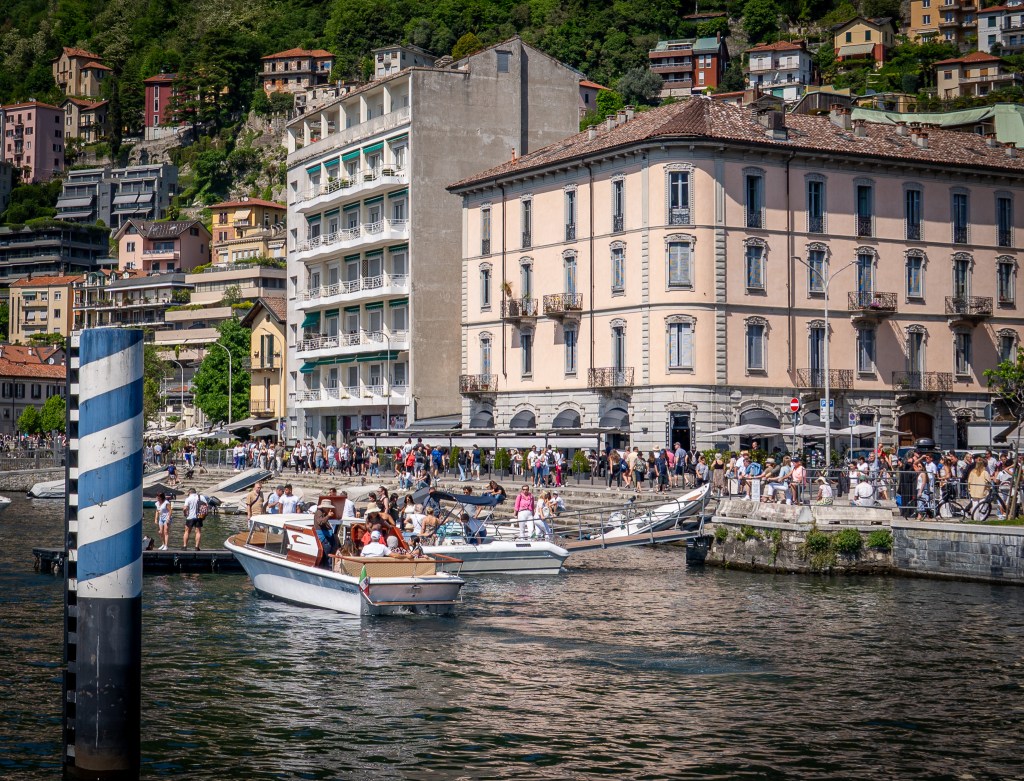
The bustling harbour at Como.

However, we had decided to give priority to taking the funicular railway from Como to Brunate, a village that sits 500 metres above Como. The funicular operates via electric motor and cable, which pulls the train up the steep gradient. Despite leaving the station every 15 minutes, the popularity of the train means that you can expect to queue for 2 hours! We arrived around 10am and the line of people was already snaking its way along the waterfront. Our wait time was around 1.5 hours but the time went quickly as we chatted with two friendly women, Geraldine and Maura, who were also from Ireland.

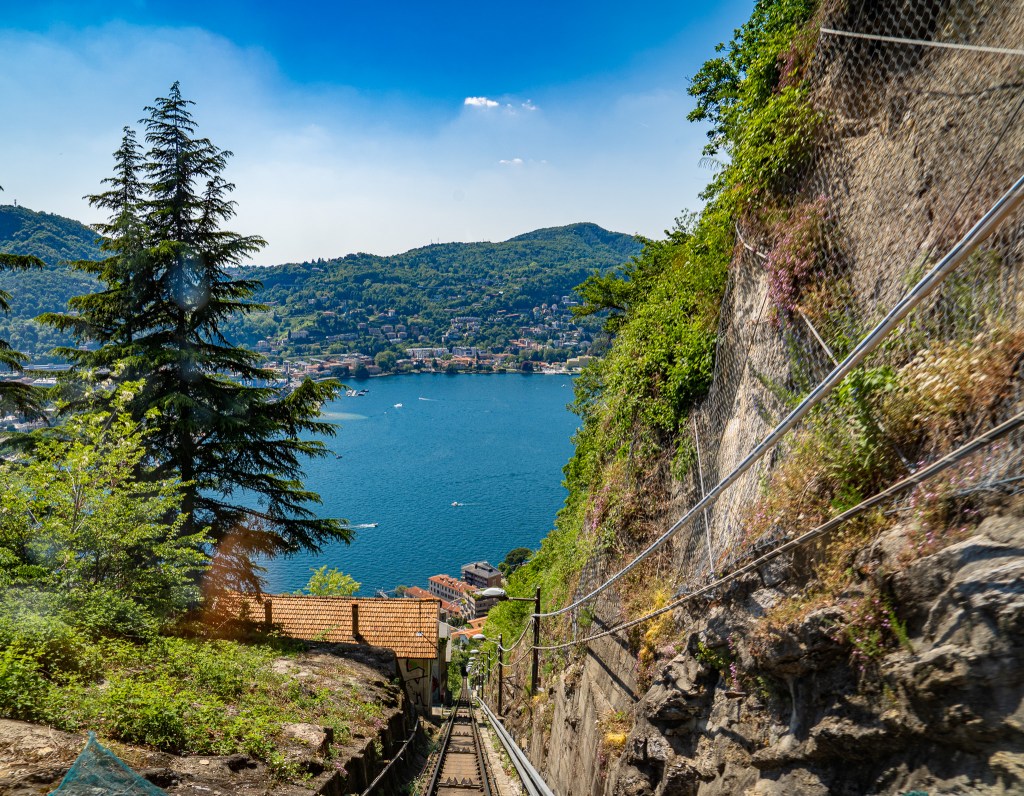
The upper station on the Como-Brunate funicular railway.

Spectacular views over Lake Como if you’re lucky enough to get a front row seat.

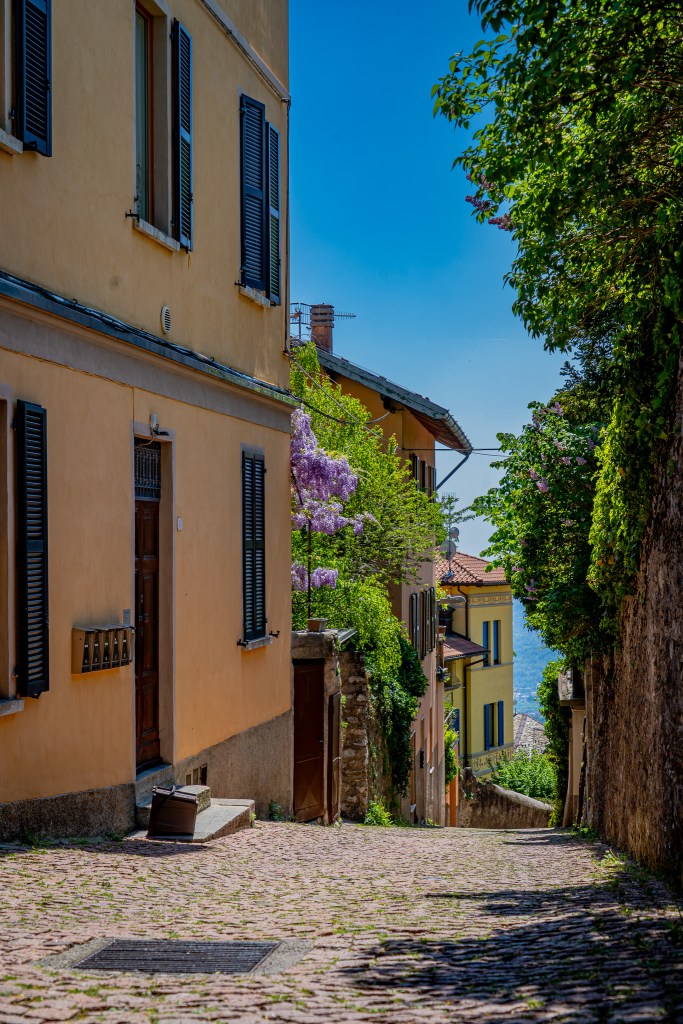
Brunate. The train journey is just over 1km long and takes 7 minutes but alighting at the other end feels like entering a new country. The chalet type houses and quiet lanes, draped in wisteria, portrayed a Swiss vibe.

The serene cobbled lanes of Brunate.

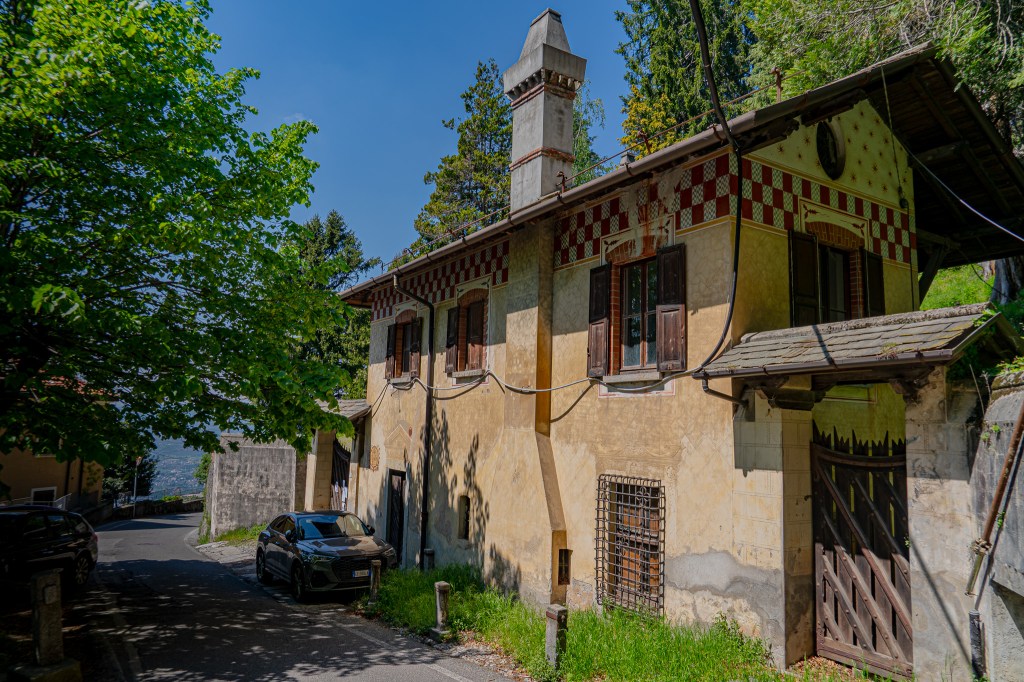
A mix of Swiss, German and Italian architecture give Brunate a unique character.

No crowds here. Probably due to the steep climb.

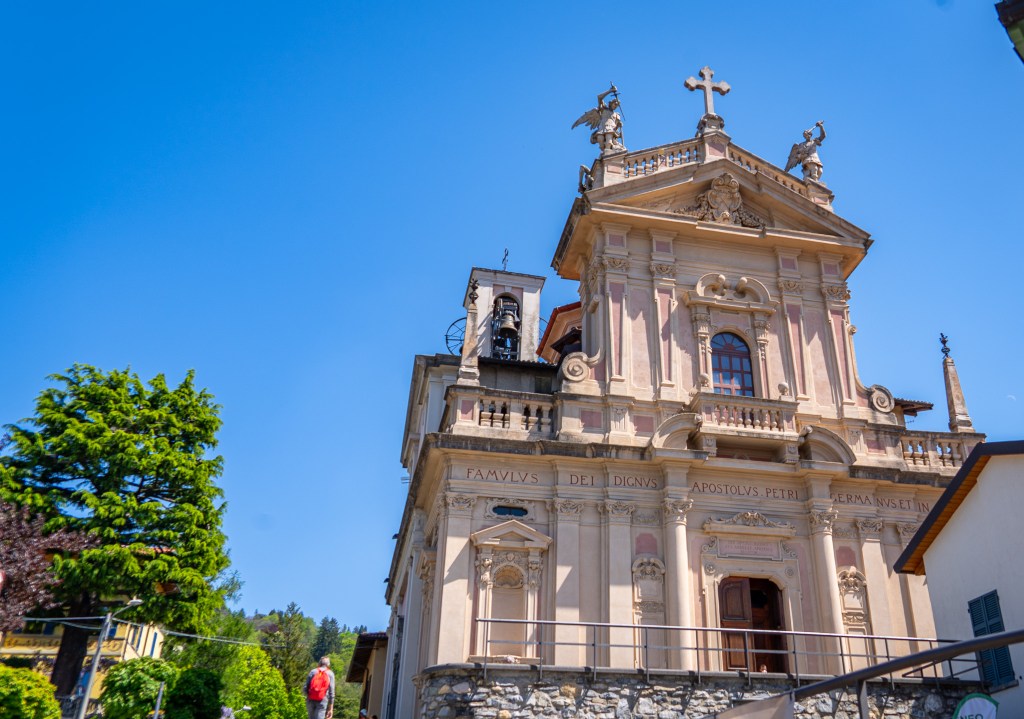
The church at Brunate.

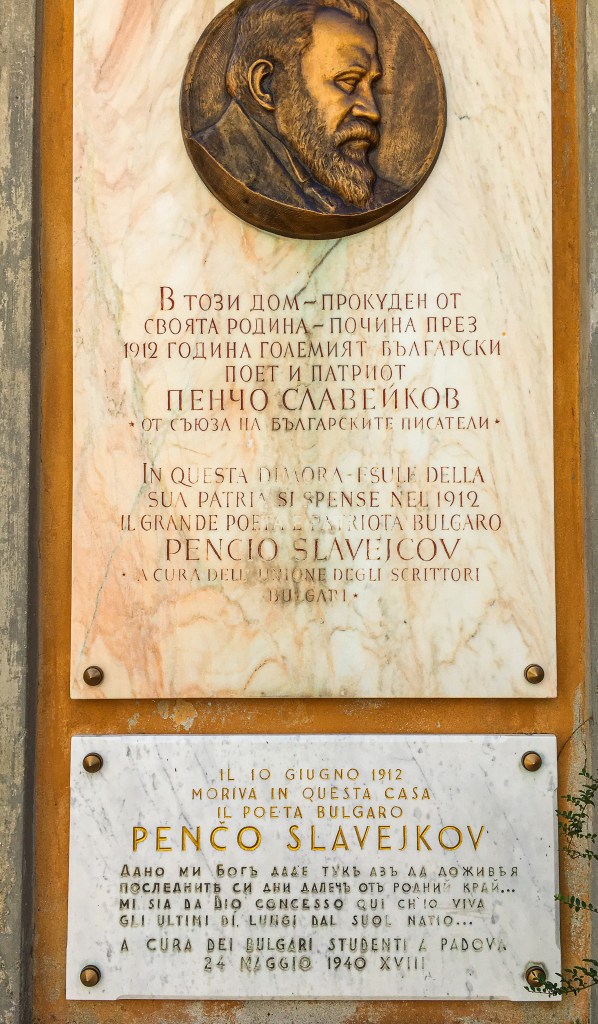
Pencho Slaveykov. Bulgarian poet, writer and philosopher. 1866-1912.

While walking past the church in Brunate, I noticed a commemorative plaque on a wall. It was mostly in Cyrillic script, which I don’t understand. Later that evening in the hotel, I looked him up and discovered a fascinating individual whose life had been dictated by one unfortunate event.

At the age of 18, Pencho fell asleep on a bench during a heavy snowfall. He contracted pneumonia which left him unable to walk without a cane and he had difficulties speaking and writing. He suffered from melancholia and he turned to literature in search of a cure. His work as a poet and philosopher led to extensive travel throughout Europe but his main goal was to find a cure for his condition. After travelling through Italy and Switzerland, he returned to the mountains in Italy. He arrived in Brunate in late May, 1912. He died on 10th June and was buried in the local cemetery. In 1921 his remains were repatriated to his homeland.

In a cruel twist of fate, he had been nominated for a Nobel Prize. Because of his death, the nomination wasn’t considered.

In 1903 Pencho began a relationship with another poet, Mara Belcheva and they remained together until his death. Although they never married, he always referred to her as his wife. They are both depicted on the Bulgarian 50 lev banknotes that were issued in 1999 and 2006. His story was an unexpected and poignant discovery for me. One which gave this picturesque village a very human dimension.

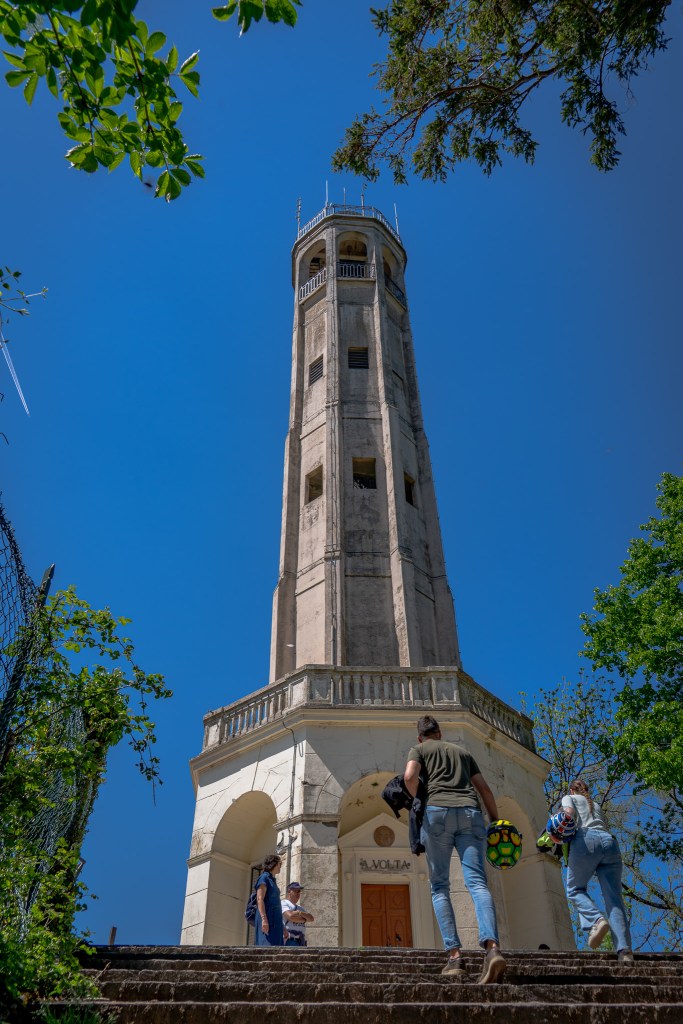
Volta Lighthouse. In and around the station at Brunate, we saw signs for a shuttle bus to Volta Lighthouse but it wasn’t obvious if the bus was operating, so we decided to walk. This was the steepest climb yet and the ground was uneven in places. The distance to the lighthouse is about 1km but it took at least 30 minutes to walk because of the slow pace and frequent stops to catch our breath. Volta Lighthouse sits on a hill in San Maurizio, a tiny village with an elevation 150 metres above Brunate. The lighthouse is named after Alessandro Volta, a chemist and physicist and native of Como. He invented the electric battery and discovered methane.

Volta Lighthouse with its distinctive octagonal shape.

The view from Volta Lighthouse

The walk back to the funicular was almost as challenging as the ascent to the lighthouse and my knees felt it. Before we knew it, our day was at an end. I think Como has a lot more to offer but I’m glad we used our time in the way we did. It was a unique experience and one which may not be possible when the knees are a few years older! We got the bus back to our hotel but it was a long wait because at least two buses didn’t turn up. My recommendation would be to take the ferry and spend two hours on the lake taking in the scenery at a leisurely pace.

Thoughts and tips.

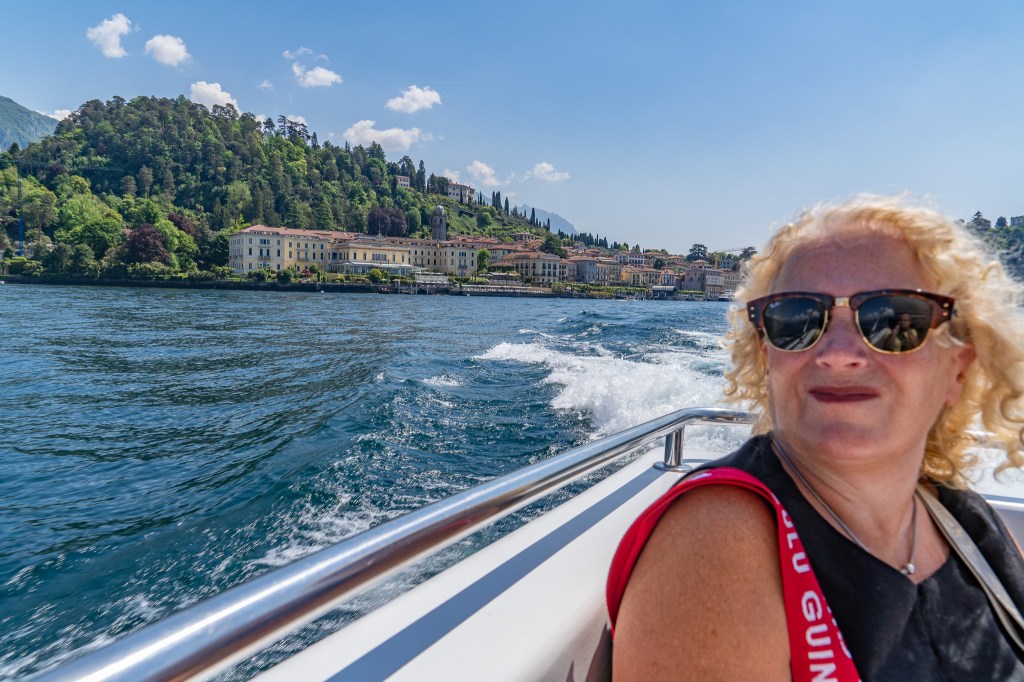
Getting around. The best, and cheapest way to travel to and from the various towns and villages on Lake Como is by boat. There is a wide choice of boat, from ferry to high speed hydrofoil, shuttle boat and water taxi. A Mid Lake day pass costs 15 euro, which allows you to visit all the locations above except Como.

On the water is the fastest, cheapest and most enjoyable mode of transport on Lake Como.

Climate. Lake Como is in the Prealp region. In other words, it sits at the foothills of the Alps and is prone to a range of weather influences. Combined with the effects of evaporation from the lake itself, the region can be humid and rain or low cloud are not uncommon. While summer temperatures may be more predictable, we experienced a wide range of temperatures and weather conditions. If you’re visiting in Springtime, bring layers to allow flexibility.

People. From shopkeepers to bus drivers, I found the Italian people very friendly. Not surprisingly, due to the volume of tourists, everyone spoke at least some English, which made communicating straightforward.

Food. I’m no food critic and most of our meals were included in the hotel booking. The general standard was good and as far as I could tell, prices were reasonable.

Would I go back? Yes. But I think a return trip would be as independent travellers. This was an organised trip, booked through a travel agent. However, my personal preference is independent travel and the freedom and flexibility that brings. One of the greatest pleasures I experienced was sitting on the balcony of the hotel room with a glass of wine, watching the boats on the lake. It was a relaxing and therapeutic ‘activity’. But that didn’t happen often because we were usually out on the various coach tours that were part of the package. As I (half) jokingly remarked one afternoon, “I know it’s not a practical, realistic or healthy aspiration but day drinking on the shores of Lake Como is my idea of the perfect pastime!”

Some more photos...

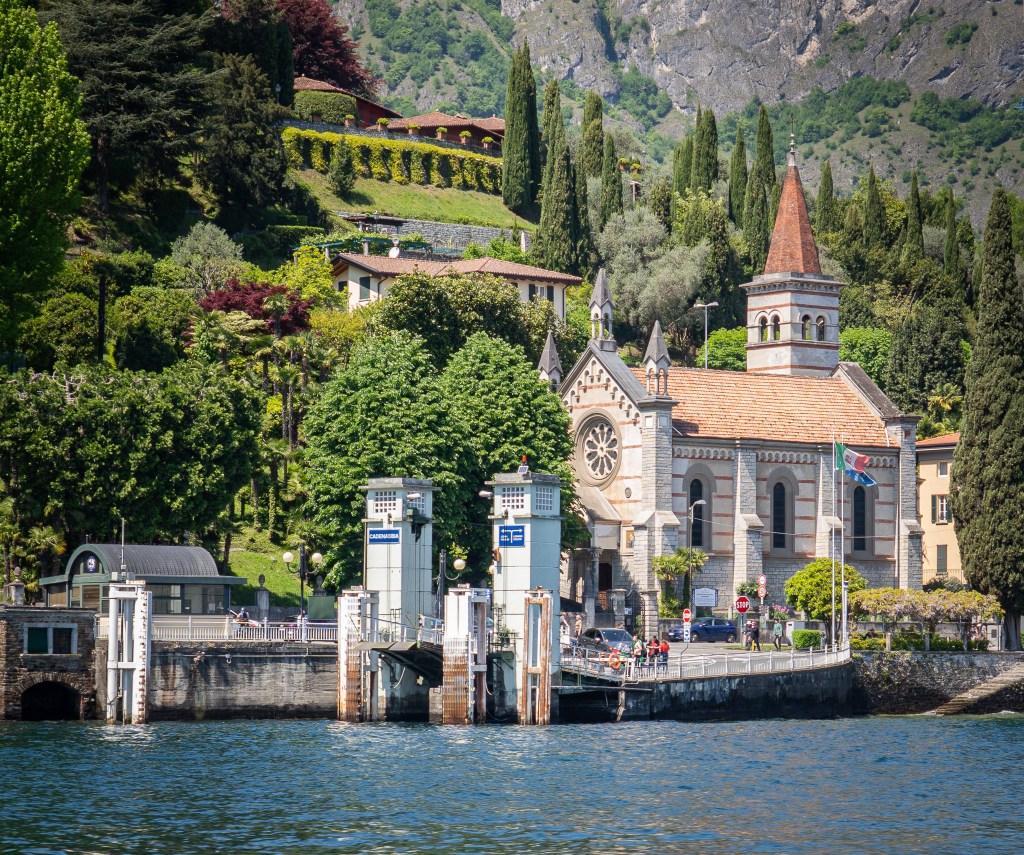
One of the many boat stops around Lake Como.

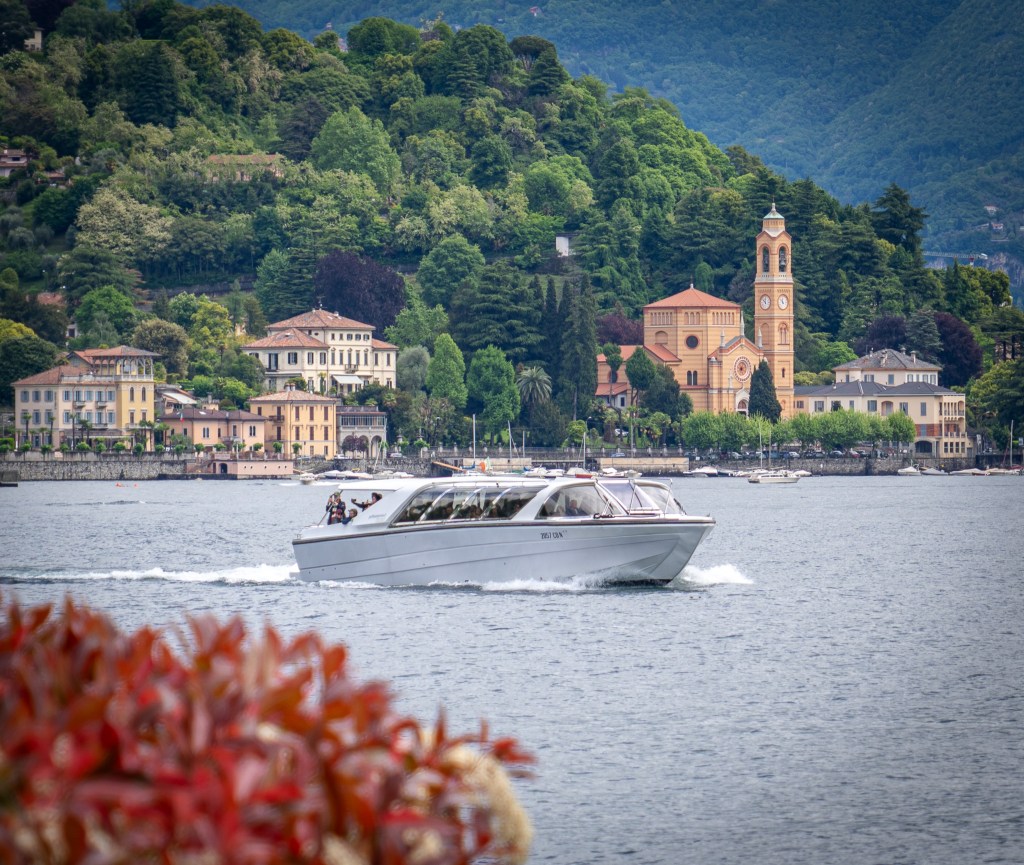
Sightseeing boat near Lenno.

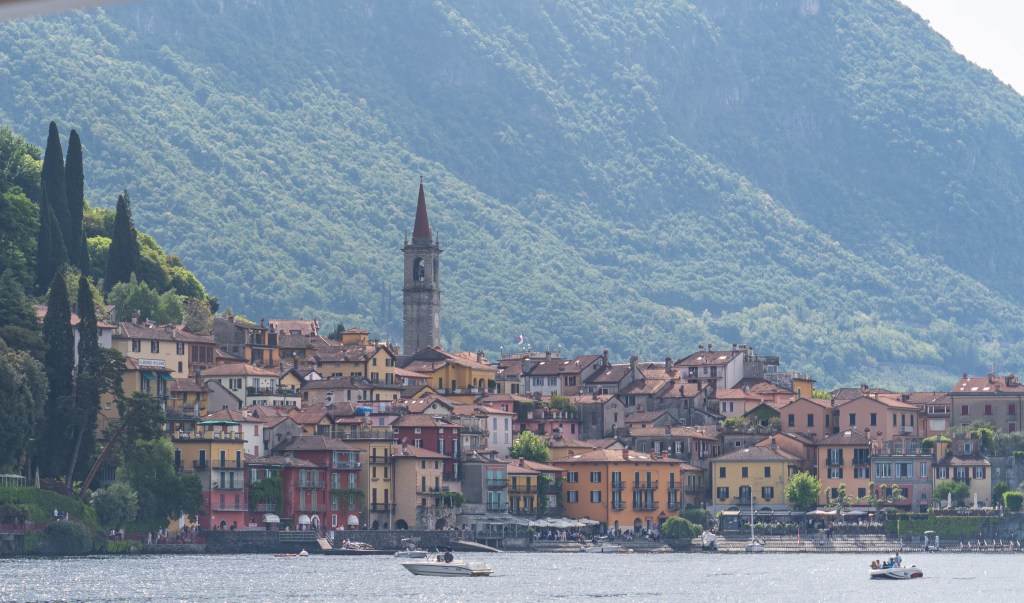
Colourful Varenna.

Light and shade in the quiet lanes above Tremezzo.

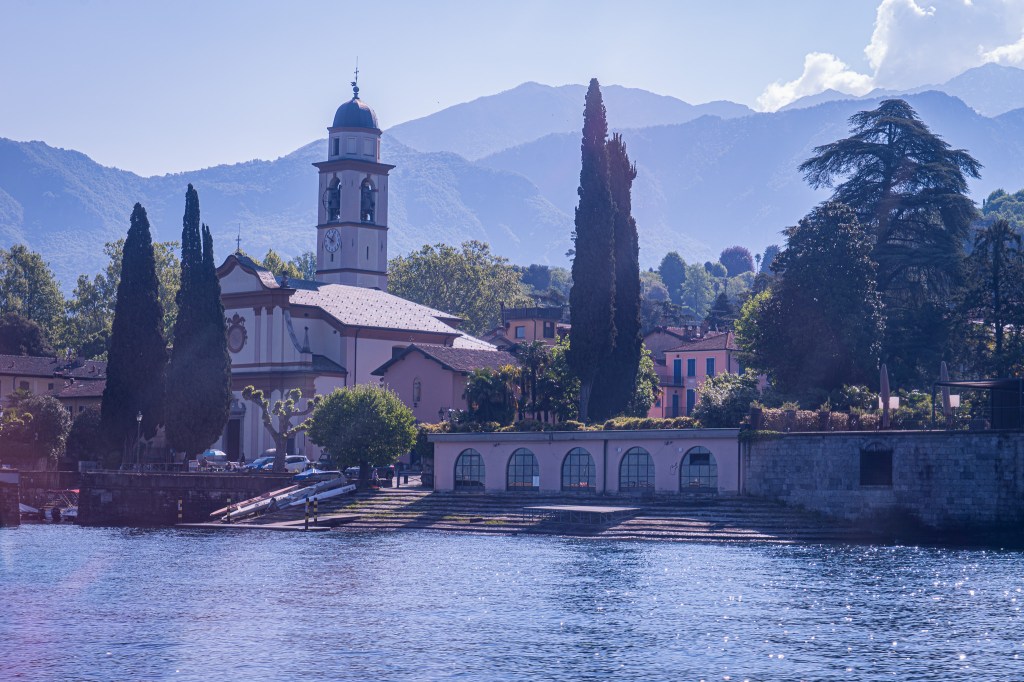
San Giovanni oozing charm. This was visible from our hotel across the lake. At night the tower was illuminated with a red spotlight.

Taxi, Como style.

Arrivederci!