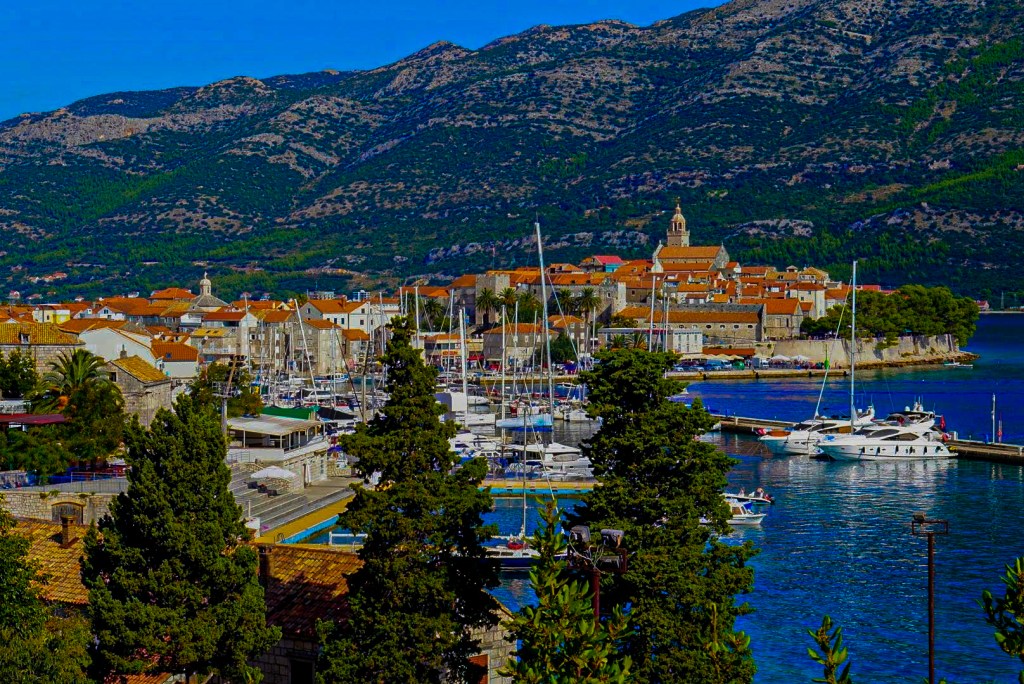
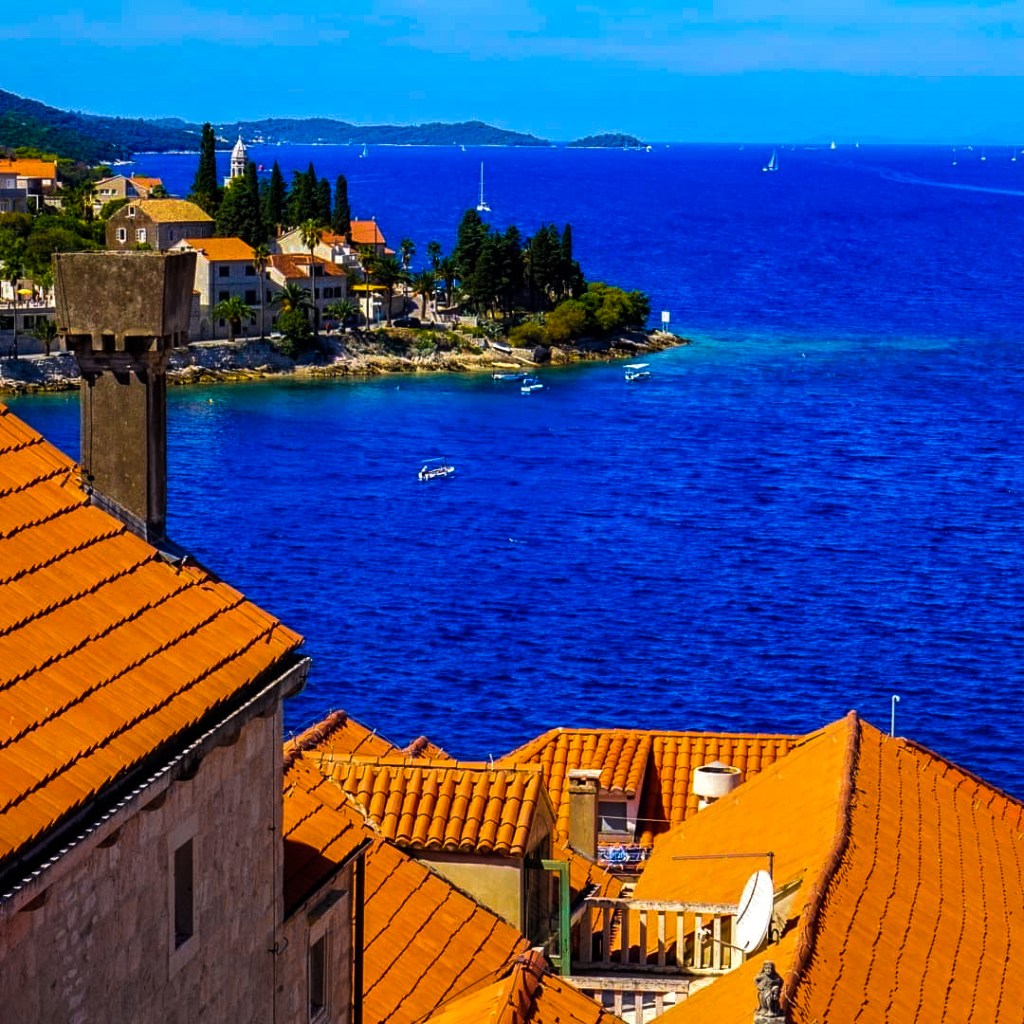
Korcula (pronounced Korchoola) is a small island in the Adriatic sea, lying off the Dalmatian coast. Approximately 30 miles long and 5 miles wide, it is home to 15-16,000 people. It is a Croatian territory. When I left school in 1979, my history and geography lessons included a cursory mention of Yugoslavia but never made reference to the fact that ‘Yugoslavia’ encompassed several distinct countries with their own individual identity and culture. Today, we know them as Serbia, Croatia, Bosnia and Herzegovina, Slovenia, Macedonia and Montenegro (I hope that is accurate!). However, my interest in this place was neither historical nor political. It was simply identified as a suitable location for a much needed ‘R&R’. I knew little about Korcula, or Croatia for that matter. But the allure of spending 2 weeks looking at blue seas and red roofs, with ambient temperatures in the mid 20s was enough to bring me there.
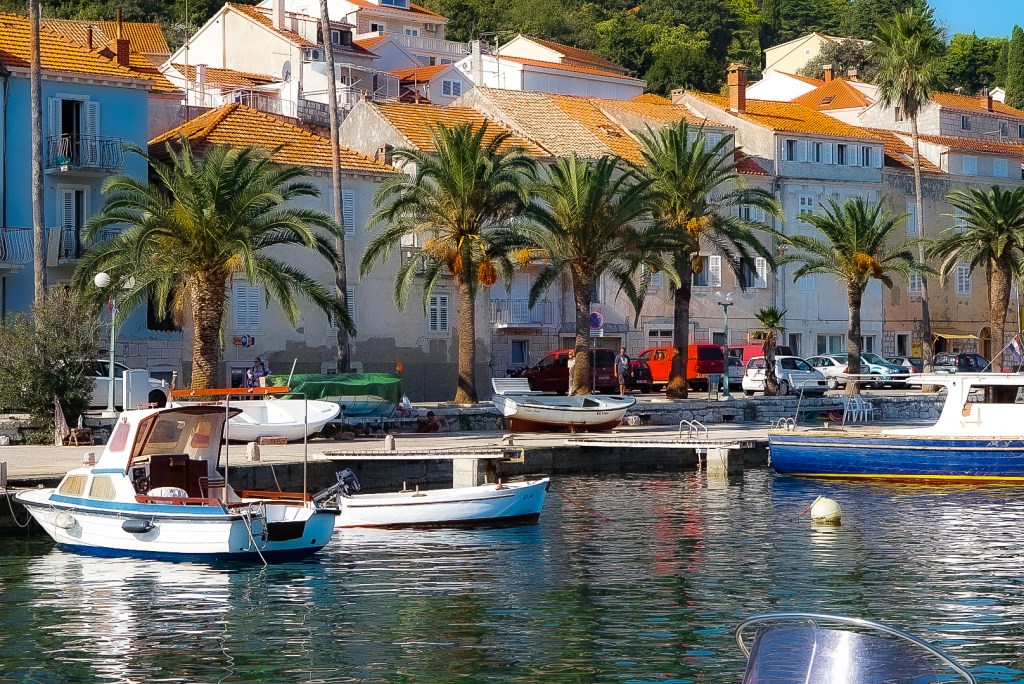
When you have spent a lifetime travelling with children- from babies to toddlers, to teenagers-just two adults travelling alone is a bit of a breeze! The first challenge to this statement presented itself when we were dropped off at the pier where the ‘boat’ would take us on the short (10 minute) journey from the mainland to Korcula. Being a small island I didn’t have great expectations for the vessel that would ferry us safely across. Then again, I didn’t expect an oversize bath tub with a roof either! As we drew closer to the ‘boat’, we could see that it was already crowded inside and overloaded outside with suitcases precariously stacked ‘on deck’. Deciding to wait on the next crossing, we took a step back. But El Capitan was having none of it! He ushered us forward. Now if this was at home, I would probably voice a confident objection but being the unsure, subservient visitors, not wanting to offend anyone, we meekly complied with his directive. After all, as an Irishman, I felt it would be better to drown than hurt someone’s feelings in their own country! Once onboard, it was obvious that the boat was overloaded. As the pitch and roll of the vessel grew, two of the cases on deck took a nose dive into the sea! At this point, people started to scramble to get off. And this was the interesting bit. I learned a lot about myself and the Irish as a race. Instead of joining in the frenzied exodus, I found myself thinking, “once all the scared people get off, we’ll have a seat and be on our way”. And that’s what happened.
Croatia’s most famous towns are Dubrovnik and Split and, having visited Dubrovnik, I can safely say that Korcula is every bit as appealing, just smaller. Its ancient cobbled, narrow, streets exude a mystical character and the notion that these ‘streets’ have endured the footfall of subsequent generations for 5 centuries is food for the imagination.
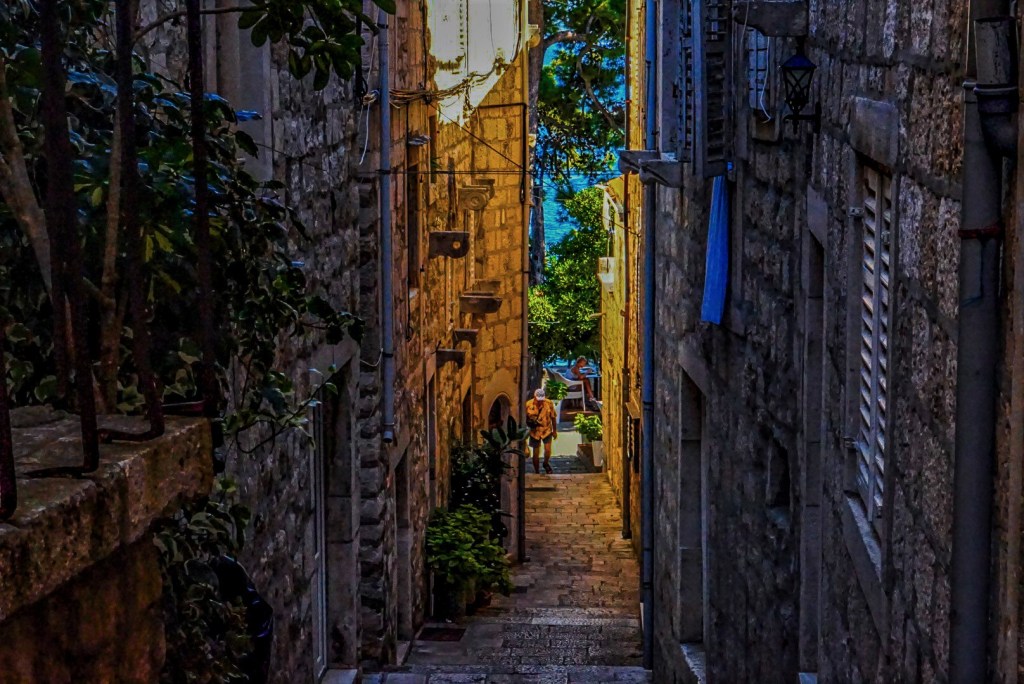
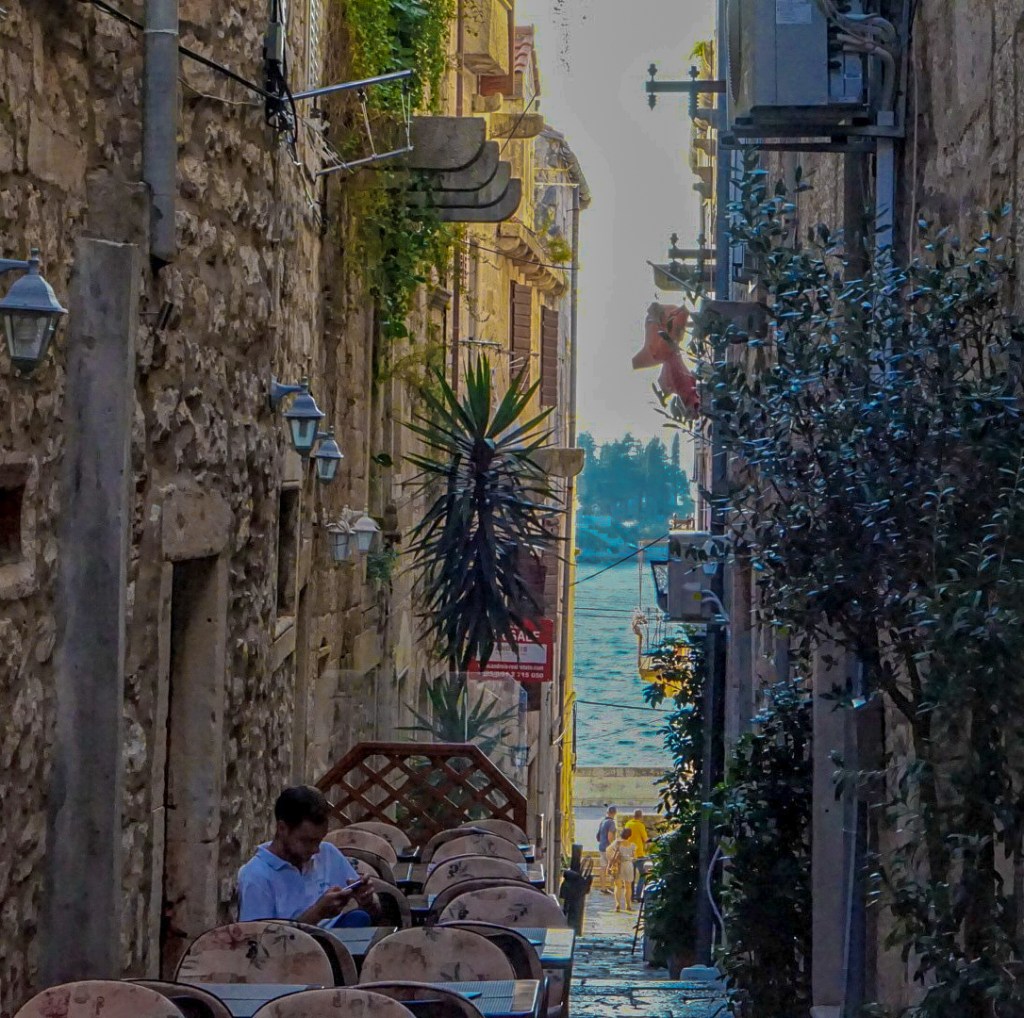
An interesting footnote for all those who think modern technology has all the answers-The streets in Korcula’s old town are built in a herring bone design to maximise the protection from the prevailing sea winds. Today’s architects and town planners are more likely to put their faith in computer aided design and algorithms rather than lessons learned from experience.
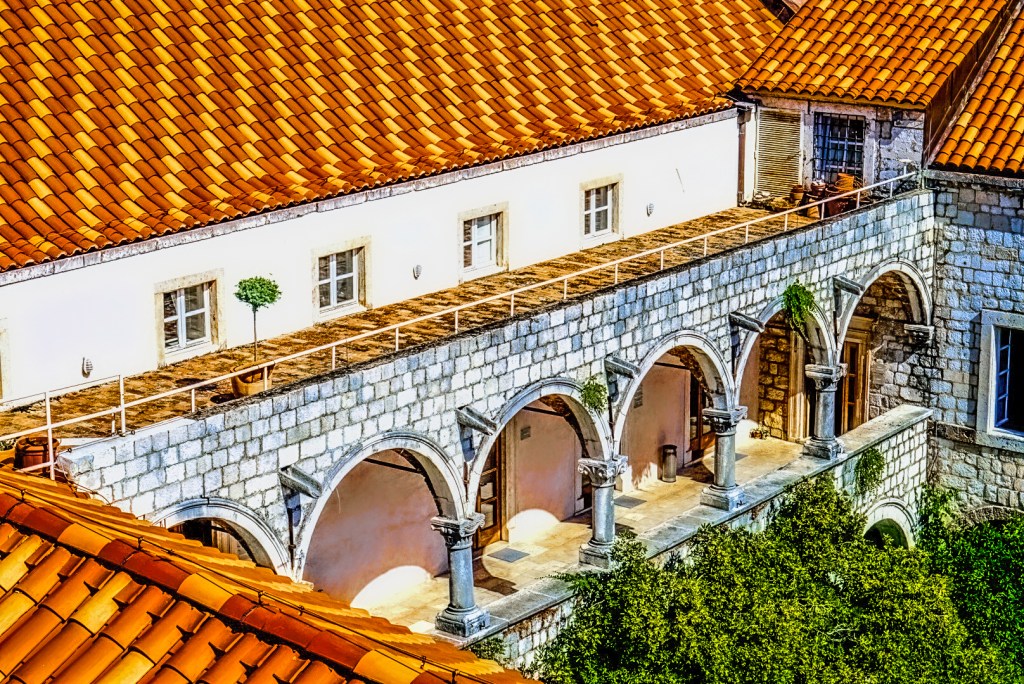
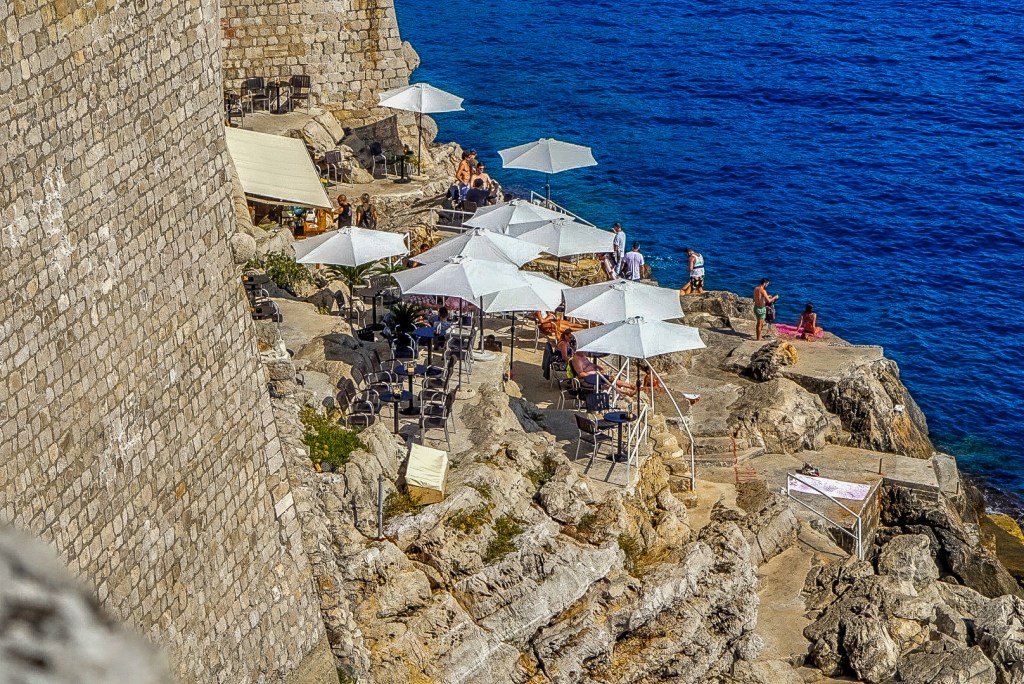
As I mentioned, we took a trip to Dubrovnik. It is a larger version, and consequently a busier and more commercialised version, of Korcula. The old town is a beautiful place where the streets and buildings are constructed from the stone that typifies the region. If you visit Dubrovnik, a walk around its walls will give you the best perspective. However, if you are unfit or claustrophobic, you may not be able to do this as it can be ‘challenging’ in places. Walking the walls, you have 2 views. Out to sea and into the properties enclosed by the walls. And while the sea views are spectacular, for me the most intriguing view was inward. Looking at the secluded gardens and cloistered walkways, I wondered about the lives of the people who lived here. How long have they lived here? What did they do for a living? How were they affected by the conflict of the 1990s? While the tell tale signs of bullet holes and shelling are still visible, they are easily overlooked as it is the beauty and character of this place that catches your eye and your imagination.

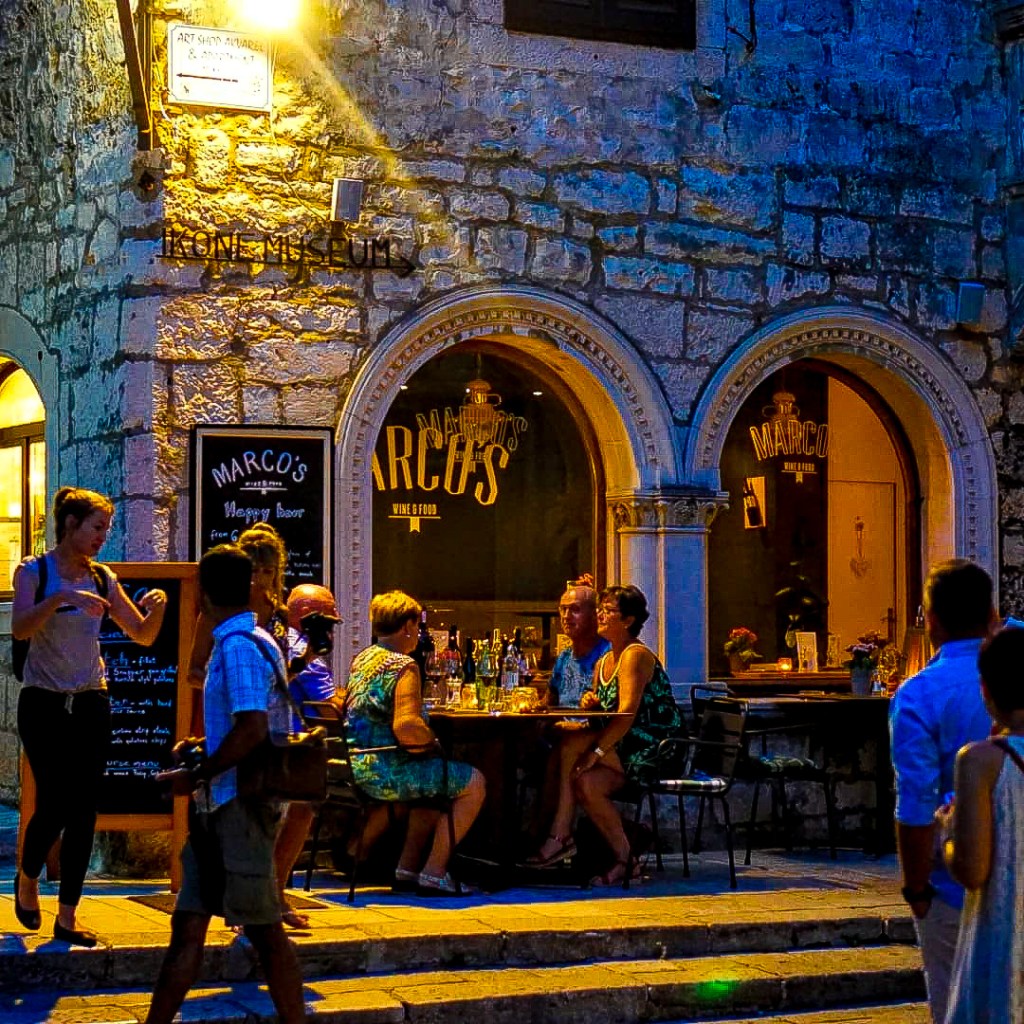
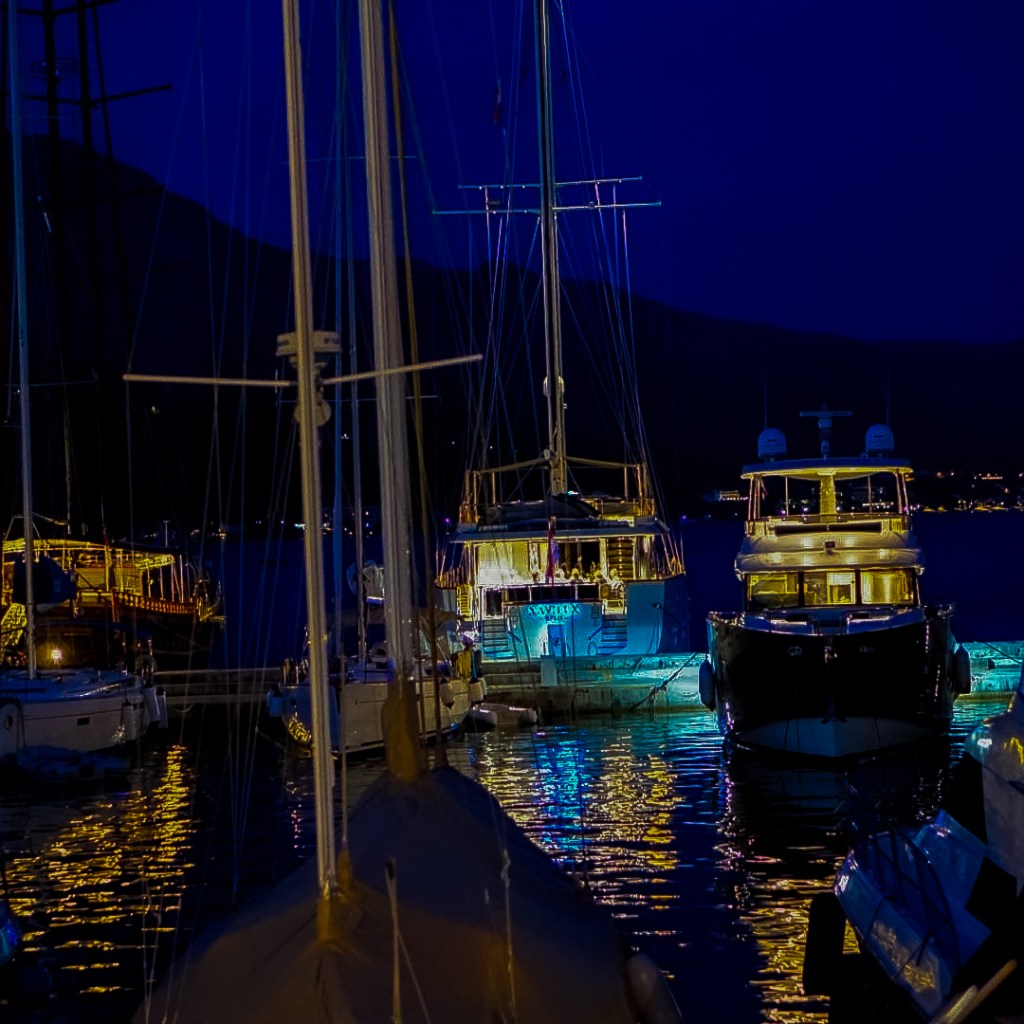
Although we only ate in the hotel, the narrow streets of Korcula seemed like a pleasant place to enjoy an evening meal. The softly illuminated streets had a very appealing ambience and in my opinion, the old town was more attractive at night.

But here’s the thing! Yes, Korcula is a charming, relaxing, interesting, attractive place. And when you read the brochures and websites that promote the island, and the country, they do it justice. But they also talk at great length about the crystal clear waters and the quiet, secluded beaches. OK, first of all the water. Yes, it is the cleanest, clearest and the most vividly blue water I have ever seen. But the beaches? Maybe it’s just me but when I hear or read the word ‘beach’ I instantly think SAND. Nope! No sand. Anywhere! You will find every grade of stone and gravel, from coarse to not-so-coarse but you won’t find any sand. So, no need to pack your bucket and spade. But definitely pack beach shoes (not sandals because the stones get trapped in these). Luckily we had a nice pool at the hotel and it wasn’t a very busy time of the year, so no overcrowding.
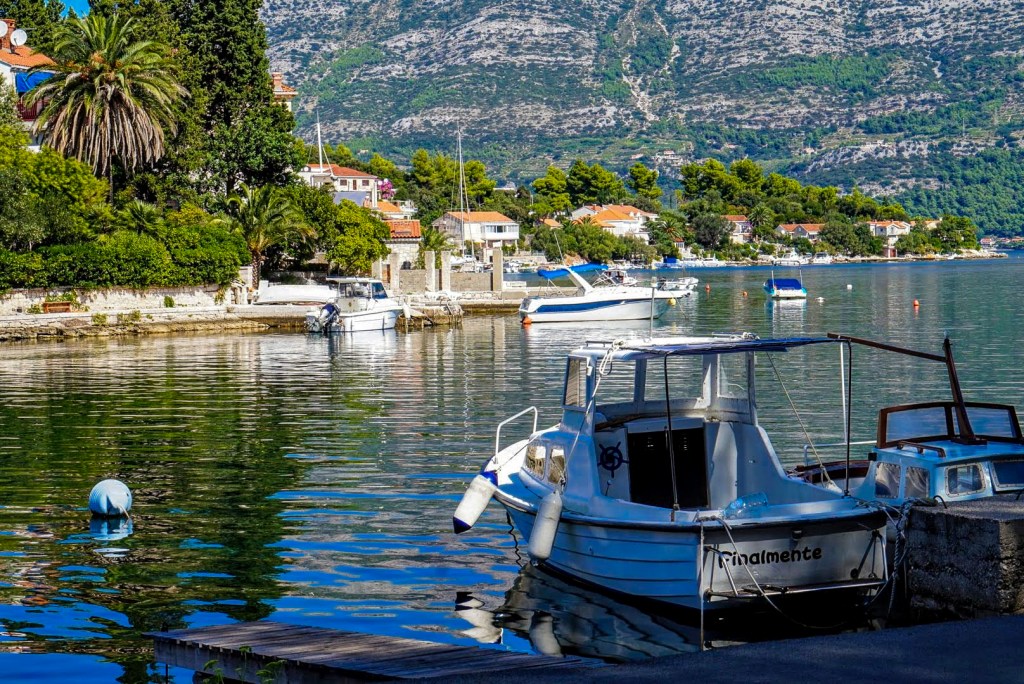
So, while it was a bit surprising to learn that there were no sandy beaches, it didn’t spoil anything. Would I recommend it? Yes but maybe for a shorter stay.
One last thought. If you are visiting Korcula and you don’t want to be an extra in a mini version of Titanic, try sourcing a private water taxi to take you from the mainland…
 Bleeding Dove
Great post 🙂
LikeLiked by 1 person
Thank you very much! 🙂
LikeLike
Fantastic and very honest review and photos really do the place justice👍👍
LikeLike