Girona

Time of visit. October 2025.

The city of Girona (also known as Gerona) is the province of Girona’s capital. Population, 106,000 (2024). It is located 60 miles northeast of Barcelona, which equates to 1 hour 20 minutes by car or just 40 minutes by high-speed train. The city has 2 main rivers; the Ter, which flows through the north of the city and the Onyar, which flows south to north. Girona’s strategic location, with France to the north and Barcelona to the south, accounts for its long and turbulent history, too detailed to recount here but if you’re interested, you can follow the link, https://en.wikipedia.org/wiki/Girona#History.

Girona. A city with grit, as well as a certain charm.

To be honest, as our bus pulled into the car park on the edge of town, my first glimpse of Girona left me underwhelmed. The eclectic mixture of architectural styles gave the impression of a place that had grown in fits and starts, with minimal thought given to continuity of profile. But I quickly reminded myself that this was no quaint village with a population of a couple of thousand souls. Today’s city is the sum of over 2,000 years of development, or to be more precise, turmoil, siege and conquest. Girona has seen no less than 25 sieges in its time. No wonder then, that what the visitor sees today is the result of buildings and structures built out of necessity for survival; the need to please future visitors with an attractive façade was not at the top of anyone’s list of priorities. Don’t get me wrong. Girona is home to some jaw dropping architecture and parts of the old town ooze character but in parts in seemed dark, almost ominous. Maybe some of my photos will translate my thoughts a bit more clearly.

Giant stone steps in unexpected places and dark archways punctuate the warren of narrow streets.

Brighter streets on the periphery. A girl in a red dress providing a striking contrast.

There is something intriguing about photographing strangers. Their anonymity creates mystery, despite just being ordinary people going about their daily business.

Climbing the steps through the almost oppressive atmosphere of the dark streets, something struck me. In autumn and winter, the sun sits lower in the sky and never reaches the narrow passages of Girona’s old town. There were reasons that towns were built in this way, the most obvious being defensive considerations. For example, a narrow street can’t accommodate attacking invaders on horseback. Having resolved some of my inner questions, we emerged into the sunny upper reaches of the old town and made our way up onto the city walls. Girona from this vantage point takes on a new persona. The spires of its cathedral and churches, the stone walls and tall, slender cypress trees swaying in the breeze give the city that romantic medieval look that appeals to the tourist in search of something inspiring. And to photographers in pursuit of a captivating shot!

A view from the city walls of the Catedral de Santa María.

The city walls provide a bird’s eye view of Girona but the climb can be challenging in parts.

Cyclists resting on the steps (90 in total) of Girona cathedral. The city is a favourite of cyclists and some famous proponents of the sport, such as Lance Armstrong, have lived there.

Crossing the river Onyar takes you to the flatter and more modern side of the city. The first thing you notice is the striking colours of the facade of the houses flanking the river. These are known as the ‘Onyar Houses’ and are synonymous with today’s Girona. The idea for the multicoloured scheme was devised by local artists Enric Ansesa and James J. Faixó. The palette of 29 colours represents the transition from the Franco dictatorship (which ended in 1975) to a brighter future. The restoration of the facades, including the addition of colour, was realised in 1982. One of the houses is known as Casa Maso, birthplace of the architect Rafael Masó í Valelentí.

The Onyar houses provide a colourful contrast to the rest of Girona. The vibrancy of the colours vary with the time of day and the position of the sun.

Crossing over one of several bridges took us to the most modern part of the city where the main attraction is the Plaza de la Independencia. The plaza is a porticoed square with a central monument dedicated to the defenders of the city during the sieges of 1808 and 1809 during the war for Spanish independence.

Plaza de la Independencia.

Girona is definitely worth a visit for a couple of hours but what you get out of it depends on what you are looking for. It is a working city with all the shops, businesses, offices etc. that you expect to find in any city. The historical architecture in the old town is impressive and the colourful houses standing on the banks of the Onyar are eye catching. If history is your thing, then you could probably spend days here. But there is an underlying feeling that you are in a place that has underinvested in catering for visitors. One small but important illustration of this is the lack of public toilets. We found only two and one of them was out of order. Yes, you can always go and buy a coffee and use the facilities while you’re there but it’s not an ideal solution. It may be that the city has prioritised expenditure elsewhere but there are definitely improvements to be made. I don’t want to end on a negative though. While we were slightly underwhelmed by Girona, it is important to consider the context. We visited 5 locations on this trip and places like Collioure, Pals and Cadaqués set a very high bar and left Girona in their shadow. Would I revisit? Probably not but glad I experienced it.
Costa Brava-the rugged coast.

Time of visit: October 2025

We travelled to the Costa Brava in northeastern Spain with David’s Coaches, a company based in the Costa Blanca in the southeastern region of the country. The journey time was around ten hours, broken up by three comfort breaks. While ten hours may sound like a long trek, it wasn’t overly arduous. The scenery along the route, combined with our guide’s repertoire of interesting facts about the various regions we traversed, made it an enjoyable journey. Our itinerary on the five night stay included trips to Girona, Cadaques, Pals and Collioure. My original plan was to publish a piece once I had talked about all locations but to my surprise, retirement is busier than I anticipated and my writing time is limited. So, I will opt for installments, starting with Tossa de Mar, our base for the duration of our trip.

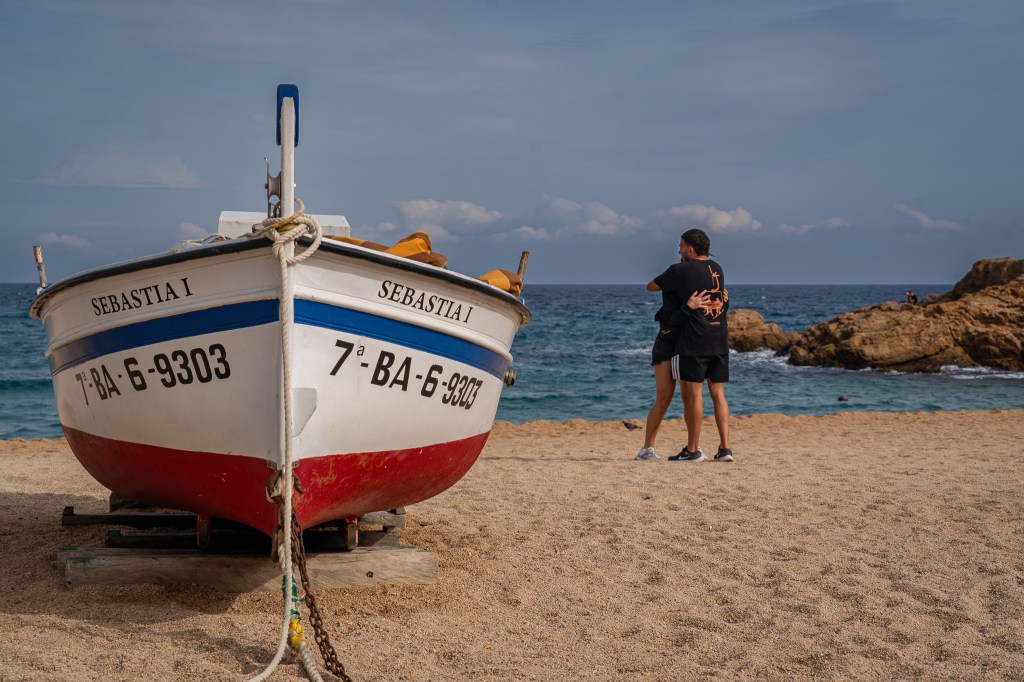
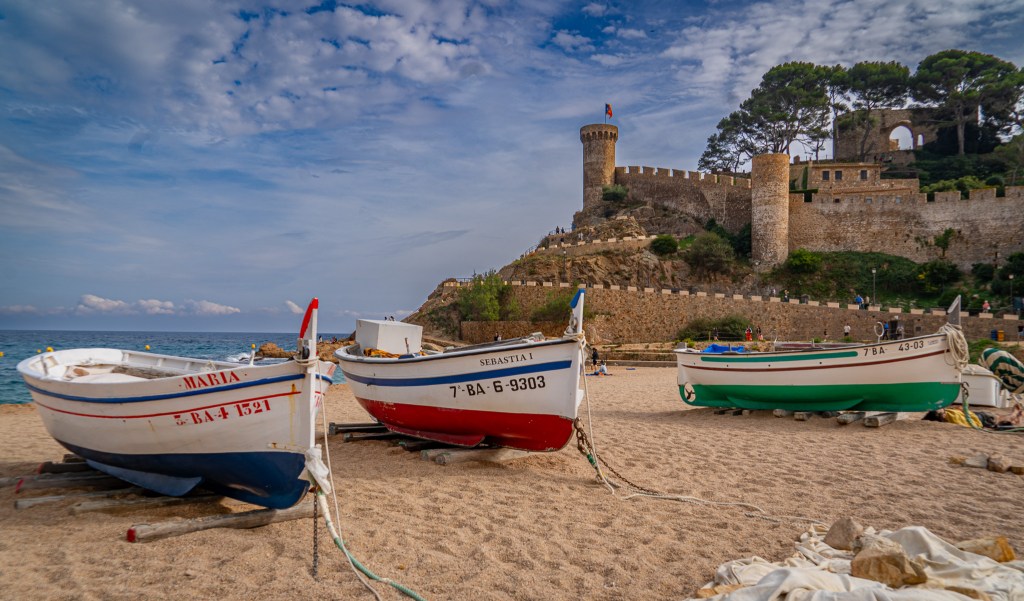
The beach at Tossa de Mar with its striking coloured boats against the backdrop of the old walled town.

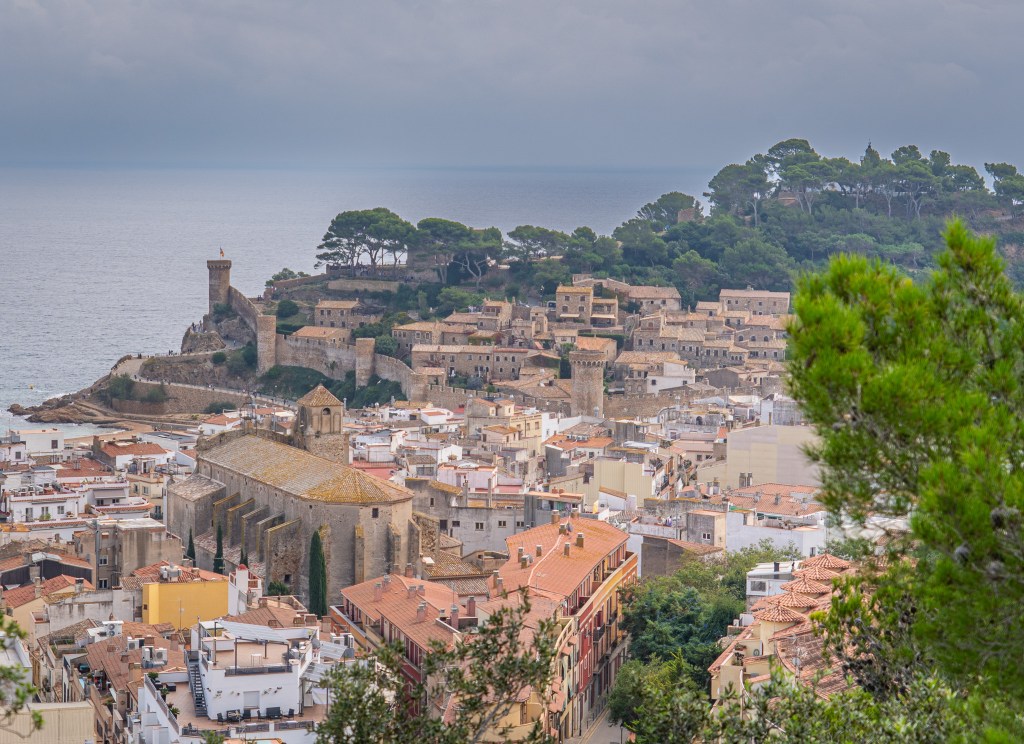
A view of the old town from the Torre des Moros (Tower of the Moors) on Can Magí Mountain.

Tossa de Mar is a municipality in Catalonia, in the province of Girona (Gerona), northern Spain. Its history goes back beyond Roman times but the main architectural characteristics range from 12th century onwards. There is a definite hint of France in the air, not surprising since it is less than 100km from the French border. In more recent times, Tossa de Mar was a successful fishing town but in the 1950’s plans were created to develop the town to attract package holiday makers. And so, the daily catch these days is offloaded from buses instead of boats and consists of curious tourists like us, complete with phones, cameras and backpacks.

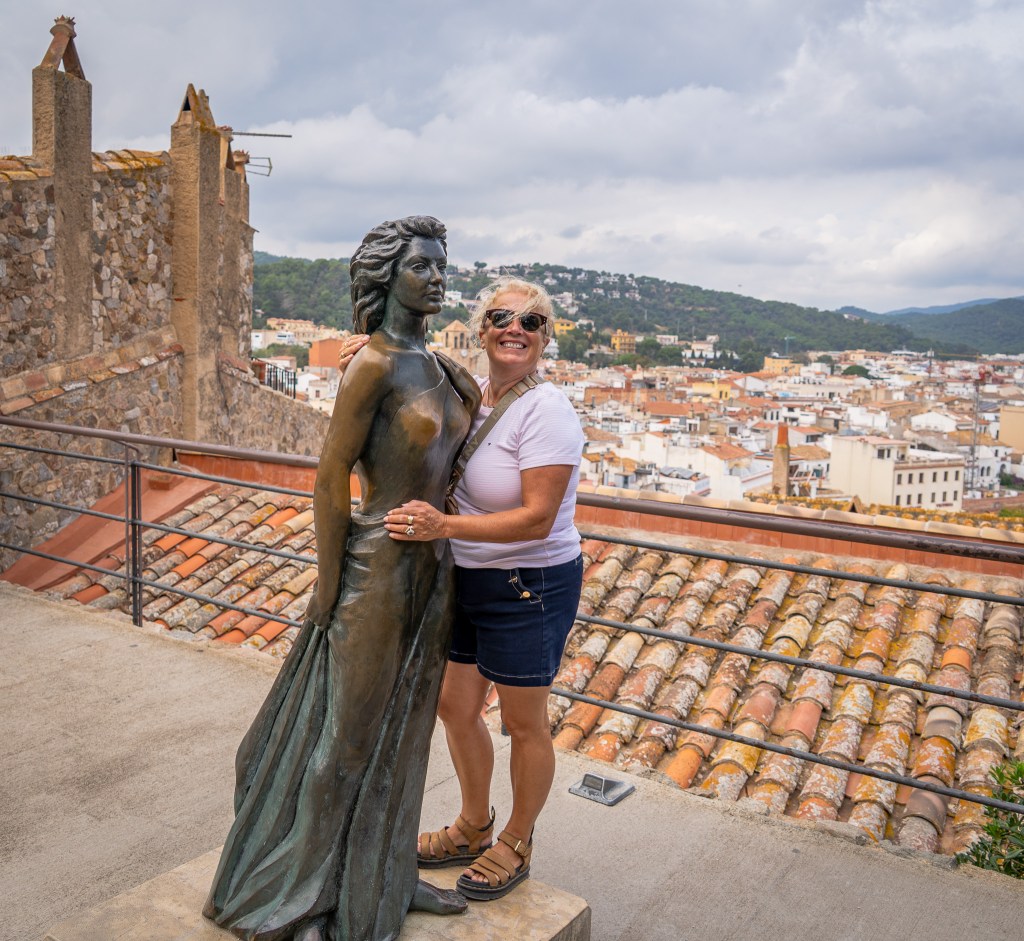
A catalyst for Tossa de Mar’s transformation came in the form of a Hollywood movie that was filmed here in 1950. It was called Pandora and The Flying Dutchman and starred Ava Gardner, James Mason and bullfighter Mario Cabré. Frank Sinatra also flew in to be with Gardner, reportedly in a jealous rage. In 1998 the town honored the actress with a bronze statue by Girona artist Ció Abellí.

Statue of Ava Gardner taking pride of place in the old town. The highly polished appearance of some parts of the statue is a result of excessive touching. Human behaviour is an enigma sometimes!

A couple taking time to embrace the moment.

Our hotel was a five minute walk to the beach and during that short stroll the streets change from modern and wide to ancient and narrow. It is a relatively compact town and you should be able to see the main sites in a day. The climb to the peak of the old walled town (the Catalan translation is Vila Vella) provides stunning views and is accessible via paths and steps. Unfortunately these may not be adequate for wheelchair users.

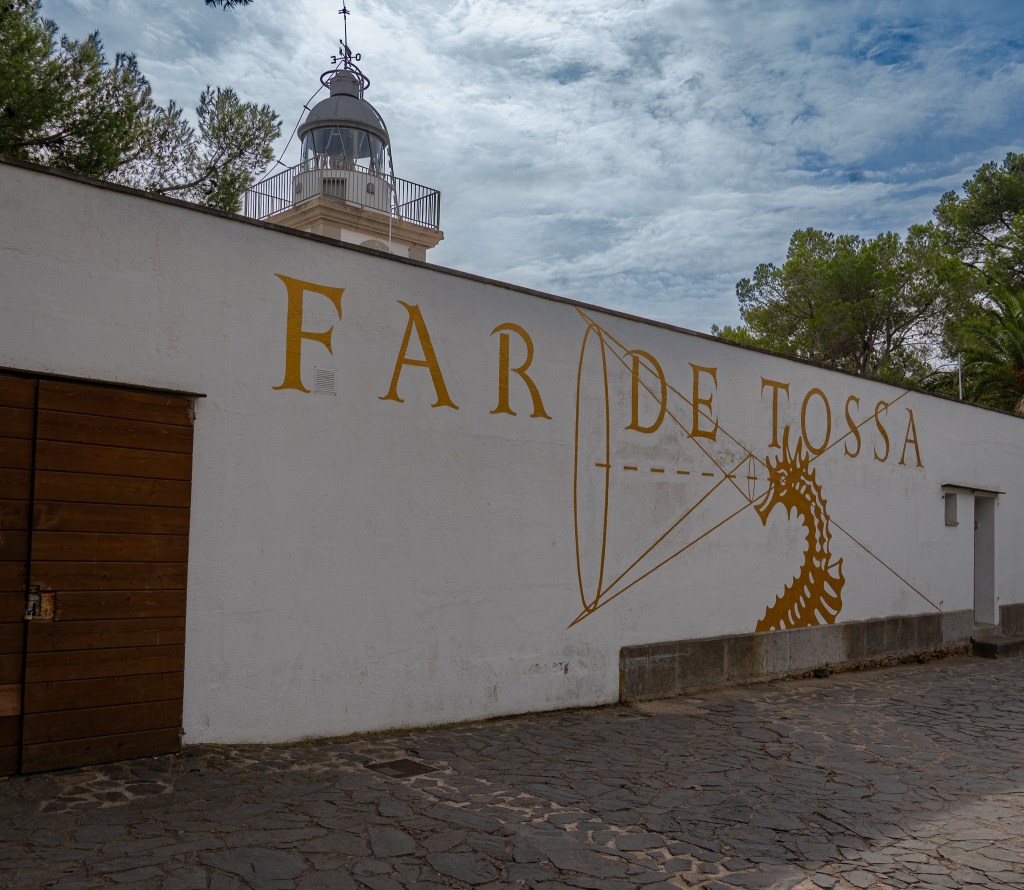
Faro de Tossa (Tossa lighthouse) provides a good vantage point from which to view the old walled town and beyond.

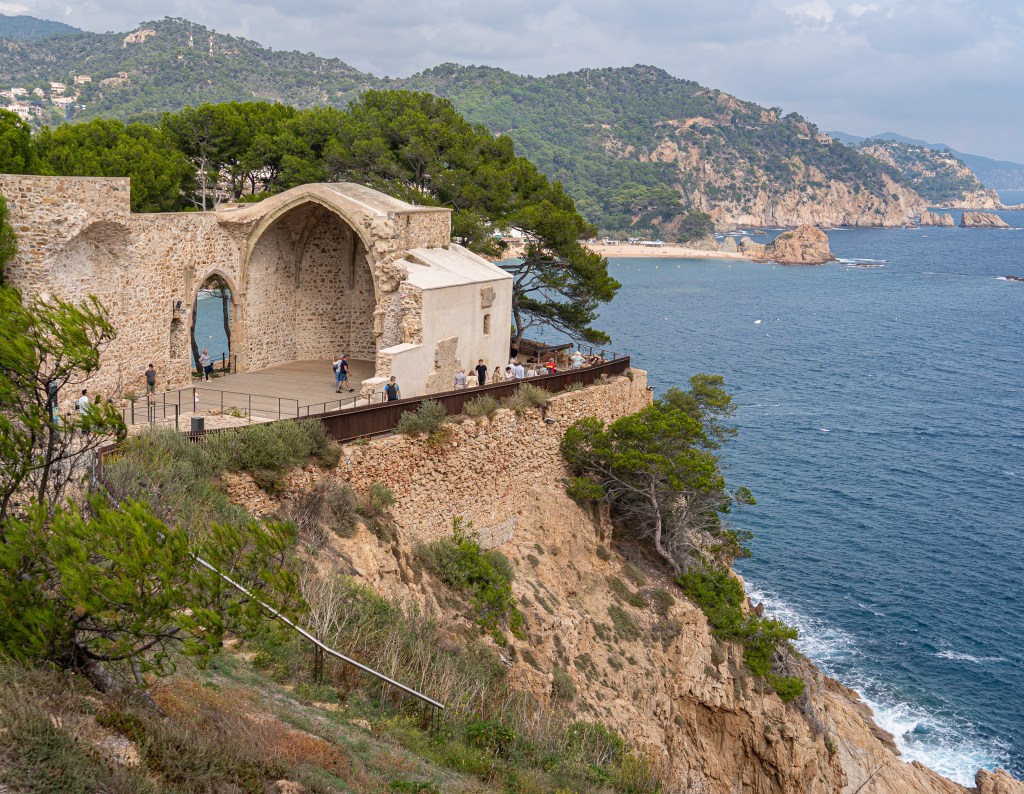
The 12th century remnants of the Gothic style church of Saint Vincent.

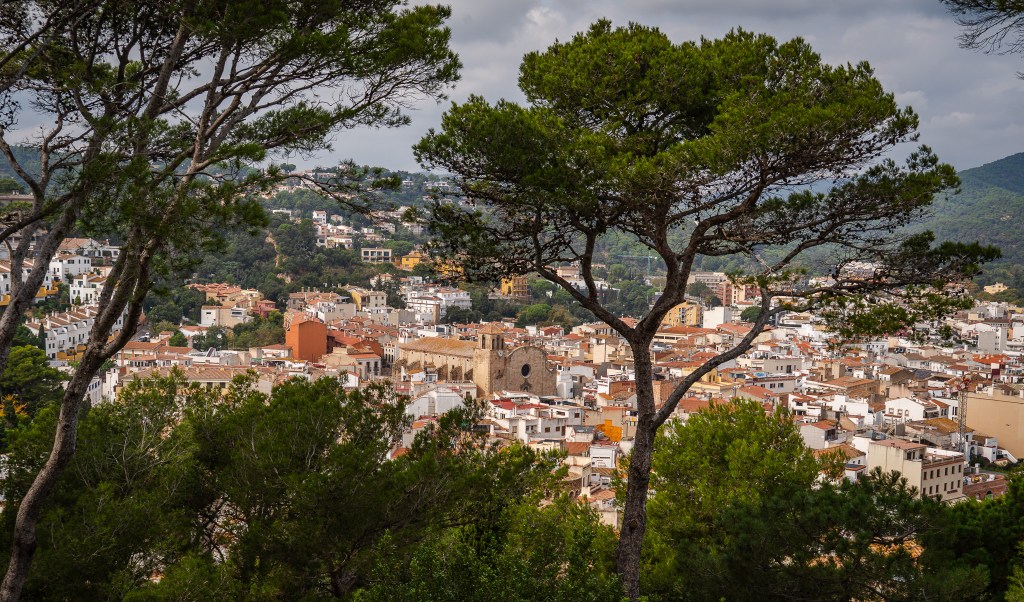
Tossa de Mar framed by the majestic Stone Pines.

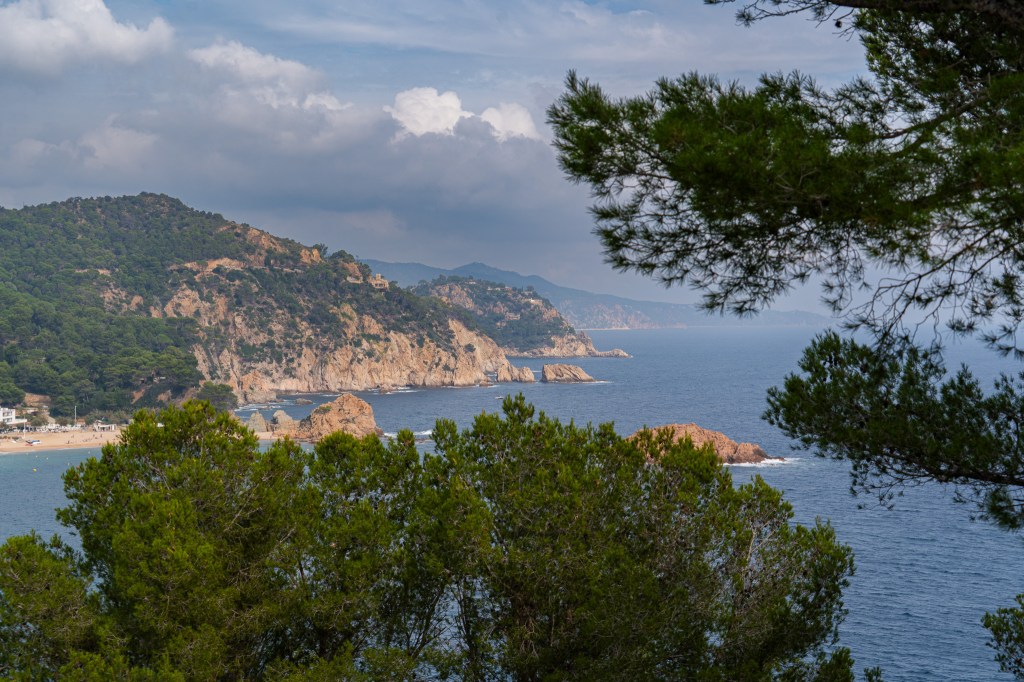
The rocky outcrops that may have inspired the name Costa Brava, Rugged Coast.

No rush here.

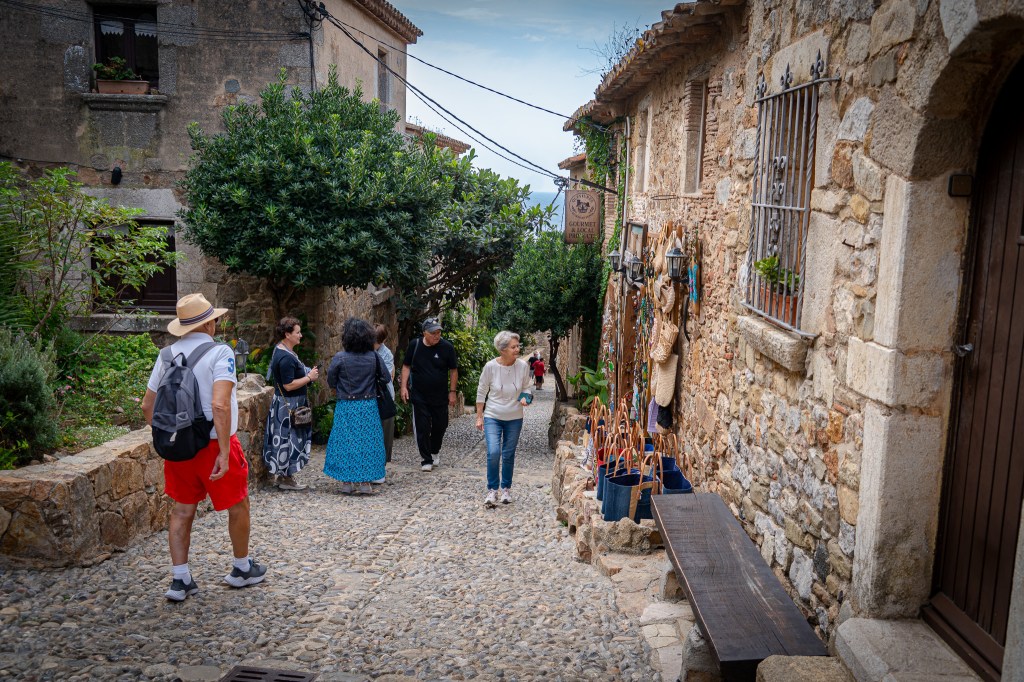
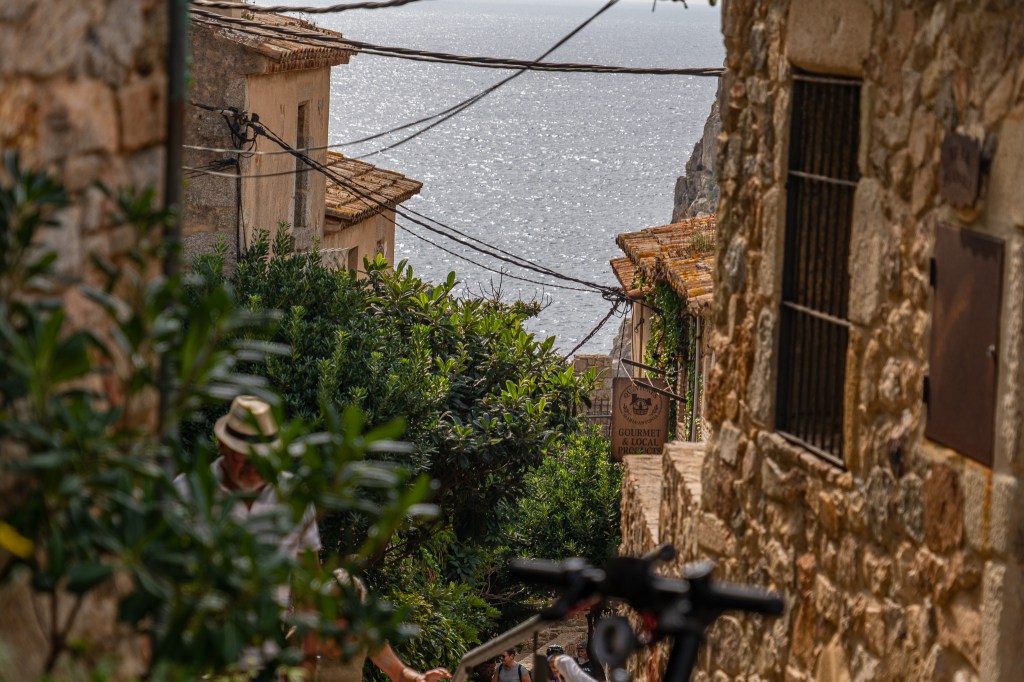
The narrow cobbled streets exude charm and the pace is relaxed. Friendly locals working in the shops, bars and restaurants add to the chilled experience. I suspect these spaces may be less enjoyable in peak season during the summer, when the crowds are funneled into the narrow walkways.

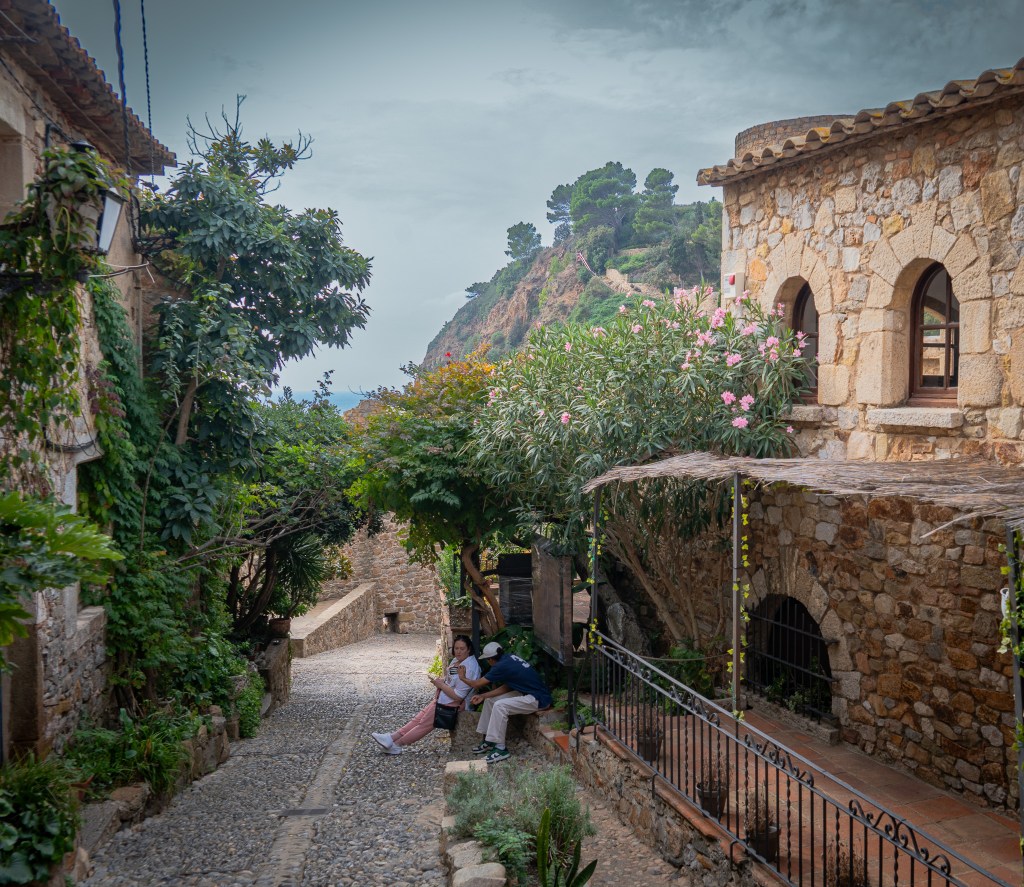
Taking a break in the shade of the oleander bush (at least I think it was Oleander).

The character of Tossa de Mar old town is a rich and inspiring one.

One observation I have made in recent times is the surge in ‘selfie tourism’ and Tossa de Mar was awash with selfie seekers. Even in the off peak season there are significant numbers of people striking a dramatic pose at the end of a selfie stick, trying for all their worth to appear nonchalant as they stroll through the narrow streets while a partner records the scene. I find the serious ones the most amusing. The ones who turn up in a flowing designer dress and heels, more suited to a night at the Oscars, and repeat the shoot until they get a result they are happy with, all the while oblivious to the presence of others. I wonder how much of the location is lost on them because they only seem to want a backdrop that will generate views and likes. I also wonder what the old fishermen would make of it all! As I was writing the last couple of sentences, it occurred to me that I sound like a grumpy old man. And maybe that’s the natural way of things. When we are faced with behaviours that are alien to us, we tend to be critical. A note to self-different people enjoy different things! Each to their own. Live and let live etc.

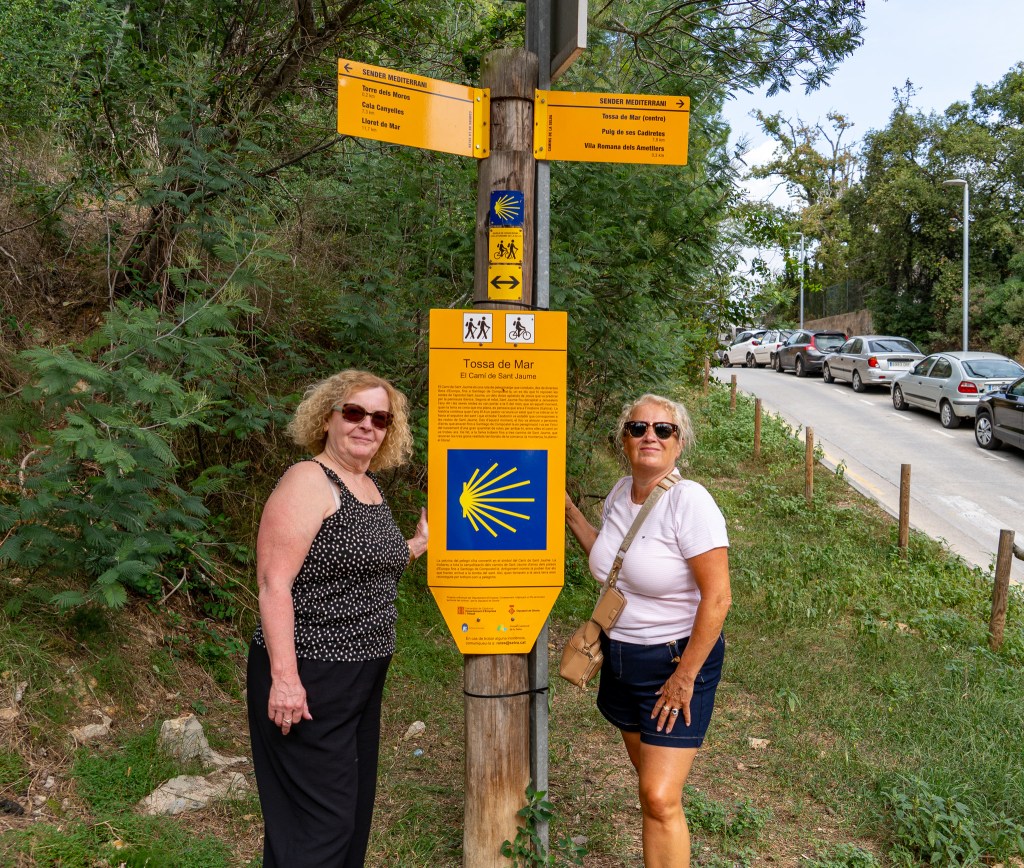
Speaking of which, for those who enjoy walking, Tossa de Mar is on the route of El Camino de Santiago de Compestella (in Catalan, El Cami de Sant Jaume). The subject of the Camino has come up in conversation several times over the years but the closest we’ve ever come to actually doing it, is posing for photographs at the famous scallop markers that direct pilgrims. One of the ladies in the photo below (not saying which one) even bought a hat to wear when her time came to do it. She has subsequently decided that she would be accompanied by too many flying insects and she’s not a big fan of our winged friends. Still, I’m sure the hat will enjoy a suitable debut some day..

If asked what I liked most about Tossa de Mar, it would be the same answer that applies to towns and villages all over Spain. Apart from the simple reward of seeing somewhere for the first time, the enjoyment for me is twofold. Firstly the aesthetic. When I see an old town like Tossa de Mar, I see an ochre stone canvass painted with the colours of the bougainvillea and oleanders, capped with terracotta rooftops. The play of light on the stone. The shadows in the narrow passages, moving slowly across the cobbles, synchronising with the sun as it sinks lower in the sky.

Secondly, I am always intrigued by the human aspect of the place. Who are the owners of the craft shops and galleries? Have their families lived here for generations? What would it have looked like in the days before mass tourism, when the only people making their way through the streets were fishermen and their families? A time when, instead of shops and cafes, there were bakers and net menders. When I ask myself these questions it reminds me that no matter where we go, places are defined by the people who inhabit them. It’s what gives a place soul.

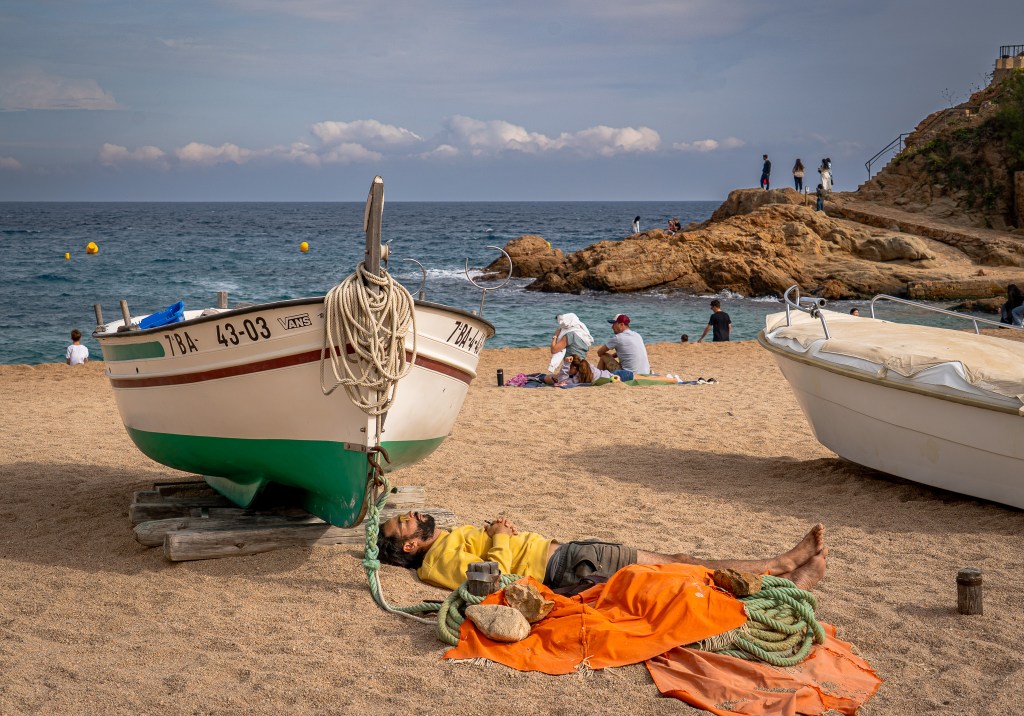
It’s all about the people. This local knows how to blend in. I had taken several photos of this scene before I realised he wasn’t part of the boat’s gear.

Would I recommend Tossa de Mar as a place to visit? Definitely! It’s the perfect base to explore the region. The nearest major airport is Barcelona. Regarding accommodation, I would have no hesitation in recommending The Golden Bahia hotel. Its setting is unremarkable but its location is perfect. The room was clean and comfortable. The food was varied, fresh and of high quality. The staff were extremely friendly and welcoming and a surprising number of them were multilingual. Like everywhere, it can be expensive in peak season but there are offers to be had if you are prepared to visit off season. A lot of the guests were repeat visitors from Ireland, Britain and mainland Europe. A hotel that can continually please such a diverse grouping is doing something right!

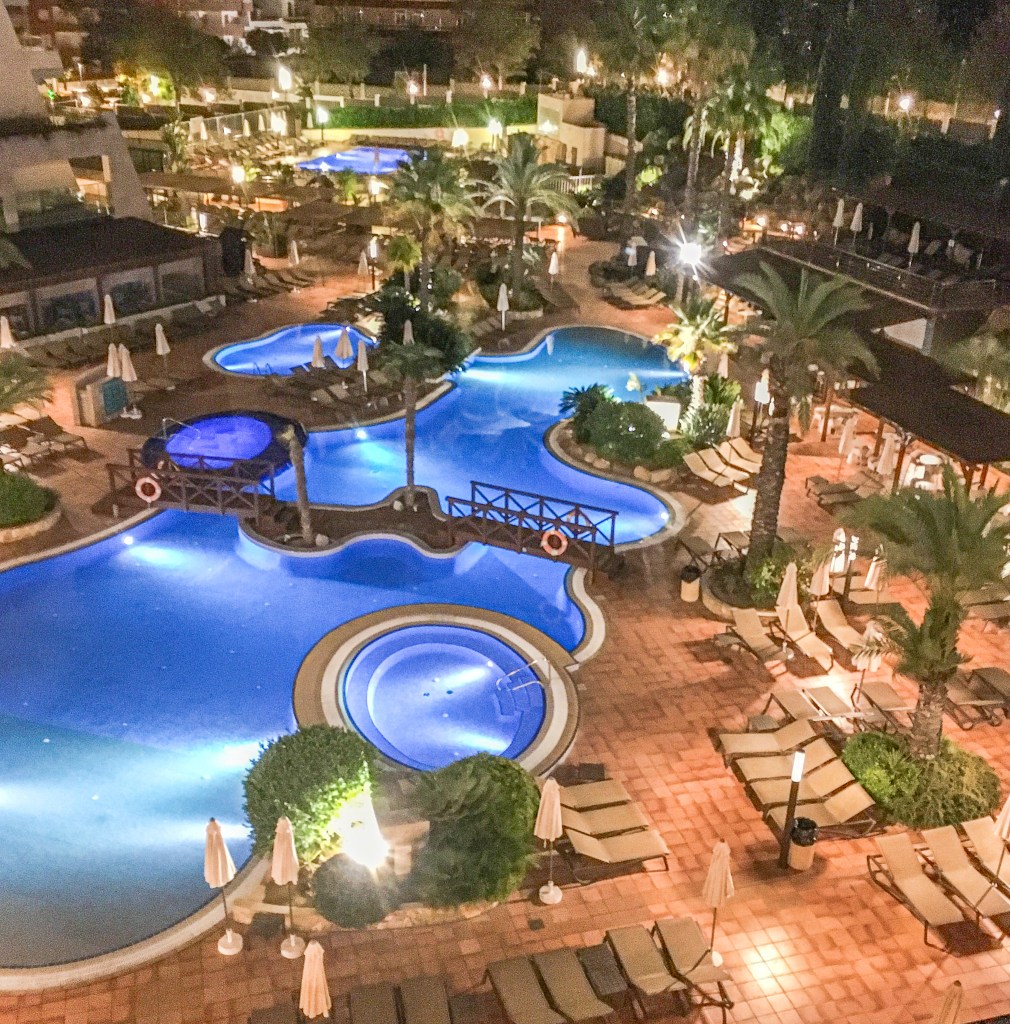
View from our hotel room, overlooking the pool area of Golden Bahia.

Next installment coming soon…