Cadaqués. The Gift of the Costa Brava.

Time of visit: October 2025
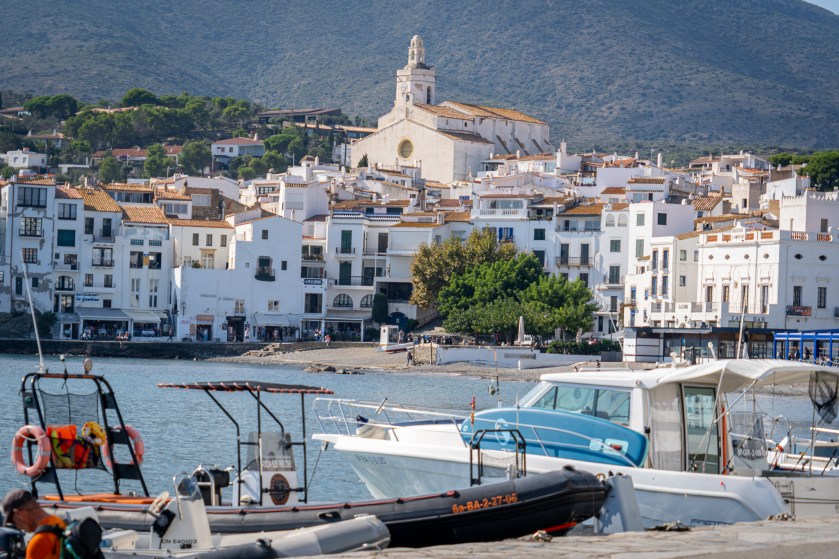
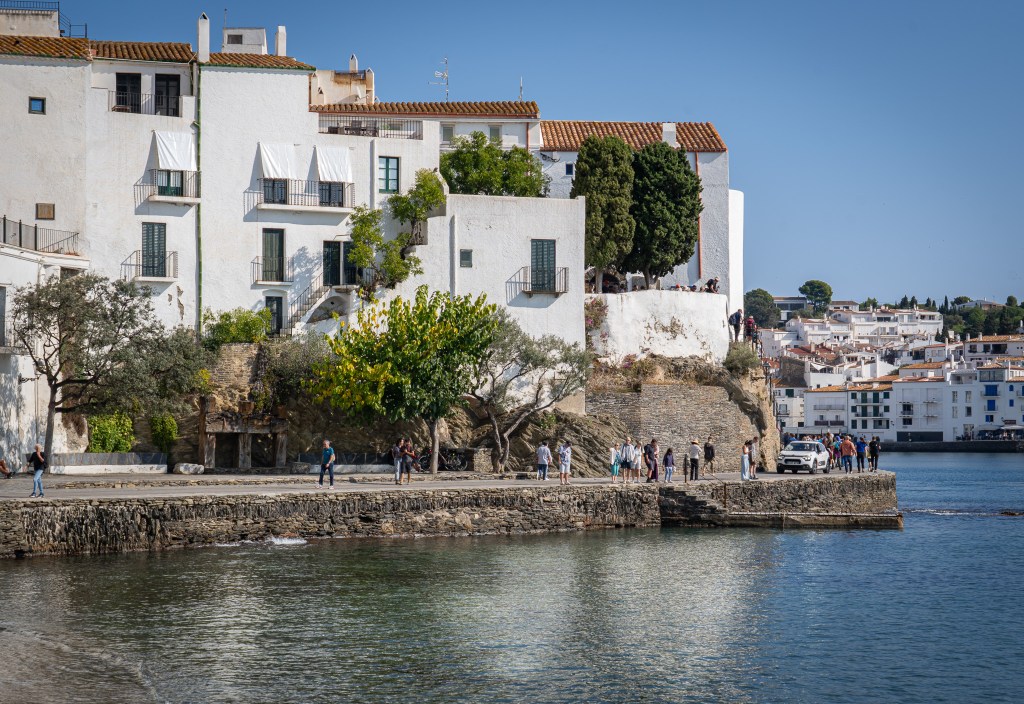
The seafront of Cadaqués. The buildings use nature’s best foundation, solid rock.
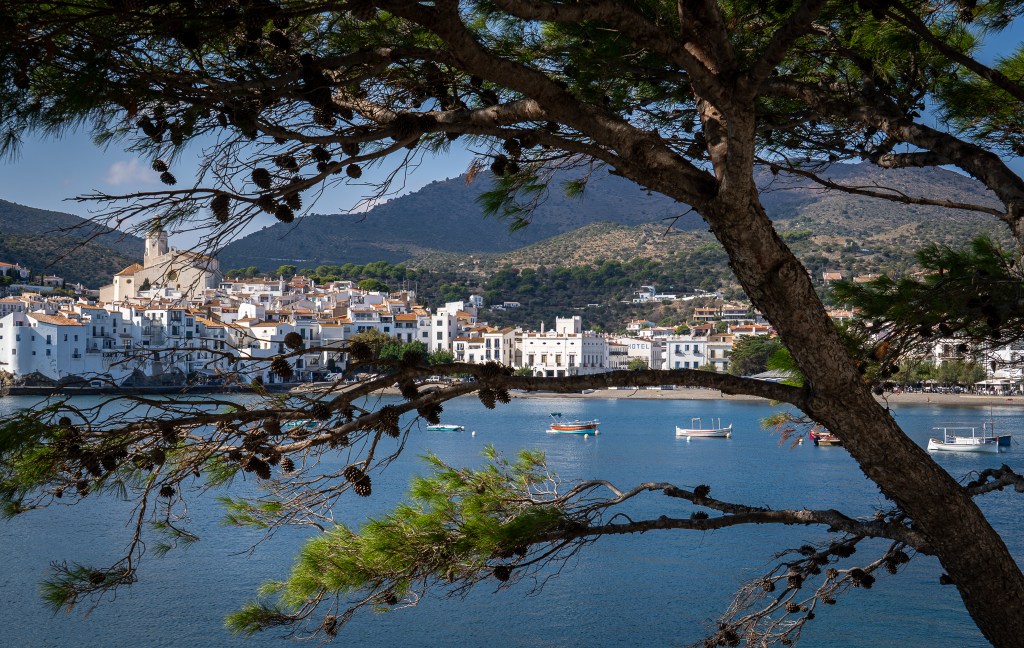
View from across the bay.

The best way to enjoy this overview of the town is to walk along the seafront. Or if you have the time, take a boat tour and savour a unique view from the sea.
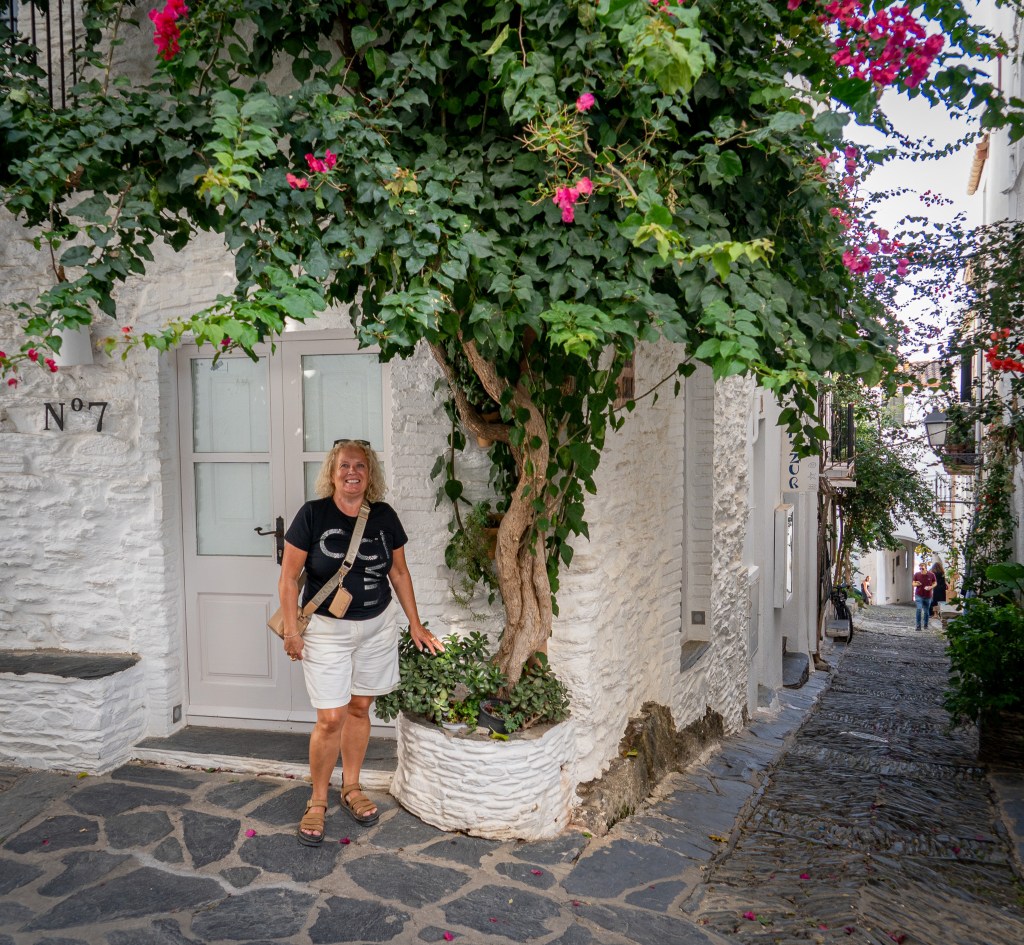
Street charm in Cadaqués.

Heading inland, the narrow streets immediately take on an upward trajectory. Underfoot is a mixture of irregular shaped stone paving and small flat stones that have been embedded on their edge to provide extra grip. Navigating the town is best done by following a general rule of thumb, ‘keep climbing until you reach the top’. If you head downhill, you will end up at the harbour.
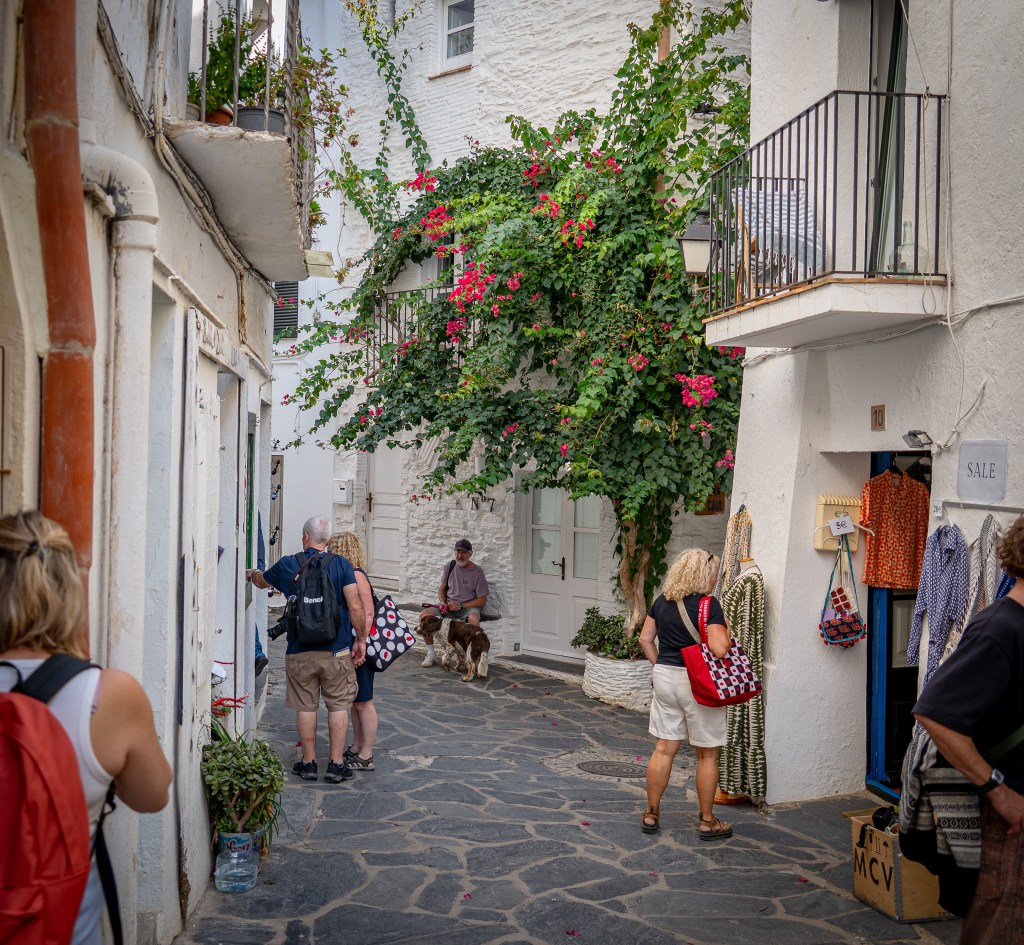
Small shops blend in with the adjoining houses.

The streets of Cadaqués are similar to many other Spanish towns and villages-whitewashed and winding, with wrought iron balconies draped with colourful splashes of bougainvillea and geraniums. The occasional shop appears every now and then, discreetly blending in with the house next door, differentiated by local handicrafts hanging at the entrance.
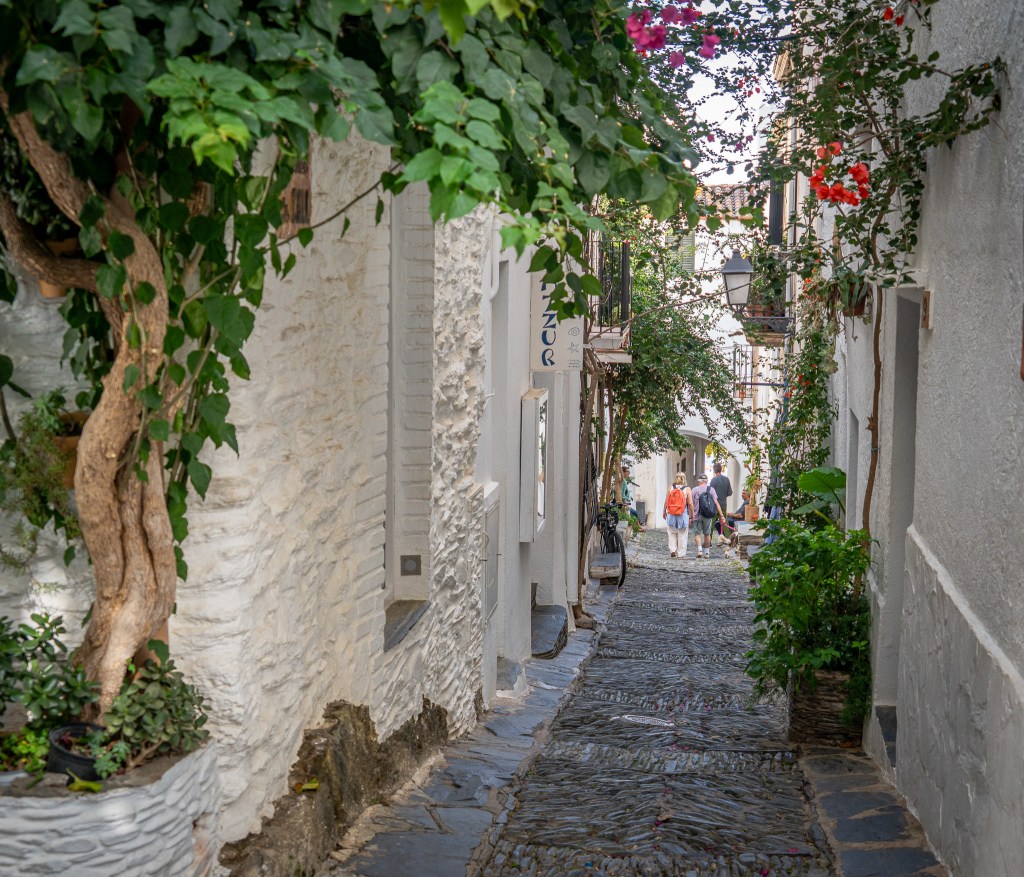
Bougainvillea adding colour and life to the stone.

A short time after starting our ascent, we were at the church of Santa Maria. There is no grand approach, just another turn at the end of another narrow street and we were in the small plaza outside the church. A musician sitting on a bench playing classical guitar added an extra layer of serenity to the place. And looking down over the rooftops at the sun glinting on the Mediterranean, completed a very Catalonian experience.
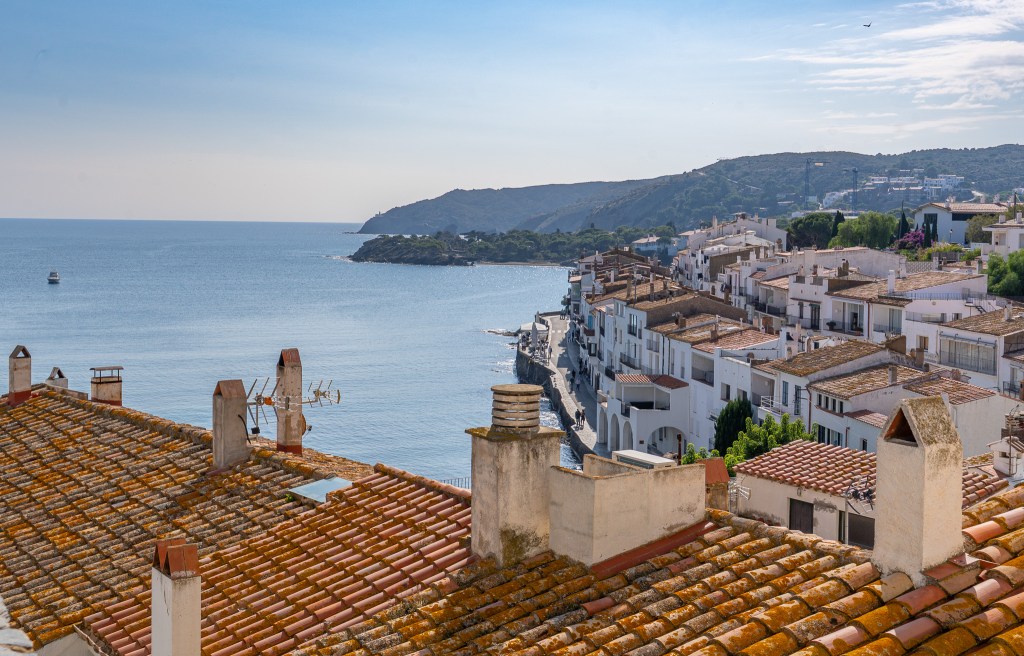
View from the plaza at the church of Santa Maria.
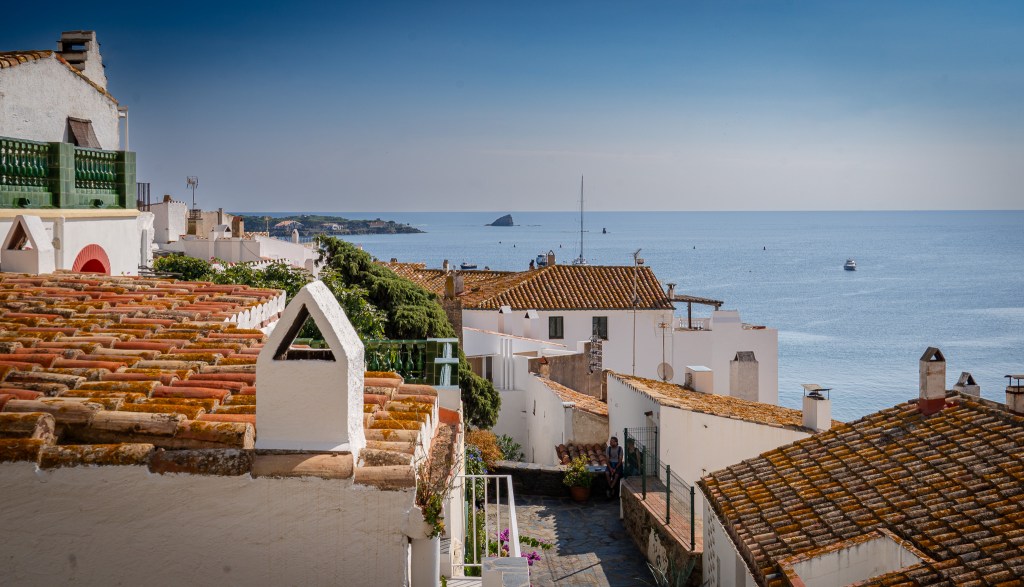
The rooftops of Cadaqués.
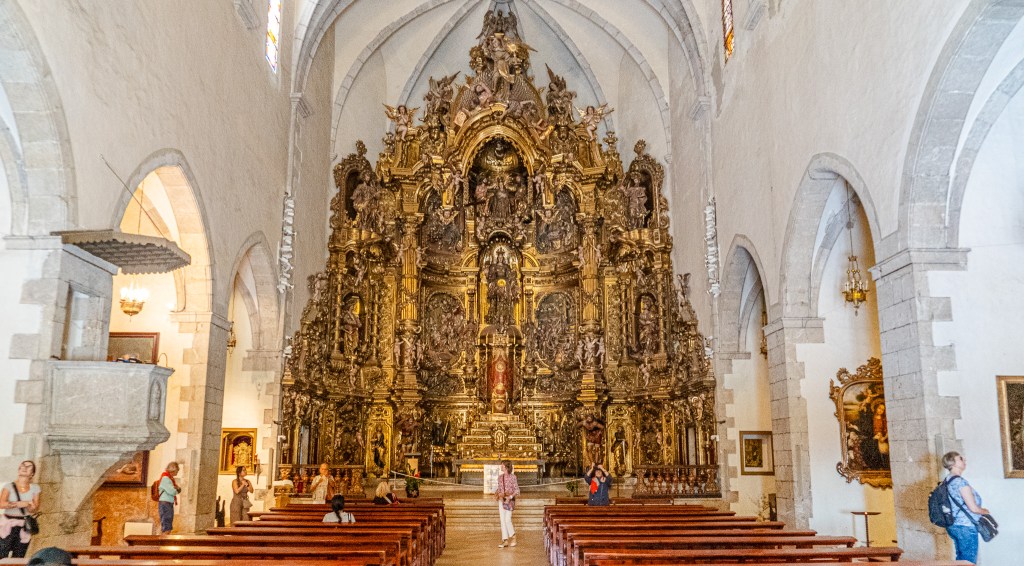
The church of Santa Maria.

The biggest surprise for me about Cadaqués was that I had never heard of it. And I haven’t met anyone else who was familiar with it either. It really is the best kept secret on the Costa Brava. I read an article about the town in a magazine called ‘Tapas’. It contained the following quote,

Be careful, lest you get caught by the tramuntana. Be careful, many people arrive for three days and stay for years. Be careful, lest you fall in love with Cadaqués”.

The Tramuntana is a strong north-westerly wind that blows through Cadaqués. And whether the wind blows you here or you arrive in a more conventional way, don’t be surprised if you want to stay for just a while longer..
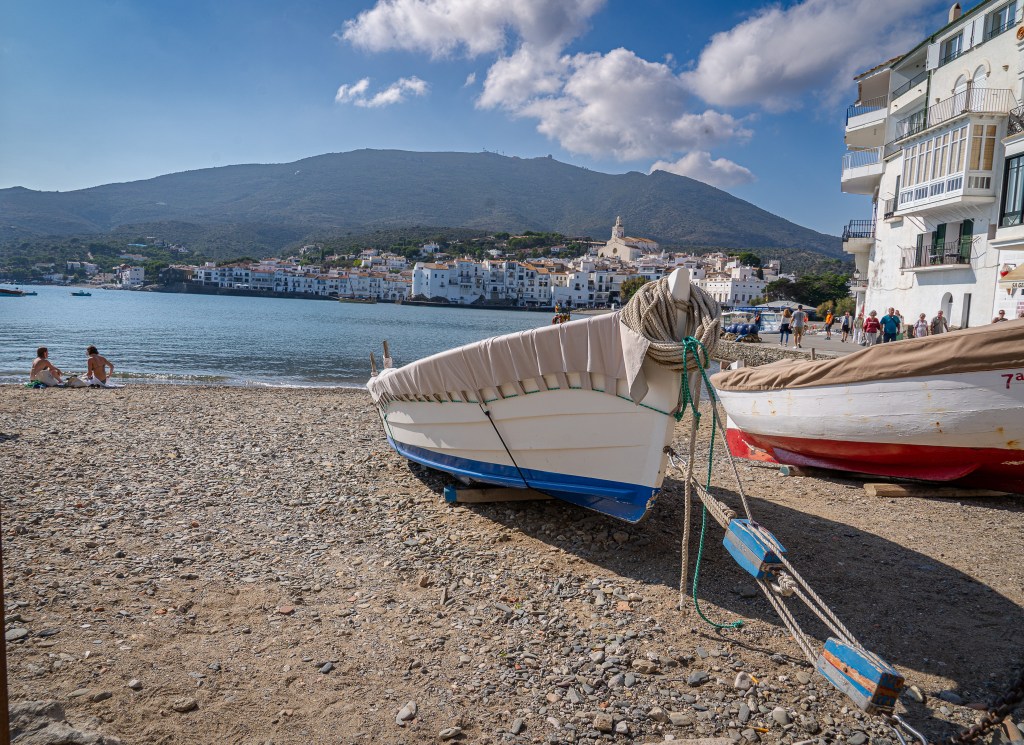
Summer beach vibes in October.
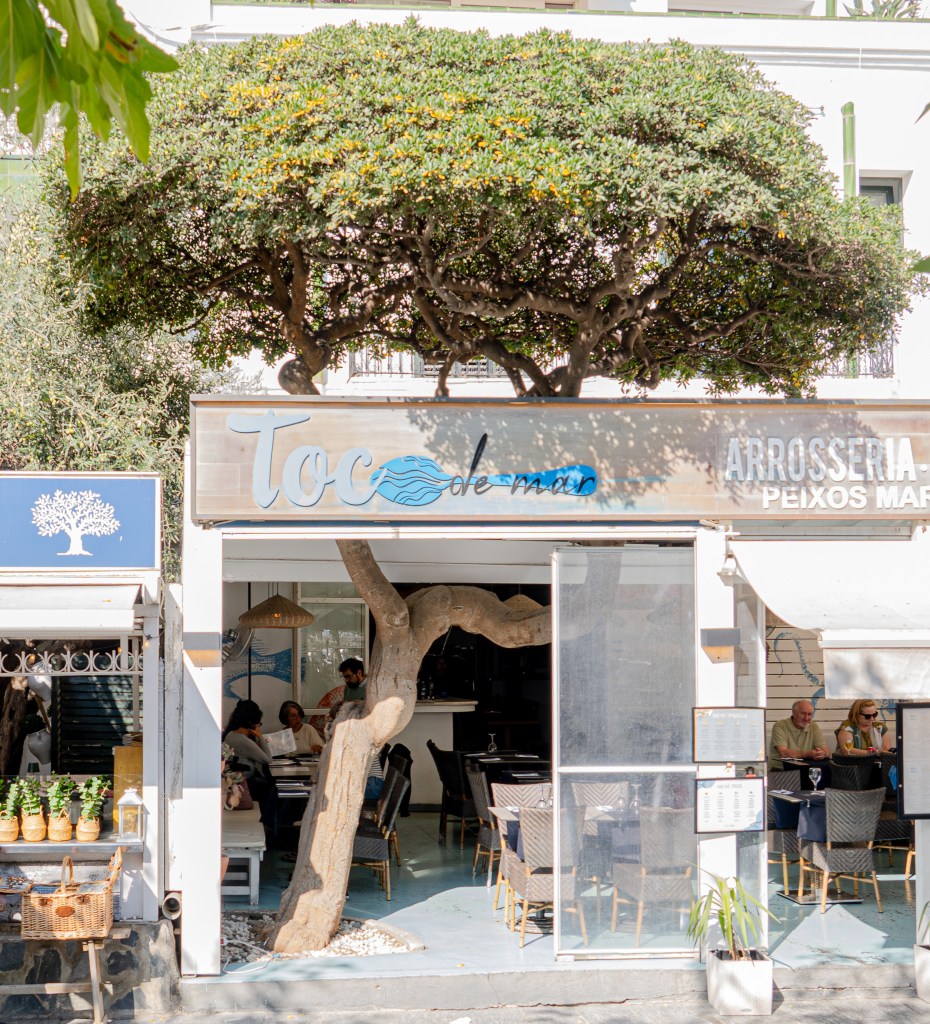
A place for everything and everything in its place.

Thanks for reading this far. If you’re interested, stay with me to read about Cadaqués’s most famous son, Salvador Dalí.

Cadaqués has a special place in art history and was a favourite of several famous names in the art world.

Marcel Duchamp, the French American artist and pioneer of the Avant Garde movement in America and New York in particular, spent time here.

Federico Garcia Lorca, Spanish poet and playwright who was assassinated by Francoists during the Spanish Civil War, was another well-known visitor, as was Picasso.

But Cadaqués’s most famous artist son is the surrealist, Salvador Dalí. His house is in Port Lligat bay on the outskirts of the town. His parents had a house nearby when Dalí was growing up and he spent his summers here. His childhood friends included future F.C. Barcelona footballers Emili Sagi-Barba and Josep Samitier. And during holidays here, the trio played football together. I was intrigued to discover that Lorca, the poet mentioned above, and Dalí had also been friends and I wondered how Dalí reconciled this friendship with his controversial support for the Franco regime.
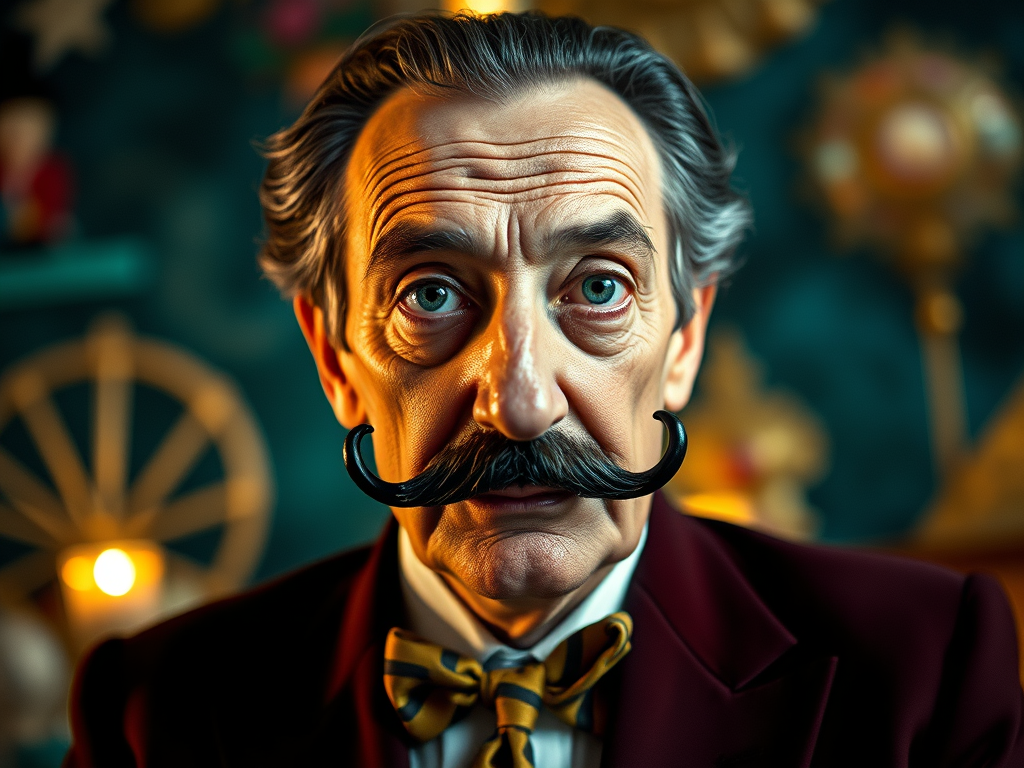
Salvador Dalí, surrealist painter. Controversial, eccentric, unique.

 It was in the Port Lligat house, in 1931, that he created one of his most iconic paintings, The Persistence of Memory. The painting depicts clocks or watches that appear to be melting, inferring that time is fluid. One analyst wrote that Dalí was projecting his view of the world according to Einstein’s theory of special relativity (the relationship between space and time). When asked about this, Dali replied that his inspiration was the surrealist perception of Camembert cheese melting in the sun! The painting has resided in the MoMA in New York City since 1934.
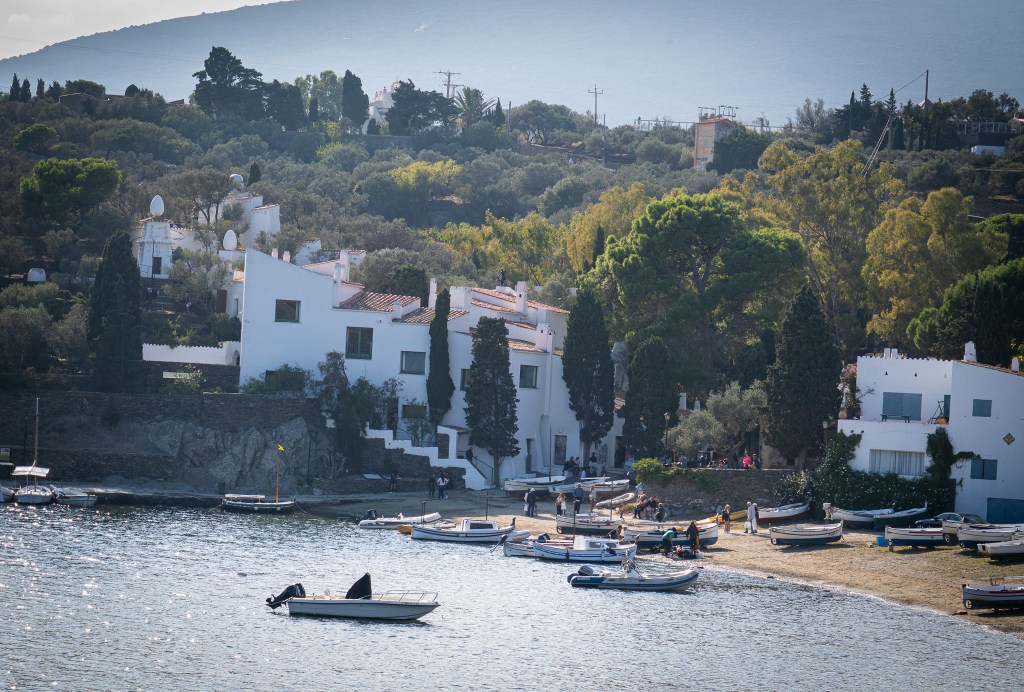
The location of Dalí’s house in Lligat Bay. Picturesque and serene.

His house is now a museum but Dali’s abstract interpretation of the world is not something that is to my taste (or so I thought), so, with our time not being as fluid as his, a visit was ruled out. We did get a glimpse of his house from the road as we were heading back to town from Lligat Bay and if the exterior is anything to go by, the house may just be worth a visit as a unique experience.
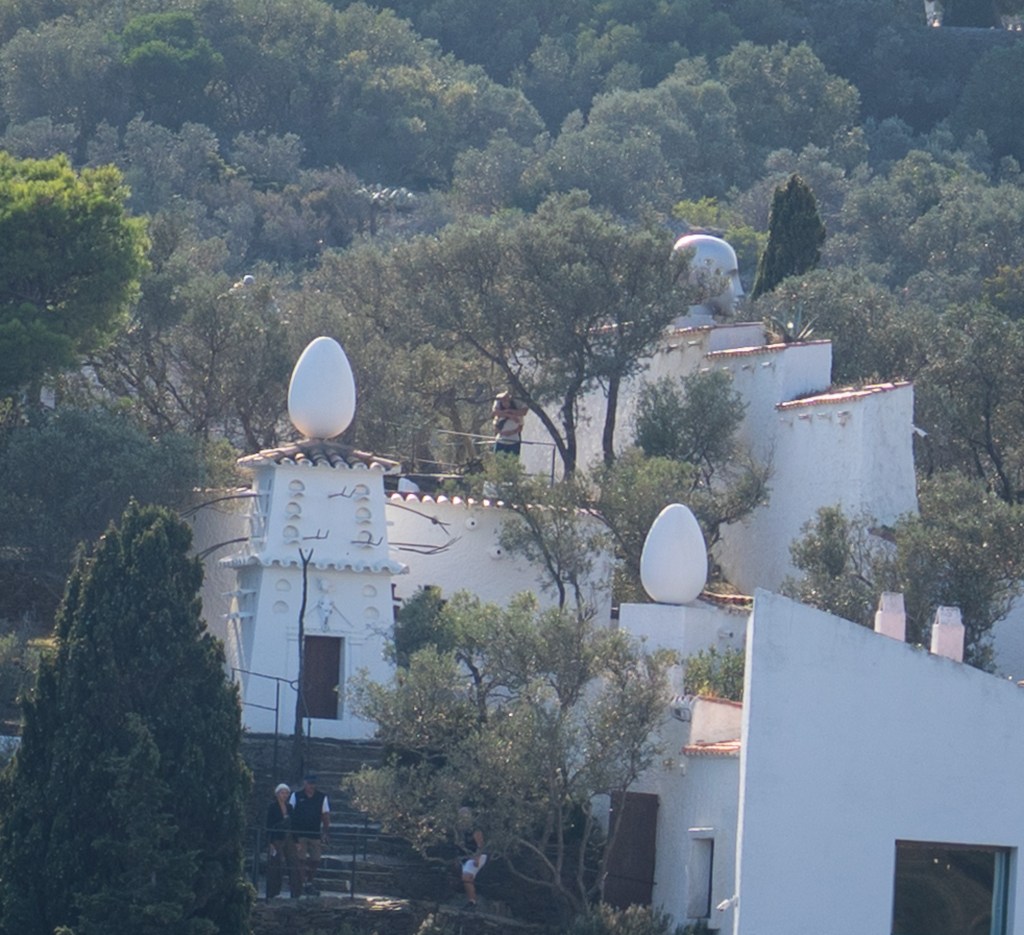
Close up of Dalí’s house, complete with giant eggs and steel heads..
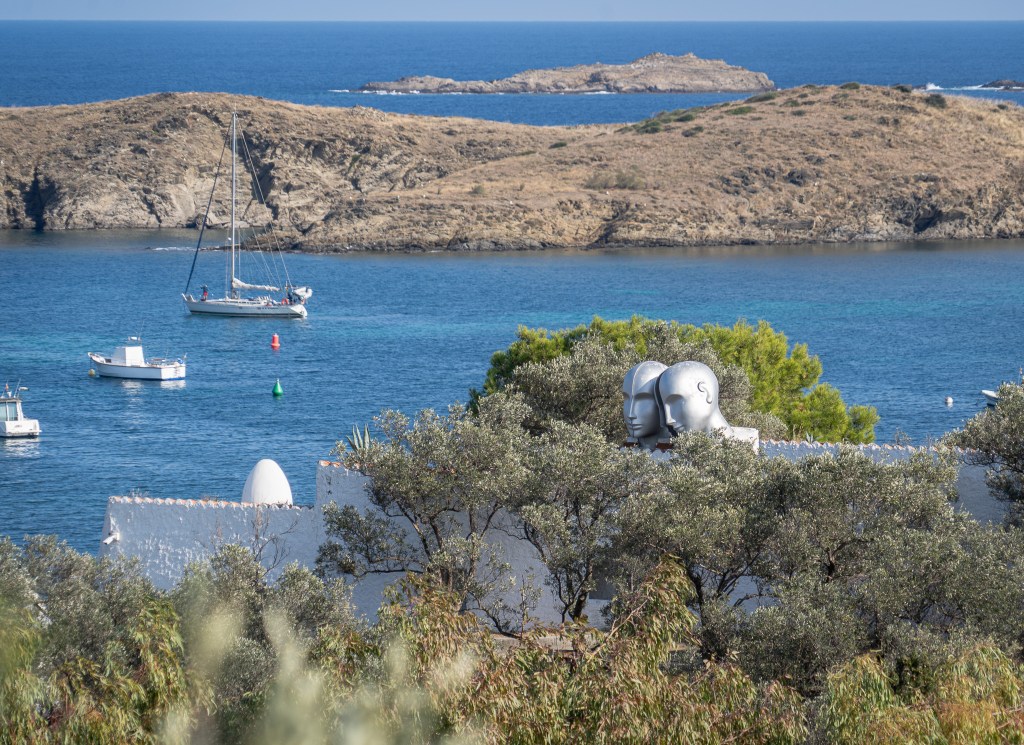
Two heads are better than one. A view from the road overlooking Dali’s house.

As I reach the end of this piece, I find myself having a change of heart. I may have been hasty in dismissing him as just a ‘kooky’ painter. I am no art expert but the more I look at ‘The Persistence of Memory’, the more intrigued I am by the thought process behind his work. He has been described as a self promoting charlatan by some of his contemporaries. Others describe him as a technically brilliant genius. If I ever return to Cadaqués, I think I will pay a visit to the Dalí museum and maybe get an insight into the mind and work of this bizarre genius and hopefully reach my own conclusion.

See you next time..
Pals. A Medieval Gem.

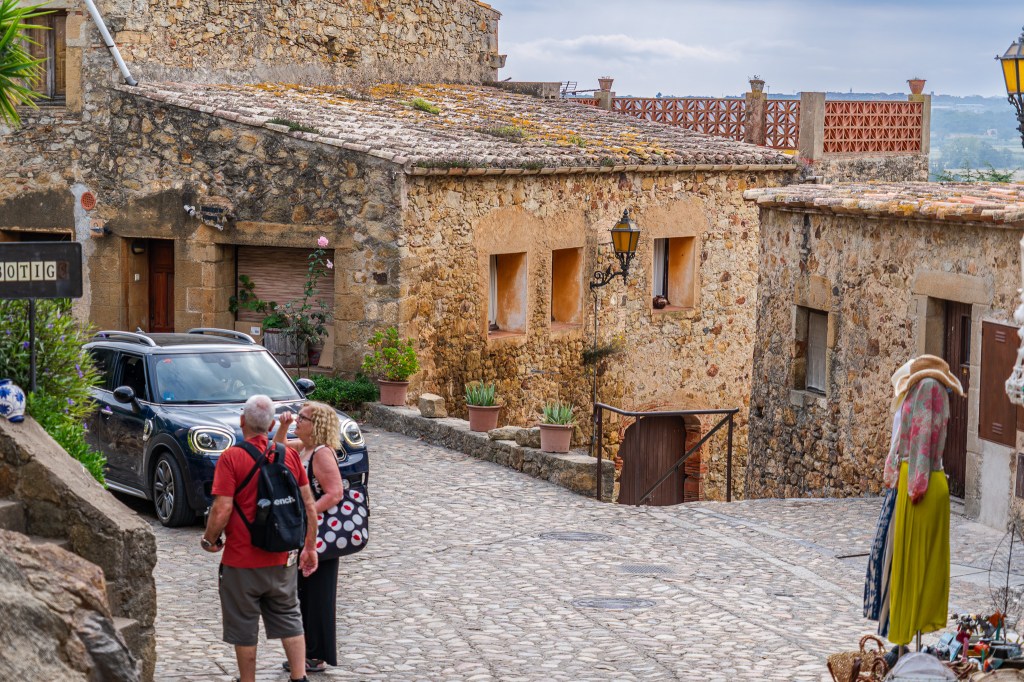
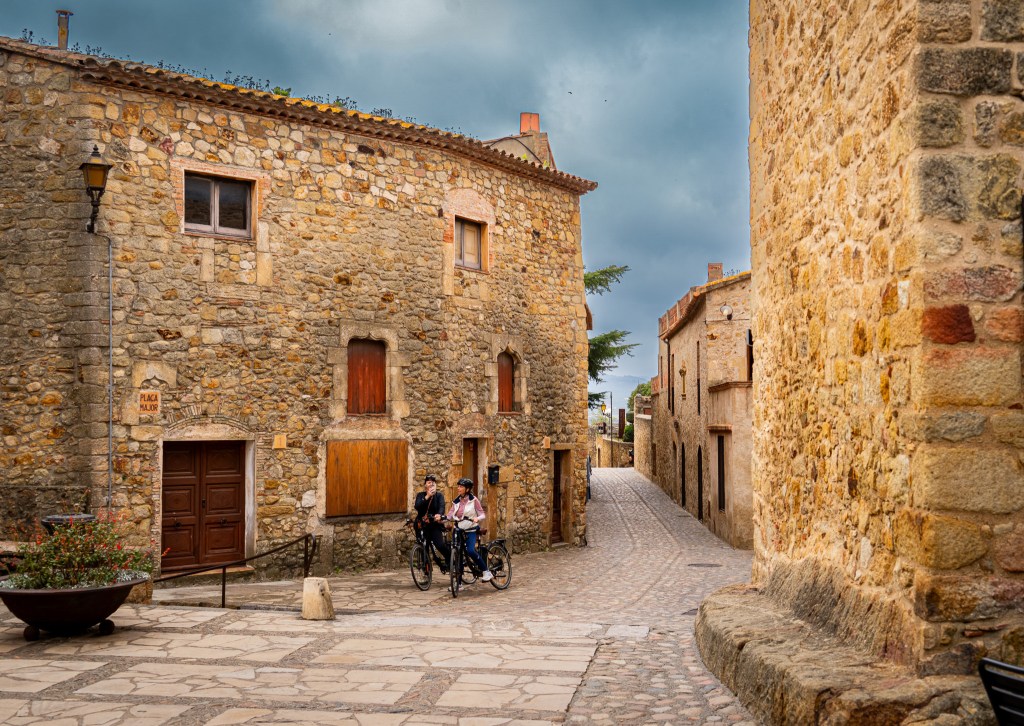
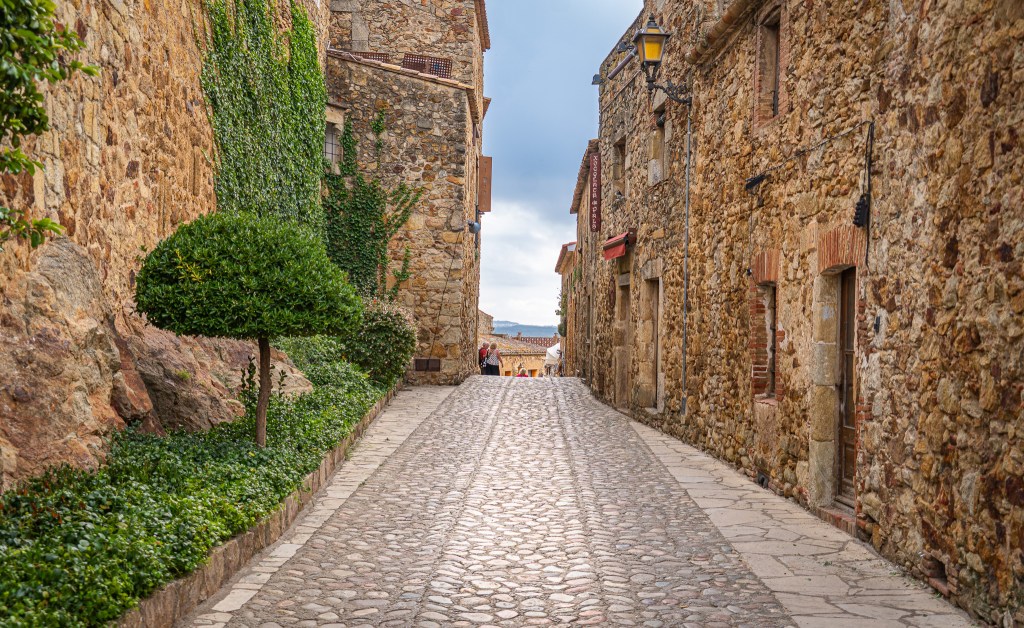
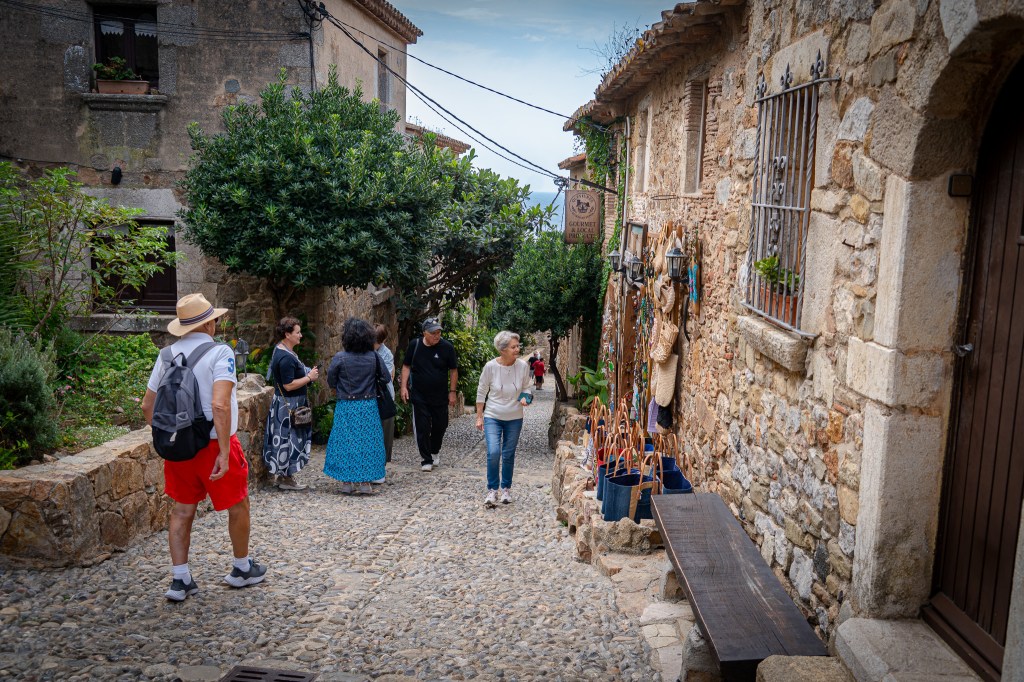
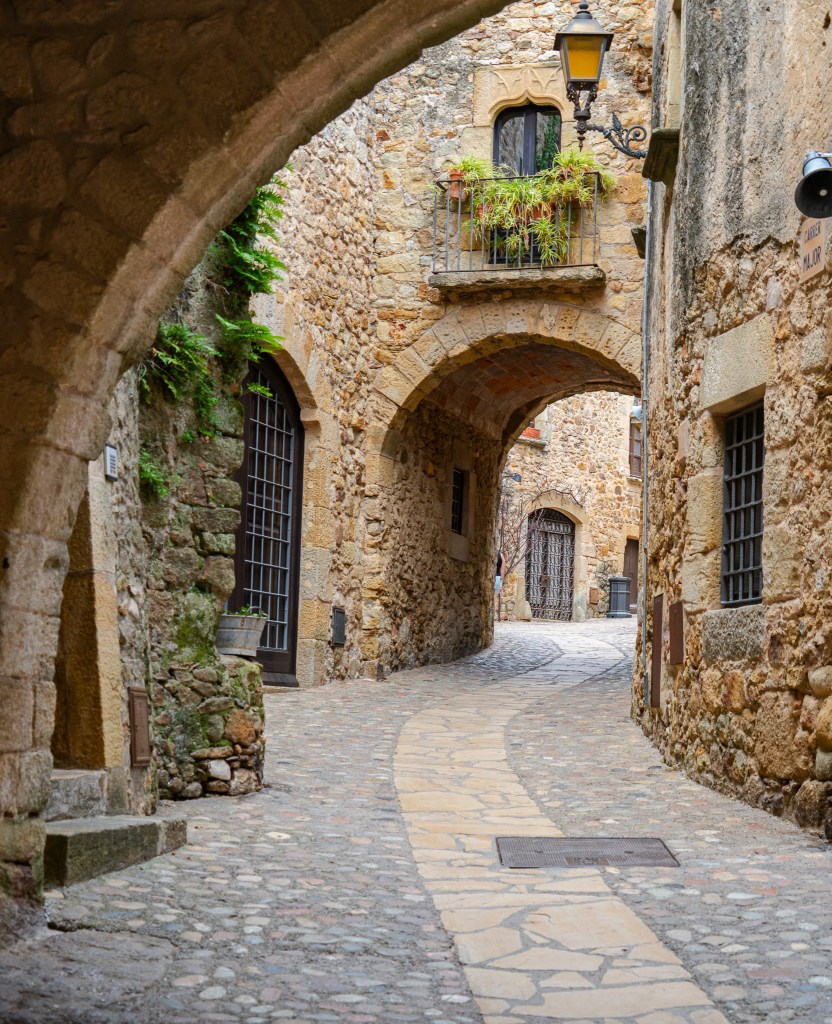
Carrer Major (‘Main Street’ in the Catalan language). Not your average Main Street.

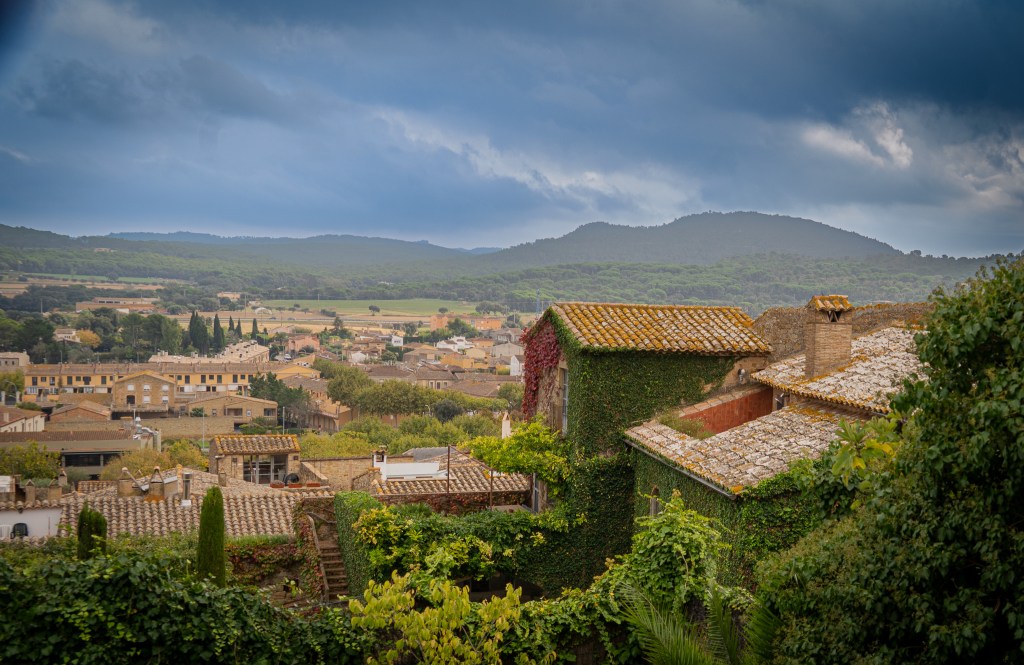
The medieval town of Pals is less than an hour’s drive from the city of Girona but in some respects, it is a world away. Its narrow, cobbled streets and stone facades transport the traveller to another time.

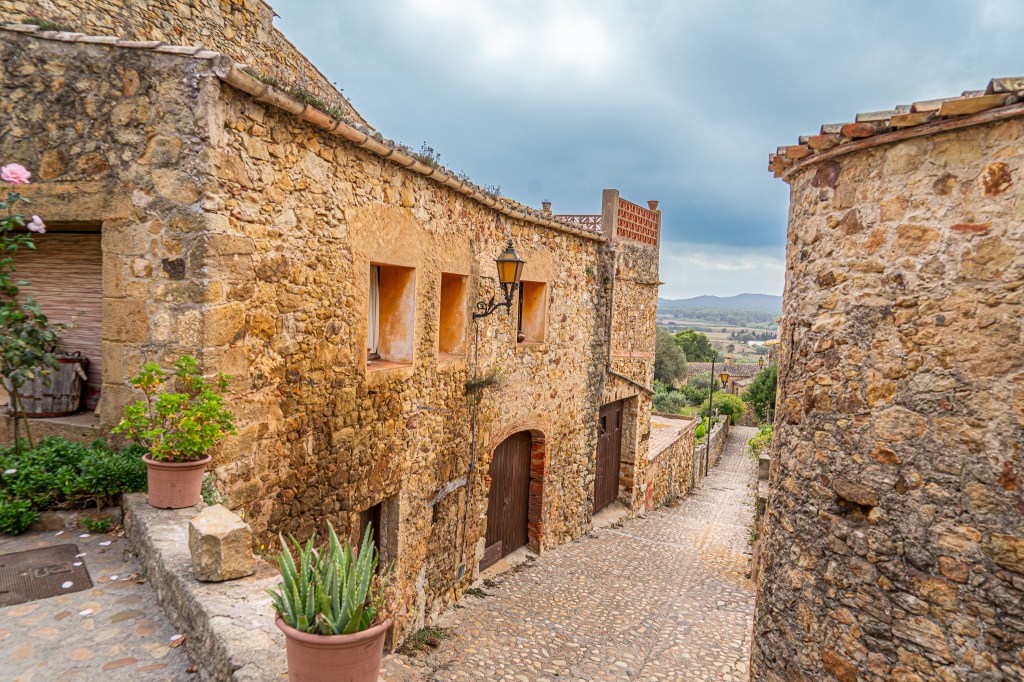
The weathered stone walls and lichen encrusted rooftops of Pals.

We had seen photographs and were looking forward to seeing it for ourselves. Our guide, however, seemed to be downplaying the benefit of spending our allotted time (3 hours) in the town. She was zealously attempting to sell us a trip to a nearby rice field and winemaker’s establishment. We resisted her efforts and spent a really enjoyable afternoon in this enchanted place, strolling through its walkways at a leisurely pace, soaking up the atmosphere and imagining its past.

Cyclists catching their breath. Cycling here could be challenging for those with below average fitness.

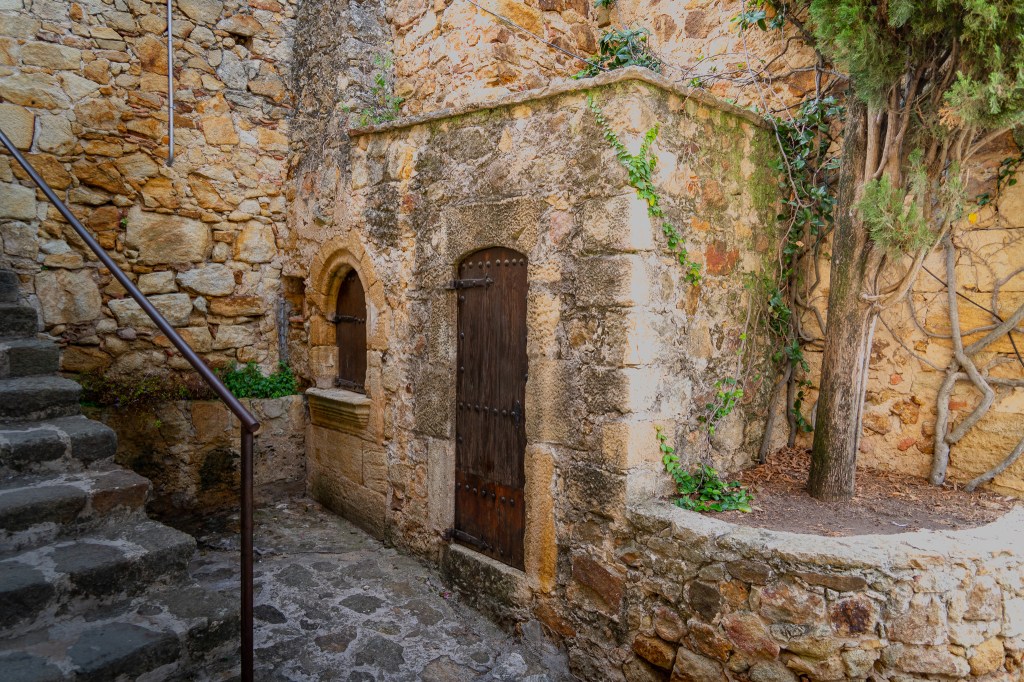
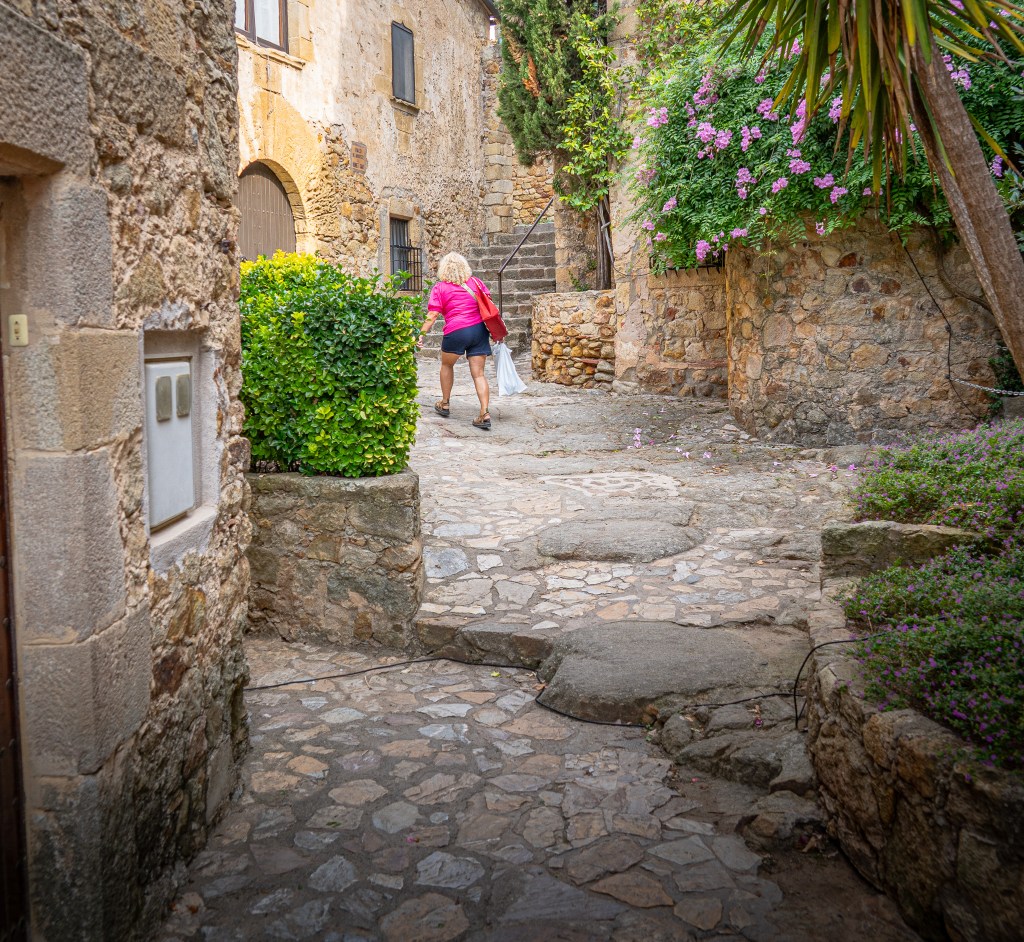
Quiet cobbled streets offering new discoveries to the curious visitors.

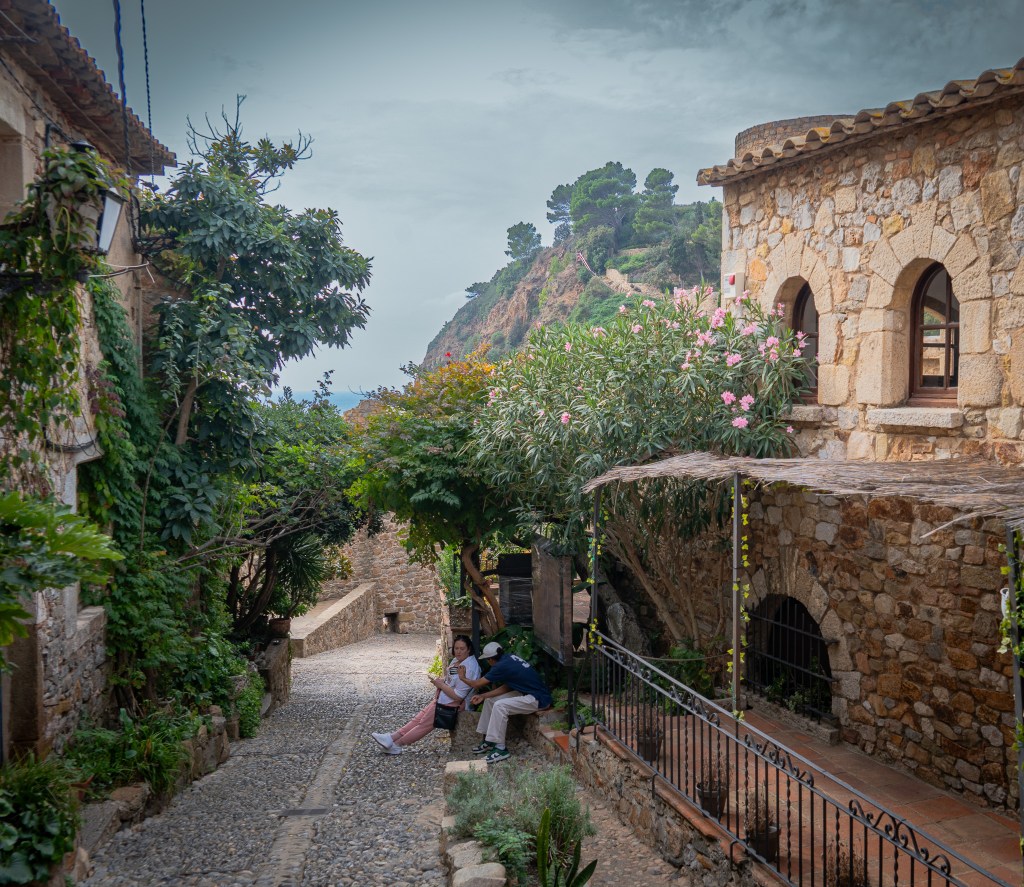
A secluded nook for quiet contemplation.

The village has been so well restored, you could be forgiven for thinking it was the creation of a movie maker who had replicated a medieval village to exacting standards. Come to think of it, if memory serves me well, this was one of the few locations that didn’t boast an appearance in Game of Thrones!

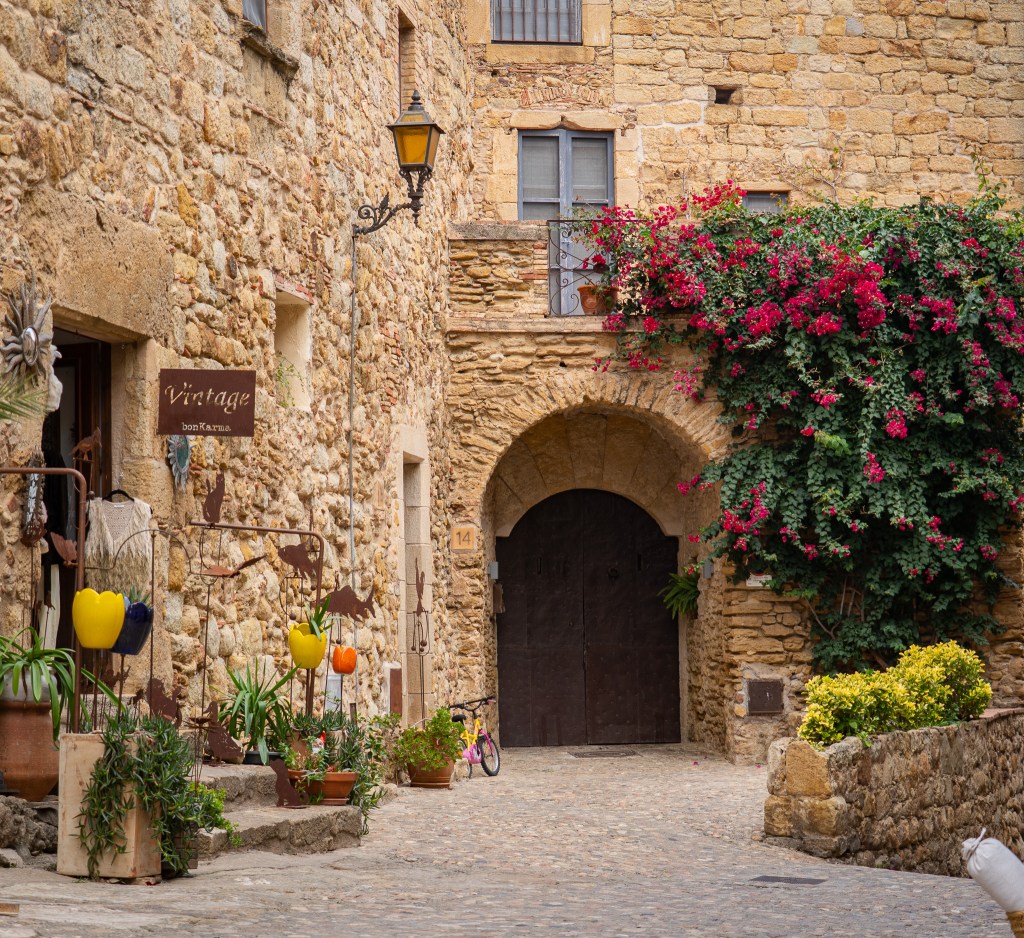
Discreet doorways and bougainvillea providing shade and colour.

An off season visit rewards the traveller with empty ‘streets’.

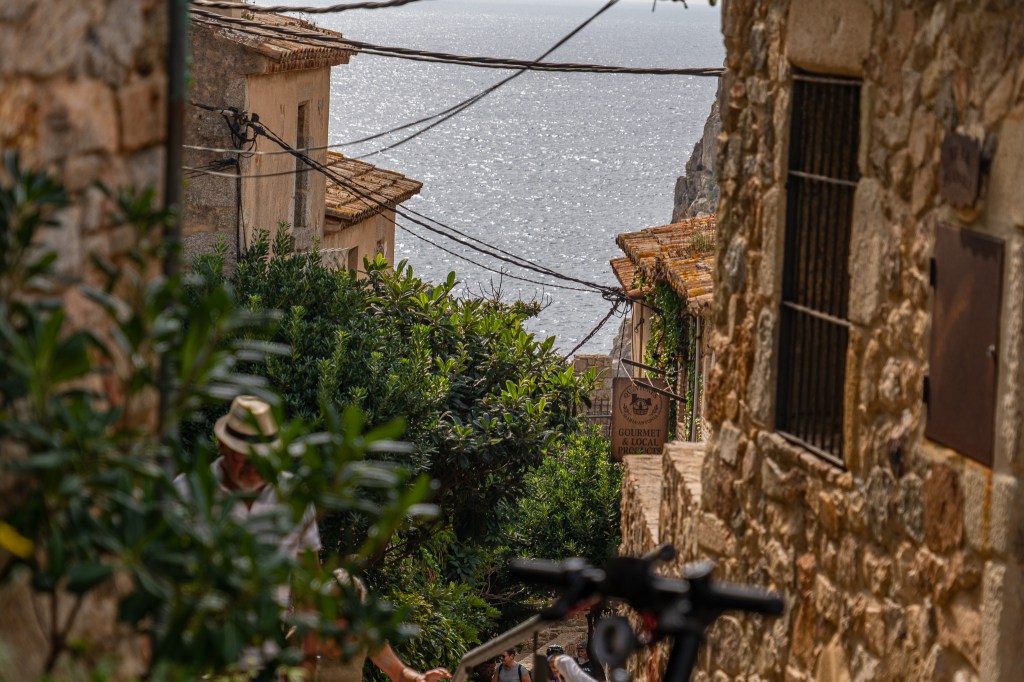
Some of them steep.

All of them memorable.

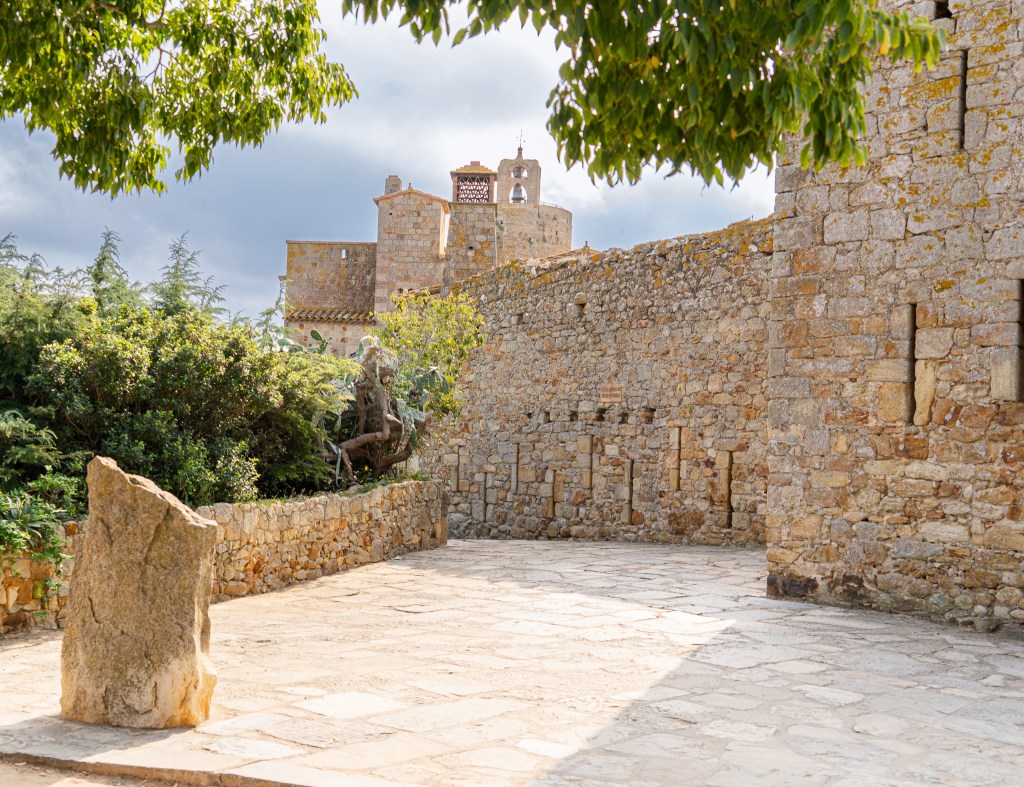
The narrow streets wind their way gradually upwards until you reach the top of the hill on which the town is perched. There, you can stroll around the walls with their square towers at four corners, dating back to the 4th century.

The ancient walls of Pals.

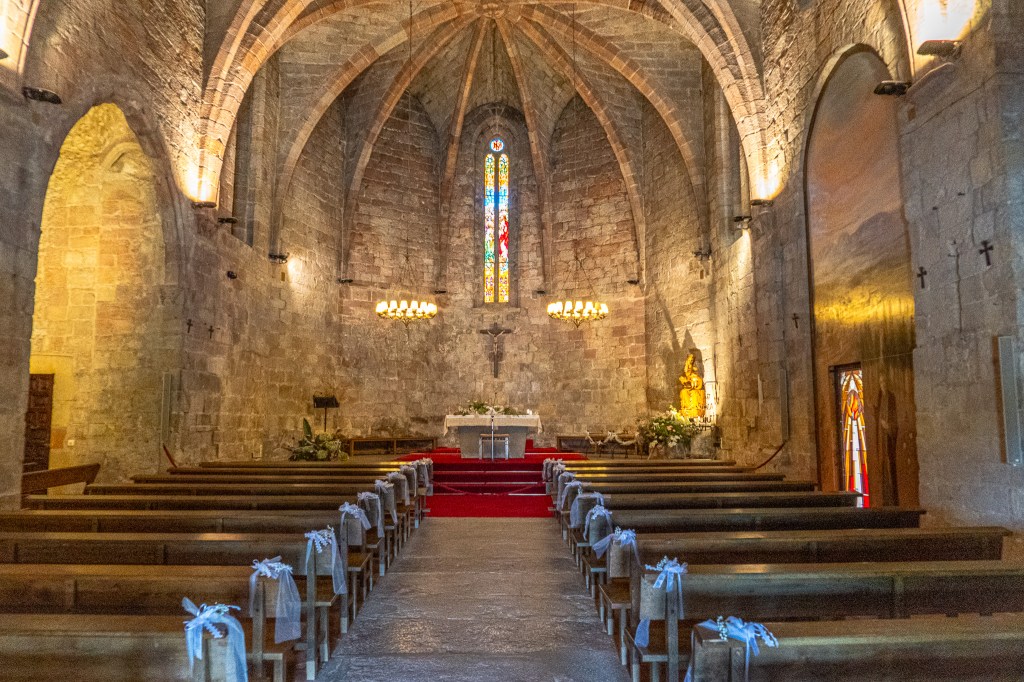
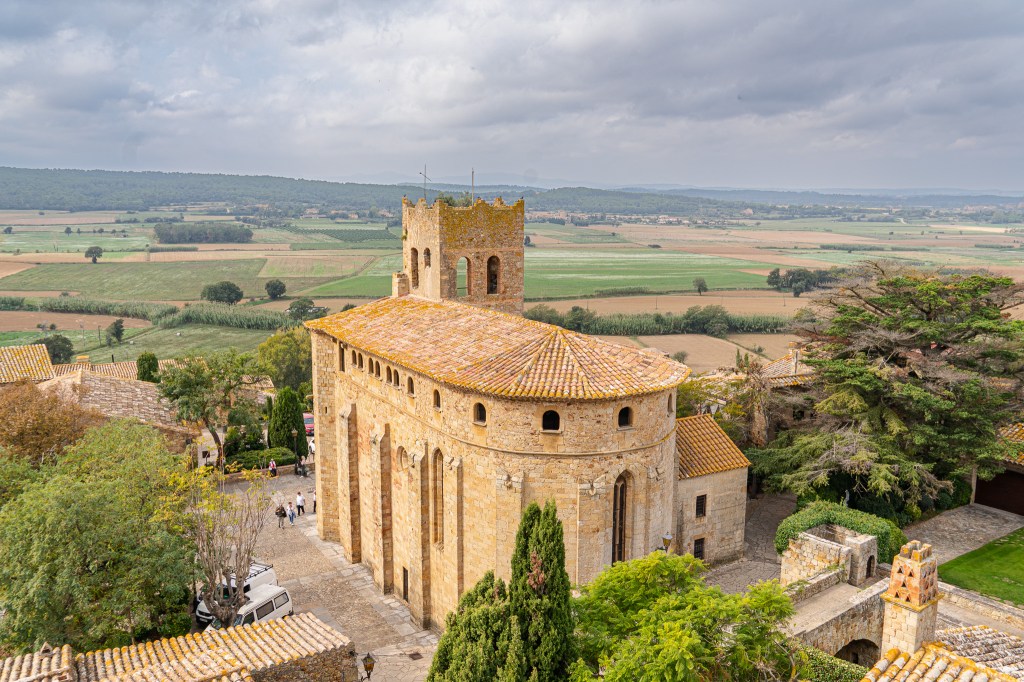
You can also visit the Romanesque church of Sant Pere or climb (for a small fee of 3 or 4 euro) to the top of the Torre de les Hores (Tower of the Hours), a clock tower built between the 11th and 13th centuries. From the top of the tower, there are expansive views of the town and the plains of its hinterland.

The modest church of Sant Pere.

Views over the plains from the Torré de les Hores.

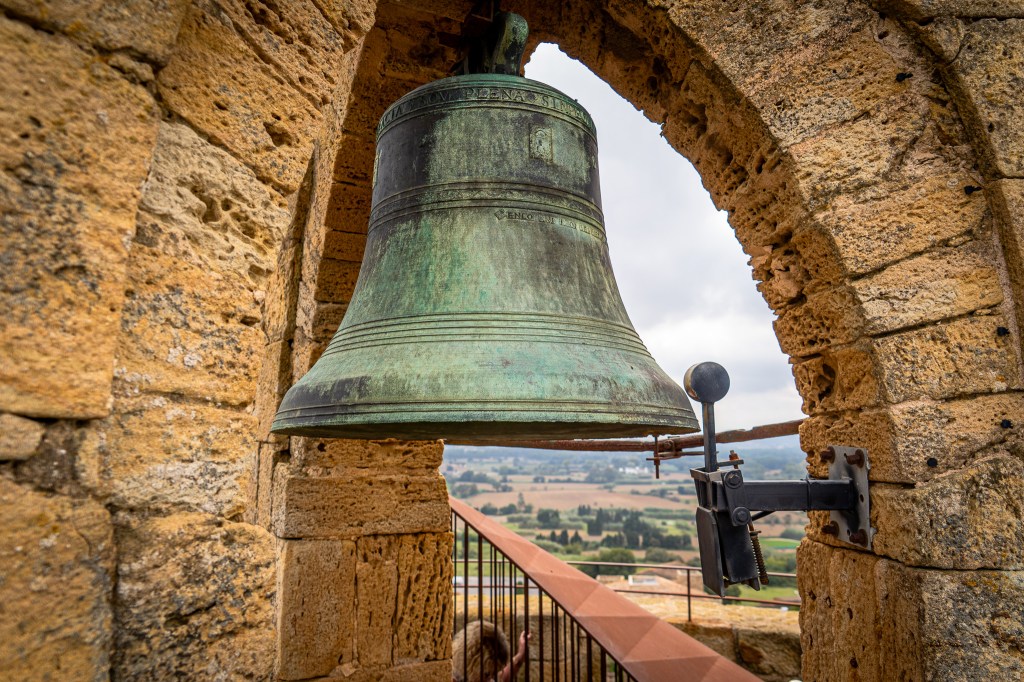
A word of warning here. The top of the tower is home to a substantial bell. If you are up there on the hour, get ready to cover your ears. It seems obvious now but at the time, my focus was on scoping out photo angles. Luckily, we were there at 1 o’clock, so we had only to protect our ears against one strike!

The bell at the top of Torre de les Hores.

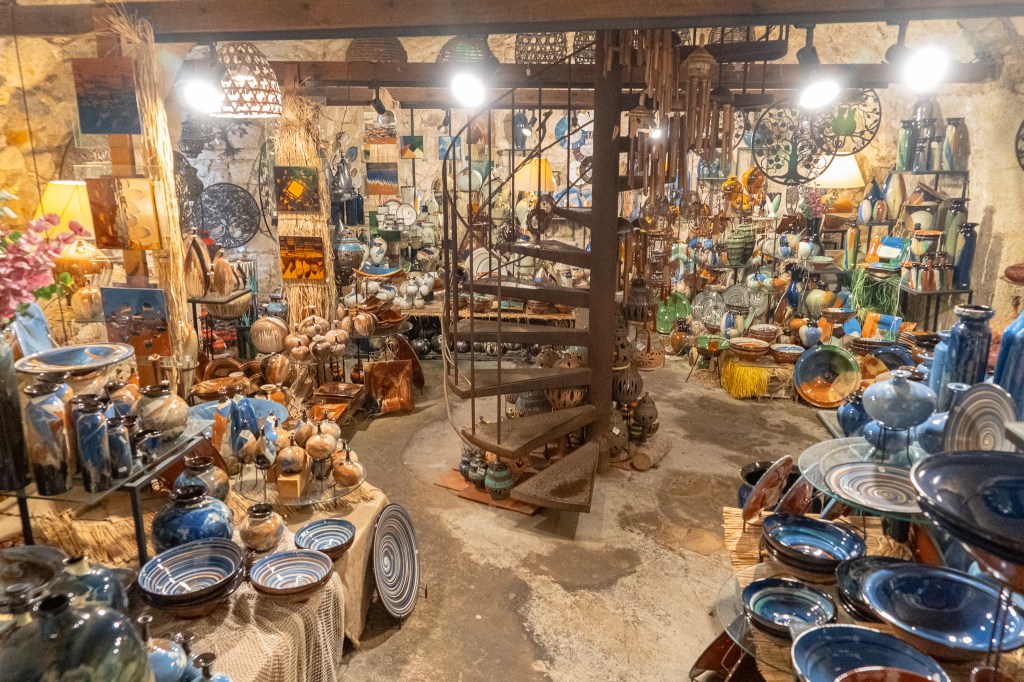
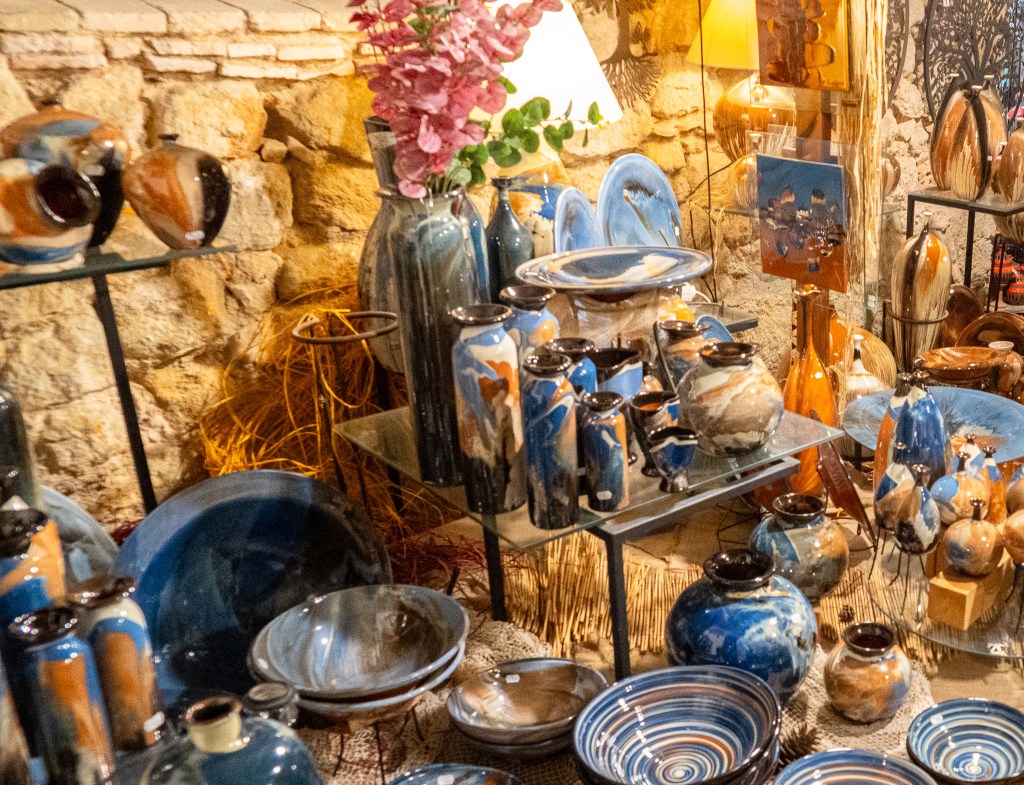
One surprise in this part of Pals (the ‘old town’) was the number and variety of shops. Not the shops you would normally expect to find where tourists congregate. You know, the ones that sell myriad key rings and shot glasses and phallic shaped bottle openers. The unobtrusive, tasteful shops sold locally made crafts, such as pottery and glassware, locally produced wine, cheese, ham and olive oil, homewares and soft furnishings. I must declare at this point that my default position when it comes to shopping is loitering patiently outside while my wife considers (not in a hurried way) potential purchases. There was one shop, however, that was so eye catching, it drew me in-Cerámica Planas Marqués. It was an Aladdin’s cave of pottery and ceramics of a particular style and colour that I found unusual. Whether it was the maker’s intention or not, the colour of the pieces seemed to mirror the colours of Pals. The strong ochre of the stone mixed with the blue and white of the skies overhead. Maybe I just got carried away in the moment! It was one of those shops where the challenge was to limit your purchases based on need and available space. In the end, we settled on some coffee cups with matching saucers. And just for good measure, as we were leaving the shop, decided to add a table lamp to our haul!

Cerámica Planas Marqués.

And there you have it. A snapshot of Pals. A place with centuries of history. Cobblestones, hidden nooks, Juliet balconies, a tower with a view and a shop where even I, a lifelong window shopper, felt compelled to make a purchase. I almost forgot to mention the small plaza where you can partake in the obligatory tapas and drink of your choice, while watching the eclectic mix of visitors mingle with small number of locals who are lucky enough to call this place ‘home’.

One of the few private residences we saw inside the walls of the old town. An idyllic home, except for the nosey tourists like me peering through your gate!

I highly recommend a visit to Pals if you are in this region of Spain. There are many attractive historical towns and villages throughout the country but Pals is right up there in terms of the quality of its preservation and restoration. A real treat for the eyes.

Time of visit: October 2025. Weather still mild. Shorts and T-shirts. No crowds.

Optimum time needed: 3-4 hours.

Fitness level: Average

Accessibility: Wheelchair users may need assistance in places.

Toilets: Public toilets in car park at entrance to the old town, beside visitors centre.

Location. Northeastern Spain (Catalonia).

I thought it would be useful to mention some locations that we have visited in the same region and their proximity to Pals. I recommend all of them but they all have their own unique appeal. Times given apply to travel by car/bus:

Tossa de Mar-50 minutes.

Girona-Less than an hour.

Cadaqués-1 hour 15 minutes.

Collioure (France)-90 minutes.

Until the next time, hasta luego..
Costa Brava-the rugged coast.

Time of visit: October 2025

We travelled to the Costa Brava in northeastern Spain with David’s Coaches, a company based in the Costa Blanca in the southeastern region of the country. The journey time was around ten hours, broken up by three comfort breaks. While ten hours may sound like a long trek, it wasn’t overly arduous. The scenery along the route, combined with our guide’s repertoire of interesting facts about the various regions we traversed, made it an enjoyable journey. Our itinerary on the five night stay included trips to Girona, Cadaques, Pals and Collioure. My original plan was to publish a piece once I had talked about all locations but to my surprise, retirement is busier than I anticipated and my writing time is limited. So, I will opt for installments, starting with Tossa de Mar, our base for the duration of our trip.

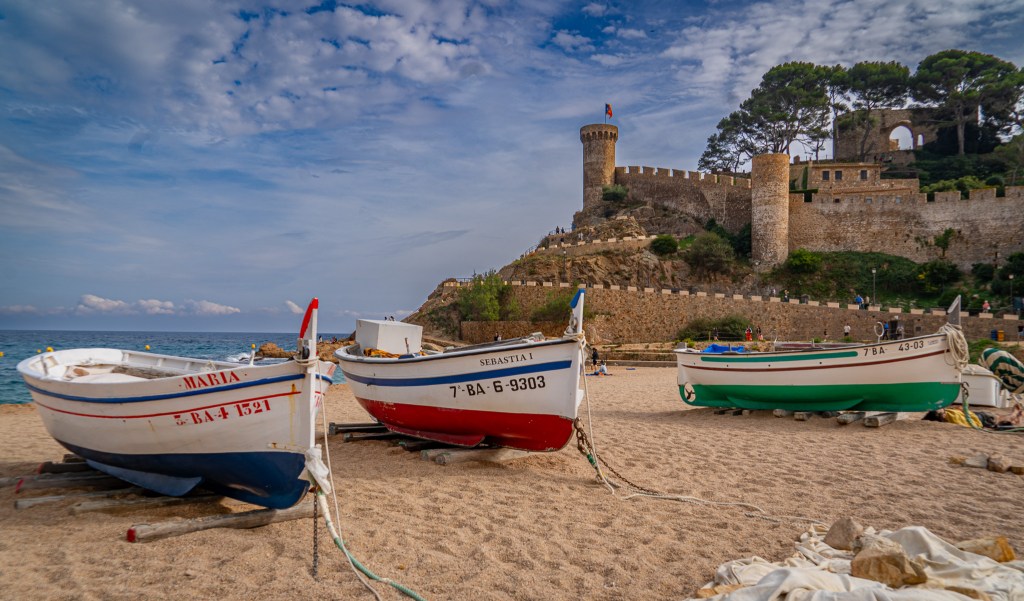
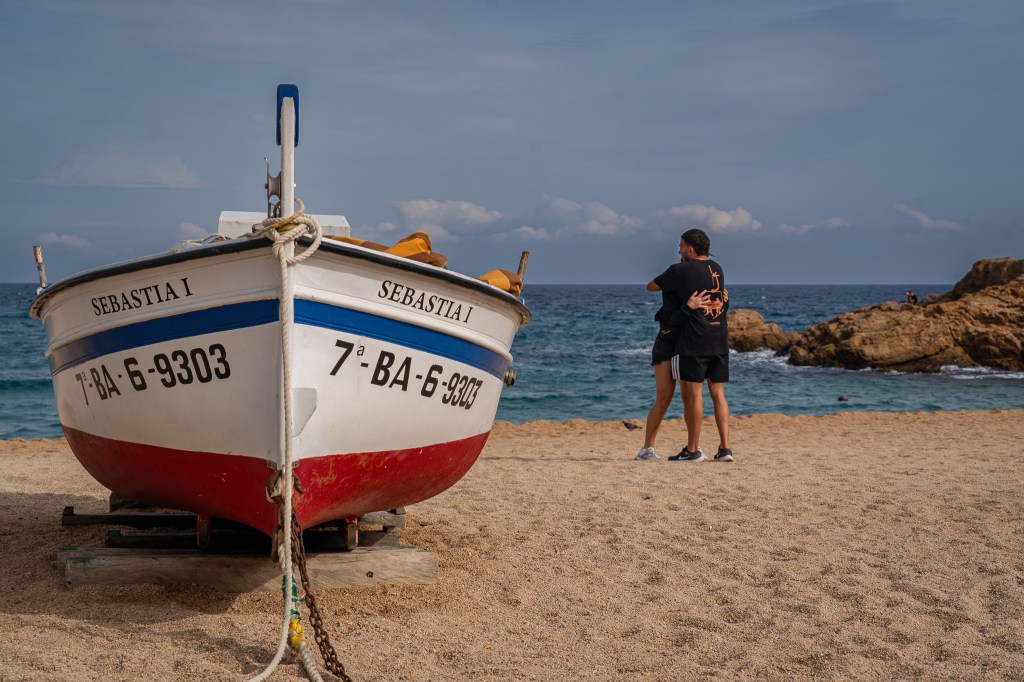
The beach at Tossa de Mar with its striking coloured boats against the backdrop of the old walled town.

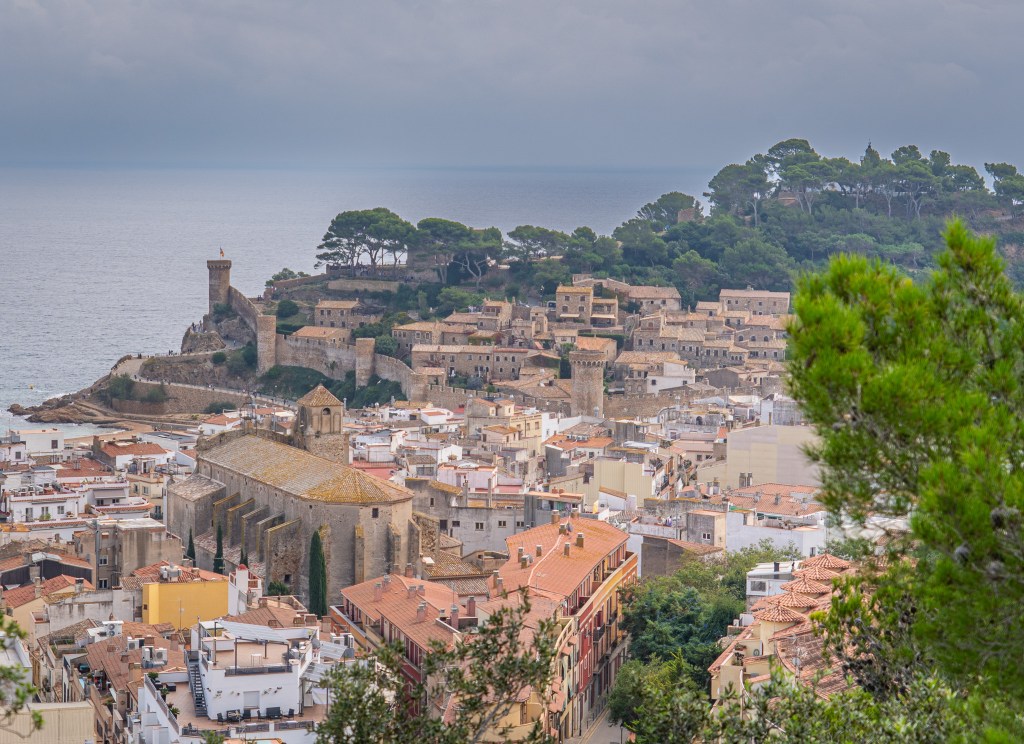
A view of the old town from the Torre des Moros (Tower of the Moors) on Can Magí Mountain.

Tossa de Mar is a municipality in Catalonia, in the province of Girona (Gerona), northern Spain. Its history goes back beyond Roman times but the main architectural characteristics range from 12th century onwards. There is a definite hint of France in the air, not surprising since it is less than 100km from the French border. In more recent times, Tossa de Mar was a successful fishing town but in the 1950’s plans were created to develop the town to attract package holiday makers. And so, the daily catch these days is offloaded from buses instead of boats and consists of curious tourists like us, complete with phones, cameras and backpacks.

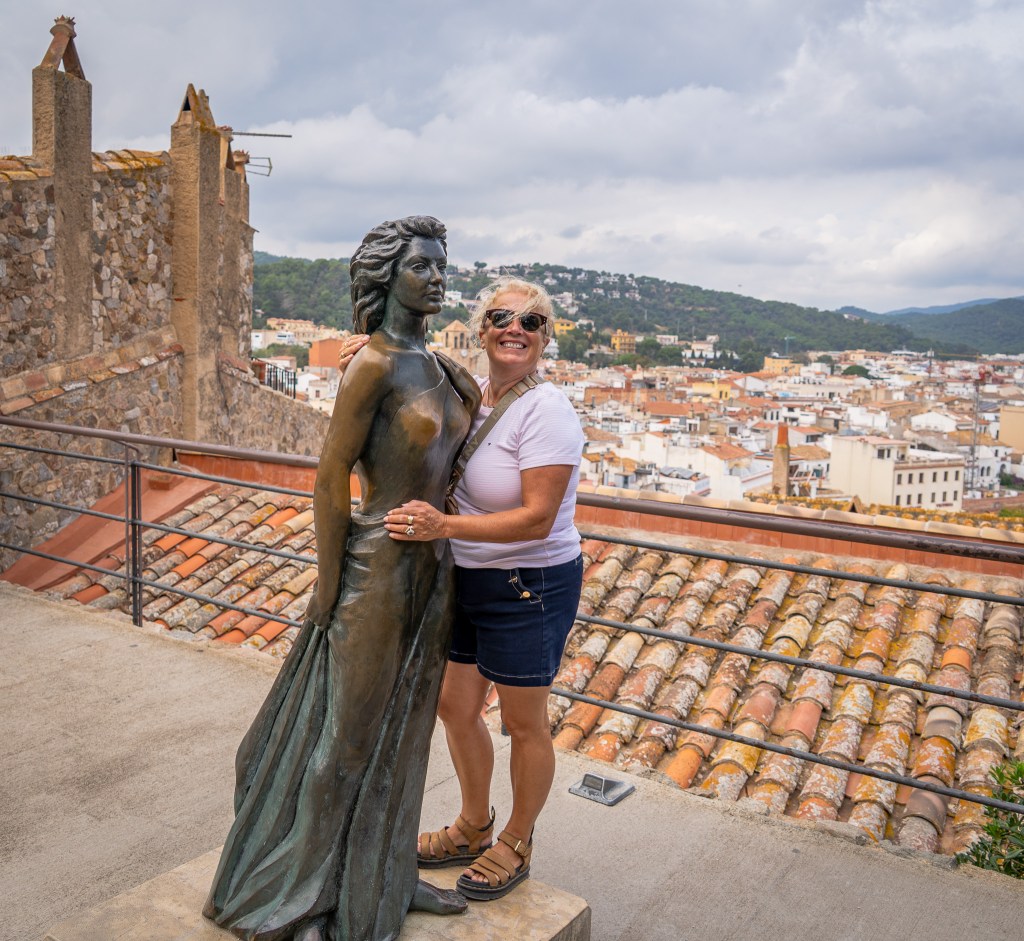
A catalyst for Tossa de Mar’s transformation came in the form of a Hollywood movie that was filmed here in 1950. It was called Pandora and The Flying Dutchman and starred Ava Gardner, James Mason and bullfighter Mario Cabré. Frank Sinatra also flew in to be with Gardner, reportedly in a jealous rage. In 1998 the town honored the actress with a bronze statue by Girona artist Ció Abellí.

Statue of Ava Gardner taking pride of place in the old town. The highly polished appearance of some parts of the statue is a result of excessive touching. Human behaviour is an enigma sometimes!

A couple taking time to embrace the moment.

Our hotel was a five minute walk to the beach and during that short stroll the streets change from modern and wide to ancient and narrow. It is a relatively compact town and you should be able to see the main sites in a day. The climb to the peak of the old walled town (the Catalan translation is Vila Vella) provides stunning views and is accessible via paths and steps. Unfortunately these may not be adequate for wheelchair users.

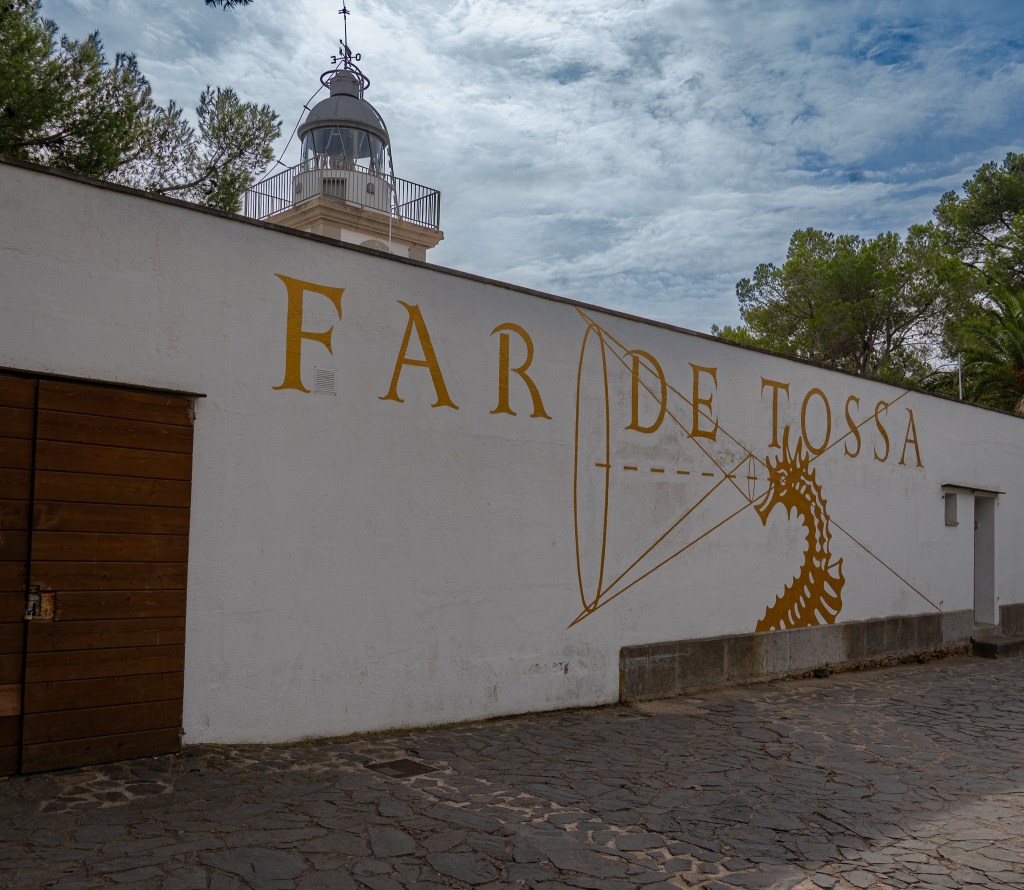
Faro de Tossa (Tossa lighthouse) provides a good vantage point from which to view the old walled town and beyond.

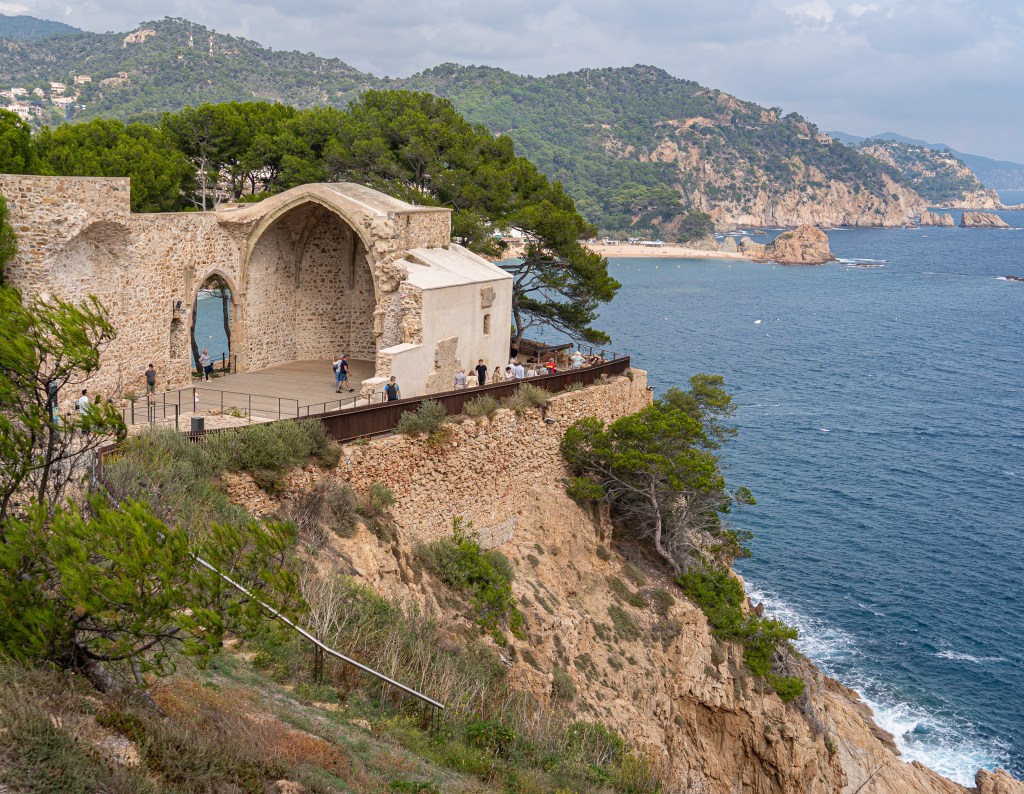
The 12th century remnants of the Gothic style church of Saint Vincent.

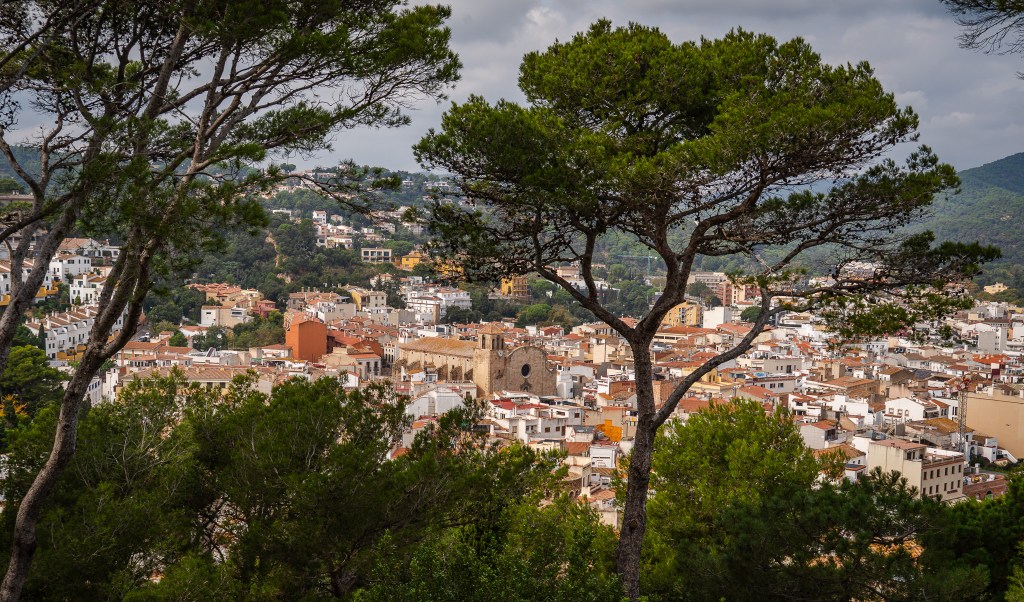
Tossa de Mar framed by the majestic Stone Pines.

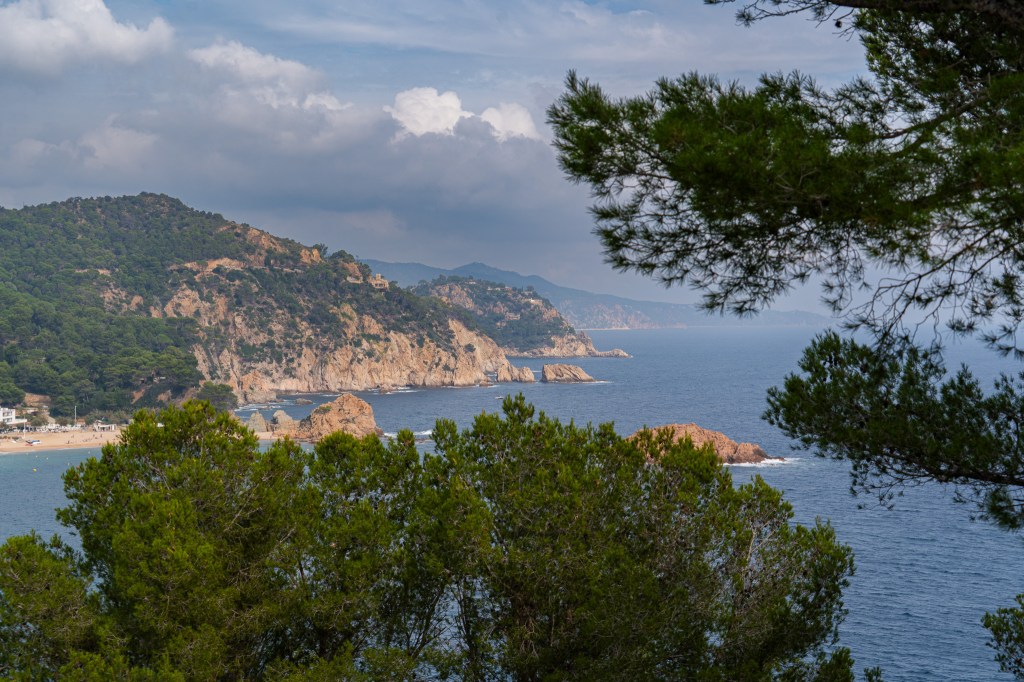
The rocky outcrops that may have inspired the name Costa Brava, Rugged Coast.

No rush here.

The narrow cobbled streets exude charm and the pace is relaxed. Friendly locals working in the shops, bars and restaurants add to the chilled experience. I suspect these spaces may be less enjoyable in peak season during the summer, when the crowds are funneled into the narrow walkways.

Taking a break in the shade of the oleander bush (at least I think it was Oleander).

The character of Tossa de Mar old town is a rich and inspiring one.

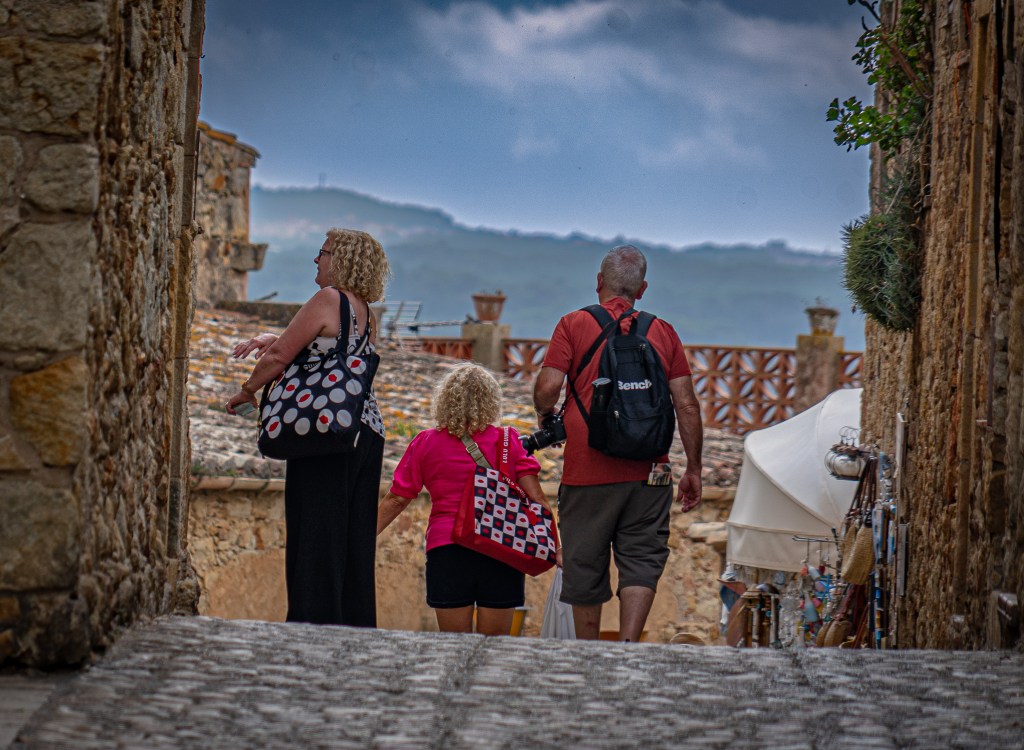
One observation I have made in recent times is the surge in ‘selfie tourism’ and Tossa de Mar was awash with selfie seekers. Even in the off peak season there are significant numbers of people striking a dramatic pose at the end of a selfie stick, trying for all their worth to appear nonchalant as they stroll through the narrow streets while a partner records the scene. I find the serious ones the most amusing. The ones who turn up in a flowing designer dress and heels, more suited to a night at the Oscars, and repeat the shoot until they get a result they are happy with, all the while oblivious to the presence of others. I wonder how much of the location is lost on them because they only seem to want a backdrop that will generate views and likes. I also wonder what the old fishermen would make of it all! As I was writing the last couple of sentences, it occurred to me that I sound like a grumpy old man. And maybe that’s the natural way of things. When we are faced with behaviours that are alien to us, we tend to be critical. A note to self-different people enjoy different things! Each to their own. Live and let live etc.

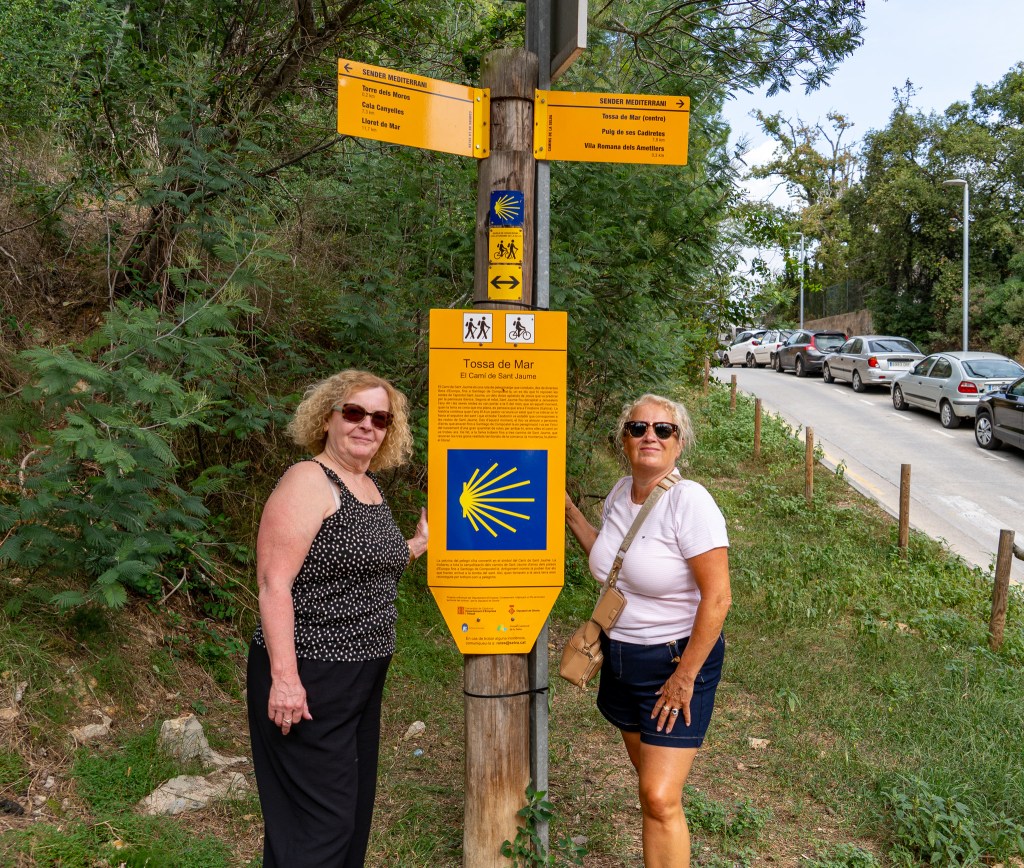
Speaking of which, for those who enjoy walking, Tossa de Mar is on the route of El Camino de Santiago de Compestella (in Catalan, El Cami de Sant Jaume). The subject of the Camino has come up in conversation several times over the years but the closest we’ve ever come to actually doing it, is posing for photographs at the famous scallop markers that direct pilgrims. One of the ladies in the photo below (not saying which one) even bought a hat to wear when her time came to do it. She has subsequently decided that she would be accompanied by too many flying insects and she’s not a big fan of our winged friends. Still, I’m sure the hat will enjoy a suitable debut some day..

If asked what I liked most about Tossa de Mar, it would be the same answer that applies to towns and villages all over Spain. Apart from the simple reward of seeing somewhere for the first time, the enjoyment for me is twofold. Firstly the aesthetic. When I see an old town like Tossa de Mar, I see an ochre stone canvass painted with the colours of the bougainvillea and oleanders, capped with terracotta rooftops. The play of light on the stone. The shadows in the narrow passages, moving slowly across the cobbles, synchronising with the sun as it sinks lower in the sky.

Secondly, I am always intrigued by the human aspect of the place. Who are the owners of the craft shops and galleries? Have their families lived here for generations? What would it have looked like in the days before mass tourism, when the only people making their way through the streets were fishermen and their families? A time when, instead of shops and cafes, there were bakers and net menders. When I ask myself these questions it reminds me that no matter where we go, places are defined by the people who inhabit them. It’s what gives a place soul.

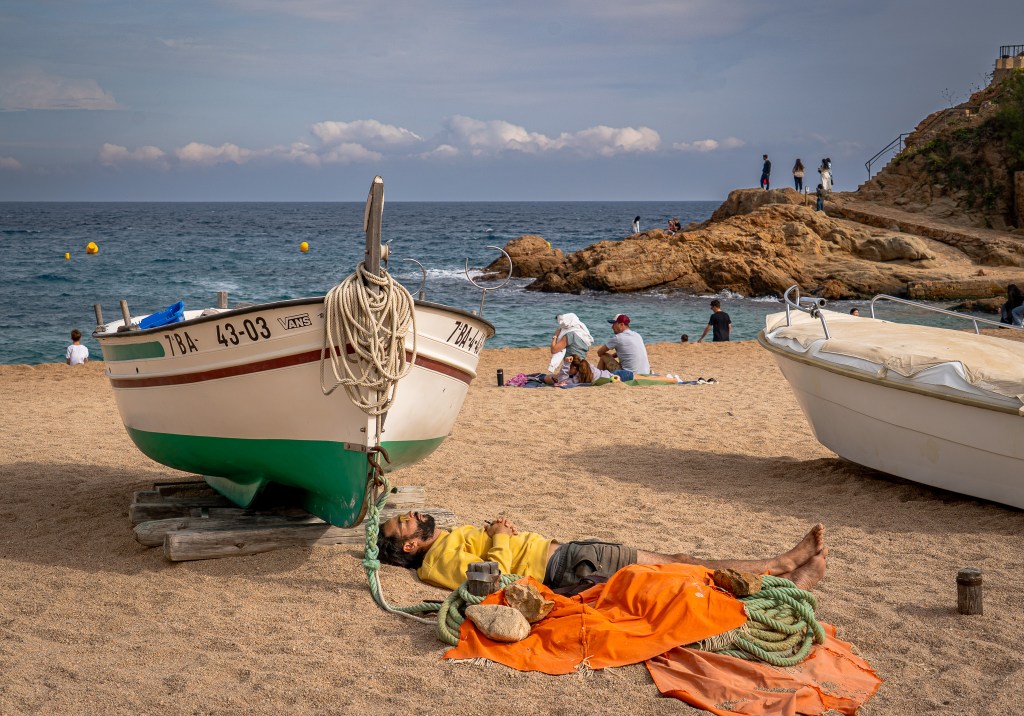
It’s all about the people. This local knows how to blend in. I had taken several photos of this scene before I realised he wasn’t part of the boat’s gear.

Would I recommend Tossa de Mar as a place to visit? Definitely! It’s the perfect base to explore the region. The nearest major airport is Barcelona. Regarding accommodation, I would have no hesitation in recommending The Golden Bahia hotel. Its setting is unremarkable but its location is perfect. The room was clean and comfortable. The food was varied, fresh and of high quality. The staff were extremely friendly and welcoming and a surprising number of them were multilingual. Like everywhere, it can be expensive in peak season but there are offers to be had if you are prepared to visit off season. A lot of the guests were repeat visitors from Ireland, Britain and mainland Europe. A hotel that can continually please such a diverse grouping is doing something right!

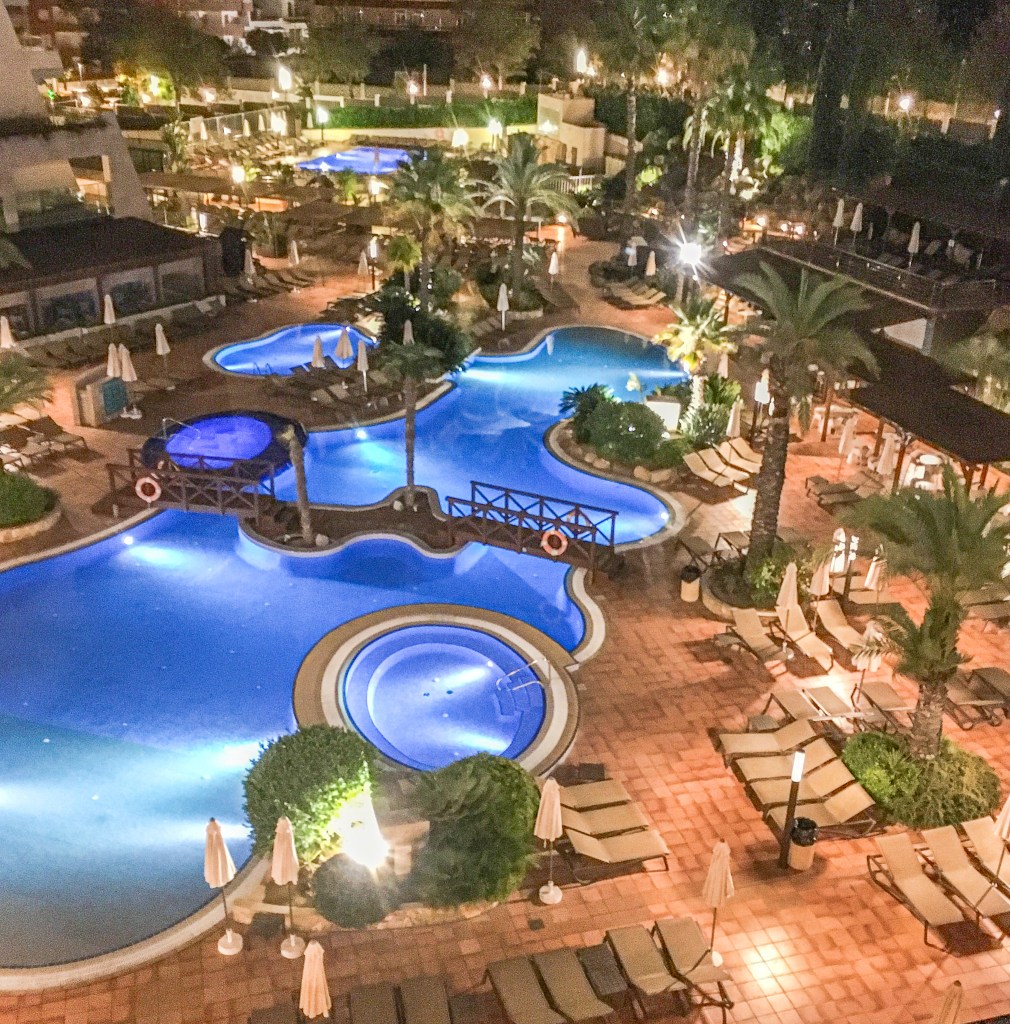
View from our hotel room, overlooking the pool area of Golden Bahia.

Next installment coming soon…

Collioure. The beauty and the pain.

The French Catalan town of Collioure sits just fifteen miles from the Spanish border. It has a history as colourful as its streets and both the Spanish and French alternately controlled the territory over the centuries. It is part of the Cote Vermeille (Vermilion Coast) overlooking the Mediterranean. Walking through the cobbled streets, browsing the craft shops, the mood is unhurried and welcoming and the locals appear to have a genuine warmth towards the visitor.

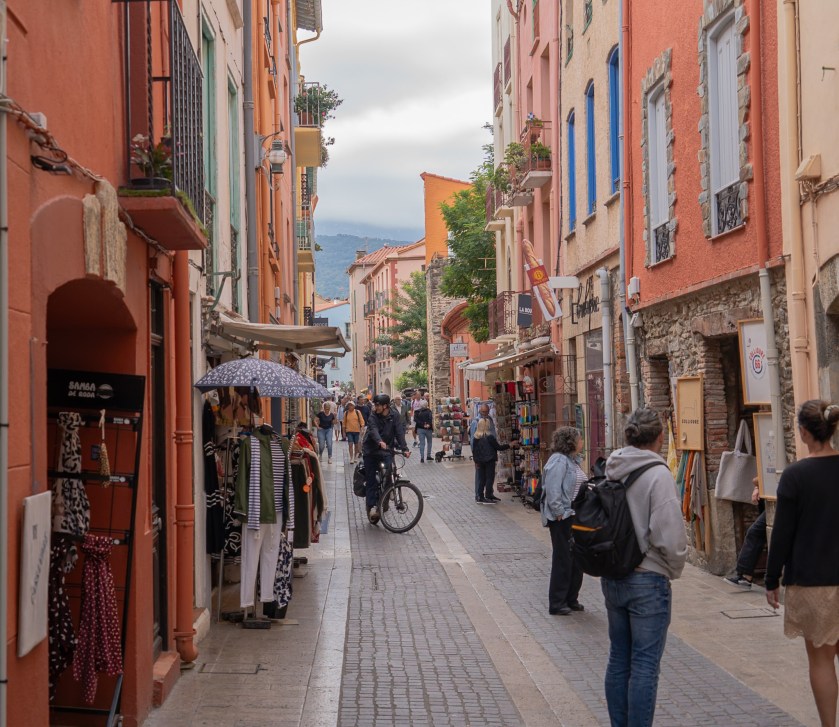
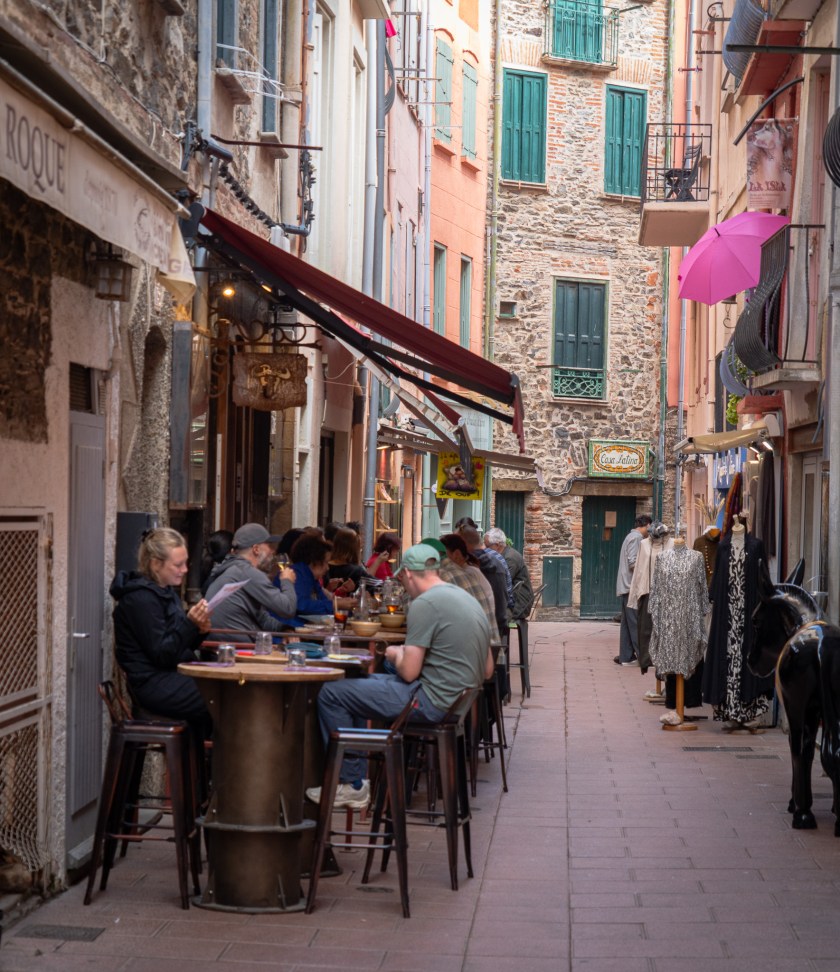
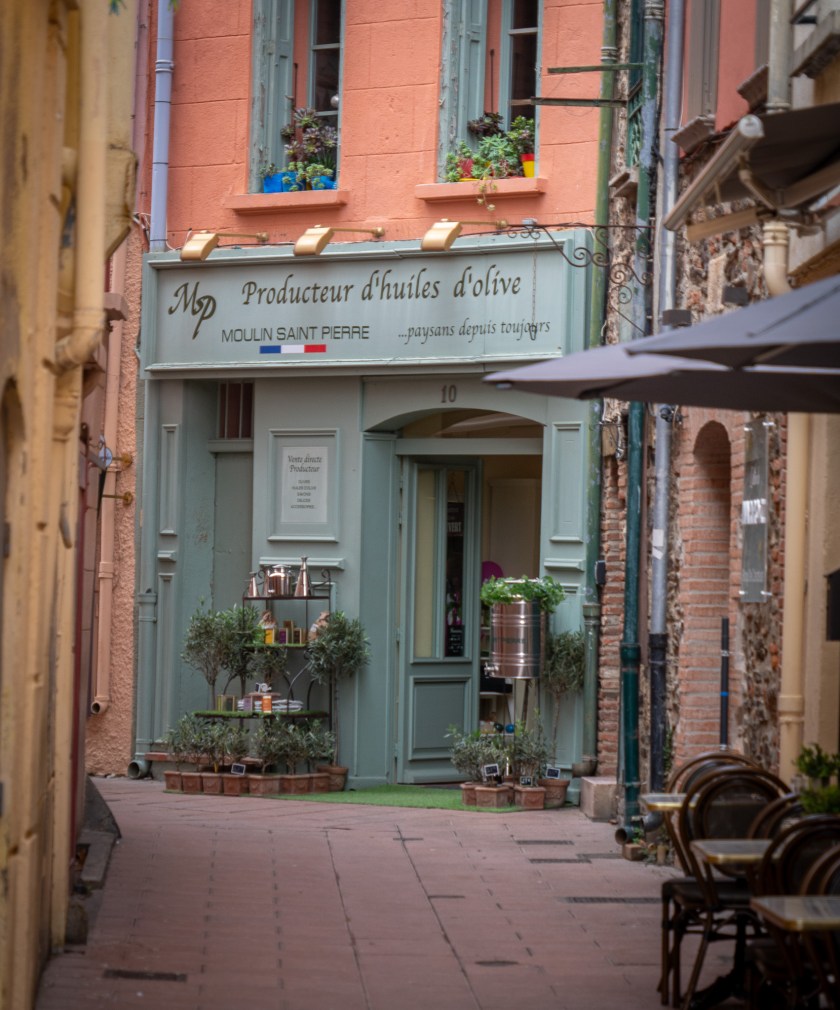
Colourful cobbled streets give Collioure its unique identity.

Although the buildings are colourful, the traditional Catalan architecture displays a prevailing mix of ocre, yellow and blue.

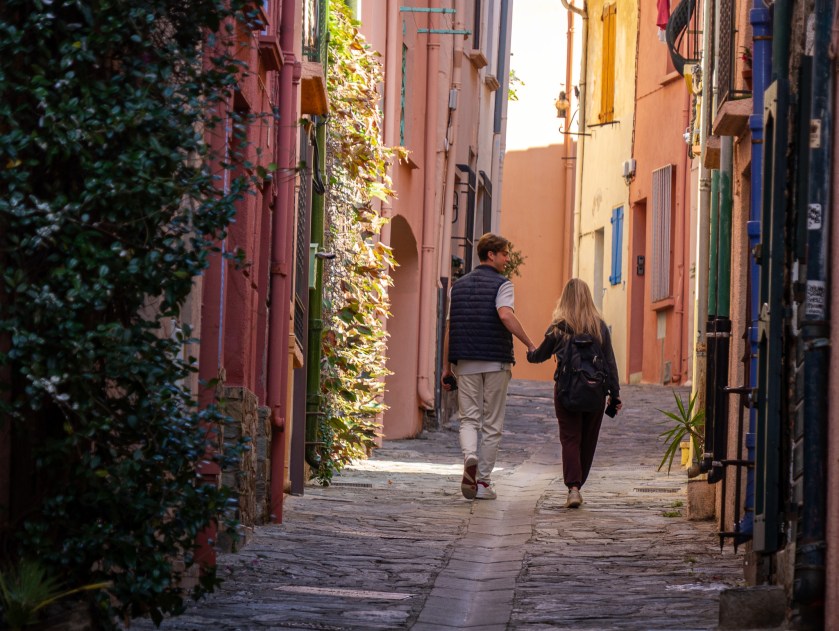
A young couple enjoying a quiet moment.

The unassuming charm of the backstreets.

Like all coastal towns, as you move to the seafront, the number of people increase. Understandable when you consider the visual offerings, from historic fortresses and churches to inspiring views of the Mediterranean.

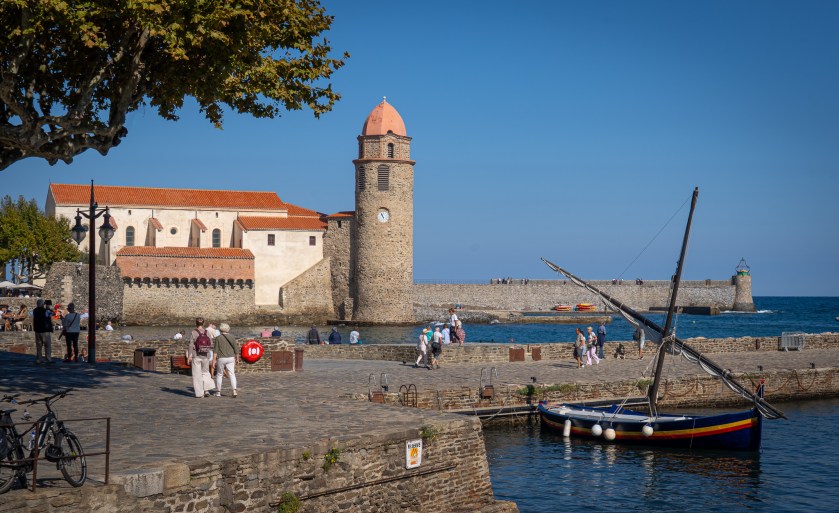
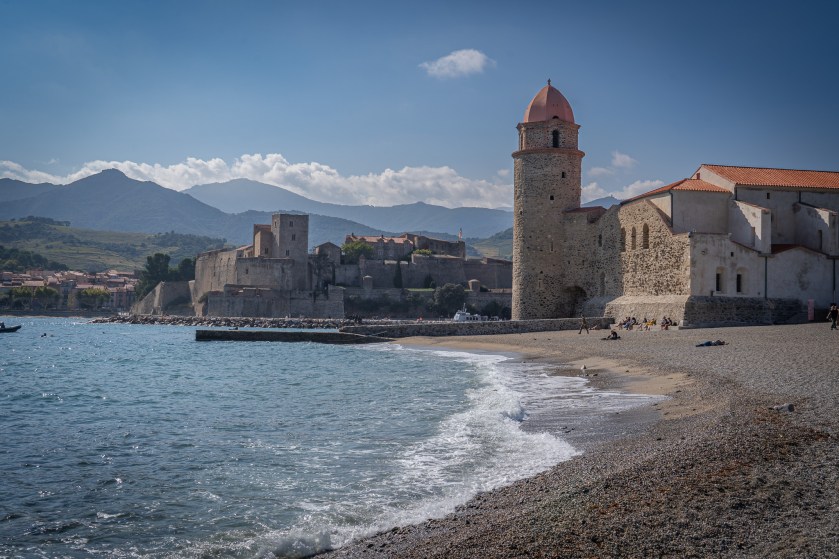
Notre Dame des Anges (Our Lady of the Angels). The bell tower of this 17th century church was once a lighthouse.

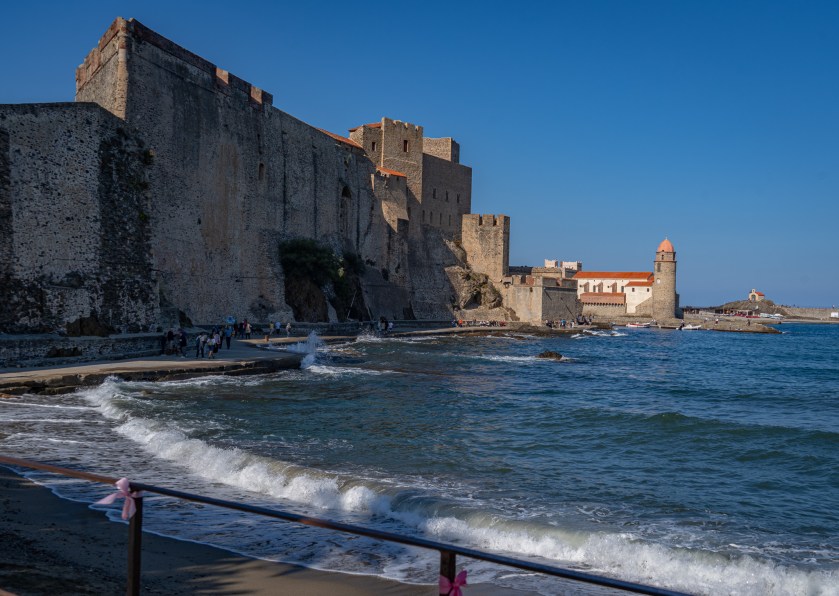
The imposing medieval Chateau Royal de Collioure.

Notre Dame des Anges in the foreground with the Chateau Royal and the mountains behind.

The streets in and around the bay offer food, drink and shade to recharge your energy levels.

Relaxed conviviality is the order of the day.

Collioure is famous for its anchovies. In some of the specialist establishments, you may need to make a reservation, especially for groups.

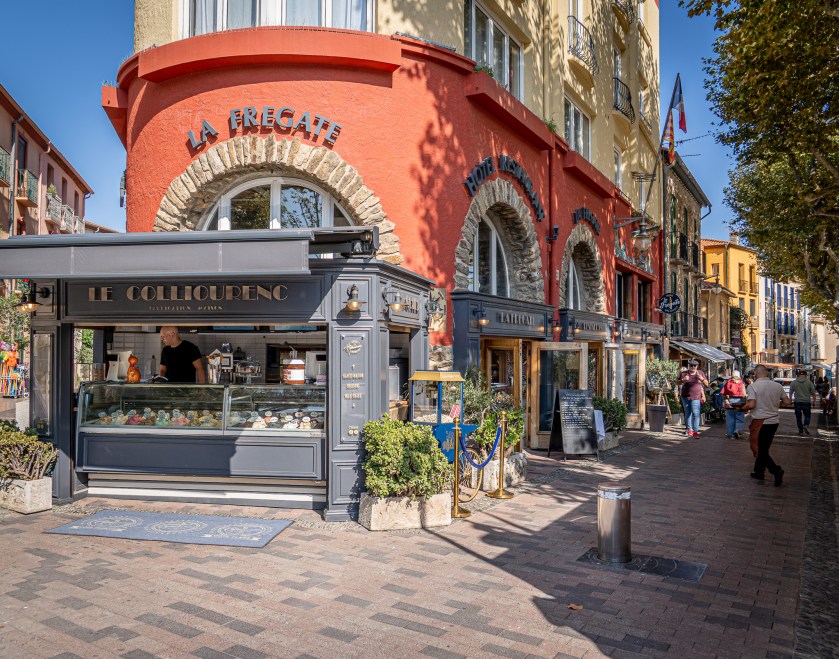
French charm.

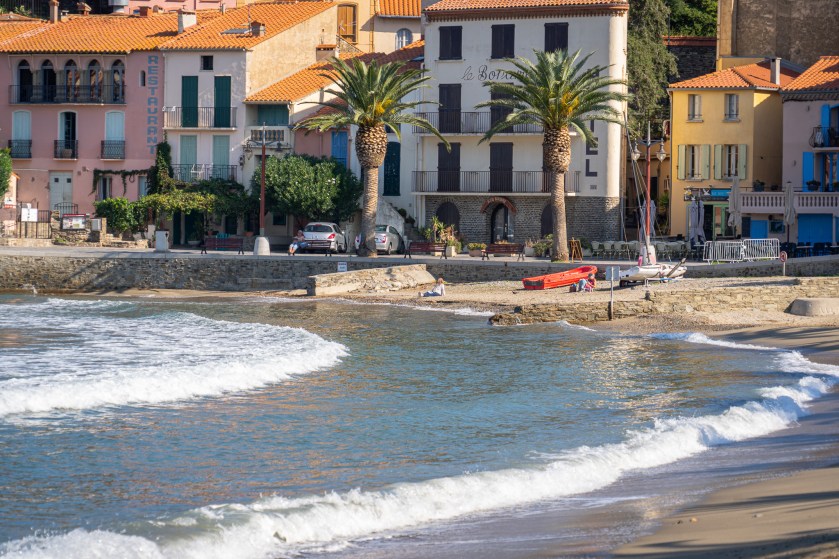
The Collioure seafront, rustic and elegant.

Taking in the views and cooling off in the breeze.

Collioure’s forgotten (or hidden) history.

Collioure is relaxed, inviting and aesthetically pleasing. It is perfect for a day’s sightseeing and the usual tourist activities. Yet you don’t have to look too far to uncover some of its painful past. The town’s proximity to the Spanish border made it a destination for hundreds of thousands of Republican soldiers, their families and those loyal to the republican cause, who fled Barcelona after the city fell to Franco’s forces on January 26 1939. In a matter of weeks, nearly half a million Spanish refugees crossed into France in what became known as ‘La Retirada’ (The Retreat).

During the Spanish Civil War, France, like Britain, had taken a non-intervention approach. This left the democratically elected republican government at the mercy of the fascist forces of Franco who were actively supported by Hitler and Mussolini. Some elements of French government were sympathetic and turned a blind eye when armaments were being brought across the border into Spain to arm the republicans. Yet when it came to receiving Spanish refugees, French authorities separated women, children and the elderly from the men and sent them to various locations throughout France, the men were sent to concentration camps that had been set up on the beaches. Conditions were harsh, with no drinking water or sanitation and as the death rates rose, many were forced to take up the offer of joining the French military or the Foreign Legion. Some returned to Spain were they lived in the mountains, others travelled to Latin America. In a cruel irony, after Germany invaded France in 1940, many Spaniards joined the French Resistance and fought for the liberation of a country that had abandoned them in their hour of need. The first French armoured vehicle that entered liberated Paris in 1944 was driven by a Spaniard.

A poet’s story

‘..Caminante, no hay camino, se hace camino al andar..’

‘..Traveller, there is no path, only the one you make..’

Antonio Machado

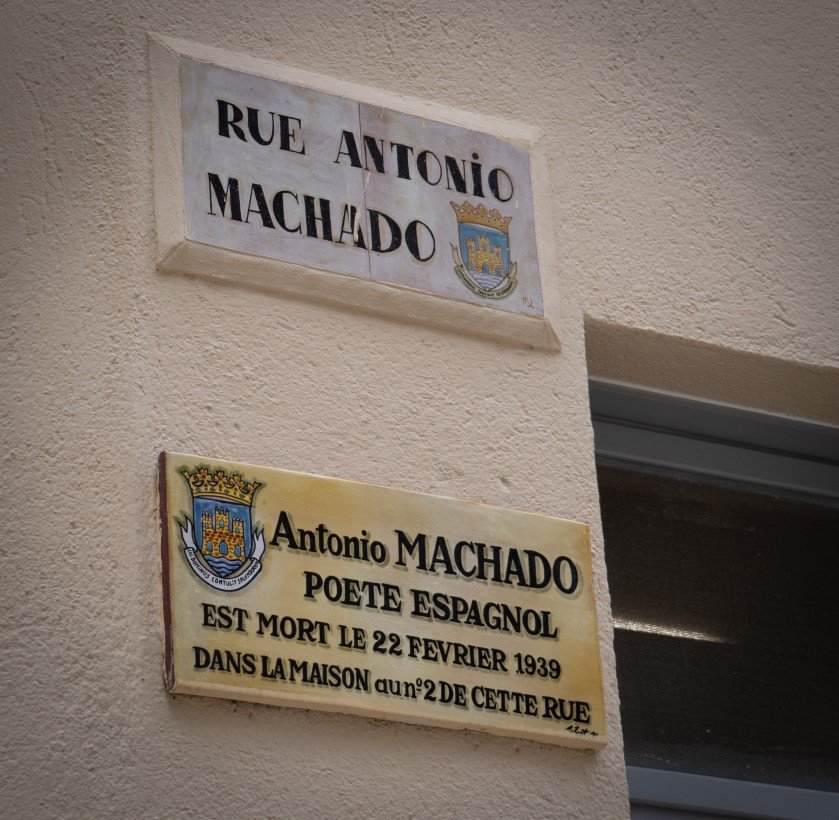
The street that is named in honour of, by consensus, one of the greatest Spanish poets of all time.

I had just finished a book about the Spanish Civil War by Javier Cercas (The Soldiers of Salamis) when my wife booked a trip to the Costa Brava. The trip included visits to several towns and cities including Collioure. In Cercas’s book, a brief reference was made to a Spanish poet named Antonio Machado who died in Collioure. In December 1938 he had left Barcelona with his brother, Jose and his elderly mother after Franco took the city. They travelled 90 miles in the dead of winter, mostly on foot and under cover of darkness with tens of thousands of their fellow citizens, until they reached Collioure. And so, I began to research Antonio Machado. The name that had begun as a brief reference, slowly revealed a captivating and tragic story of one individual who paid the ultimate price, simply for daring to wish for a better society in the Spain he loved.

Antonio Machado was born in Seville 1875. His family moved to Madrid in 1883. During his school years Antonio discovered his passion for literature. In 1899, he and his brother, Manuel, travelled to Paris to work as translators for a French publisher. During his time in Paris, he came into contact with and was inspired by, the great French Symbolist poets Jean Moréas, Paul Fort and Paul Verlaine, and also met other contemporary literary figures, including Oscar Wilde. Over the next few years he had several poems and collections of poems published.

In 1907 he was offered a teaching post in Soria in the Castile and Leon region of Northwestern Spain. Here he met Leonor Izquierdo. Antonio was staying in the guest house owned by her parents. In 1909 he and Leonor were married. He was 34 and she was 15! In early 1911 the couple went to live in Paris. A few months later Leonor was diagnosed with advanced TB. They returned to Soria in Spain where Leonor died on 1st August 1912. Machado was devastated by her death and left the city soon after, never to return. For several years afterwards he was consumed by the love and loss of Leonor and this was expressed in his poems from that time.

Machado spent the next seven years in Andalusia and then moved to Segovia to take up a post as Professor of French at the Instituto de Segovia. He moved there to be nearer to Madrid, where his brother Manuel lived but as the fascist coup of 1936 took hold, he moved north to Valencia and then to Barcelona. He would never see Manuel again.

People like Machado were the enemy of fascism. People who used the written word to advocate for democracy, equality and justice. And so, with every advance made by Franco’s army, came the brutal repression of anti-fascist views, popular culture, literature, theater and educated thinking. Not only did Franco target writers, poets, homosexuals (such as the gay poet Federico Garcia Lorca) and all political opponents. The fascists leveled entire towns and villages with the help of Hitler’s Luftwaffe. The most devastating example was the bombing of Guernica in the Basque Country when the German ‘Condor Legion’ obliterated the town in a matter of hours.

On his journey to Collioure, Machado wrote:

For the strategists, for the politicians, for the historians, all this will be clear: we lost the war. But at a human level I am not so sure: perhaps we won.

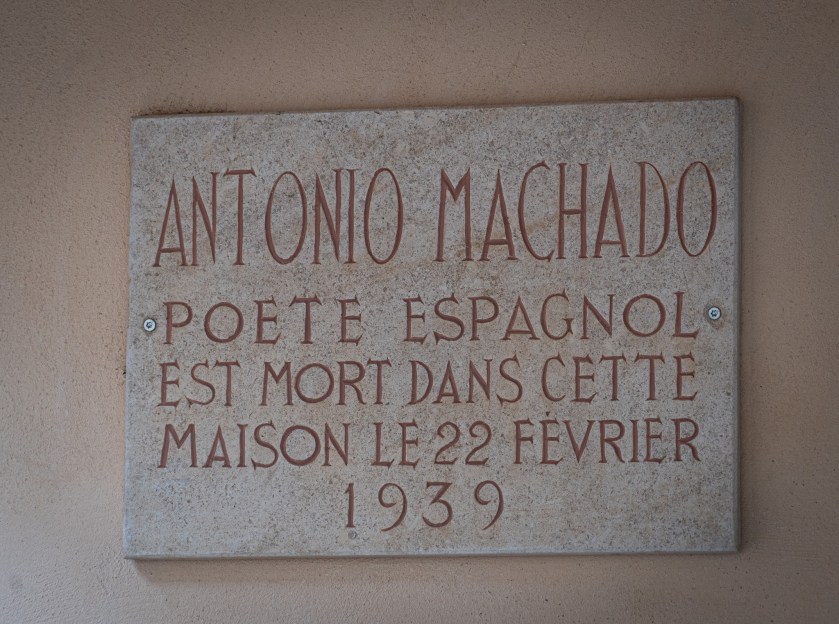
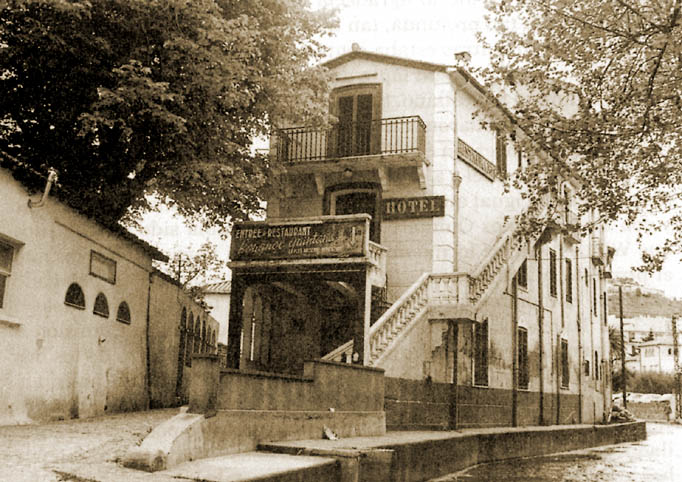
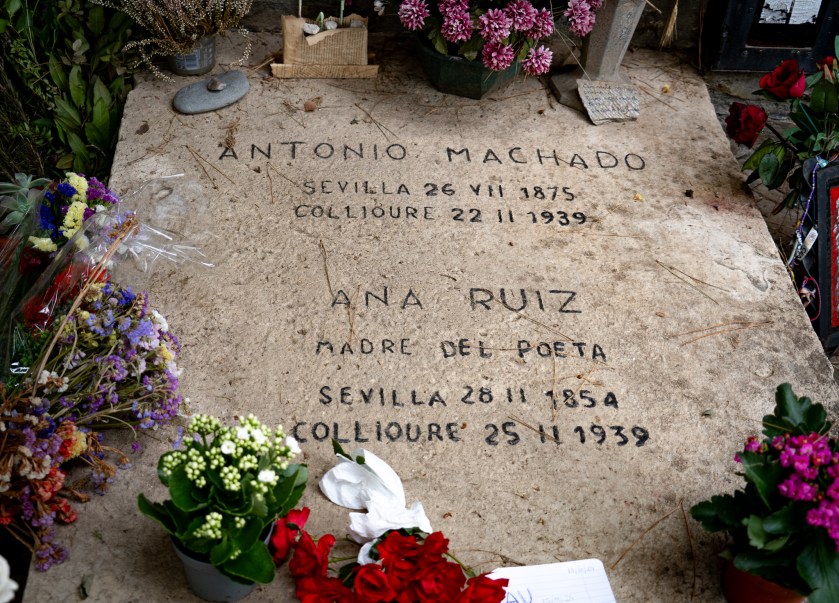
Machado, along with his mother and brother, reached Collioure and with the help of friends was able to get accommodation at the Hotel Bougnol-Quintana. It was in this hotel, on the 22nd February, two months after arriving, that Antonio Machado died. His mother died three days later. In the pocket of his overcoat, his brother Jose found some handwritten notes, including one which began, “Estos dias azules y este sol de la infancia” which translates to English as “These blue days and this sun of childhood”. It was the poet’s last poem.

When we arrived in Collioure, I made my way to the location of the Hotel Bougnol-Quintana. In the years after the end of Franco’s dictatorship (he died in 1975), the hotel had been transformed into a visitors center. Sadly, on this particular day, it was closed. A ‘For Sale’ sign in the window suggested that the closure may become permanent.

The former Hotel Bougnol-Quintana in Collioure.

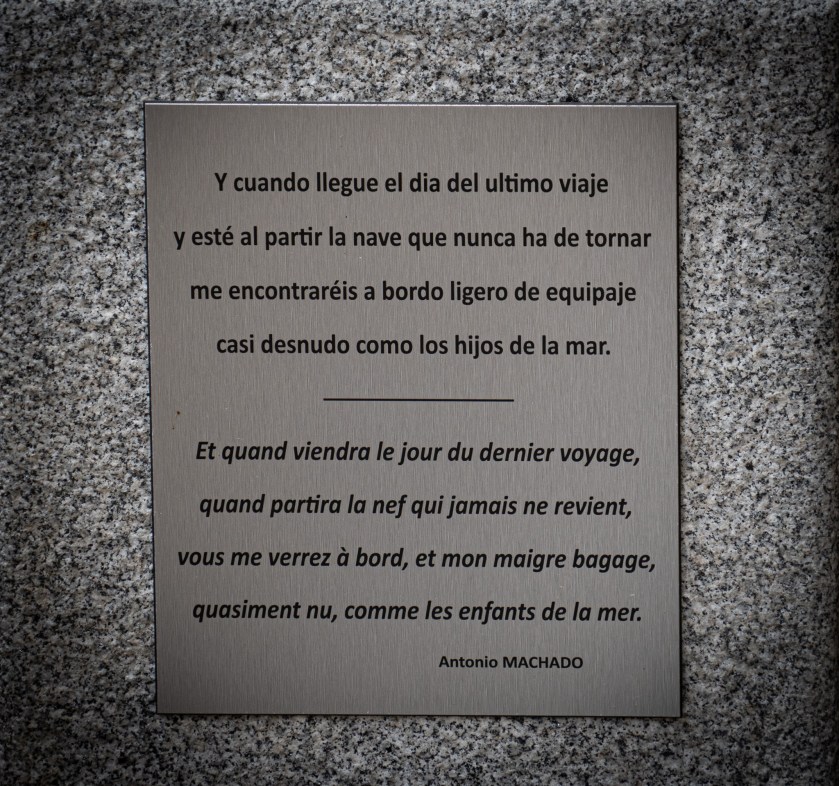
‘And when the day of the final voyage arrives. When the ship that never returns departs. You will see me onboard and my meager luggage. Almost naked, like the children of the sea.’

The hotel as Machado probably saw it.

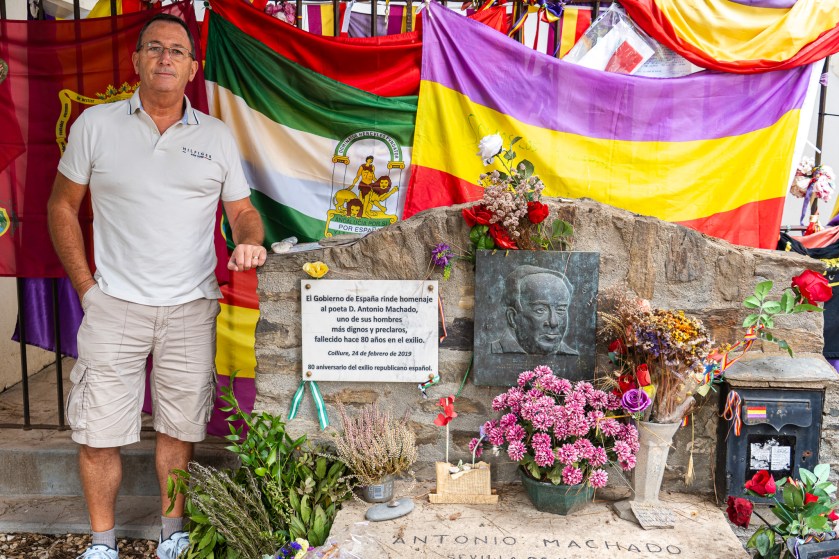
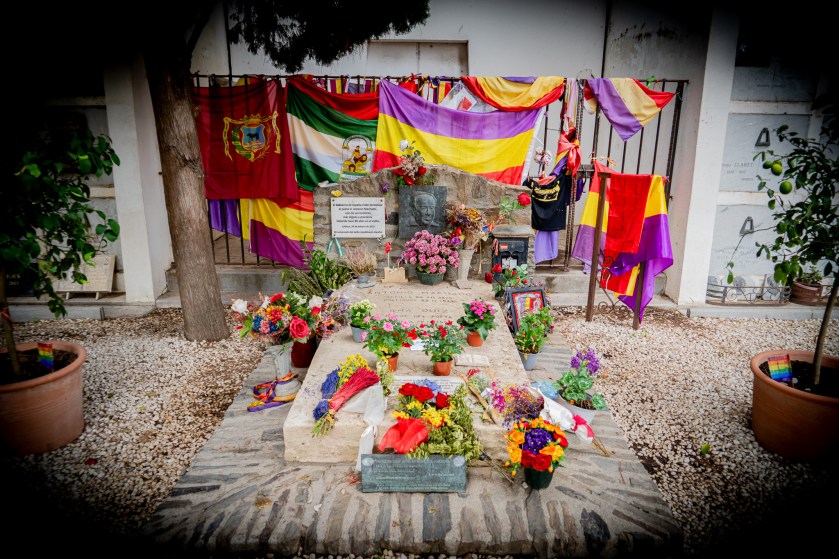
One hundred metres from the hotel is the cemetery of Collioure where Antonio Machado and his mother are buried. The grave is festooned with flags of the republic and provincial flags from Andalusia and Cordoba. More than 80 years after his death, followers and devotees still place flowers on his grave daily, along with tokens of affection, and the occasional poem.

Machado’s grave. A shrine to a man and an ideal.

Antonio and his mother died three days apart.

After our trip to Collioure, I found myself reflecting on the impact and causes of conflict. The impact is obvious. The human devastation, the heartbreak, suffering and the lasting legacy of loss. The causes can be less obvious. On the surface it can appear that wars are fought over race, religion or politics. But at the root of all wars is the lust for power and wealth.

Antonio Machado’s story is one of millions but it represents for me the struggle between good and evil. I believe that in this world there are many more people like Machado than there are like Franco, Mussolini, Hitler and Netanyahu. It is easy to believe, when confronted with the daily evidence, that the world is broken and doomed. But I agree with the poet when he said, “But at a human level I am not so sure: perhaps we won.”

As our bus slowly navigated the narrow roads out of the town at the end of the day, I caught a glimpse of a sign at the side of the road, informing visitors that the town of Collioure was twinned with Soria (Leonor’s resting place).

Summary

Collioure is definitely worth a visit. It is a compact town and a day is plenty of time to see everything it has to offer. Its aesthetic appeal and photo opportunities are reasons enough to visit but like towns and cities everywhere, it is the history that provides the depth to the experience. Behind every wall and under every roof, there are memories that deserve to be kept alive.

Regrets? I should have tried the anchovies!