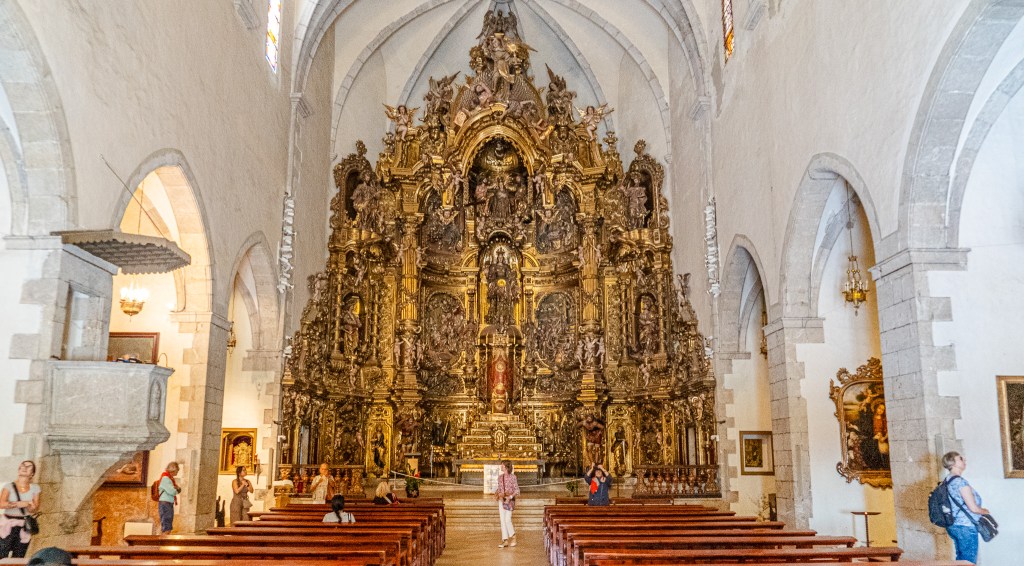
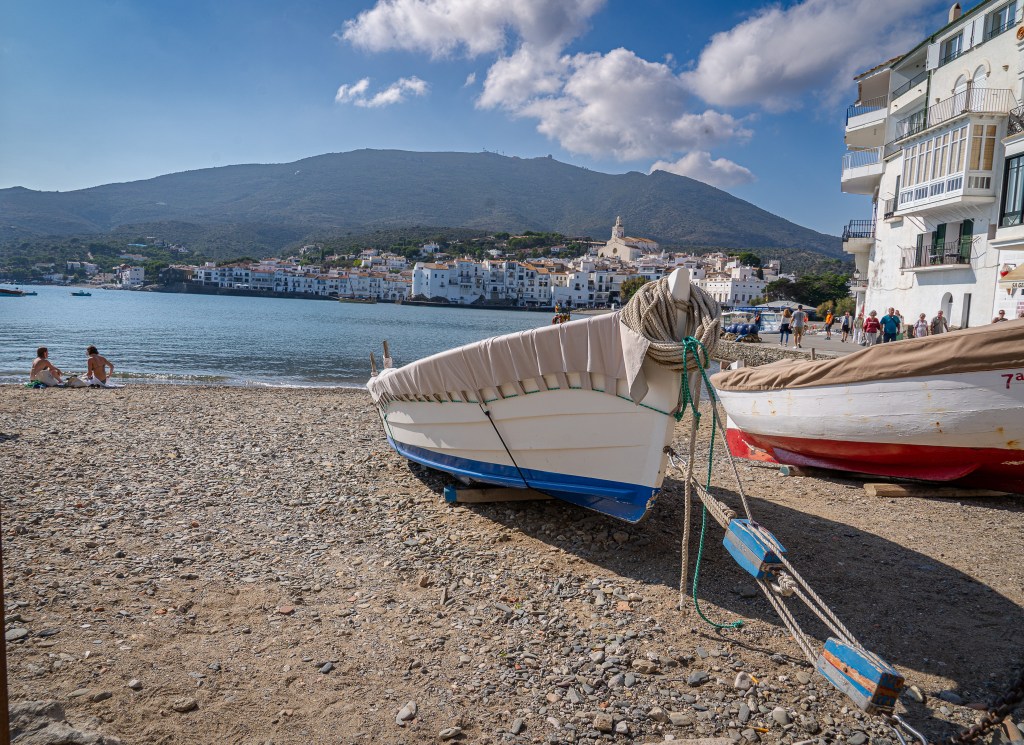
Collioure. The beauty and the pain.

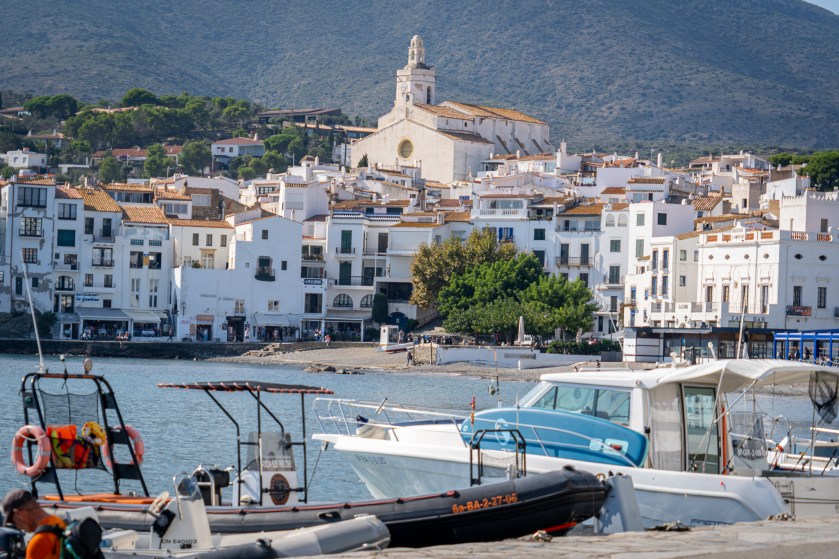
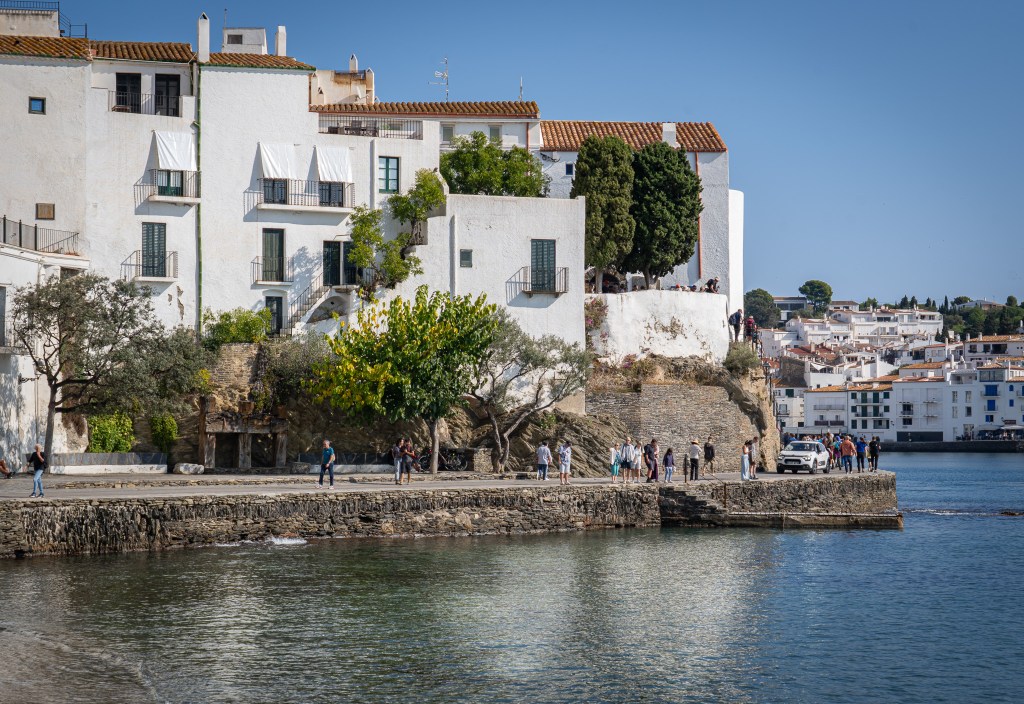
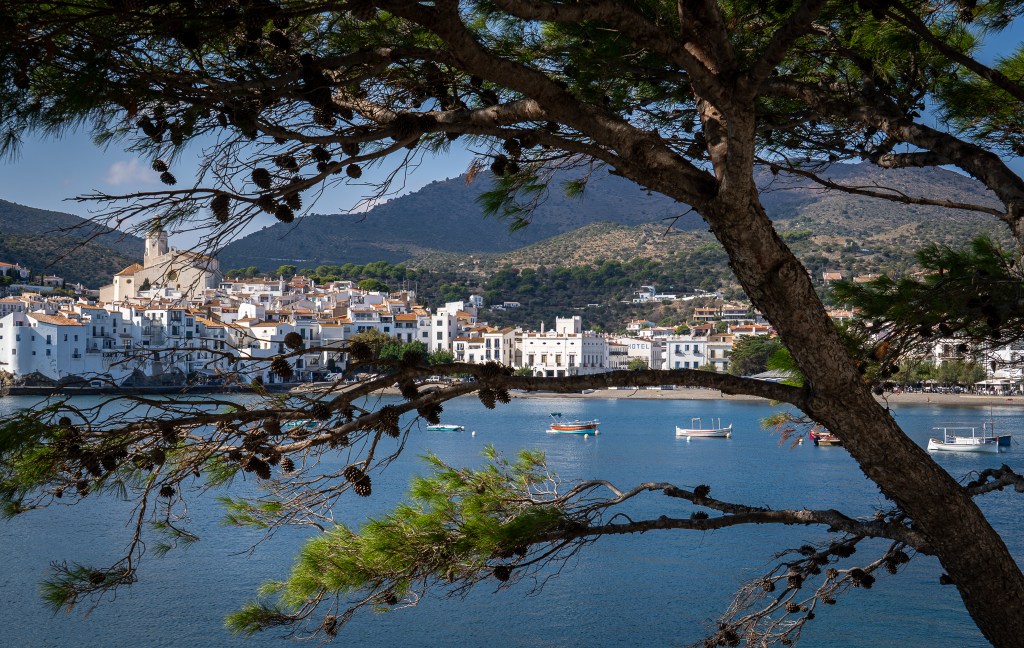
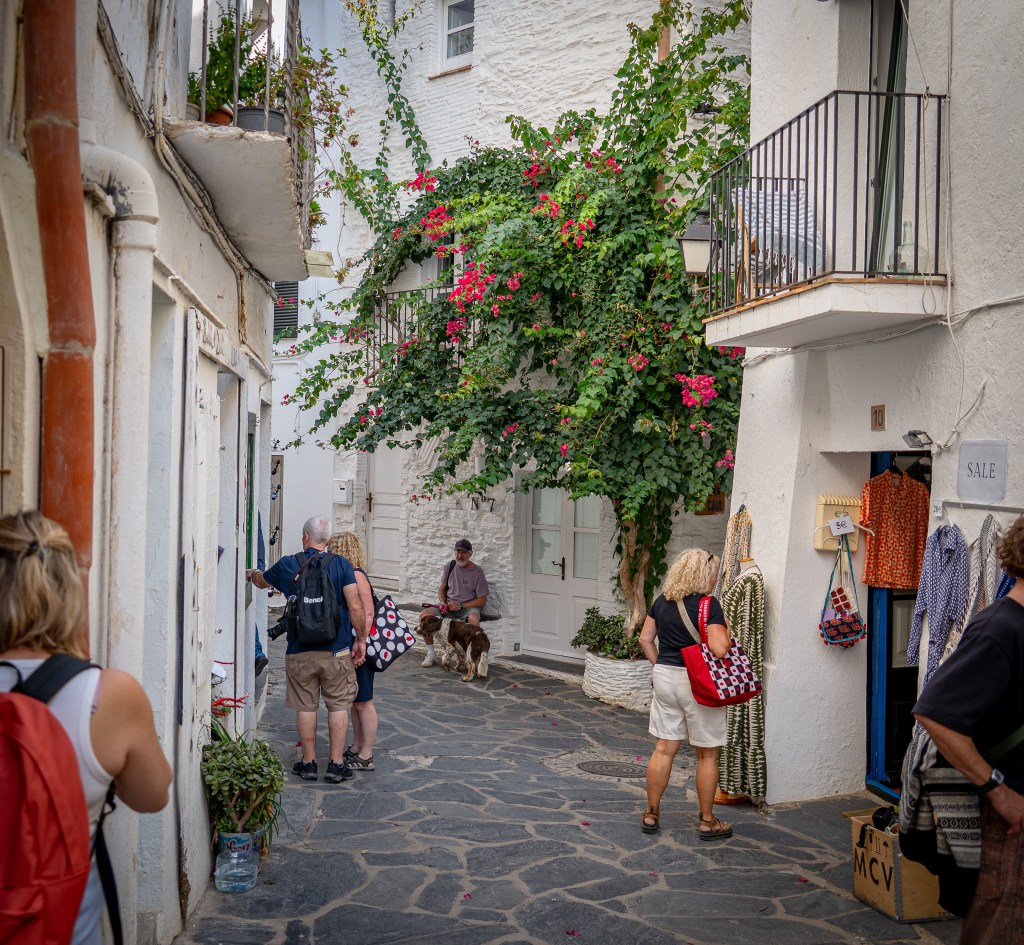
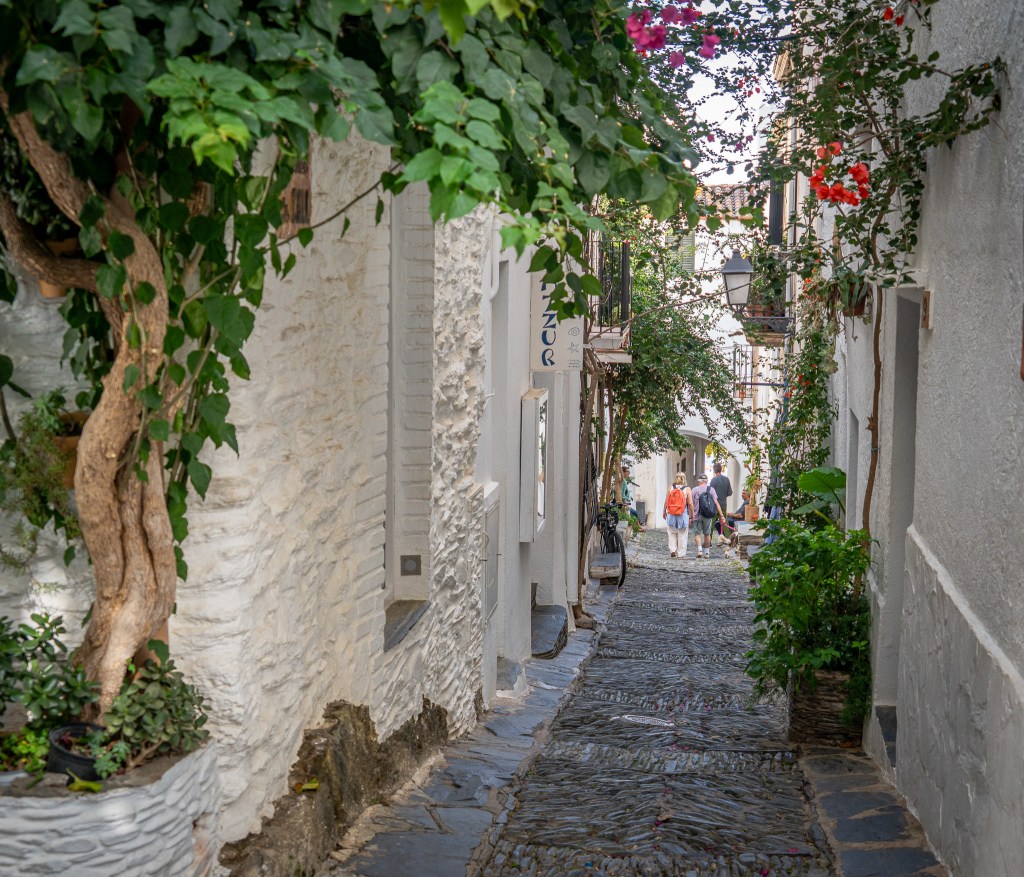
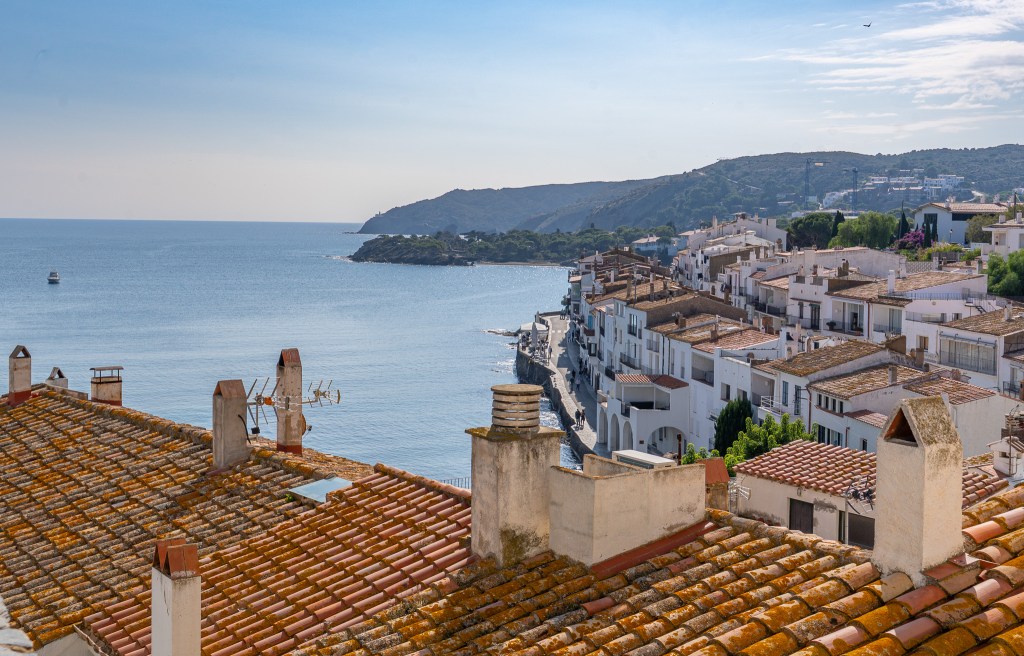
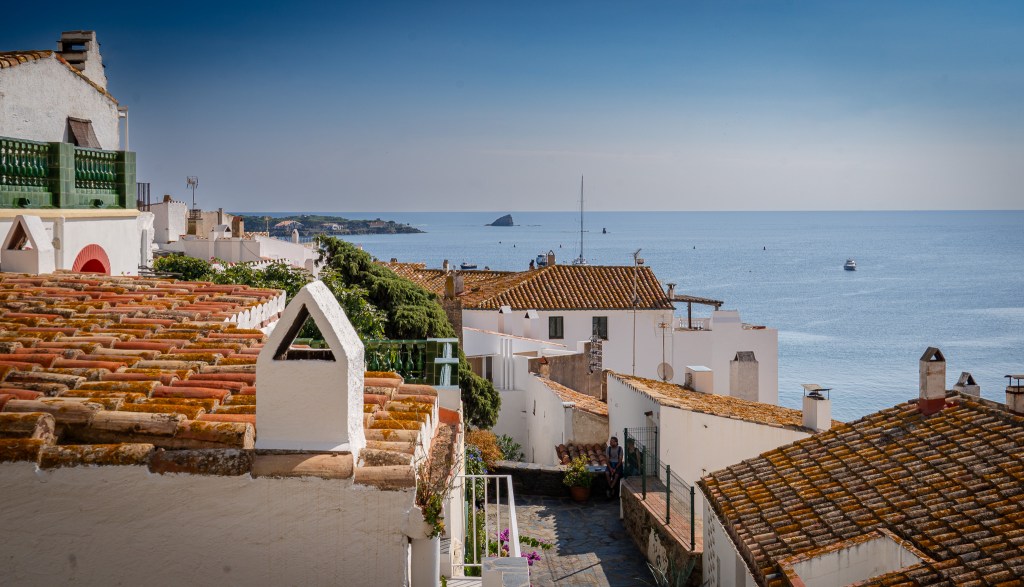
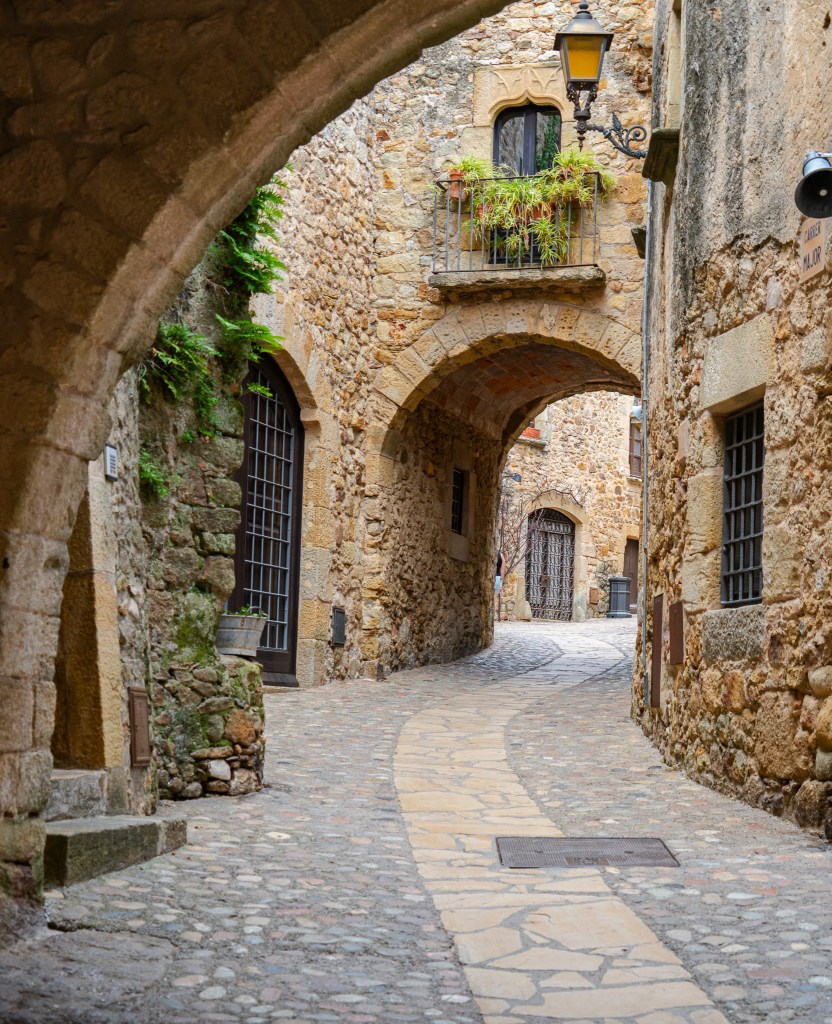
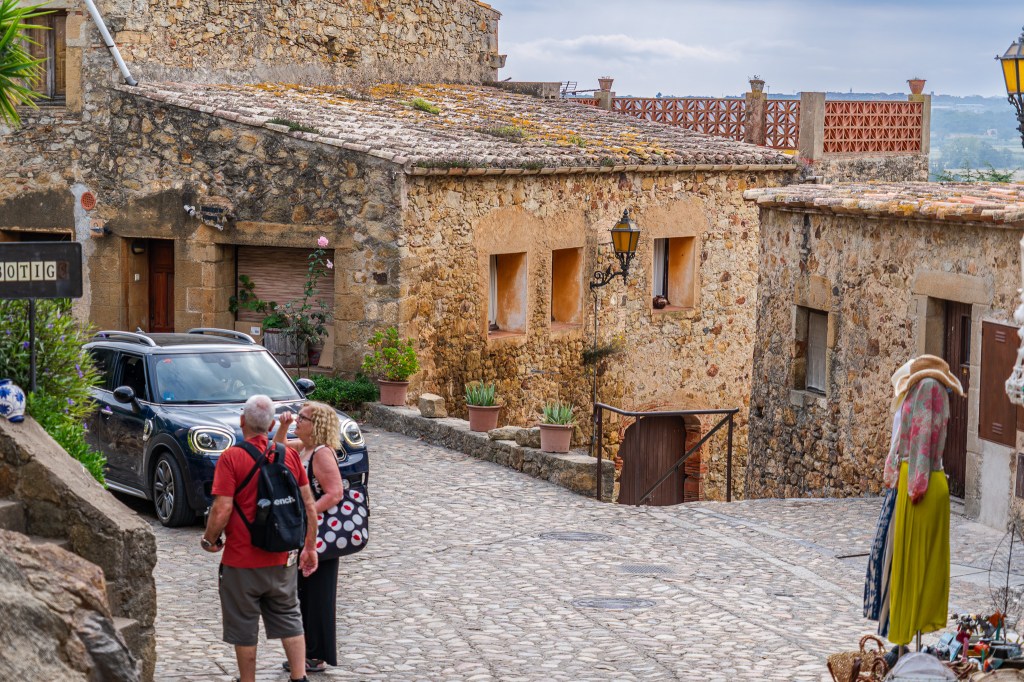
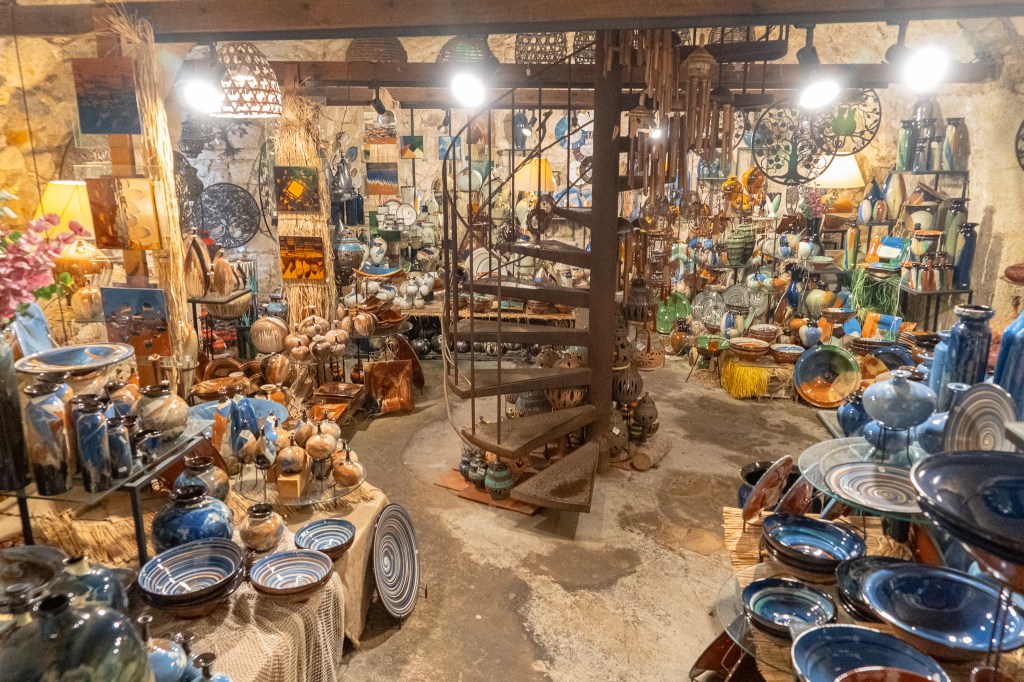
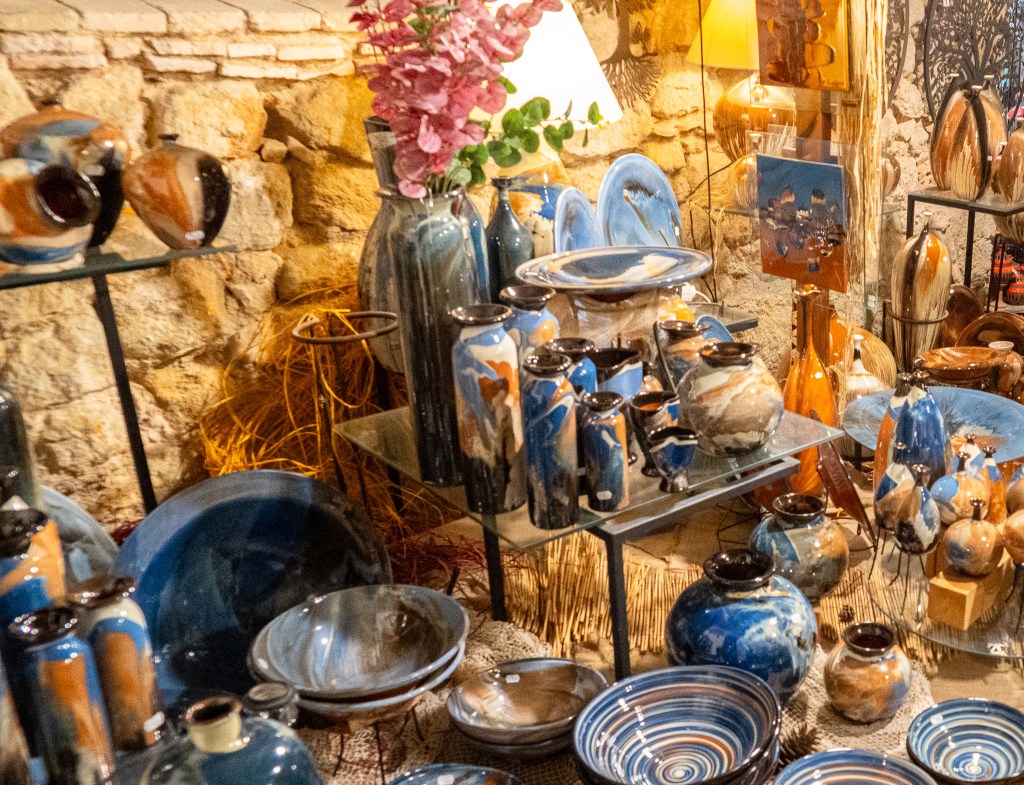
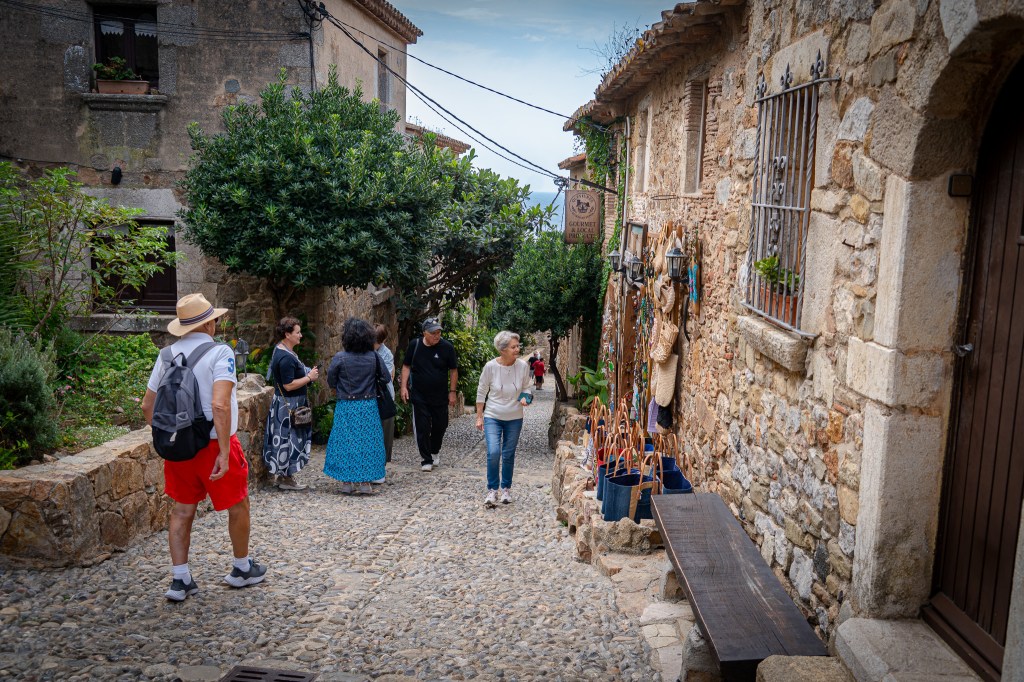
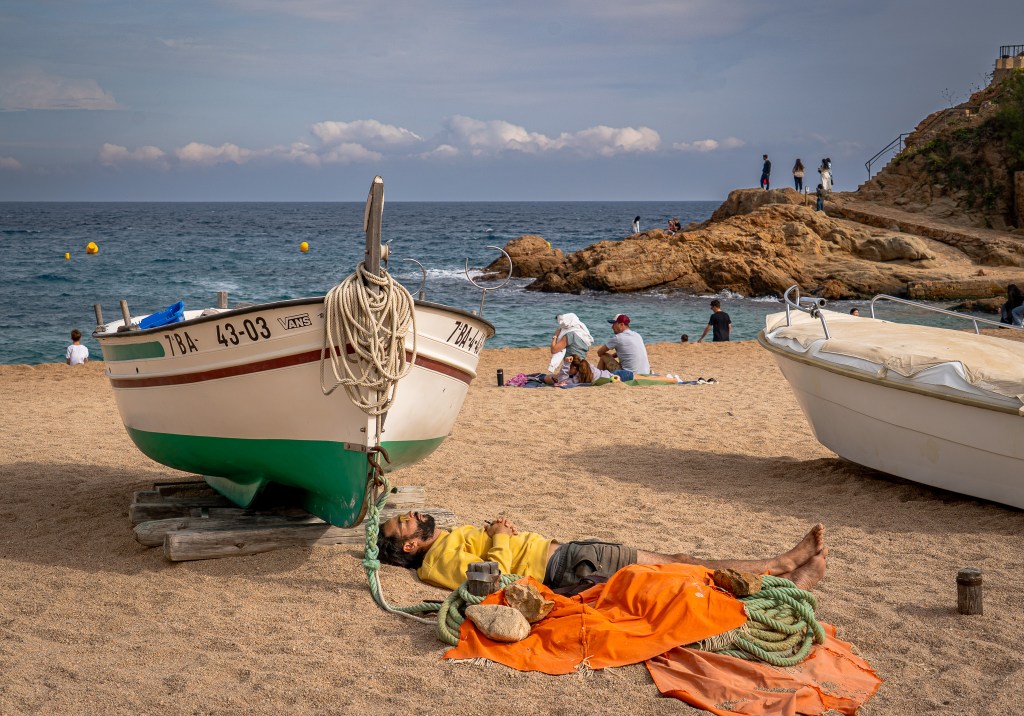
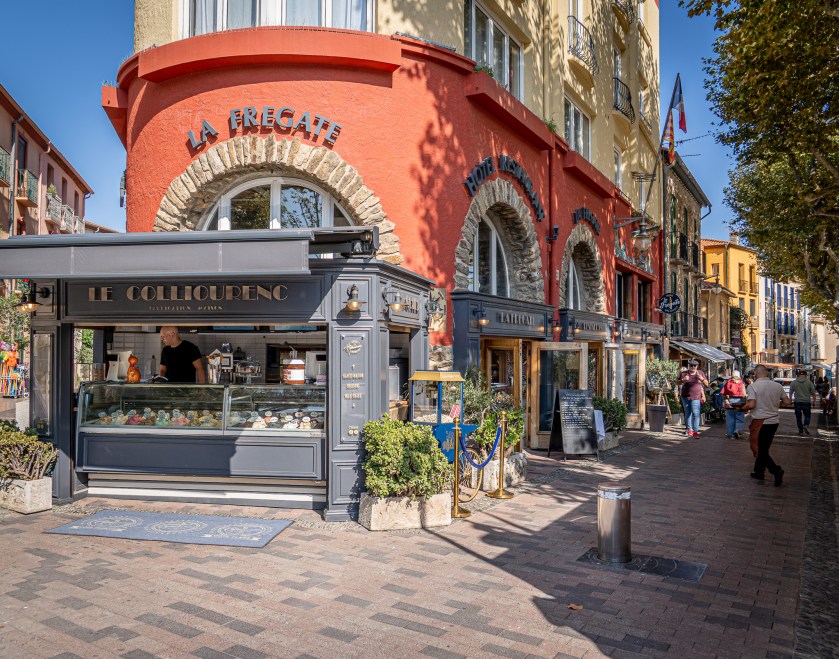
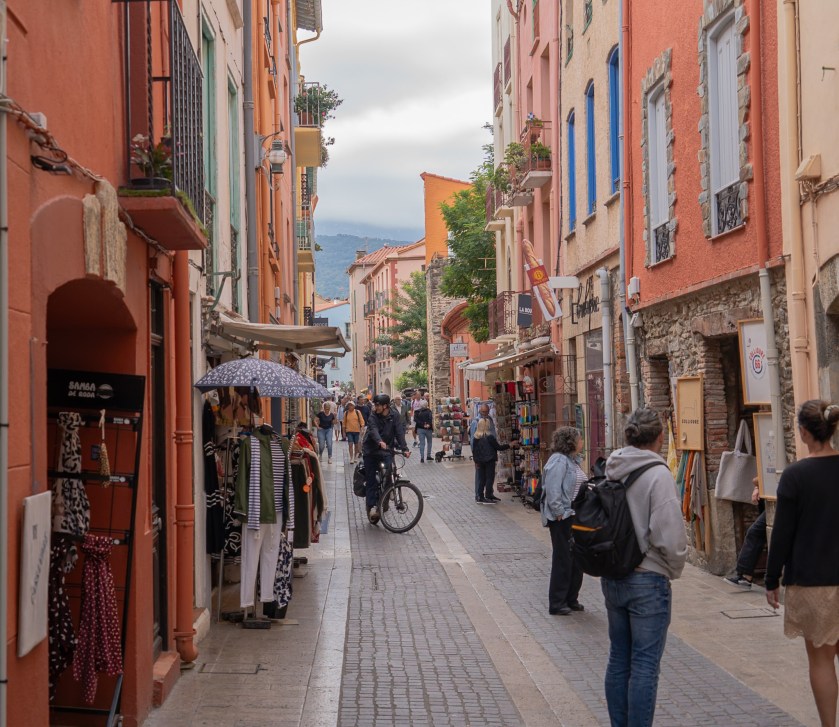
The French Catalan town of Collioure sits just fifteen miles from the Spanish border. It has a history as colourful as its streets and both the Spanish and French alternately controlled the territory over the centuries. It is part of the Cote Vermeille (Vermilion Coast) overlooking the Mediterranean. Walking through the cobbled streets, browsing the craft shops, the mood is unhurried and welcoming and the locals appear to have a genuine warmth towards the visitor.

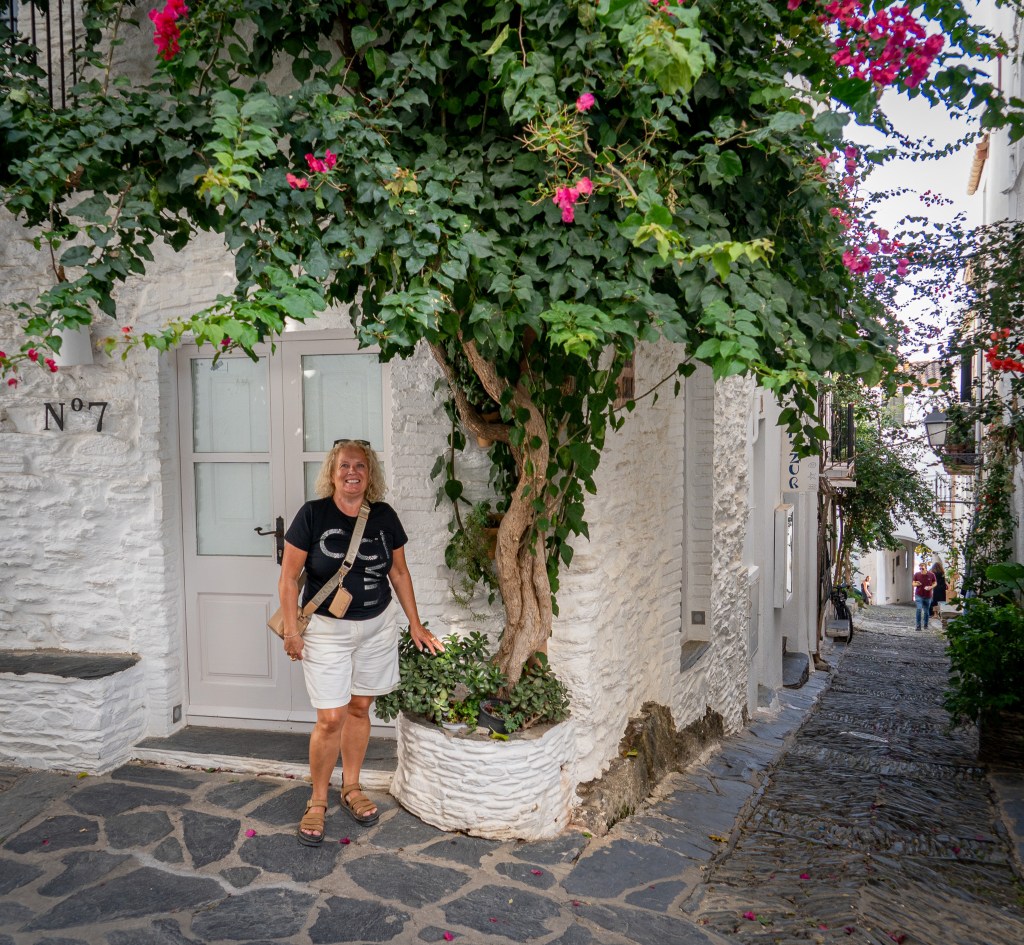
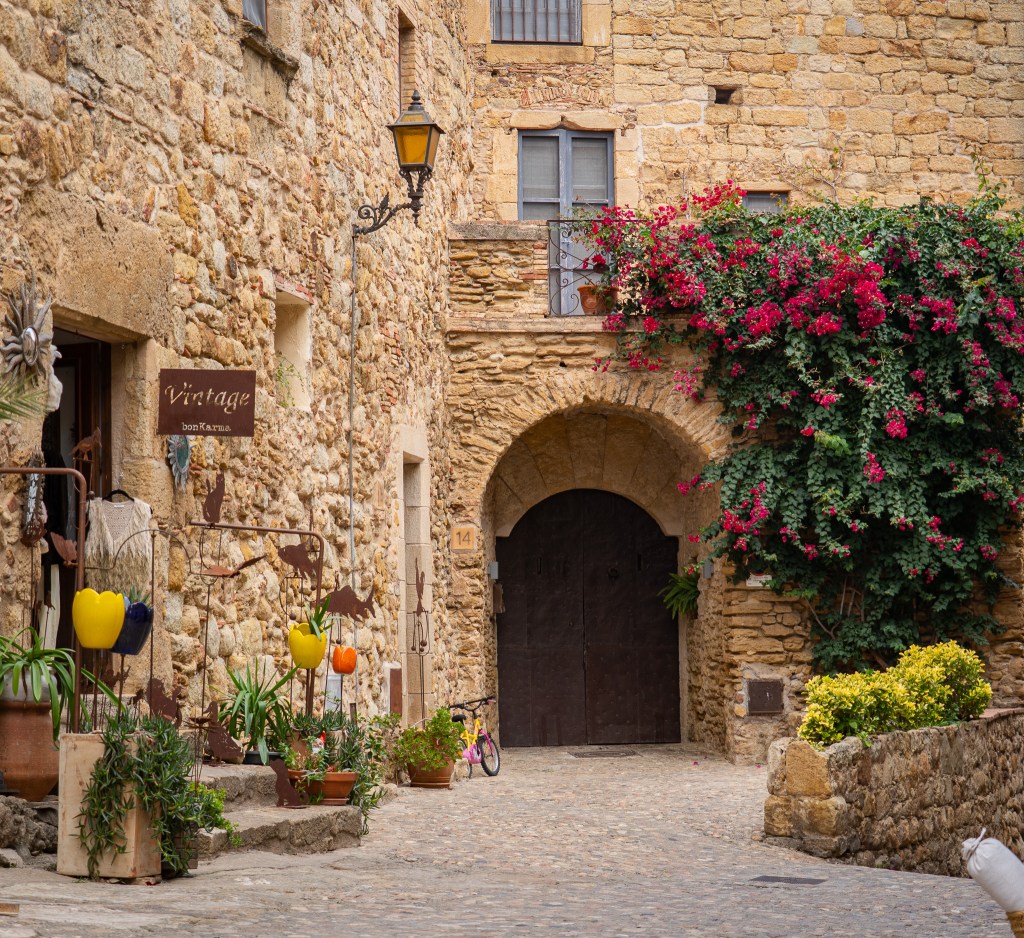
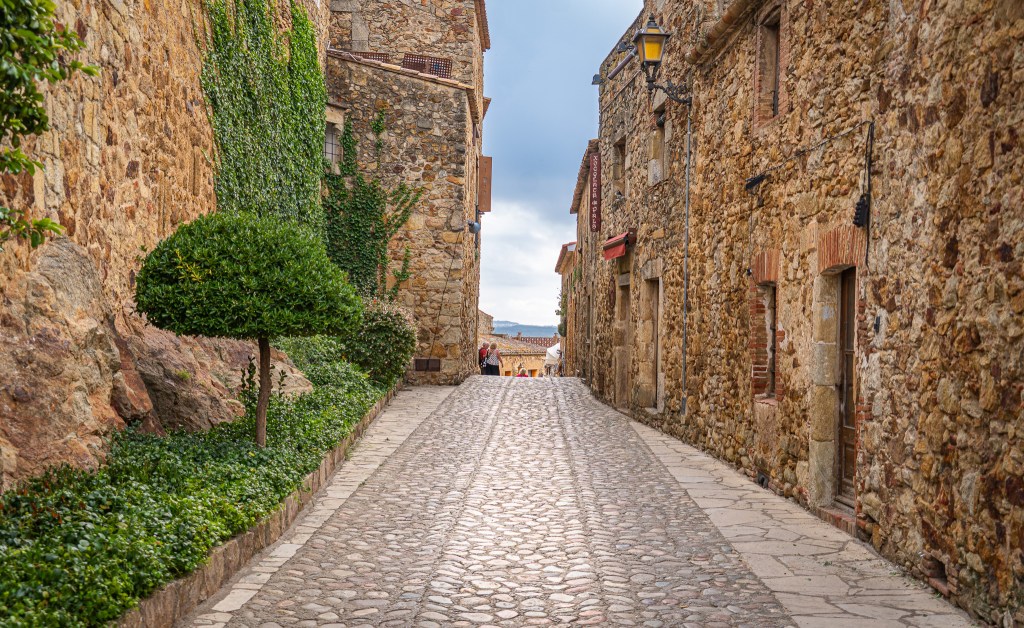
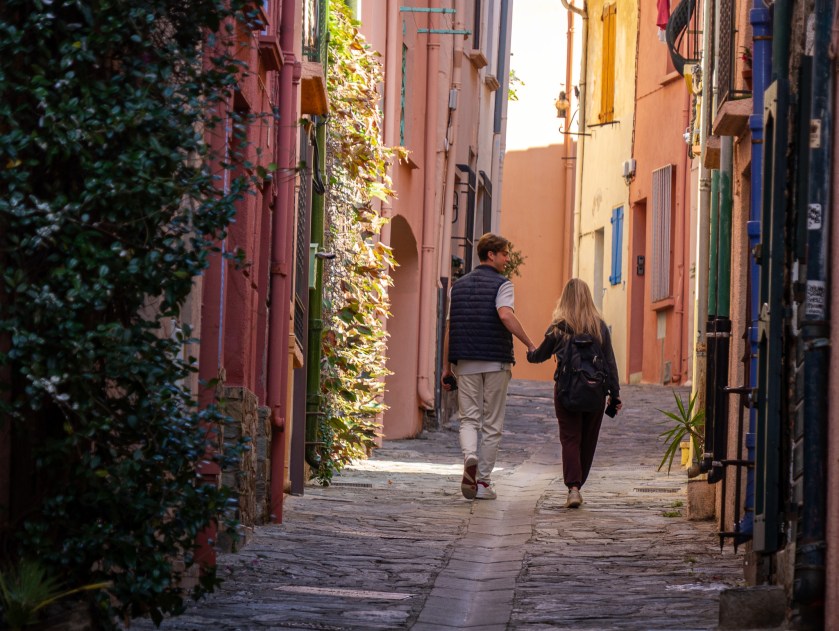
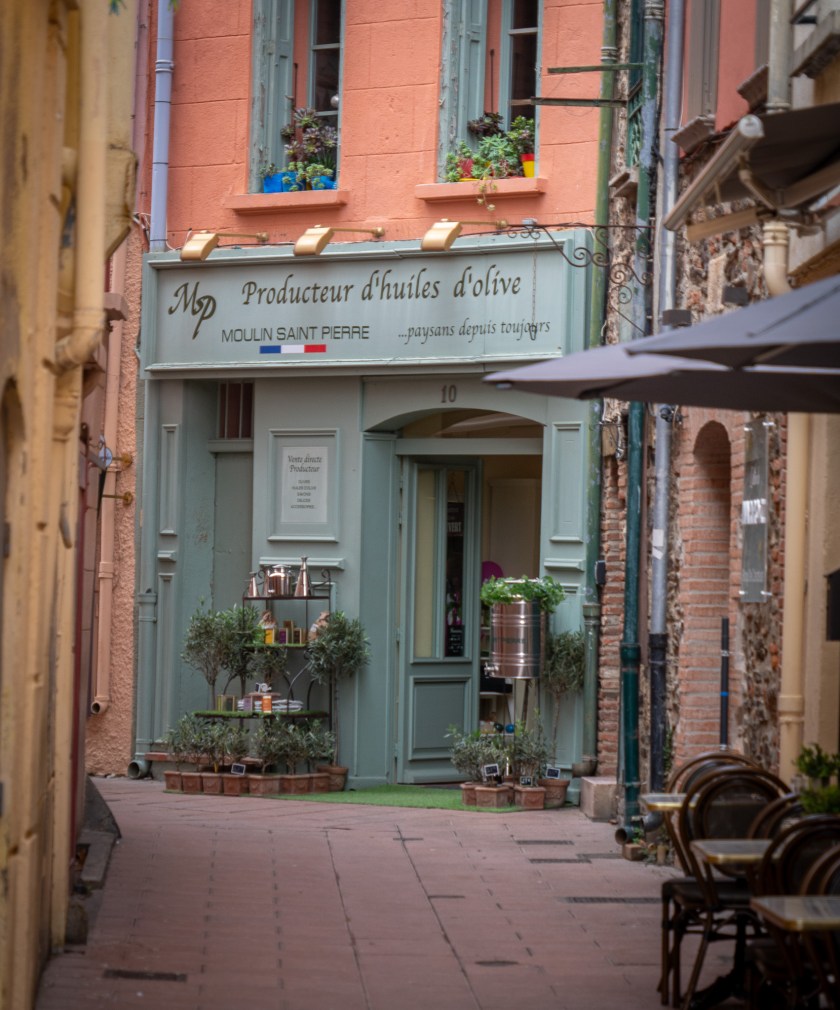
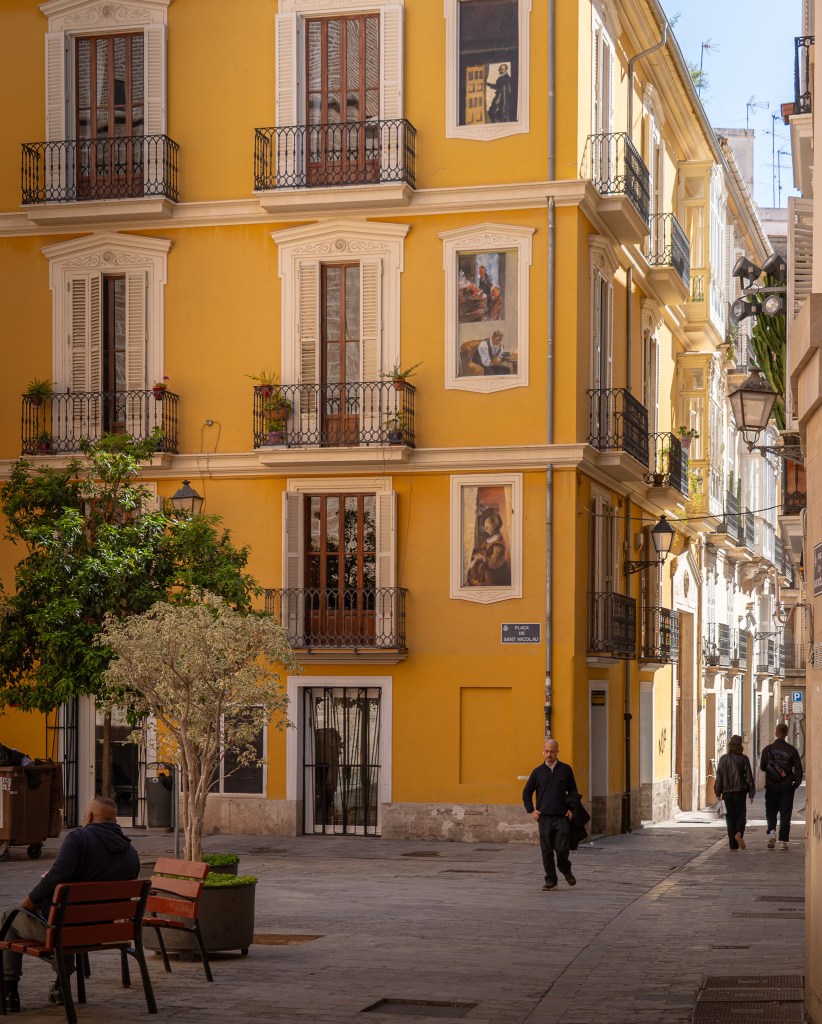
Colourful cobbled streets give Collioure its unique identity.

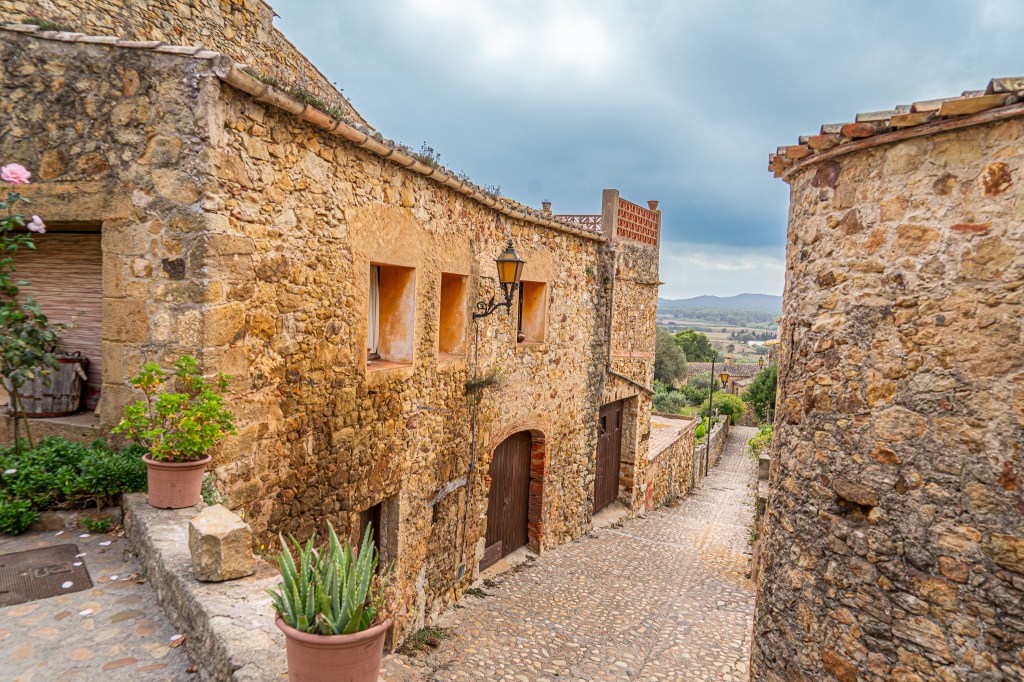
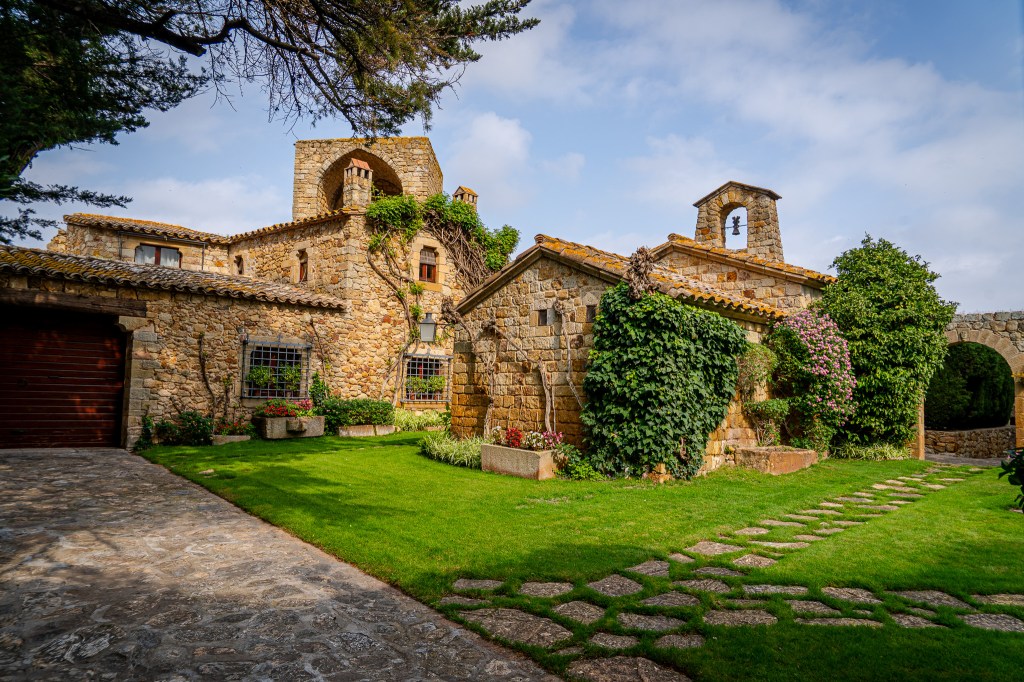
Although the buildings are colourful, the traditional Catalan architecture displays a prevailing mix of ocre, yellow and blue.

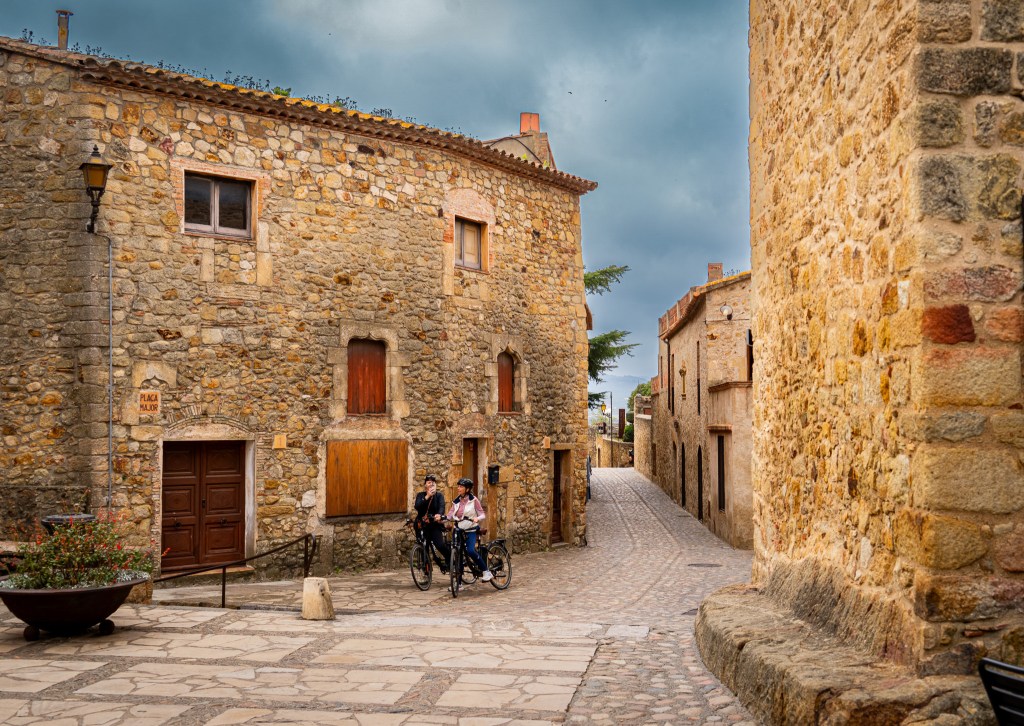
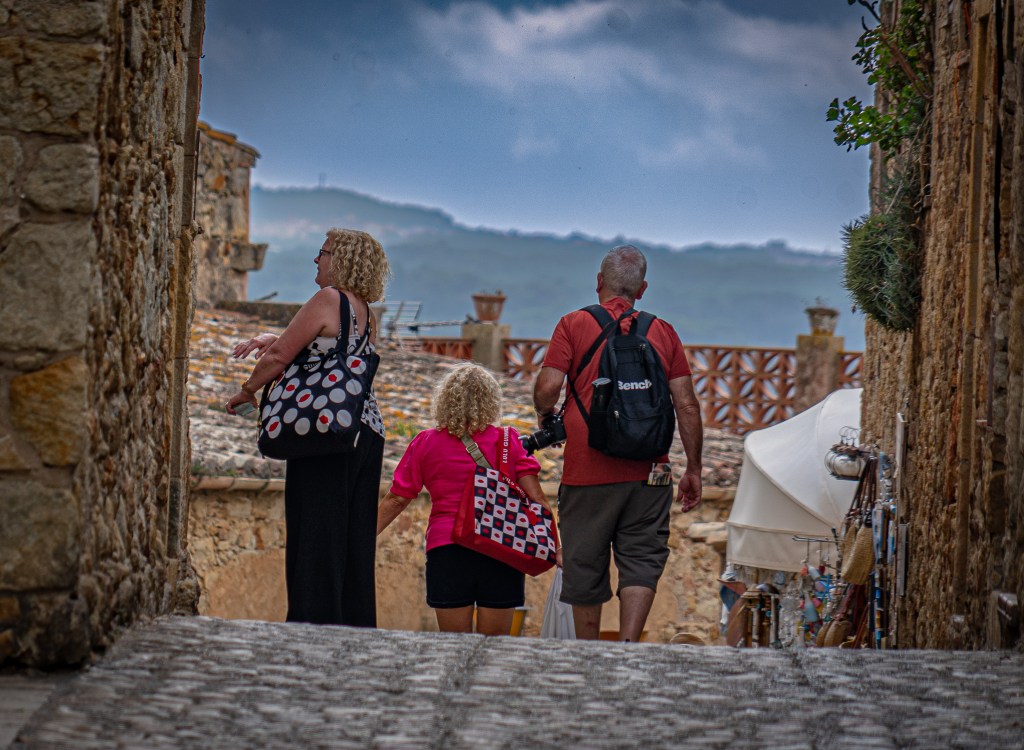
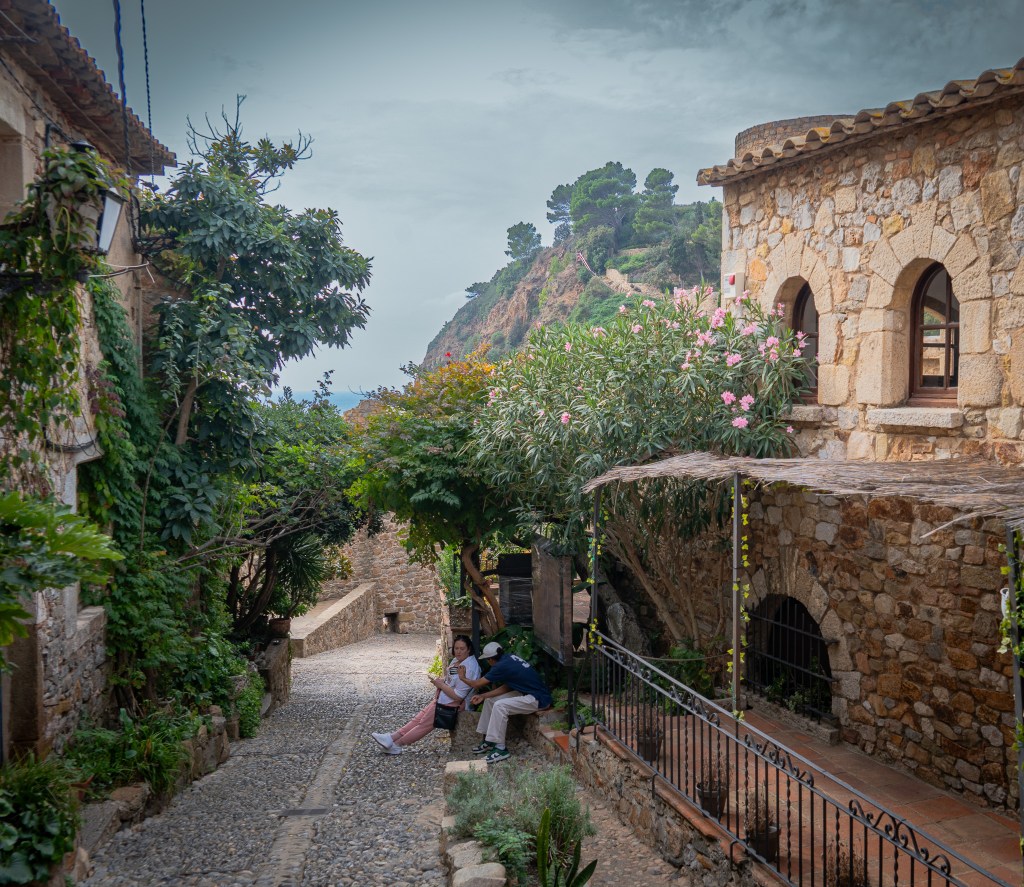
A young couple enjoying a quiet moment.

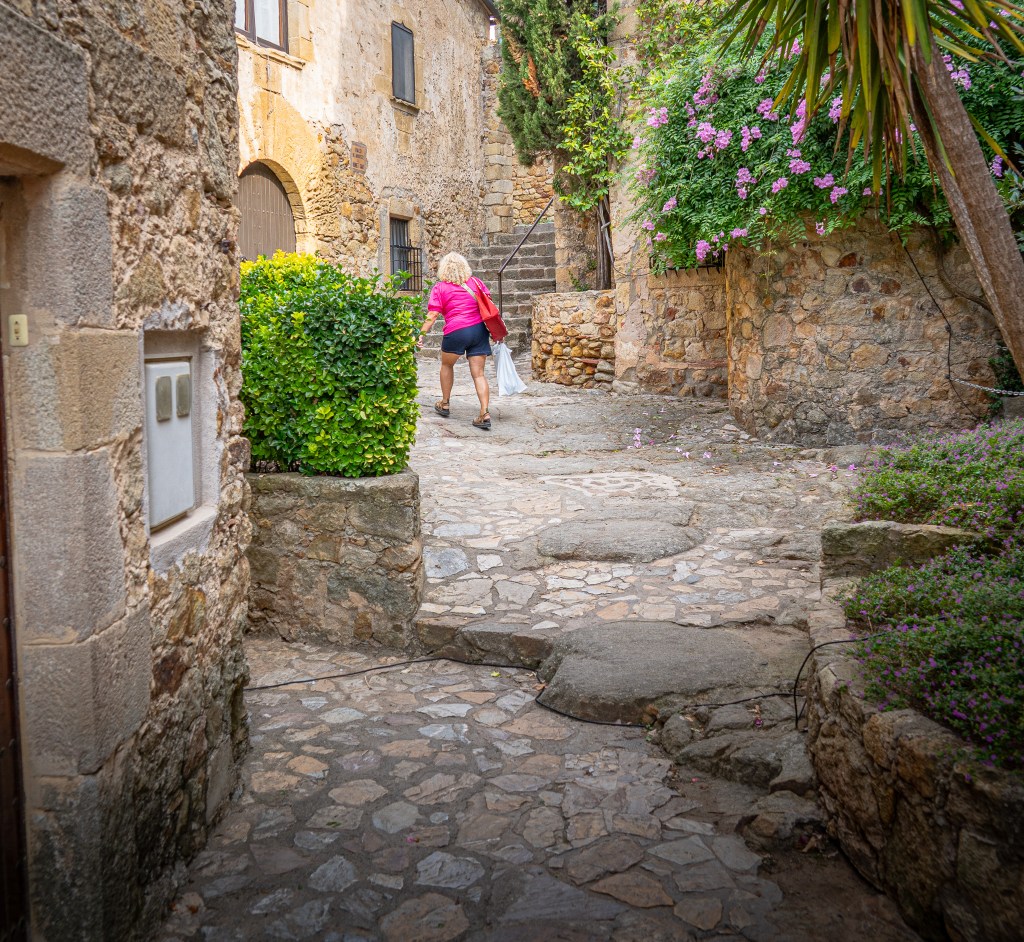
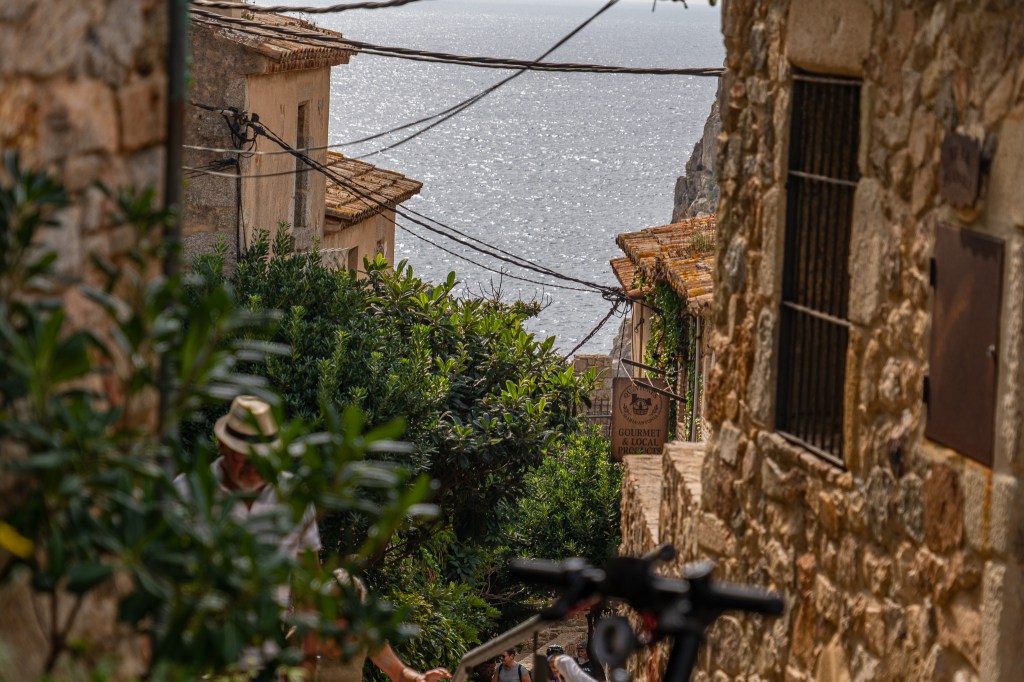
The unassuming charm of the backstreets.

Like all coastal towns, as you move to the seafront, the number of people increase. Understandable when you consider the visual offerings, from historic fortresses and churches to inspiring views of the Mediterranean.

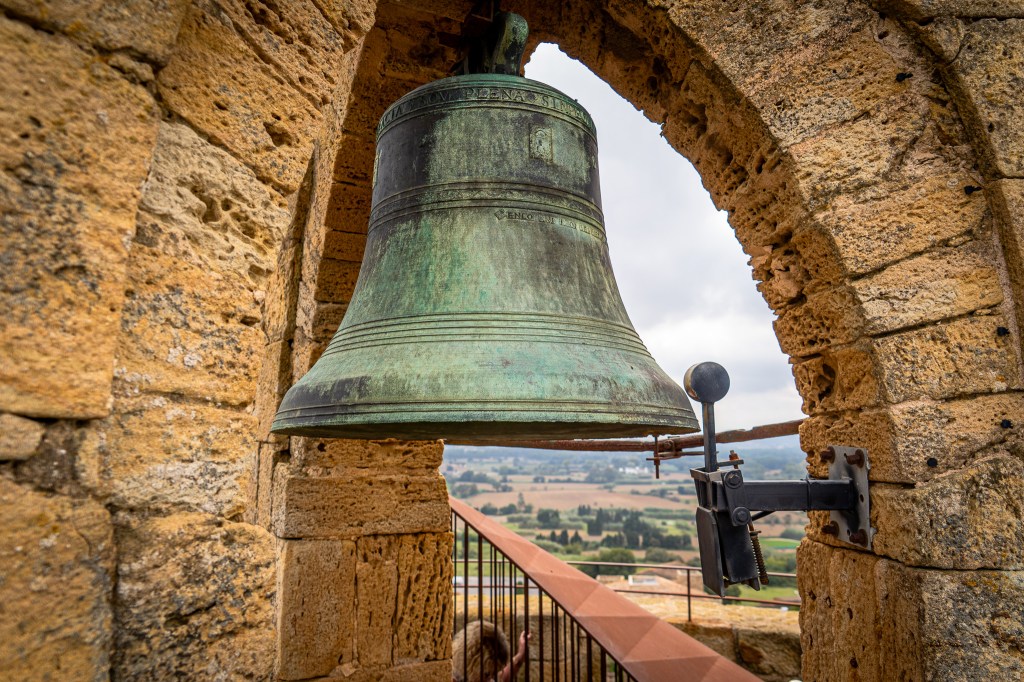
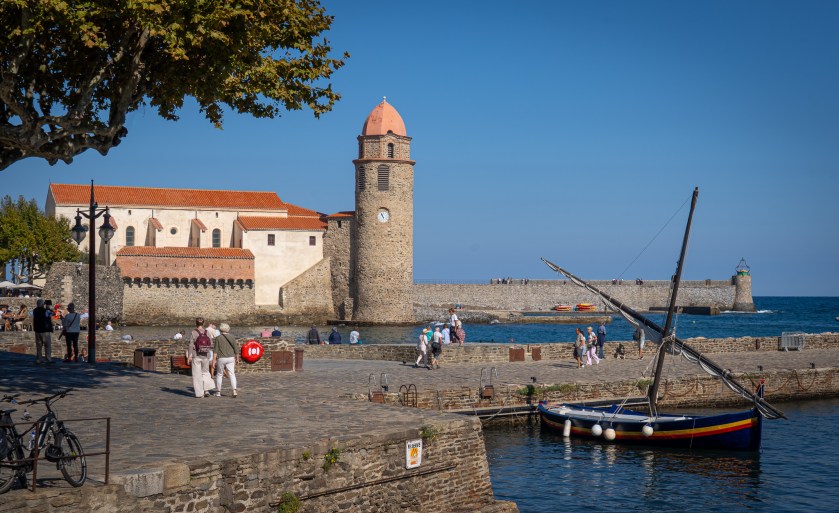
Notre Dame des Anges (Our Lady of the Angels). The bell tower of this 17th century church was once a lighthouse.

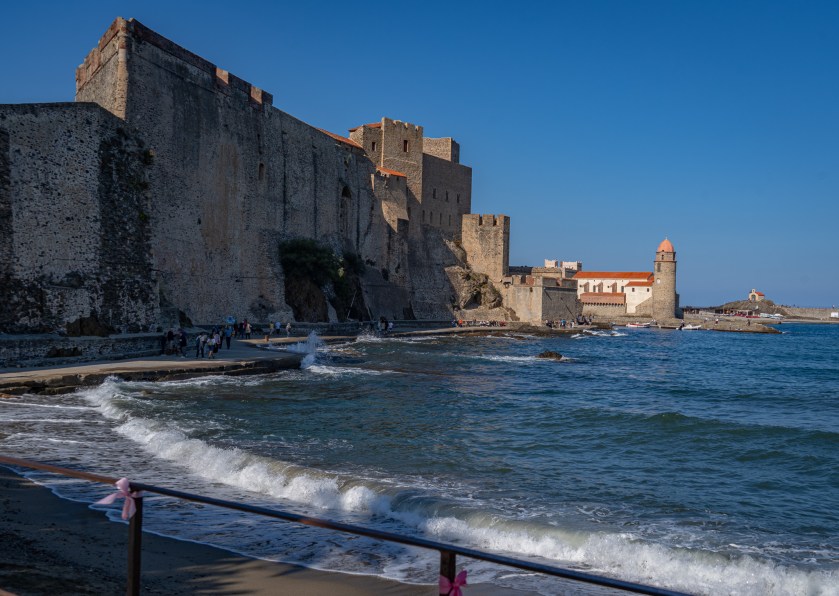
The imposing medieval Chateau Royal de Collioure.

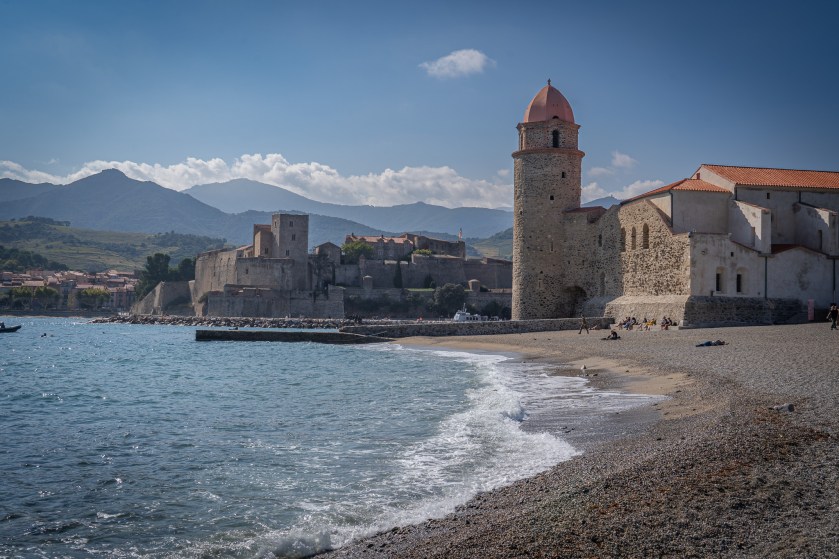
Notre Dame des Anges in the foreground with the Chateau Royal and the mountains behind.

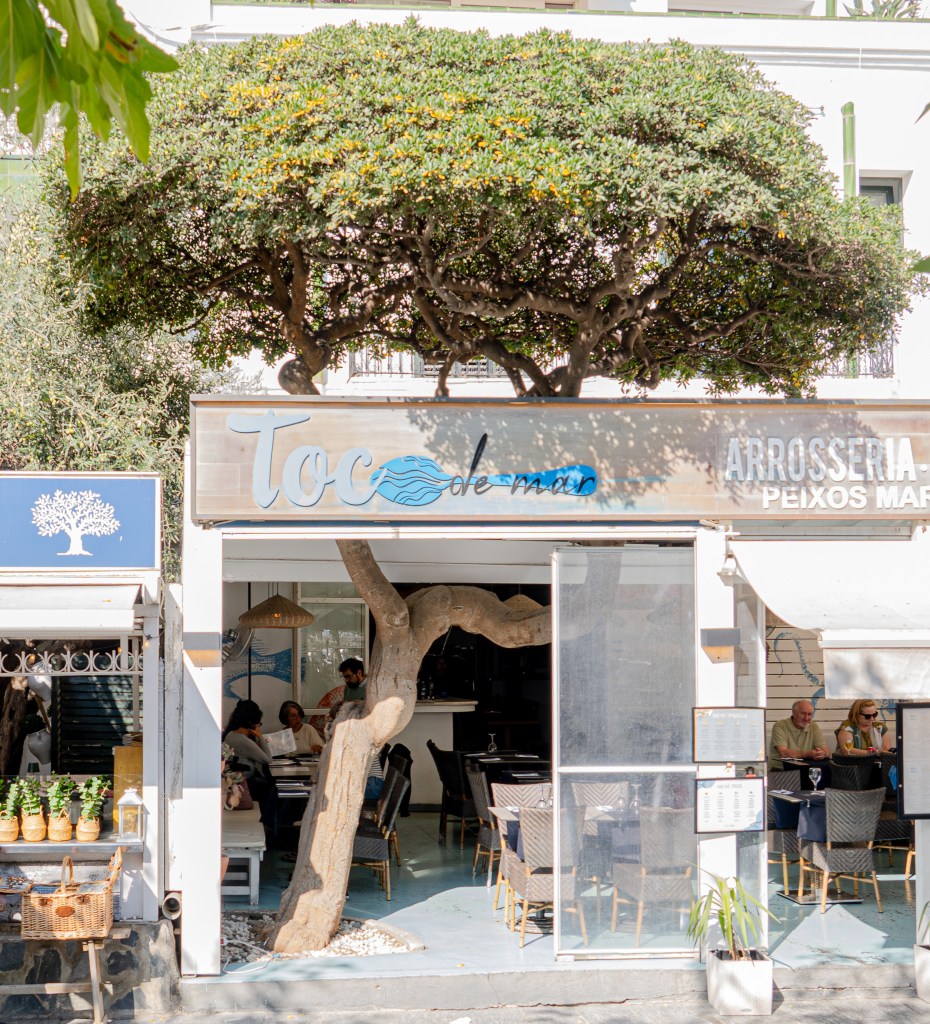
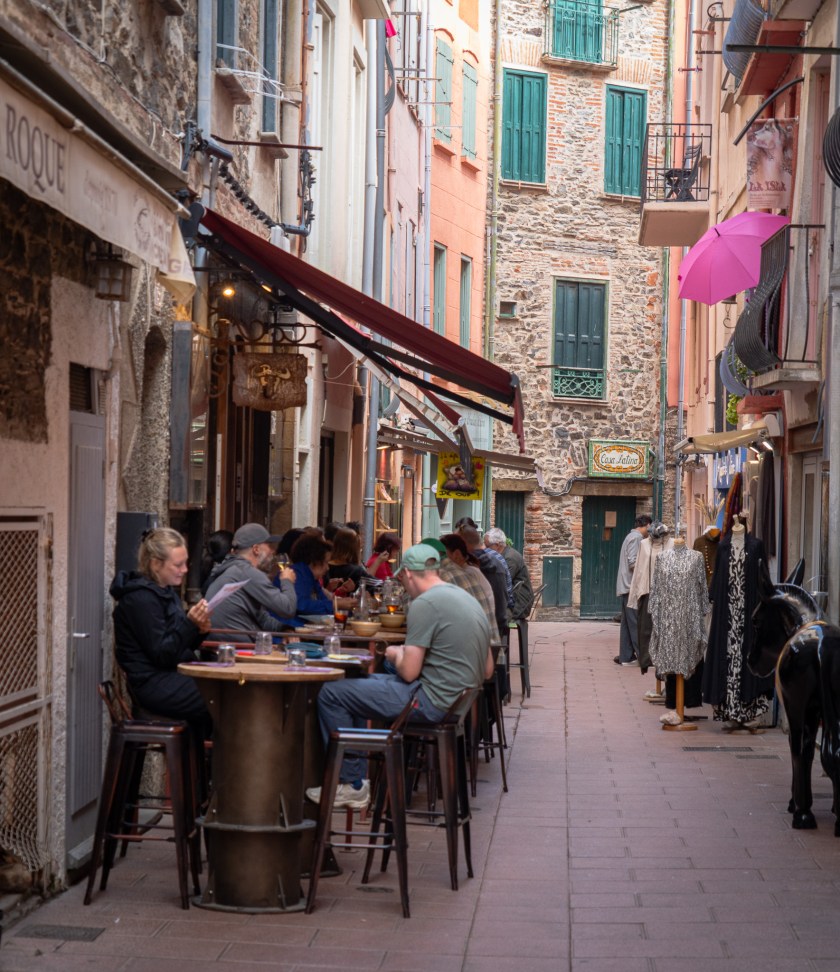
The streets in and around the bay offer food, drink and shade to recharge your energy levels.

Relaxed conviviality is the order of the day.

Collioure is famous for its anchovies. In some of the specialist establishments, you may need to make a reservation, especially for groups.

French charm.

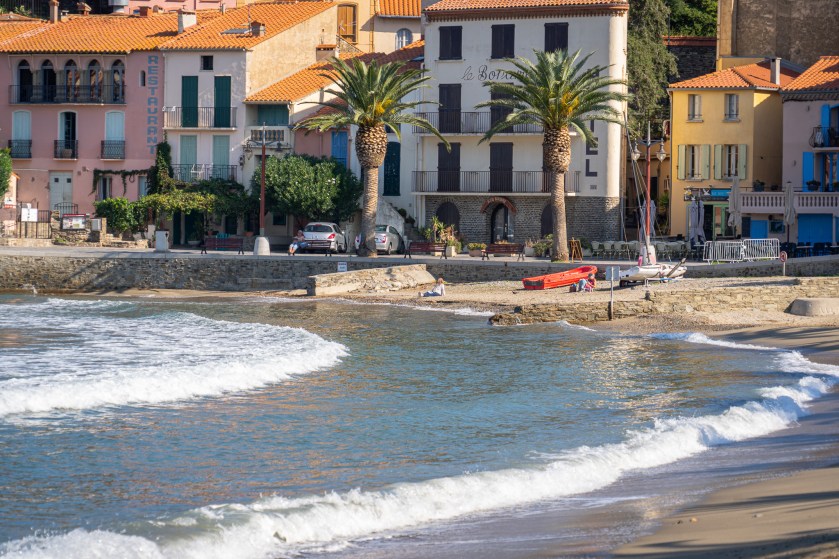
The Collioure seafront, rustic and elegant.

Taking in the views and cooling off in the breeze.

Collioure’s forgotten (or hidden) history.

Collioure is relaxed, inviting and aesthetically pleasing. It is perfect for a day’s sightseeing and the usual tourist activities. Yet you don’t have to look too far to uncover some of its painful past. The town’s proximity to the Spanish border made it a destination for hundreds of thousands of Republican soldiers, their families and those loyal to the republican cause, who fled Barcelona after the city fell to Franco’s forces on January 26 1939. In a matter of weeks, nearly half a million Spanish refugees crossed into France in what became known as ‘La Retirada’ (The Retreat).

During the Spanish Civil War, France, like Britain, had taken a non-intervention approach. This left the democratically elected republican government at the mercy of the fascist forces of Franco who were actively supported by Hitler and Mussolini. Some elements of French government were sympathetic and turned a blind eye when armaments were being brought across the border into Spain to arm the republicans. Yet when it came to receiving Spanish refugees, French authorities separated women, children and the elderly from the men and sent them to various locations throughout France, the men were sent to concentration camps that had been set up on the beaches. Conditions were harsh, with no drinking water or sanitation and as the death rates rose, many were forced to take up the offer of joining the French military or the Foreign Legion. Some returned to Spain were they lived in the mountains, others travelled to Latin America. In a cruel irony, after Germany invaded France in 1940, many Spaniards joined the French Resistance and fought for the liberation of a country that had abandoned them in their hour of need. The first French armoured vehicle that entered liberated Paris in 1944 was driven by a Spaniard.

A poet’s story

‘..Caminante, no hay camino, se hace camino al andar..’

‘..Traveller, there is no path, only the one you make..’

Antonio Machado

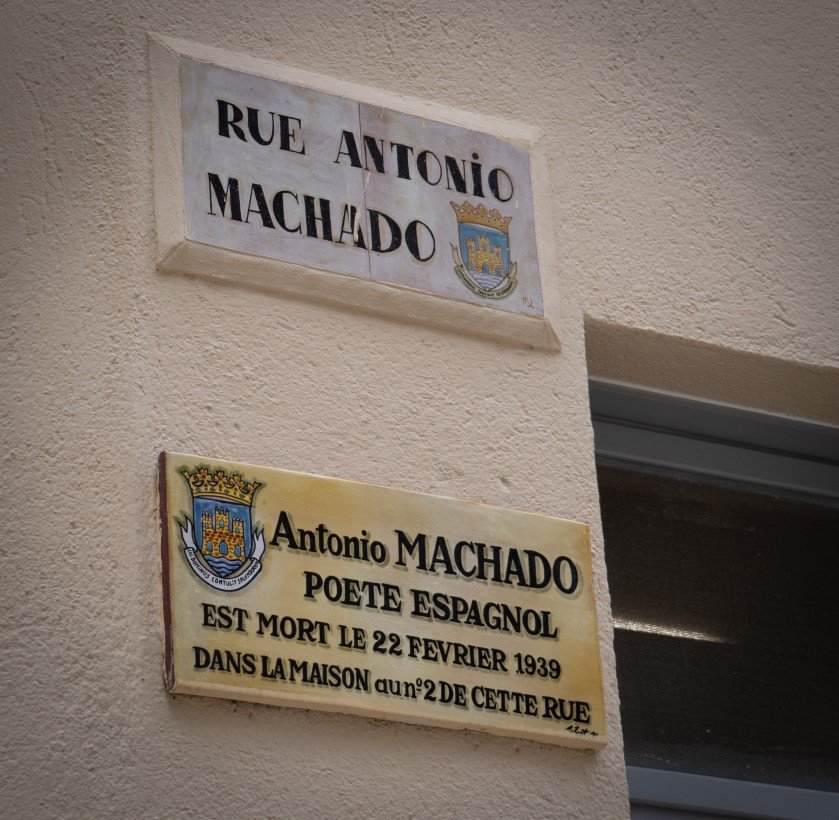
The street that is named in honour of, by consensus, one of the greatest Spanish poets of all time.

I had just finished a book about the Spanish Civil War by Javier Cercas (The Soldiers of Salamis) when my wife booked a trip to the Costa Brava. The trip included visits to several towns and cities including Collioure. In Cercas’s book, a brief reference was made to a Spanish poet named Antonio Machado who died in Collioure. In December 1938 he had left Barcelona with his brother, Jose and his elderly mother after Franco took the city. They travelled 90 miles in the dead of winter, mostly on foot and under cover of darkness with tens of thousands of their fellow citizens, until they reached Collioure. And so, I began to research Antonio Machado. The name that had begun as a brief reference, slowly revealed a captivating and tragic story of one individual who paid the ultimate price, simply for daring to wish for a better society in the Spain he loved.

Antonio Machado was born in Seville 1875. His family moved to Madrid in 1883. During his school years Antonio discovered his passion for literature. In 1899, he and his brother, Manuel, travelled to Paris to work as translators for a French publisher. During his time in Paris, he came into contact with and was inspired by, the great French Symbolist poets Jean Moréas, Paul Fort and Paul Verlaine, and also met other contemporary literary figures, including Oscar Wilde. Over the next few years he had several poems and collections of poems published.

In 1907 he was offered a teaching post in Soria in the Castile and Leon region of Northwestern Spain. Here he met Leonor Izquierdo. Antonio was staying in the guest house owned by her parents. In 1909 he and Leonor were married. He was 34 and she was 15! In early 1911 the couple went to live in Paris. A few months later Leonor was diagnosed with advanced TB. They returned to Soria in Spain where Leonor died on 1st August 1912. Machado was devastated by her death and left the city soon after, never to return. For several years afterwards he was consumed by the love and loss of Leonor and this was expressed in his poems from that time.

Machado spent the next seven years in Andalusia and then moved to Segovia to take up a post as Professor of French at the Instituto de Segovia. He moved there to be nearer to Madrid, where his brother Manuel lived but as the fascist coup of 1936 took hold, he moved north to Valencia and then to Barcelona. He would never see Manuel again.

People like Machado were the enemy of fascism. People who used the written word to advocate for democracy, equality and justice. And so, with every advance made by Franco’s army, came the brutal repression of anti-fascist views, popular culture, literature, theater and educated thinking. Not only did Franco target writers, poets, homosexuals (such as the gay poet Federico Garcia Lorca) and all political opponents. The fascists leveled entire towns and villages with the help of Hitler’s Luftwaffe. The most devastating example was the bombing of Guernica in the Basque Country when the German ‘Condor Legion’ obliterated the town in a matter of hours.

On his journey to Collioure, Machado wrote:

For the strategists, for the politicians, for the historians, all this will be clear: we lost the war. But at a human level I am not so sure: perhaps we won.

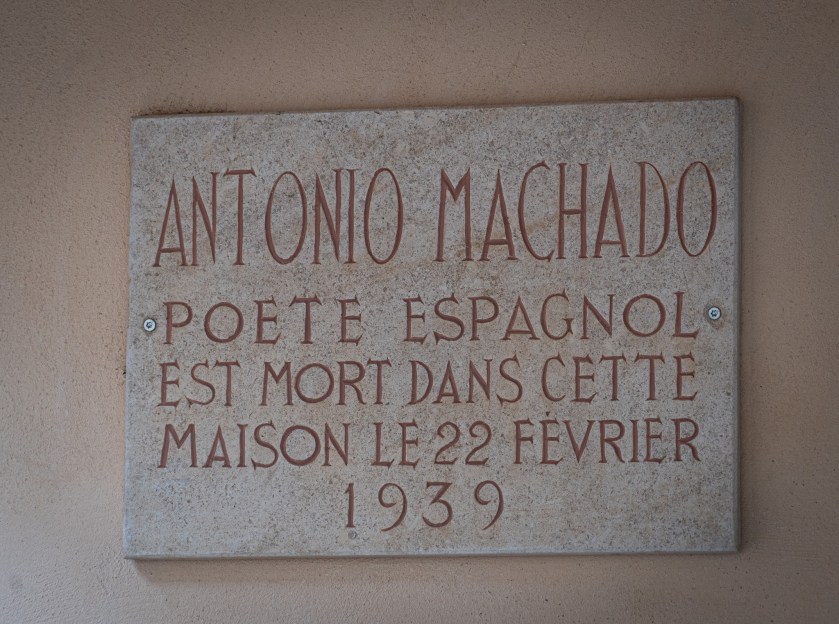
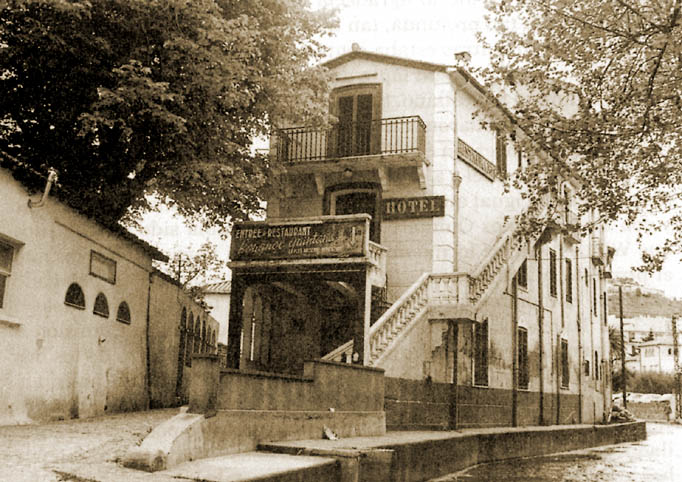
Machado, along with his mother and brother, reached Collioure and with the help of friends was able to get accommodation at the Hotel Bougnol-Quintana. It was in this hotel, on the 22nd February, two months after arriving, that Antonio Machado died. His mother died three days later. In the pocket of his overcoat, his brother Jose found some handwritten notes, including one which began, “Estos dias azules y este sol de la infancia” which translates to English as “These blue days and this sun of childhood”. It was the poet’s last poem.

When we arrived in Collioure, I made my way to the location of the Hotel Bougnol-Quintana. In the years after the end of Franco’s dictatorship (he died in 1975), the hotel had been transformed into a visitors center. Sadly, on this particular day, it was closed. A ‘For Sale’ sign in the window suggested that the closure may become permanent.

The former Hotel Bougnol-Quintana in Collioure.

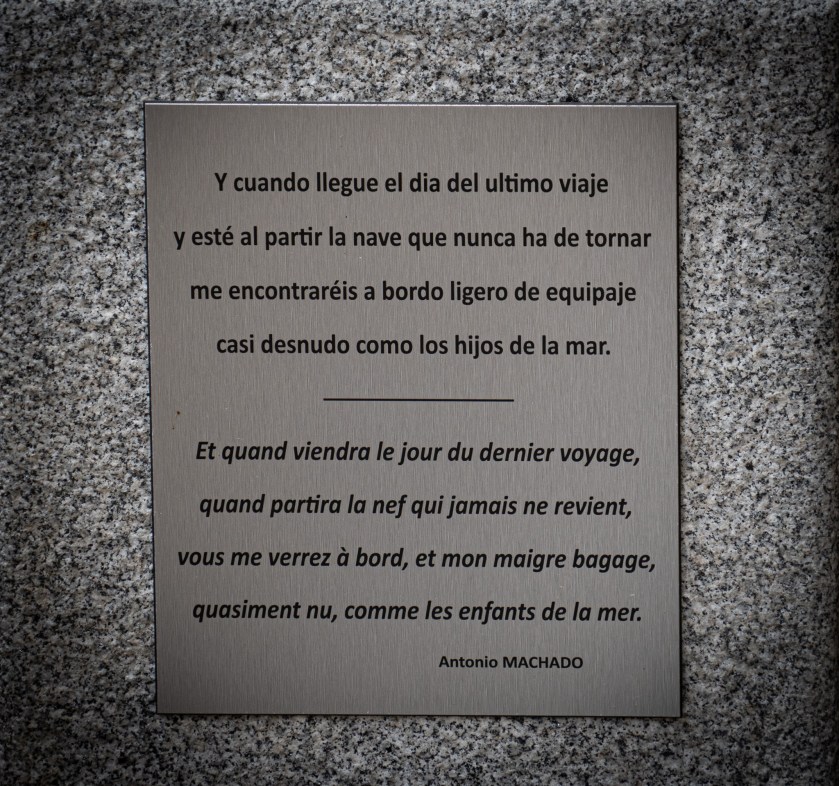
‘And when the day of the final voyage arrives. When the ship that never returns departs. You will see me onboard and my meager luggage. Almost naked, like the children of the sea.’

The hotel as Machado probably saw it.

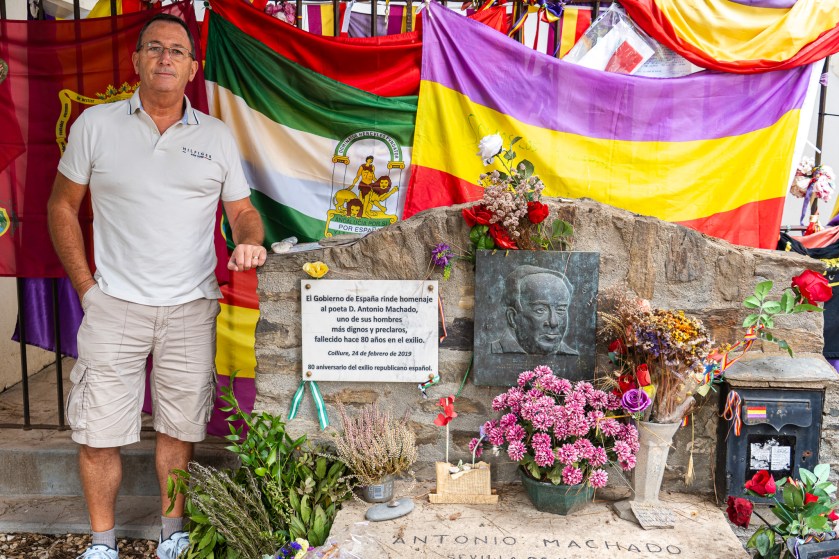
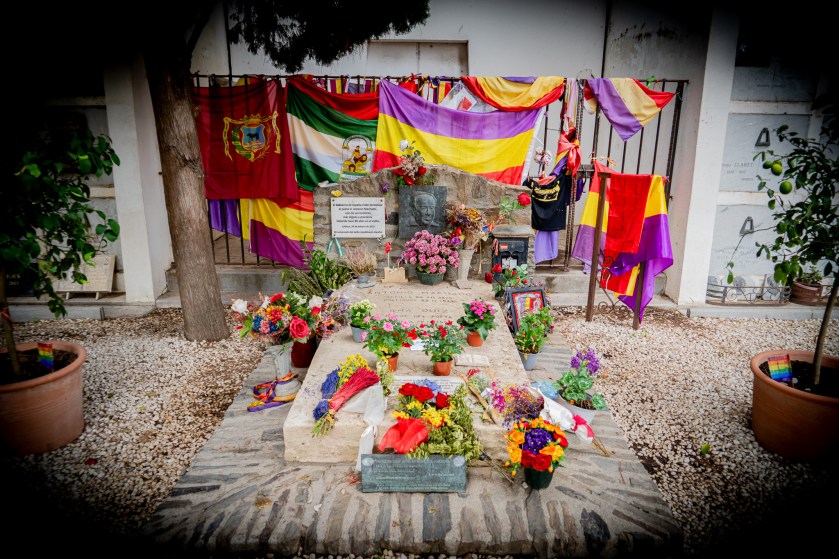
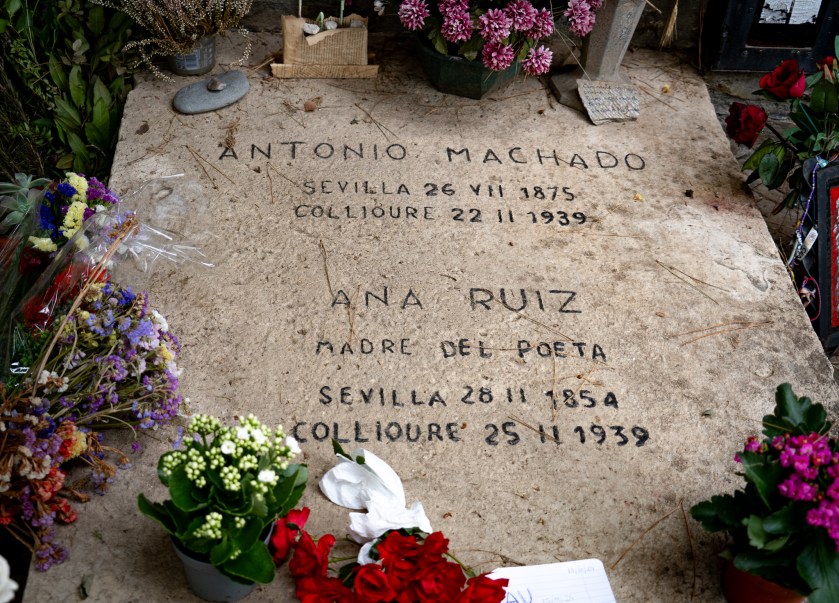
One hundred metres from the hotel is the cemetery of Collioure where Antonio Machado and his mother are buried. The grave is festooned with flags of the republic and provincial flags from Andalusia and Cordoba. More than 80 years after his death, followers and devotees still place flowers on his grave daily, along with tokens of affection, and the occasional poem.

Machado’s grave. A shrine to a man and an ideal.

Antonio and his mother died three days apart.

After our trip to Collioure, I found myself reflecting on the impact and causes of conflict. The impact is obvious. The human devastation, the heartbreak, suffering and the lasting legacy of loss. The causes can be less obvious. On the surface it can appear that wars are fought over race, religion or politics. But at the root of all wars is the lust for power and wealth.

Antonio Machado’s story is one of millions but it represents for me the struggle between good and evil. I believe that in this world there are many more people like Machado than there are like Franco, Mussolini, Hitler and Netanyahu. It is easy to believe, when confronted with the daily evidence, that the world is broken and doomed. But I agree with the poet when he said, “But at a human level I am not so sure: perhaps we won.”

As our bus slowly navigated the narrow roads out of the town at the end of the day, I caught a glimpse of a sign at the side of the road, informing visitors that the town of Collioure was twinned with Soria (Leonor’s resting place).

Summary

Collioure is definitely worth a visit. It is a compact town and a day is plenty of time to see everything it has to offer. Its aesthetic appeal and photo opportunities are reasons enough to visit but like towns and cities everywhere, it is the history that provides the depth to the experience. Behind every wall and under every roof, there are memories that deserve to be kept alive.

Regrets? I should have tried the anchovies!

Morning People

It’s easy to feel that you have a personal connection to the sunrise. Even when you know it can be seen by everyone. And so, when we get up and go to a particular place to enjoy it and hopefully photograph it, I usually find myself with mixed emotions. I see other people (not many) with the same idea as me and feel resentment that they are crashing my party. My time with MY sunrise. On the other hand, I feel reassured that I am not alone in my appreciation of what is arguably the most precious part of the day.

Please meet some of the dawn fraternity…

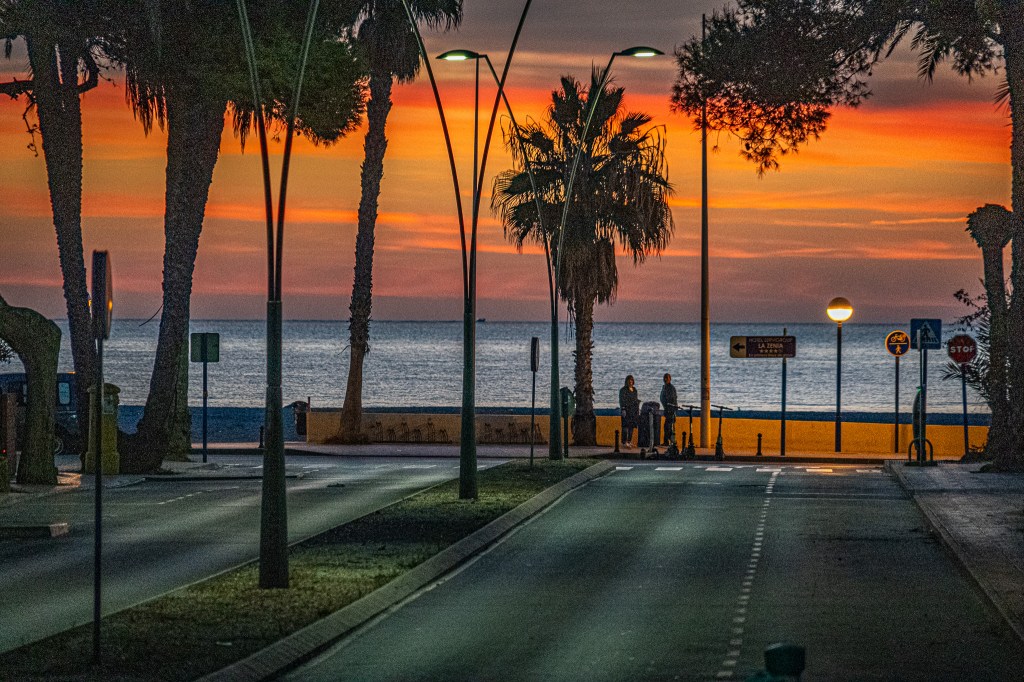
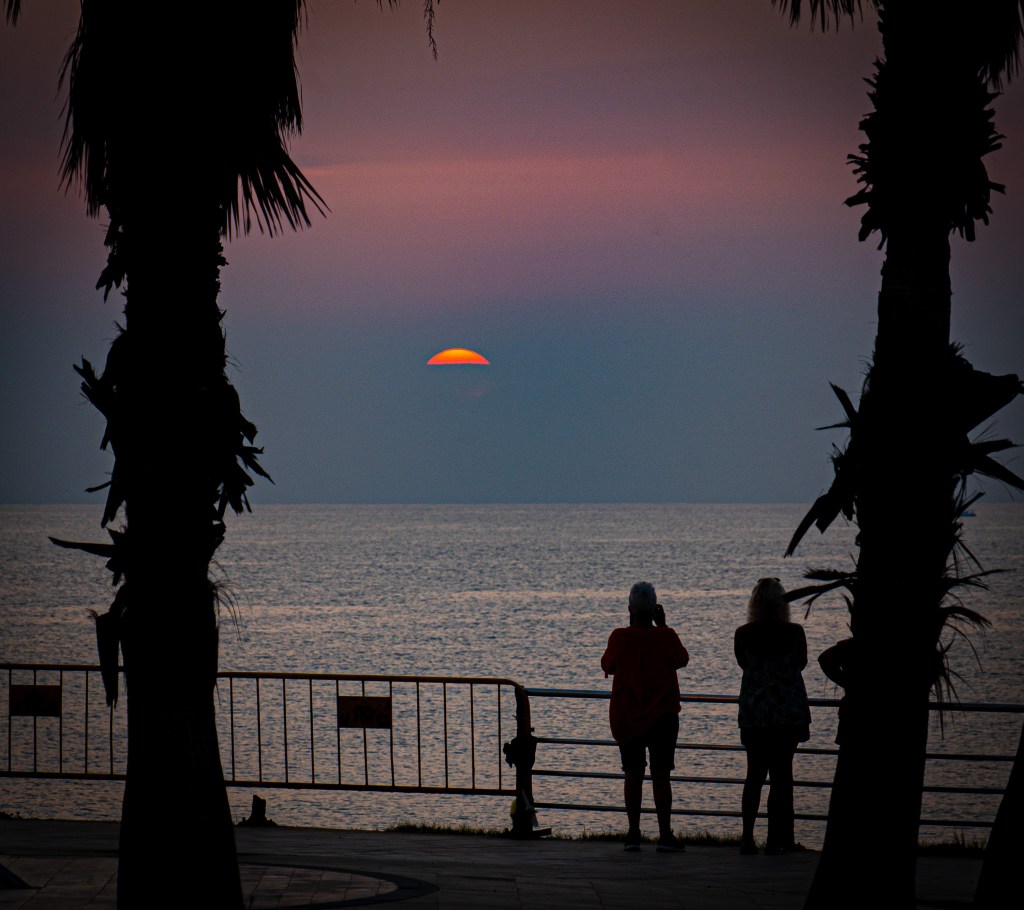
I pulled into this deserted street near La Zenia beach just before sunrise. As I took the photo I couldn’t help but think the couple in the shot resented me. Probably because I was crashing their party. Their time with THEIR sunrise!

Some mornings disappoint because of cloud cover but the uncertainty is half the joy. After a dull start, my long suffering wife was rewarded with an inspiring sunrise at Playa Flamenca, Orihuela Costa.

This is probably one of my favourites. From a technical perspective, it’s nothing special but I think it has a cinematic feel. Something almost nostalgic about it. Playa Flamenca, Orihuela Costa.

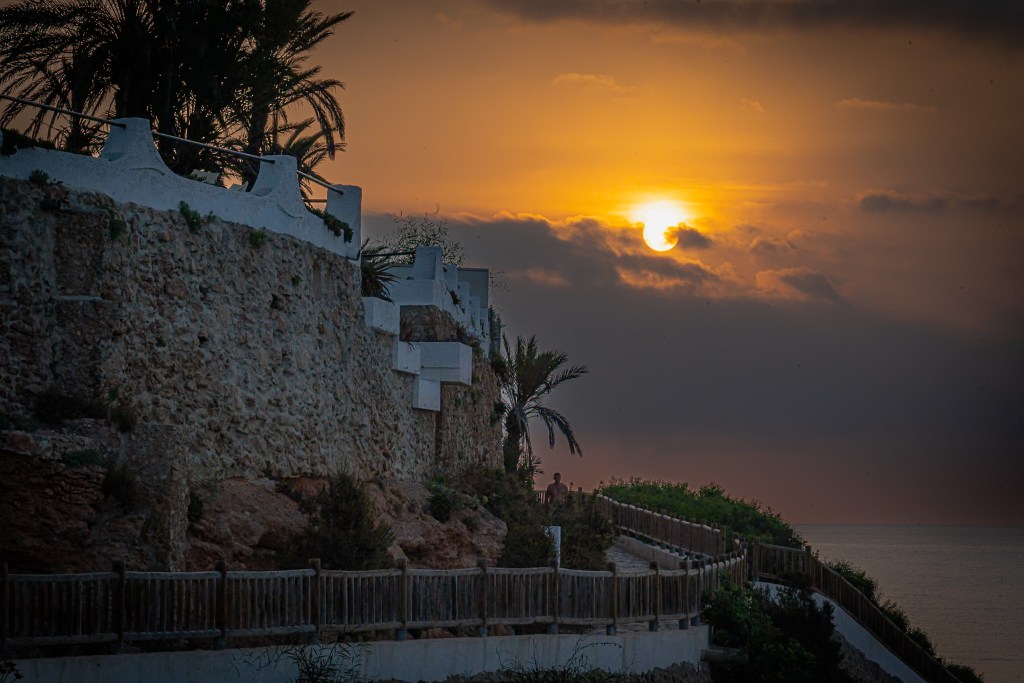
The sun appearing about 10 minutes after sunrise on the coastal path at Cabo Roig. The first jogger of the day coming into shot.

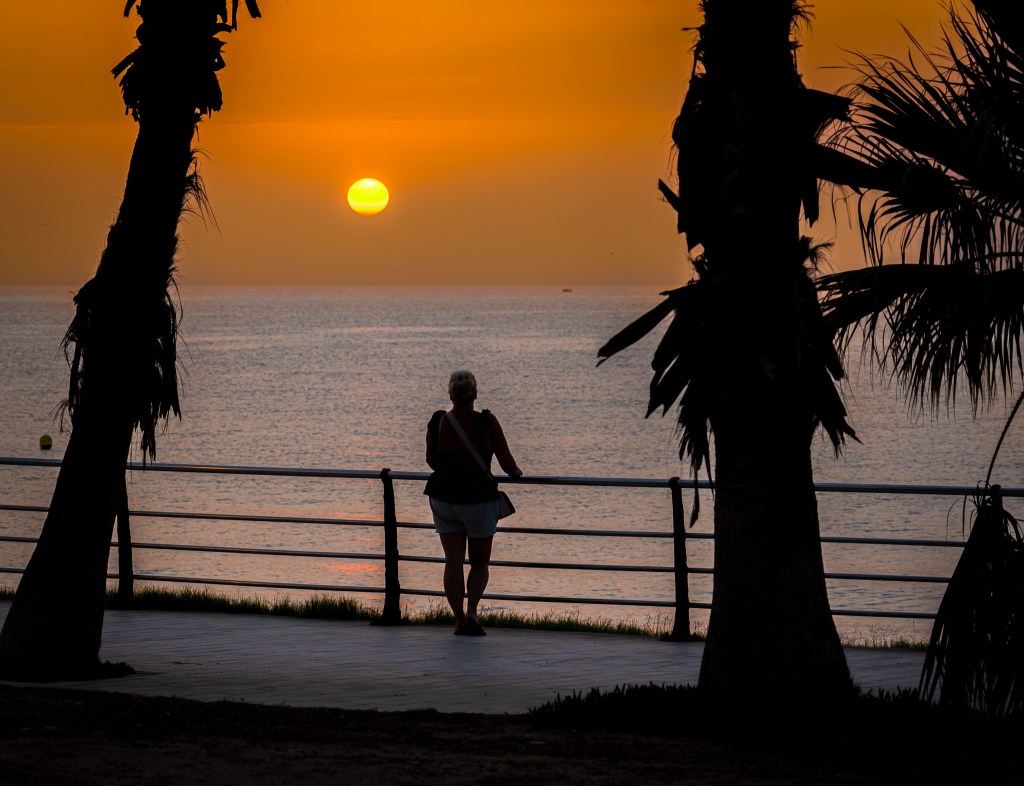
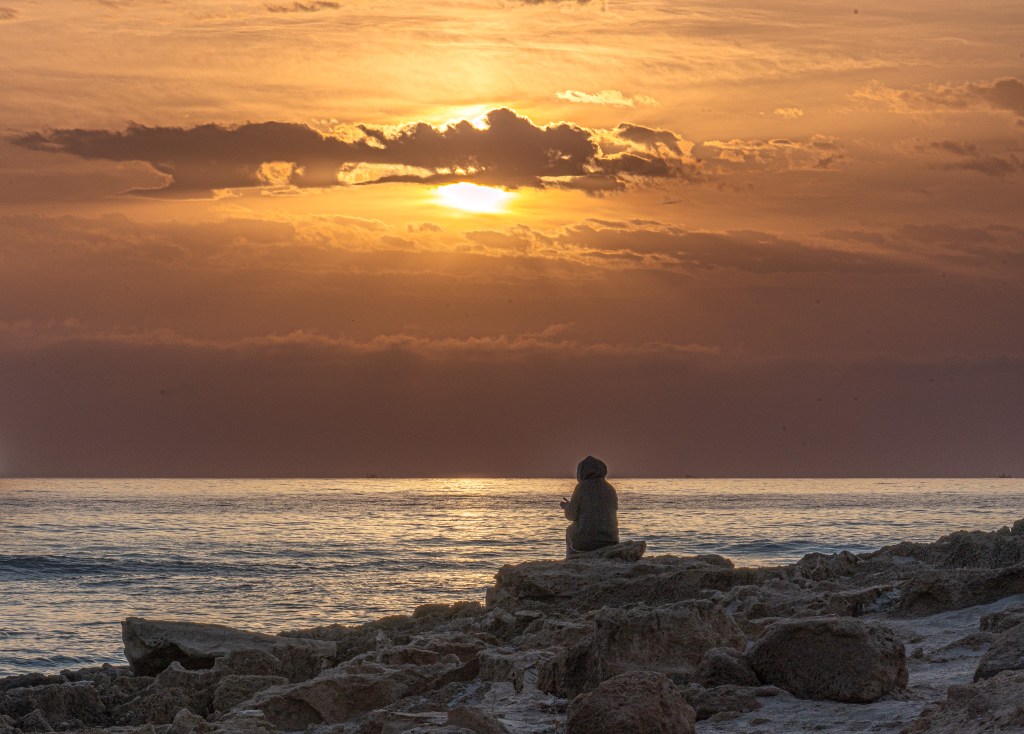
A very cold morning at La Zenia, Orihuela Costa. Alone with her thoughts. This time of day is an opportunity in a frenetic world to find some quiet space.

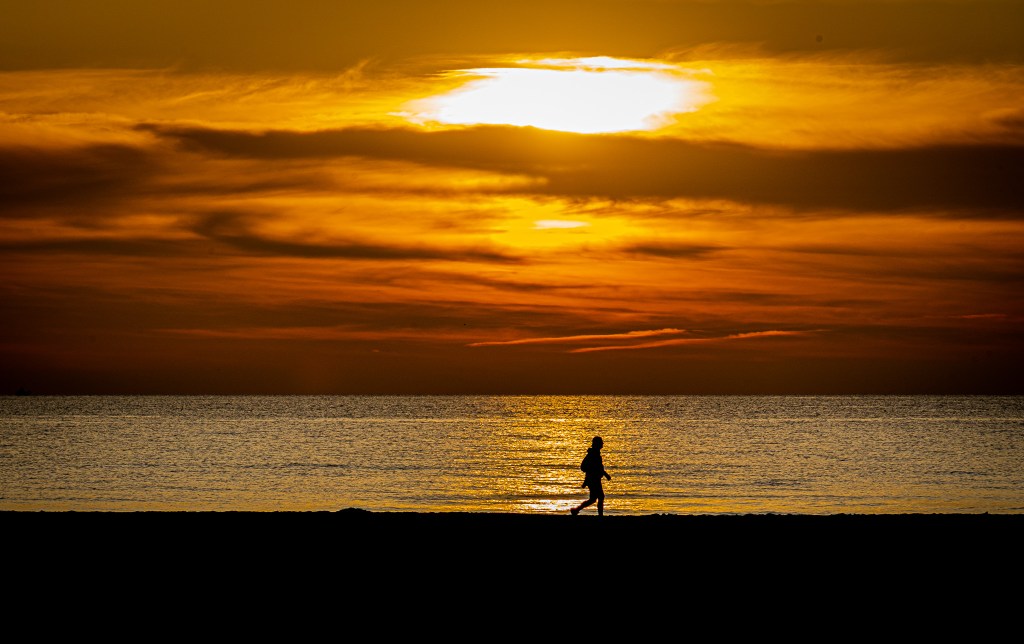
A lone walker on La Zenia beach. Not many better ways to start the day. And depending on the time of year, this is the only time it is possible. In summer, the daytime temperatures and crowds make it a less enjoyable experience.

Partial reveal. That touch of magic when the rising sun slowly appears above the misty horizon at Playa Flamenca. The patience of the expectant watchers paying off.

There is never any interaction between the morning people, apart from the odd polite nod. A hesitancy exists among the multinational strangers. One unsure of the language spoken by the other. But as the sun rises in the sky and reaches an intensity that is impossible to look at, and as the morning people make their way to their various homes to get on with their days, they can be sure of one thing. They all share a common language. One that has no words. Rather, one that consists of a shared wonder and appreciation of the yellow star that sits at the centre of our solar system and the magic it performs every morning.

Bernina Express

There are many things I never dreamed of doing. Not because I had no desire to do them but because they simply never came onto my radar. One example would be sitting looking out of a train window as it traversed the Swiss Alps. But that’s exactly where I found myself at the start of May 2025. Saying I ‘found myself’ there implies that I was abducted and woke up on the train. My turn of phrase merely reflects the fact that when it comes to journeys, I tend to be less imaginative than my wife. She is the one who sources and books the trips while I busy myself recording the experience on my camera-not exactly an onerous task and definitely my preferred role.

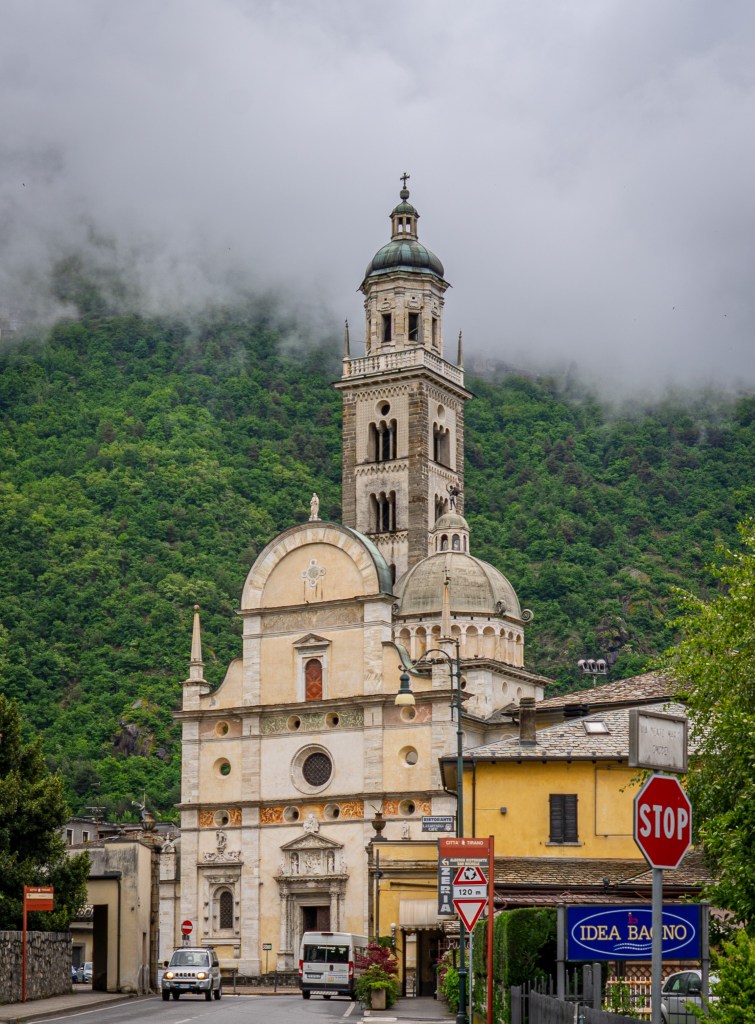
The Train I refer to was the Bernina Express. It runs on the 384 Km narrowgauge network of the Rhaetian Railway which links Switzerland with Italy. Our schedule included a 48 km stretch of the network, known as the Bernina Line-the only Swiss railway to cross the Alps. In order to catch the train, we travelled by bus from Lake Como in Italy, through Lugano in Switzerland, stopping briefly in Tirano and finally on to Poschiavo station. The low cloud looming over the Basilica of the Madonna di Tirano gave a clue as to the weather conditions we could expect as we began ascending to higher altitudes.

Basilica of the Madonna di Tirano

The bus was an unexpectedly interesting leg of the journey. We were informed by the guide as we crossed the Swiss border that Switzerland has four official languages: German, spoken by 62%, French (23%) Italian (8%) and Romansh (only spoken by 0.5%). We also passed a small town inside the Swiss border called Campione d’Italia which is administered by Italy and belongs to the province of Como. It seems Ireland isn’t the only country with border issues!

We also passed close to the village of Dongo on the upper reaches of Lake Como. It was here, in April 1945, in the final days of World War II, that Mussolini, the fascist dictator, was captured by Italian partisans. He was accompanied by his mistress, Claretta Petacci and several other senior fascists who were fleeing Milan and heading for the Swiss border. The next day they were executed and their bodies brought back to Milan, where they were hung upside down in a suburban square, Piazzale Loreto.

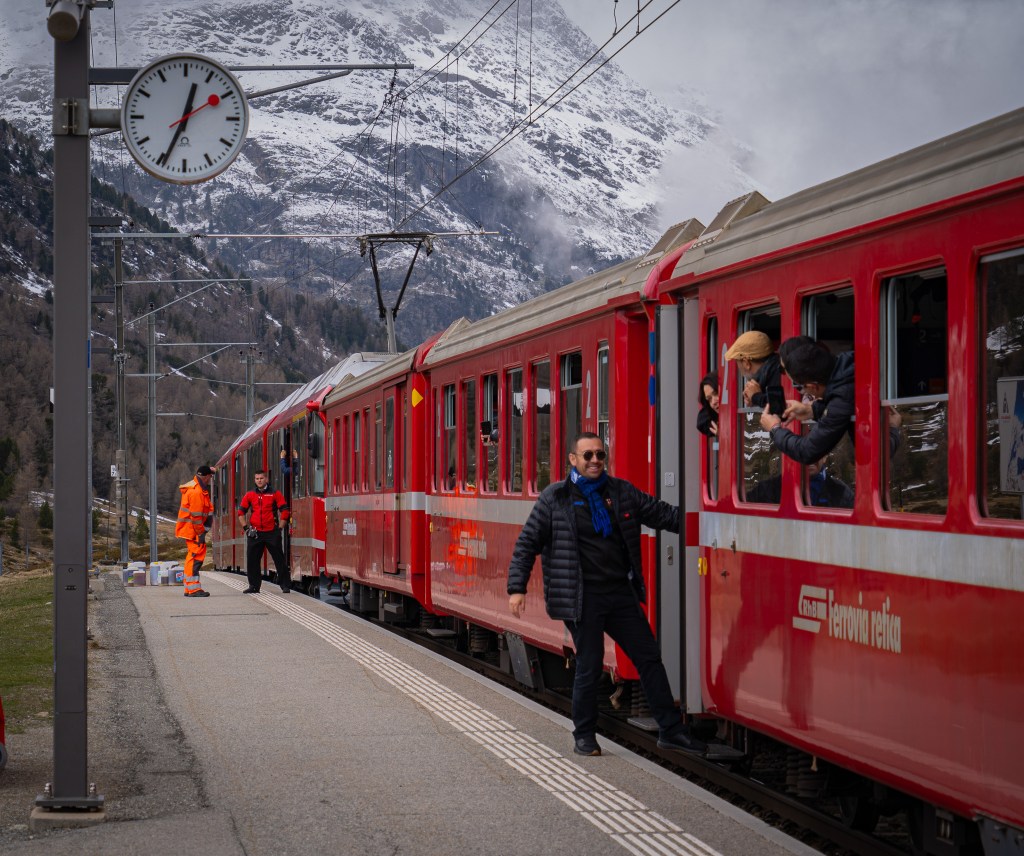
At Poschiavo we boarded the Bernina Express. There was some confusion about which part of the train was allocated to our group and by fluke, we ended up in a half empty carriage. The brochures I had read always gave prominence to photos of carriages with extended windows which curved up over the roof of the train for enhanced viewing. The first thing I noticed were the regular windows, similar to most trains. My initial ire was dispelled when it occurred to me that the extended windows were fixed units that couldn’t be opened. These ones could! I’m guessing that opening the windows, if not prohibited, is discouraged. But as anyone who has ever taken photos through a window pane will know, the reflections of ‘ghosts’ can ruin the image. So, taking the proverbial bull by the horns, I pulled (with considerable effort!) the sash of the window down. In my defense, I tried a couple of shots through the window first but couldn’t entertain the thought of missing an opportunity that may never come again. As in all such cases, it only takes one instigator and soon all the windows were being opened as the hitherto sedate passengers took on a more rebellious demeanour!

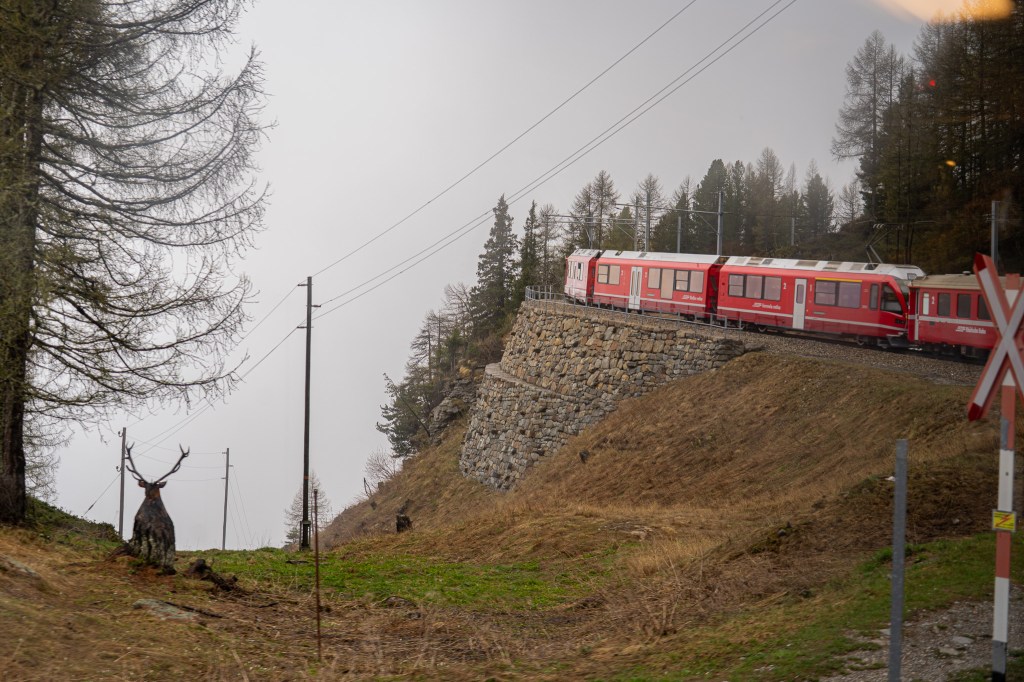
A shot through the window with those annoying reflections in the top right of the photo. I wish I could say that the deer walked into the shot but he’s made of stone!

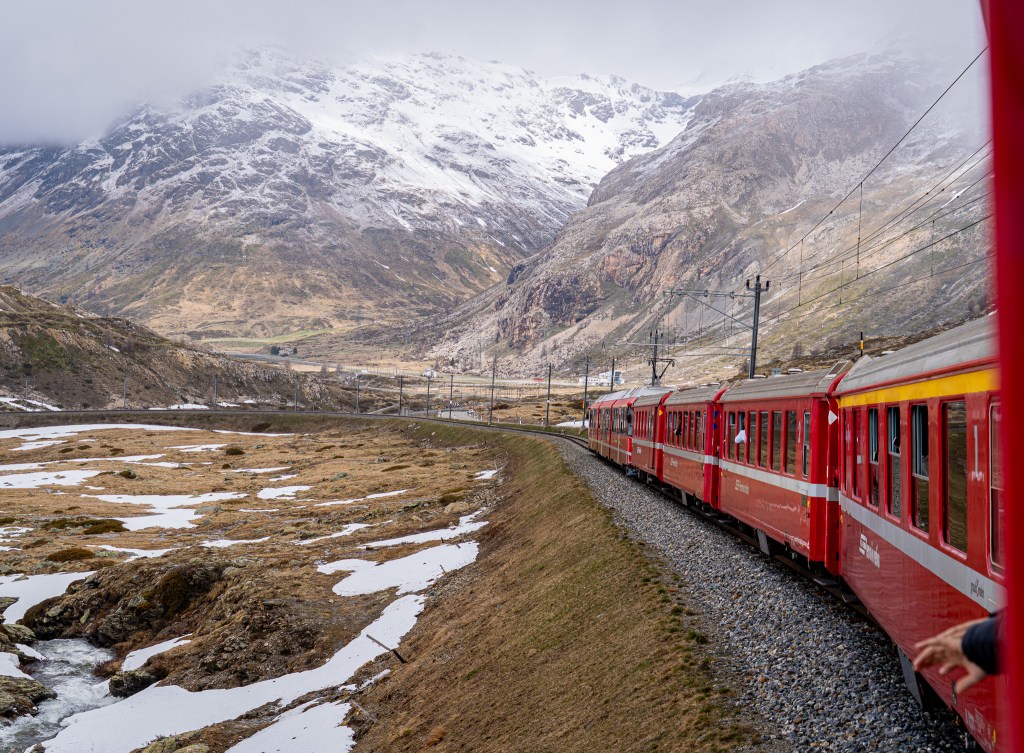
As the train left Poschiavo, at an altitude of just over 1,000 m (3,330 ft) it seemed as if we were ascending into the clouds. One of the unique features of the railway is the use of sharp bends in the track which allow the train to climb the steep gradient. This provides good opportunities to capture the carriages as they snake their way upwards. This is also why you should pick a front or rear carriage. That way you can get more of the train into your shots.

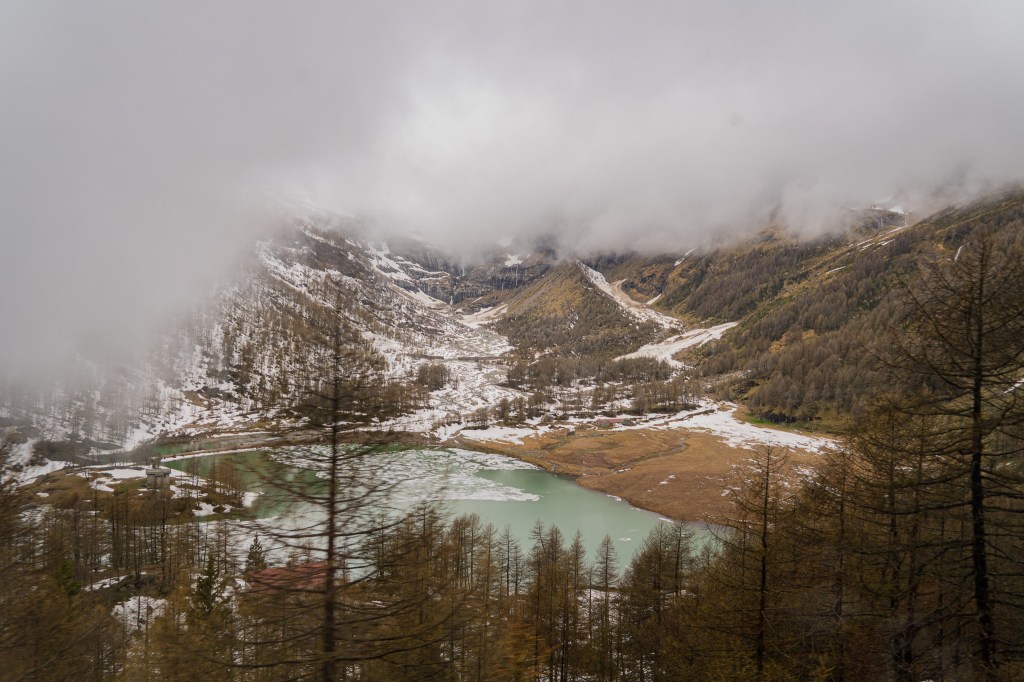
Occasional breaks in the cloud revealed aquamarine lakes and alpine slopes sprinkled with snow.

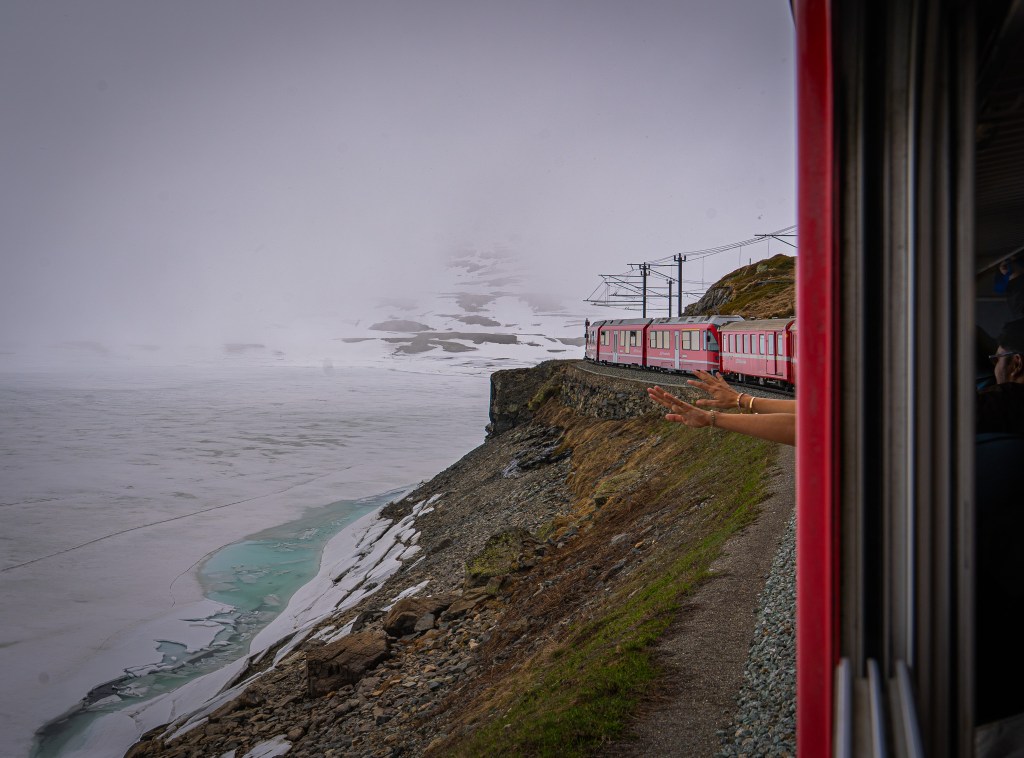
And the occasional frozen lake, plus anonymous hands of fellow passengers. Maybe they’re thanking me for initiating the mass opening of the windows!

The train slowed down, almost to a halt, as we entered Alp Grum railway station. The altitude here is 2,090 m (6,860 ft). Normally the train would stop here for passengers to enjoy the panoramic view but we were now passing through dense cloud and there wasn’t much to see. As we passed through Ospizio Bernina, the highest point of the Bernina Line at 2,253 m (7,392 ft), above sea level, the prospect of some good photos was dwindling. Then, as if by magic, the carriage lit up with bright sunshine and the landscape appeared again in all its splendour.

Descending below the clouds outside Bernina Diavolezza at approximately 2,080 m (6,820 ft) above sea level.

I was happy to be coming away with at least some decent photos that would serve as mementos of a unique experience. I was also reminded that when it comes to any form of landscape photography, nature is the boss. It decides when and where it will provide the optimum conditions. Regardless of weather, this was a pleasure. In fact, to witness the majestic beauty of this part of the world was more than a pleasure. It was a privilege. One for which I will always be grateful.

A cable car crosses the railway line at Bernina Diavolezza, our final stop on the Bernina Express.

Bernina Diavolezza station.

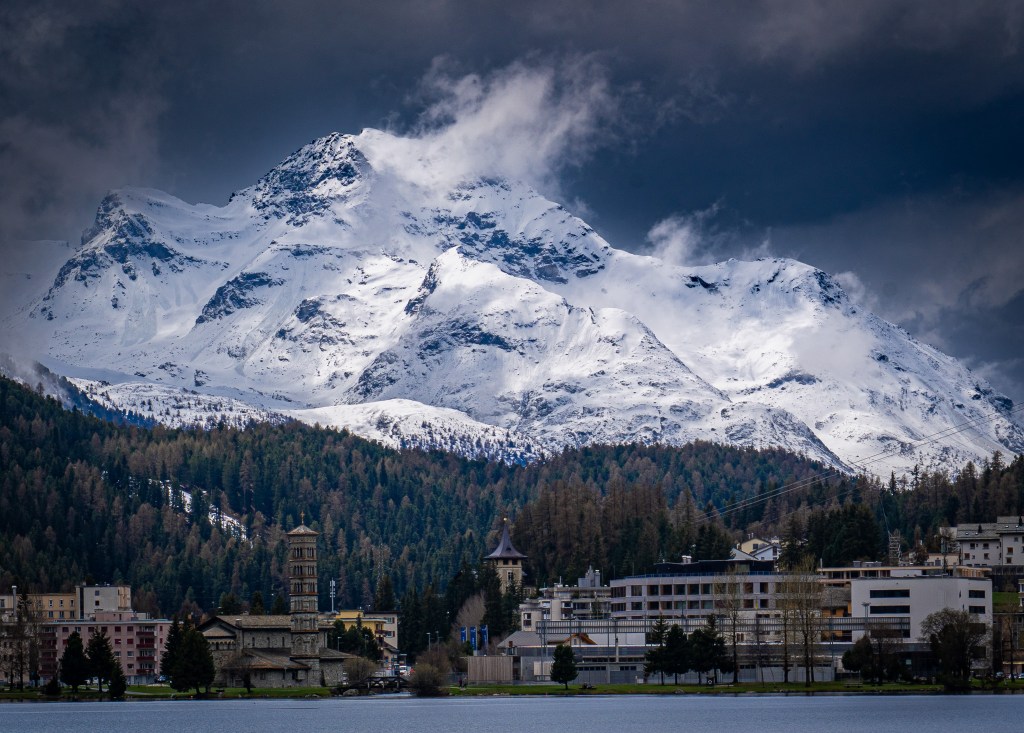
From Bernina Diavolezza, we travelled a short distance by coach into St Moritz. If I had to sum up this town in one word, it would be ‘anticlimactic’. Given its reputation as a world class ski resort, I had imagined a bit of style and polish but we were both in agreement about the nondescript character of the place. It didn’t help that a lot of the shops were closed for a ‘between season break’. I’m not a skier and I reckon that is its biggest draw, the skiing and its location, a perfect base for exploring the Alps. And maybe it looks better when covered in snow. But let’s not end on a negative. Before getting back on the coach for the return trip to Italy, I had a pleasant surprise. I took a walk across the road to the lakeshore and a break in the stormy sky created a scene which lasted less than a minute before the rain started again. What did I say about nature being the boss?

The sun broke threw the clouds to create a dramatic contrast between the snow capped peaks and the storm clouds.

And so, St Moritz having provided some photographic compensation, we boarded the bus and settled in for the return journey to Lake Como.

Thoughts and Tips

A great experience. As I have alluded to, the weather conditions will determine how much you will see. People have a tendency to expect the views to be exactly like the brochures but you have to remember that the brochures show places in perfect weather.

Which train to choose? This is a tricky one. As I mentioned, there are different ‘classes’ of train. The most expensive train will have the carriages with the extended windows but if photos are your priority, take the train with windows that open. It’s also worth noting that normal service trains run on the same line. If you have the time, you can travel longer stretches of the line, getting off at different stations and catching the next train to continue on to your next destination. One major benefit of using these trains is that your ticket allows flexibility. You don’t have to travel on a particular day. If you buy a ticket for the Bernina Express, you must use it on a specific day and time.

What time of year is best? It depends on what type of experience you want. In winter you will see dazzling snow covered landscapes. In summer, lush pines and alpine flora will be the order of the day. Spring or Autumn will offer a mixture as the seasons change from one to the other. But remember. When you are travelling at such high altitudes, weather conditions are volatile and your experience will be in the hands of the Gods. This is where the flexibility of the regular service trains will be an advantage. If you are spending a few days or longer in the region, you can follow the weather forecast and pick the best day to travel.

Would I go back? Yes but as I said in my previous post, independent travel would allow the flexibility I’ve talked about above. But that comes at a cost. Our trip was part of a package and while that meant less flexibility, it made the the trip more cost effective. Also, independent travel isn’t for everyone. For some travellers, a package means not having the hassle and responsibility of booking trains, buses, accommodation etc. As I have already mentioned, I don’t have to do that anyway, so as long as I have my camera, I’m a happy lad.

Lake Como

Lake Como is situated in the Lombardy region of Italy. Formed by glacial processes, it has a distinctive inverted Y shape. It’s the third largest of the Italian Lakes (146km2) after Lake Garda and Lake Maggiore. It is also one of the deepest lakes in Europe at 400m.

The lake sits at the base of the Alps and its shores are punctuated with picturesque villages and luxury villas. This is one of the most scenic locations we have ever visited. With the dramatic backdrop of the Alps and the striking coastal landscape, it’s no wonder this has been the setting for many movies, including Hitchcock’s debut film, The Pleasure Garden (1925), Star Wars: Episode 2 (2002), Ocean’s Twelve (2004) and Casino Royale (2006).

This house is part of Richard Branson’s site. It’s his gardener’s house!

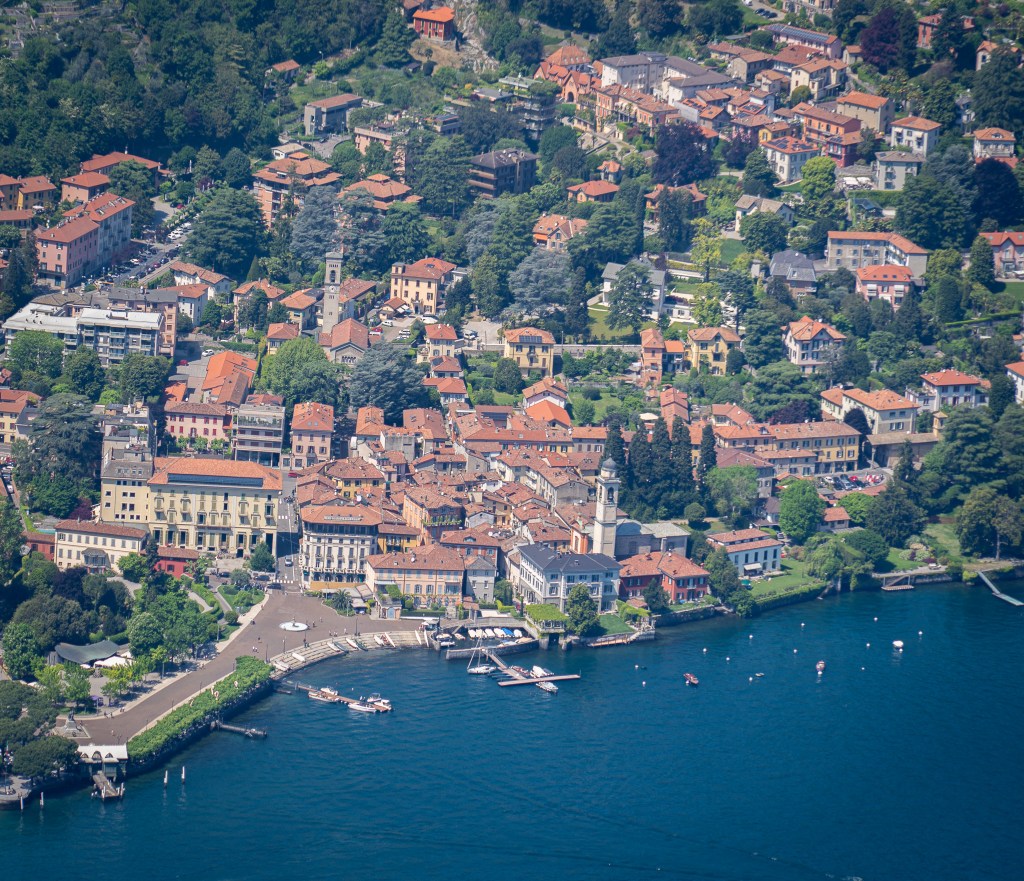
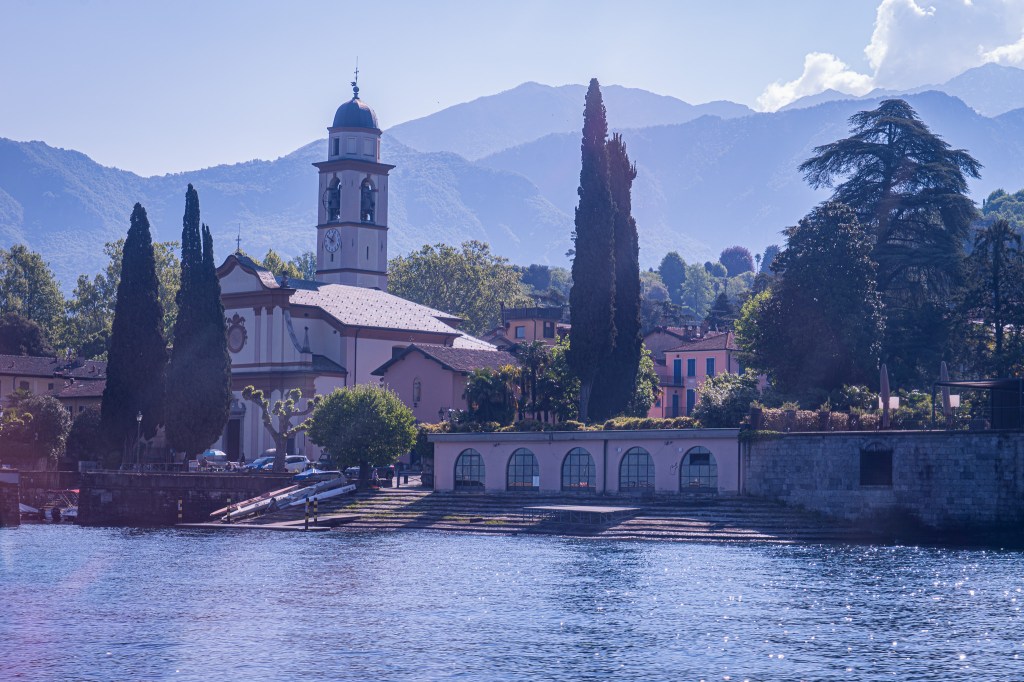
Our hotel was on the lakeshore at Tremezzo and watching boats of all descriptions, from yachts to water taxis, on the lake was a pastime of dreams.

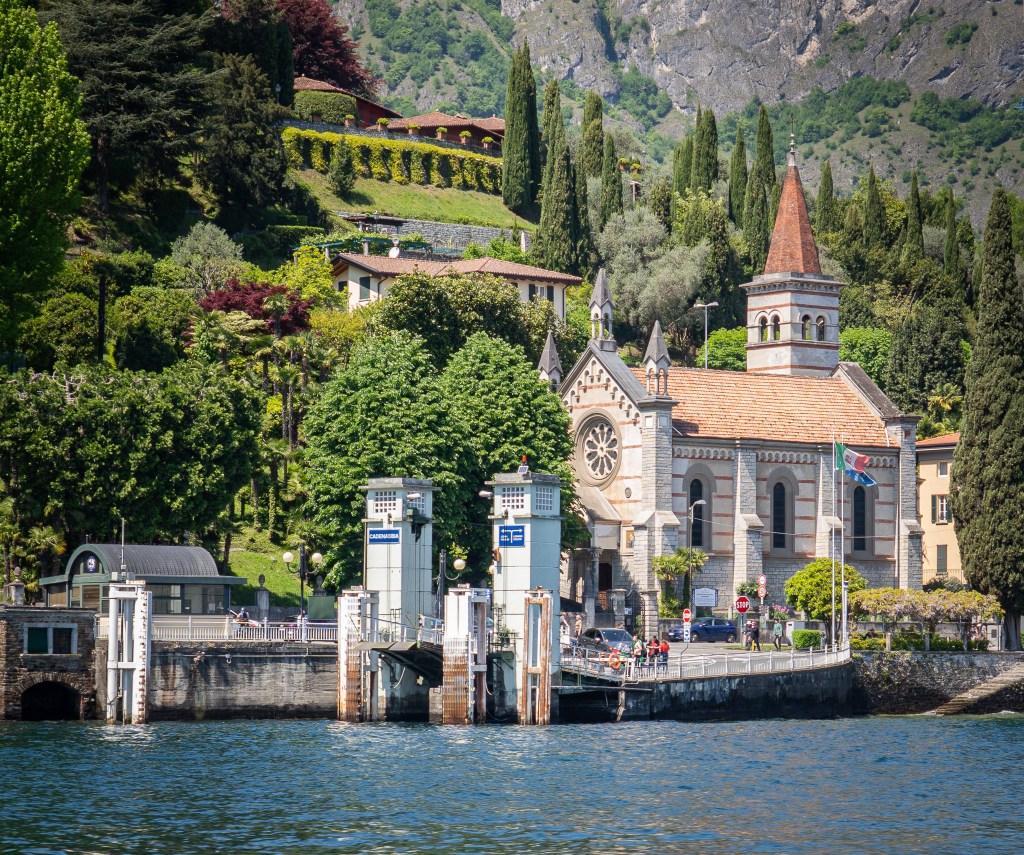
Tremezzo. One of the many ferries that carries passengers to the various towns and villages. Photo taken from the hotel room balcony.

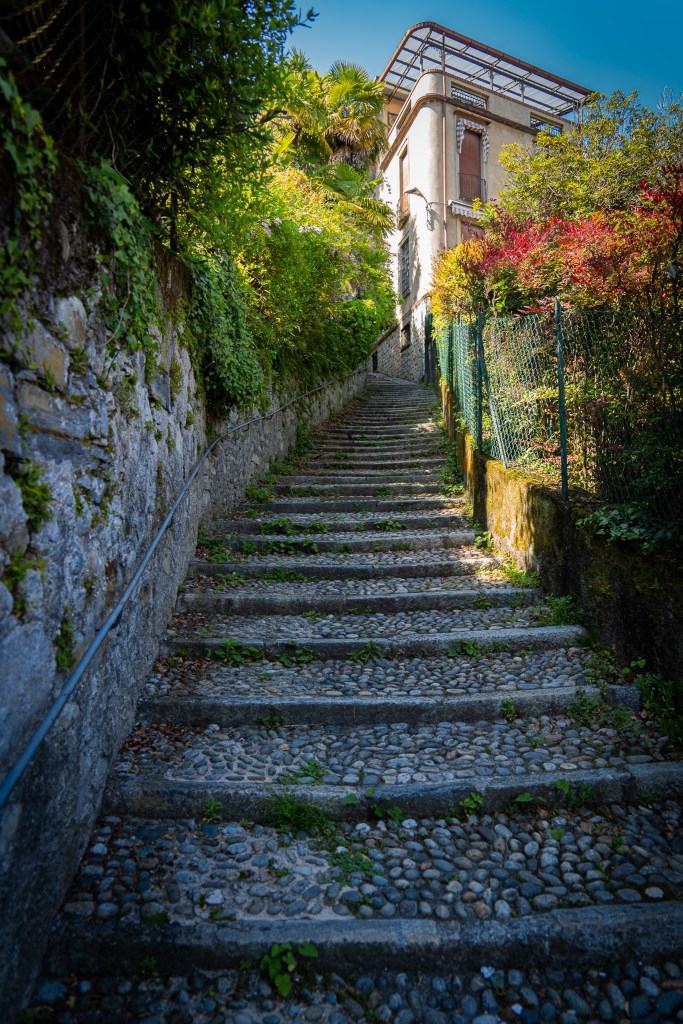
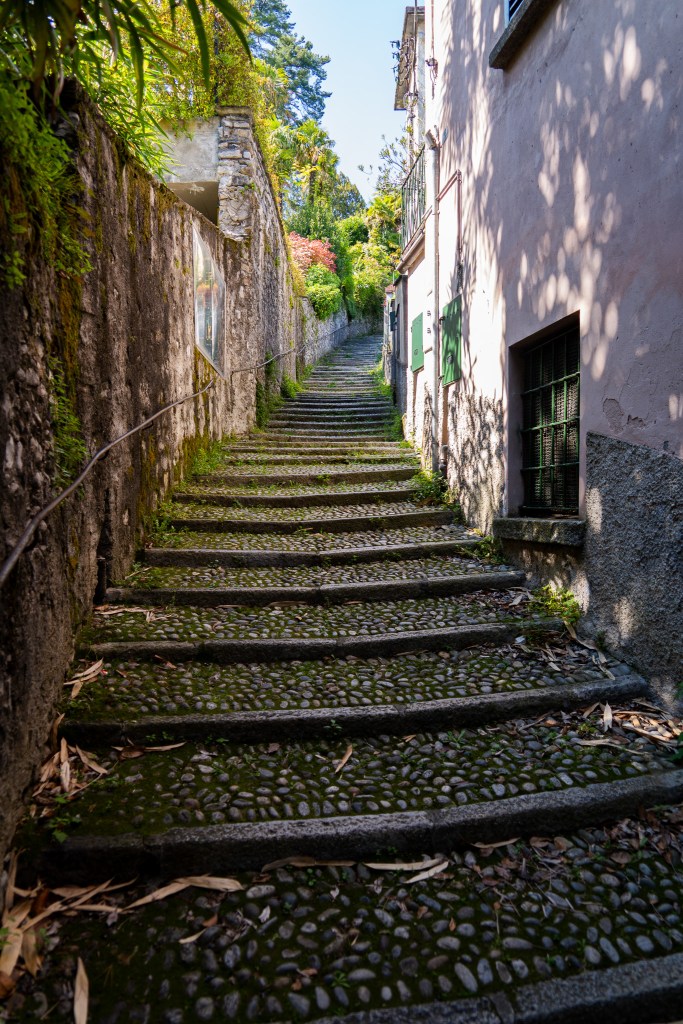
The cobbled lanes behind the hotel revealed lots of villas tucked away.

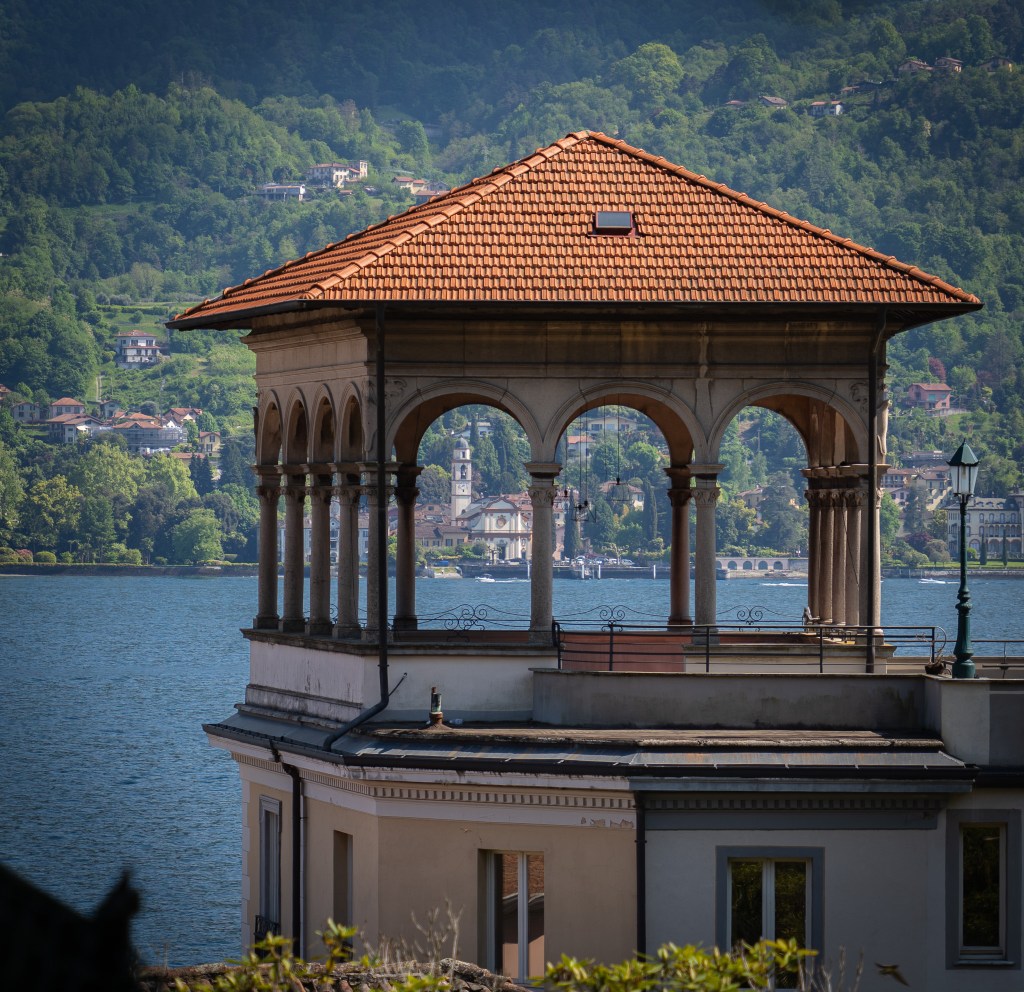
Not to mention some impressive views over the lake.

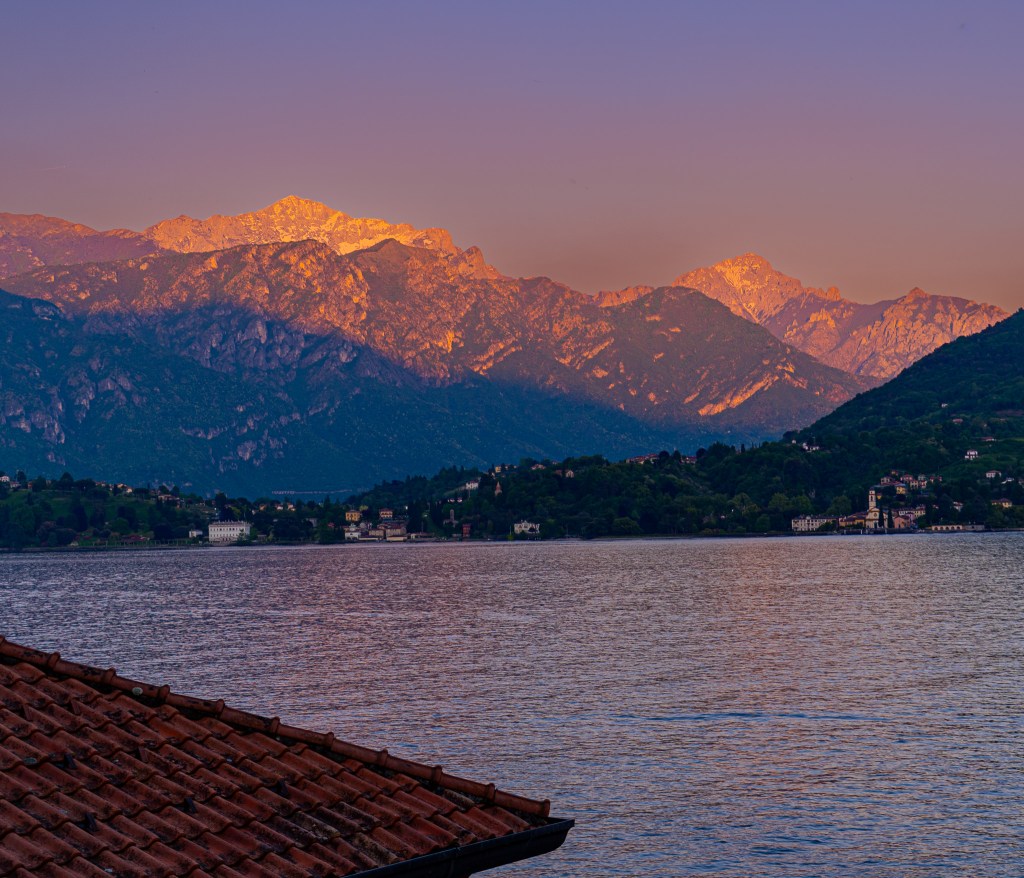
The setting sun painting the Alps in evening tones. View from the hotel room balcony.

Although there are many towns and villages dotted around the shores of Lake Como, we only had time to visit four: Bellaggio, Varenna, Lenno and Como. Each one had their own unique appeal and I would recommend a visit to all of them.

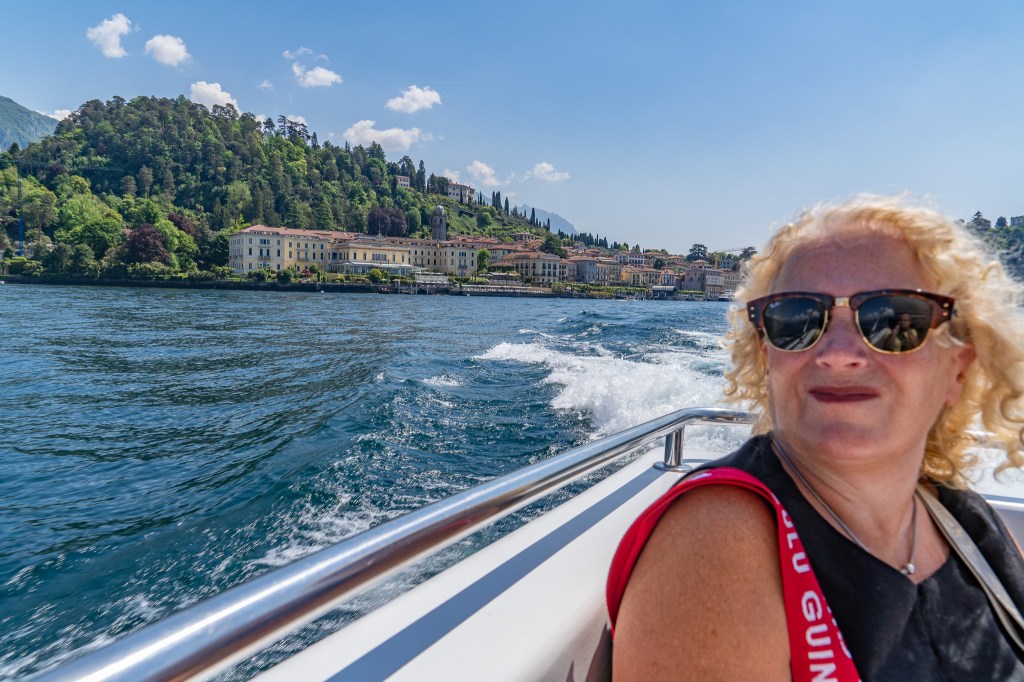
Bellaggio was probably the most polished town we visited.

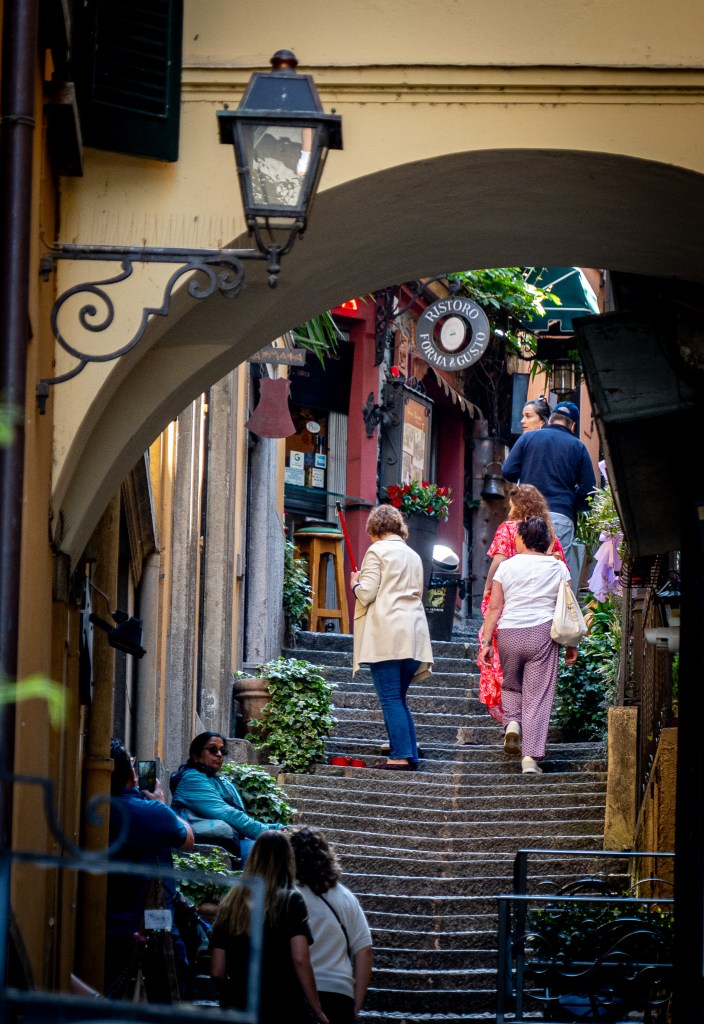
Bellaggio’s steep cobbled streets were lined with shops of every description. From jewellery to glass to silk, for which the region is famous.

Both a shopper’s paradise and a photographer’s dream.

Streets full of character.

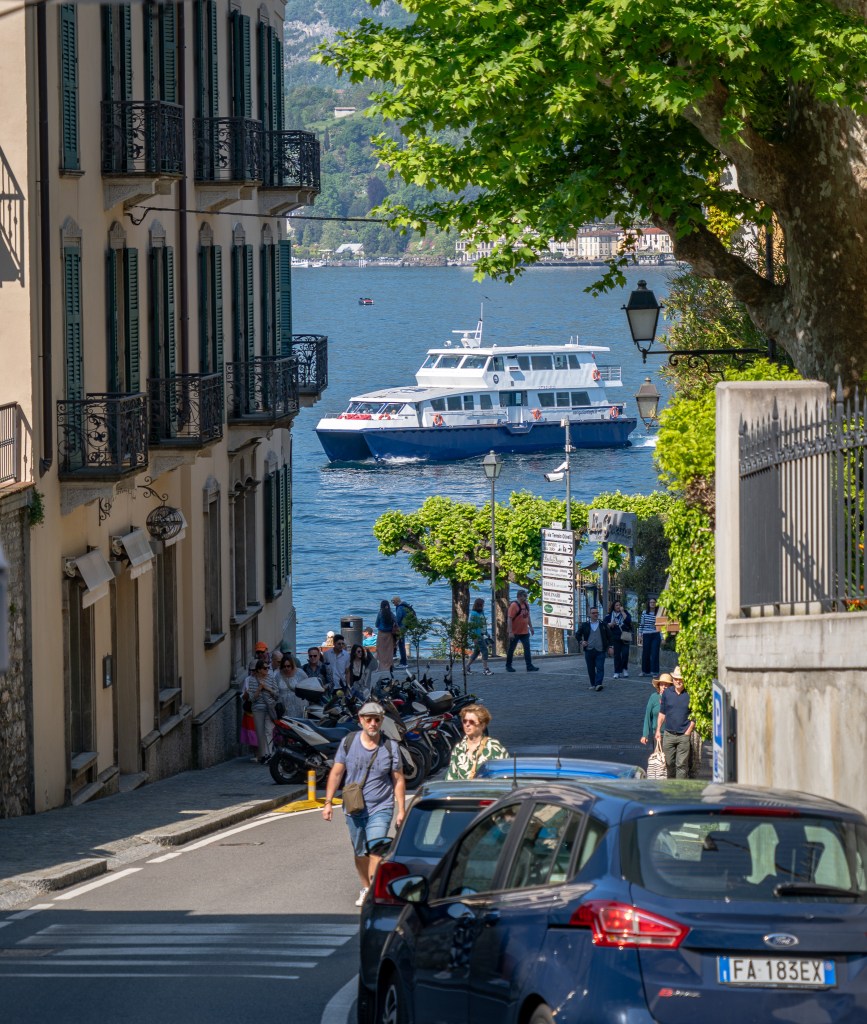
The next ferry is never far away.

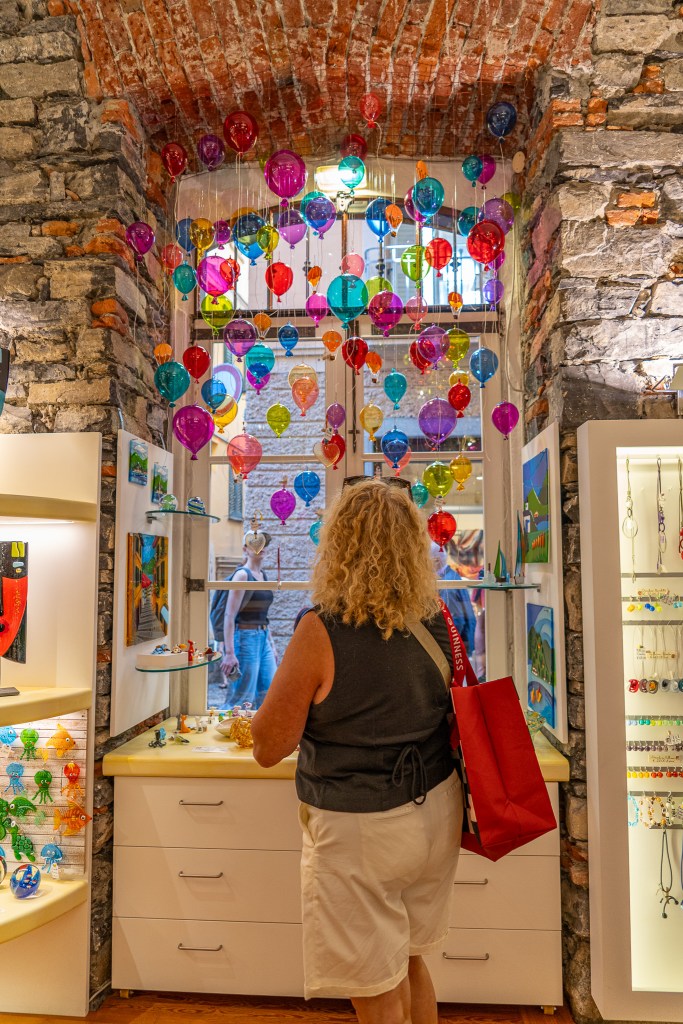
One of the many artisans in Bellaggio, specializing in glass. Including an eye catching range of coloured glass balloons.

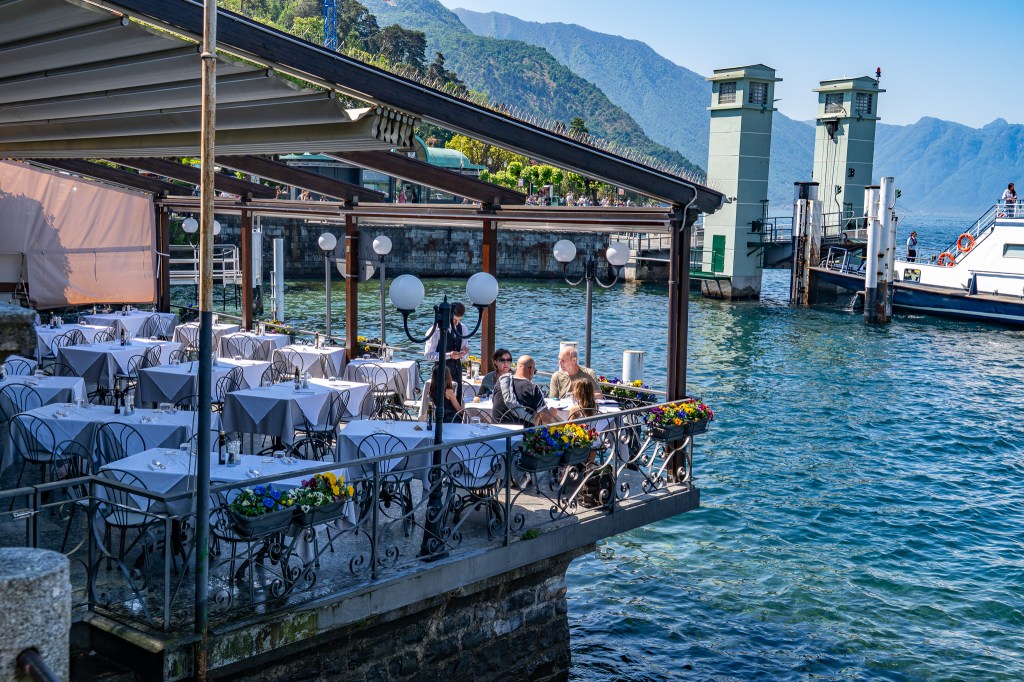
While the narrow cobbled streets cater for the shoppers, the lake front offers a wide range of eateries.

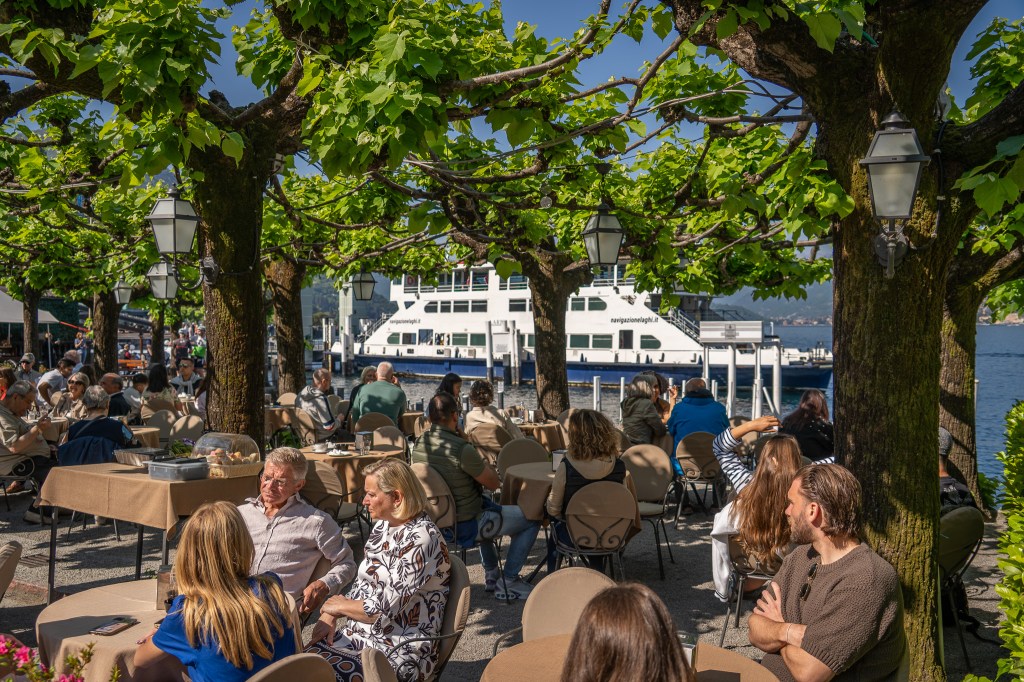
Lunch by the lake.

As close as you can get to the lake without being in it!

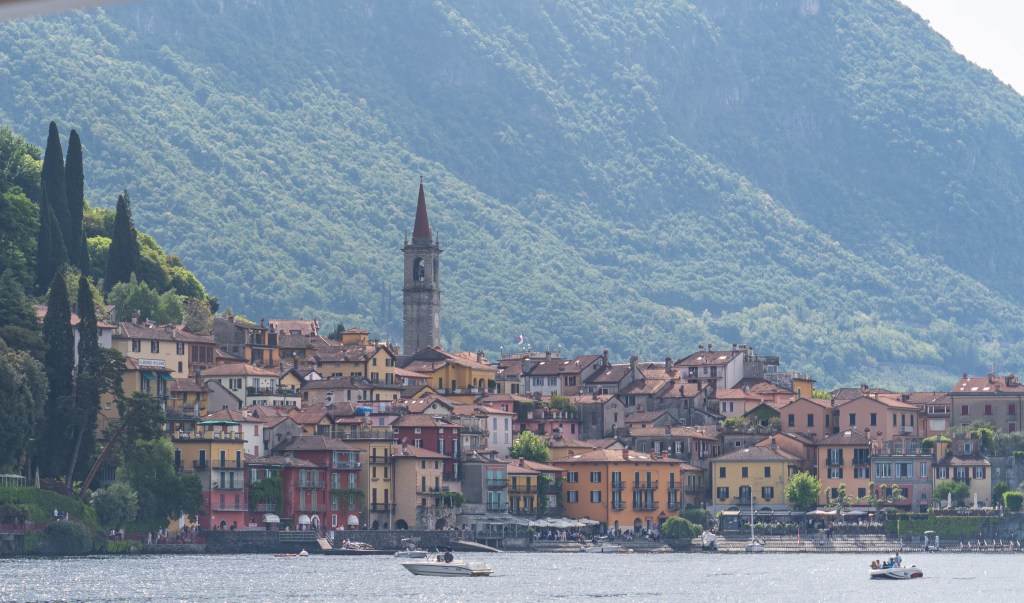
If Bellaggio is the most polished town, Varenna has to be the most picturesque. It is situated approximately 15 minutes, by boat, from Bellaggio. Stepping off the boat it soon becomes obvious that Varenna lacks the elegance of Bellaggio but if it lacks elegance, it overcompensates with charm and rustic beauty.

Varenna. Capturing this scene was a long standing goal of mine. The combination of lighting conditions and the vibrant colours resulted in a photo with a postcard feel and made the wait worthwhile.

Varenna invokes the same question as other locations on the lake. Is it a town or a village? It seems too small for the former and too big for the latter. Whatever its status, it oozes history and character. There is no shortage of cafes and restaurants from which to enjoy the atmosphere and watch the world (and endless tourists) go by. A climb up one of the many steep side streets provides an escape from the bustle of the harbour and a glimpse of what everyday existence is like for the locals-unhurried and peaceful.

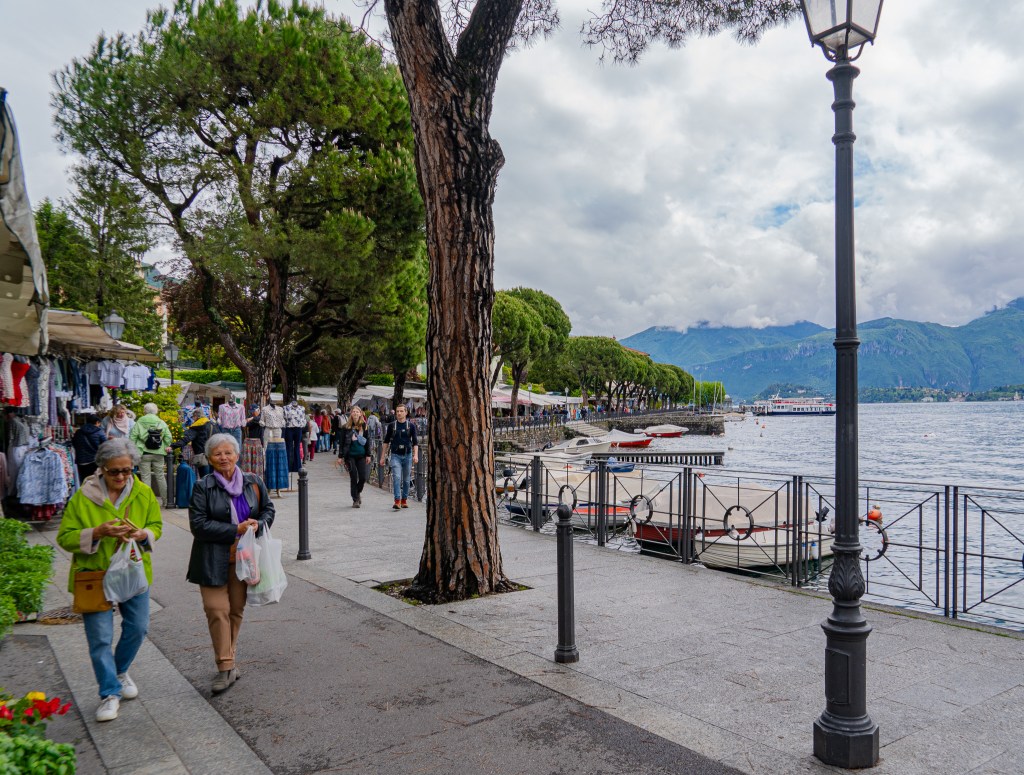
Another 15 minute boat ride, heading south from our hotel in Tremezzo, brought us to Lenno. While not as striking as Bellaggio or Varenna, market day in Lenno has a pleasant ambience. The stalls stretch from the small square in the village down to the waterfront, so if market shopping isn’t your thing, you can always just admire the small boats that are moored in front of the stalls.

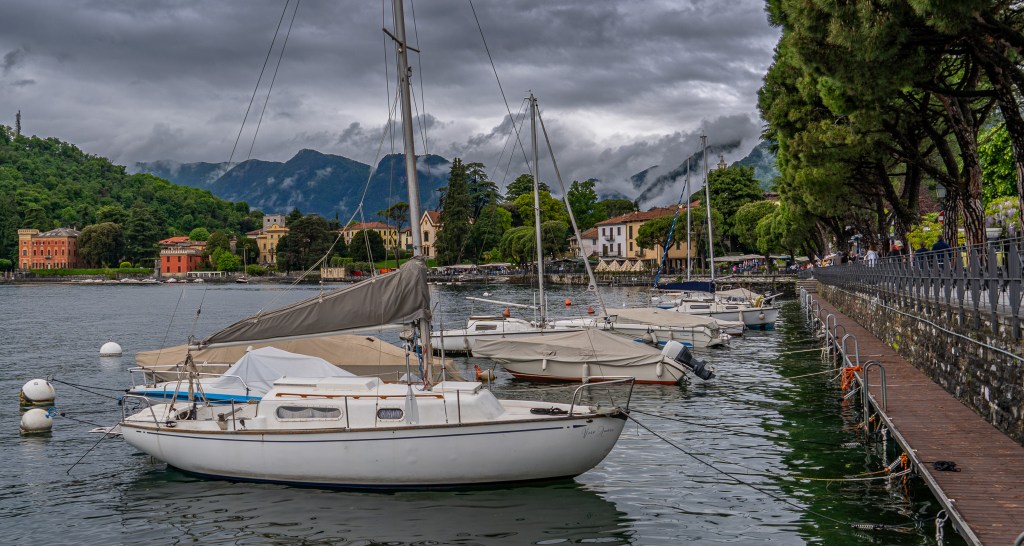
Lenno. Boats moored at the jetty.

Market stalls versus boats. I know which I prefer!

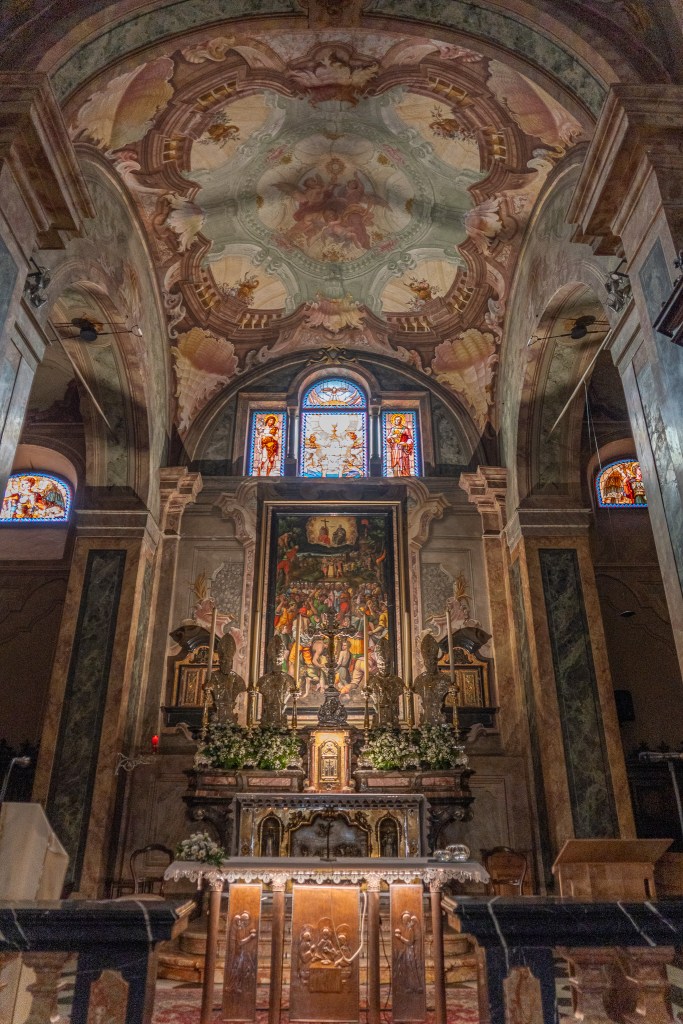
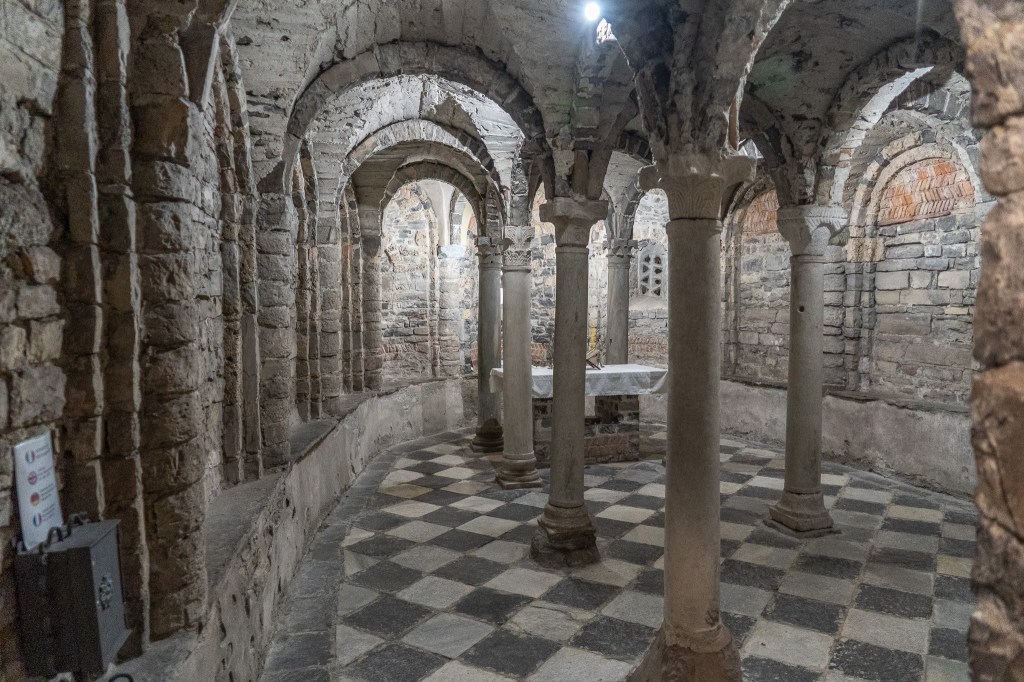
Two hours in Lenno is probably enough unless you stay for a coffee or something to eat. The local church of St Stephen was an interesting and unexpected find and is worth a look. As well as the intricate frescoes, there is a crypt that is accessed from steps in the main body of the church. It dates back to the 12th century and has been impressively preserved. No mean feat, given that it is below the water level of the lake!

Frescoes and stained glass adding colour and interest.

St Stephen’s underground crypt.

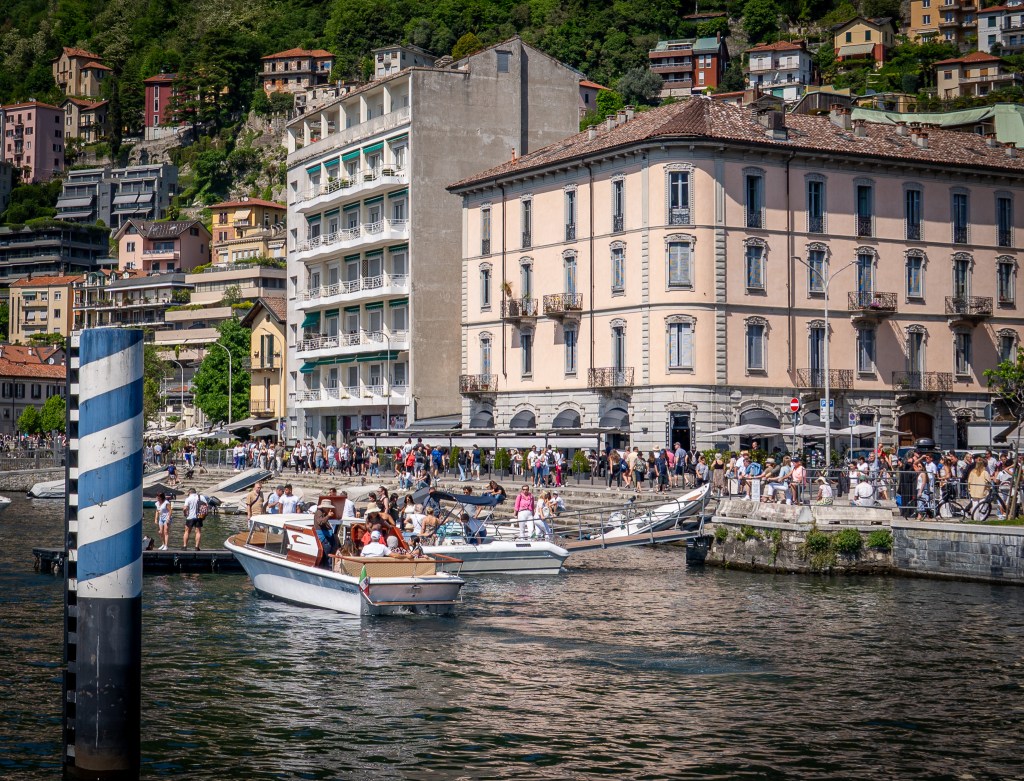
Como was our first trip by bus. Although it is accessible by boat, its position at the southwestern tip of the lake would have meant a 2 hour boat journey. Unlike the previous locations, Como’s status is obvious. It’s most definitely a city. It is the administrative capital of the Province of Como and has a population of 84,000. Como has lots to offer in terms of history, culture and arts, as well as the world’s oldest seaplane club.

The bustling harbour at Como.

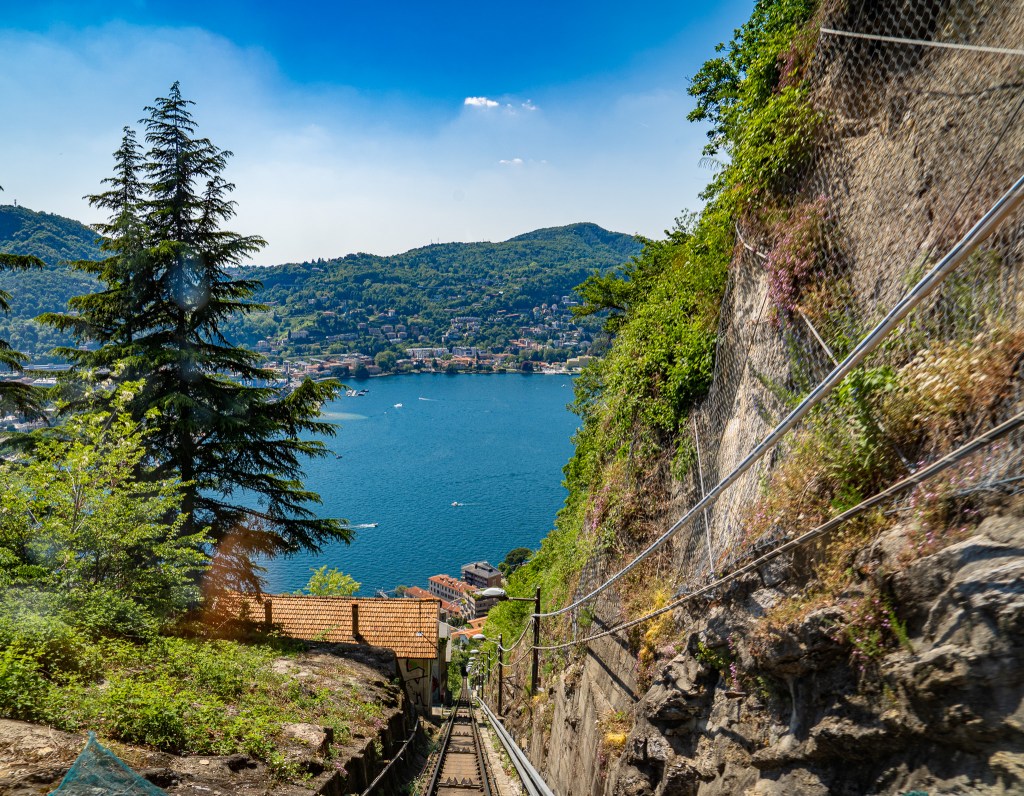
However, we had decided to give priority to taking the funicular railway from Como to Brunate, a village that sits 500 metres above Como. The funicular operates via electric motor and cable, which pulls the train up the steep gradient. Despite leaving the station every 15 minutes, the popularity of the train means that you can expect to queue for 2 hours! We arrived around 10am and the line of people was already snaking its way along the waterfront. Our wait time was around 1.5 hours but the time went quickly as we chatted with two friendly women, Geraldine and Maura, who were also from Ireland.

The upper station on the Como-Brunate funicular railway.

Spectacular views over Lake Como if you’re lucky enough to get a front row seat.

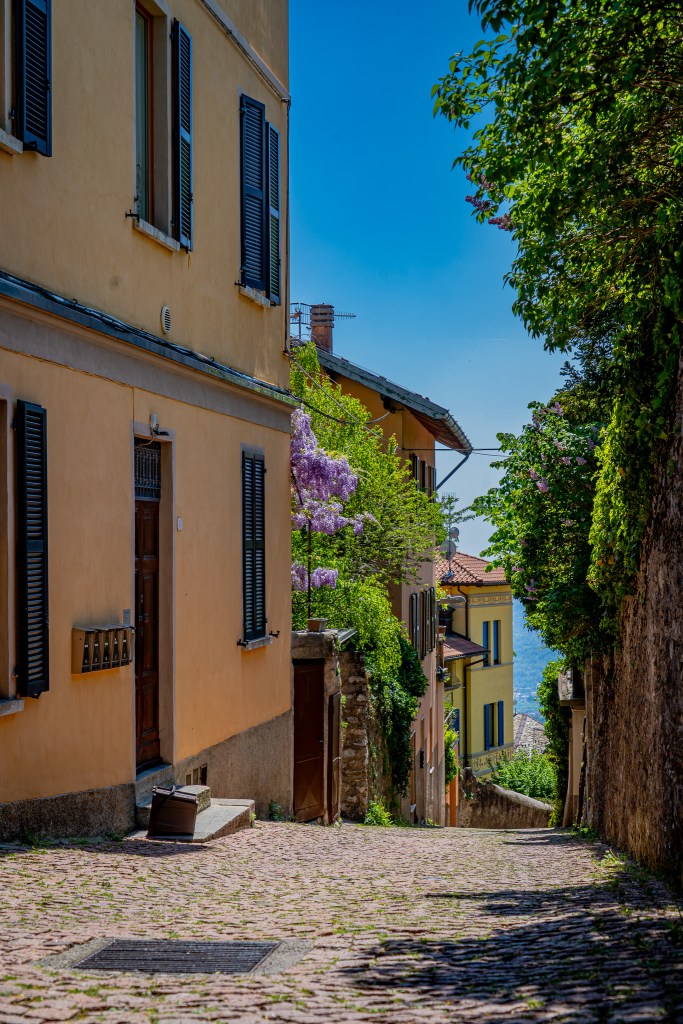
Brunate. The train journey is just over 1km long and takes 7 minutes but alighting at the other end feels like entering a new country. The chalet type houses and quiet lanes, draped in wisteria, portrayed a Swiss vibe.

The serene cobbled lanes of Brunate.

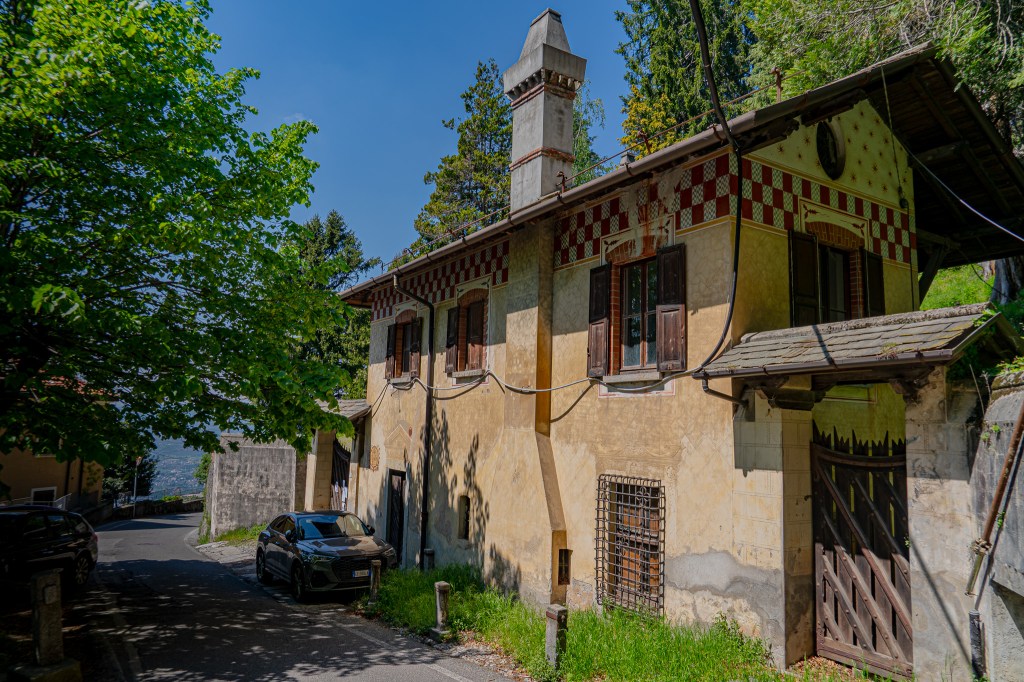
A mix of Swiss, German and Italian architecture give Brunate a unique character.

No crowds here. Probably due to the steep climb.

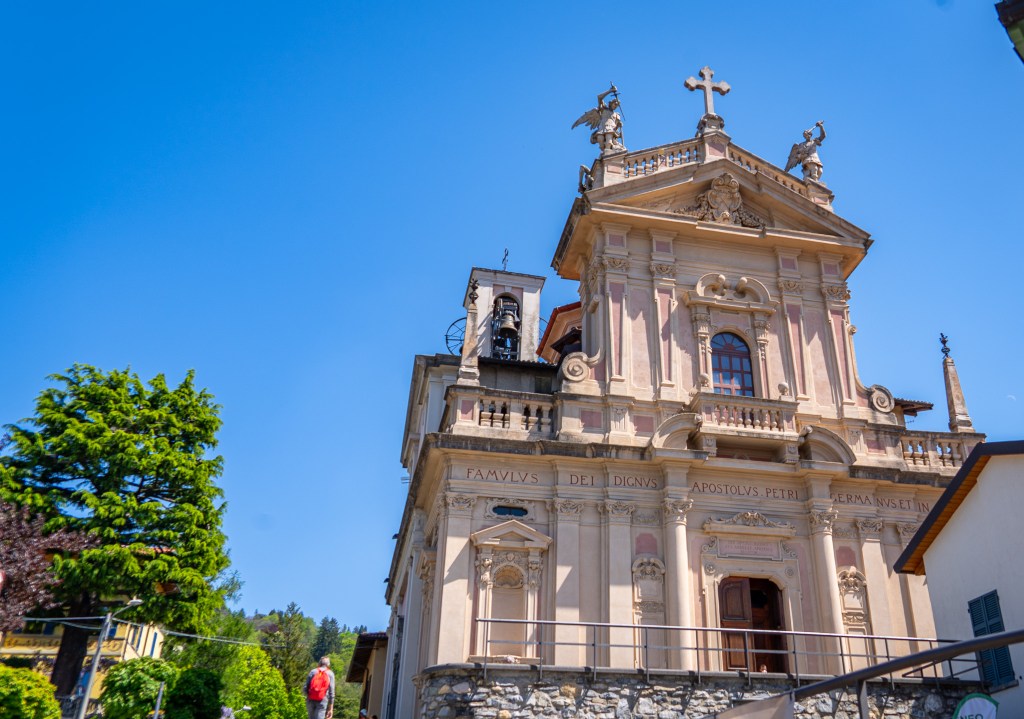
The church at Brunate.

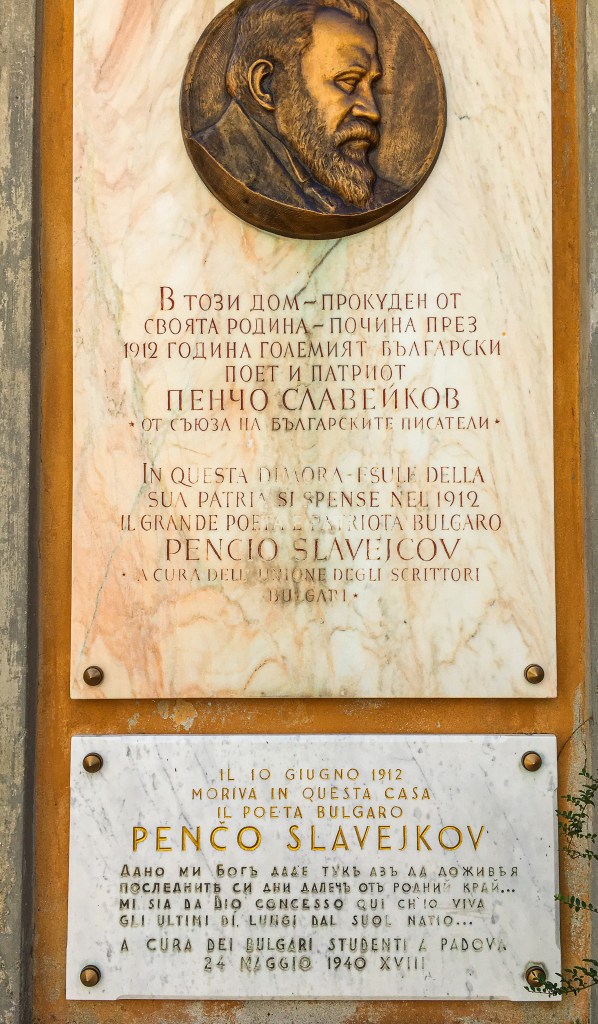
Pencho Slaveykov. Bulgarian poet, writer and philosopher. 1866-1912.

While walking past the church in Brunate, I noticed a commemorative plaque on a wall. It was mostly in Cyrillic script, which I don’t understand. Later that evening in the hotel, I looked him up and discovered a fascinating individual whose life had been dictated by one unfortunate event.

At the age of 18, Pencho fell asleep on a bench during a heavy snowfall. He contracted pneumonia which left him unable to walk without a cane and he had difficulties speaking and writing. He suffered from melancholia and he turned to literature in search of a cure. His work as a poet and philosopher led to extensive travel throughout Europe but his main goal was to find a cure for his condition. After travelling through Italy and Switzerland, he returned to the mountains in Italy. He arrived in Brunate in late May, 1912. He died on 10th June and was buried in the local cemetery. In 1921 his remains were repatriated to his homeland.

In a cruel twist of fate, he had been nominated for a Nobel Prize. Because of his death, the nomination wasn’t considered.

In 1903 Pencho began a relationship with another poet, Mara Belcheva and they remained together until his death. Although they never married, he always referred to her as his wife. They are both depicted on the Bulgarian 50 lev banknotes that were issued in 1999 and 2006. His story was an unexpected and poignant discovery for me. One which gave this picturesque village a very human dimension.

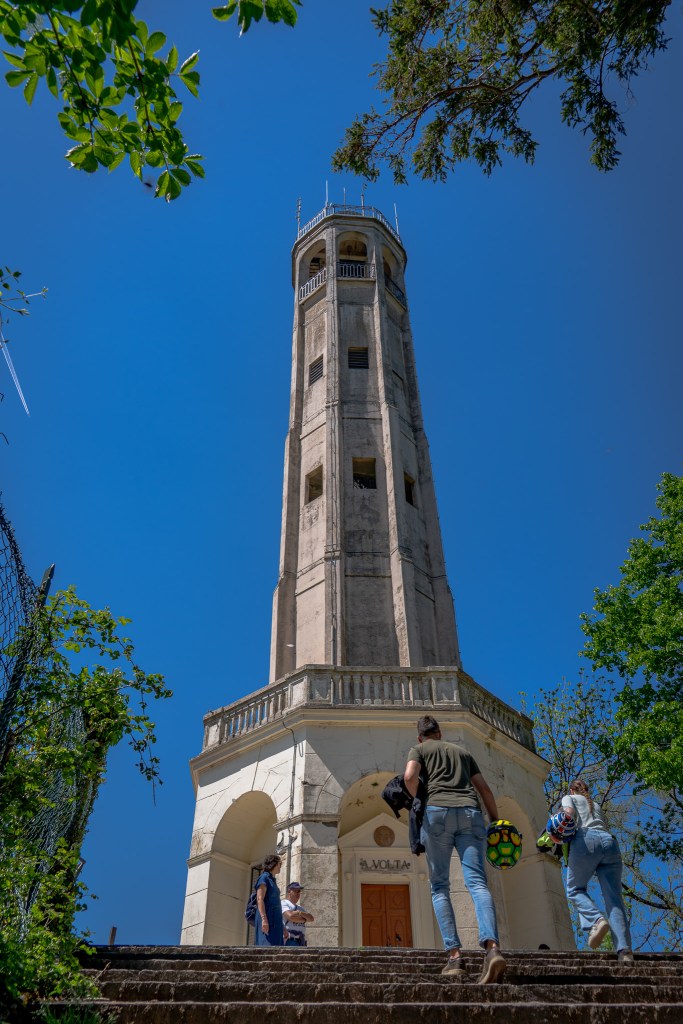
Volta Lighthouse. In and around the station at Brunate, we saw signs for a shuttle bus to Volta Lighthouse but it wasn’t obvious if the bus was operating, so we decided to walk. This was the steepest climb yet and the ground was uneven in places. The distance to the lighthouse is about 1km but it took at least 30 minutes to walk because of the slow pace and frequent stops to catch our breath. Volta Lighthouse sits on a hill in San Maurizio, a tiny village with an elevation 150 metres above Brunate. The lighthouse is named after Alessandro Volta, a chemist and physicist and native of Como. He invented the electric battery and discovered methane.

Volta Lighthouse with its distinctive octagonal shape.

The view from Volta Lighthouse

The walk back to the funicular was almost as challenging as the ascent to the lighthouse and my knees felt it. Before we knew it, our day was at an end. I think Como has a lot more to offer but I’m glad we used our time in the way we did. It was a unique experience and one which may not be possible when the knees are a few years older! We got the bus back to our hotel but it was a long wait because at least two buses didn’t turn up. My recommendation would be to take the ferry and spend two hours on the lake taking in the scenery at a leisurely pace.

Thoughts and tips.

Getting around. The best, and cheapest way to travel to and from the various towns and villages on Lake Como is by boat. There is a wide choice of boat, from ferry to high speed hydrofoil, shuttle boat and water taxi. A Mid Lake day pass costs 15 euro, which allows you to visit all the locations above except Como.

On the water is the fastest, cheapest and most enjoyable mode of transport on Lake Como.

Climate. Lake Como is in the Prealp region. In other words, it sits at the foothills of the Alps and is prone to a range of weather influences. Combined with the effects of evaporation from the lake itself, the region can be humid and rain or low cloud are not uncommon. While summer temperatures may be more predictable, we experienced a wide range of temperatures and weather conditions. If you’re visiting in Springtime, bring layers to allow flexibility.

People. From shopkeepers to bus drivers, I found the Italian people very friendly. Not surprisingly, due to the volume of tourists, everyone spoke at least some English, which made communicating straightforward.

Food. I’m no food critic and most of our meals were included in the hotel booking. The general standard was good and as far as I could tell, prices were reasonable.

Would I go back? Yes. But I think a return trip would be as independent travellers. This was an organised trip, booked through a travel agent. However, my personal preference is independent travel and the freedom and flexibility that brings. One of the greatest pleasures I experienced was sitting on the balcony of the hotel room with a glass of wine, watching the boats on the lake. It was a relaxing and therapeutic ‘activity’. But that didn’t happen often because we were usually out on the various coach tours that were part of the package. As I (half) jokingly remarked one afternoon, “I know it’s not a practical, realistic or healthy aspiration but day drinking on the shores of Lake Como is my idea of the perfect pastime!”

Some more photos...
One of the many boat stops around Lake Como.

Sightseeing boat near Lenno.

Colourful Varenna.

Light and shade in the quiet lanes above Tremezzo.

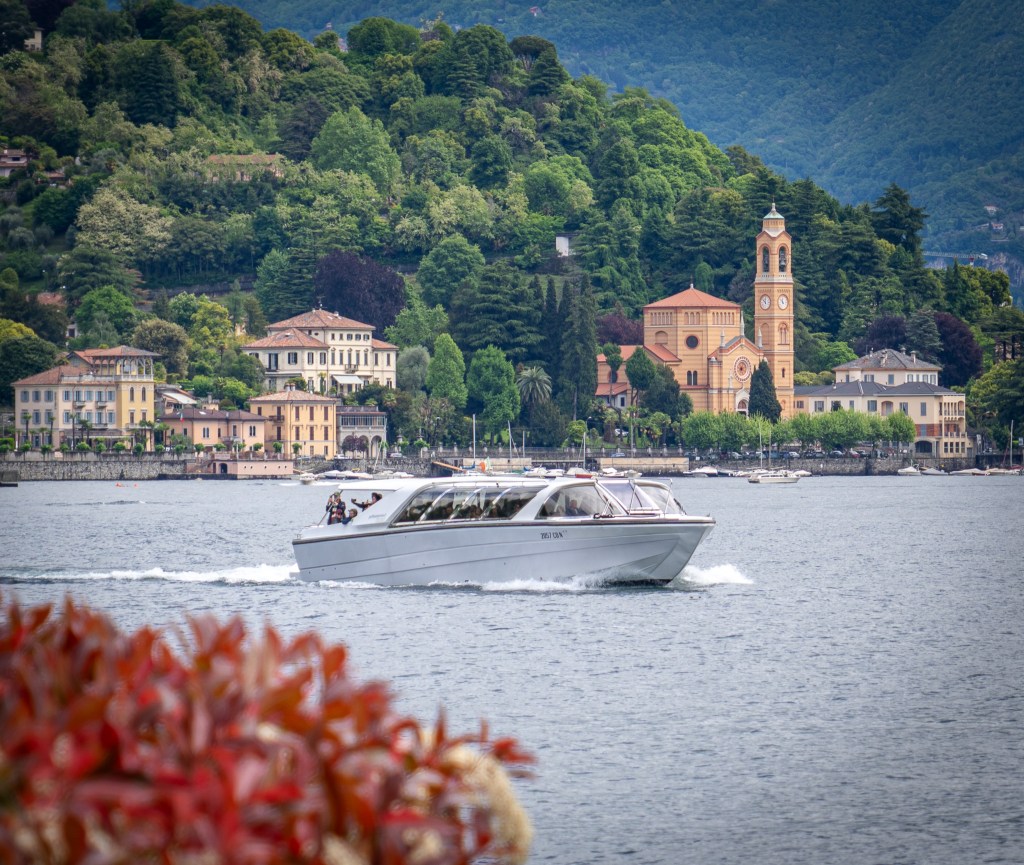
San Giovanni oozing charm. This was visible from our hotel across the lake. At night the tower was illuminated with a red spotlight.

Taxi, Como style.

Arrivederci!

Seville (Sevilla)

Capital city of the autonomous community of Andalusia. Famous for its architecture, culture and rich history. It is also considered the birthplace of Flamenco. And of course, no mention of Seville would be complete without a reference to Seville oranges. The bitter fruit that grows on trees throughout the city is highly sought after in places like Britain for making marmalade. The Spanish use the oranges for aromatherapy, herbal medicine and even clean electricity generation by using the methane generated from the fermentation process. Never as a foodstuff.

We visited the city at the end of October, which unfortunately coincided with some of the worst flooding Spain had seen for years. And while the heaviest rains and the worst consequences (including loss of lives) was in the Valencia region, several hours north, the rain fell for the entire duration of our three day stay. But Seville is such an outstanding city that even the rains didn’t dampen the spirits or spoil the enjoyment.

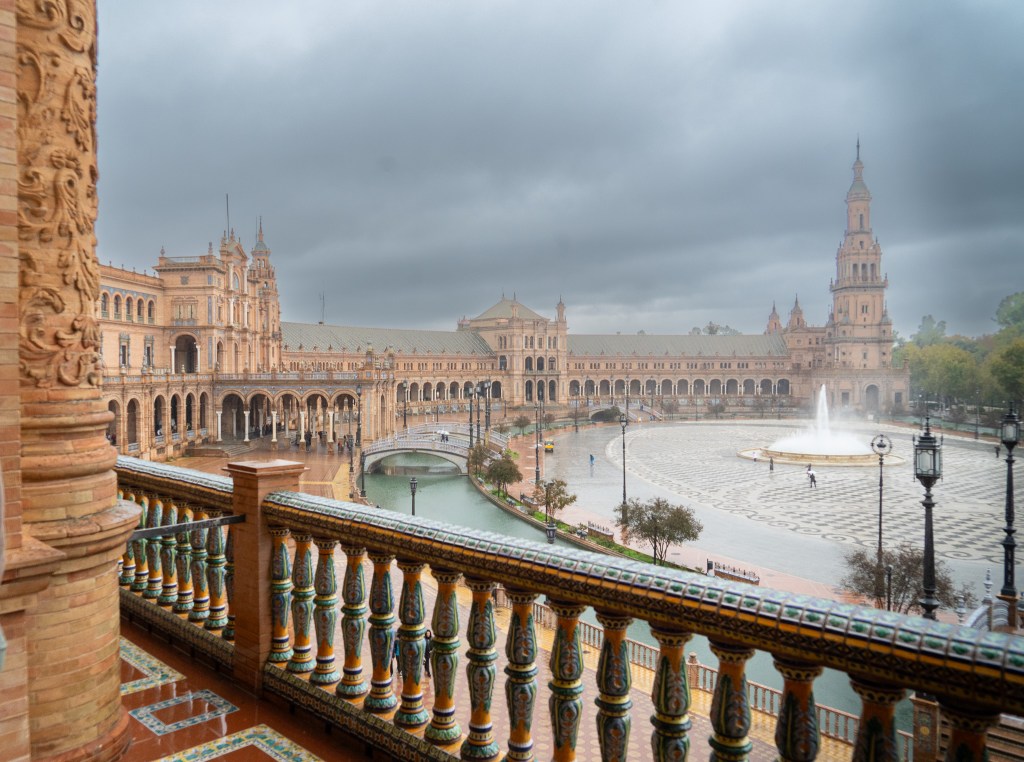
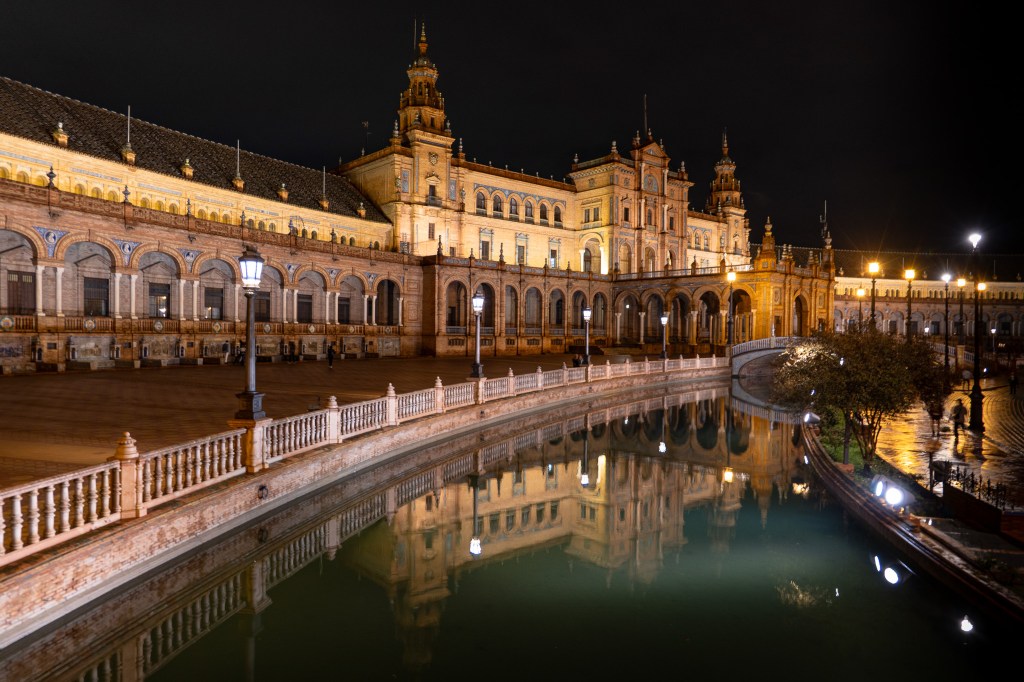
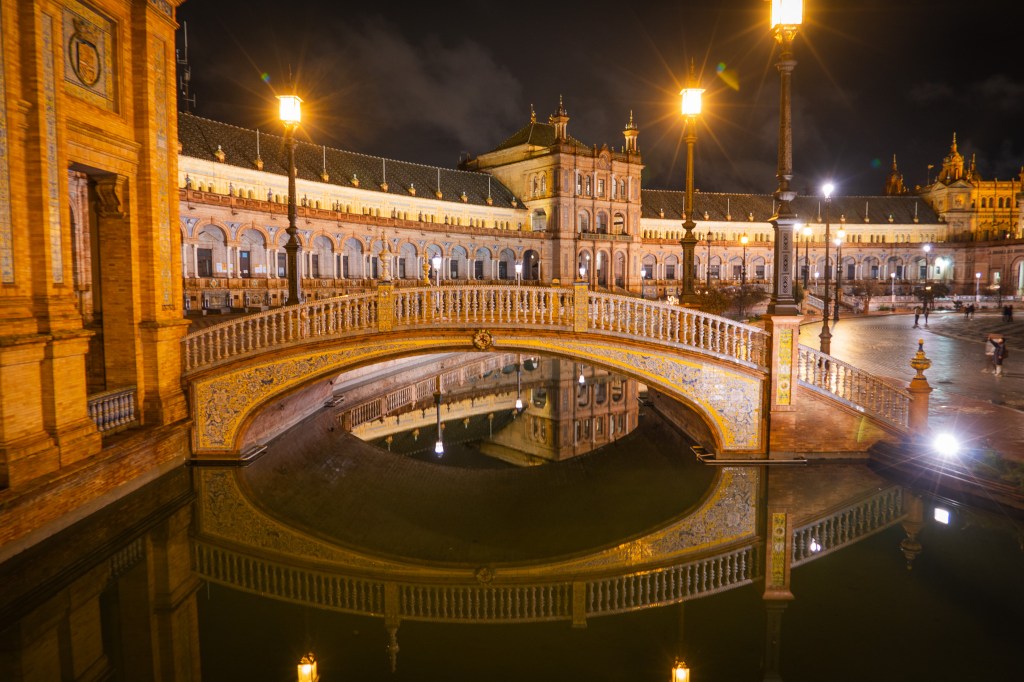
The Plaza de Espana was our fist port of call. Built in 1928 for the Ibero-American Exposition of 1929, it is an imposing structure of huge proportions.

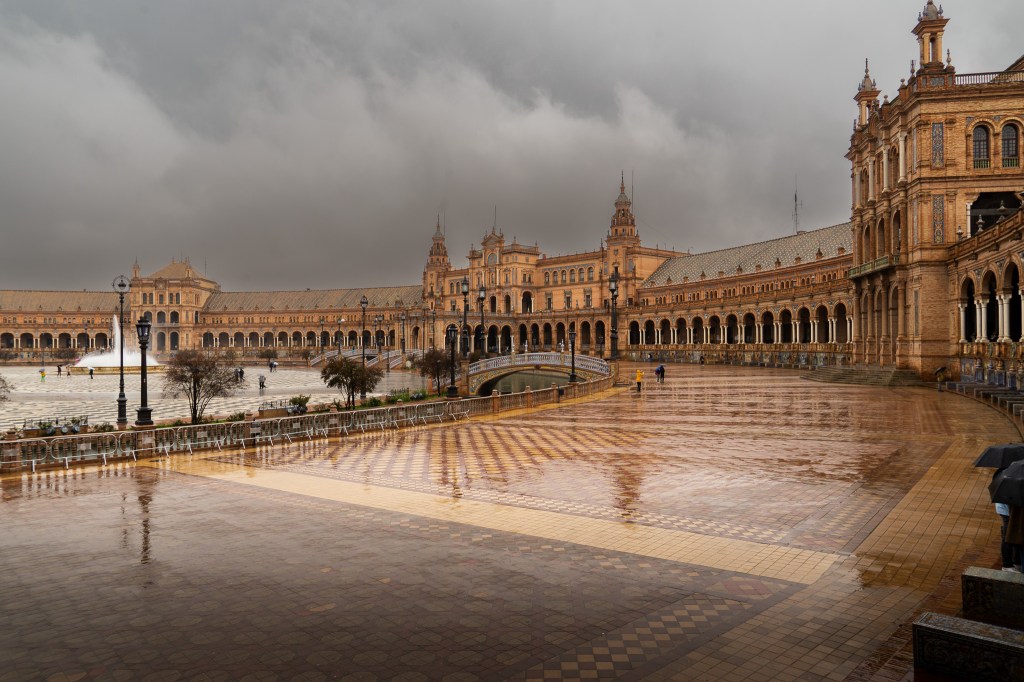
Plaza de Espana. The rain created a softening effect and kept most of the tourists away, which gave the place an almost ethereal feel.

Only extreme weather would cause this place to be so deserted but I wasn’t complaining. The deserted plaza allowed for some dramatic shots.

The cloistered walkway providing respite for the sodden tourists.

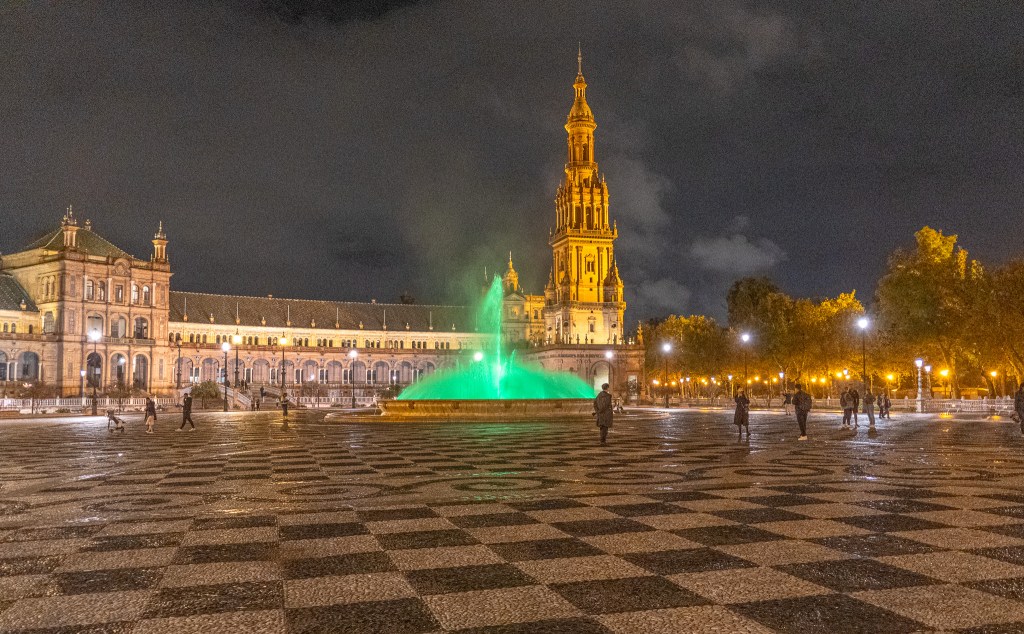
I loved this place so much that we made a return visit at night.

The lights and reflections in the canal created a sereneness that was palpable.

A splash of colour to lift the drenched spirits.

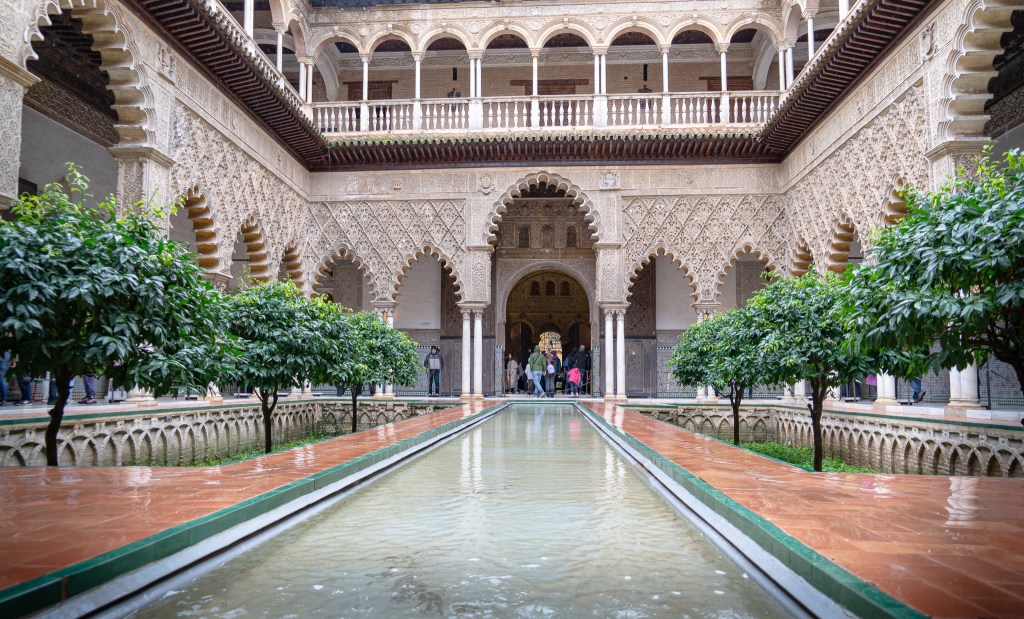
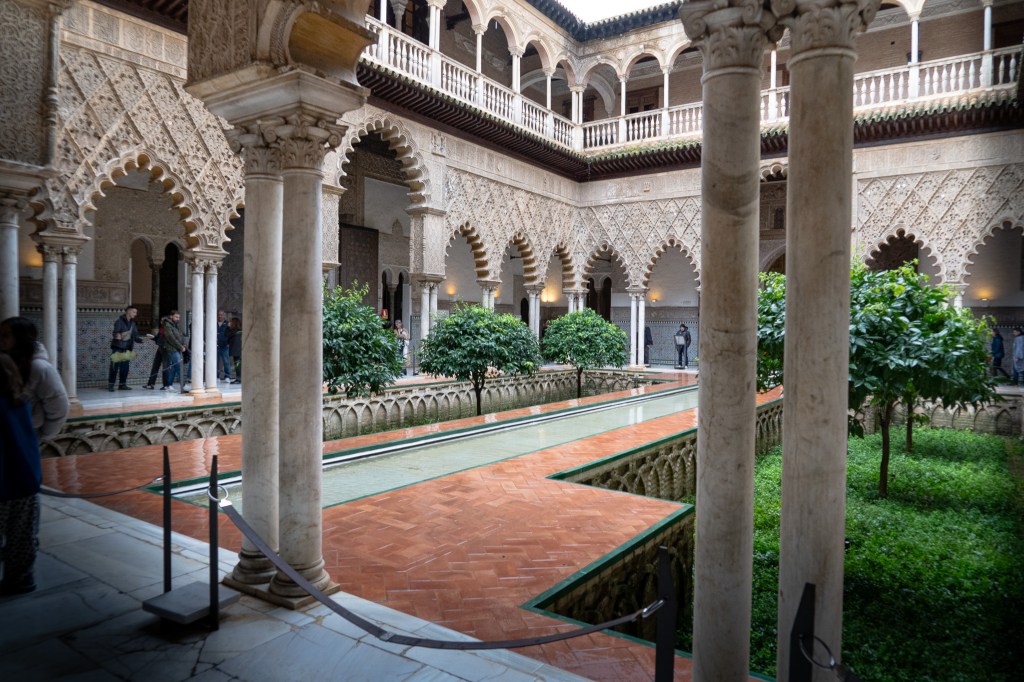
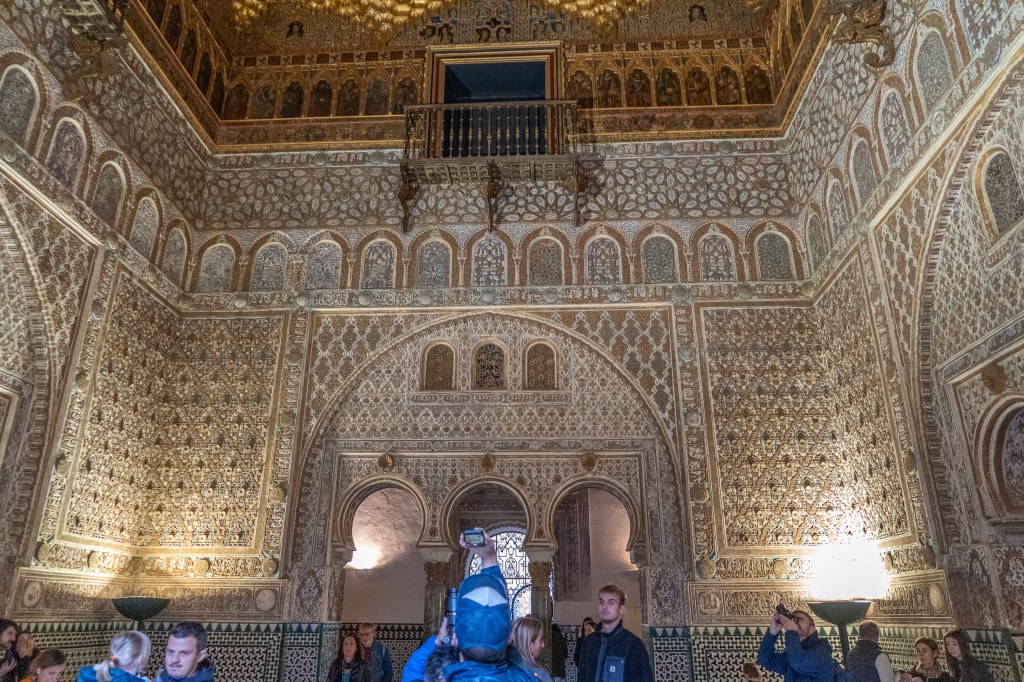
The Plaza de Espana had set a high standard but the Real Alcazar de Sevilla was every bit as impressive. Maybe not in terms of outward grandeur but once inside, the Moorish architecture was stunning. The attention to intricate detail in the stone carved arches alone make this place a work of art.

The term Alcazar is of Arabic origin, ‘al-qasr’, meaning castle or palace. It started life as the citadel of the city during the Islamic era in the 10th century. It was added to by successive Arab dynasties and finally by the Christians in 14th century. Fortunately, the Christians decorated the buildings in the Mudejar style which was derived from Islamic decorative designs, retaining the original character.

The Real Alcazar. An outstanding example of Moorish architecture.

A lot more tourists here than at the Plaza de Espana but I was still able to get the odd photo without the tourists clad in blue and yellow ponchos.

The level of detail in this place was staggering. It’s hard to imagine anything like this being replicated today. Not just because of prohibitive cost. I don’t believe there are enough craftsmen of the calibre needed to do it.

Another must-see in this city is Seville Cathedral (Catedral de Sevilla). A Catholic cathedral and former mosque, it is a UNESCO World Heritage Site. It is the largest Gothic cathedral in the world and dates from the 12th century.

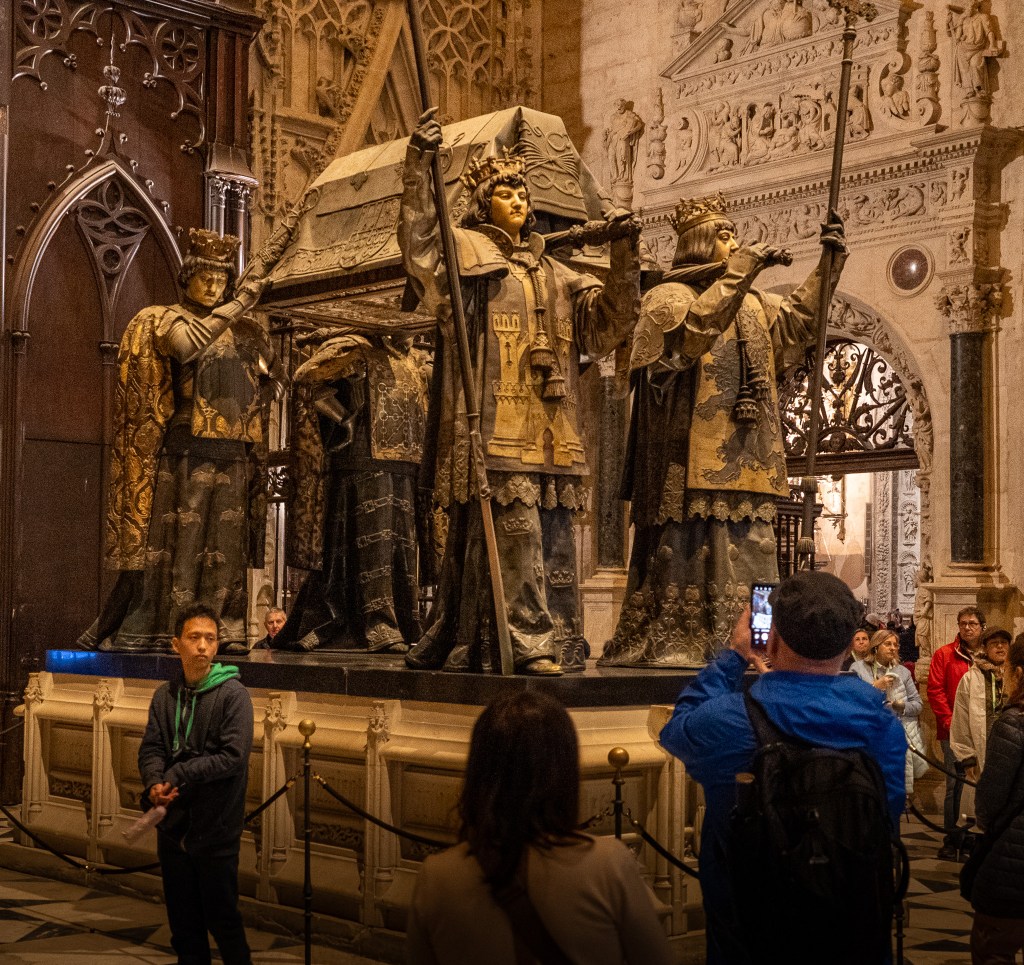
The cathedral contains the tomb of Christopher Columbus. The four pallbearers represent the four kingdoms of Spain from Columbus’s time-Castille, Navarre, Aragon and Leon.

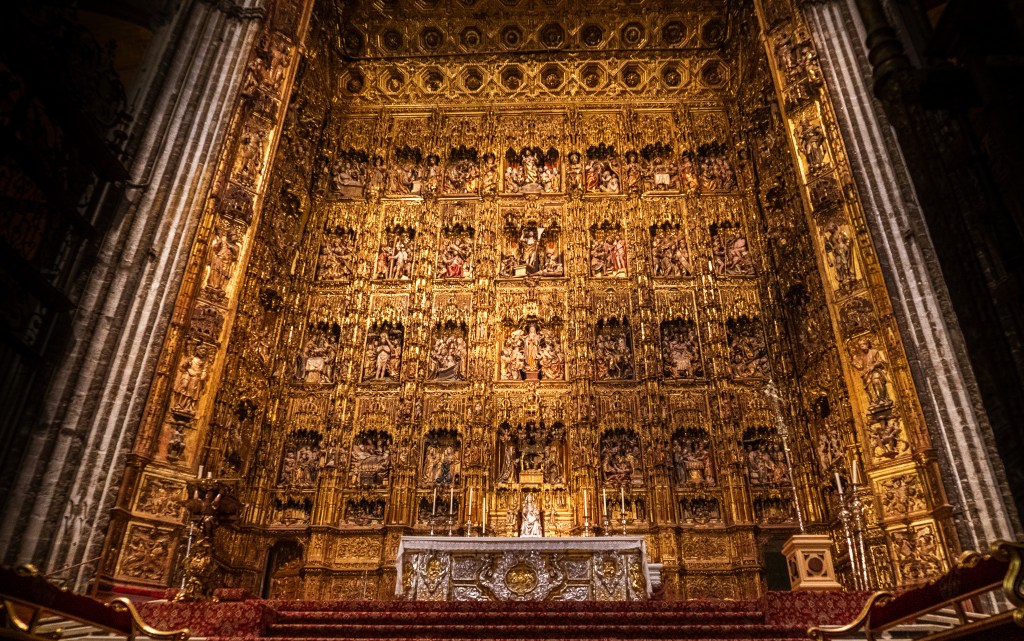
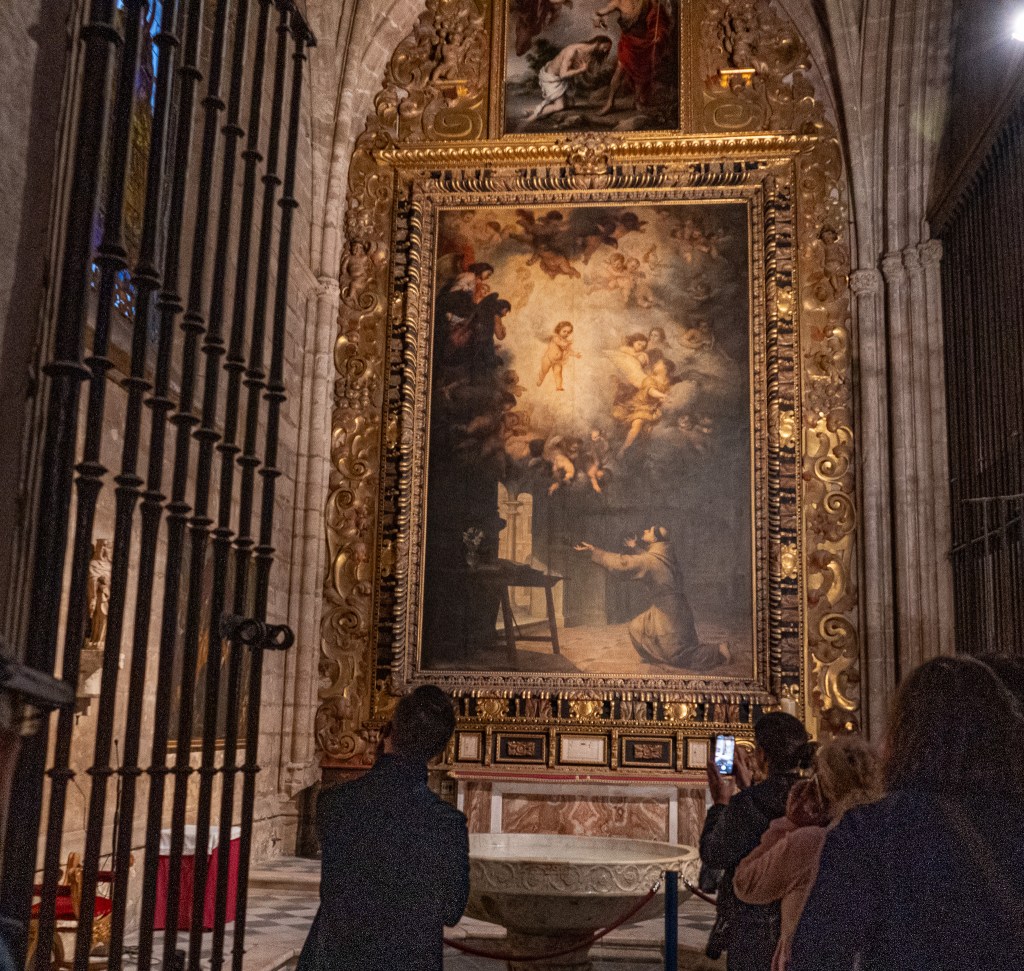
There are 80 chapels in Seville Cathedral. This is the Main Chapel. The altarpiece took 80 years to complete.

The works of art are numerous and captivating.

The scale of the cathedral is dramatic and the craftsmanship extraordinary.

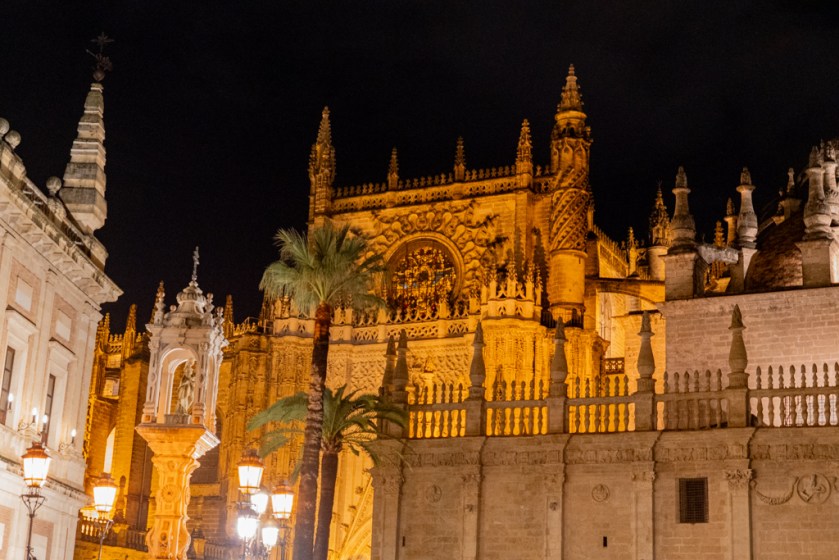
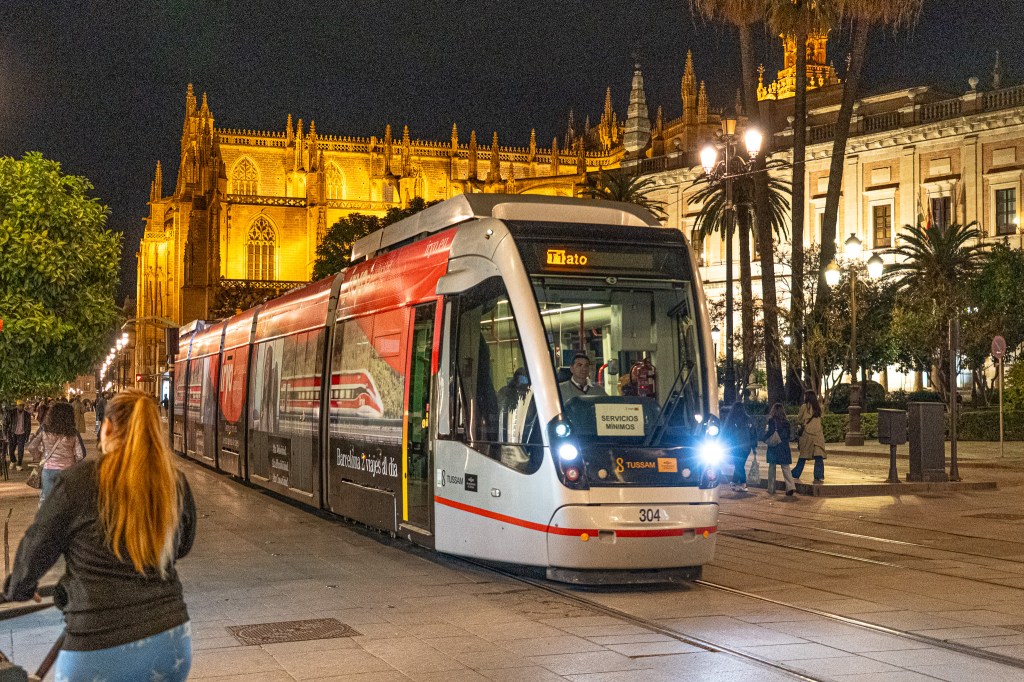
Seville Cathedral at night.

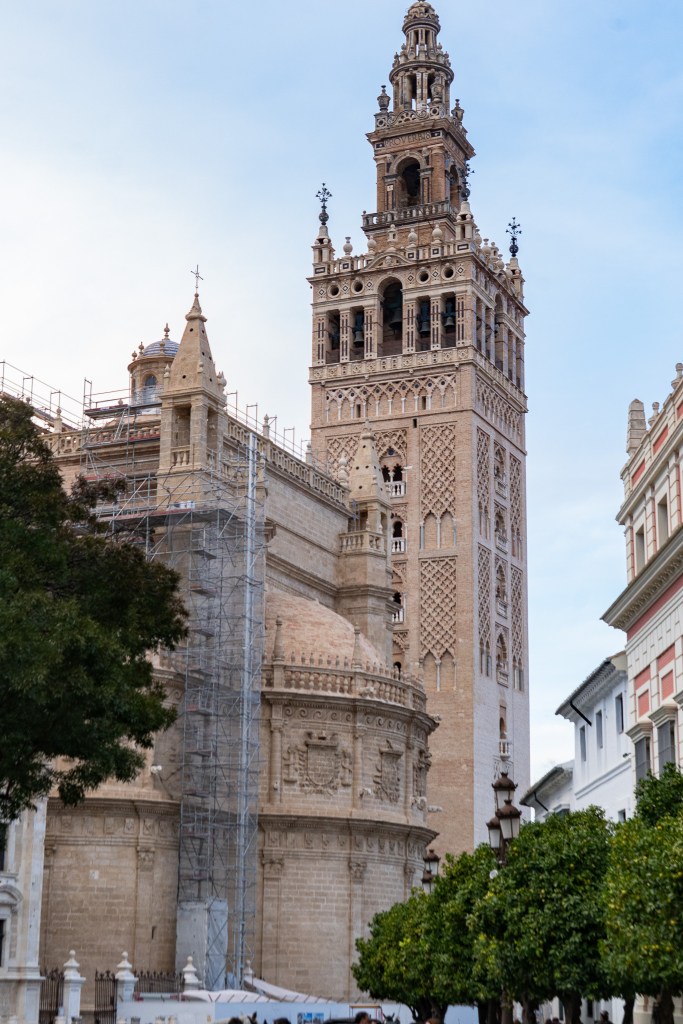
The Giralda Tower (La Giralda). Photo taken during a brief dry spell.

La Giralda is the bell tower of the cathedral. Originally a minaret for the Great Mosque, constructed in the 12th century, it is one of the most important examples of Moorish architecture in Spain. We climbed to the top for a view of the city but the weather conditions ensured it wasn’t the most pleasurable experience.

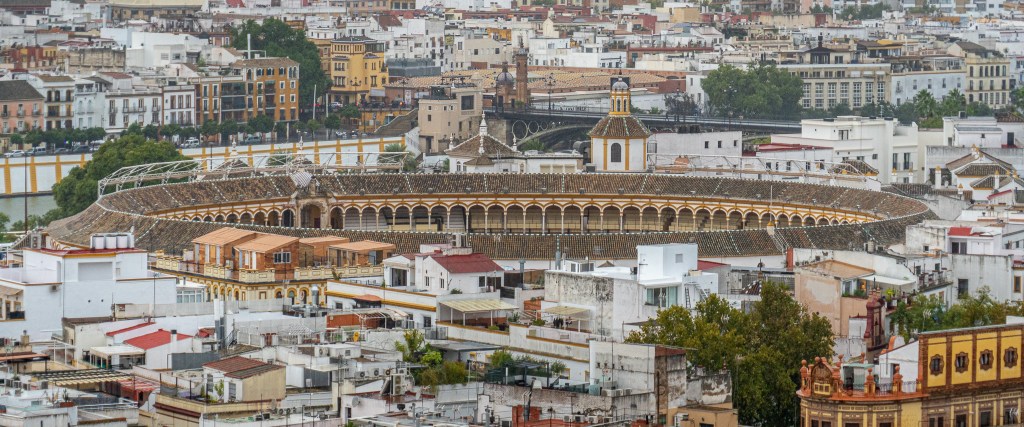
One of the few photos I was able to take from the top of the Giralda Tower. The Seville bullfighting ring.

Getting around Seville requires little effort.

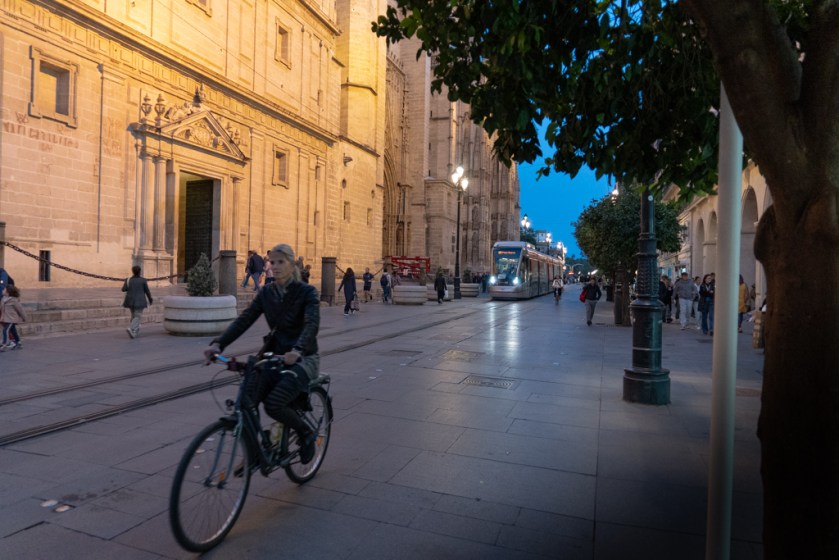
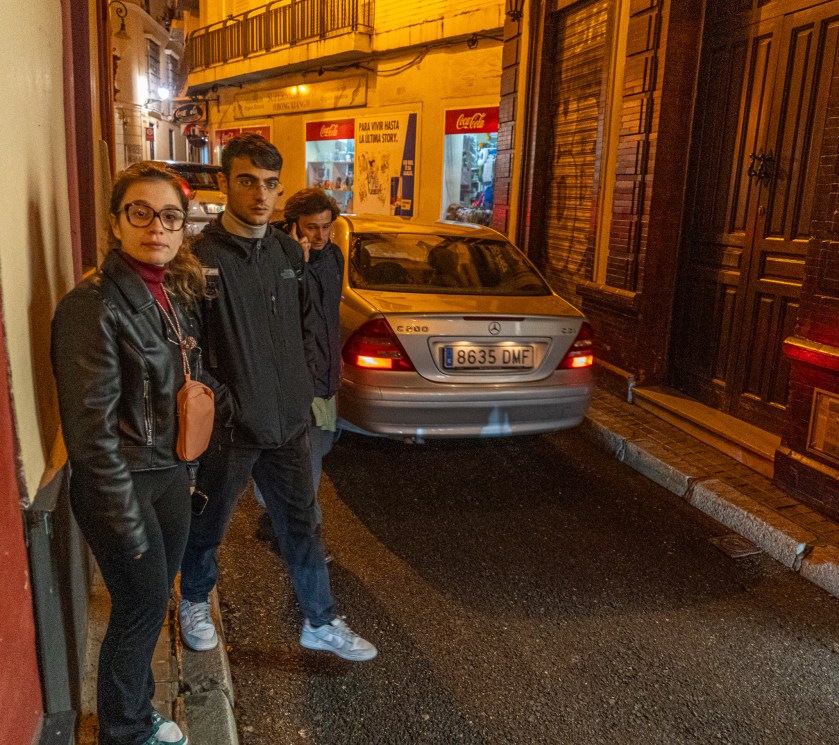
The centre of Seville is relatively flat but like lots of Spanish cities, the streets (even the very narrow ones) are a shared space. Trams, bicycles, cars and pedestrians are everywhere, so be aware of your surroundings.

You can’t please all the people all the time! Not sure if those are disapproving looks or merely curious ones..
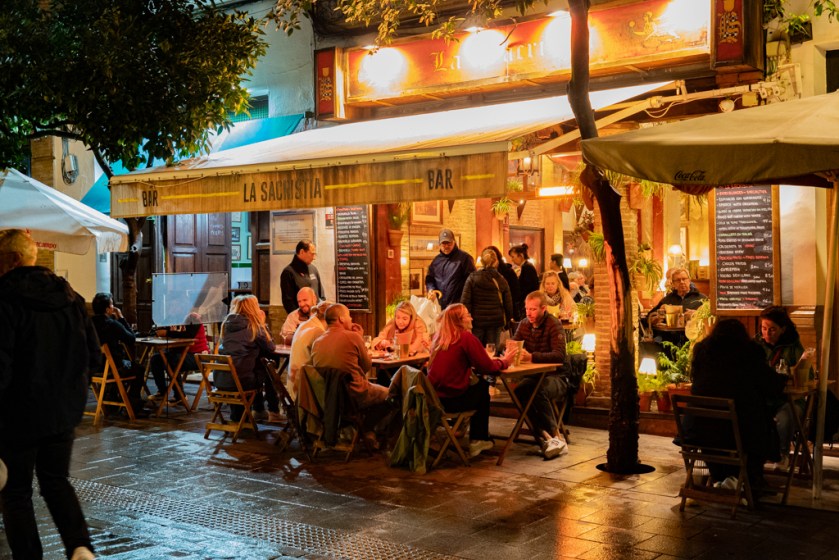
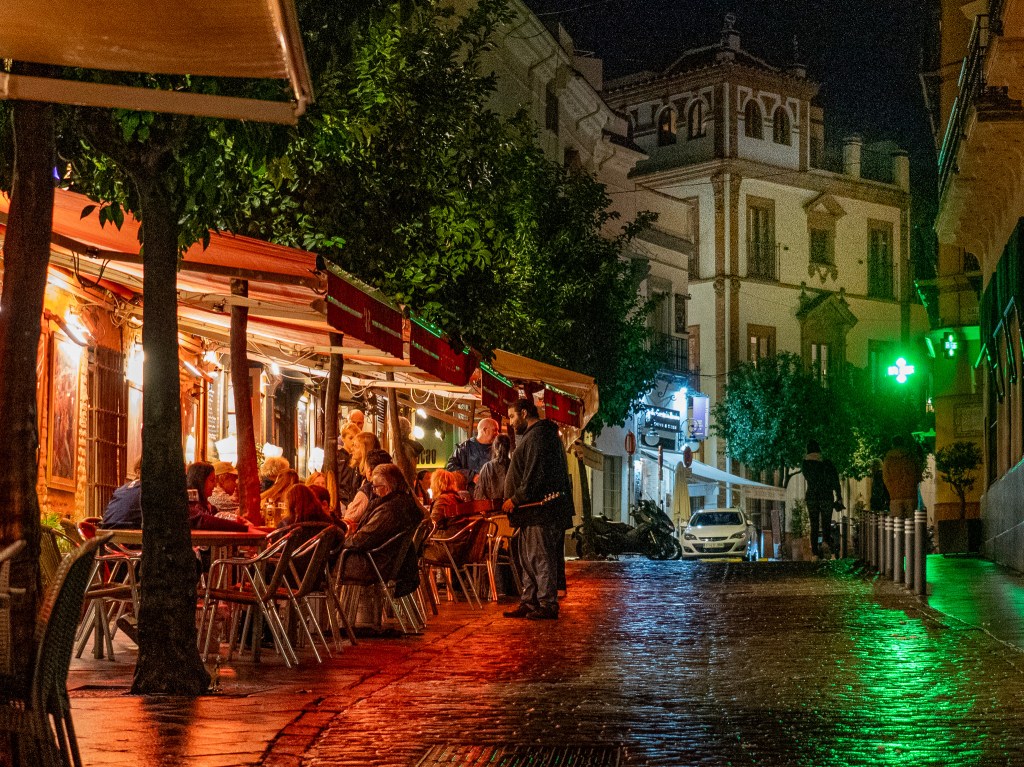
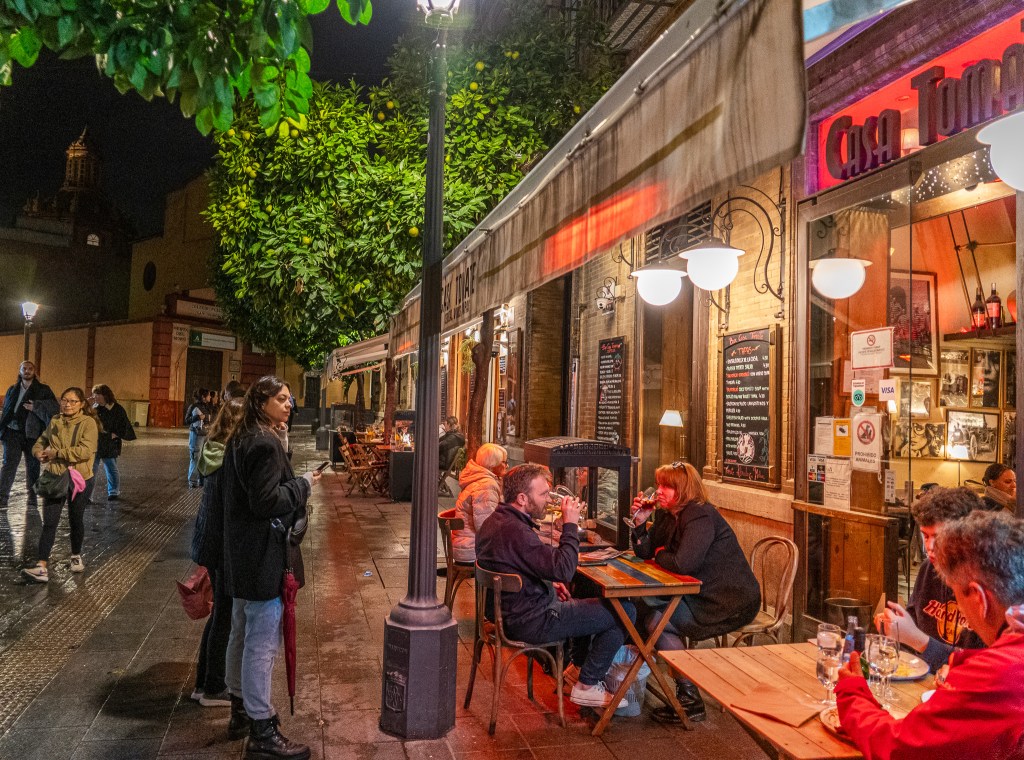
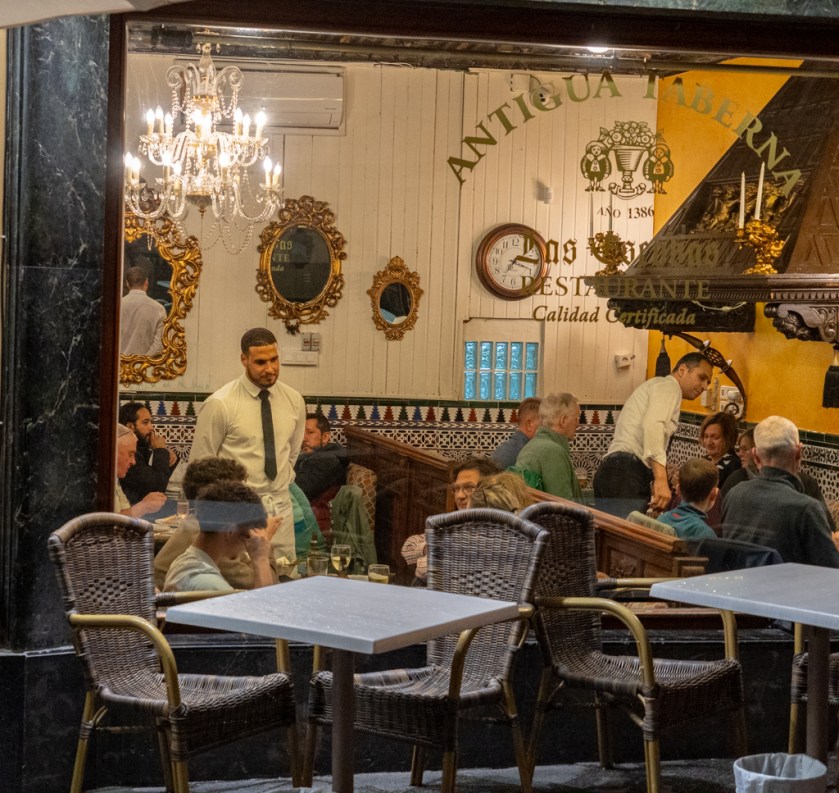
Despite the unrelenting rain, there was still a relaxed and enjoyable atmosphere in the evenings and the cafe culture was very much alive and kicking.
This street reminded me of the Montmartre area of Paris. The coloured lights reflecting off the wet cobbles added lots of character.

Love a bit of people-watching.

There was also the occasional quiet spot.

This scene reminded me of the Edward Hopper painting, ‘Nighthawks’

Sevillians are friendly and welcoming.

Eating out in Seville offers choice for every taste and budget. My favourite meal was ox tail at a bar/restaurant that had a bull theme (El Toro?)

Distasteful?

Not everyone would be comfortable surrounded by bulls mounted on the walls but bullfighting is an undeniable part of Seville’s history. I was surprised by how much these added to the authenticity of the place.

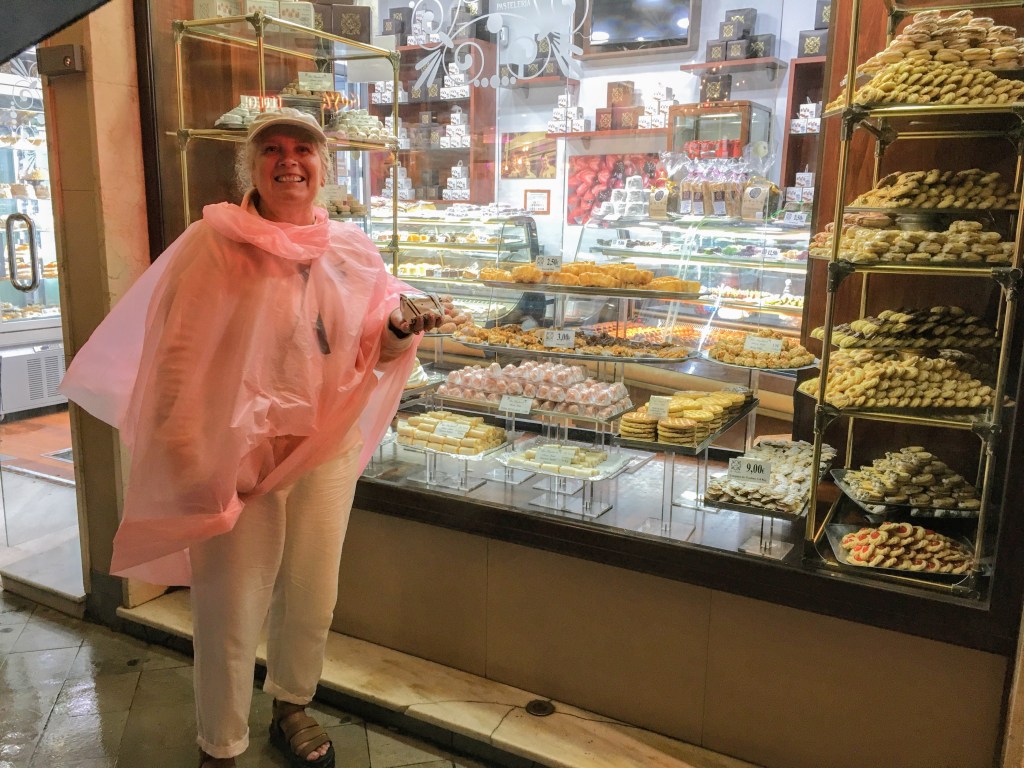
For those with a sweet tooth, an after dinner something was never far away.

I always judge the appeal of a city by my desire to revisit. I would definitely like to return to Seville. The weather curtailed our activities and there was so much more I wanted to see. The only respite from the rain took place on one evening. That’s when most of the photos were taken, with the exception of the Plaza de Espana where the cloistered walkway provided convenient cover. Hopefully when we see this beautiful city again, it will be in the sunshine and I won’t have to walk around with my camera secreted up my coat.

It’s easy when talking about a visit to a particular city, to forget to refer to the journey. On this occasion, the journey definitely deserves a mention. We left a relatively sunny and dry Costa Blanca and travelled by bus. As we headed south west, the countryside became increasingly green and lush as we traversed the agricultural heartland of Murcia. But the most spectacular, and surprising, leg of the journey came as we approached Granada. The landscape changed to a rocky scene and the bus started to climb steeply into the Sierra Nevada mountains. The snow capped peaks were an unexpected but awesome sight. There was also a notable drop in temperature. Then as we descended into Granada, the snow gave way to greenery again and the countryside was dotted with the distinctive villages of Andalusia, with their whitewashed walls and terracotta roofs. The journey, including a pit stop, took around 5 hours but the scenery made it seem shorter. And very memorable.

Norway. Land of the Midnight Sun

When the opportunity to cruise to the Arctic Circle arises, you need to grasp it. You know if you don’t, you will probably regret it. And when the cruise ship is leaving from the city you live in, meaning no flights or long drives? It’s a done deal. And so, we set sail from Belfast, stopping en route to pick up more passengers in Liverpool before heading north to Norway.

We sailed with Ambassador Cruise Line on board the ‘Ambition’. It is smaller than some of the modern giants and holds around 1,200 passengers. It lacked some of the glitz associated with the bigger ships but the cabins were very clean with ample space and the crew were friendly and attentive. The food was of a high standard with plenty of variety.

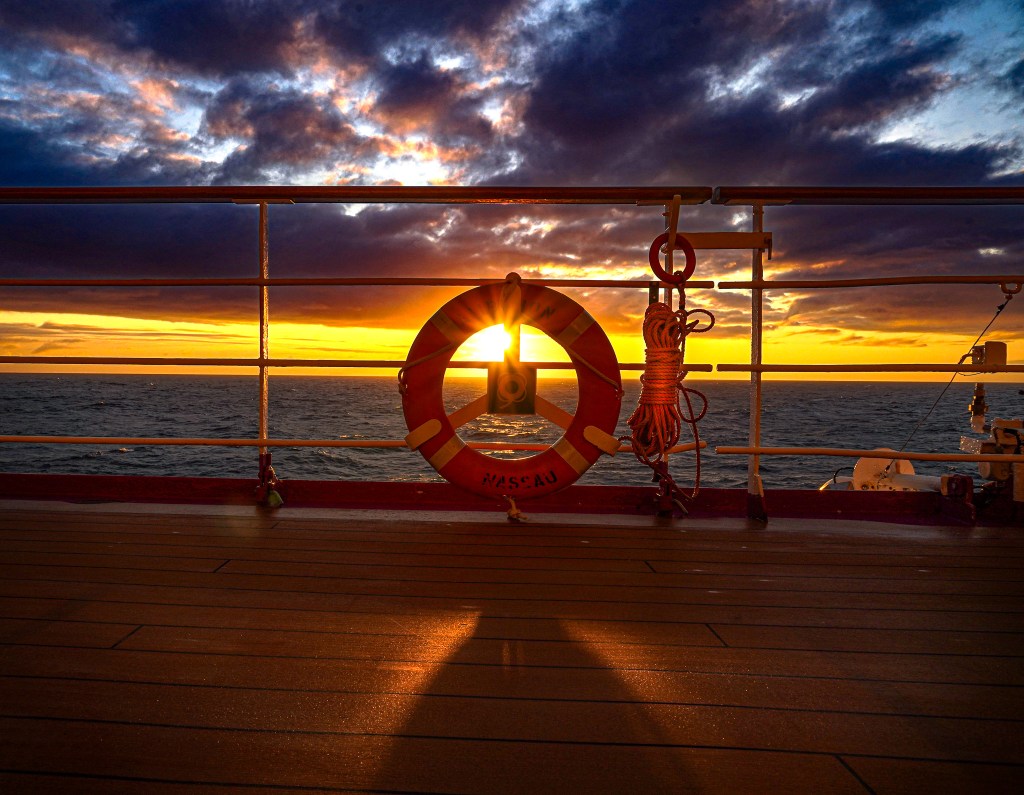
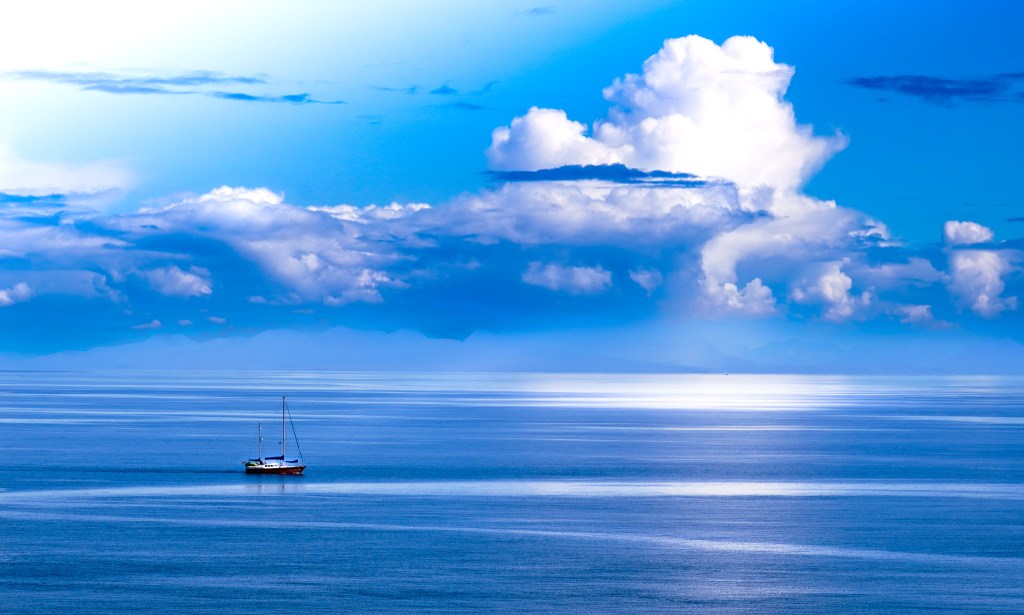
Sunset from the lower deck as we left the North Sea and entered the Norwegian Sea.

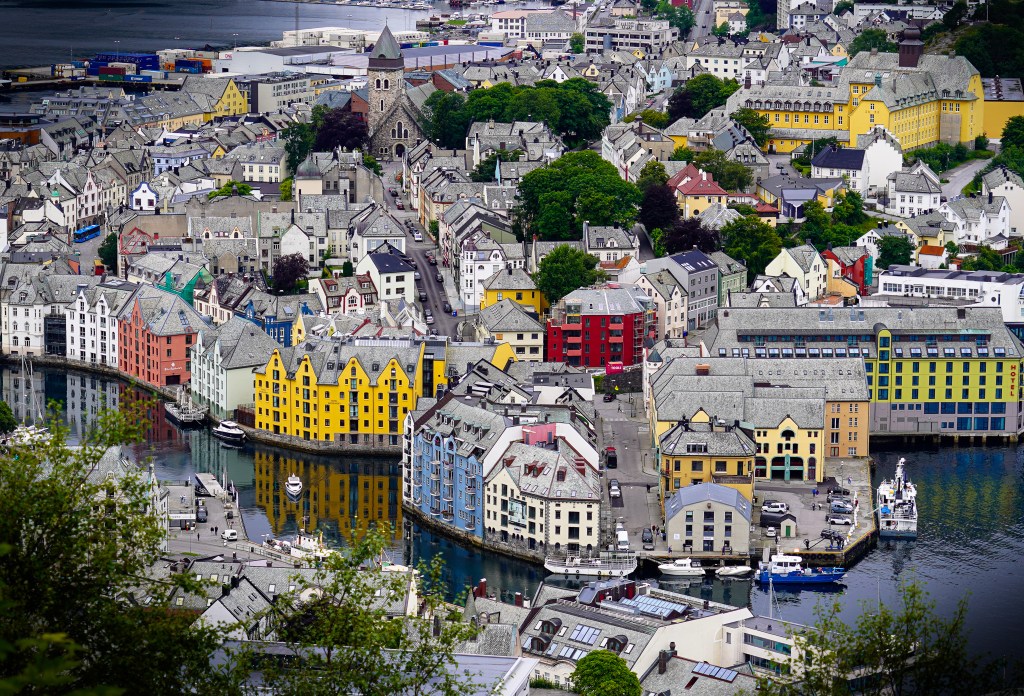
After two days at sea, we docked at Alesund on Norway’s west coast, around 400 km north of Bergen and 1,220 km from Liverpool. The town is colourful and picturesque. The houses and buildings are uniform in appearance because they were all built between 1904 and 1907, after the town was destroyed by a fire. The timber construction and high winds on the night of the fire, ensured total destruction. The town was rebuilt in brick, stone and mortar in the Art Noveau style.

Alesund. Photo taken from a vantage point above the town. A steep climb (418 steps) but worth it for this view.

Our next stop was Narvik, 1,200 km north of Alesund. The town was of strategic importance during World War II because of its coastal position and its rail link to Sweden. This rail link was our main reason for leaving the ship. Not for any historical reason but rather to view the striking scenery from the train that travels from Narvik to Abisko in Sweden.

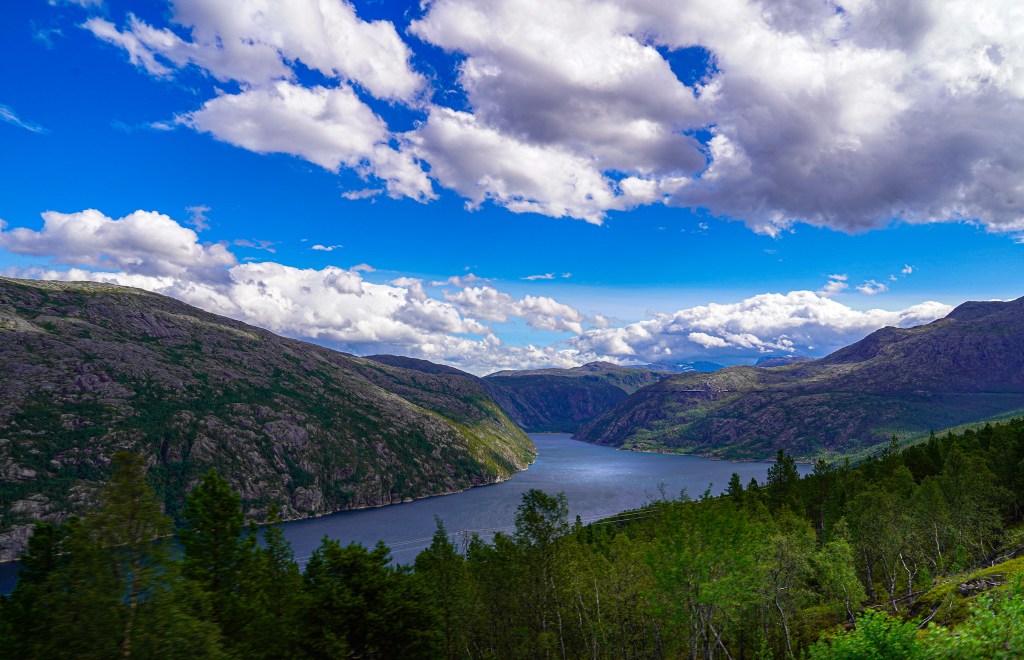
Rombaken Fjord. Not easy taking photos from a moving train but at least no one objected to me hanging out the window.

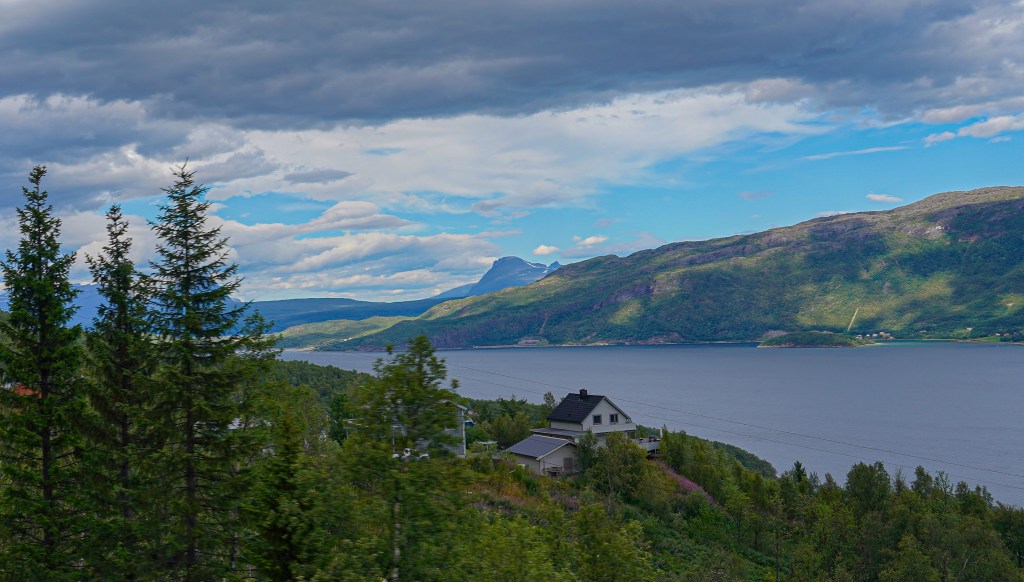
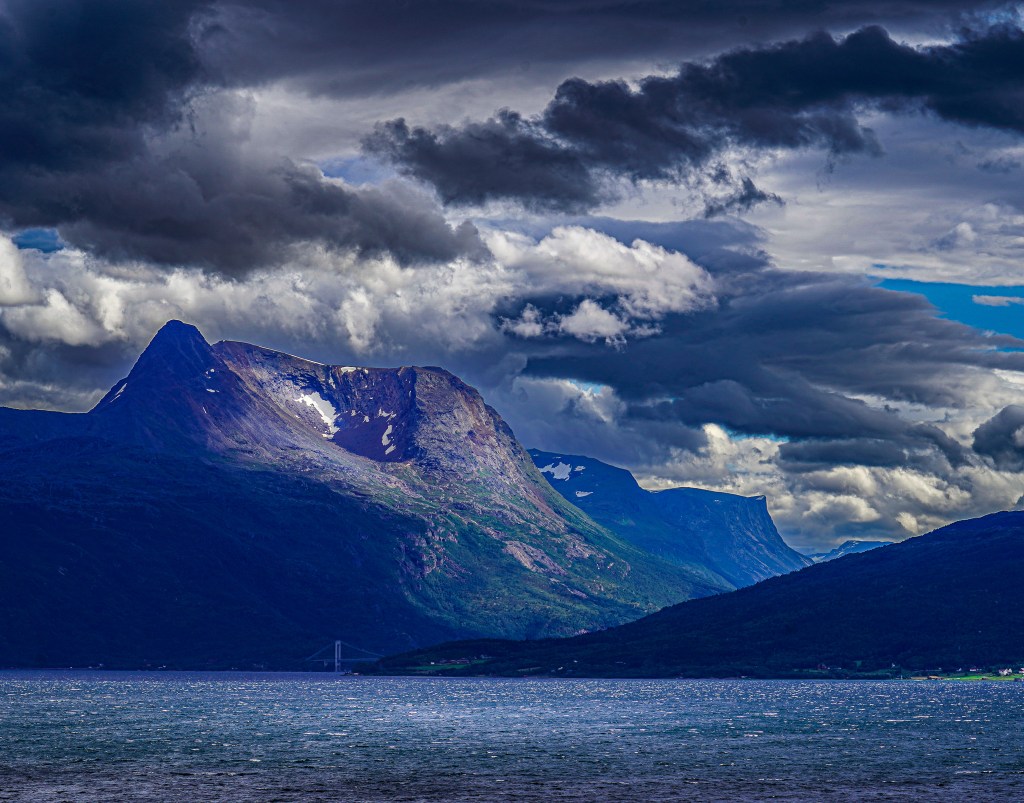
Rombaken Fjord. This shot reminded me of NW Donegal in Ireland. Both are likely the result of the same glacial processes that carved out landscapes 12,000 years ago.

Dramatic skies over the fjord. The suspension bridge in the distance is dwarfed by the enormity of these majestic giants.

Tromso. Now we were inside the Arctic Circle. We had travelled 1,400 km from our first Norwegian port, Alesund and the days were getting decidedly longer. You don’t really know what to expect in the ‘Land of the Midnight Sun’. The further north you go, the brighter the nights, until it’s a kind of twilight around 1am. Then it starts getting bright again! A strange experience and one which makes sleep difficult. I worked shifts years ago and it brought it all back to me. Sleeping during daylight just isn’t natural. I should point out at this stage that our cruise took place in July.

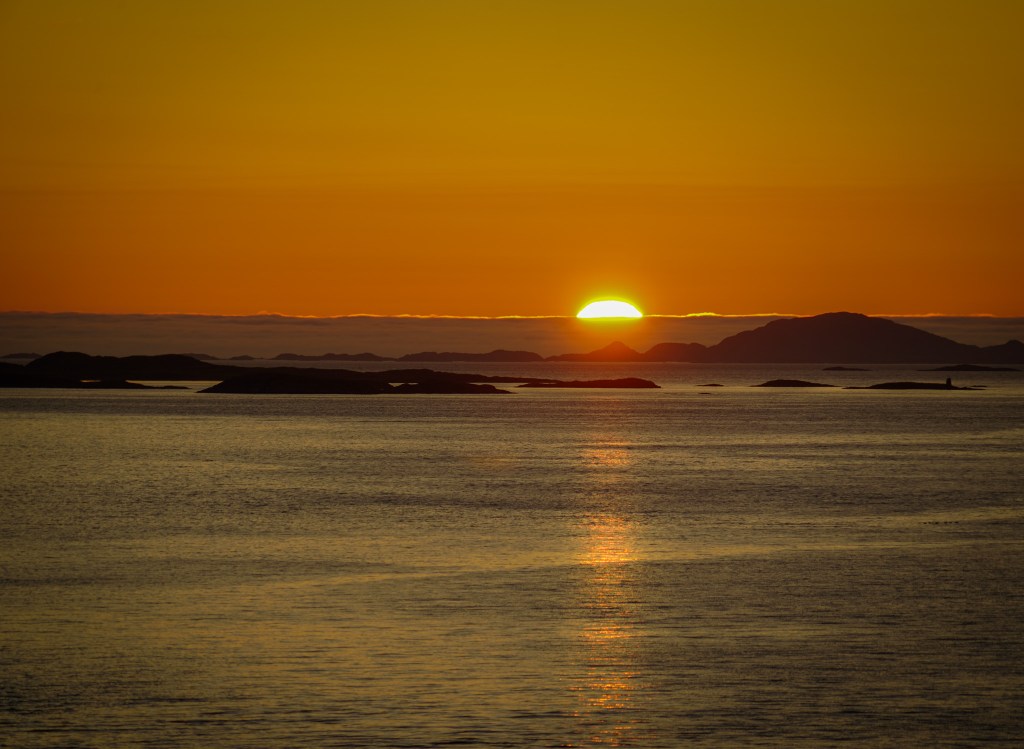
Midnight sun. Watching the sun almost set and then rise again can challenge your perception of reality!

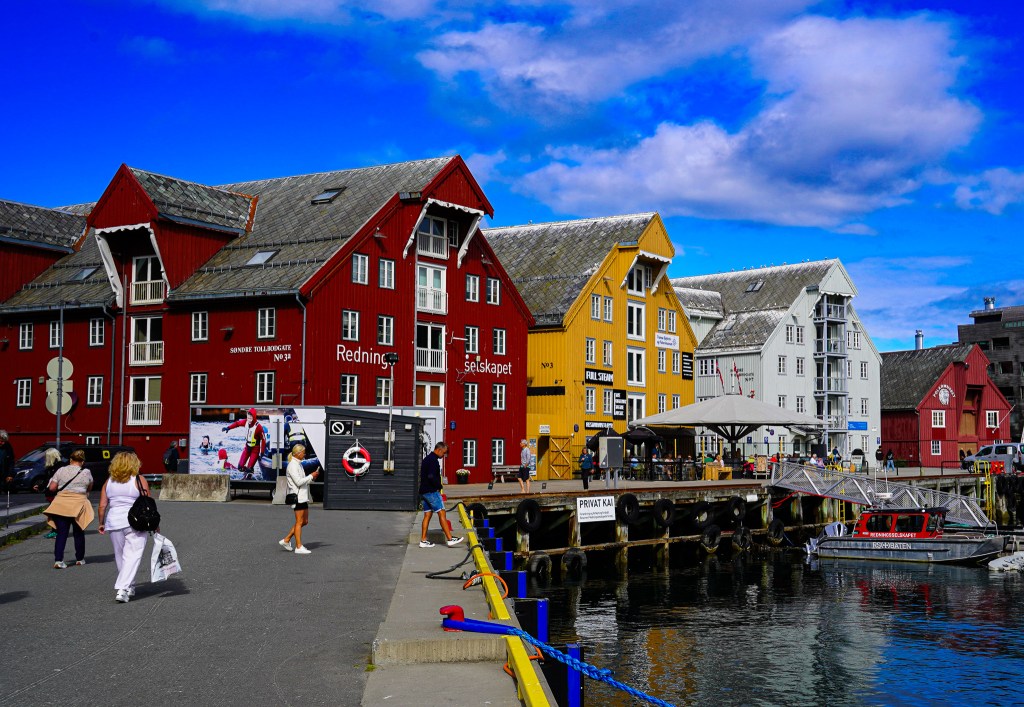
The colourful harbour at Tromso. It was a surprise to me that daytime temperatures inside the Arctic Circle could reach 20 degrees Celsius.

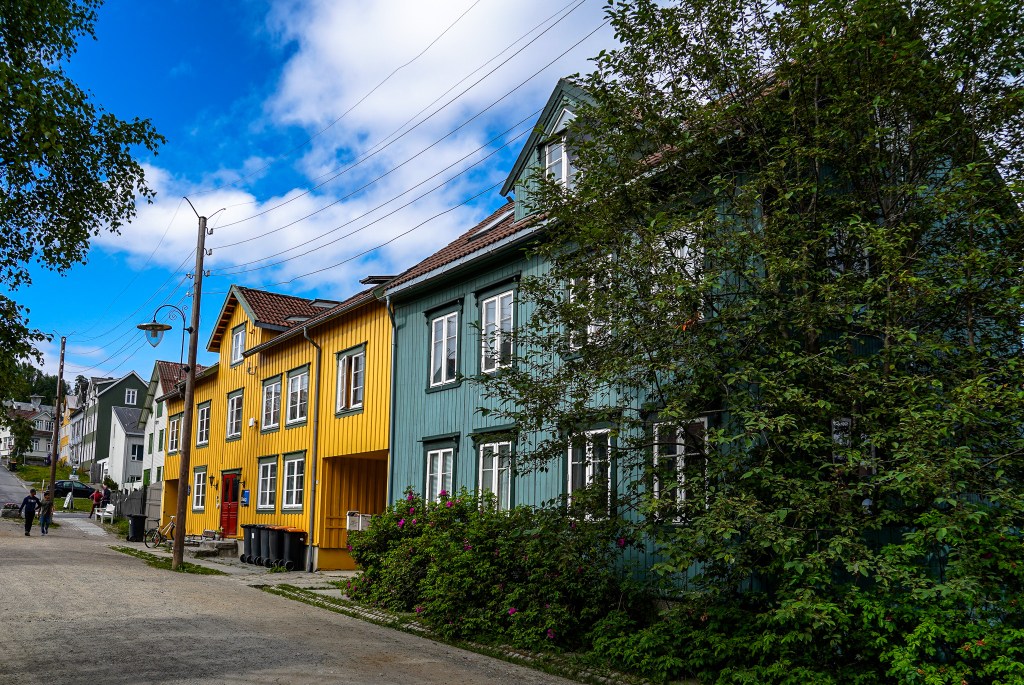
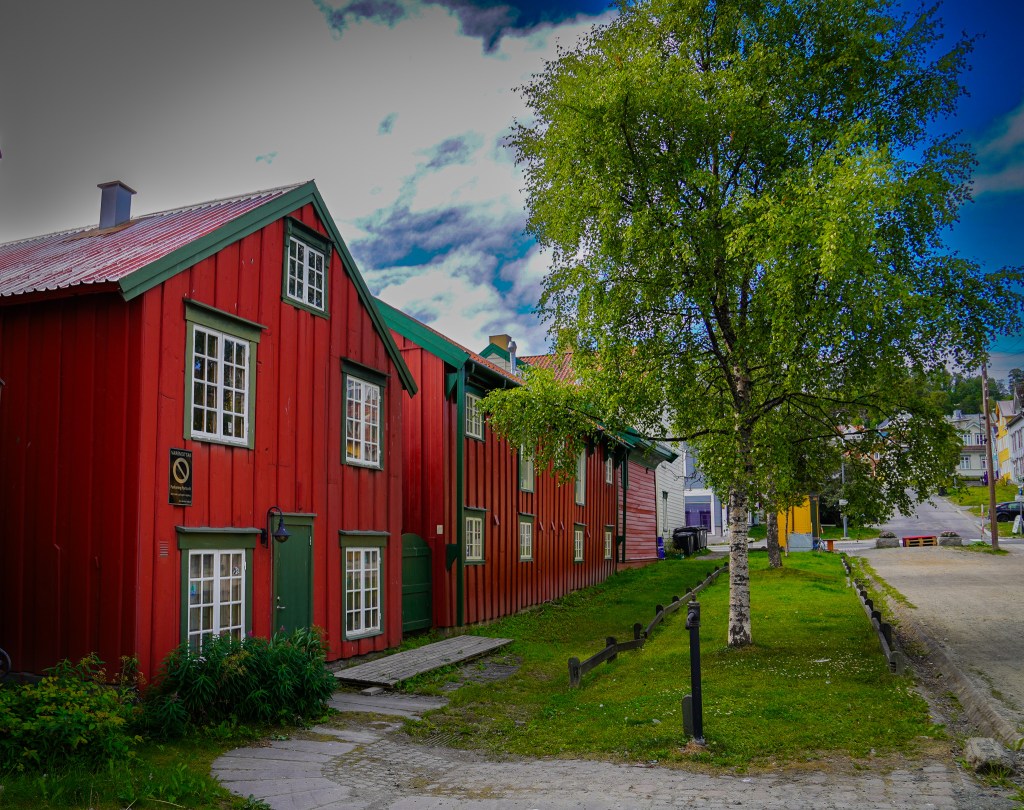
Distinctive colours give ordinary houses character.

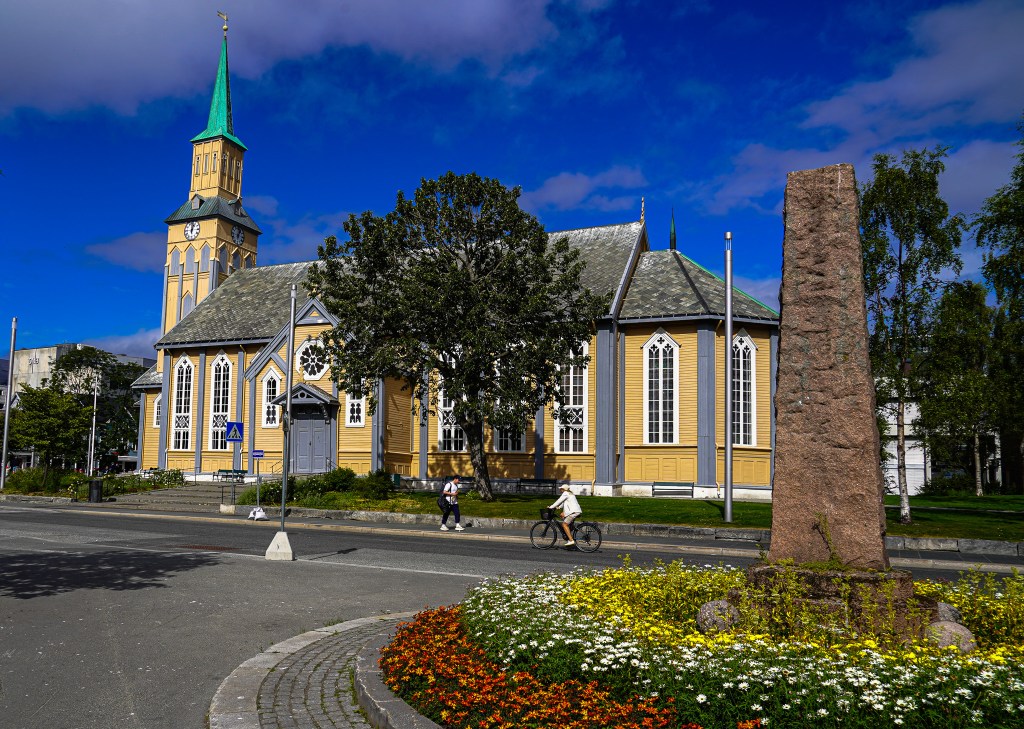
Tromso church.

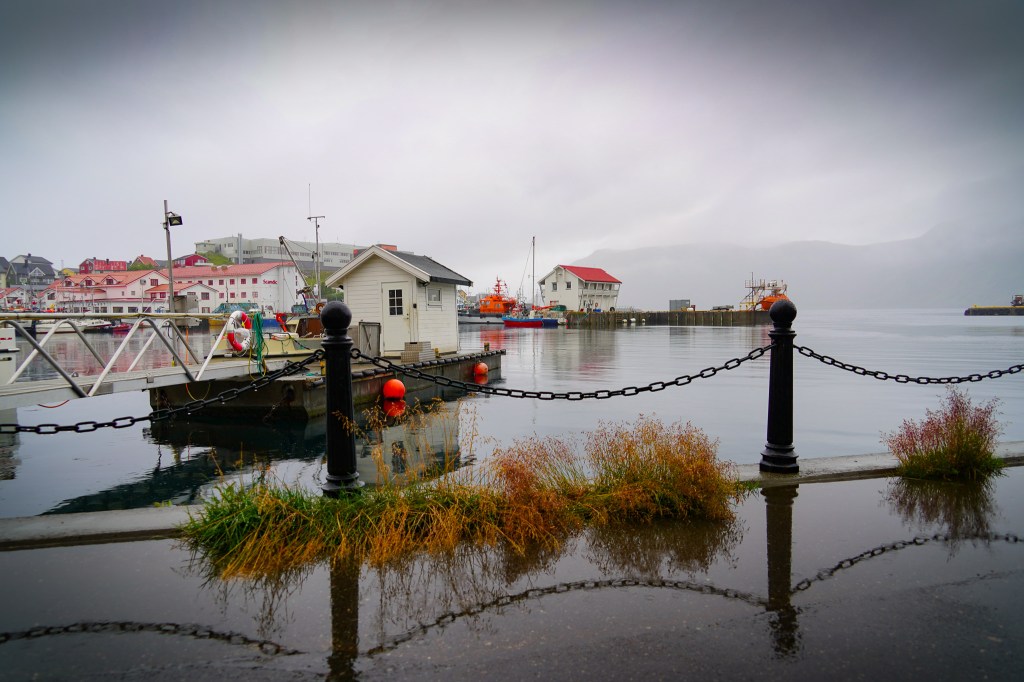
Honningsvag. Our most northerly port. In fact, Honningsvag is the most northerly city in Europe and 1,900 km from Alesund. One thing to note about this place is that, although the sun may not set for weeks on end, it can be misty and fogbound due to its climate and topography. It has unexpectedly mild temperatures due to the North Atlantic Drift, which is a warm sea current that extends the Gulf Stream to these far reaches of Europe. This is also why the ocean here is ice free.

Honningsvag. I’ve never been able to decide why this is my favourite photo from the whole trip. It may have to do with the atmosphere created by the mist and the stillness that provided the reflections.

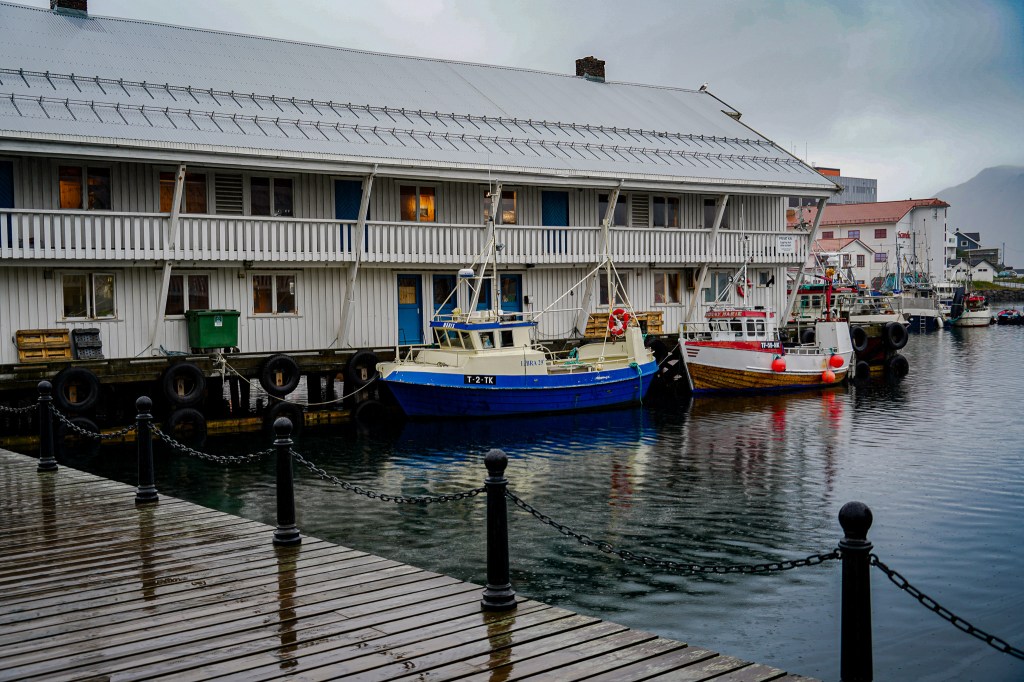
Even on a rainy day, Honningsvag has a distinct charm and a pace of life that we can only dream of.

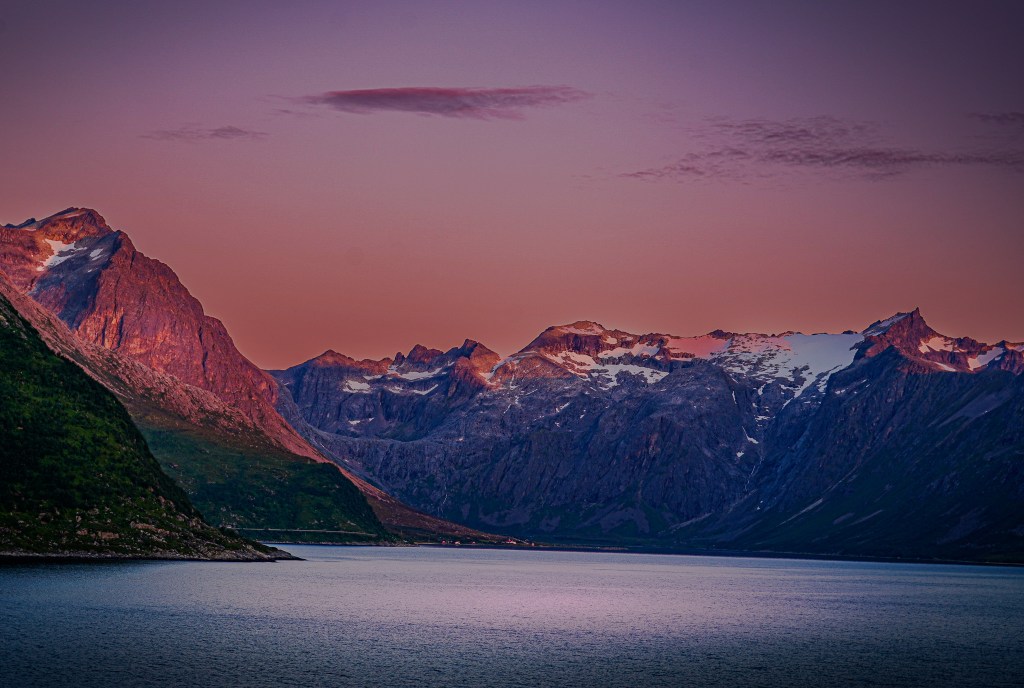
The low sun colouring the sky and highlighting the snow capped peaks of the fjord. The houses on the shore are just about visible.

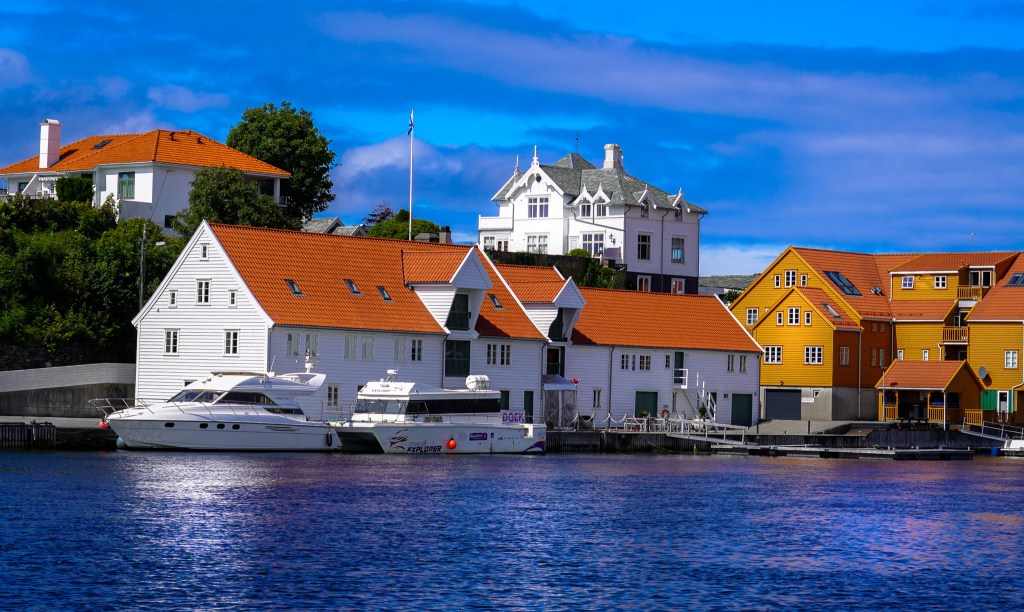
Haugesund was our last port of call. We docked here on the return journey home. It was our most southerly port, situated 550 km south of our first stop, Alesund. The town was lively and had more of a buzz than any of the other ports we called at.

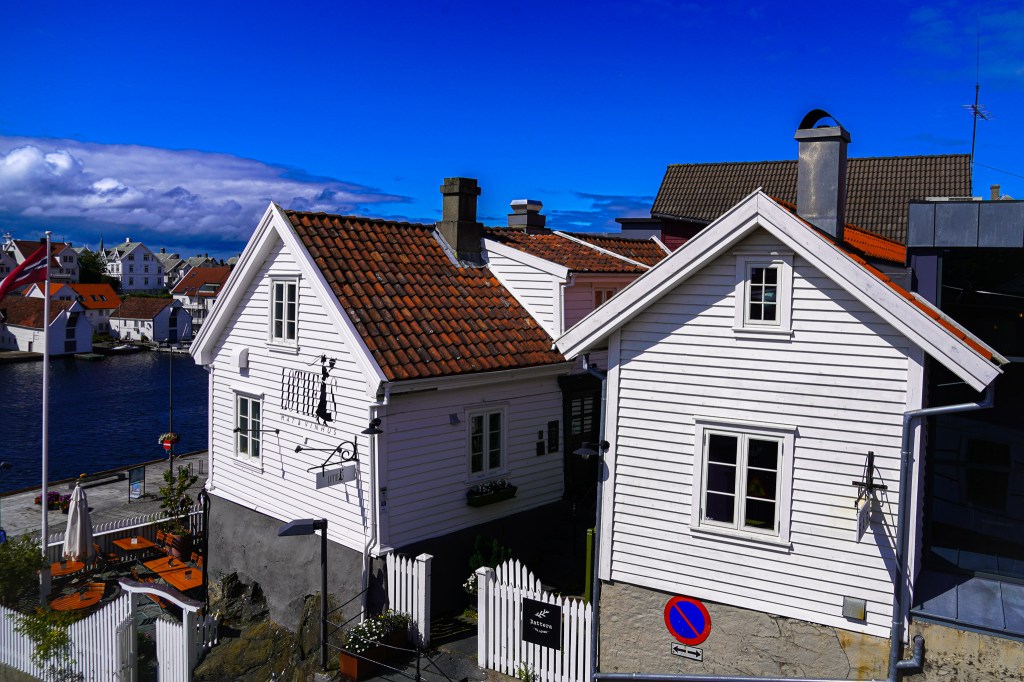
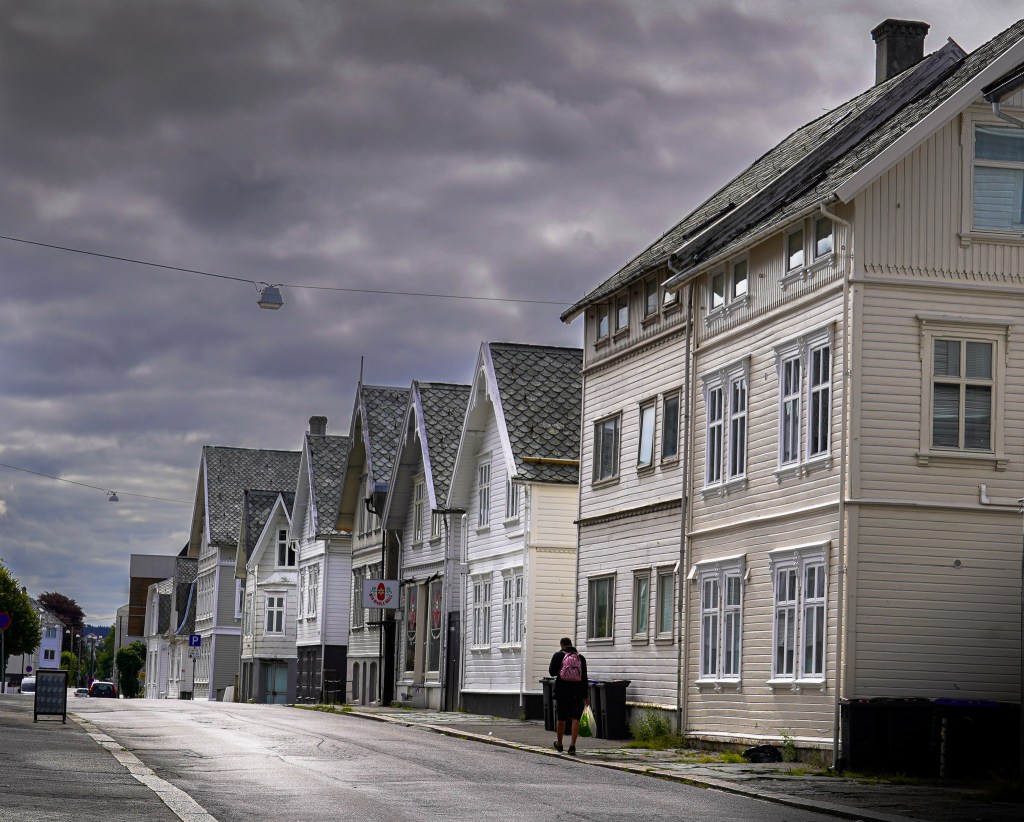
Massachusetts vibes in Haugesund.

Terracotta rooftops and white clapboard houses give Haugesund a bright and uplifting feel.

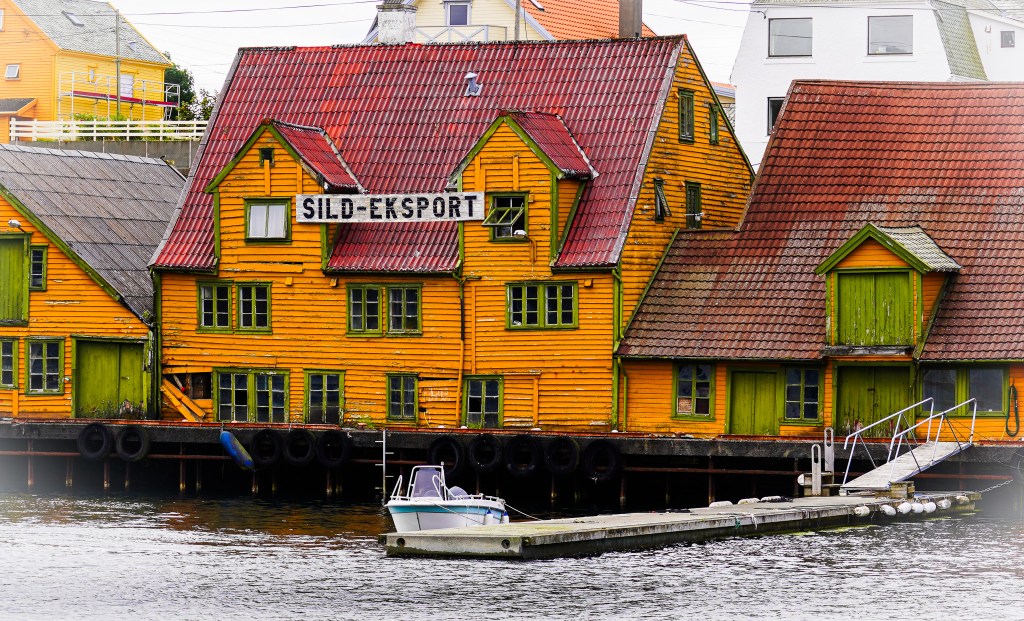
Nostalgic remnants of another time in Haugesund’s history.

On the edge of town, the character prevails.

The last photo I took as we headed home. An appropriate symbol of a taste of life at sea.

Summary. It was two weeks long and we enjoyed every minute. I would never describe myself as a cruise fan but there are a lot of positive things to be said about them. For me, the main appeal is the opportunity to visit places that would simply be too expensive to visit, once flights, accommodation and meals are factored into the equation. I don’t know exactly how much it would cost to fly to Norway and visit 5 towns or cities and pay for accommodation and food in each of those places. At a guess I would say triple the cost of our cruise.

Tip. If you are travelling alone or as a couple, be aware that you may be dining with strangers. This can be an opportunity to make new friends and enjoy some stimulating conversation. Or, mealtimes may become the time of day that you dread most and end up sneaking to the burger bar to avoid your allocated dining partner who believes that everyone else really does want to hear their views on how to make a million pounds/dollars. Worse still, you could end up acting as a referee to that couple whose favourite pastime is hurling abuse at each other and dessert is a large portion of uncontrollable sobbing. Extreme examples, I admit but these things happen. We travelled with family/friends, so we avoided any of those scenarios. This advice applies to cruises in general. In relation to Norway as a country and a specific experience, I highly recommend it. The scenery is spectacular and the people are friendly with a strong social bias, so a warm welcome is pretty much guaranteed.

Valencia

Valencia is the name of the city, the name of the province and also the name of the autonomous community. This piece refers to the city of Valencia. It is the third most populated city in Spain after Madrid and Barcelona and sits on the eastern coast above the Costa Blanca.

A very brief history: Valencia was founded by the Romans in 138 BC. The Visigoths conquered the Iberian peninsula in the 5th century after the fall of the Roman Empire and established a kingdom in Spain. In 711 AD Spain was invaded by the Moors. They occupied the city and today their influence is still evident in the architecture and irrigation systems that have shaped the city and whole regions of Spain. The Christian conquest of Spain was a gradual process which ended in the 15th century with the fall of Granada.

Valencia is around a two and a half hour drive from our house but on this occasion we took the bus which added another couple of hours to the journey. The advantage though, was that we were able to take in the impressive scenery along the way. As the bus travelled north, the rocky outcrops of Benidorm and Calpe gave way to miles of lush green agricultural landscape. This transformation is illustrative of Spain’s variety. It is a complex and diverse country. Not only in geography but in its culture and traditions, not to mention its languages. It may come as a surprise to know that several languages are spoken in Spain. No doubt there are many people out there who will have differing opinions but as far as I can tell, the main ones are Spanish (Castilian Spanish), which is spoken my the majority of the population; Catalan, spoken in Catalonia and the Valencian Community (though the people who live in Valencia call it Valencian!), Galician, spoken in Northwestern Spain and is similar to Portuguese; and Euskara, spoken in the Basque Country. As with all things linguistic and cultural, there will always be different opinions and bias and occasions where contradictions occur. For example, we are based in Orihuela Costa which is part of the Valencian Community and people here speak Castilian Spanish. The only part of the Community of Valencia where this is the case. An anomaly, yes, but I’m sure it’s not the only one!

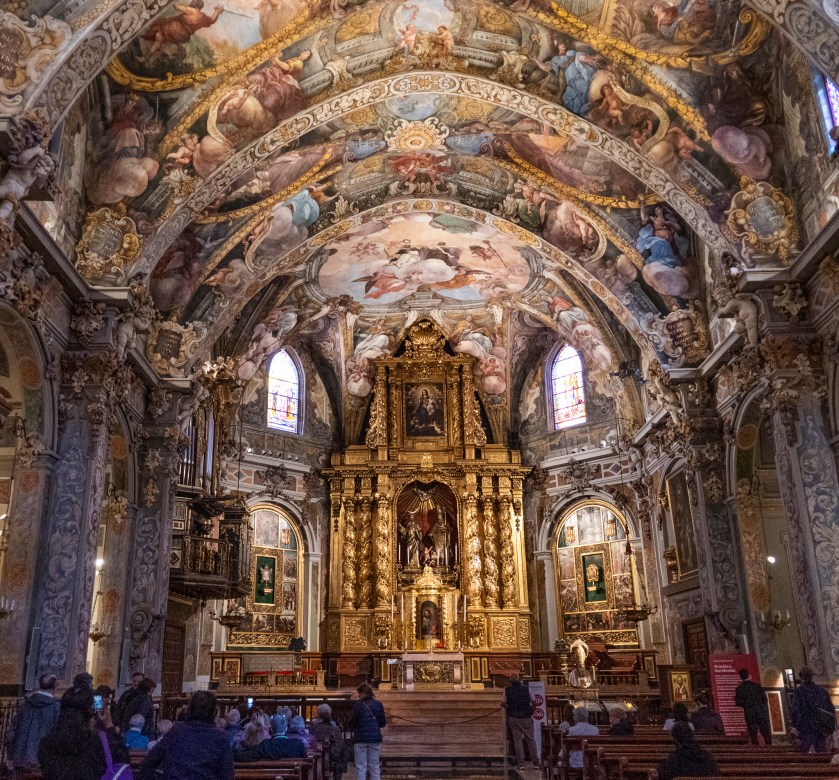
Because of the city of Valencia’s history, it’s unsurprising that there is a wealth of historic buildings and architecture to explore. One place in particular that I have wanted to see for a while is the Church of Saint Nicholas. Having seen several YouTube videos, I was struck by the contrast of the inconspicuous exterior with the ostentatious interior. And so, this was the first visit on the list. The YouTube videos were impressive but nothing equals seeing the frescoes with your own eyes.

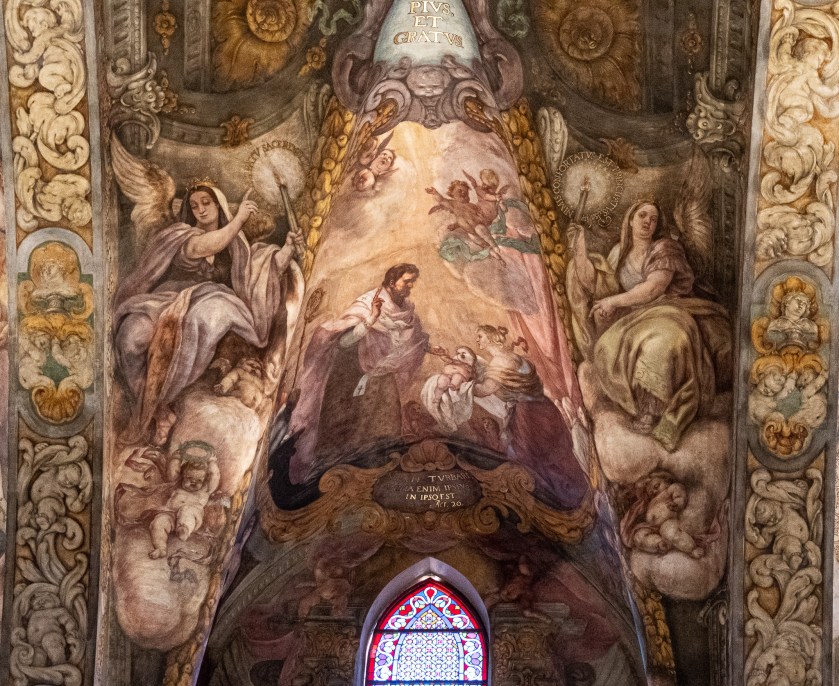
‘The Sistine of Valencia’ is a well deserved moniker.

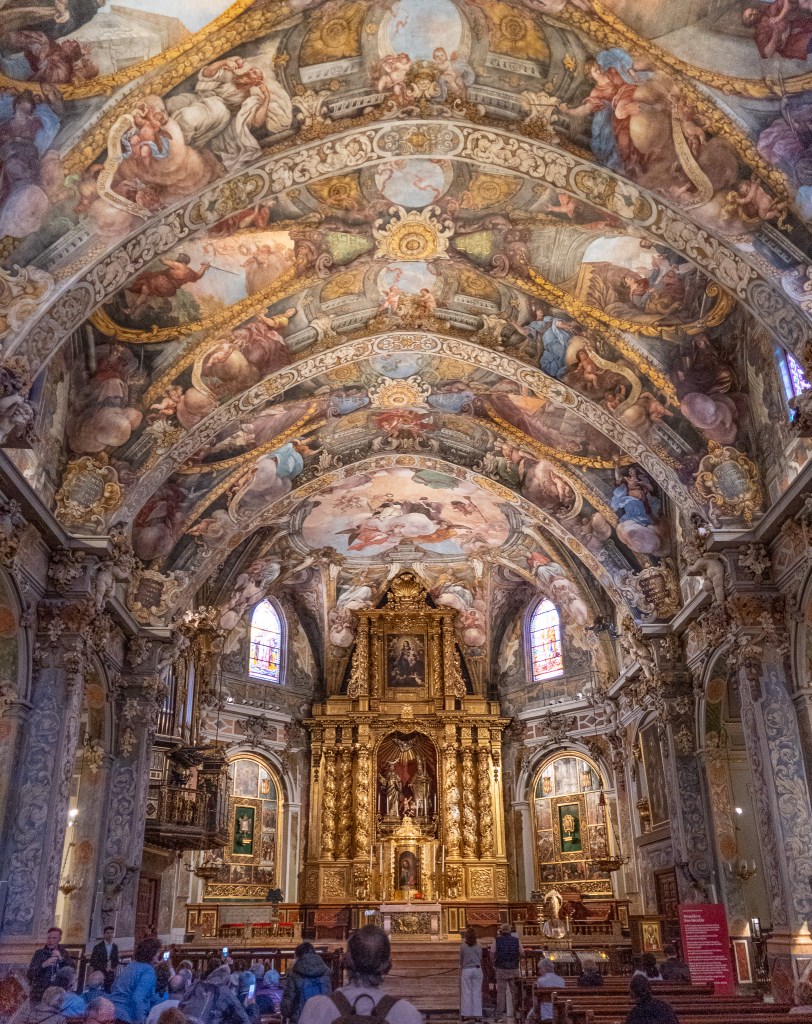
You really need to seek this place out because you will never just come across it by chance. The entrance is via a narrow side street and an unassuming door. After visiting old churches over the years, you never really get any big surprises but this is the exception. It is worth visiting for the outstanding frescoes alone. Although the church was founded in the 13th century, the frescoes were added in the 17th century. Over the next 300 years the detail became obscured by layers of soot from burning candles and incense. In 2016, renovations were completed and this amazing artwork is visible once again, in all its glory, for all to see. It is with good reason that this church is known as ‘the Sistine of Valencia’.

Close up of one of the lunettes. There are six on each side of the nave. Each lunette depicts a scene from the life of a saint in the center, ‘escorted’ on either side by angels, diverse according to their hierarchy. I didn’t know there was a hierarchy of angels!

The history of Saint Nicholas’s church (including the artists) is rich and detailed but not for this blog. For anyone who’s interested, it makes fascinating reading but my aim is to provide a cursory taste of what you can expect in this hidden gem.

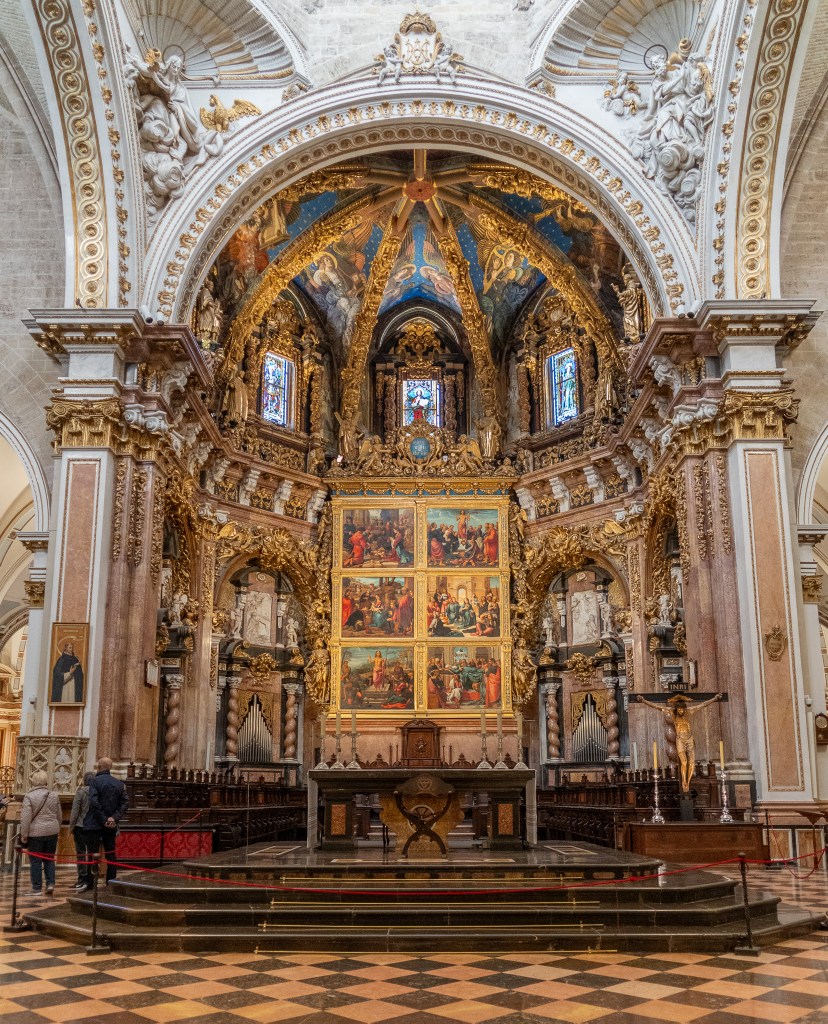
Valencia Cathedral, also known as St Mary’s Cathedral is another important religious building. While not as artistically ornate as the church of St Nicholas, it has a particular significance all of its own.

The main altar in Valencia Cathedral

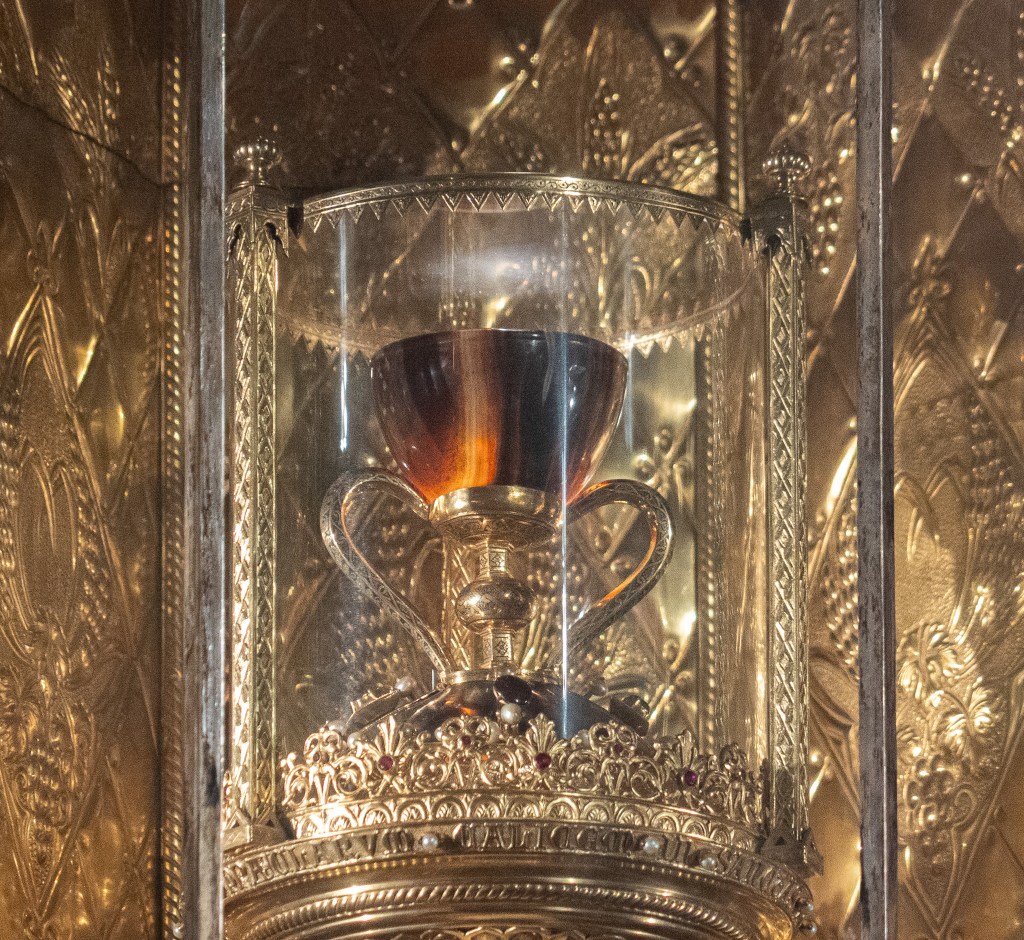
Among its many chapels, there is one that claims to hold a holy chalice, believed by many to be the true Holy Grail, the chalice that Jesus drank from at the Last Supper. Of all the claimants around the world, this chalice is considered the most plausible contender due to it being dated to the 1st century and its provenance. Its movements throughout the centuries has been well documented. It was given to this cathedral in 1436 by King Alfonso V of Aragon. It has been used by many popes, most recently by Pope John Paul II in 1982 and Benedict XVI in July 2006. Only the top portion is the true relic. An agate bowl shaped vessel, it is made from a mineral found in the region between Alexandria and Syria. The ornate handles and precious stones were added later. Whatever the true origin of this cup, there is no doubt that it has great historical significance and has been venerated for centuries as a true and valuable relic of the Passion of Jesus Christ

The Holy Chalice

21st Century Valencia

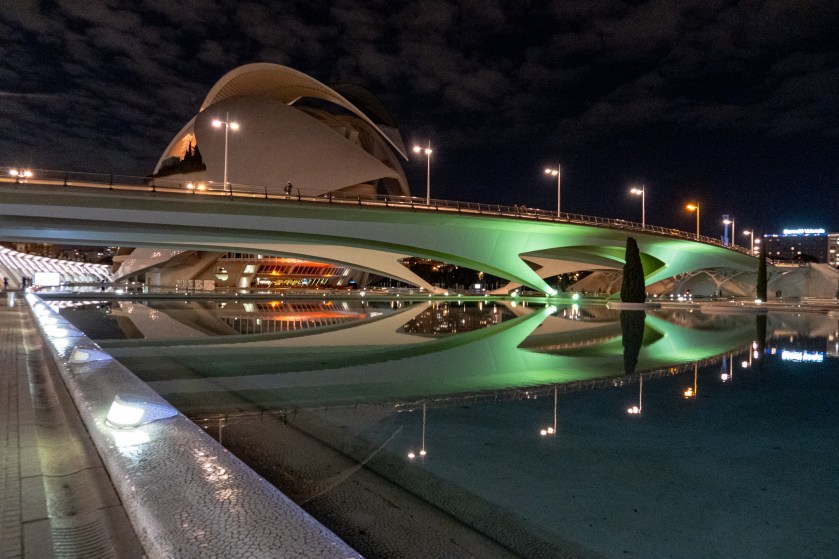
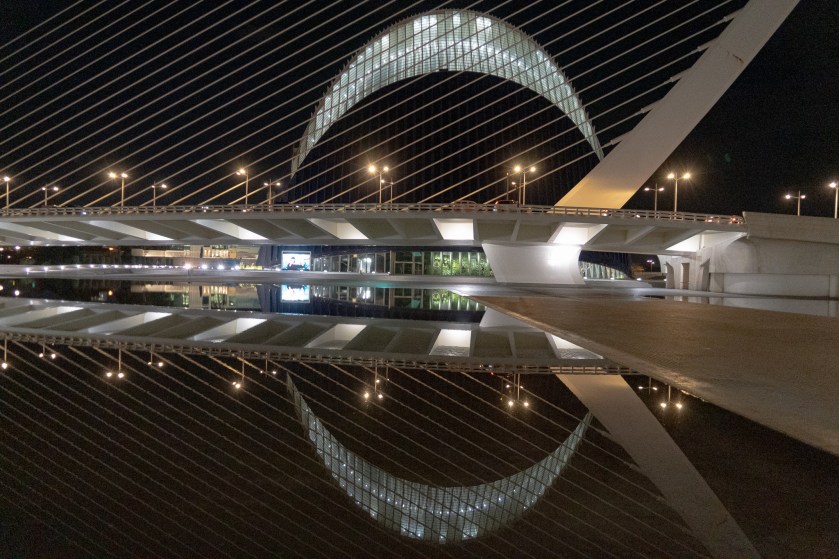
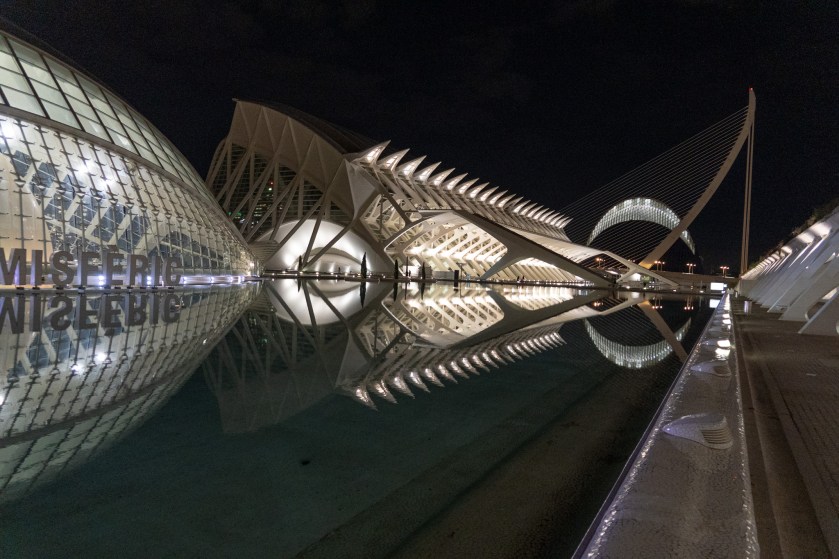
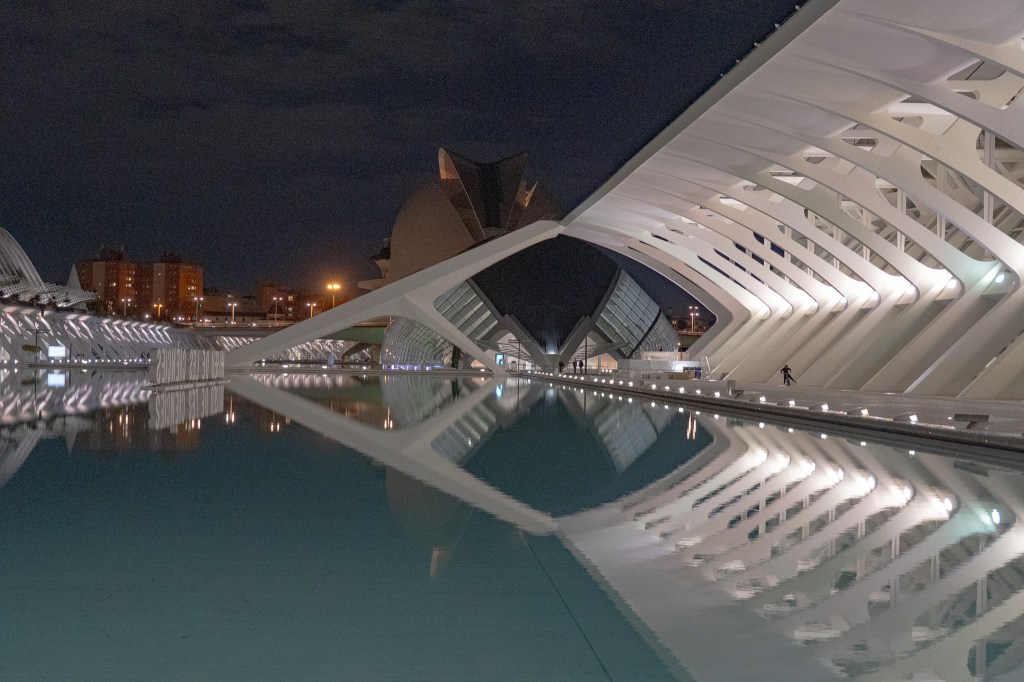
Valencia, like most cities, has two parts. An old, historic part and a new, modern part. And I don’t mind admitting that when it comes to architecture, my preference is for the ornate Gothic or Baroque over the streamlined futuristic structures. If anywhere could put my preferences to the test, it’s the ‘City of the Arts and Sciences’ (‘Ciutat de les Arts i les Ciencies’ in Valencian)

City of the Arts and Sciences

Reflections creating a whole other dimension

Museum of the Sciences leading to the ‘Hemisferic’

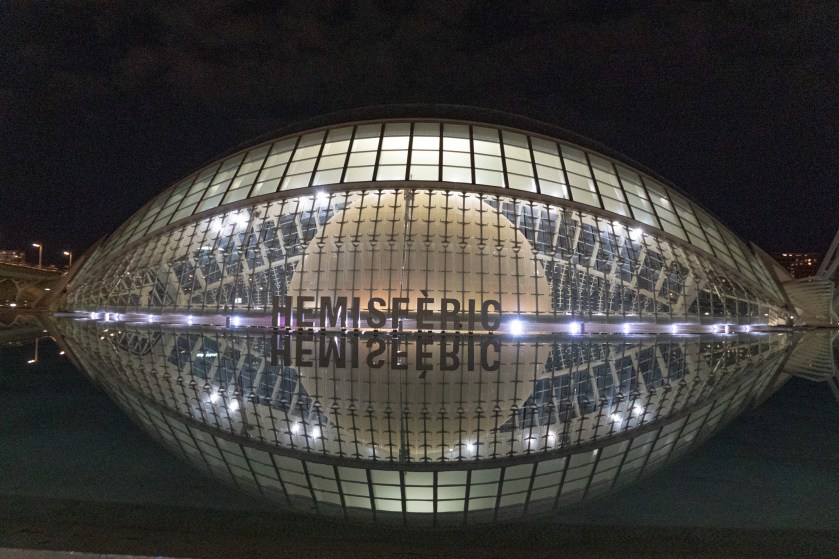
The ‘Hemisferic’ is an immersive experience with IMAX Dome format on a huge concave screen.

In the eye of the beholder

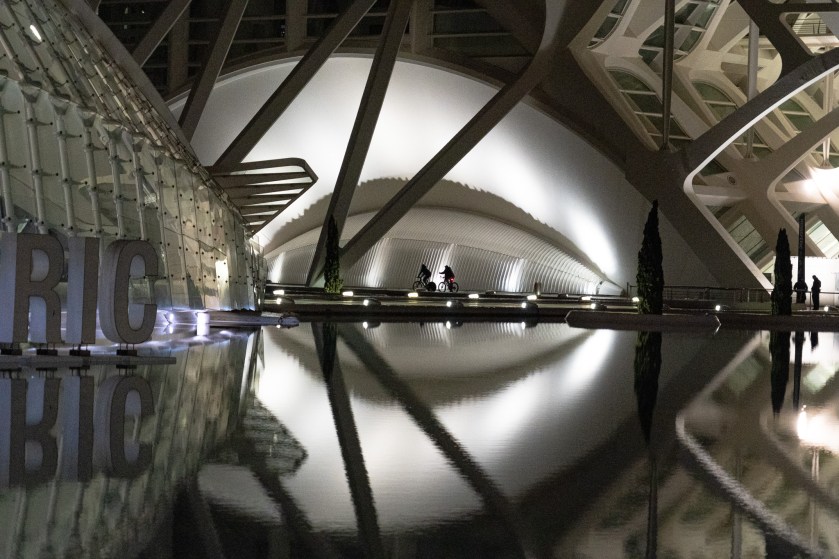
Symmetry

Due to a limited stay of two nights, a decision was taken to omit this place from our daytime itinerary. It is packed with attractions, including the ‘Oceanografic’ aquarium which is run by a foundation focused on research initiatives and species recovery. It would be easy to spend a couple of full days enjoying everything these places have to offer but the ticket costs could quickly add up! Visiting at night though, has its own rewards. It would be difficult to think of many places such as this where you could wander around, safely, late at night and be presented with such a display of light and reflections. I have seen daylight images of the above shots and they look like different structures. Without the nighttime reflections, it looks like the bottom halves are missing! So, for all you keen photographers, this is a must see if you come to Valencia. Day or night, I’m sure you won’t find a shortage of photo opportunities. As usual I didn’t have a tripod. I was happy enough with the shots I took but a few long exposures would have been nice!

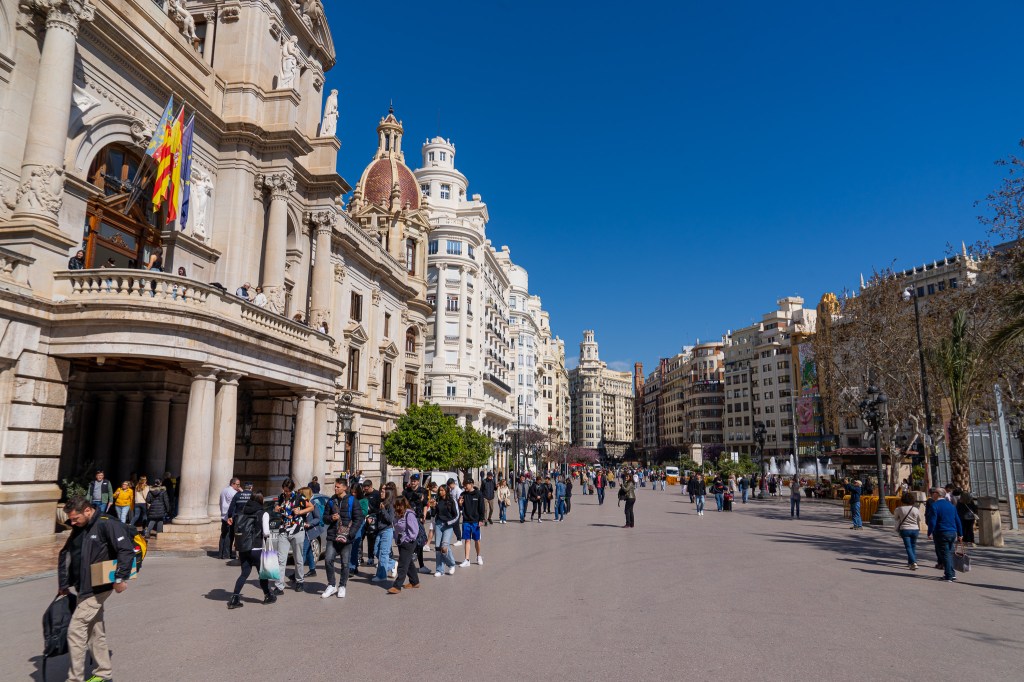
While all Valencia’s attractions make it a fascinating city to visit, one of the most enjoyable aspects for me was simply walking around the streets and soaking up the atmosphere. Valencia is a vibrant yet relaxed city. And while the age range of its inhabitants is wide, young people definitely seem to be in the majority. It also felt like a very safe place, day or night.

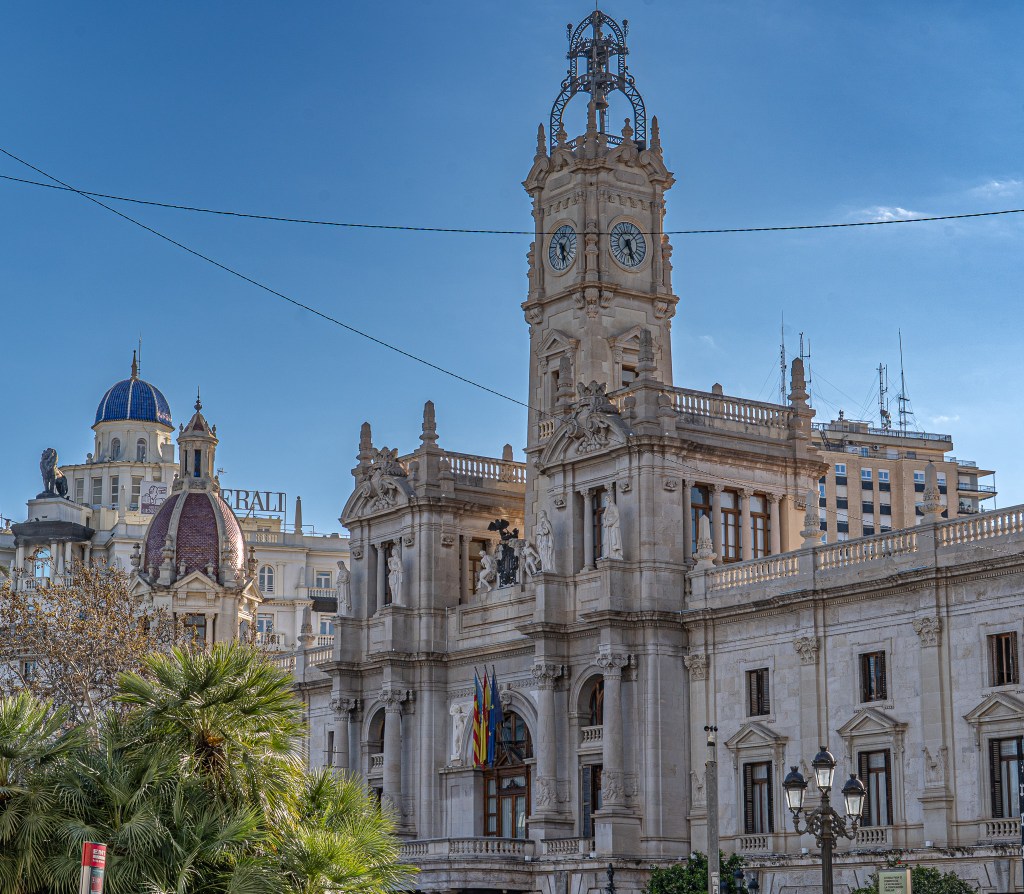
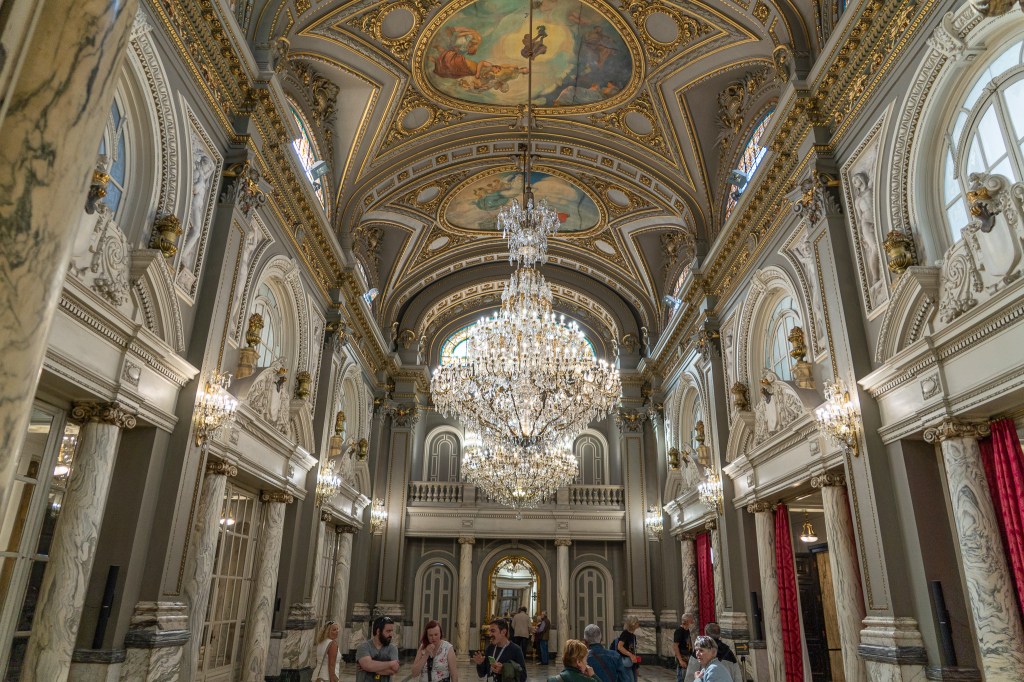
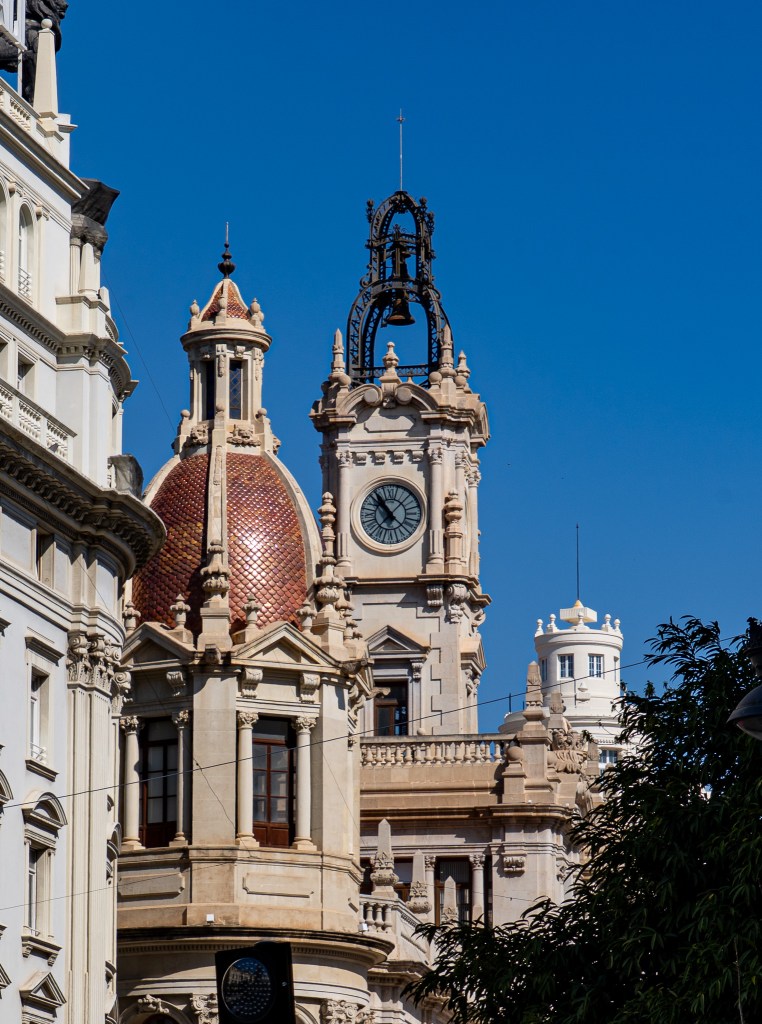
Valencia City Hall

City Hall. Free to visitors.

Traffic free zones make strolling around a relaxed affair.

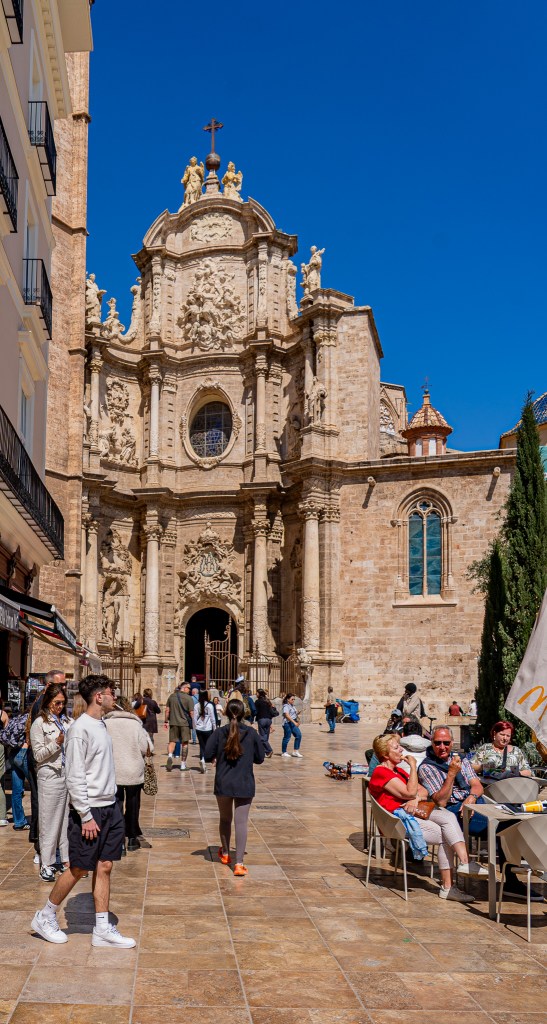
Entrance to the cathedral in Plaza de la Reina (translates to Queen’s Square)

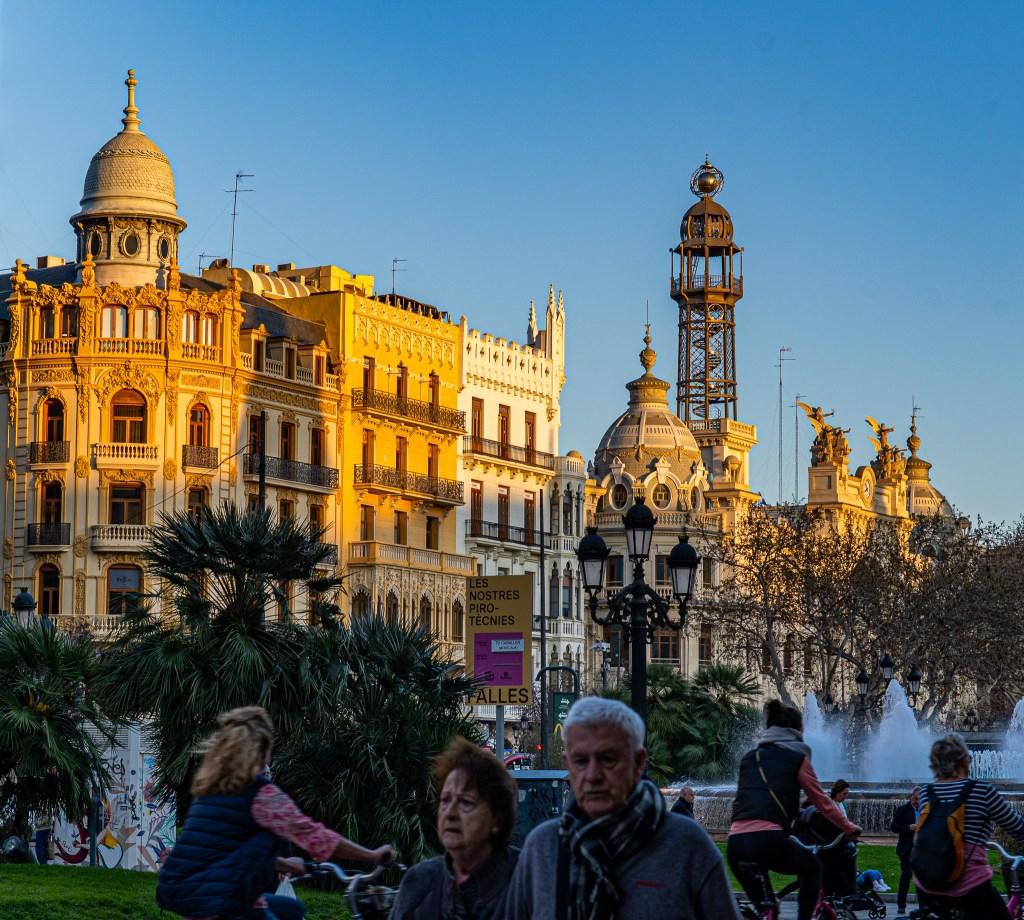
The architecture provides a constant treat for the eyes.

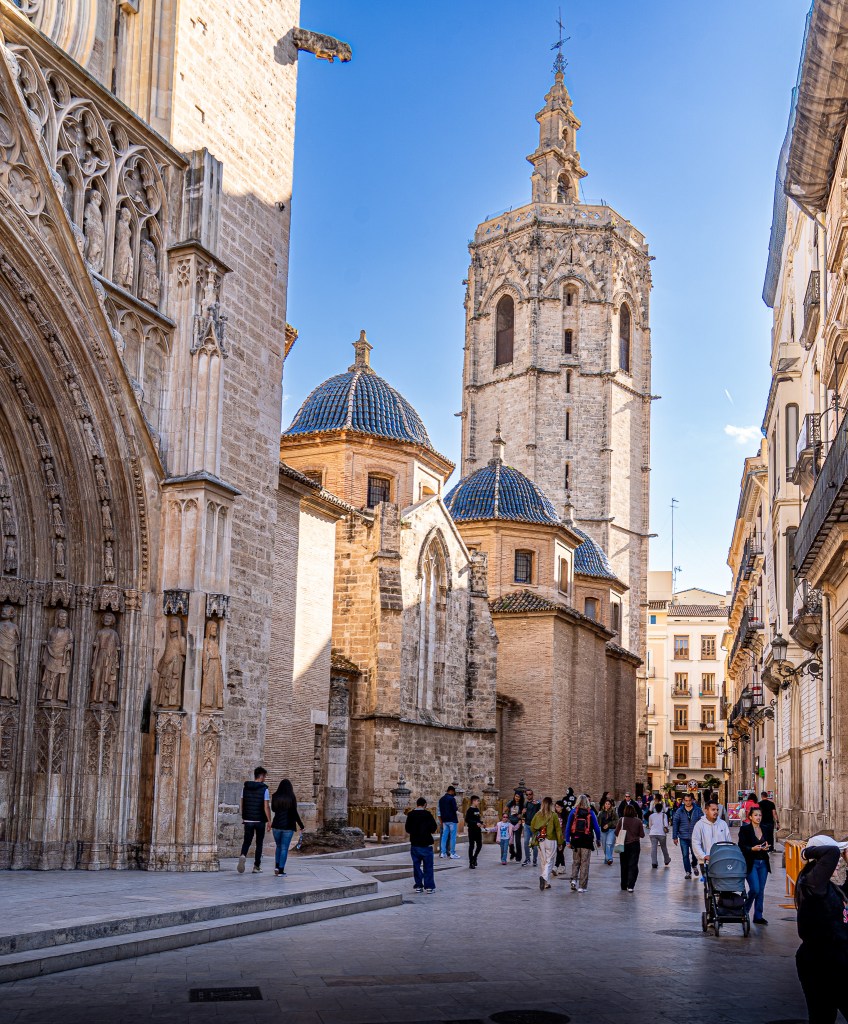
The Miguelete Tower and the domes of the individual chapels inside the cathedral.

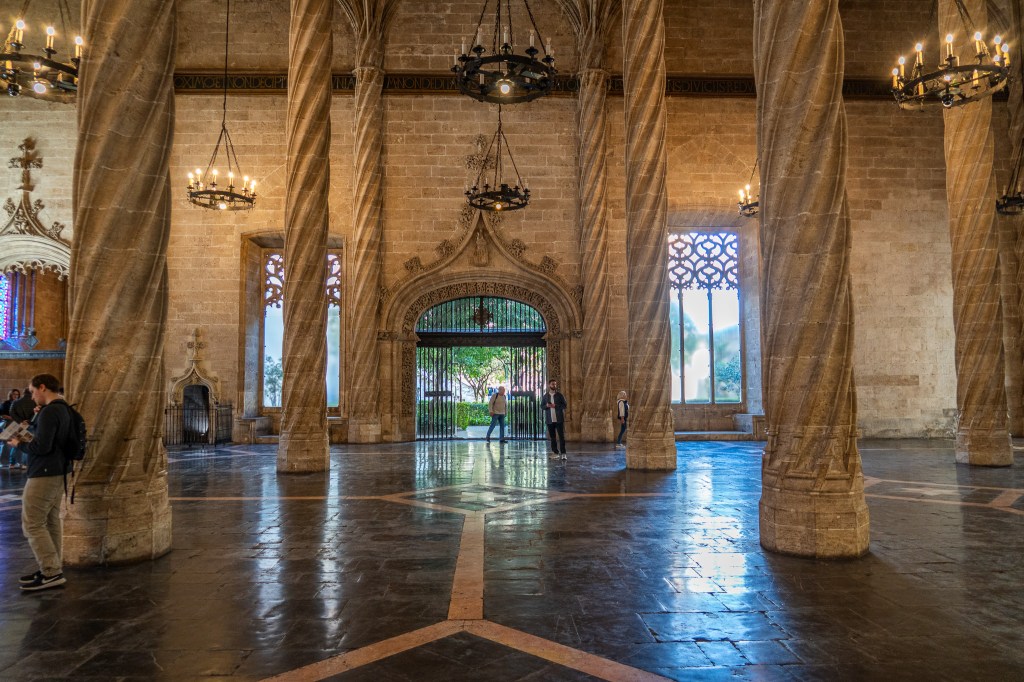
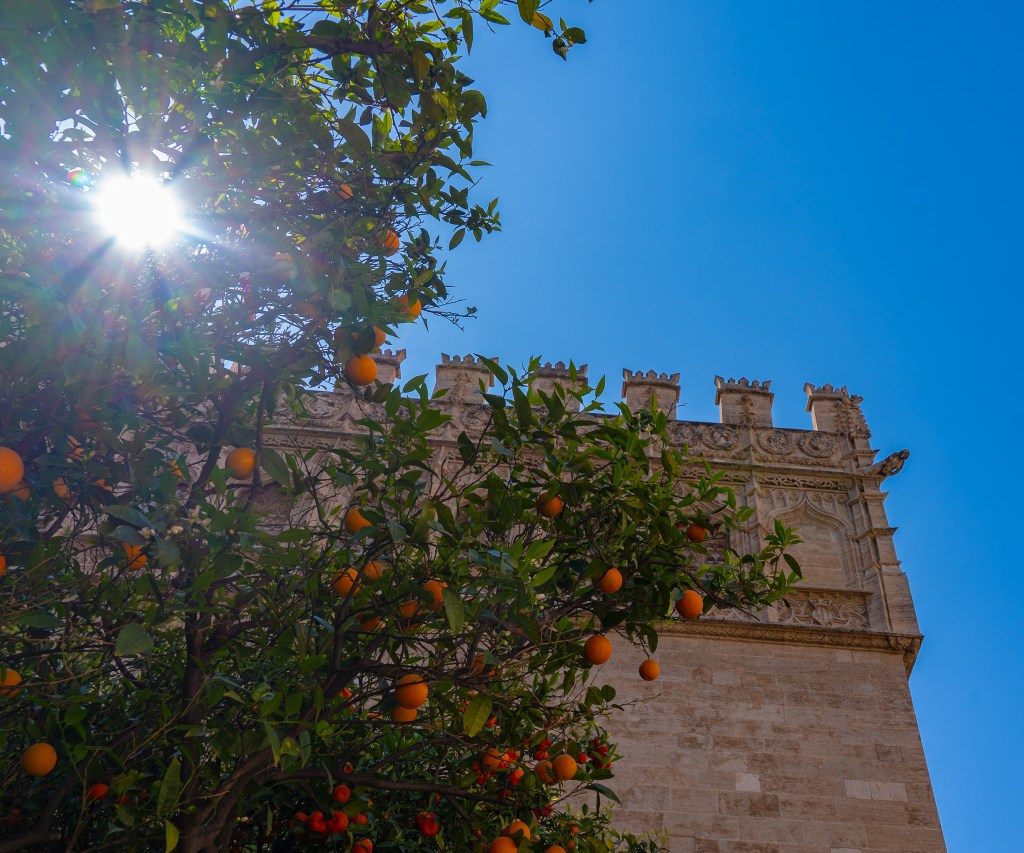
The Silk Exchange (Lonja de la Seda) built in the 15th century. Merchants worked out their contracts and completed their deals here.

The silk trade contributed greatly to Valencia’s prosperity. Around the four walls of the trading hall (above) is a Latin inscription that translates as, ‘I am an illustrious house built in fifteen years. Try and see, fellow citizens, how negotiation is such a good thing when there is no lie in speech, when it swears to the neighbour and does not deceive him, when it does not lend money with an interest charge for its use. The merchant who acts this way will prosper galore and at the end he will enjoy the eternal life.’ I like the sentiment of honesty in business. It’s as pertinent today as it always was. I wonder how many ‘merchants’ adhere to it.

Orange Tree Courtyard of the Silk Exchange

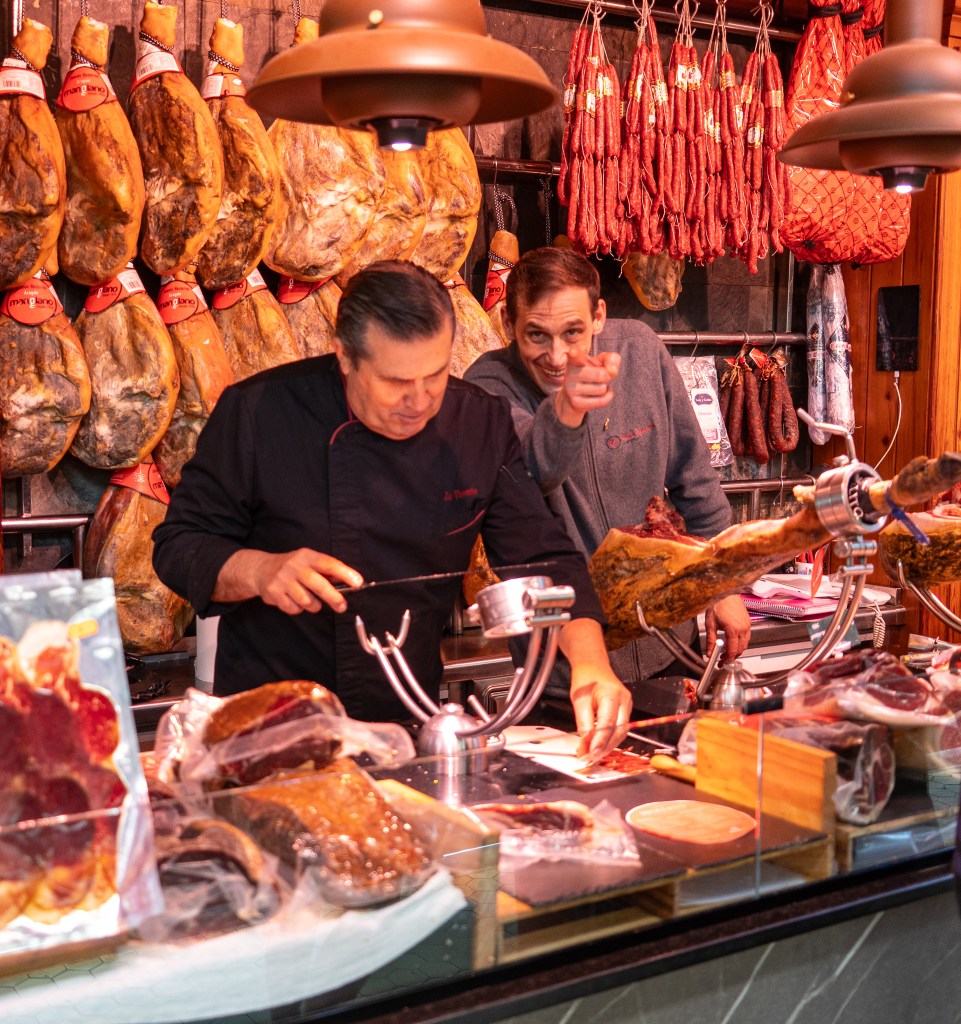
Valencia’s Mercado Central, where the choice of ham, fish, fruit and vegetables is endless.

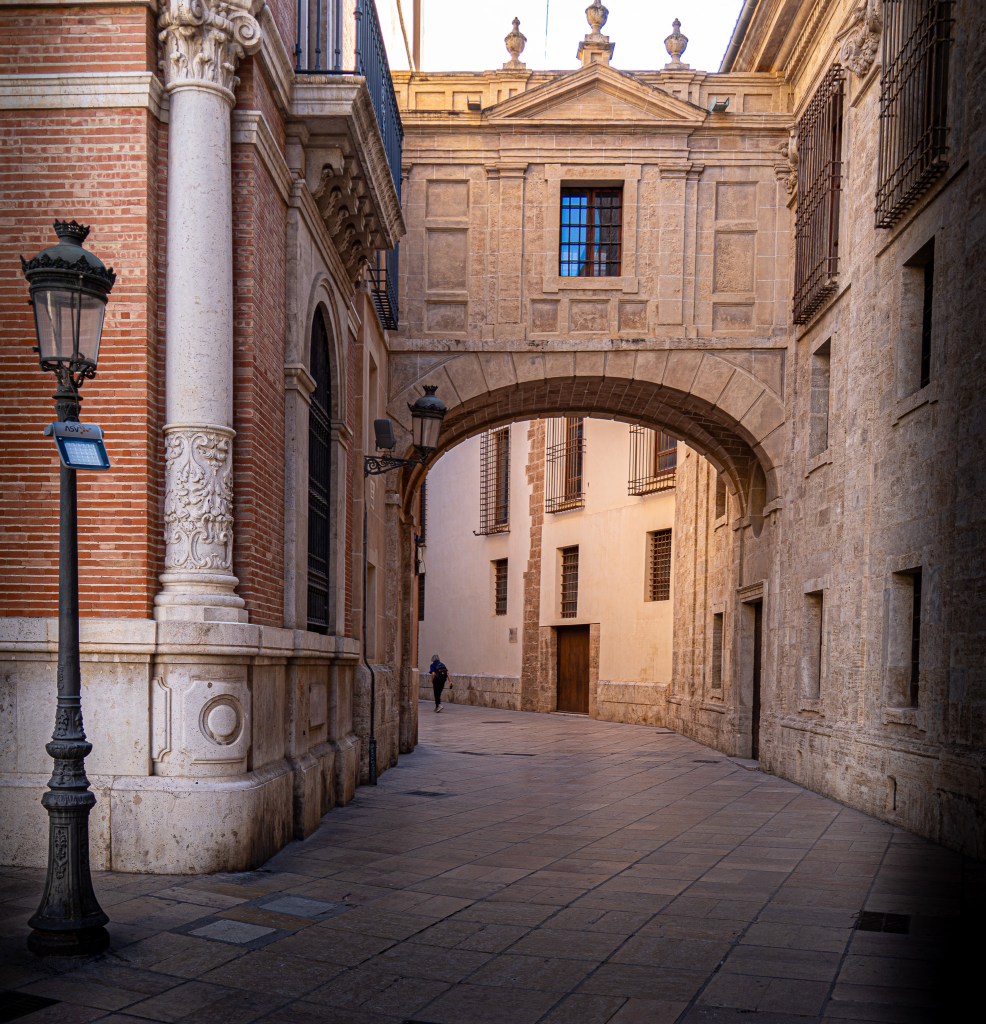
A city of carved stone, arches and alleyways.

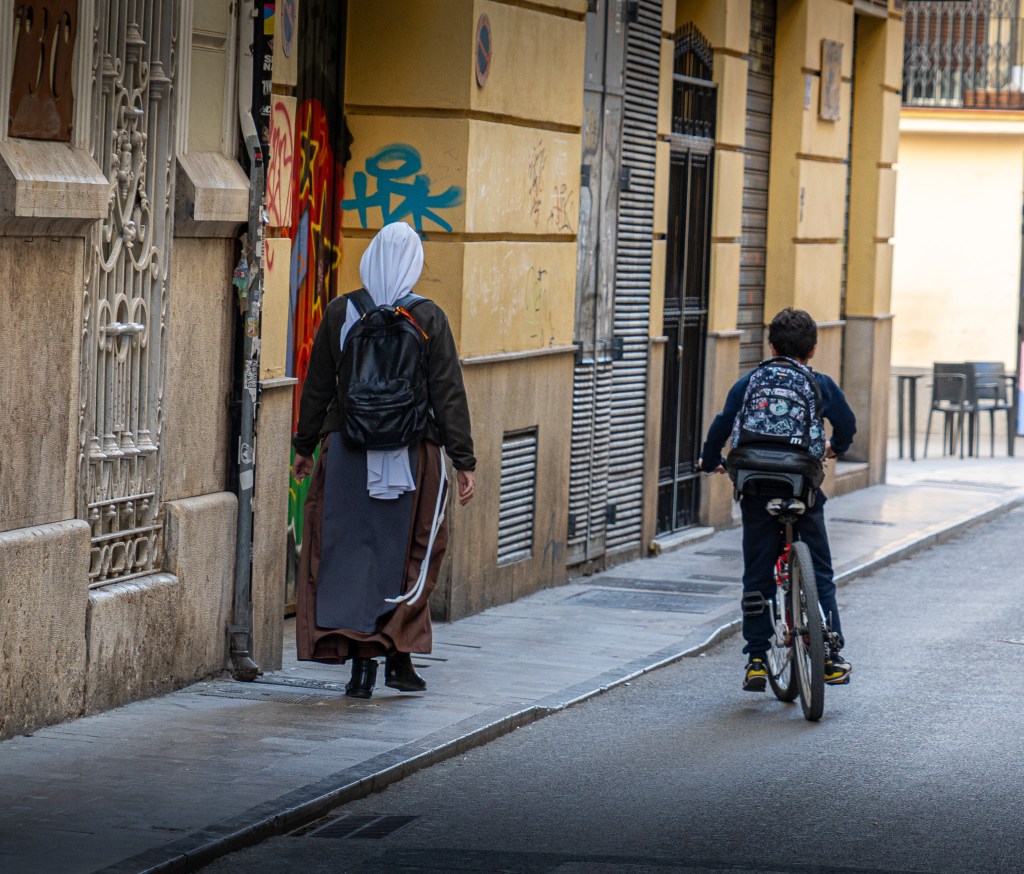
A young Franciscan nun and a schoolboy on a bike. Probably an unusual sight for many but here it’s just everyday life.

Every street seems to lead to another square.

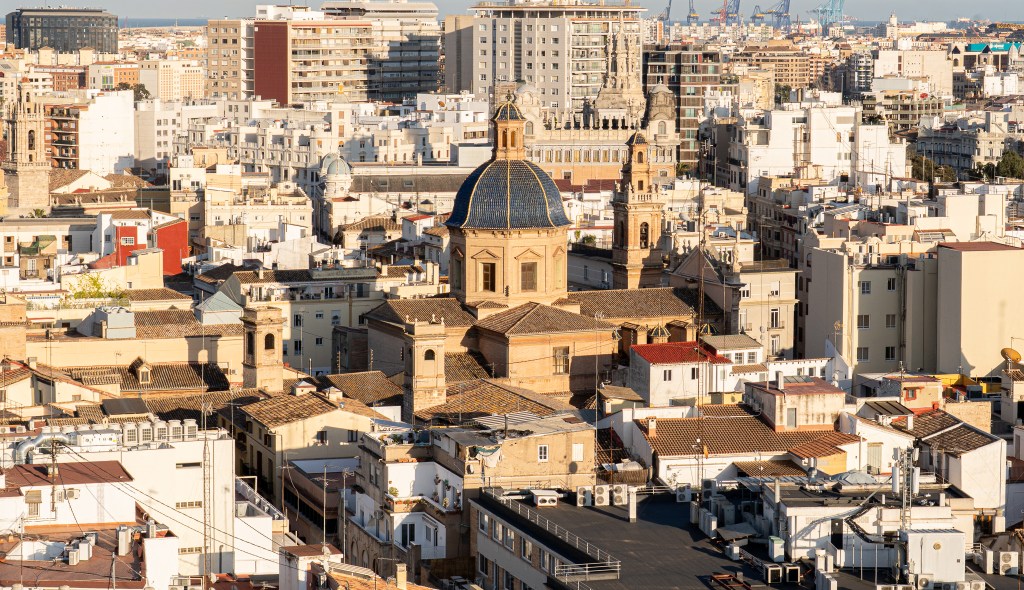
A roofscape taken from the Miguelete Tower

The sun setting on Valencia and the end of another trip to remember.

Tip. Even if you feel reasonably confident speaking Spanish or are just beginning to learn the language, be prepared for a challenge. The population speak Valencian here. It is sometimes similar to Spanish, sometimes bears no resemblance. I may be mistaken but I got the impression while trying to use my limited Spanish that some Valencians preferred to speak in English to me than Spanish. This is understandable when you consider that for forty years of the Franco dictatorship, Valencian was banned and only Spanish was permitted. People here are proud of their language and fervently defend their right to protect it and promote it. So, don’t take it personally if your efforts are not appreciated.

Altea

We all have our preconceived notions of Spain. The mention of it conjures up various images. Sunshine and sangria, beaches and bullfighting. Even civil war. For me, my first thought is of whitewashed villages with cobbled streets and wrought iron balconies.

Altea is just such an example. The warren of narrow streets are an endless discovery. In the summer, they provide welcome shade. In the winter, they offer shelter from the winds coming in from the sea. The old town today is a tourist magnet. Its streets and squares populated with cafés and souvenir shops.

But when I walk around this ancient place, I imagine the merchants and fishermen. Hauling goods, fish and nets to and from the harbour. And I think it would be reasonable to assume that these streets also witnessed their fair share of upheaval as Spain transitioned through Roman, Muslim and Christian rule. Needless to say, its elevated position means it has views over the Mediterranean for those who simply want to take a deep breath and spend a minute smiling to themselves in quiet contemplation.

Tip: Visit in the off peak season. We visited in February. This will enable you to soak up the atmosphere and appreciate the authenticity of this historical gem. If you go in July or August, it will just be like any other overcrowded tourist attraction, swarming with overheated, malodorous, irate mobs.

The youtubers tend to exaggerate when talking about the steepness of the climb. Anyone with an average fitness level can walk from the coast to the square at the top of the old town in less than 30 minutes. Sensible shoes recommended.