Time of visit: October 2025
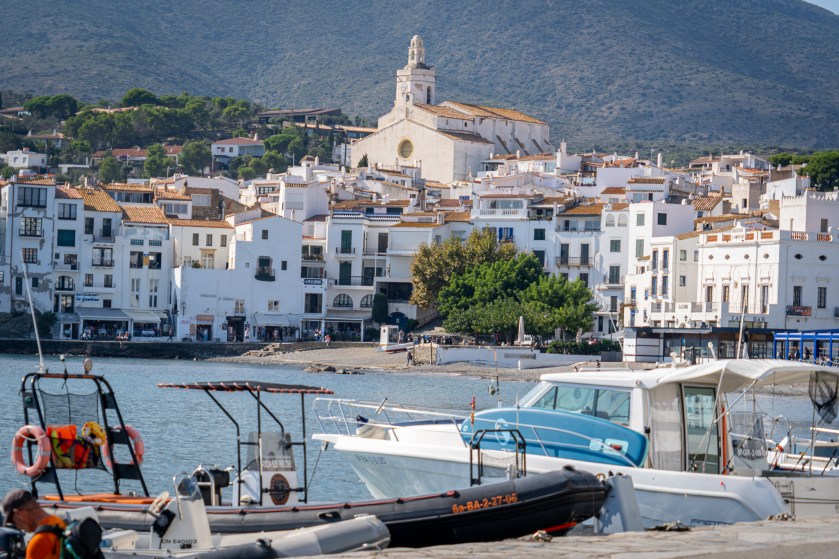
Cadaqués is a town in the province of Girona, Catalonia, on Spain’s Costa Brava and sits on a bay in the middle of the Cap de Creus peninsula.
Its name is derived from the Catalan, Cap de quers (Cape of Rocks). It is just over a 2 hour drive from Barcelona and 90 minutes from Perpignan in France. It has an official population of under 3,000.
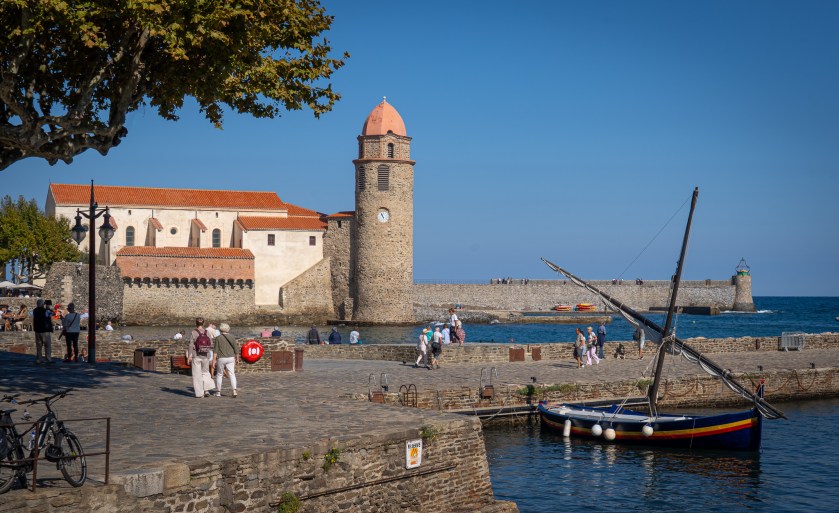
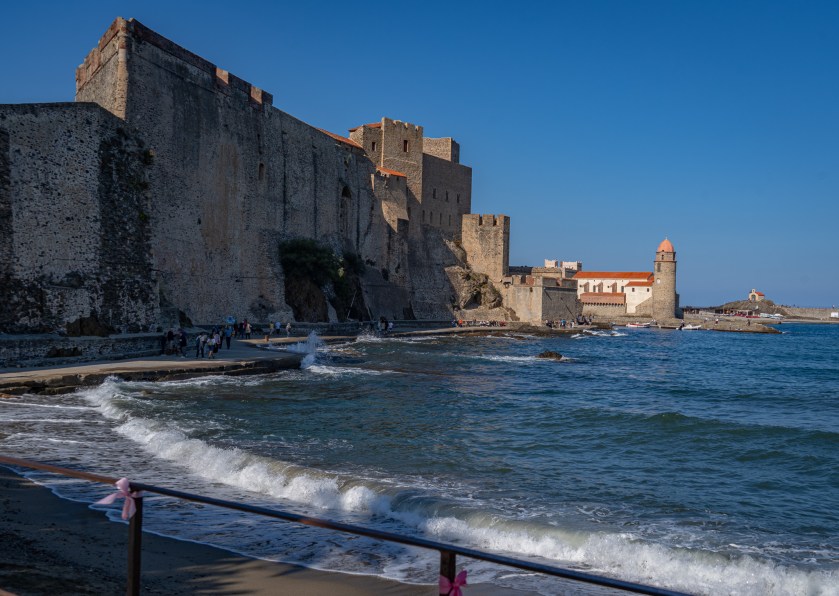
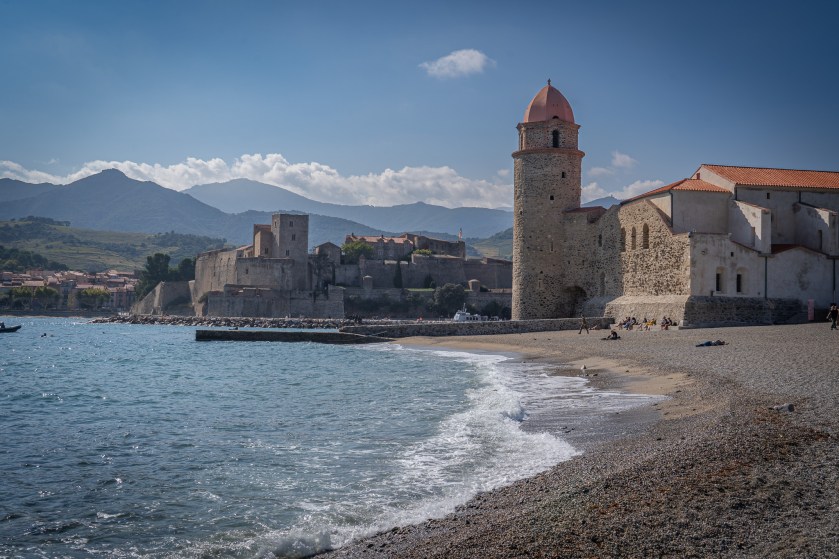
If you are looking for a town that, in aesthetic terms, is the complete opposite of Pals (see previous post), Cadaqués is it. The predominant colour of the buildings in Cadaqués is white. The cluster of whitewashed houses with their terracotta rooftops, sits nestled on the rocky hillside that slopes down to the bay. The buildings appear to grow out of the rocks in a seamless extension of the land, with the church of Santa Maria dominating the skyline. Looking at the scene, the houses, the church, the boats on the pebble beach, the sea, it appears as if all the elements have evolved together and merged to become one. Everything looks like it belongs. There is nothing that doesn’t fit.
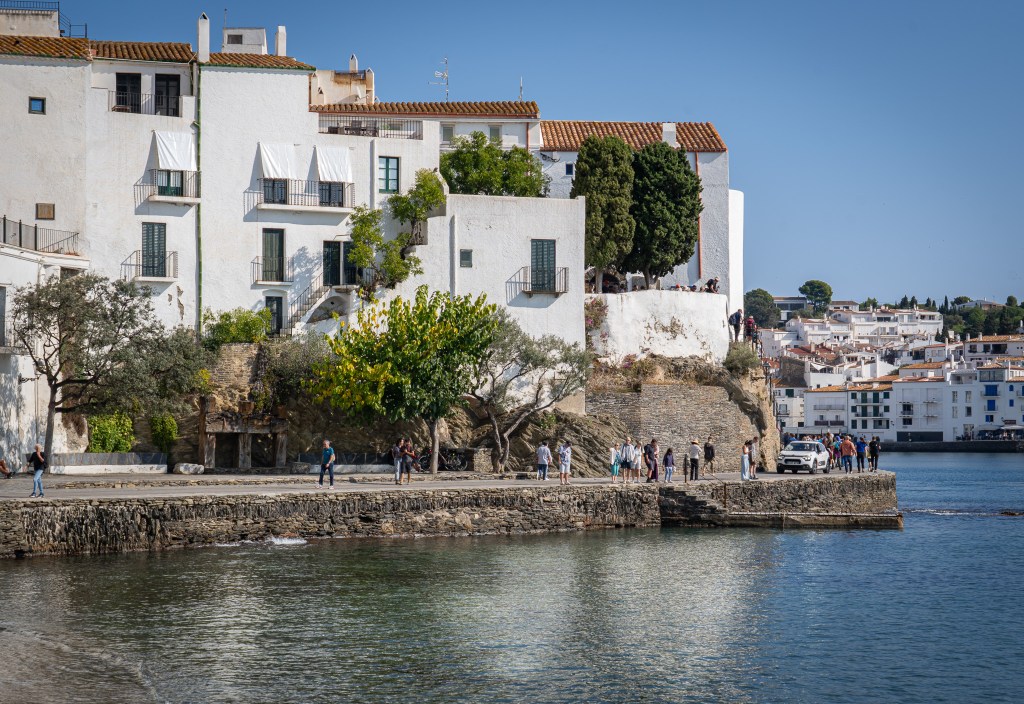
The seafront of Cadaqués. The buildings use nature’s best foundation, solid rock.
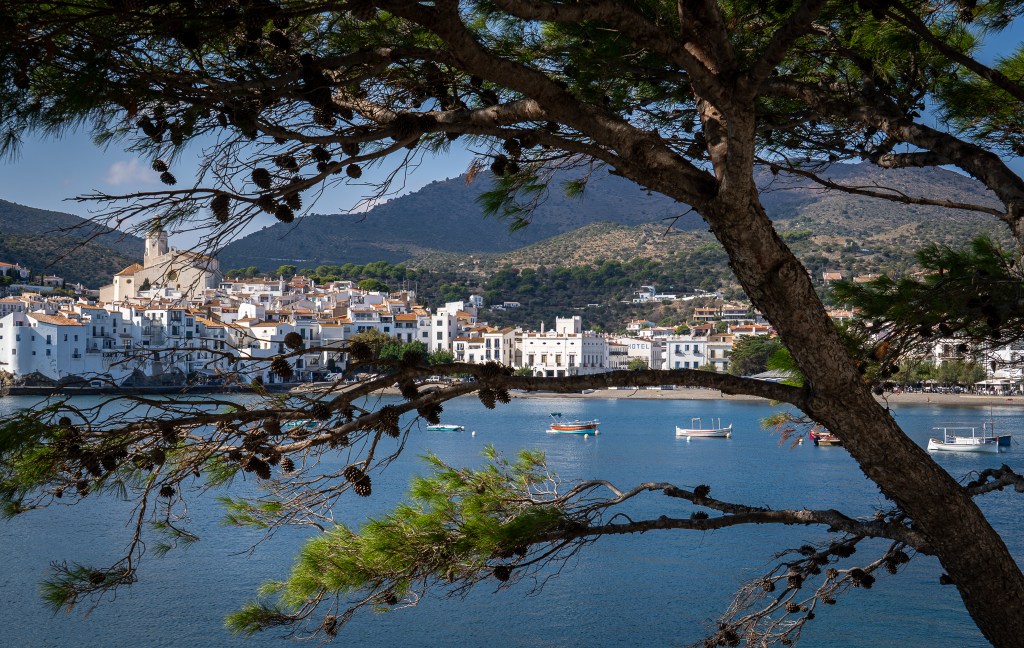
View from across the bay.
The best way to enjoy this overview of the town is to walk along the seafront. Or if you have the time, take a boat tour and savour a unique view from the sea.
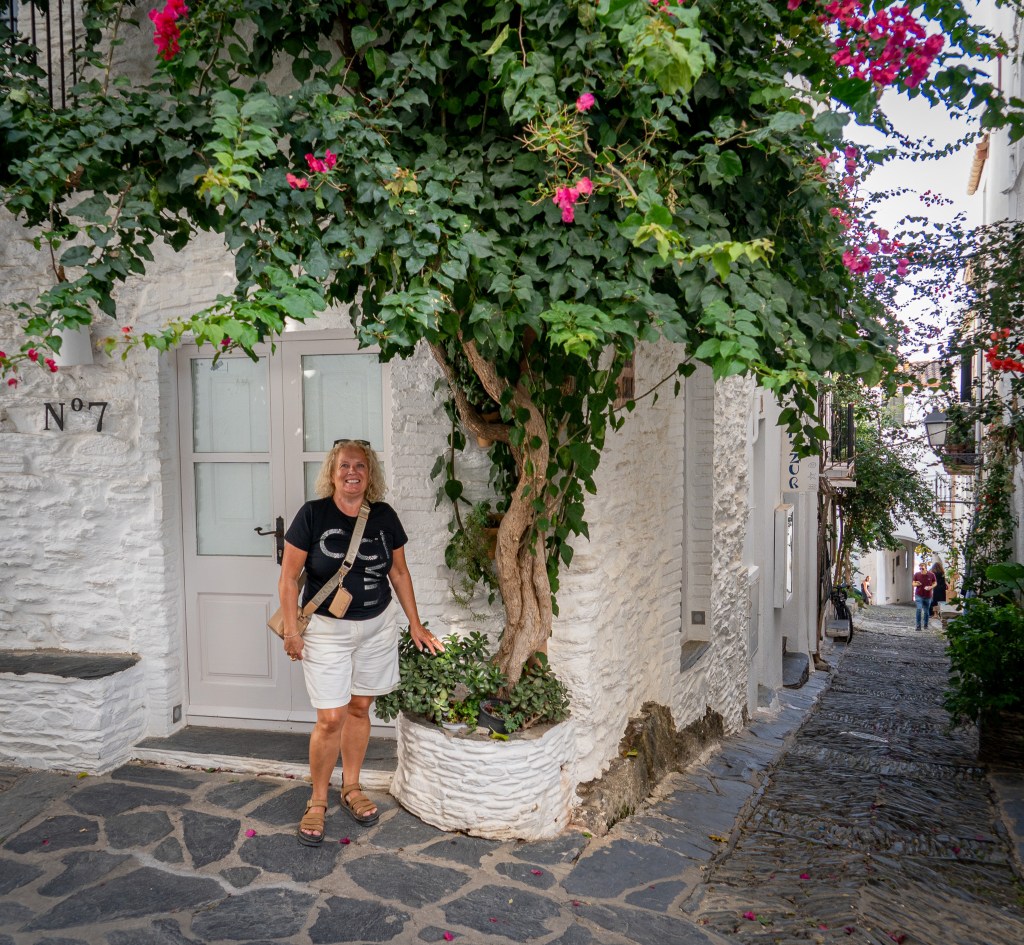
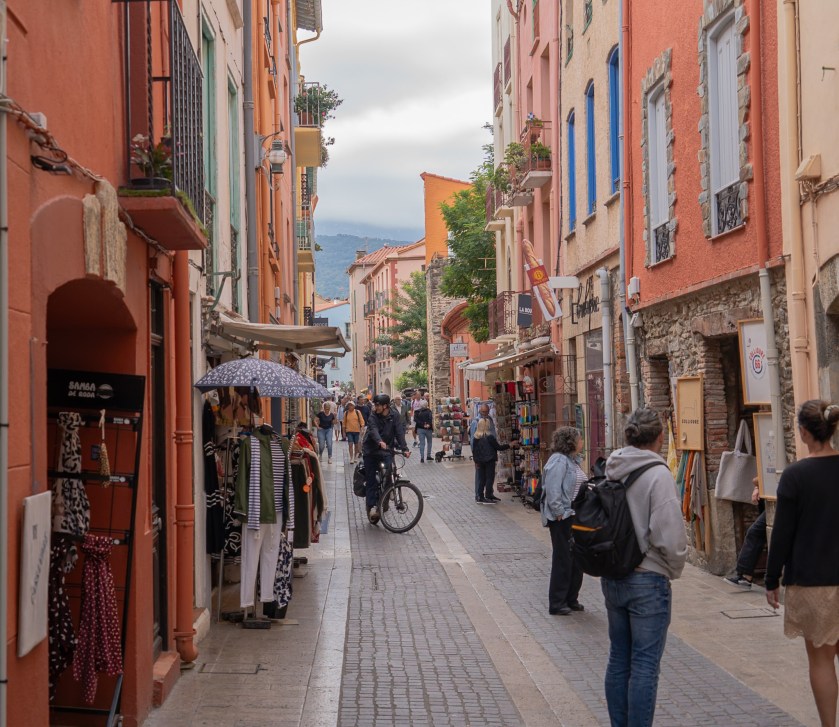
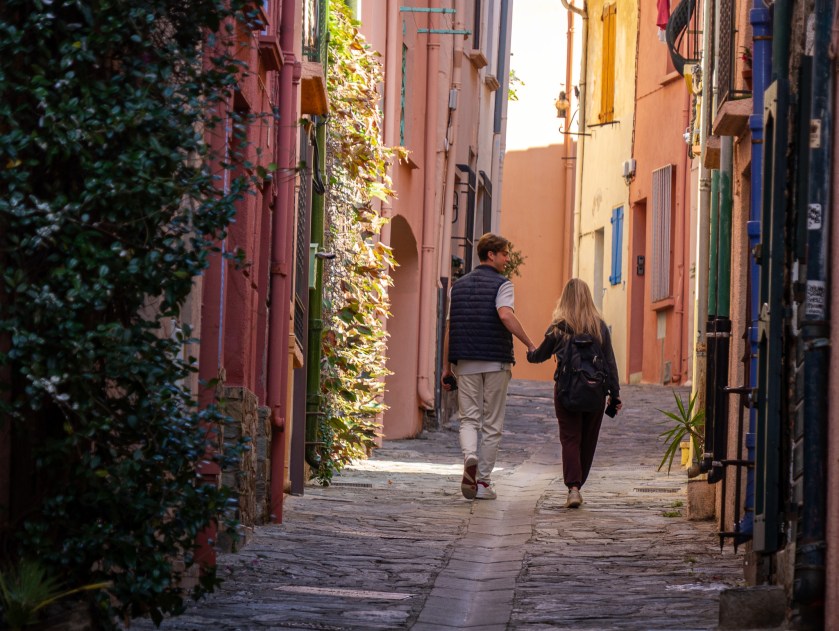
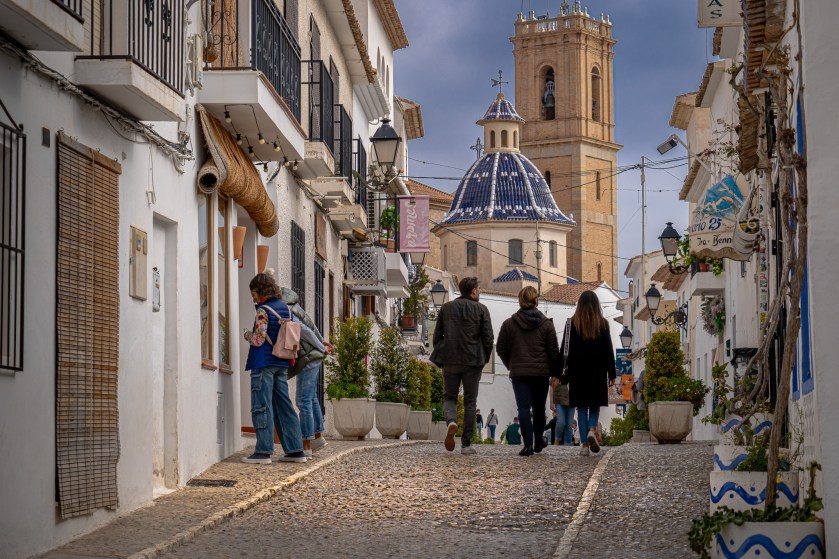
Street charm in Cadaqués.
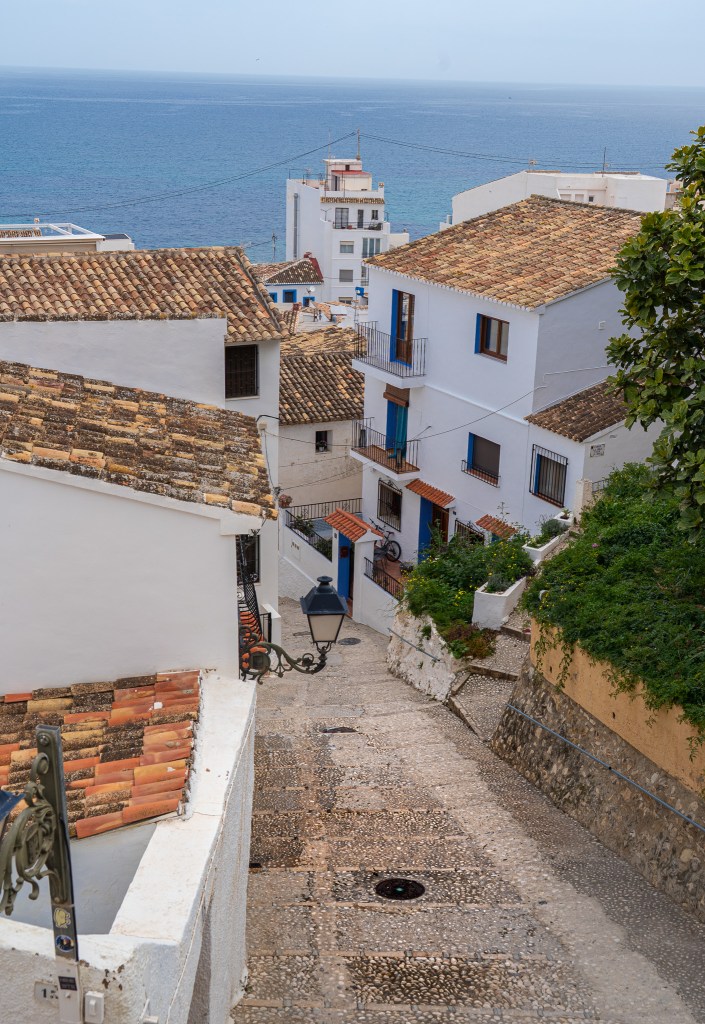
Heading inland, the narrow streets immediately take on an upward trajectory. Underfoot is a mixture of irregular shaped stone paving and small flat stones that have been embedded on their edge to provide extra grip. Navigating the town is best done by following a general rule of thumb, ‘keep climbing until you reach the top’. If you head downhill, you will end up at the harbour.
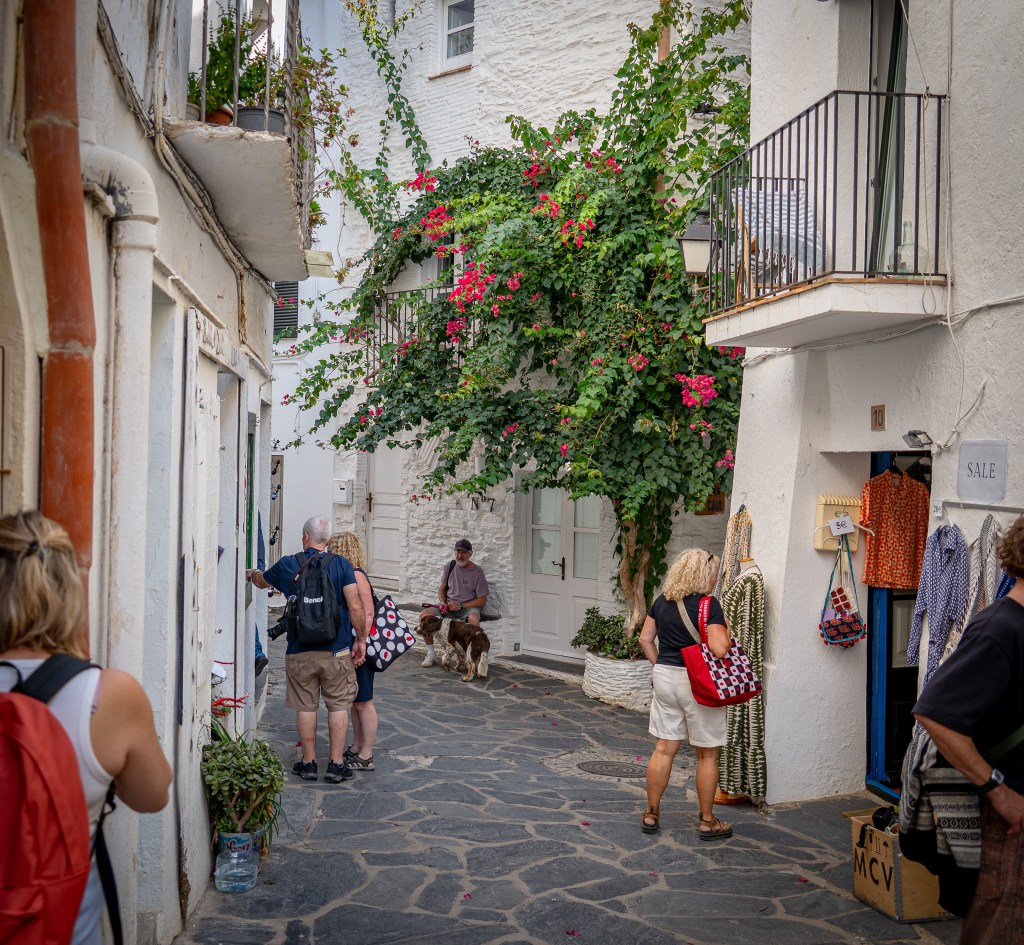
Small shops blend in with the adjoining houses.
The streets of Cadaqués are similar to many other Spanish towns and villages-whitewashed and winding, with wrought iron balconies draped with colourful splashes of bougainvillea and geraniums. The occasional shop appears every now and then, discreetly blending in with the house next door, differentiated by local handicrafts hanging at the entrance.
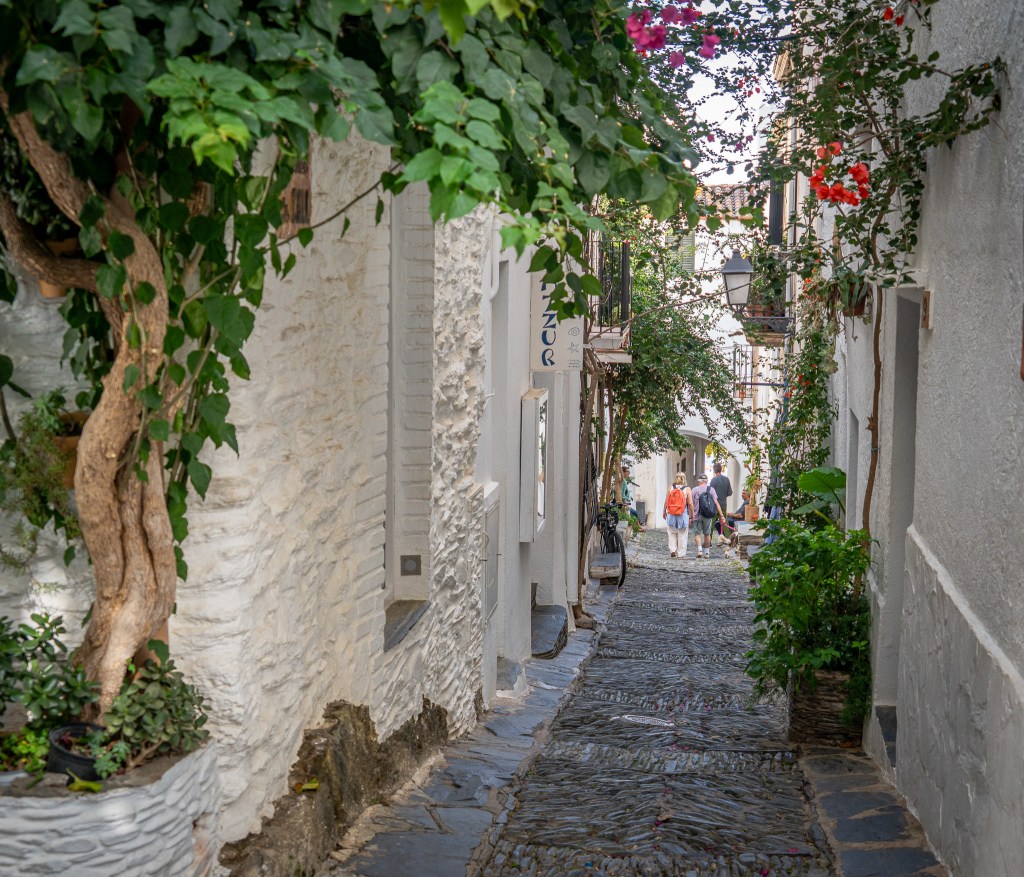
Bougainvillea adding colour and life to the stone.
A short time after starting our ascent, we were at the church of Santa Maria. There is no grand approach, just another turn at the end of another narrow street and we were in the small plaza outside the church. A musician sitting on a bench playing classical guitar added an extra layer of serenity to the place. And looking down over the rooftops at the sun glinting on the Mediterranean, completed a very Catalonian experience.
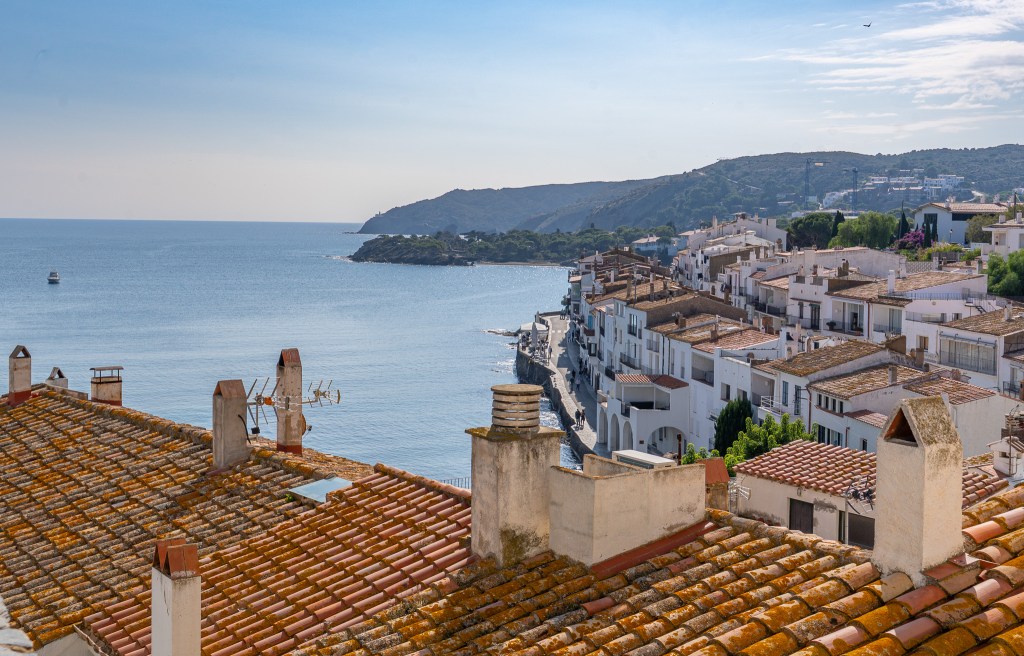
View from the plaza at the church of Santa Maria.
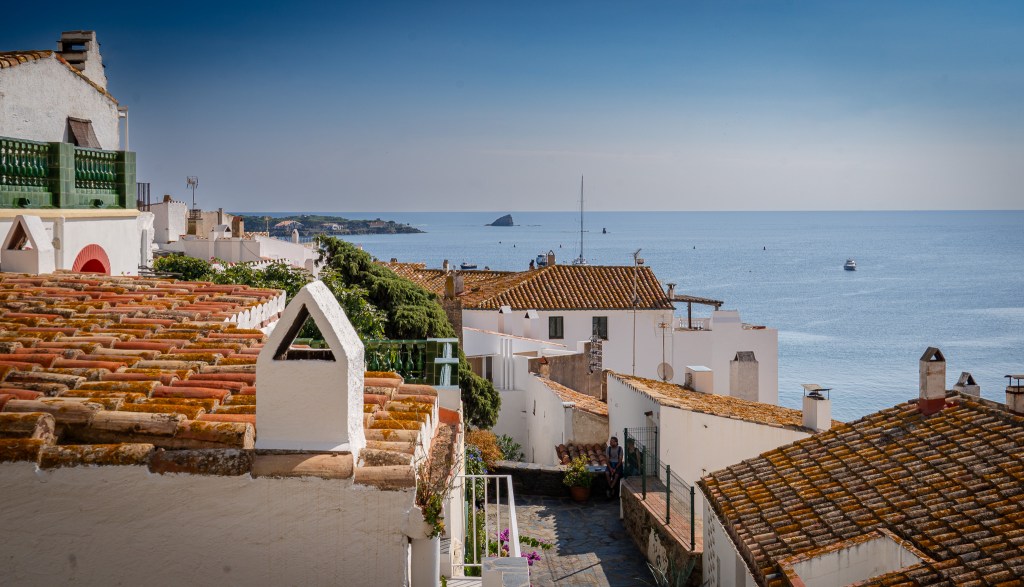
The rooftops of Cadaqués.
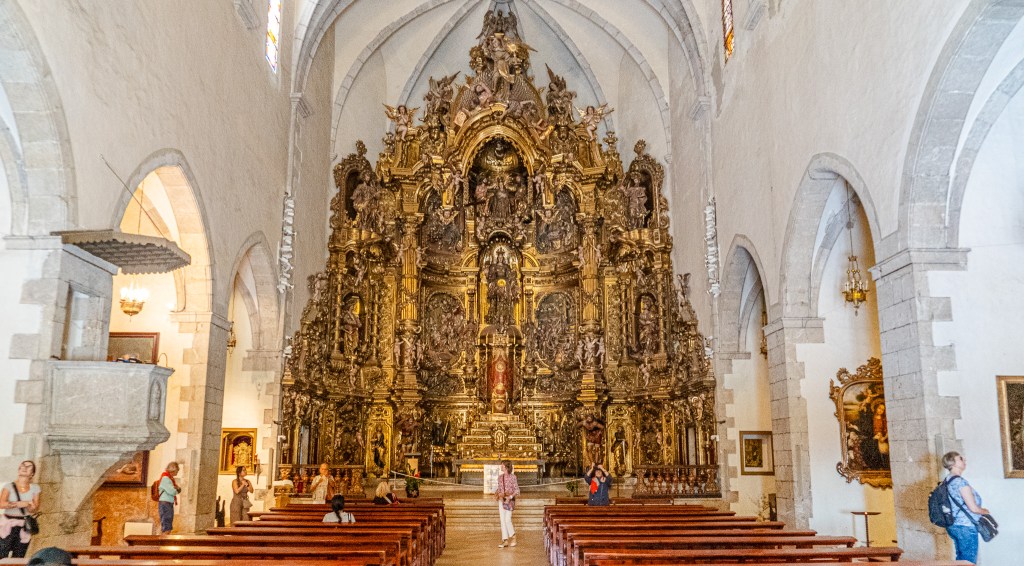
The church of Santa Maria.
The biggest surprise for me about Cadaqués was that I had never heard of it. And I haven’t met anyone else who was familiar with it either. It really is the best kept secret on the Costa Brava. I read an article about the town in a magazine called ‘Tapas’. It contained the following quote,
“Be careful, lest you get caught by the tramuntana. Be careful, many people arrive for three days and stay for years. Be careful, lest you fall in love with Cadaqués”.
The Tramuntana is a strong north-westerly wind that blows through Cadaqués. And whether the wind blows you here or you arrive in a more conventional way, don’t be surprised if you want to stay for just a while longer..
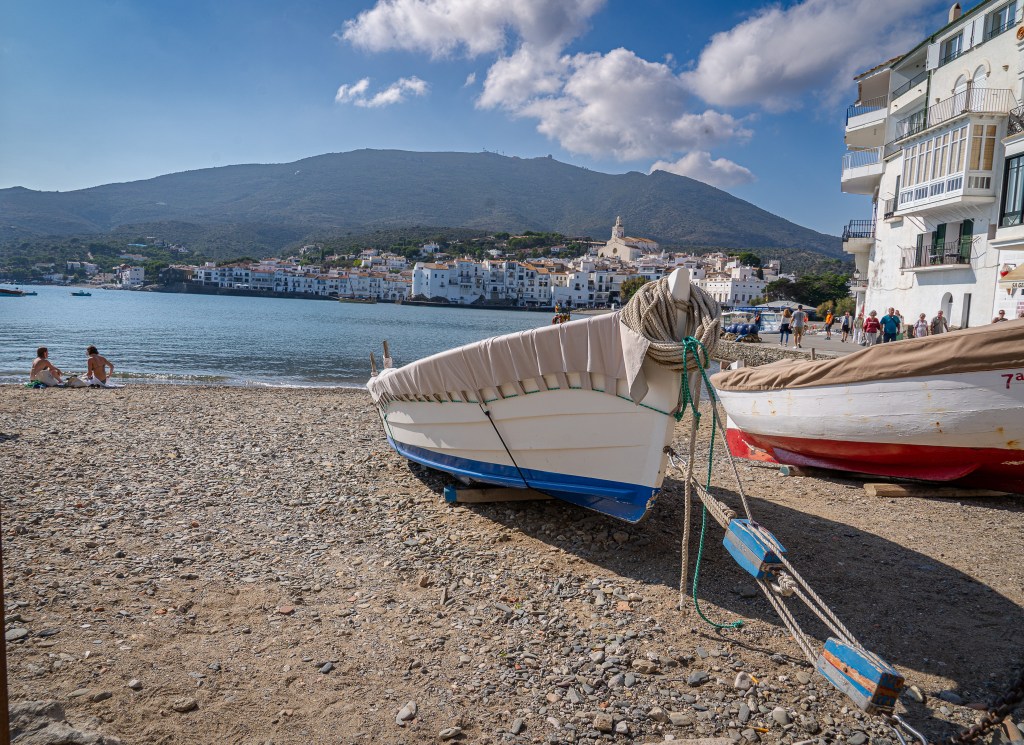
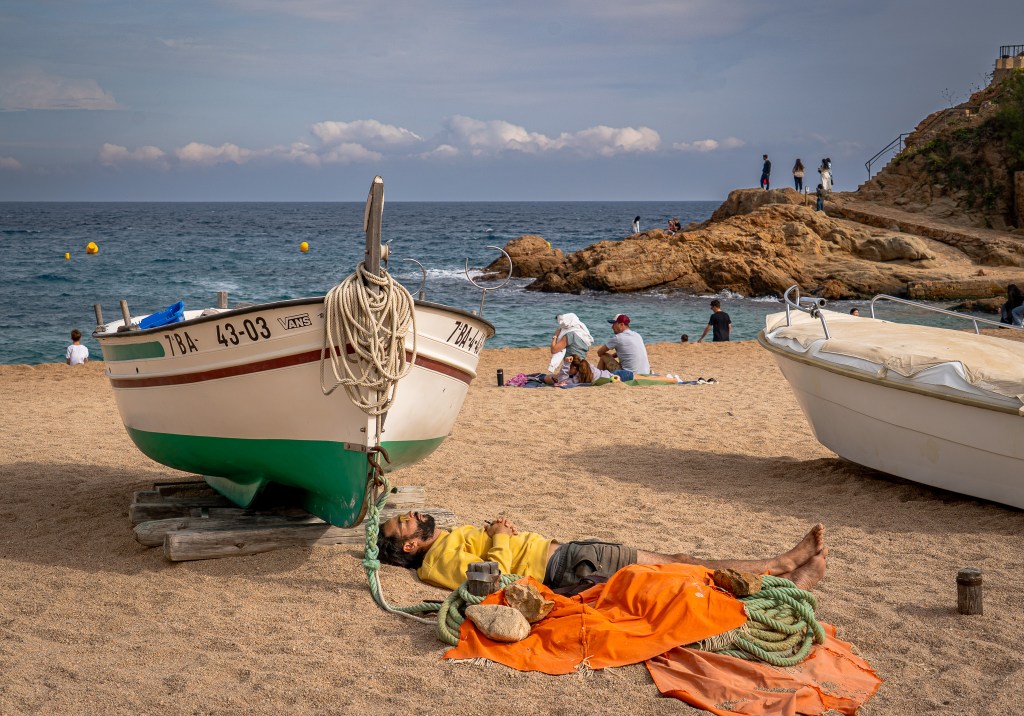
Summer beach vibes in October.
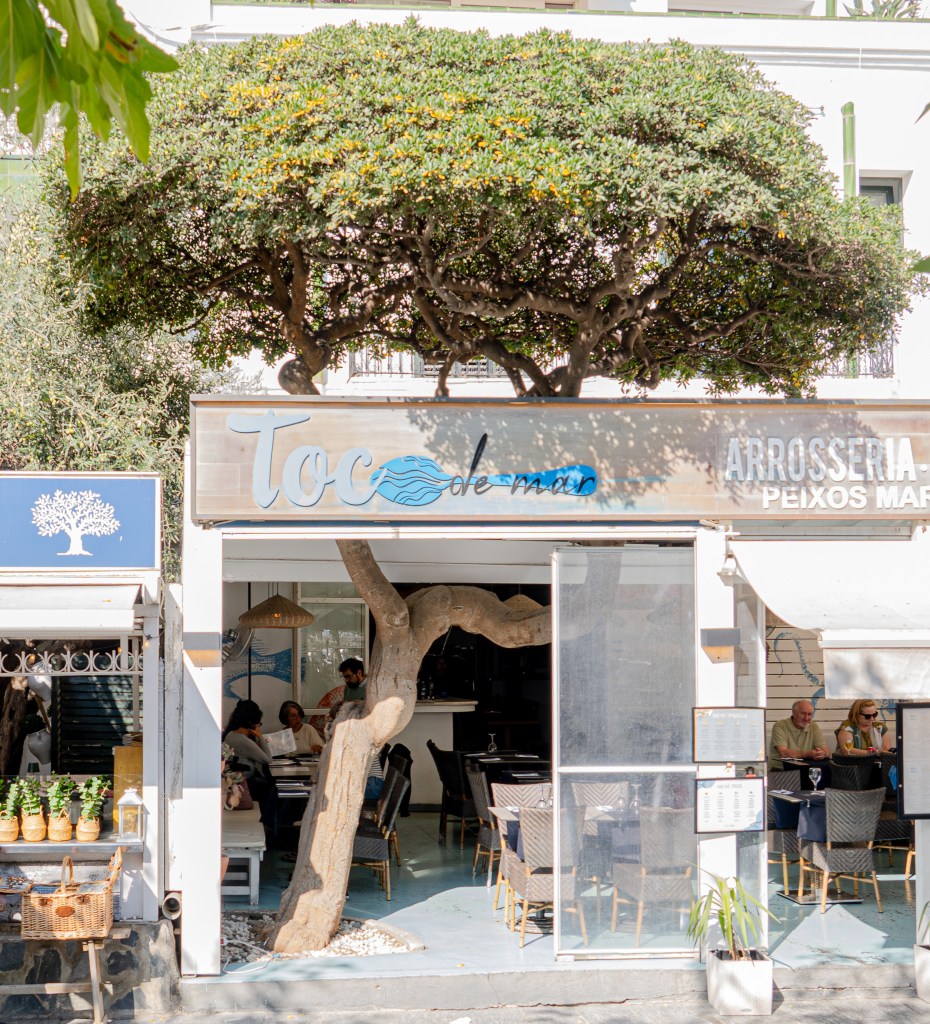
A place for everything and everything in its place.
Thanks for reading this far. If you’re interested, stay with me to read about Cadaqués’s most famous son, Salvador Dalí.
Cadaqués has a special place in art history and was a favourite of several famous names in the art world.
Marcel Duchamp, the French American artist and pioneer of the Avant Garde movement in America and New York in particular, spent time here.
Federico Garcia Lorca, Spanish poet and playwright who was assassinated by Francoists during the Spanish Civil War, was another well-known visitor, as was Picasso.
But Cadaqués’s most famous artist son is the surrealist, Salvador Dalí. His house is in Port Lligat bay on the outskirts of the town. His parents had a house nearby when Dalí was growing up and he spent his summers here. His childhood friends included future F.C. Barcelona footballers Emili Sagi-Barba and Josep Samitier. And during holidays here, the trio played football together. I was intrigued to discover that Lorca, the poet mentioned above, and Dalí had also been friends and I wondered how Dalí reconciled this friendship with his controversial support for the Franco regime.
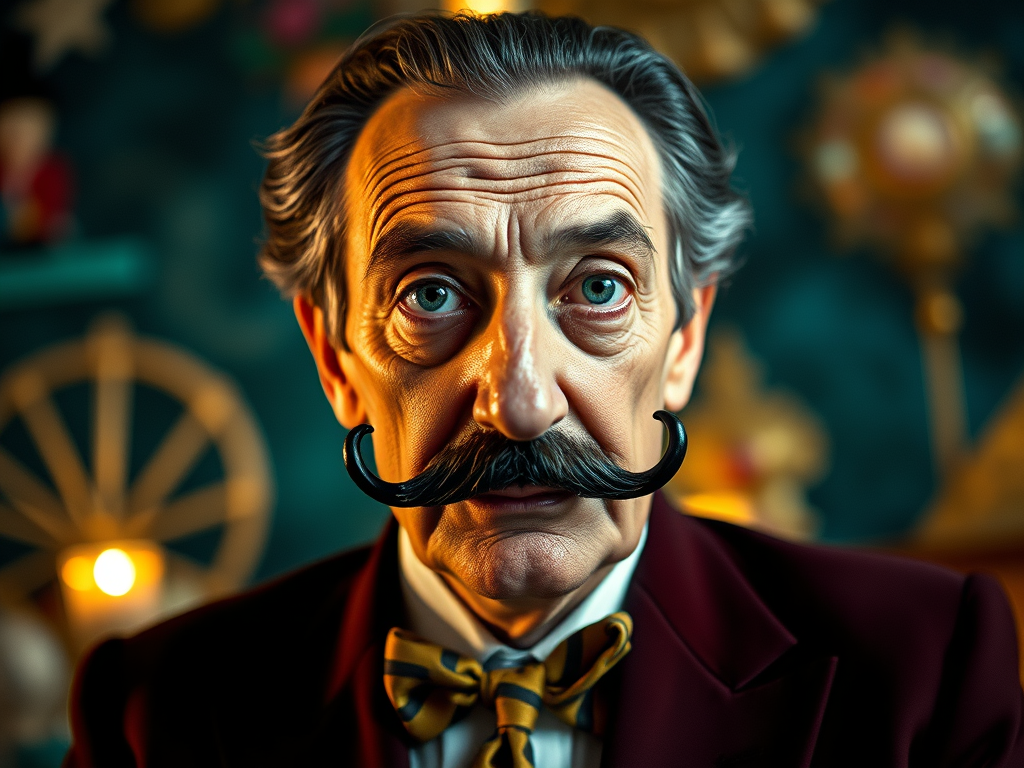
Salvador Dalí, surrealist painter. Controversial, eccentric, unique.
It was in the Port Lligat house, in 1931, that he created one of his most iconic paintings, The Persistence of Memory. The painting depicts clocks or watches that appear to be melting, inferring that time is fluid. One analyst wrote that Dalí was projecting his view of the world according to Einstein’s theory of special relativity (the relationship between space and time). When asked about this, Dali replied that his inspiration was the surrealist perception of Camembert cheese melting in the sun! The painting has resided in the MoMA in New York City since 1934.
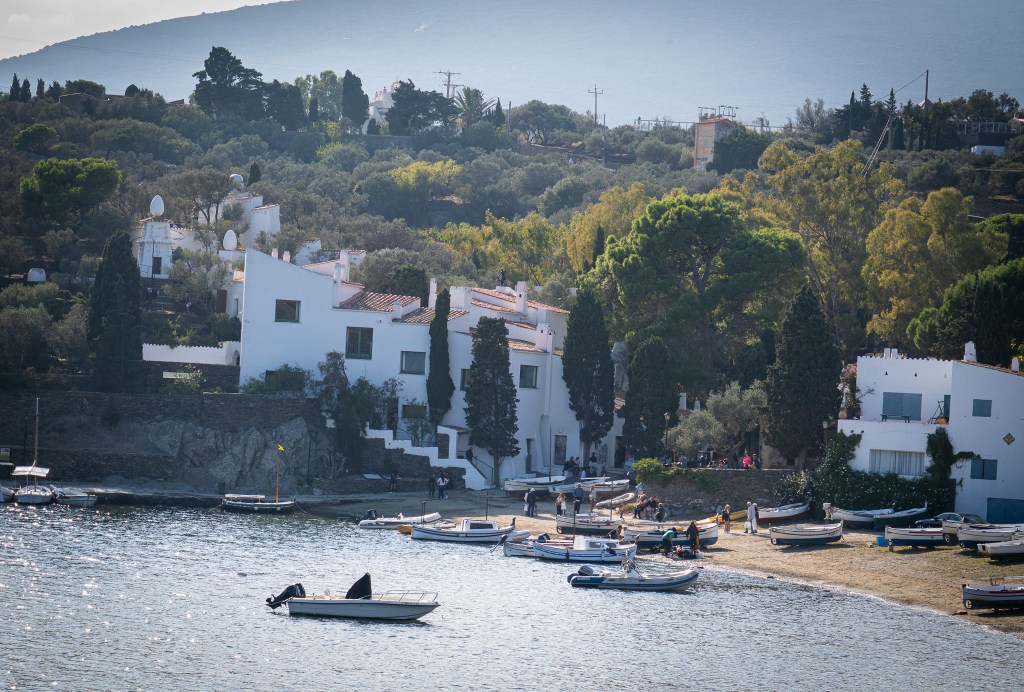
The location of Dalí’s house in Lligat Bay. Picturesque and serene.
His house is now a museum but Dali’s abstract interpretation of the world is not something that is to my taste (or so I thought), so, with our time not being as fluid as his, a visit was ruled out. We did get a glimpse of his house from the road as we were heading back to town from Lligat Bay and if the exterior is anything to go by, the house may just be worth a visit as a unique experience.
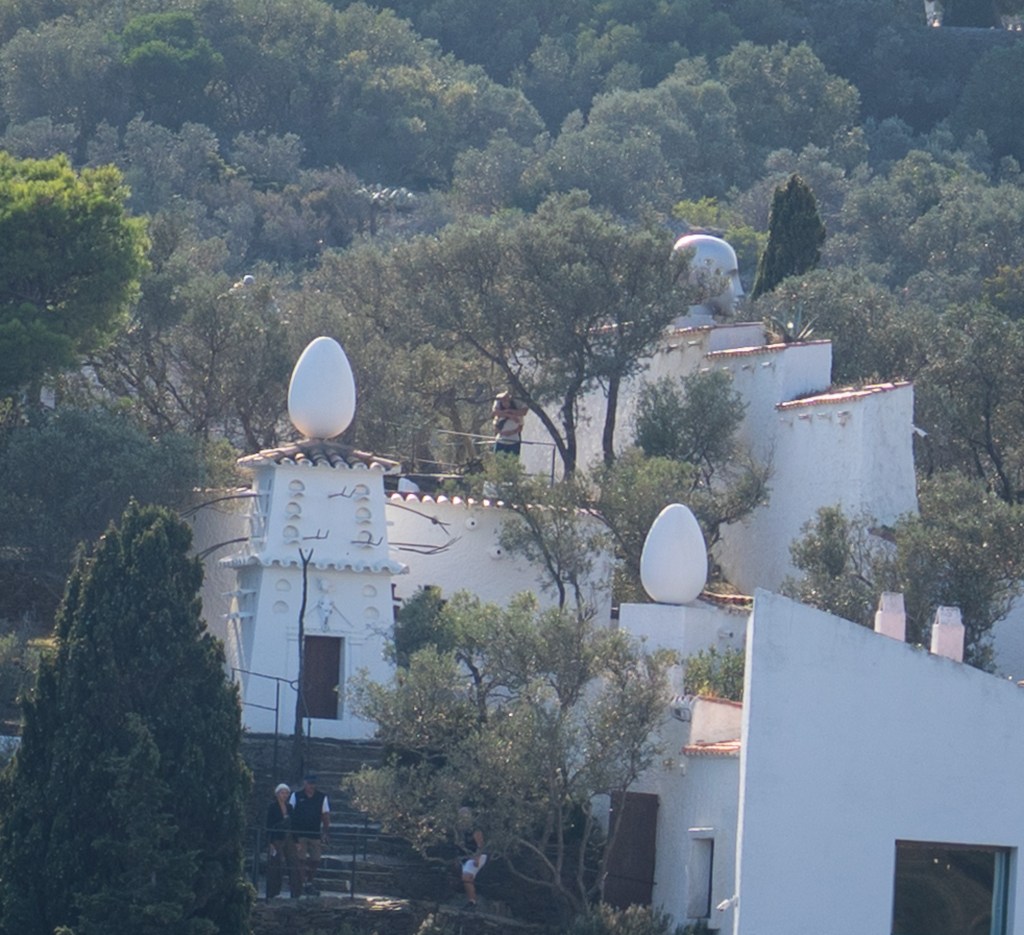
Close up of Dalí’s house, complete with giant eggs and steel heads..
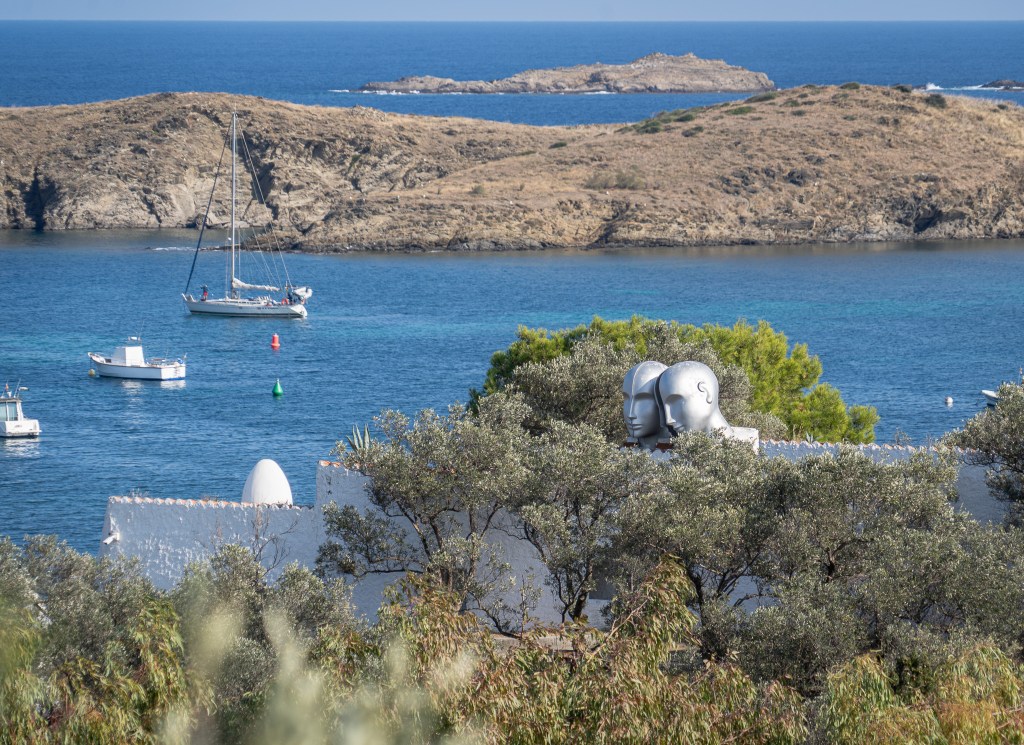
Two heads are better than one. A view from the road overlooking Dali’s house.
As I reach the end of this piece, I find myself having a change of heart. I may have been hasty in dismissing him as just a ‘kooky’ painter. I am no art expert but the more I look at ‘The Persistence of Memory’, the more intrigued I am by the thought process behind his work. He has been described as a self promoting charlatan by some of his contemporaries. Others describe him as a technically brilliant genius. If I ever return to Cadaqués, I think I will pay a visit to the Dalí museum and maybe get an insight into the mind and work of this bizarre genius and hopefully reach my own conclusion.
See you next time..
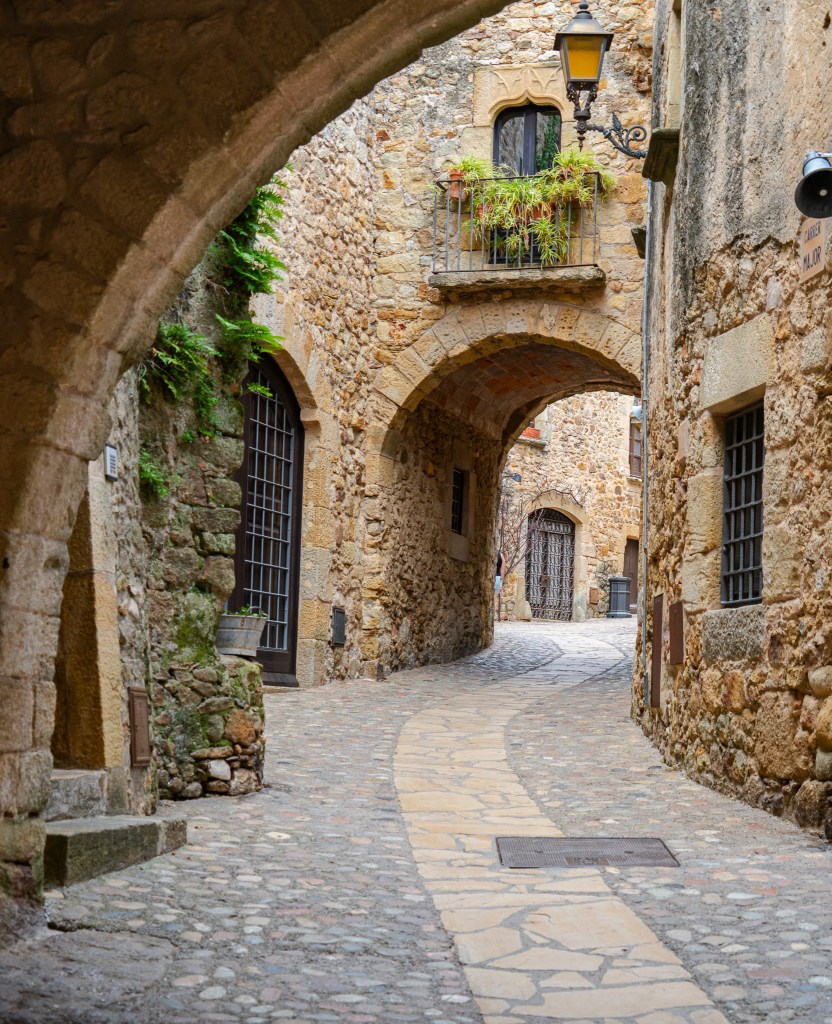












 Bleeding Dove